

Cold Calling Anxiety: A Psychologist-Approved Framework for Getting Past the Fear
It's 9:07 AM. The dialer's open. You've refilled your coffee twice. Zero calls made. You're rearranging your prospect list, tweaking your script, checking Slack - doing anything except pressing the green button.
You're not lazy. You have cold calling anxiety.
48% of B2B reps experience it. 76% of millennials report phone anxiety in general - and that was before the job required 200 dials a day. This isn't a character flaw. It's a wiring problem, and it has a fix.
The Short Version
- Call anxiety is a normal physiological response. The fix isn't "just dial more."
- Use the 3C's cognitive restructuring exercise plus a 5-minute pre-call routine.
- The single biggest hidden anxiety amplifier: bad data. Verify your list before your next call block.
Why Cold Calls Trigger Sales Call Anxiety
Your brain treats a cold call like a minor threat. Fight-or-flight kicks in, which is exactly why you can rehearse a perfect opener at your desk and then blank the moment someone picks up.
Phone calls are harder than other sales channels for three reasons. Fear of rejection - you're interrupting a stranger. Absence of nonverbal cues - no facial expressions to read or project. And time pressure - you can't edit a phone call the way you'd revise an email. There's also a social-norm dimension that rarely gets discussed: cold calling feels like a reciprocity violation, because you're asking for something (time, attention) without having given anything first, and that sense of being rude compounds the dread before you've even dialed.
Reps on r/sales describe "crippling anxiety even after years." That should tell you something. This isn't something you outgrow. Overcoming fear of phone calls in sales requires a system, not willpower.
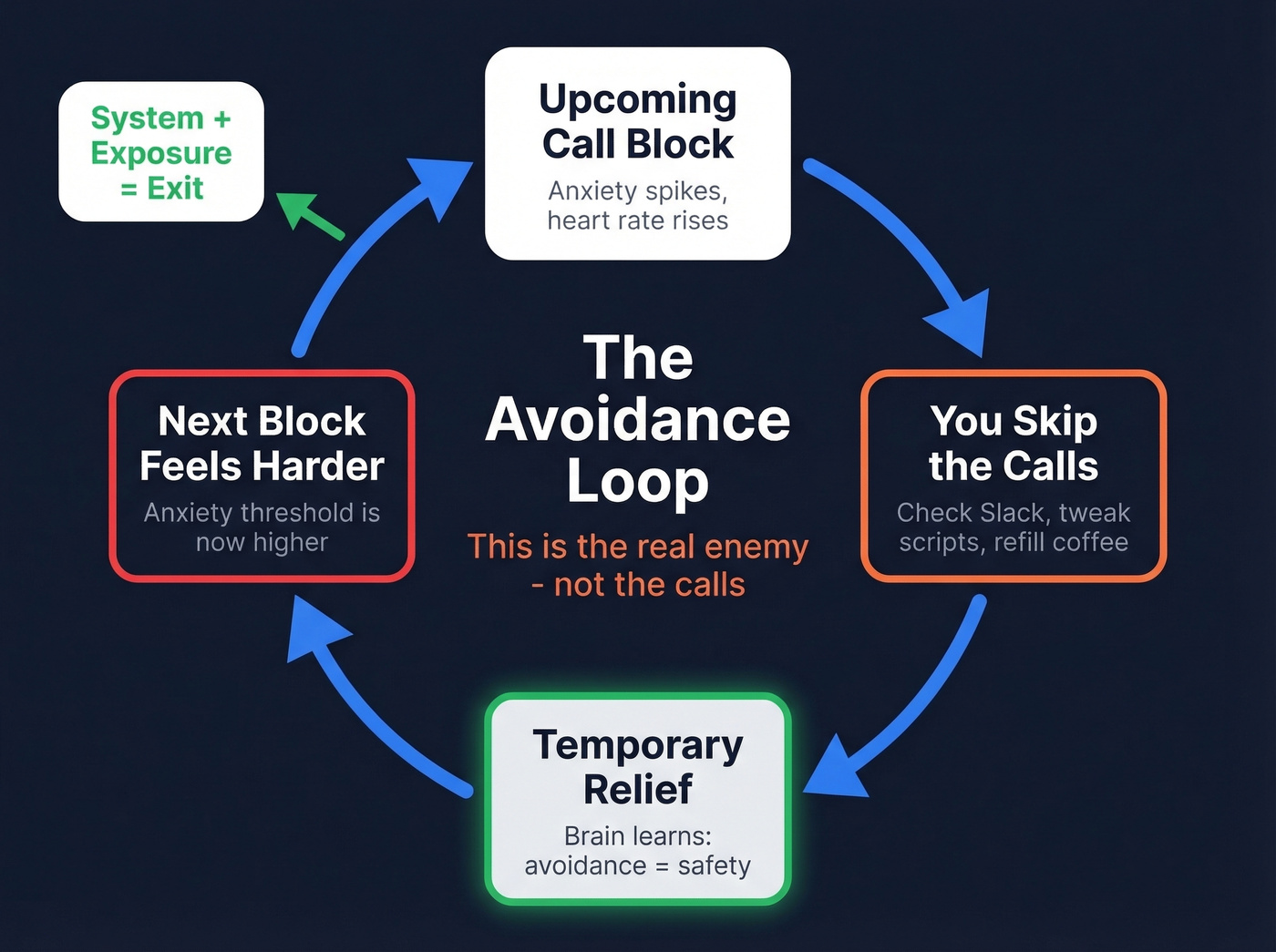
Here's the trap: when you skip a call block, you feel temporary relief. That relief teaches your brain avoidance works. So the next call block feels harder, and you skip that one too. This avoidance loop is the real enemy - not the calls themselves.
What "Normal" Actually Looks Like
Most phone call anxiety in sales comes from expecting results the channel doesn't produce. Here's what actual cold calling benchmarks say:
| Metric | Number | What It Means |
|---|---|---|
| Meeting rate (per conversation) | 4.82% | ~5 meetings per 100 conversations |
| Avg call length | 93 seconds | Most calls end fast |
| Connect rate | 3-8% | 6-16 pickups per 200 dials |
| Calls to max convos | 3 attempts | 93% of convos happen by call 3 |
Ninety-five out of 100 conversations won't result in a meeting. That's not failure - that's the game.
The consensus on r/sales frames it as simple activity math: hit 200+ dials at a 5% connect rate and you'll land at least one meeting. The numbers aren't personal. They're structural. Internalizing this math is the first real step past the dread.
The 3C's - A CBT Framework for Reps
Let's be honest: most "7 tips to beat cold calling anxiety" articles say the same five things. This is a psychological pattern, and it responds to psychological tools. The most effective one we've found is the 3C's, adapted from cognitive behavioral therapy: Catch it, Check it, Change it.
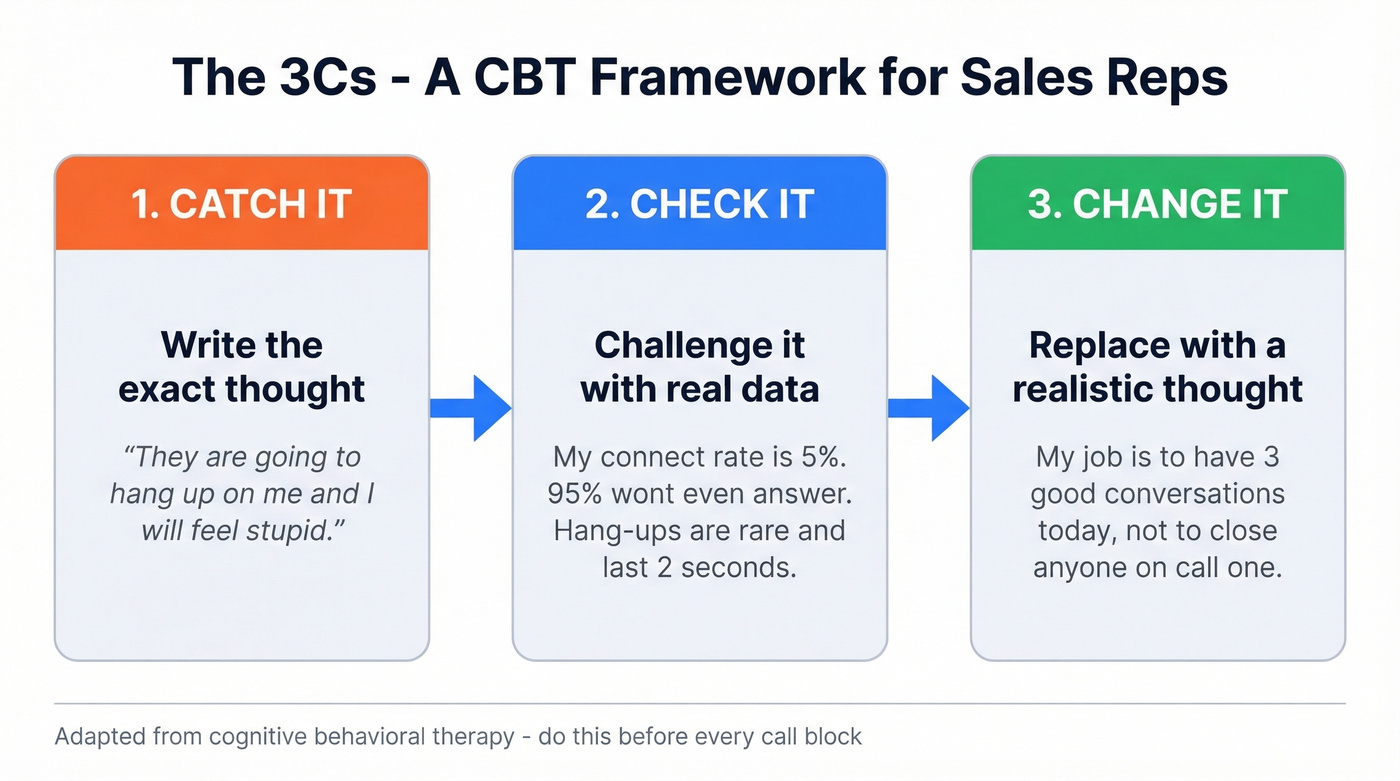
Catch it. Write down the thought creating the dread. Not "I'm anxious" but "They're going to hang up on me and I'll feel stupid."
Check it. Challenge it with data. "My connect rate is 5%, so 95% won't even answer. Of the ones who do, most are polite. Hang-ups are rare and last two seconds."
Change it. Replace the distorted thought with a realistic one. "My job is to have three good conversations today, not to close anyone on the first call."
Then have a simple opener ready so you're not improvising under stress: "Hi [name], this is [you] from [company]. I know I'm calling out of the blue - do you have 25 seconds for me to explain why?" Having actual words prepared removes the blank-page moment entirely, which is one of the biggest panic triggers we've seen in reps we work with.

The 3C's reframe your thoughts. But no mental framework survives three wrong numbers in a row. Prospeo's 125M+ verified mobile numbers are refreshed every 7 days - so when you press dial, a real person answers. 30% pickup rate across all regions.
Fix your data before you fix your mindset.
How to Stay Calm: A 5-Minute Pre-Call Routine
The 3C's handle the mental game. This routine handles the physical one. Do it before every call block.
If you're building a repeatable cold calling system, this is the part that keeps you consistent.
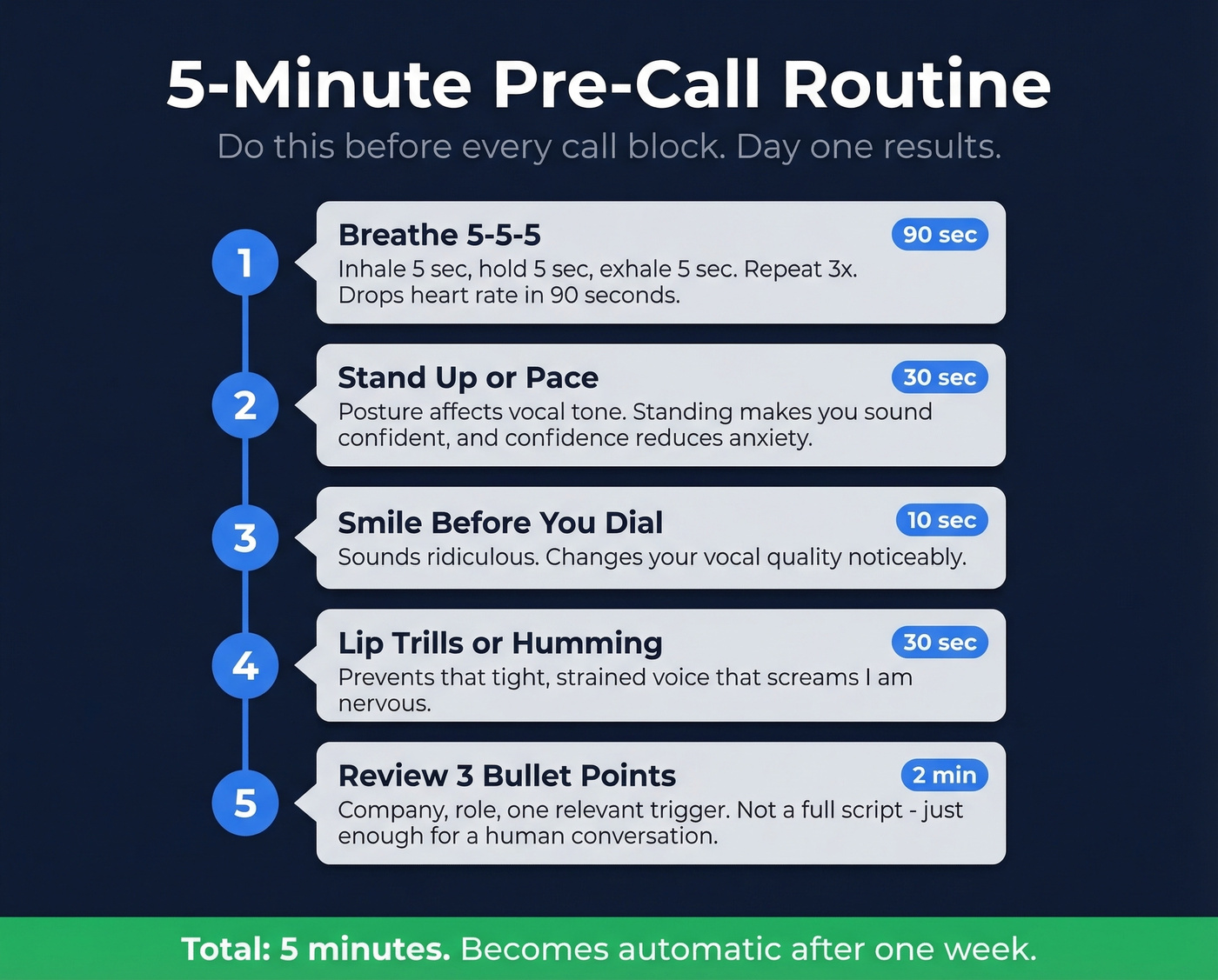
- 5-5-5 breathing. Inhale for 5 seconds, hold for 5, exhale for 5. Repeat 3 times. This activates your parasympathetic nervous system and drops your heart rate within 90 seconds.
- Stand up or pace. Posture directly affects vocal tone. Standing makes you sound more confident, and feeling confident reduces anxiety - it's a feedback loop that works in your favor.
- Smile before the first dial. It sounds ridiculous. It changes your vocal quality noticeably.
- Lip trills or humming for 30 seconds. Prevents that tight, strained voice that screams "I'm nervous."
- Review three bullet points about your prospect. Company, role, one relevant trigger. Not a full script - just enough for a human conversation.
In our experience, reps who commit to this routine for a week stop needing it consciously. It becomes automatic. Five minutes, day one results.
The Graduated Exposure Ladder
Anxiety shrinks through exposure, not avoidance. But you don't have to start with the hardest calls. Use a graduated approach:
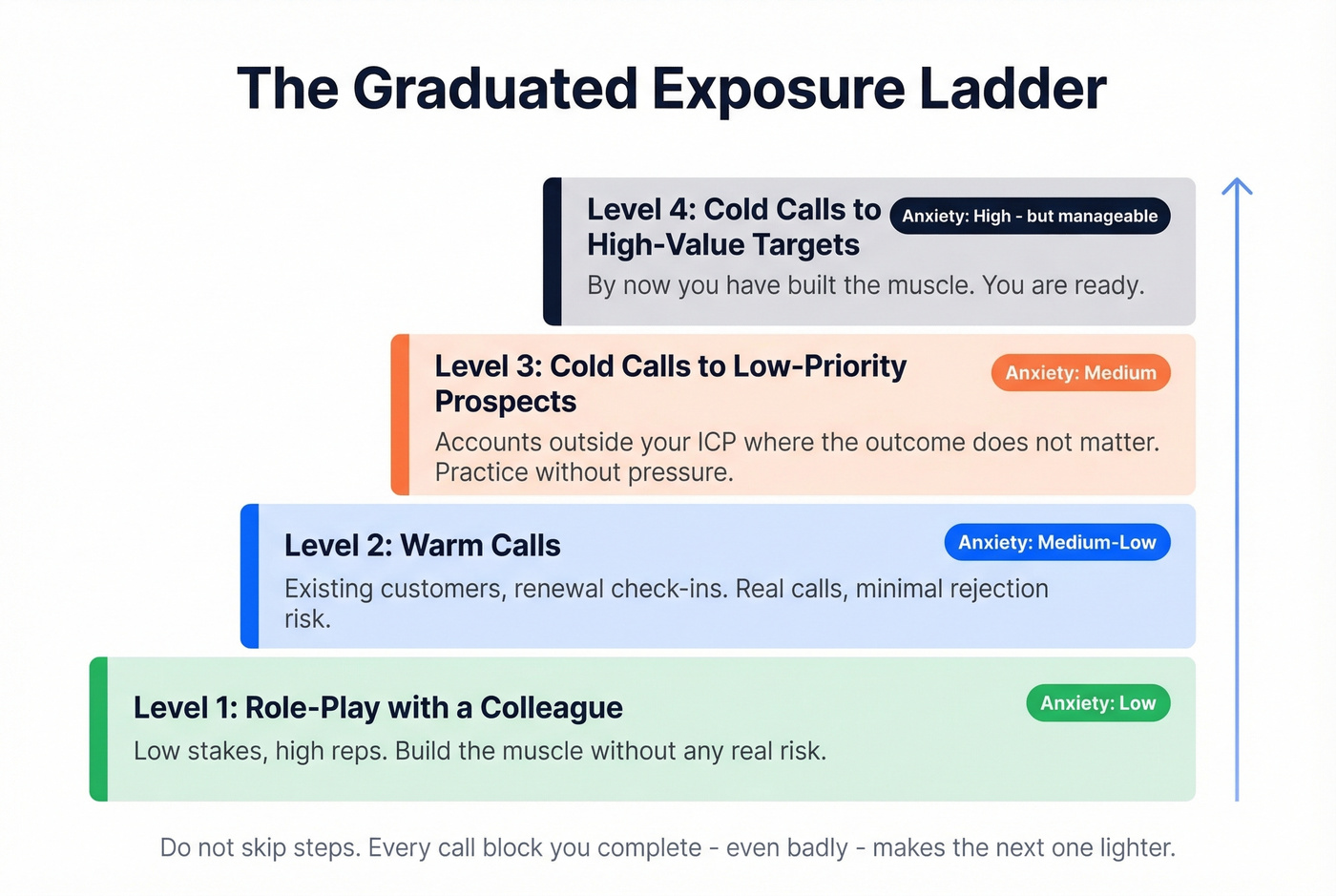
- Role-play with a colleague. Low stakes, high reps.
- Warm calls. Existing customers, renewal check-ins. Real calls, minimal rejection risk. (If you want a tighter definition and examples, see warm calls.)
- Cold calls to lower-priority prospects. Accounts outside your ICP where the outcome doesn't matter. Practice without pressure. Use an Ideal Customer Profile so "lower priority" is intentional, not random.
- Cold calls to high-value targets. By now, you've built the muscle.
Don't skip steps. Every call block you complete - even badly - makes the next one lighter.
The Anxiety Multiplier Nobody Talks About
Here's the thing: half of the dread isn't about the conversation. It's about what happens before it.
Wrong numbers. "This person left six months ago." Voicemails for roles already filled. Every wasted dial erodes confidence and compounds the stress. I've watched reps lose all momentum after three consecutive wrong numbers - not because the calls were hard, but because the data was garbage and it felt like the universe was confirming their worst fears about cold calling being pointless.
A clean, verified list removes an entire source of frustration before you pick up the phone. Tools like Prospeo give you verified mobile numbers with a 30% pickup rate and emails refreshed every 7 days, so you're calling real people at real numbers. (If you're comparing vendors, start with data enrichment services and sales prospecting databases.) The free tier covers 75 verified emails per month - enough to clean a list before your next call block and feel the difference immediately.
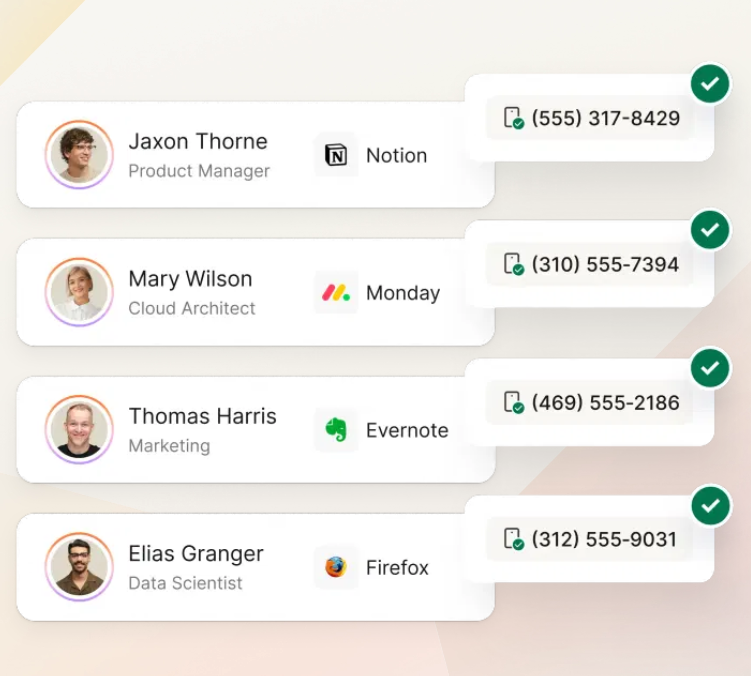
Every dead number compounds the dread. Every real conversation builds momentum. Prospeo gives you verified direct dials at $0.01/lead - 90% cheaper than ZoomInfo - so your graduated exposure ladder starts with actual humans, not voicemail graveyards.
Clean your call list in 5 minutes. No contract, no sales call.
When Anxiety Spikes Mid-Block
Even with preparation, some calls hit hard. When panic rises mid-block:
- Pause and take three deep breaths. Don't chain-dial through it.
- Reframe the last call. Ask "What did I learn?" not "What went wrong?"
- Tell yourself the next call is practice, not performance.
- Take a break after 90 minutes. A 10-minute walk resets your nervous system more than another coffee.
Most cold calling advice tells you to "just push through." That's wrong. Pushing through panic makes you sound terrible on the next call and reinforces the association between dialing and suffering. Strategic pauses aren't weakness - they're how you stay in the game long enough for the anxiety to actually shrink.
If rejection is the specific trigger, keep a few cold call rejection responses on your desk.
Skip this advice if you're having a genuinely good flow state. Don't interrupt momentum to follow a rule. But if your hands are shaking and your voice is cracking, stop. Walk. Come back.
Putting It Together
Cold calling anxiety doesn't disappear. It shrinks. The answer isn't a single hack - it's the combination of cognitive restructuring, physical preparation, clean data, and graduated exposure. Run the 3C's before your next call block, verify your list, and dial.
If you're new to the channel, pair this with a simple cold calling for beginners plan and a few talk track examples.
The phone gets lighter every time you pick it up.