

Cold Email Triggers That Actually Get Replies in 2026
Your SDR sent 200 emails this week. Reply rate: 2.1%. Meanwhile, a competitor referenced a prospect's Series B announcement from Tuesday and booked three demos from 15 emails. The difference isn't talent or copywriting - it's timing paired with the right trigger.
The average cold email reply rate sits around 3.43% across billions of interactions tracked by Instantly, with elite performers clearing 10.7%. But one practitioner who tracked 19,000 emails over six months found that referencing a specific trigger event - a funding round, a job posting, a leadership change - pushed reply rates to 8.7%, roughly 2.7x the 3.2% he got from basic first-name-and-company personalization. And 58% of those replies came from the first email. If you're still personalizing with just {{firstName}} and {{company}}, you're leaving meetings on the table.
Three Types of Cold Email Triggers
Triggers fall into three buckets. Sales event triggers are external changes at a company - funding, new hires, tech adoption - that create a buying window. Behavioral triggers are actions a prospect takes - opening your email, clicking a link, visiting your site - that signal interest. Spam triggers are the technical and content mistakes that route your email to junk before anyone reads it.
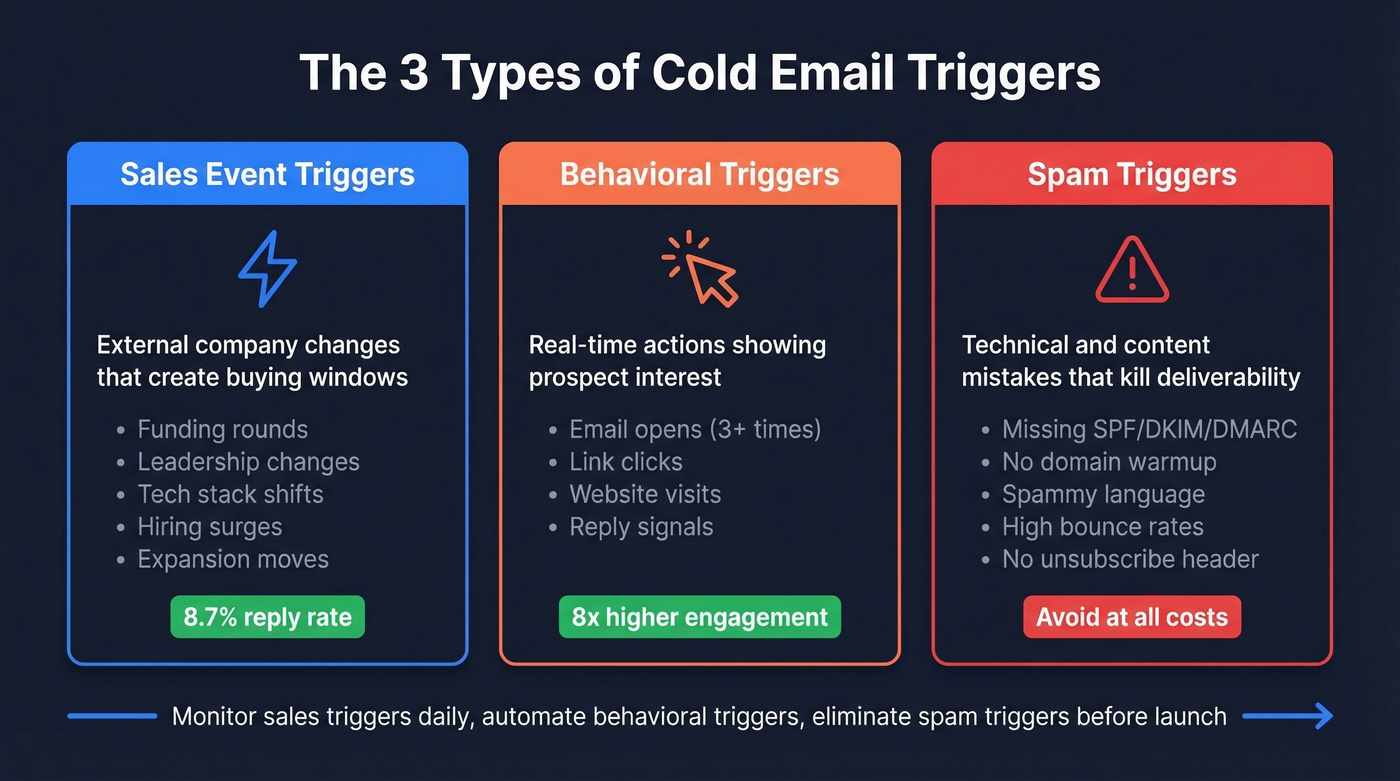
Here's the short version: trigger-event personalization delivers ~8.7% reply rates vs. 3.2% for basic personalization, the 48-hour rule matters more than your subject line, and none of it works if your emails bounce.
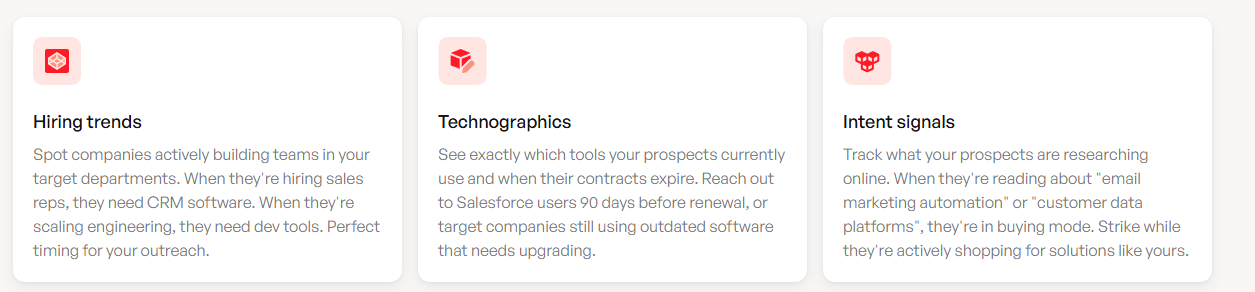
Sales Triggers Worth Monitoring
These are the highest-leverage signals because they create urgency the prospect already feels. A company that just raised a Series B is actively spending. A new VP of Sales is rebuilding the stack. A competitor's public stumble opens a window you didn't create but can walk through.
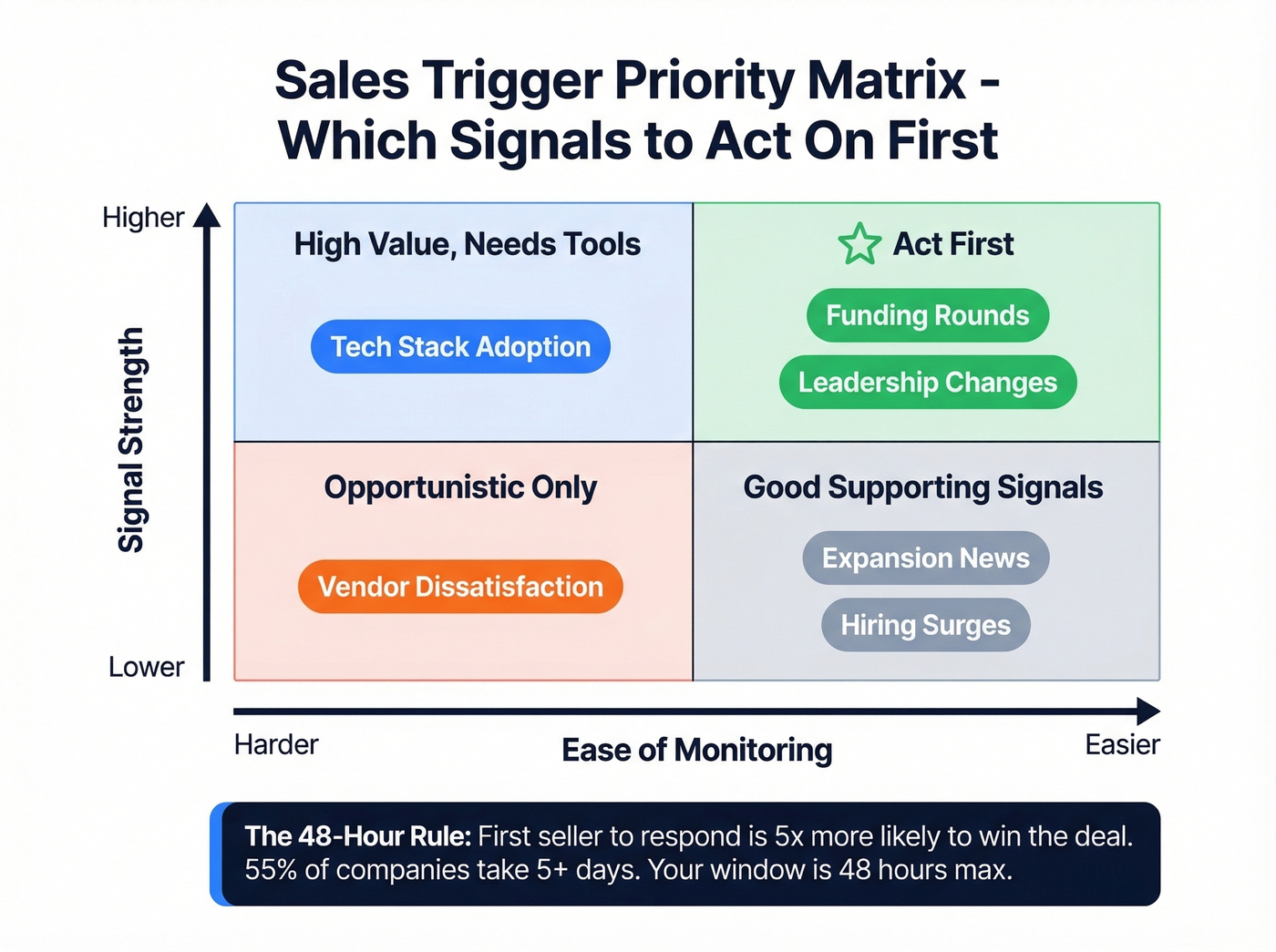
Most guides list 10 trigger types with zero guidance on how to actually track them. We've found five categories worth your time:
- Funding and financial changes - Series rounds, M&A, IPO filings, earnings misses
- Leadership and hiring - New C-suite hires, department head changes, hiring surges
- Expansion - New offices, product launches, geographic moves
- Tech adoption - Stack changes trackable via BuiltWith or Wappalyzer, digital transformation initiatives
- Vendor dissatisfaction - Public complaints, negative reviews, contract expirations
The first seller to respond after a trigger event is 5x more likely to win the deal. Yet 55% of companies take more than five days to respond. That gap is your advantage - but only if you act within 48 hours. One r/sales contributor reported that the same email sent without a trigger reference produced "garbage results," while trigger-timed sends from 908 emails generated 112 meetings.
Our prioritization: funding rounds first (clearest buying signal), leadership changes second (new leaders buy new tools), tech adoption third (harder to monitor but high intent). Skip the events your team can't act on fast. Tracking 10 triggers and responding to none of them within 48 hours is worse than tracking two and nailing the timing.
For monitoring, you can duct-tape Google Alerts, BuiltWith, and a job board together. Prospeo's 30+ search filters - job change, headcount growth, funding, technographics - combined with intent data across 15,000 Bombora topics and verified contact data, let you spot and act on signals from this week rather than last month. A trigger email using a timeline hook:
Hi {{firstName}}, saw {{company}} closed its Series B last week - congrats. Teams at that stage usually hit a wall scaling outbound without burning through SDR hours. Worth a 15-min call Tuesday to see if we can help?
Short, specific, timed to the event. No "I hope this finds you well."
Stacking Triggers for Higher Intent
Single triggers are good. Stacked triggers are better.
Funding + hiring surge means a company is actively building and spending. New VP of Engineering + job postings for DevOps roles means a tech stack overhaul is coming. When two signals overlap, you're not guessing about intent - you're confirming it.
Here's the thing: we've seen teams set up alerts for 10 trigger types and respond to none of them within 48 hours. You don't need 10. Pick your two highest-signal events, build a daily monitoring habit, and stack them when they overlap. A single event is a signal. Two overlapping events are a buying window.
If you want a step-by-step system, see our guide on track them.

Stacking triggers only works when you can act on them fast - with verified contact data. Prospeo's 30+ filters (job change, funding, headcount growth, technographics) plus intent data across 15,000 Bombora topics surface buying windows this week, not last month. 98% email accuracy means your trigger email actually lands.
Stop finding the signal and missing the person behind it.
Behavioral Triggers and Timing
Behavioral triggers are the real-time layer. Someone opens your email three times in an hour - that's interest. Someone clicks your case study link - that's deeper interest. The window here is tight: 1-4 hours for engagement-based follow-ups, not 24 hours.
Emails tied to user actions see up to 8x higher engagement rates compared to generic campaigns. The automation patterns that work:
- Reply trigger - instantly send a scheduling link with a 1-minute delay so it feels manual
- Click trigger - 3-minute delay, redirect toward booking
- Open trigger - double down while the problem is top of mind
A 3-7-7 cadence (Day 0, Day 3, Day 10, Day 17) captures 93% of replies by day 10. Across large benchmark data, 58% of replies come from the first email and 42% come from follow-ups - so don't abandon sequences early. Your sequencer handles this. GMass supports open/click/reply-triggered emails, and most modern platforms like Instantly or Lemlist support automation natively. Set it up before you launch, not after.
If you need a proven sequence structure, start with a cadence that matches your deal cycle.
Writing the Trigger Email
Two data points should shape every trigger email you write.
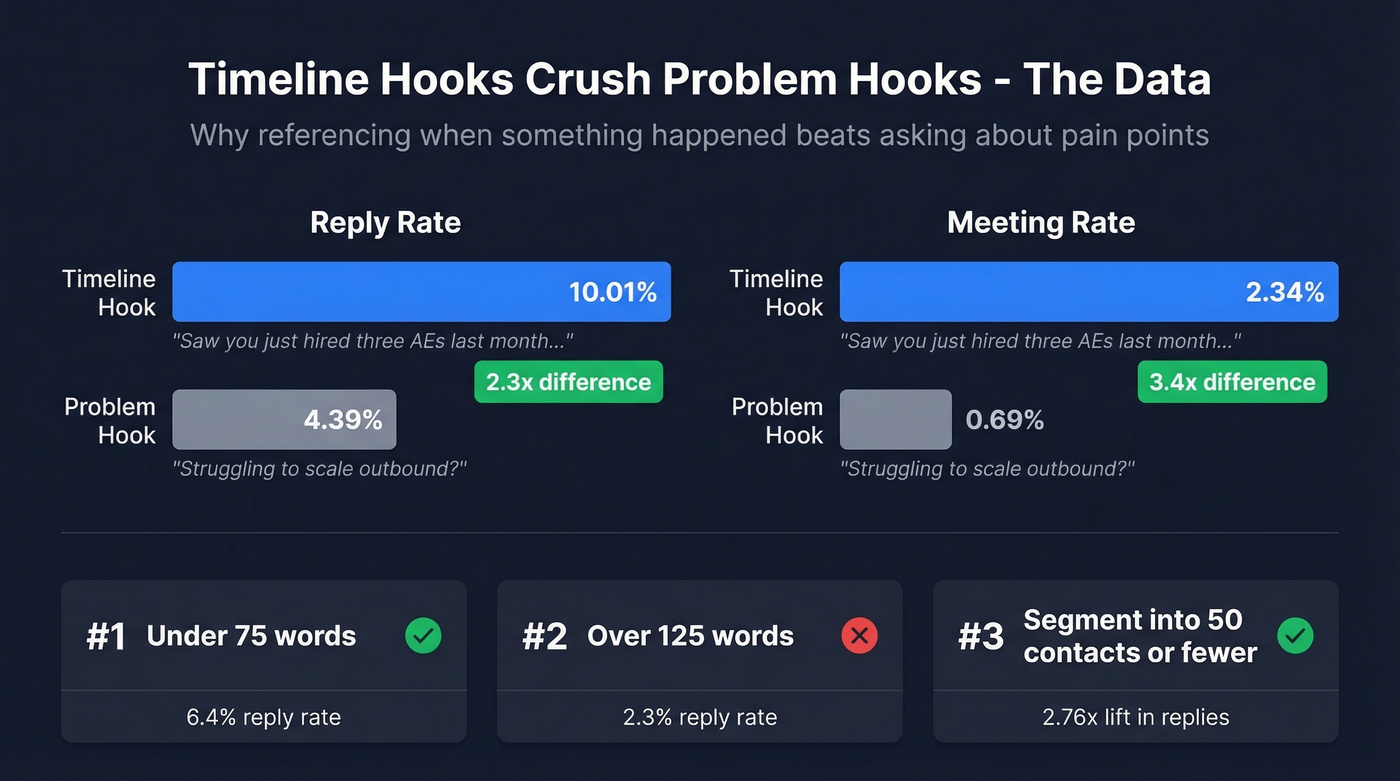
First, timeline hooks average a 10.01% reply rate vs. 4.39% for problem hooks - a 2.3x difference. Meeting rates tell the same story: 2.34% for timeline hooks vs. 0.69% for problem hooks, a 3.4x gap. "Saw you just hired three AEs last month" beats "Struggling to scale outbound?" every time. Reference the event and when it happened.
Second, length kills replies. Emails under 75 words hit 6.4% reply rates. Over 125 words drops to 2.3%. One trigger reference, one value prop, one CTA. The micro-ask outperforms everything: "Worth a 15-min call Tuesday?" beats "Let me know if you'd like to schedule a demo at your convenience." Segmenting into cohorts of 50 contacts or fewer lifts reply rates by 2.76x.
For more examples, borrow from these follow-up templates and adapt the opener to your trigger.
A leadership-change trigger email:
Hi {{firstName}}, noticed you joined {{company}} as VP Sales about three weeks ago. New sales leaders usually inherit a pipeline that doesn't match their targets. We helped [similar company] close that gap in 60 days - worth a quick call Thursday?
Spam Triggers to Avoid
None of the above matters if your emails land in spam. 160 billion spam emails hit inboxes daily, and filters are aggressive. Here's the preflight checklist:
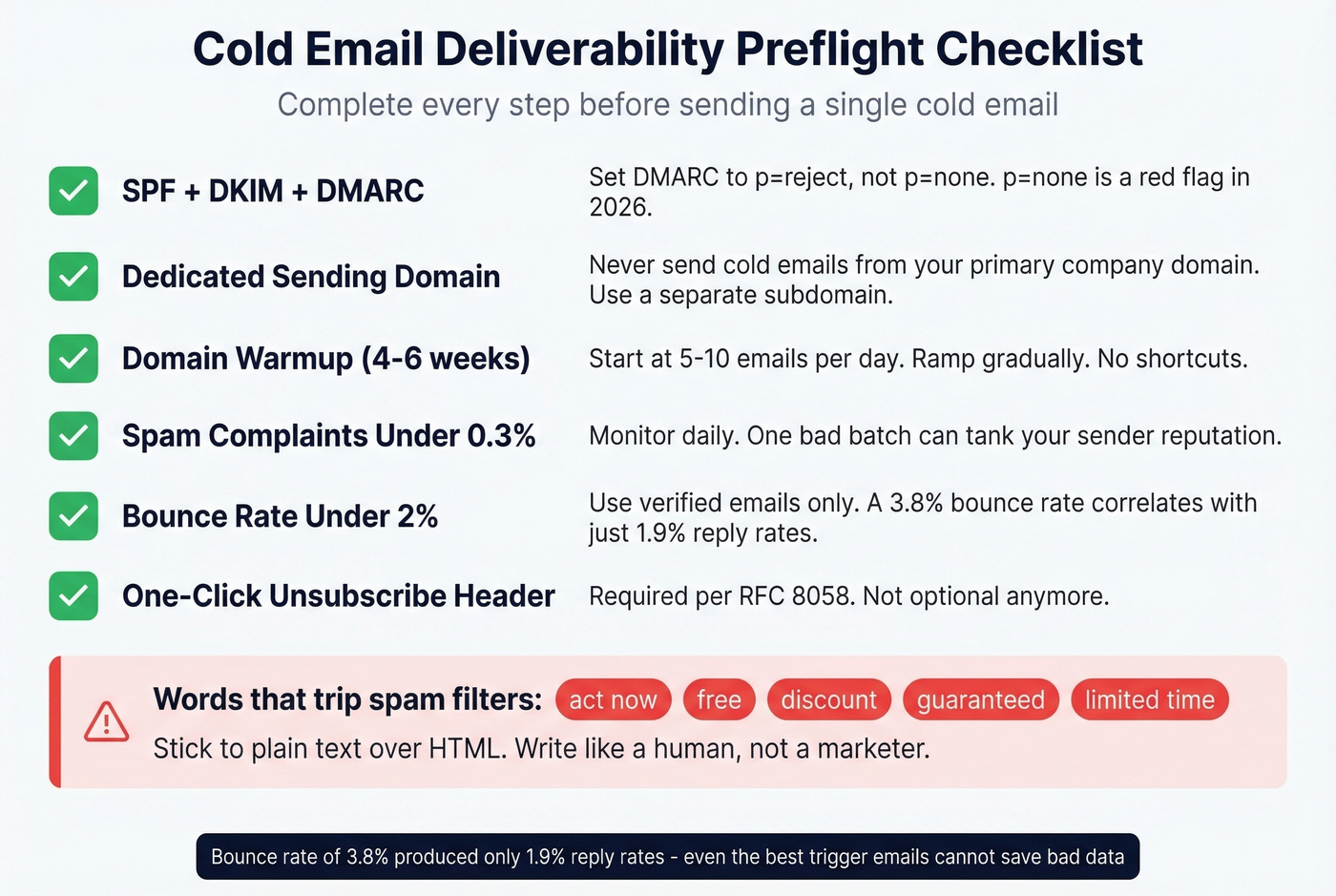
- Authentication - SPF, DKIM, and DMARC with p=reject. p=none is a red flag now.
- Dedicated sending domain - never cold email from your primary domain
- Warmup - Start at 5-10 emails/day, ramp over 4-6 weeks
- Spam complaints under 0.3%, bounces under 2%
- One-click unsubscribe headers per RFC 8058
- Plain language - "act now," "free," "discount," and overpromising language all trip filters; stick to plain text over HTML
If you're troubleshooting deliverability, use a full email deliverability guide and run a quick spam check before scaling volume.
Let's be honest about the bounce-rate-to-reply-rate correlation: it's brutal. One practitioner's campaign with a 3.8% bounce rate produced just 1.9% reply rates. Even the best trigger-based outreach won't save a campaign built on stale data. Prospeo's 98% email accuracy and 7-day refresh cycle exist to prevent exactly this - you're not emailing addresses that went dead three weeks ago.
If your average deal size is under $10k, you probably don't need a $30k/year data platform. But you absolutely need verified emails and timely triggers. The ROI math on trigger-based outbound only works when your bounce rate stays under 2%. (If you want the benchmarks and fixes, see bounce rate.)
Trigger emails under 75 words hit 6.4% reply rates - but only if they reach a real inbox. Prospeo's 5-step verification and proprietary email infrastructure deliver 98% accuracy at $0.01/email. Teams using Prospeo book 26% more meetings than ZoomInfo and 35% more than Apollo.
Your timing is perfect. Make sure the email address is too.
FAQ
What's the best time to send a trigger-based cold email?
Within 48 hours of the event - the first seller to respond is 5x more likely to win the deal. For behavioral signals like opens and clicks, the window shrinks to 1-4 hours. For day-of-week timing, Tuesday and Wednesday consistently outperform other days.
How many trigger events should I track?
Two to three, maximum. Pick triggers you can monitor daily and act on within 48 hours. Funding rounds and leadership changes are the highest-signal starting points. Adding more without the operational capacity to respond quickly just creates noise.
Should I skip trigger-based outreach if I don't have monitoring tools?
Not necessarily. Google Alerts covers news triggers for free, and BuiltWith handles tech stack changes at a basic level. You won't have the speed or coverage of a dedicated platform, but even manually checking a prospect's recent news before hitting send puts you ahead of 90% of cold emailers who don't bother.