Digital Sales Channels: Which Actually Work (and Which Drain Your Budget)
Customer acquisition costs climbed roughly 40% between 2023 and 2025, with average ecommerce CAC now running $45-$175 depending on industry. Marketing budgets haven't kept pace - most companies allocate 7-8% of revenue to marketing, and a third of that disappears into paid media. Meanwhile, nearly half of sellers have lost $1M+ from botched omnichannel execution, according to a 1WorldSync study. The core issue isn't a shortage of digital sales channels. It's the opposite: too many options, and most companies spread themselves thin across all of them instead of going deep on the ones that actually move revenue.
With 23% of all retail expected to happen online by 2027, the stakes keep rising.
Here's the thing - most teams don't have a channel problem. They have a depth problem. Three channels executed well will outperform ten channels executed poorly every single time.
Quick Version
TL;DR Checklist:
- Email remains the highest-ROI online selling channel at $36-$40 per $1 spent
- Start with two or three channels max - your own site, email, and one paid or outbound channel
- Don't run 15 channels simultaneously; you'll do all of them badly
- For B2B outbound, verify every email before sending - a 35% bounce rate will tank your domain reputation faster than any channel strategy can save it
What Is a Digital Sales Channel?
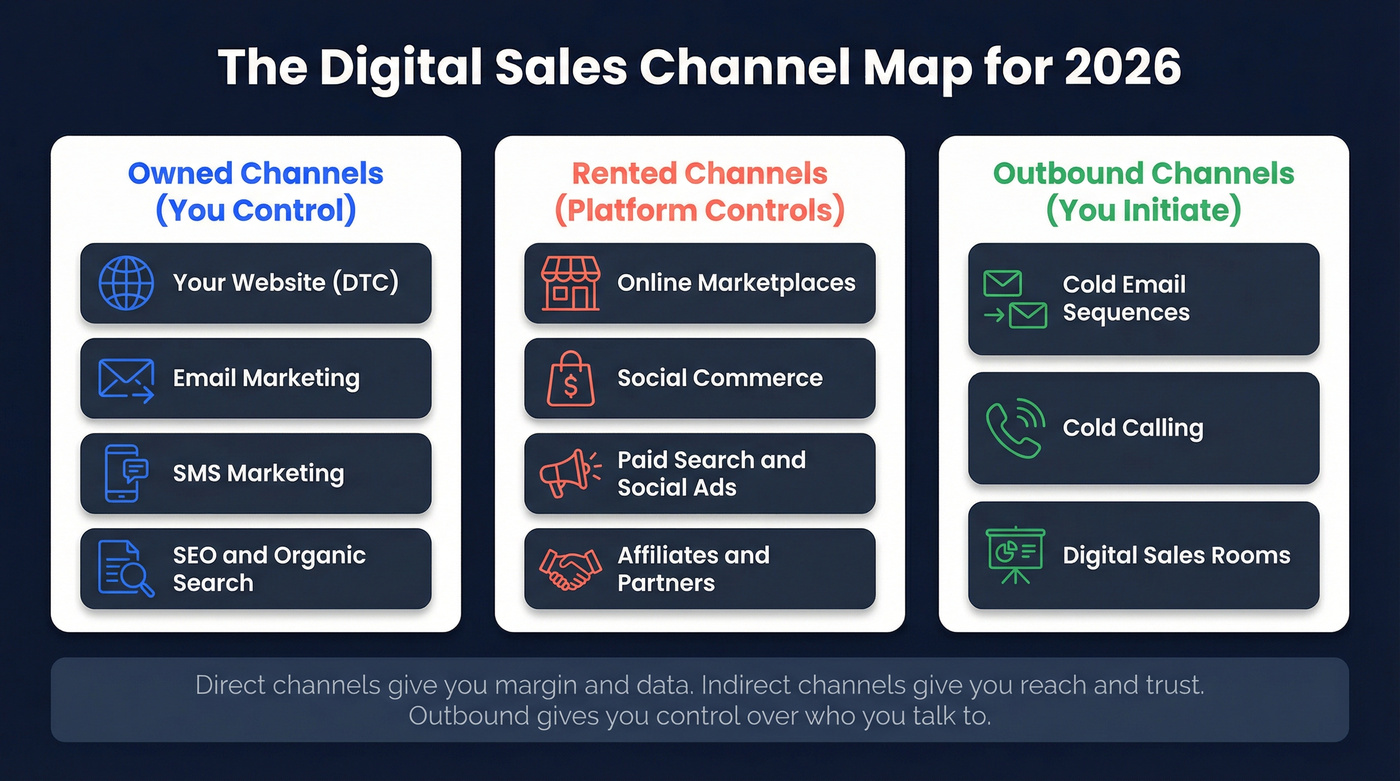
A digital sales channel is any online pathway where a buyer can discover, evaluate, or purchase your product. The useful distinction is direct vs. indirect. Direct channels - your website, email list, outbound sequences - give you margin and data. Indirect channels - marketplaces, affiliates, reseller networks - give you reach and trust.
You'll hear "multichannel" and "omnichannel" used interchangeably. They aren't the same thing. Multichannel means you sell through multiple channels. Omnichannel means those channels are connected: shared data, consistent experience, coordinated messaging. Most companies are multichannel. Very few are truly omnichannel.
The Channel Map for 2026
Every major digital selling channel worth considering this year, grouped by function.
Your Own Website (DTC)
The only channel where you control everything - pricing, branding, customer data, and margins. No platform fees, no algorithm changes. DTC margins improve significantly once you subtract the 8-20% blended marketplace fees you'd pay elsewhere.
The tradeoff is traffic. You earn every visitor through SEO, paid ads, or brand awareness. But the data you collect compounds over time in ways marketplace data never will.
Online Marketplaces
Amazon, Walmart Marketplace, eBay, Etsy - these platforms bring built-in traffic. The downside is fees in the 8-20% range and limited ownership of the customer relationship. Use marketplaces for discovery, then move customers to your owned channels.
Social Commerce
US social commerce sales topped $90B in 2025 and are projected to hit roughly $150B by 2028. Platform choice matters enormously based on your audience.
| Platform | Gen Z Preference | Millennial Preference |
|---|---|---|
| TikTok Shop | 40% | 18% |
| 30% | 53% | |
| 20% | 34% | |
| 25% | 19% |
Selling $30 products to 22-year-olds? TikTok Shop. Targeting 35-year-old homeowners? Facebook and Instagram. Don't invest in social commerce management software like Sprout Social ($199-$399/seat/month) until you've validated the channel works for your product.
Email Marketing
Email generates $36-$40 per $1 spent across ecommerce, with some platforms reporting up to $79 for optimized campaigns. Nobody gets promoted for "we sent better emails," but the ROI speaks for itself.
The repeat purchase data tells the story: a first-time buyer has a 27% chance of buying again. After a second purchase, 49%. After a third, 62%. Email is the engine driving those repeat purchases, and it's the most underrated channel in our stack heading into 2026.
SMS Marketing
Skip this if your product requires education before purchase, or you don't have explicit opt-in infrastructure yet.
SMS ROI ranges from $21-$71 per $1 spent - higher ceiling than email in some cases, but with a much smaller addressable list. It works for time-sensitive offers and abandoned cart recovery. It doesn't work for long-form nurture. Compliance requirements are strict, and the penalties for violations are real.
SEO & Organic Search
SEO returns roughly $7.48 per $1 spent. Lower than email or SMS, but a blog post that ranks today keeps driving traffic for years. Paid ads stop the moment you stop paying. The catch: SEO takes 6-12 months to show meaningful results, and most teams give up at month four.
Paid Search & Social Ads
Fast testing, precise retargeting, scalable for proven offers. But the ROI averages around $2.50 per $1 spent - the lowest on this list - and CAC keeps rising with zero compounding effect.
Paid still makes sense as an amplifier for channels that already work. It doesn't make sense as your only acquisition channel.
Outbound Sales (Email + Phone)
Cold calling converts at roughly 2%, which sounds terrible until you learn that 78% of decision-makers have taken a meeting from a cold call. The close rate is low, but the deal sizes are high - outbound is how you land enterprise accounts that would never find your blog post.
Cold email is the scalable version, but it lives and dies on data quality. We've seen teams running outbound with 30-35% bounce rates, which doesn't just waste sends - it destroys sender reputation. Once your domain gets flagged, every email-dependent channel suffers.

Affiliates, Partners & Sales Rooms
Affiliate programs let other people sell for you on a performance basis. For B2B, channel partnerships can drive 30-50% of revenue at scale, but building those relationships takes years.
Digital sales rooms - platforms like Aligned, Trumpet, or GetAccept - give buyers a single URL with proposals, case studies, and stakeholder collaboration tools. With B2B buying groups typically spanning 6-10 stakeholders, one shared space beats the 47-email-thread approach.
Channel ROI Comparison
| Channel | ROI per $1 | Best For | Watch Out For |
|---|---|---|---|
| $36-$40 | Retention, nurture | List hygiene is critical | |
| SMS | $21-$71 | Time-sensitive offers | Compliance, small lists |
| SEO | $7.48 | Long-term compounding | 6-12 month ramp |
| Paid Ads | ~$2.50 | Testing, retargeting | Rising CAC, low ceiling |
| Outbound | High (data-dependent) | Enterprise, high ACV | Bounce rates kill ROI |
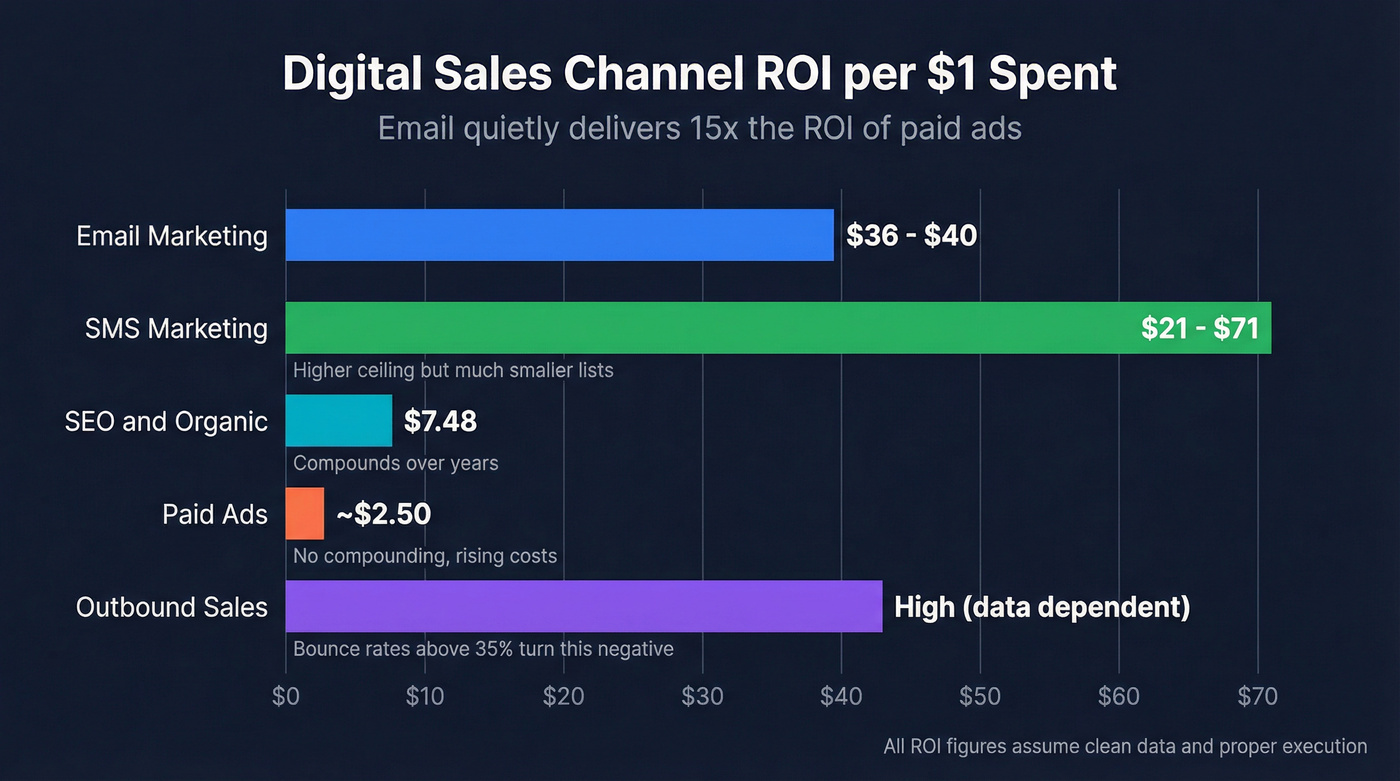
These ROI figures assume clean data. A 35% bounce rate on outbound turns that "high" into "negative" fast.
Every team wants the sexy TikTok strategy or the AI-powered ABM play. Meanwhile, email quietly delivers 15x the ROI of paid ads with a fraction of the complexity.
DTC vs. Marketplaces
| Factor | Your Own Store | Marketplace |
|---|---|---|
| Margins | Full control | ~8-20% fees |
| Customer Data | You own it | Platform controls most of it |
| Traffic | You earn it | Built-in audience |
| Brand Control | Complete | Limited |
| Personalization | Full (64% prefer it) | Minimal |
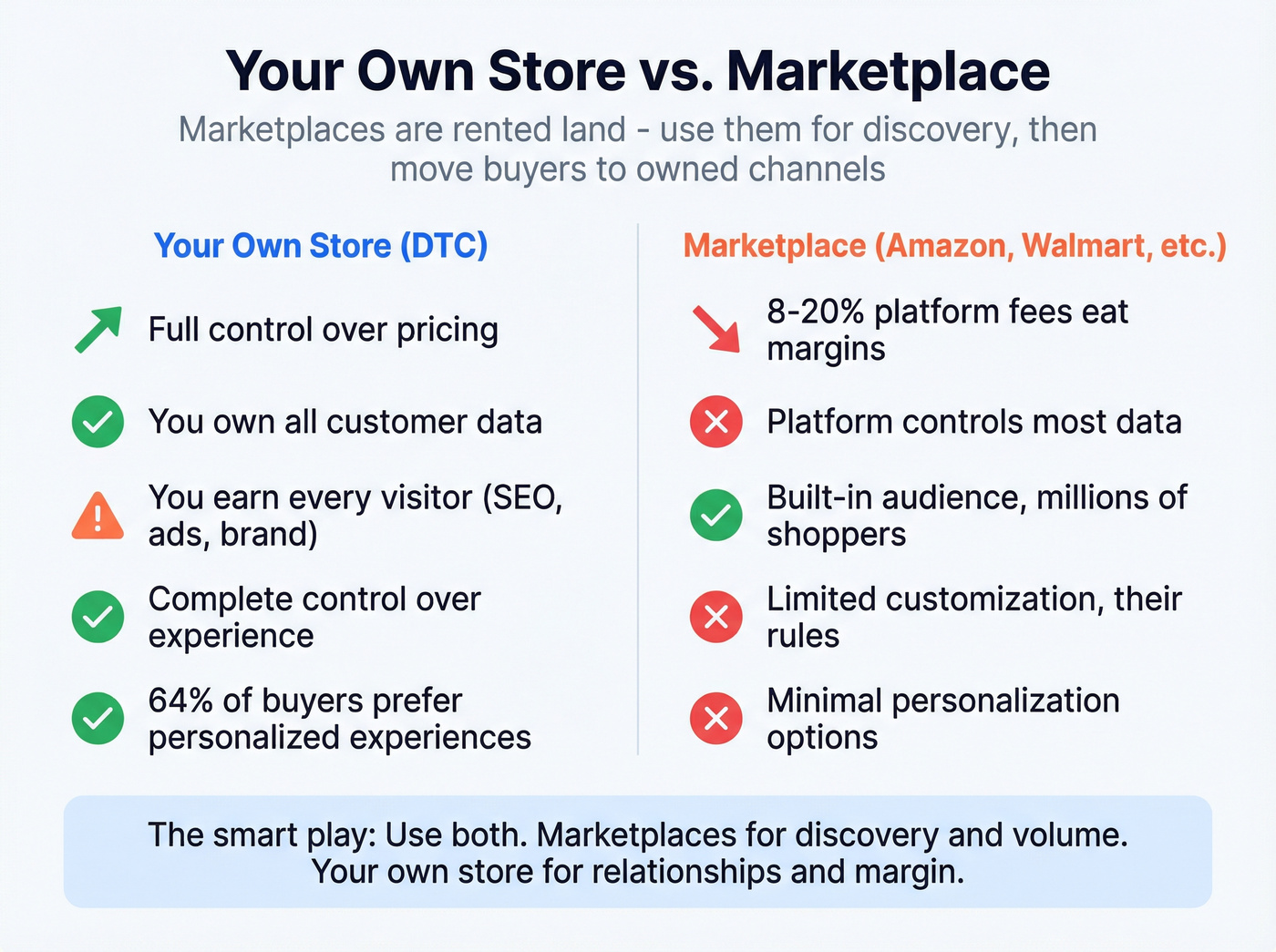
Marketplaces are rented land. The smart play is both: use marketplaces for discovery and volume, then invest in moving customers to your owned channels where you control the relationship.

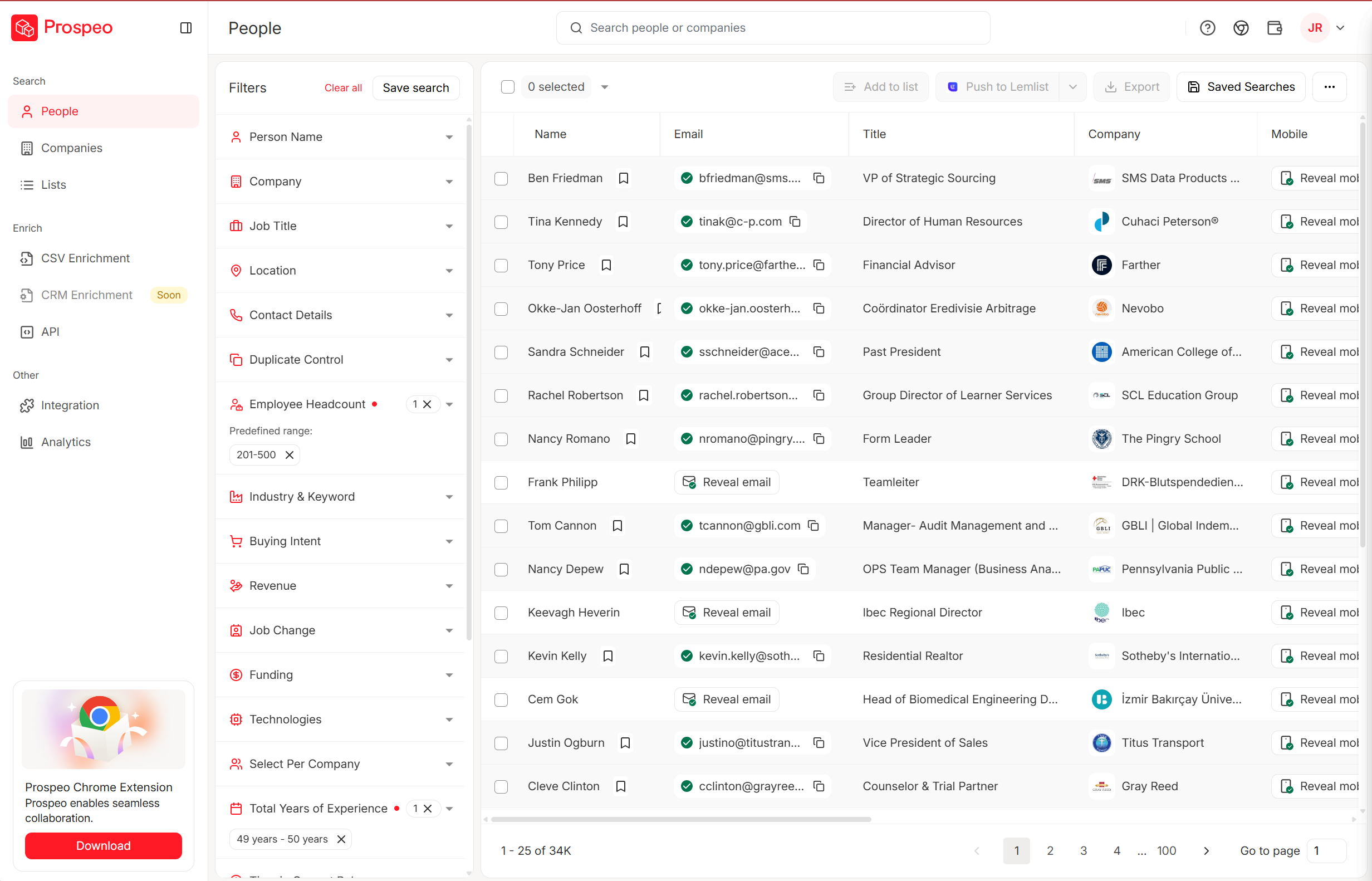
The article says it plainly: outbound lives and dies on data quality. A 35% bounce rate doesn't just waste sends - it torches your domain and every email channel with it. Prospeo's 5-step verification delivers 98% email accuracy, refreshed every 7 days. Teams using Prospeo cut bounce rates from 35%+ to under 4% and book 26% more meetings than ZoomInfo users.
Stop bleeding domain reputation. Start with data that actually connects.
How B2B Channels Differ
B2B operates under different rules. Longer buying cycles, larger deal sizes, more decision-makers.
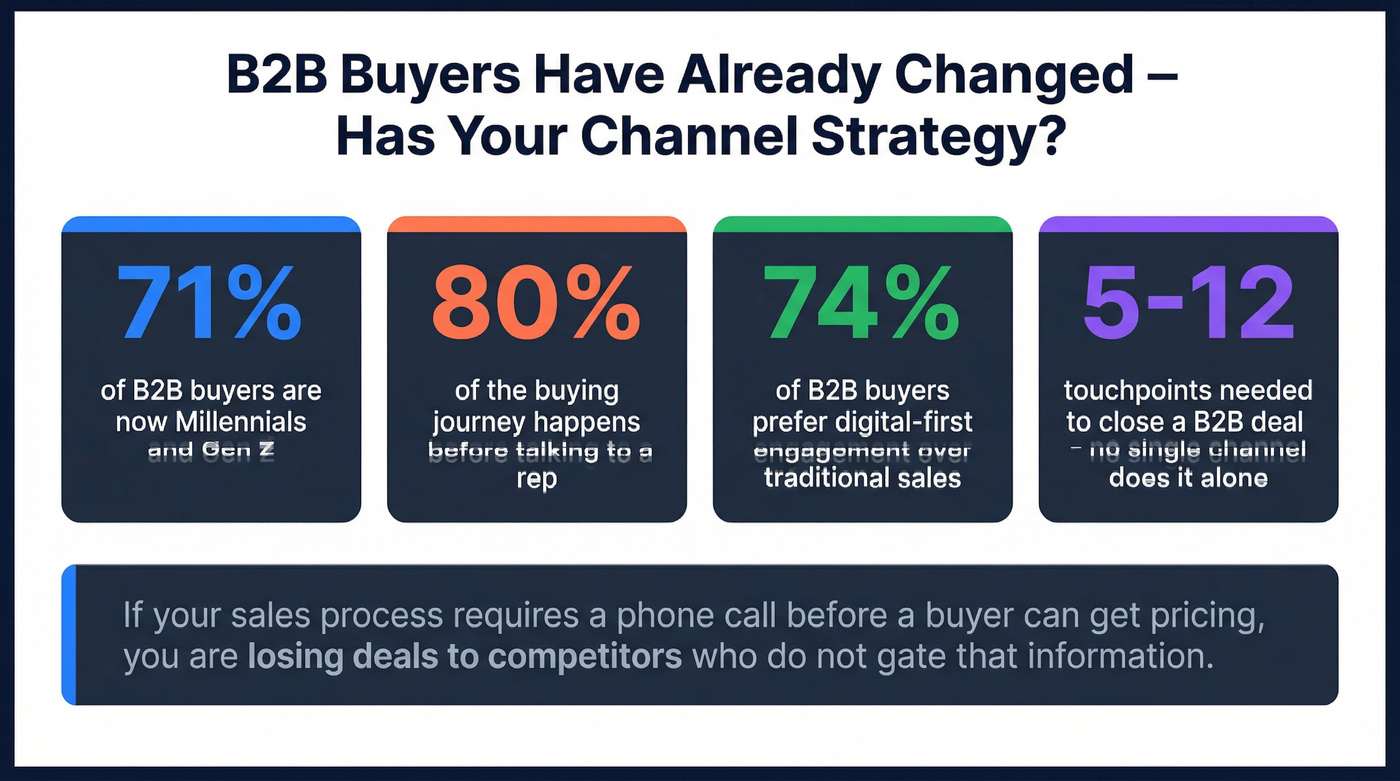
Millennials and Gen Z now make up 71% of B2B buyers. These buyers are 80% through the purchasing process before they ever talk to a sales rep. Gartner projected that by 2025, 80% of B2B sales interactions would occur in digital channels - and that shift has only accelerated into 2026. More than half of large B2B transactions, including deals over $1M, now flow through online channels. And 74% of B2B buyers prefer digital-first engagement over traditional sales interactions.
So which channels actually close B2B deals? Outbound email sequences, digital sales rooms, professional networking platforms, and self-serve product tours consistently outperform traditional field sales motions for mid-market accounts.
If your B2B sales process requires a phone call before a buyer can get pricing or a demo, you're losing deals to competitors who don't gate that information. Digital sales rooms, self-serve product tours, and ungated content are table stakes now.
Channel breadth matters too. Companies using 7+ marketing channels are 72% more likely to grow market share than those using fewer, per McKinsey research. But breadth without coordination is just noise. And 80% of B2B deals require 5-12 touchpoints to close - no single channel does the job alone.
Examples by Business Type
Not every channel fits every business. The right mix depends on your deal size, sales cycle, and buyer behavior.
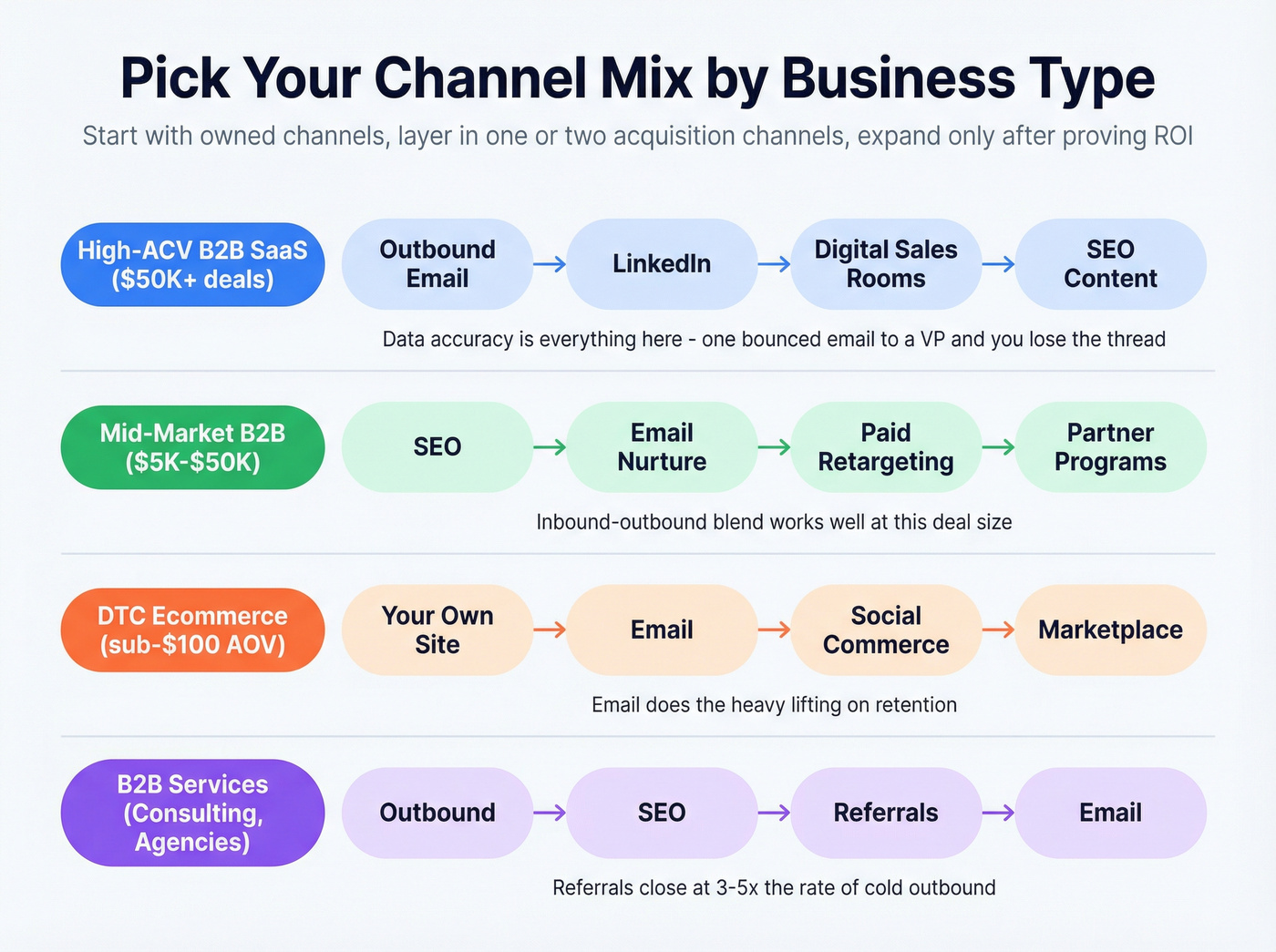
High-ACV B2B SaaS ($50K+ deals): Outbound email + professional networking + digital sales rooms + SEO content. These deals don't close from a single blog visit. You need multi-threaded outreach into buying committees, and the data feeding those sequences has to be accurate - one bounced email to a VP of Engineering and you've lost the thread.
Mid-market B2B ($5K-$50K deals): SEO + email nurture + paid retargeting + partner programs. The inbound-outbound blend works well here because deal sizes justify the CAC of paid channels while still being small enough to close without a 6-month sales cycle.
DTC ecommerce (sub-$100 AOV): Your own site + email + social commerce + marketplace presence. Email does the heavy lifting on retention. Social commerce handles discovery. The marketplace brings volume while you build brand.
B2B services (consulting, agencies): Outbound + SEO + referral/affiliate + email. In our experience, referrals close at 3-5x the rate of cold outbound for services businesses, but you can't scale referrals alone.
The pattern is consistent: start with owned channels, layer in one or two acquisition channels, and expand only after proving ROI.
The Bullseye Framework
Gabriel Weinberg's Bullseye framework gives you a clean three-step process for channel selection.
Ring 1 - Brainstorm everything. List every possible channel without filtering. Website, email, SEO, paid search, outbound, affiliates, events, partnerships, social, content, PR.
Ring 2 - Rank by fit. Score each channel on cost-effectiveness, reach into your target audience, and alignment with your sales motion. Move the top 5-6 into the middle ring.
Ring 3 - Test the top three. Run small experiments with clear success metrics. After 4-6 weeks, double down on winners and cut losers.
Let's make this concrete. A SaaS startup with $50K/month marketing budget brainstorms 12 channels, ranks email + SEO + outbound as the top three, tests for six weeks, discovers outbound drives 60% of qualified pipeline, and doubles down. That focus is what separates teams that scale from teams that spin their wheels.
Starting with more than three channels is a mistake we see constantly. Teams spread budget across seven channels, none get enough investment to work, and leadership concludes "digital doesn't work for us." It does. They just didn't give any single channel enough oxygen.
Omnichannel Mistakes (and the Cost)
Running channels as silos. Marketing owns email, sales owns outbound, product owns the website. Nobody coordinates. The buyer gets three different messages in the same week. IDC research flags this as one of the most common omnichannel failures in B2B.
Over-automating without personalization. Automation is a tool, not a strategy. Personalized campaigns outperform generic ones by 30%. Static nurture sequences that don't adapt to buyer behavior are sophisticated spam.
Keeping marketing intelligence separate from sales. When marketing sees intent signals but sales doesn't know about them, you're leaving money on the table. Signal-based activation - routing intent data to reps in real time - is what separates good omnichannel from performative omnichannel.
Launching everything at once. NetSuite's research is blunt: "taking on everything in one broad sweep is generally a recipe for failure." Nail one channel, add the next, connect them.
The Data Layer That Powers Every Channel
Every channel strategy article covers which channels to use. Almost none cover the data quality that makes those channels work. Poor data costs companies $12.9M annually on average. For outbound-heavy teams, the cost shows up as bounced emails, burned domains, and wasted rep time.
B2B deals require 5-12 touchpoints. If your first touchpoint bounces, you don't get a second one from that domain.
Real talk: we've watched teams build beautiful outbound sequences, nail the copy, pick the right channels - and still fail because a third of their emails bounced. Meritt was in that exact position before switching to Prospeo. Their bounce rate dropped from 35% to under 4%, and pipeline tripled from $100K to $300K per week. Snyk saw similar results - AE-sourced pipeline jumped 180%, generating 200+ new opportunities monthly, once they stopped burning sends on bad data.
Your channel strategy is only as good as the data feeding it. You can pick the right digital sales channels, build the perfect sequences, and nail the messaging - and still fail if 30% of your emails bounce.
You don't need more channels. You need the two or three you run to actually convert. Prospeo gives outbound teams 300M+ verified profiles, 125M+ direct dials, and intent data across 15,000 topics - so every email and call hits a real buyer who's actively in-market. All at $0.01 per email, no contracts.
Go deep on outbound with data that makes every send count.
FAQ
Which digital sales channel has the highest ROI?
Email marketing delivers $36-$40 per $1 spent, making it the highest-ROI channel for most businesses. SMS can reach $21-$71 in specific use cases like abandoned cart recovery. Paid ads average around $2.50 - the lowest among major channels.
How many channels should a small business start with?
Two or three. Your website plus email gives you an owned foundation with full margin control. Add one acquisition channel like SEO, outbound, or paid, and expand only after proving positive ROI over 4-6 weeks.
What's the difference between multichannel and omnichannel?
Multichannel means selling through multiple independent channels. Omnichannel means those channels share data and deliver a coordinated buyer experience - same messaging, shared customer history, unified reporting. Most companies claim omnichannel but operate multichannel.
How do I protect my domain reputation when running outbound?
Verify every email before sending - bounce rates above 5% degrade deliverability with inbox providers. Use a verification tool with catch-all handling, spam-trap removal, and honeypot filtering before you scale volume. Warm up new sending domains gradually.
What are the best B2B digital sales channels in 2026?
Outbound email, professional networking platforms, SEO-driven content, digital sales rooms, and partner programs consistently perform best for B2B. Enterprise accounts typically require outbound plus multi-stakeholder sales rooms, while mid-market deals often close through inbound content and email nurture sequences.