Direct Dials vs Mobile Numbers: Which Actually Gets Answered?
ScaleX research compared three phone number types head-to-head. Work mobile numbers connected at roughly 7x the rate of desk direct dials. So the question isn't which type is "better" - it's how to use both without wasting dials or catching fines.
The data is clear: mobile numbers connect at a 10:1 dial-to-connect ratio vs 73:1 for desk direct dials. Direct dials still matter for compliance simplicity and reaching execs. But the real variable underneath everything? Data freshness. Stale numbers of either type go straight to voicemail.
What's the Difference?
A direct dial is a company-assigned phone number that rings a specific person's desk or VoIP line without routing through a receptionist. It's tied to a physical location or office setup. When someone changes jobs or goes remote, that number often dies.
A mobile number is tied to a cellular device. It travels with the person - home office, airport, coffee shop. That portability is exactly why mobiles connect more often in a hybrid-work world, and it's why we've seen teams shift their budgets toward mobile data over the past two years.
| Direct Dial | Mobile Number | |
|---|---|---|
| Assigned by | Employer / company | Carrier / individual |
| Location-dependent? | Yes | No |
| Survives job change? | Rarely | Usually |
| Typical use | Office/desk calls | Anywhere reachable |
Connect Rate Benchmarks
The gap is stark:
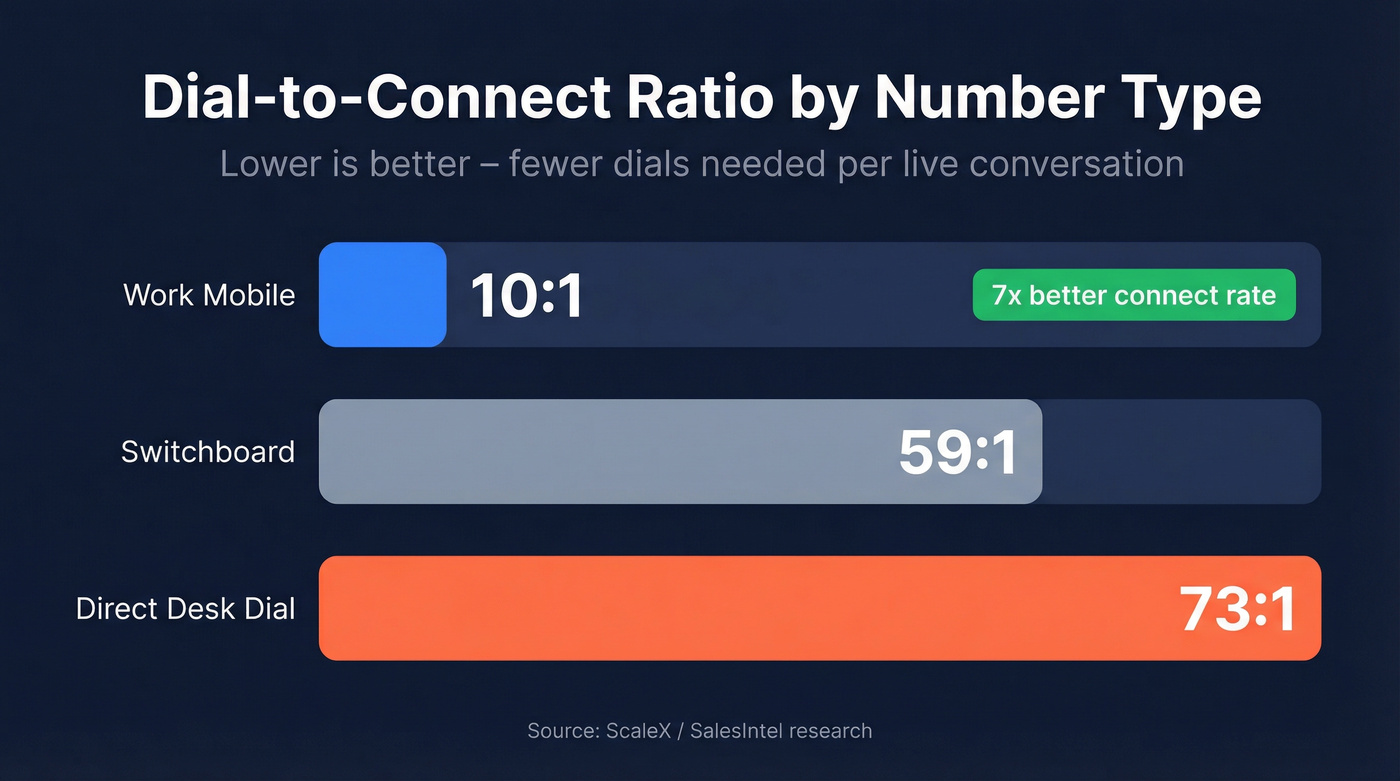
| Number Type | Dial-to-Connect Ratio |
|---|---|
| Work mobile | 10:1 |
| Switchboard | 59:1 |
| Direct desk dial | 73:1 |
That ScaleX data was collected early in COVID, when many desk phones weren't routed to work-from-home setups - which means the gap may have narrowed slightly since then. ZoomInfo's data shows direct dials improve connections 4-6x vs not having them at all, but that sidesteps the mobile comparison entirely.
Local presence dialing also matters here: calls from local area codes answer at 27.5% vs 7% for toll-free numbers. The number you're calling from can be as important as the number you're calling to.
For broader context, a recent analysis of 55,000+ dials found a 16.6% connection rate when using quality data. Number type matters, but data quality is the multiplier underneath it all.
Why Direct Dials Still Matter
Don't write them off.
Cognism's State of Cold Calling 2026 Report found that with the right contact data, reps averaged just 1.55 dials to reach a prospect - compared to the 8-18 dials most studies cite. That reflects pre-screened contacts, not raw direct dials from a bulk database. It's a data-quality advantage, not a number-type advantage. In that same dataset, CEOs and executives made up 11.91% of conversations - the most likely group to pick up.
From a compliance standpoint, live calls to business lines don't create the same TCPA exposure as automated calls or texts to mobile numbers. For teams running high-volume outbound without sophisticated consent tracking, direct dials are the safer path.

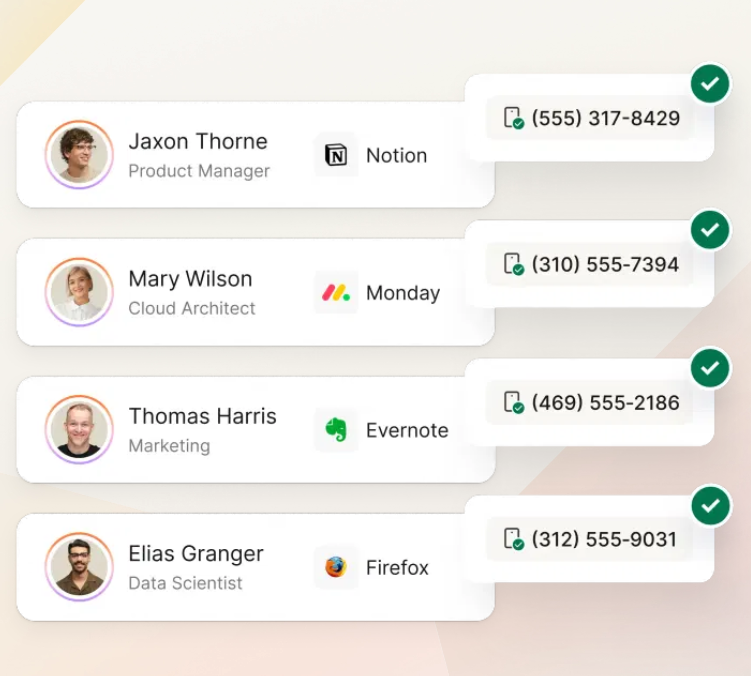
Stale numbers kill connect rates and torch your caller reputation. Prospeo refreshes 125M+ verified mobile numbers every 7 days - not every 6 weeks - with a 30% pickup rate across all regions. Pair that with 143M+ emails at 98% accuracy, and your hybrid calling playbook actually works.
Stop compounding the damage. Dial numbers verified this week.
The Compliance Gap
Here's the thing: calling someone's mobile isn't the same legal territory as calling their office line. Mobiles connect far more often, but some prospects find unsolicited cell calls invasive. The legal risk is real too.
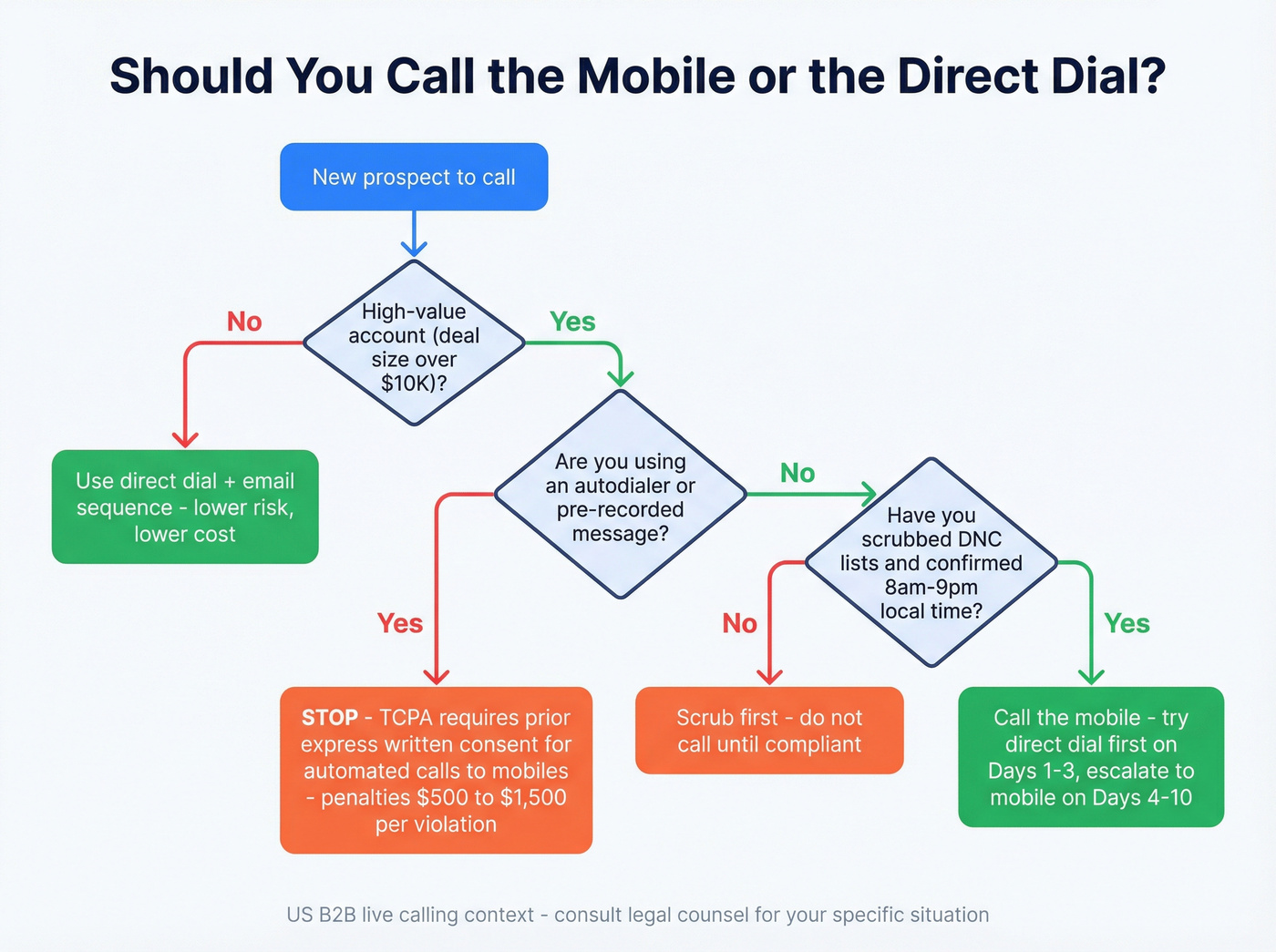
Use mobiles when:
- You're making live, manual B2B calls (generally permitted in the US)
- You've scrubbed against DNC lists and respect 8am-9pm local time windows
- The prospect is high-value enough to justify the extra compliance diligence
Skip mobiles when:
- You're using an autodialer or pre-recorded messages - TCPA requires prior express written consent for automated calls to cell phones, with penalties of $500-$1,500 per violation
- The number might be a mixed-use personal cell, which is treated as a consumer line under TCPA even in B2B contexts
- You're calling into the UK without TPS scrubbing - the ICO fined one company £100,000 for 614,342 unsolicited calls to registered numbers
If your average deal size is under $10K, you probably don't need mobile numbers at all. Direct dials plus a solid email sequence will get you there without the TCPA headache. Save mobile dials for the accounts that actually justify the compliance overhead.
Data Freshness Matters More Than Number Type
Most of this debate misses the variable that actually drives outcomes: when the number was last verified.
Data decay is accelerating. Numbers that were valid six months ago may now be disconnected, reassigned, or flagged as spam. And here's what frustrates us about the industry - carrier spam-flagging is driven by dialing patterns and low answer rates, so dialing stale numbers doesn't just waste time, it actively damages your caller reputation for future dials. It's a compounding problem.

The Hybrid Calling Playbook
The best-performing teams don't choose between desk numbers and cell numbers. They use both in a structured sequence. Multi-channel outreach (phone + email + social) drives results up to 287% higher than single-channel campaigns, and pre-call warming via email or social can lift subsequent call connect rates 20-40%.
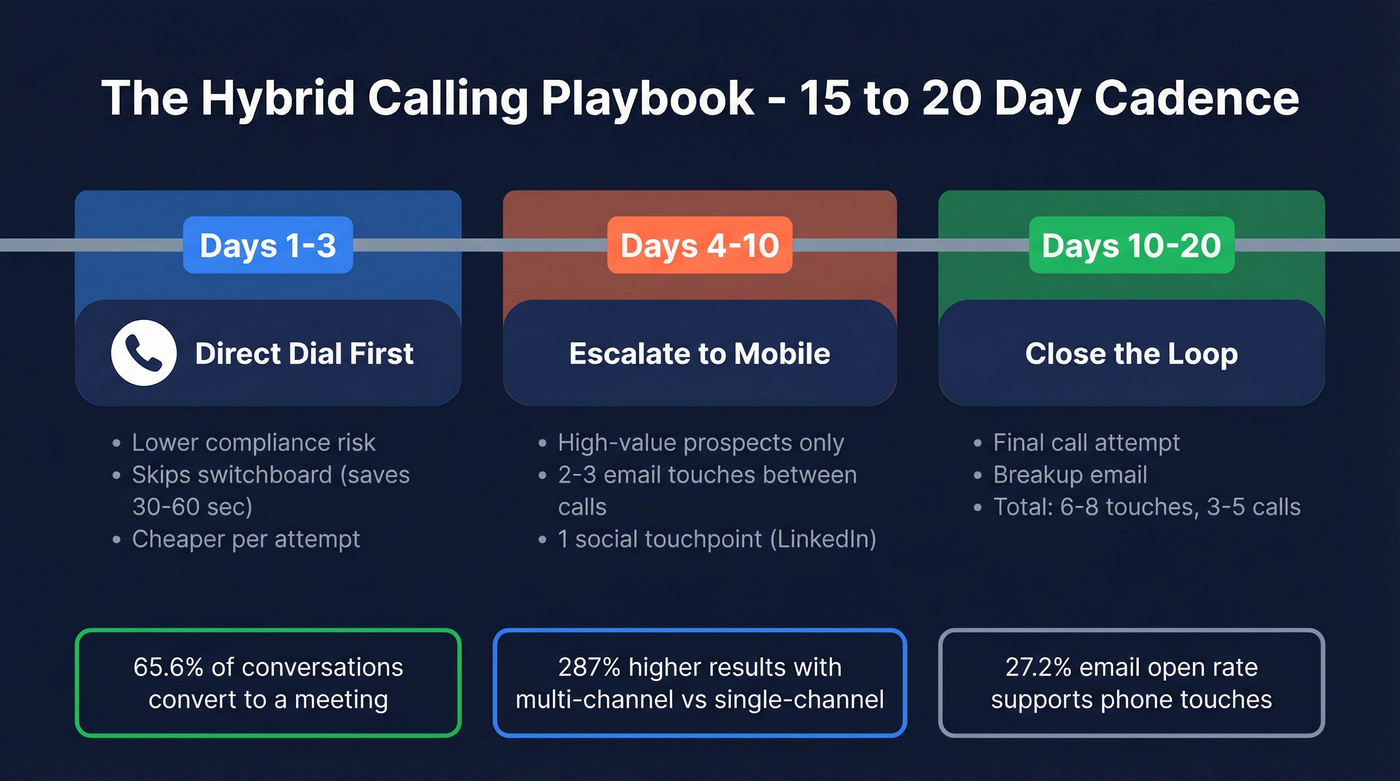
Once you actually reach someone, roughly 65.6% of conversations convert to a meeting or meaningful next step. The bottleneck is connects, not persuasion.
Here's the cadence that works in our experience:
- Days 1-3: Try the direct dial first. Lower compliance risk, and if they're in-office, you'll connect fast - a direct dial skips the switchboard entirely, saving 30-60 seconds per attempt.
- Days 4-10: Escalate to mobile for high-value prospects who didn't pick up at the desk. Layer in 2-3 email touches and a social touchpoint between call attempts.
- Total: 15-20 days, 6-8 touches, 3-5 call attempts.
Email steps in the cadence typically see 27.2% open rates and 2.9% reply rates, which is why the phone steps carry the conversion weight. The logic is simple: direct dials first (cheaper, safer), mobiles for the ones who matter most.
If you want a deeper framework for the phone side, start with a B2B cold calling guide and a cold call checklist before you scale volume.
Where to Get Verified Numbers
Let's be honest - the provider you choose matters less than the freshness of their data. That said, there are real differences worth knowing.
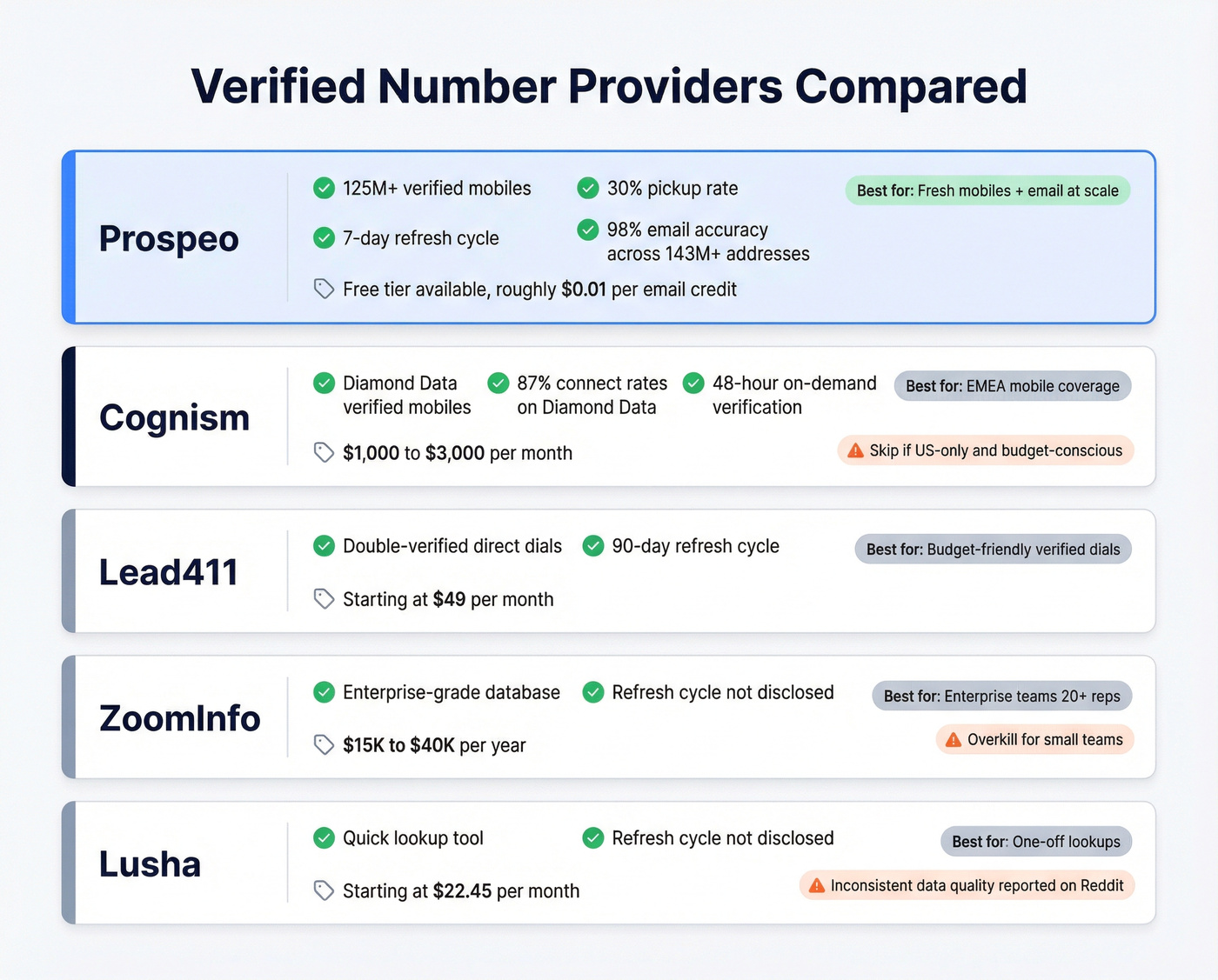
Prospeo's Mobile Finder covers 125M+ verified mobile numbers globally with a 30% pickup rate and a 7-day refresh cycle, so you're not dialing numbers that expired last quarter. Email accuracy runs 98% across 143M+ verified addresses, which means your multi-channel sequences don't bounce either. Pricing is credit-based and transparent: roughly $0.01 per email, 10 credits per mobile number. There's a free tier (75 emails + 100 Chrome extension credits/month), no contracts, and self-serve onboarding.
If you're evaluating vendors, it helps to compare sales prospecting platforms and sanity-check pricing against Lead411 pricing and Cognism pricing.
| Provider | Best For | Verified Mobiles | Refresh Cycle | Starting Price |
|---|---|---|---|---|
| Prospeo | Fresh mobiles + email | 125M+ (30% pickup) | 7 days | Free; ~$0.01/email |
| Cognism | EMEA mobile coverage | Diamond Data (87% connect rates) | 48-hr on-demand | ~$1,000-$3,000/mo |
| Lead411 | Double-verified dials | Available | 90-day cycle | $49/mo |
| ZoomInfo | Enterprise all-in-one | Available | Not disclosed | ~$15K-$40K/yr |
| Lusha | Quick lookups | Available | Not disclosed | $22.45/mo |
Skip Cognism if you're US-only and budget-conscious - their strength is EMEA coverage and their pricing reflects it. ZoomInfo is overkill for teams under 20 reps; you're paying for an ecosystem most small teams won't use. The consensus on r/sales is that Lusha's data quality has been inconsistent lately, though it's still fine for quick one-off lookups.
Your hybrid cadence needs both direct dials and mobiles - but only if the data is fresh. Prospeo's Mobile Finder delivers verified numbers on a 7-day refresh cycle at roughly $0.01 per credit. No contracts, no stale data, no spam-flagged dials burning your caller ID.
Fresh mobiles, fresh direct dials, one platform. Start for free today.
FAQ
Are direct dials the same as mobile numbers?
No. A direct dial is a company-assigned number that rings a specific person's desk or VoIP line without going through a switchboard. A mobile number is tied to a personal cellular device. Direct dials are location-dependent and rarely survive a job change; mobiles travel with the person and connect at a 10:1 ratio vs 73:1 for desk lines.
Is it legal to cold call someone's mobile number?
In the US, live agent B2B calls to mobiles are generally permitted under TCPA. Automated calls or texts to cell phones require prior express written consent, with penalties of $500-$1,500 per violation. Always scrub against DNC lists and respect 8am-9pm local time windows.
What's a good free tool for finding verified mobile numbers?
Prospeo offers a free tier with 75 email credits and 100 Chrome extension credits per month - enough to test mobile and email lookups on real prospects. Lead411 starts at $49/mo for double-verified dials. Lusha offers limited free lookups. Prioritize providers that refresh data weekly, not monthly - freshness matters more than database size.