

The Only Cold Call Checklist You Need in 2026
It's 10:15 a.m. on a Wednesday. You've made 20 dials - fourteen hit voicemail, three were disconnected, two were the wrong person, and one hung up before you finished your name. That's not a skill problem. It's a data problem, and no cold call checklist fixes it unless it starts with your list.
The average cold-calling success rate sits at 2.3%, yet 49% of buyers still prefer a cold call over other first-touch channels. Top teams hit 5-8% by tightening up list quality, timing, and talk tracks. We've watched this play out across thousands of outbound campaigns - the gap between average and great almost always comes down to what happens before the dial.
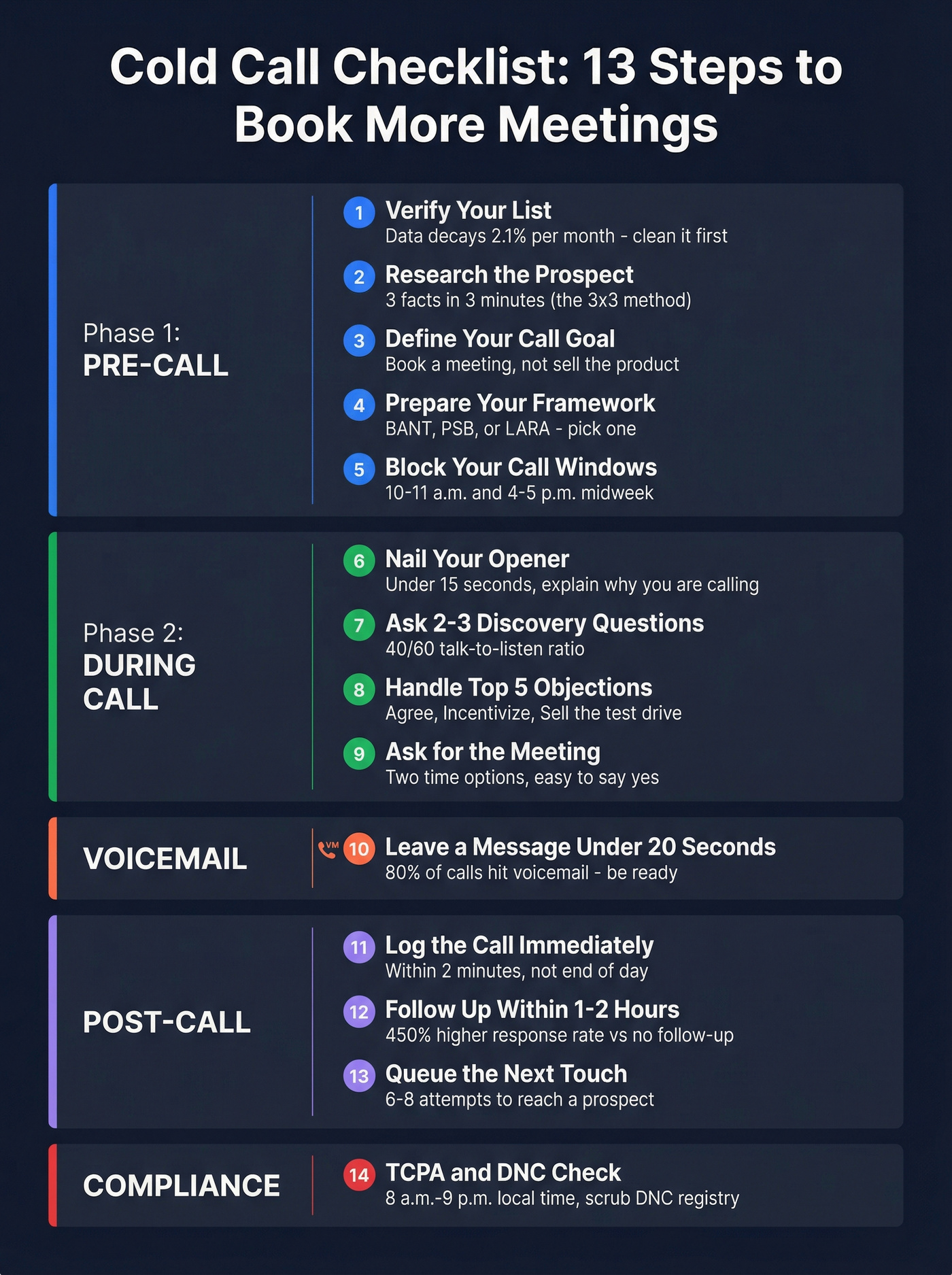
Quick-Reference Checklist
Thirteen steps, five phases: pre-call, during-call, voicemail, post-call, compliance. Reps lose 27.3% of their productive time to bad contact data. Fix your list first, then fix everything else.
Pre-Call Preparation
Step 1: Verify Your List
B2B data decays at roughly 2.1% per month - that's 22.5% of your list going stale every year. Ask any rep who's been in the trenches: the biggest time-suck isn't rejection. It's dialing numbers that don't connect.
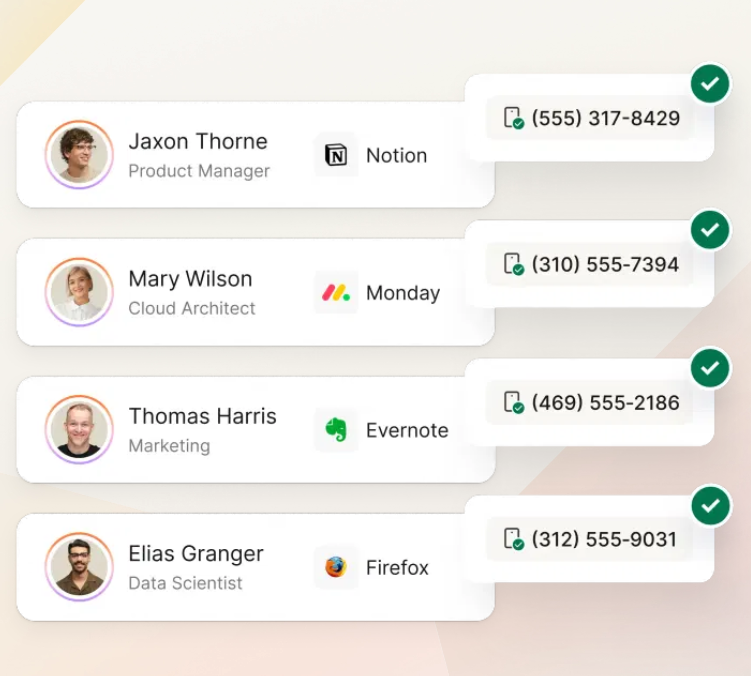
Before you pick up the phone, run your contacts through a verification tool. This single step is the foundation of any serious calling process. Prospeo handles this well - 98% email accuracy, 125M+ verified mobile numbers, and a 7-day refresh cycle that keeps data current between calling blocks. If you want to go deeper on list hygiene, start with B2B contact data decay and prospect data accuracy.
Step 2: Research the Prospect
Use the 3x3 method: find 3 relevant facts in 3 minutes. Their role, a recent company event like funding or a product launch, and something that connects to the problem you solve. Don't spend 15 minutes scrolling through their social profiles - you're making a cold call, not writing a biography.
For enterprise deals, stretch to five minutes. For SMB, two is plenty. This kind of pre-call research separates reps who book meetings from reps who burn through lists and wonder why nothing's working.
Step 3: Define Your Call Goal
You're booking a meeting, not selling the product. Every word out of your mouth should move toward one outcome: "Does next Tuesday at 2 work?" If you need tighter language for the ask, use this how to ask for an appointment framework.
Step 4: Prepare Your Framework
Frameworks beat scripts every time. A memorized script makes you sound like a robot the moment someone goes off-track. Pick one and internalize the structure:
- BANT - Budget, Authority, Need, Timeline. Lead with Need.
- PSB - Problem, Solution, Benefit. Lead with their pain.
- LARA - Listen, Acknowledge, Respond, Ask. Best for objection-heavy calls.
Step 5: Block Your Call Windows
The data is consistent: 10-11 a.m. and 4-5 p.m. midweek are your best windows. Wednesday and Thursday outperform every other day. Block these on your calendar like meetings - they're more valuable than most meetings you attend. If you're building a repeatable system around this, map it into an outbound calling strategy.
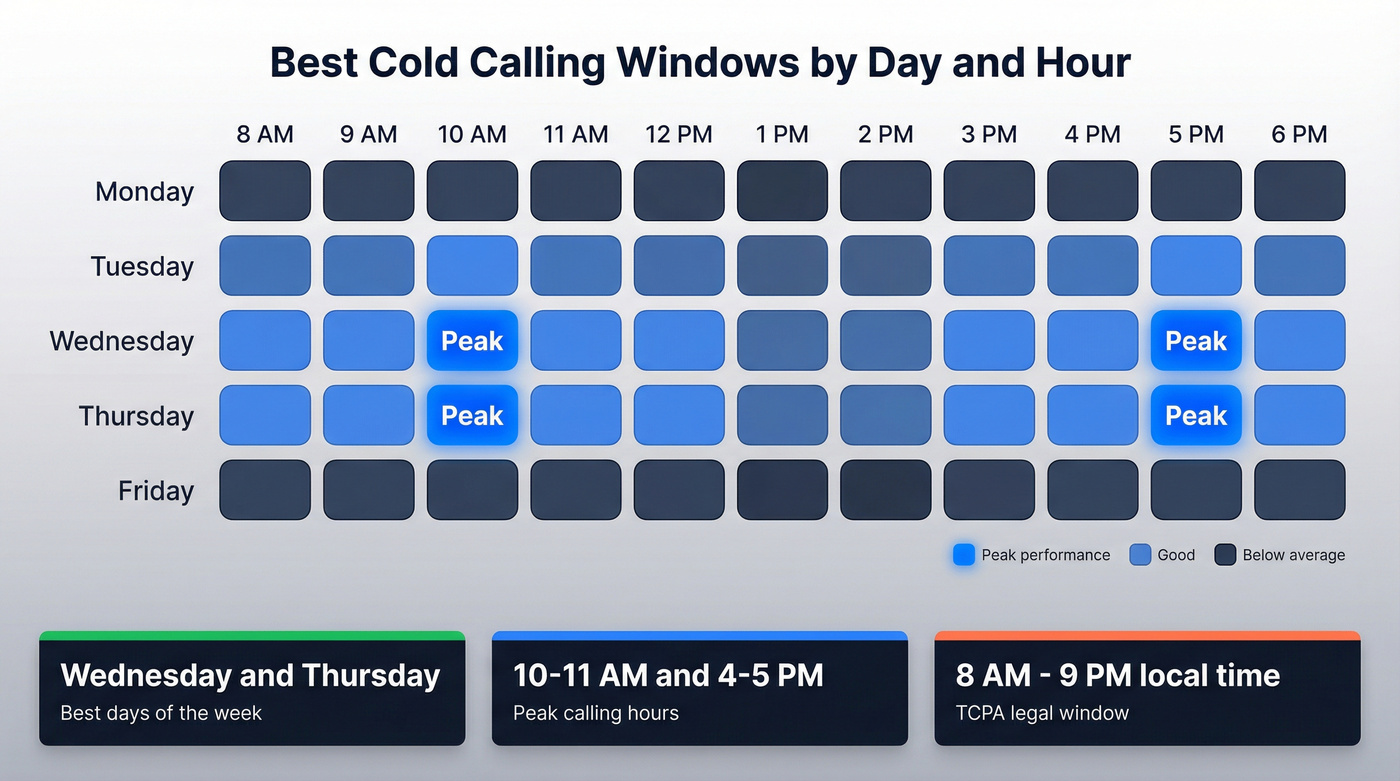
TCPA telemarketing hours are 8 a.m.-9 p.m. in the prospect's local time zone. Know your time zones before you start dialing.
During the Call
Step 6: Your Opener - Under 15 Seconds
You've got about 15 seconds before the prospect decides to stay or hang up. Explaining why you're calling makes you 2.1x more likely to succeed. Three styles that work:
- Permission opener: "Hey Sarah, this is Mike from [Company]. I know I'm calling out of the blue - do you have 27 seconds for me to tell you why?"
- Trigger opener: "Sarah, I saw [Company] just closed a Series B. Usually when teams scale that fast, [specific problem] becomes a bottleneck - is that on your radar?"
- Problem-first opener: "Sarah, most VPs of Sales I talk to are dealing with [specific pain]. Curious if that's hitting your team too."
Here's what NOT to do: don't open with "Is this Sarah?" - assume identity. Don't ask "Did I catch you at a good time?" - that decreases meeting chances by 40%. And don't pitch the product. Sell the next step. For more openers and what actually works, see cold calling advice.
Step 7: Ask 2-3 Discovery Questions
Your job is to listen, not lecture. Aim for a 40/60 talk-to-listen ratio. Successful cold calls average 5:50 in duration; failed ones average 3:14. The difference isn't that winners talk longer - it's that they get the prospect talking. Two sharp questions that surface pain beat a five-minute monologue every time. If you want a bank of prompts, pull from these cold call qualifying questions.
Step 8: Handle the Top 5 Objections
An analysis of 300M+ cold calls by Gong found that five objections account for 74% of all pushback. They break into three buckets: dismissive at 49.5%, situational at 42.6%, and existing-solution at 7.9%.
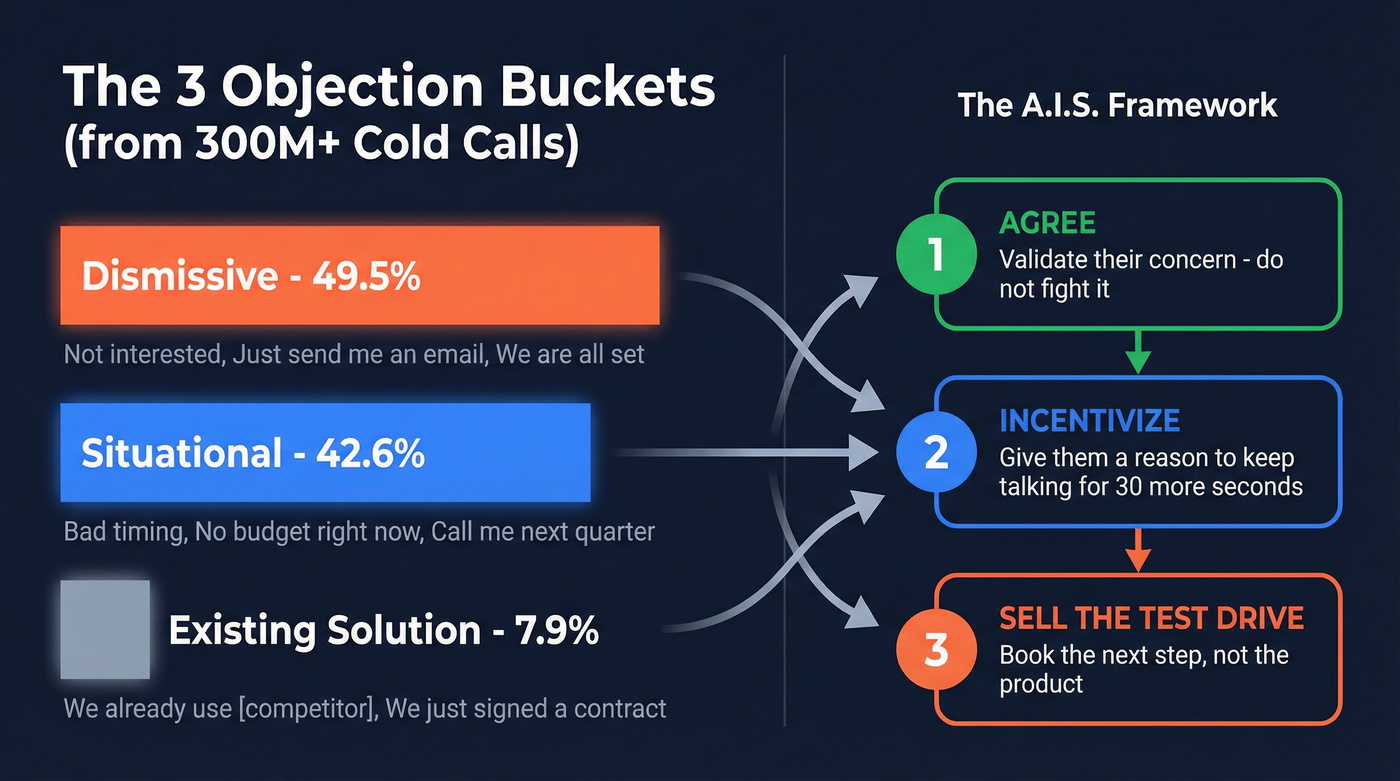
The framework that works across all three: Agree with the objection, Incentivize continued conversation, and Sell the test drive - book the next step without hard-selling on the call. In our experience, reps who practice this loop on the five most common objections handle 90%+ of real-world pushback without freezing up. If you want a deeper breakdown, use this guide to types of objections.
Step 9: Ask for the Meeting
Not the sale. Not "let me send you some info." A specific time.
"I'd love to walk you through how we handle [problem] in 20 minutes. Does Thursday at 3 work, or is next week better?" Two options. Easy to say yes. If you need more options for the follow-up ask, borrow from these schedule meeting email examples.

Step 1 of any cold call checklist is a verified list - and it's where most reps fail. Prospeo's 125M+ verified mobile numbers and 7-day data refresh mean you stop burning call blocks on disconnected lines and wrong contacts. Reps using Prospeo data see 30% pickup rates vs. the 12.5% industry average.
Dial real decision-makers instead of dead numbers.
If You Hit Voicemail
80% of cold calls reach voicemail. Keep your message under 20 seconds. Leave at least 3 voicemails across your cadence - persistence yields a 22% callback lift. Name the prospect, state one specific reason you're calling, and leave your number slowly. For tighter messaging, use these cold call voicemail scripts.
One thing worth flagging for 2026: Apple's iOS voicemail transcription and call-screening means your message will likely be read on-screen before it's ever listened to. Speak clearly, lead with relevance, and assume every word matters more than it used to.
Post-Call Follow-Up
Step 10: Log the Call Immediately
Within 2 minutes. Not at the end of the day. Disposition, key pain points, objections raised, next step agreed. If you wait until 5 p.m. to log 40 calls, you'll remember maybe three of them clearly. The rest becomes fiction. If you're trying to operationalize this, build it into your cold calling CRM integration.
Step 11: Follow Up Within 1-2 Hours
Over 30% of leads never receive a single follow-up. That's staggering. Following up within 1-2 hours yields 450% higher response rates compared to never following up. Reference something specific from the call. Keep it to three sentences.
Step 12: Queue the Next Touch
It takes 6-8 attempts to reach a prospect. One call and one email isn't a cadence - it's a coin flip. Schedule your next touch before you move to the next dial. If you want a clean structure, start from a proven sales cadence example.
B2B data decays at 2.1% per month, and you just read that reps lose 27.3% of productive time to bad contacts. Prospeo refreshes every 7 days - not every 6 weeks like competitors - so your cold call list stays current between Monday and Friday calling blocks. At $0.01 per email, cleaning your list costs less than one wasted dial.
Stop dialing decay. Start dialing decision-makers.
Compliance Quick-Check
Let's be honest - most reps don't think about TCPA until something goes wrong. TCPA litigation surged roughly 95% in 2025, and it isn't slowing down. Your minimum checklist:
- Call only between 8 a.m. and 9 p.m. in the prospect's local time zone. Some states restrict further - Connecticut is 9 a.m.-8 p.m.
- Scrub your list against the National Do Not Call Registry and maintain an internal DNC list
- Penalties run $500 per violation, up to $1,500 for willful violations, and up to $43,792 per DNC infraction
- Watch for state mini-TCPA laws - 15+ states now have their own rules
B2B live-agent calls to business lines are less restricted, but calling a mobile number used for work can be treated as a consumer line. Don't assume you're exempt.
Cold Call Benchmarks for 2026
| Metric | Benchmark |
|---|---|
| Dials per day | 33-35 |
| Connects per day | ~6-7 |
| Calls per appointment | 209 |
| Hours per appointment | 7.5 |
| Connect-to-meeting rate | 2.3% avg, 5-8% top |
| Successful call duration | 5:50 vs 3:14 failed |
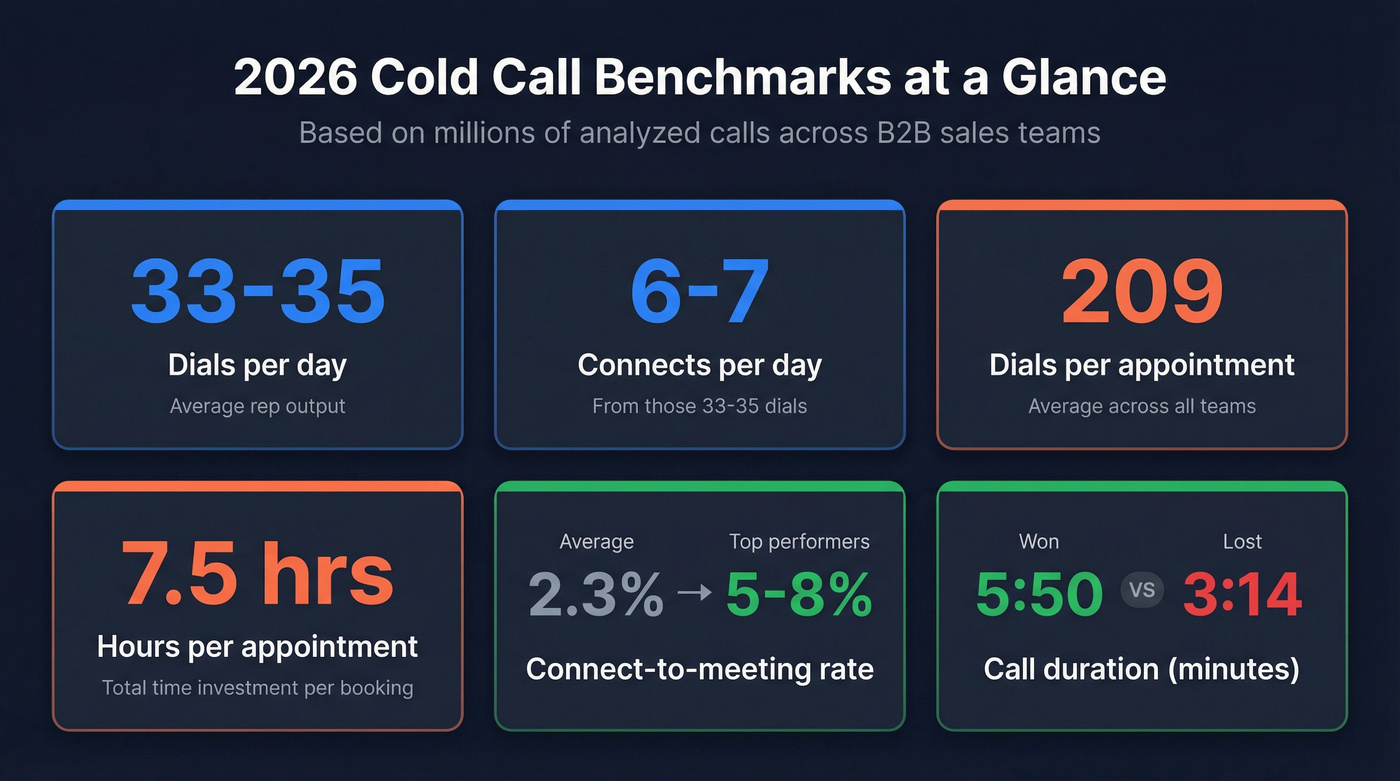
Skip this table if you're already tracking your own numbers - your actuals matter more than industry averages. But if you're building a new team or benchmarking for the first time, these are solid baselines drawn from multiple studies across millions of calls.
FAQ
How many cold calls does it take to book one meeting?
About 209 dials on average. That number drops significantly with verified contact data and a structured pre-call process. Teams using verified mobile numbers with a 30% pickup rate have cut dials-per-meeting nearly in half just by eliminating dead numbers and wrong contacts from their lists.
What's the best time of day to cold call?
10-11 a.m. and 4-5 p.m. midweek consistently outperform all other windows. Wednesday and Thursday are the strongest days. Block these hours on your calendar and protect them from internal meetings - we've seen reps lose their best calling windows to "quick syncs" that could've been emails.
How do I keep my call list accurate?
B2B data decays at 2.1% per month, so a list older than 30 days is already degrading. Use a verification tool with a short refresh cycle and re-verify before every calling block. A 10-minute upload saves hours of wasted dials, and the consensus on r/sales is that list hygiene is the single highest-ROI activity most reps ignore.