What the Data Actually Says
A sales rep I know spent an entire quarter grinding through a purchased list - 200 dials a day, getting cussed out every ten calls, booking maybe two meetings a week. Then his marketing team started routing inbound demo requests to the same team. Same reps, same scripts, same CRM. Close rate jumped from 2% to 40% overnight. The calls didn't change. The leads did.
That's the hot call vs cold call gap in a nutshell. But the real story is more nuanced than "hot good, cold bad."
The Short Version
Cold calls convert at roughly 2.35%. Hot calls - where the prospect has requested a demo, visited your pricing page, or otherwise signaled buying intent - close at 30-50%. That gap is real, but it's misunderstood.
Here's what most people get wrong: they treat this as a binary choice. Cold or hot. In reality, the hidden variable is data quality, not call type. Calling a disconnected number kills your hot call just as fast as your cold one. A well-researched cold call to a verified direct dial outperforms a "hot" callback to a generic office line every time.
If you only remember one thing: respond to hot leads within 5 minutes (you're 21x more likely to qualify them) and cold call on Tuesdays at 10 AM with verified contact data. Everything else is optimization.
What Makes a Call "Hot" or "Cold"
The distinction is simpler than most sales blogs make it.

A cold call targets a complete stranger - someone who's never heard of you, never visited your site, never opened your emails. You're interrupting their day with zero context. A warm call targets someone who knows your brand - maybe they downloaded a guide, attended a webinar, or got referred by a colleague. It's the middle ground: reaching out to someone who has some familiarity with you but hasn't signaled they're ready to buy. A hot call targets someone actively ready to buy - they've requested a demo, visited your pricing page three times this week, or flat-out asked for a proposal.
These map cleanly to the sales funnel. Cold calls live at the top (awareness). Warm calls sit in the middle (consideration). Hot calls happen at the bottom (decision).
The practical difference? Intent. A cold prospect doesn't know they have a problem you solve. A warm prospect knows but isn't ready. A hot prospect is waiting for someone to close them.
| Attribute | Cold Call | Warm Call | Hot Call |
|---|---|---|---|
| Prior contact | None | Some awareness | Active interest |
| Funnel stage | TOFU | MOFU | BOFU |
| Buyer mindset | "Who are you?" | "I've heard of you" | "When can we start?" |
| Personalization | Minimal | Moderate | Highly tailored |

You just read that 209 dials produce one cold call appointment - and 72% never reach a human. Bad data is the silent killer. Prospeo's 125M+ verified mobile numbers deliver a 30% pickup rate, and 98% email accuracy means your warm-up sequences actually land.
Cut your dials-per-meeting in half with contact data that connects.
The Numbers: Hot Calls vs Cold Calls Side by Side
Here's where opinions end and math begins.

| Metric | Cold Call | Warm Call | Hot Call |
|---|---|---|---|
| Conversion rate | 2.35% | 10-30% | 30-50% |
| Dials per appointment | 209 | ~40-60 | ~5-15 |
| Successful call length | 5:50 | ~6-8 min | ~8-15 min |
| Voicemail rate | 80% | ~40% | ~15% |
| Cost per lead | Low | Medium | Higher (nurturing) |
| Scalability | High | Medium | Limited by pipeline |
That 209-dials-per-appointment number for cold calling comes from Bridge Group research. Think about that for a second: 7.5 hours of dialing for one meeting. And 72% of those calls don't reach a human - most go straight to voicemail.
But cold calling isn't uniformly terrible. Conversion rates vary wildly by industry:
| Industry | Cold Call Rate |
|---|---|
| Janitorial | 2.85% |
| Business Services | 2.61% |
| Consulting | 2.43% |
| Real Estate | 2.20% |
| Insurance | 2.12% |
| Financial Services | 1.54% |
| Tech Solutions | 0.95% |
| Industrial Equipment | 0.88% |
If you're selling janitorial services, cold calling is 3x more effective than if you're selling industrial equipment. Context matters. The average successful cold call lasts 5 minutes and 50 seconds. Failed calls? Three minutes and 14 seconds. That extra two and a half minutes is where deals get made.
How to Know If a Lead Is Hot, Warm, or Cold
Most teams don't actually have a system for this. They eyeball it. "Oh, they opened an email - that's warm." No. You need a scoring framework with real numbers that updates in real time as prospects interact with your brand.
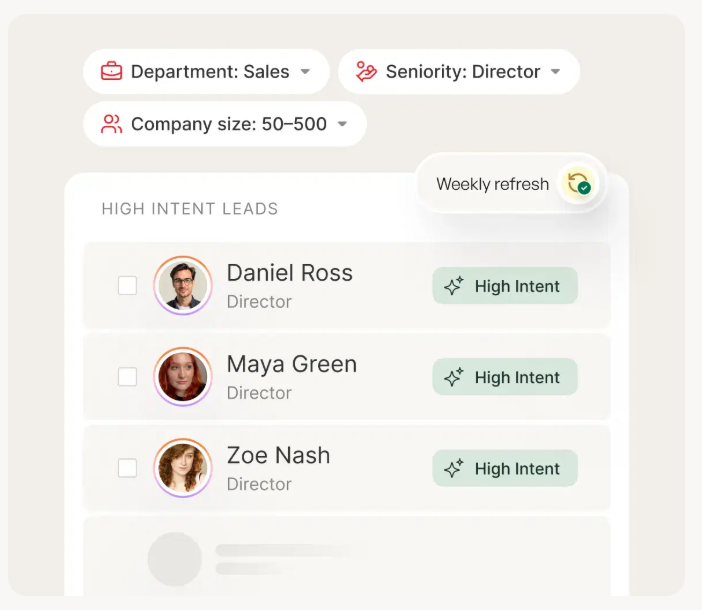
A simple lead scoring model that works:
Low-intent signals (10-15 points):
- Downloaded a guide or whitepaper: +10 points
- Attended a webinar: +15 points
- Interacted with chatbot asking general questions: +15 points
High-intent signals (20-30 points):
- Multiple website visits in a single month: +20 points
- Replied to a marketing email with intent: +20 points
- Visited your pricing page: +25 points
- Requested a product demo: +30 points
- Signed up for a free trial: +30 points
Temperature thresholds:
- 100+ points = Hot lead. Call immediately. These people are shopping right now and need a rep on the phone within minutes.
- 50-75 points = Warm lead. Needs nurturing. Add to a cadence.
- Below 50 = Cold lead. Outbound territory. Research before you dial.
67% of lost sales are attributed to failure to properly qualify leads. And 61% of B2B marketers send all leads directly to sales - yet only 27% of those leads are actually qualified. That's a massive waste of rep time.
Score your leads before routing them. It's not optional.
The 5-Minute Rule: Why Hot Calls Have an Expiration Date
Hot leads spoil faster than you think.

You're 21x more likely to qualify a lead contacted within 5 minutes versus 30 minutes. Respond within one minute? 391% higher conversions. And 78% of customers buy from the first business to respond.
Now here's the painful part: the average B2B company takes 42 hours to respond to an inbound lead. Forty-two hours. That's not a response time - that's a rejection. It gets worse: 51% of leads are never contacted at all.
88% of customers expect a reply within one hour. 82% rate immediate response as "important" or "very important." Yet most sales teams are structured around daily or twice-daily lead review. By the time your SDR sees that demo request in their morning queue, three competitors have already called.
We've seen teams install speed-to-lead alerts and watch their hot call conversion jump 20-30% in the first month. No new scripts. No new training. Just calling faster. The 5-minute rule isn't a suggestion - it's the single highest-ROI change most sales orgs can make.
Cold and Warm Calling: What Actually Works in 2026
Cold calling isn't dead. Bad cold calling is dead.
82% of buyers accept meetings from strategic cold outreach, and 69% accepted at least one cold call in the past year. The question isn't whether to cold call - it's how.
When and How to Call
A study of 1.4 million outbound calls found Tuesday is the best day for cold calling, with the highest connect rates and demo creation. Tuesday and Wednesday together account for 44% of all demos booked.
Best time of day: 10-11 AM in the prospect's time zone, followed by 2-3 PM. Monday has the highest call-to-demo efficiency rate (1.19%) but lower overall volume. Friday is worst on every metric.
The optimal number of call attempts is 3. 93% of conversations happen by the third attempt, and 98.6% by the fifth. After that, you're burning time. And yet 48% of salespeople never make a single follow-up call - essentially leaving money on the table after doing the hardest part.
Scripts That Actually Work
The robotic "Hi, this is [name] from [company], and we help companies like yours..." opener gets you hung up on in 3 seconds.
Here's what's working instead:
The Honest Opener: "Would it completely ruin your day if I told you this was a good old-fashioned cold call?" People laugh. They stay on the line. As one rep put it on Reddit: "People don't hate cold calls. They hate being lied to and having their time wasted."
The 30-Second Ask: "Hey [name], it's [your name] from [company], got 30 seconds so I can tell you why I called?" Short, respectful, gives the prospect control.
Both follow the same principle: explaining why you're calling leads to 2.1x higher success rates. That's Gong.io data across thousands of recorded calls. And if you can mention a mutual connection, your meeting chances jump 70%.
Structure your cold call in three minutes:
- Minute 1: Intro and value proposition. Why should they care?
- Minute 2: Qualifying questions. Do they have the problem you solve?
- Minute 3: Next step. Book the meeting. Don't sell the product.
Five Cold Calling Mistakes That Kill Your Numbers
1. The "Is this Bob?" opener. Creates instant defensiveness. The prospect knows you're reading from a list. Use an assumptive opener instead - say their name confidently, like you expected them to pick up.

2. Permission-based openers. "Is this a bad time?" decreases your meeting chances by 40%. You're handing them an easy exit.
3. Pitching the product instead of the meeting. A cold call isn't a demo. You're selling 15 minutes on their calendar, not your software. The moment you start feature-dumping, you've lost.
4. Talking too much. The recommended talk-to-listen ratio is 40/60. Ask questions. Let them tell you their problems.
5. Calling with outdated data. 72% of cold calls don't reach a human. That's not a cold calling problem - it's a data problem. If your list was last updated six months ago, you're dialing disconnected numbers and wondering why your connect rate is garbage.
The Counterintuitive Truth About Cold Calling
Here's a stat that surprises people: outbound leads convert to sales at a 34% higher rate than inbound leads. Outbound campaigns also generate 50% larger deal sizes on average.

Why? Because cold outbound lets you target your ideal customer profile precisely. You're not waiting for whoever happens to find your blog post. You're choosing the exact companies and decision-makers you want to sell to.
Real talk: if your average deal size sits below $10K annually, you probably don't need a sophisticated inbound engine. A disciplined cold calling program with verified data and a tight ICP will outperform a bloated marketing funnel every single time. The teams that complain cold calling is dead are usually the teams calling random lists with zero research and a script from 2018.
Hot Calling: How to Close When the Lead Is Ready
Hot calling requires a completely different mindset. You're not interrupting - you're responding. The prospect has raised their hand. Your job is to not screw it up.
Before you pick up the phone, you should know:
- What specific action triggered this call (demo request, pricing page visit, trial signup)
- Their role, company size, and likely pain points
- Any previous interactions logged in your CRM
- Their competitive landscape and recent company news
Sales coach Doug Dvorak tells a story about buying a single share of a prospect's stock so he could legitimately open with "I'm a shareholder in your company." That's extreme, but the principle is sound: do something that makes the prospect think "this person actually cares about my business."
Reference their specific interactions. "I saw you checked out our pricing page twice this week and downloaded the integration guide - sounds like you're evaluating solutions. What's driving the timeline?" That's a hot call opener. It's personal, it's informed, and it respects their intelligence.
Create urgency without being sleazy. If you have a limited-time offer, mention it. If their competitor just signed with you, say so. If their current contract is up for renewal, acknowledge the timing. The typical B2B buying cycle now stretches to 11.5 months - so when a hot lead surfaces, that window of active evaluation is precious and brief.
Find the decision-maker before you call. One of the biggest hot call failures is having a great conversation with someone who can't sign a check.
The Hidden Variable: Why Data Quality Decides Everything
Here's the thesis of this entire article: the difference between a hot call and a cold call matters far less than the data behind each one.
72% of cold calls don't reach a human. Cold call success rates have dropped from 4.82% in 2024 to roughly 2.3% more recently. Data decay is a major factor. Phone numbers change. People switch jobs. Direct dials get reassigned.
Your reps aren't bad at cold calling. They're calling disconnected numbers from a list that was last updated six months ago.
Teams using verified contact data see dramatically different results. In our experience, the single fastest way to improve any calling program - hot or cold - is to fix the data layer first. A 6.7% success rate on verified numbers versus 2.3% on stale ones isn't a marginal improvement. It's a different business.
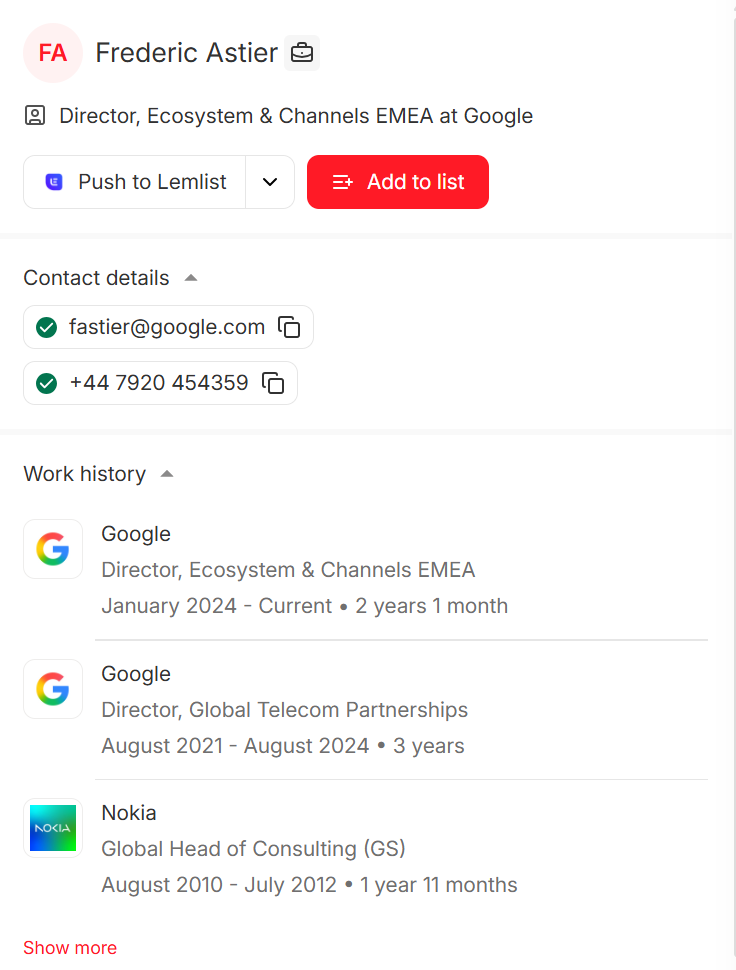
Prospeo's 7-day data refresh cycle - compared to the 6-week industry average - across 125M+ verified mobile numbers with a 30% pickup rate means fewer dead numbers and more conversations. When your connect rate jumps because you're dialing numbers that actually work, the whole debate between hot and cold outreach starts to matter a lot less.
The math is simple: if 72% of your dials don't reach a human, you need 209 calls per appointment. Cut that failure rate in half with verified data, and suddenly you need 100 calls. Same reps, same scripts, half the grind.
Hot leads expire in 5 minutes, but you can't act fast if you're scrambling for verified contact info. Prospeo refreshes data every 7 days - not 6 weeks - so the number you dial is the number that rings. Layer in intent data across 15,000 topics to know which leads are hot before they even fill out your form.
Reach hot leads first with real-time buyer intent and verified phones.
Tools for Hot and Cold Calling
You don't need 10 tools. You need a dialer, a CRM, and verified contact data. Everything else is optional until you've nailed the fundamentals.
| Category | Tool | What It Does | Approx. Pricing |
|---|---|---|---|
| Data | Prospeo | 300M+ profiles, 98% email accuracy, 7-day refresh | Free tier; ~$0.01/email |
| Data | ZoomInfo | B2B database, intent signals, org charts | ~$15-40K/year |
| Data | Apollo.io | Prospecting + engagement, large DB | Free tier; from ~$49/mo/user |
| Dialer | Aircall | Cloud phone, CRM integrations | From ~$30/user/mo |
| Dialer | PhoneBurner | Power dialer, high-volume | From ~$149/user/mo |
| CRM | HubSpot | Lead tracking, scoring, pipeline | Free CRM; paid from ~$20/mo |
| CRM | Salesforce | Enterprise CRM, automation | From ~$25/user/mo |
| Engagement | Salesloft | Multi-channel cadences, calls | ~$75-150/user/mo |
| Engagement | Outreach | Sequencing, analytics, calls | ~$100-150/user/mo |
| Analytics | Gong.io | Conversation intelligence | ~$100-150/user/mo |
The stack that works for most teams under 20 reps: a CRM (HubSpot if you're starting out, Salesforce if you're scaling), a dialer (Aircall for simplicity, PhoneBurner for volume), and a verified data source for contact accuracy. Add Gong once you have enough call volume to make conversation analytics worthwhile. Skip the sequencing tools until you're actually running multi-channel cadences - they're expensive and underused by small teams.
The tool doesn't make the rep. But bad data makes every tool worse. Start with the data layer and build up from there.
If you're evaluating dialing options, compare your outbound calling software based on logging, local presence, and connect rates - not just per-seat price.
FAQ
Is cold calling dead in 2026?
No. 69% of buyers accepted at least one cold call in the past year, and outbound leads convert at 34% higher rates than inbound in some contexts. What's dead is calling stale lists with robotic scripts. With verified data and an honest opener, cold calling remains one of the most effective B2B prospecting channels.
What's the difference between a warm call and a hot call?
A warm call targets someone who knows your brand - they've visited your site, opened emails, or been referred. A hot call targets someone actively ready to buy - they've requested a demo or visited pricing pages multiple times. Hot leads need immediate response (within 5 minutes); warm leads need nurturing through a cadence first.
How many cold calls does it take to book one meeting?
On average, 209 dials per appointment - but this varies wildly by data quality. Teams using verified contact data report connect rates 2-3x higher than the 2.35% average, cutting required dials roughly in half. The accuracy of your numbers matters more than the volume of your dials.
How fast should I respond to a hot lead?
Within 5 minutes. You're 21x more likely to qualify a lead contacted in that window versus 30 minutes later, and the first business to respond wins 78% of the time. Set up real-time alerts for demo requests and pricing page visits - the average B2B company's 42-hour response time is essentially a forfeit.
What's the difference between cold calling and direct calling?
Cold calling means contacting someone with no prior relationship. Direct calling means dialing a prospect's personal number rather than going through a switchboard or gatekeeper. You can make a direct cold call or a direct hot call - the distinction matters because direct dials bypass gatekeepers and dramatically improve connect rates regardless of lead temperature.