

Education Decision Makers: A Complete Guide for B2B Teams
Your team spent three months demoing to a principal who loved the product. The pilot went great. Teachers were on board. Then you discovered the curriculum director has veto power - and wasn't in a single meeting. Deal dead.
That's what happens when you don't understand how education purchasing actually works. It's committee-driven, multi-stakeholder, and slower than almost any other vertical. Policy-level decision makers at the state and federal level shape the broader environment, but for B2B sales, the education decision makers who matter sit inside districts and campuses. Let's break down who they are, how the process works, and how to actually reach them.
What You Need (Quick Version)
Education purchasing isn't top-down. It's committee-driven, and missing one stakeholder can kill a deal months in.
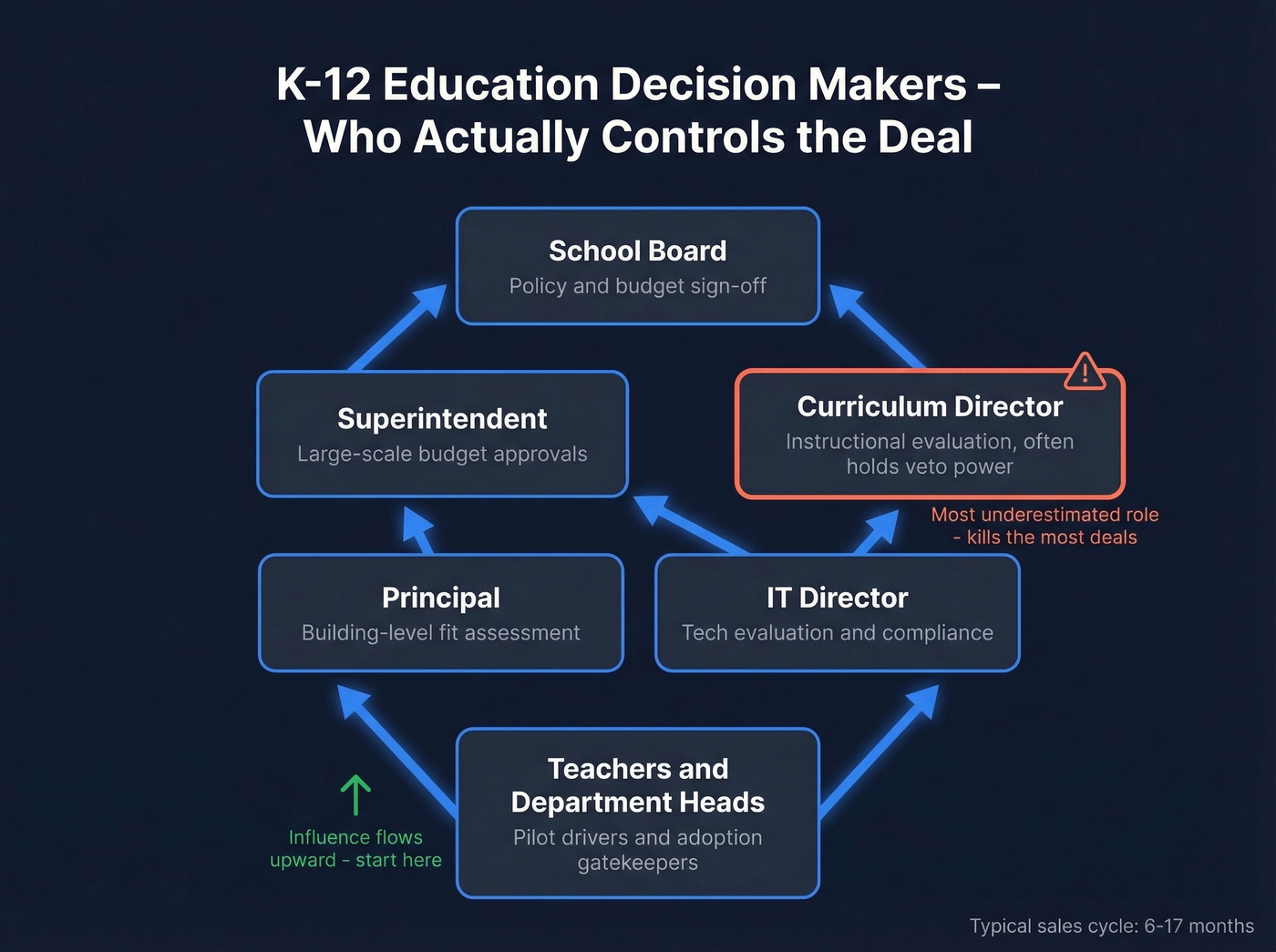
The six roles that matter most in K-12:
- Superintendent - large-scale budget approvals
- School Board - policy and budget sign-off
- Curriculum Director - instructional evaluation (often holds veto power)
- Principal - building-level fit assessment
- IT Director - tech evaluation and lifecycle planning
- Teachers/Department Heads - pilot drivers and adoption gatekeepers
6-11 months is the most common timeline, and 12-17 months is also common. Budget discussions happen in March and April, with final budgets typically set around June. Start outreach early - a November "yes" means nothing if the budget was locked five months ago.
The practical move: target teachers and curriculum directors first, because influence flows upward. Then use a B2B data tool like Prospeo to find verified emails and direct dials for each committee member so you're not stuck with generic info@ addresses.
Quick Note - The Legal "EDM" Meaning
If you searched "education decision maker" looking for the legal definition, here's the short version. Under Nevada's NRS 432B.462, every foster child must have an Educational Decision Maker - often a parent or guardian, and otherwise someone appointed by the court - who acts as the legal parent for education purposes. This role connects to IDEA's surrogate parent provisions, ensuring foster children have someone advocating for their educational rights, including special education meetings and school records access.
The rest of this guide covers a different context entirely: purchasing decision makers in education, the people who evaluate, approve, and buy products for schools and universities.
K-12 Decision Makers, Role by Role
Understanding who does what - and who can block a deal - is the difference between a six-month sales cycle and an eighteen-month one.
Superintendent
The superintendent is the district's chief executive. They implement board policy, oversee operations, and approve large-scale purchases. For district-wide deals - core curriculum adoptions, major technology rollouts - the superintendent's sign-off is non-negotiable.
What they care about: district-wide impact, compliance, and whether the investment aligns with strategic priorities. Most superintendents won't evaluate your product directly, but they'll kill a deal that doesn't have clear ROI framing.
School Board
School boards set policy and approve budgets. For major initiatives and high-dollar purchases, board approval is the final gate. Board members aren't evaluating product features - they're asking whether the spend is justified, whether it aligns with community priorities, and whether the district followed proper procurement procedures.
You won't pitch to the board directly in most cases, but your champion inside the district needs materials that survive a board presentation.
Curriculum Director
Here's the role most vendors underestimate - and the one that kills the most deals.
Curriculum directors evaluate instructional materials and software for standards alignment, pedagogical fit, and integration with existing programs. In many districts, they hold effective veto power over anything that touches instruction. If you're selling anything classroom-facing - curriculum, assessment tools, supplemental content - the curriculum director's evaluation matters more than the superintendent's enthusiasm.
We've seen this play out repeatedly: a vendor gets the superintendent excited, skips the curriculum director, and then watches the deal stall for months while the curriculum team runs their own evaluation. Ask for the rubric early. If there isn't one, offer to help create evaluation criteria - that positions you as a partner, not just another vendor in the pile.
Principal
Principals approve building-level purchases and assess whether a product fits their specific school's needs. They're closer to the ground than district administrators, and they'll push back on anything that creates implementation headaches for their staff. For products that need school-by-school adoption, the principal is your entry point. For district-wide deals, they're an influential voice in the committee but rarely the final decision maker.
IT Director
IT directors evaluate technology purchases through a completely different lens than everyone else on the committee. Their checklist: integration requirements, data privacy compliance (FERPA, state-level student data laws), infrastructure compatibility, and lifecycle planning.
A district technology director quoted in EdTech Magazine framed it this way - they're thinking about what's realistic within 9, 12, and 18-month planning horizons. Device lifecycles matter here: copiers get refreshed every 3 years, interactive flat panels last 7-10 years, but software dependencies can force earlier replacement. The cost-of-ownership math gets granular. A $25-30 modular headset that only needs a cable swap beats a $20 unit that requires full replacement. If your product has a technical implementation component, the IT director needs to be in the conversation from day one.
Teachers and Department Heads
Teachers don't sign contracts, but they make or break adoption. A FutureFocus survey of 2,803 educators found that 55% learn about products from other teachers and educator peers - not from vendor outreach, not from conferences, but from colleagues down the hall.
Pilots begin in classrooms and scale only if teacher feedback is positive. Department heads carry additional weight because they can advocate for budget allocation within their subject area. The smartest edtech vendors build teacher champions first, then let that enthusiasm carry the product upward through the committee.

Reaching superintendents, curriculum directors, and IT leads means having verified direct contacts - not generic district emails. Prospeo gives you 98% accurate emails and 125M+ verified mobile numbers across 300M+ professional profiles, with 30+ filters to pinpoint education decision makers by role, department, and district size.
Stop losing deals because you couldn't reach the right committee member.
How K-12 Purchasing Works
The 4-Stage Procurement Process
A Decision Lab study of 225+ K-12 edtech decision-makers mapped the procurement journey into four stages: Needfind, Evaluate, Pilot, Purchase.
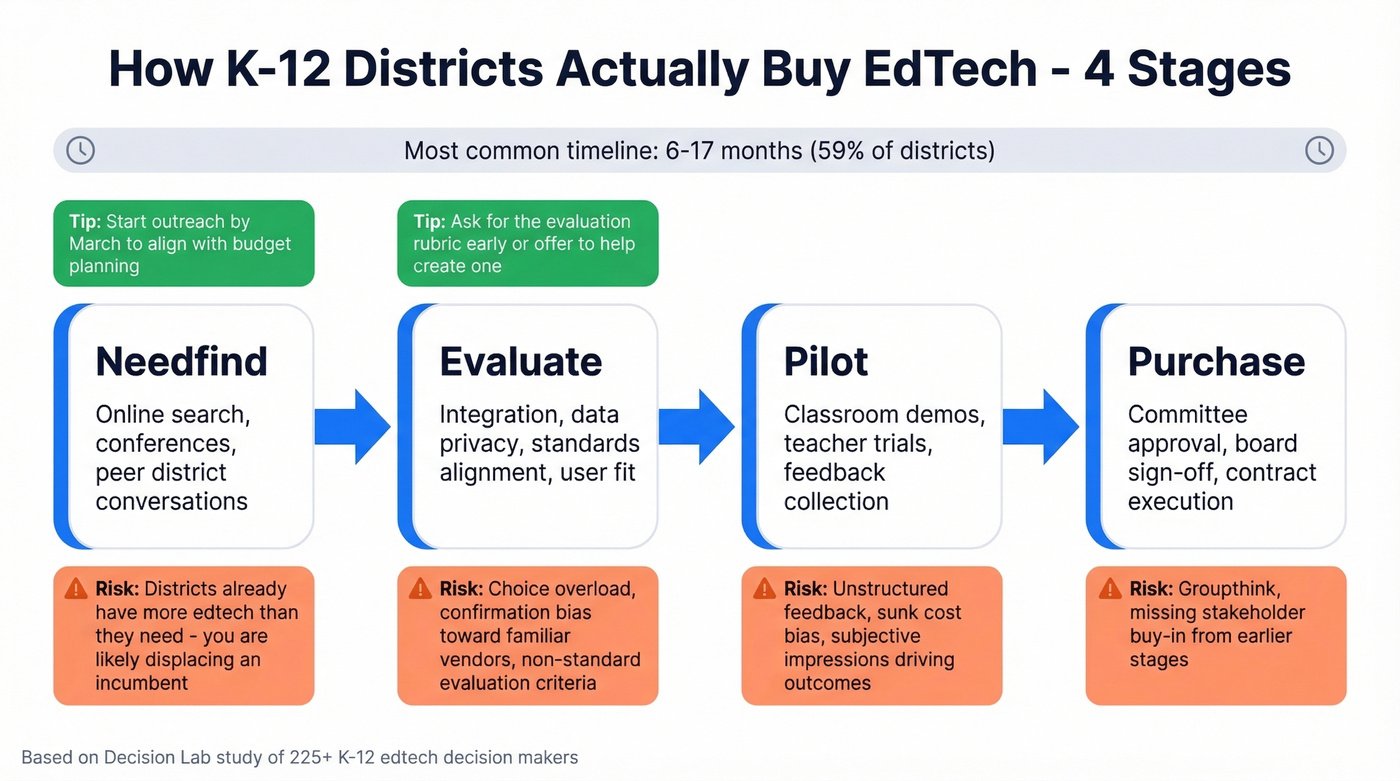
During Needfind, districts research solutions through online search, conferences, and conversations with peer districts. The challenge is that most districts already have more edtech products than they need - so you're often displacing an incumbent, not filling a gap.
Evaluate is where deals get complicated. Districts assess integration requirements, data privacy compliance, standards alignment, and user fit. The barriers are real: choice overload from too many options, confirmation bias toward familiar vendors, and non-standard evaluation criteria that vary by district. If you're not already a known name, you're fighting uphill.
Pilot stage means classroom demos and trials. The biggest risk here is unstructured feedback - districts often lack formal rubrics for evaluating pilots, which means subjective impressions drive the outcome. Sunk cost bias also kicks in: districts sometimes continue with suboptimal products because they've already invested time.
Purchase is the final gate, and it's where groupthink and lack of stakeholder buy-in can derail everything. If a key committee member wasn't involved in earlier stages, expect resistance.
How Long Does It Take?
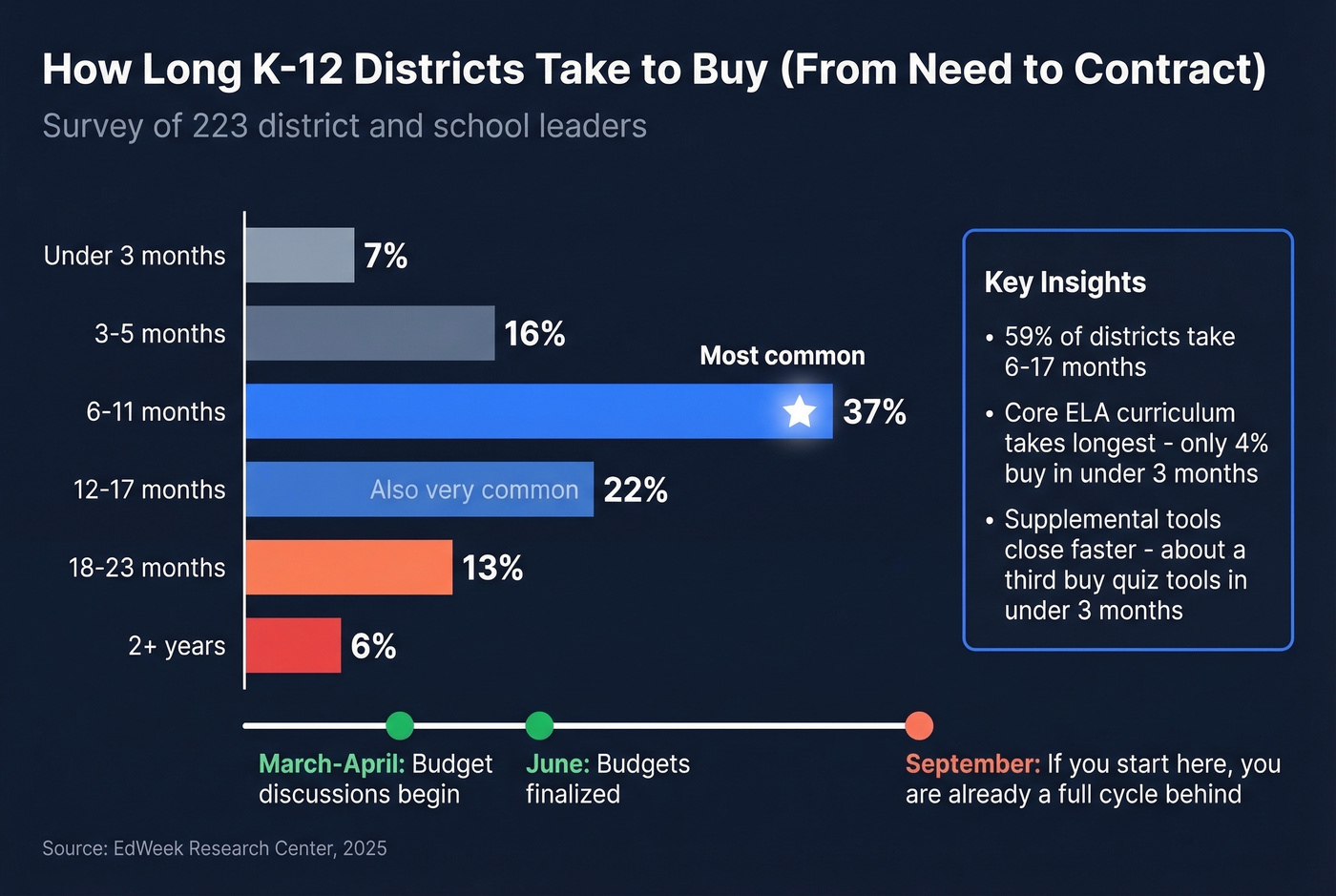
An EdWeek Research Center survey of 223 district and school leaders put hard numbers on what most vendors already feel:
| Timeline | % of Districts |
|---|---|
| Under 3 months | 7% |
| 3-5 months | 16% |
| 6-11 months | 37% |
| 12-17 months | 22% |
| 18-23 months | 13% |
| 2+ years | 6% |
The largest segment - 37% - takes 6-11 months from identifying a need to signing a contract. Nearly a quarter take over a year. For classroom products requiring a pilot year, add roughly 12 months before the formal purchasing process even begins.
Not all categories move at the same speed. Supplemental programs close faster - about a third of districts buy student survey and quiz tools in under three months. Core ELA curriculum is a different story; only 4% of districts said they bought core ELA that quickly.
Budget timing is critical. Districts finalize spending plans around June, but the most impactful discussions about budget changes happen in March and April. If you're starting outreach in September, you're already behind by a full cycle.
Why It's Harder in 2026
ESSER-driven budget pressures have changed the math for K-12 buyers. In 2024, a Tyton Partners survey of 60+ K-12 content and technology executives found that sales cycles ran 30% longer than the prior year, with ESSER-driven budget pressures cited by 45% of vendor executives as the primary cause.
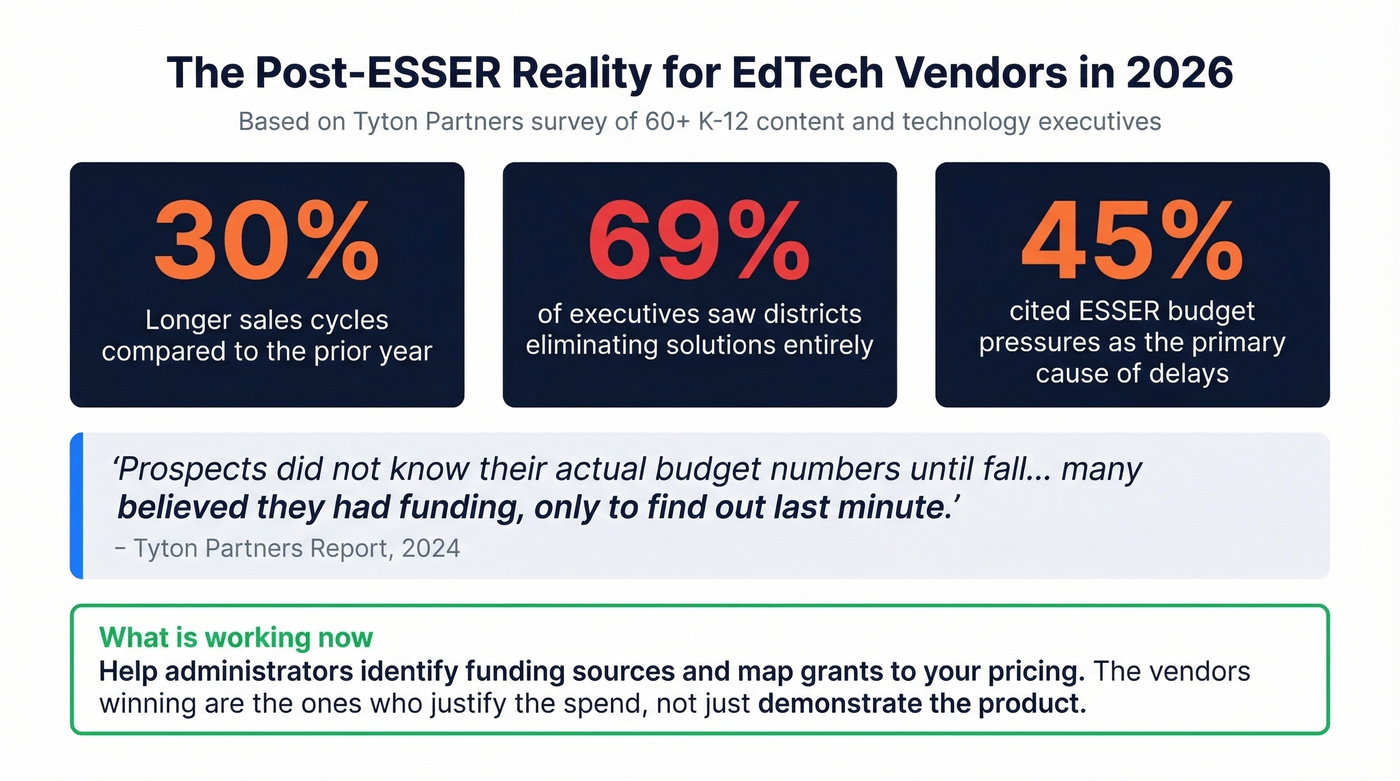
Districts aren't just slowing down - they're cutting. 69% of executives observed districts eliminating solutions entirely. 40% saw districts reducing the number of licenses. The quote that stuck with our team from that report: prospects "did not know their actual budget numbers until fall... many believed they had funding, only to find out last minute."
Here's the thing: if your deal size is under $15k, you probably don't need a 12-month enterprise sales motion for K-12. The vendors winning right now are the ones who help administrators identify funding sources and justify the spend - not just demonstrate the product. Offer to map their budget to your pricing. Show them which federal or state grants apply. That's the differentiator in a post-ESSER world. Edtech stakeholders who feel supported through the budget justification process are far more likely to champion your product internally.
Higher Education Decision Makers
Higher education procurement looks different from K-12 in almost every way. The key roles shift: procurement officers manage the formal process, department heads own budget lines and initiate purchases, CFOs give final approval on large expenditures, and CIOs control IT purchasing decisions.
The process runs through more stages: need identification, budgeting and approval, RFP/bidding, evaluation and selection, negotiation and contract finalization, purchase order and payment. Multi-level approvals and extensive legal requirements are the norm, not the exception. E&I's research highlights that higher-ed purchasing is often distributed across campuses and departments, making it harder to identify who actually controls the budget for your category. Expect FERPA compliance review and institutional data governance checks for any product handling student information.
Start with the department head who owns the budget line, not the procurement office. Procurement executes - they don't initiate. A department head who wants your product will navigate the internal process for you. A procurement officer who receives a cold email about your product will file it and forget it.
For large deals, expect the CFO to weigh in on cost justification and the CIO to evaluate technical fit. Reaching higher education purchasers often requires mapping out these distributed approval chains campus by campus before you even begin outreach. The legal review alone can add weeks. Plan for it.
How to Find and Reach the Right People
Channels That Work
Phone outreach to schools is mostly dead. Receptionists route SDRs to voicemail, staff are in class, and one blunt takeaway from a K-12 SDR post on Reddit's r/salesdevelopment was: "I was told to just email people."
The FutureFocus survey data points to what does work: 55% of educators discover products through peers, making referral-driven strategies essential. For content, 38% of district leaders find webinars most informative - but only when they feature other educators using the product, not vendor-led sales pitches. Case studies come in at 24.8%, infographics at 17.3%, and white papers at 16.2%.
The viable approach is multi-channel: email sequences to the right stakeholders, presence at education conferences, and peer referral programs that turn teacher champions into your distribution channel. Demonstrating AI or cybersecurity expertise also builds credibility fast with IT directors and CIOs who are fielding those questions from their boards.
If you're building outbound sequences for districts, keep your messaging tight and role-specific - a few proven sales follow-up templates can save weeks of iteration.
Timing Your Outreach
March through April is the window for budget planning discussions. Budgets typically finalize around June. If you got a verbal "yes" in November, but the district's budget was finalized in June, you're waiting until the next fiscal year.
That said, 37% of purchasers evaluate products on an ongoing basis, and 18.7% actively evaluate during fall and winter. Outreach outside the budget window isn't wasted - it's planting seeds. Just don't expect a signed contract until the budget cycle catches up.
Align to the district fiscal year, not the calendar year. Your Q4 push means nothing to a district that finalized spending six months ago.
Building Your Contact List
School websites list generic info@ addresses and front-desk phone numbers. That's useless when you need to reach the curriculum director, the IT lead, and the superintendent individually.
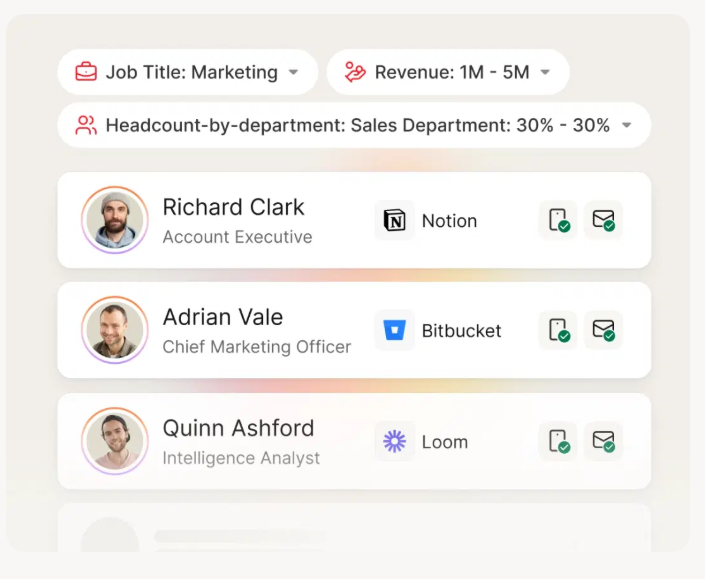
Prospeo's B2B database handles this with 30+ search filters - industry, job title, department, company size - so you can build a targeted list across an entire district. The database covers 300M+ professional profiles with 98% email accuracy, 125M+ verified mobile numbers, and a 7-day data refresh cycle, which matters when staff turnover in education runs high. The free tier gives you 75 verified emails per month, enough to test your outreach on a handful of districts before scaling up.
To keep lists clean and protect deliverability, pair any data pull with data enrichment and a quick email deliverability check before you scale.
If you're prospecting from LinkedIn, a lightweight lead generation workflow plus personalized outreach will outperform generic blasts.
Education deals die when you miss a stakeholder. Prospeo's Chrome extension lets you pull verified emails and direct dials for every committee member - from the curriculum director to the IT lead - in one click. 40,000+ users already prospect this way, at roughly $0.01 per email.
Map the entire buying committee before your competitor finds the superintendent.
FAQ
Who is the most important decision maker in K-12?
No single person controls K-12 purchasing - it's committee-driven. Superintendents approve budgets, curriculum directors evaluate instructional fit and often hold veto power, and teachers drive pilot adoption. Target the full committee from day one.
How long is the average K-12 sales cycle?
6-11 months is the most common range, reported by 37% of districts. Another 22% take 12-17 months. For classroom products requiring a pilot year, add roughly 12 months before the formal purchasing process even begins.
When should I start outreach to school districts?
Begin in March or April, when districts discuss budget changes for the following fiscal year. Budgets typically finalize around June. Starting outreach in fall means you're likely waiting until the next cycle - plan 9-12 months ahead of your target close date.
How do I find verified emails for school administrators?
School websites usually list only generic addresses and front-desk numbers. A B2B data platform with education-specific filters lets you surface verified direct emails by job title and department. Prospeo's free tier includes 75 emails per month - enough to start prospecting without a contract.