

The 11 Best Email CRM Tools in 2026
The average email gets 8.97 seconds of attention. If that email lands on the wrong person - or bounces entirely - you've wasted the window. Email marketing still returns $36 for every $1 spent across a $22.16 billion industry, but your email CRM is only as good as the data inside it. CRM data goes stale fast. Every bounced email chips away at your sender reputation, and once that's damaged, even your best campaigns land in spam.
The tool you pick matters. The data quality underneath it matters more. Here are 11 tools worth your time, sorted by what actually moves the needle.
Our Picks (TL;DR)
| Pick | Best For | Starting Price |
|---|---|---|
| Prospeo | Data accuracy + CRM enrichment | Free (75 emails/mo) |
| HubSpot | Free all-in-one starting point | $0 |
| Brevo | Budget-friendly option | $9/mo |
Runners-up: Instantly for cold outreach teams that need unlimited sending accounts. ActiveCampaign for teams that live and die by automation workflows.
What Is an Email CRM?
An email CRM combines contact management, deal tracking, and email marketing or outreach in a single platform. Instead of juggling a CRM for pipeline and a separate tool for campaigns, you get both under one roof - unifying the two workflows that sales and marketing teams toggle between all day: managing relationships and sending messages.
The distinction that matters: CRM-first tools (HubSpot, Pipedrive, Salesflare) start with contact and deal management, then bolt on email features. Email-first tools (Brevo, ActiveCampaign) start with campaign sending and add lightweight CRM capabilities. Neither approach is wrong. It depends on whether your primary workflow is closing deals or nurturing lists.
There's a third category most articles miss: cold outreach CRMs like Instantly, purpose-built for high-volume prospecting rather than marketing campaigns. The distinction is practical - sending a marketing newsletter through a cold outreach tool will get your domain blacklisted, and running cold sequences through a marketing CRM will tank your deliverability. Different animal entirely.
What to Look For
Eight criteria separate good tools from expensive address books.
Inbox integration and automation are table stakes. The tool needs to sync natively with Gmail or Outlook - if reps have to copy-paste between tools, adoption dies within a month. On the automation side, visual workflow builders with branching logic beat simple drip sequences every time. Look for conditional waits, multi-channel triggers, and lead scoring, not just "send email on day 3."
Segmentation and tracking determine how precisely you can target. Can you slice contacts by behavior, deal stage, and engagement simultaneously? Basic list segmentation isn't enough for B2B. For tracking, open and click data is the minimum - reply detection and thread tracking are what separate sales-grade tools from newsletter platforms.
Deliverability infrastructure is the silent killer. Dedicated IPs, SPF/DKIM setup guidance, and warm-up tools matter. Shared sending infrastructure works for small volumes but becomes a liability at scale.
Data quality is the criterion most comparison articles skip entirely. Does the tool verify emails? Flag stale contacts? Enrich records automatically? A CRM full of bad data is worse than no CRM at all, and the tighter the integration between your contact management and email sending, the faster bad data compounds into deliverability problems. (If you want the full playbook, start with an email deliverability guide and work backward from bounces.)
Pricing model transparency determines your real cost more than the sticker price. Per seat? Per contact? Per email sent? Modular? Know the model before you commit. And don't overlook the mobile app - field sales teams and founders who can't update deals from their phone will stop updating deals. Period.

Bad data is the silent killer of every email CRM. Prospeo enriches your HubSpot or Salesforce contacts with 50+ data points at an 83% match rate - and keeps them fresh on a 7-day cycle. At 98% email accuracy, your bounce rates stay under control and your sender reputation stays intact.
Stop sending campaigns to dead inboxes. Start with 75 free verified emails.
The 11 Best Email CRM Systems
Prospeo - Best for Data Accuracy
Every CRM on this list has the same weakness: the data inside it decays constantly. Prospeo solves that problem at the source. It's a B2B data platform with 300M+ professional profiles, 143M+ verified emails, and 125M+ verified mobile numbers - all refreshed on a 7-day cycle. The industry average for data refresh is six weeks, which means most databases are already stale by the time you're running sequences off them.
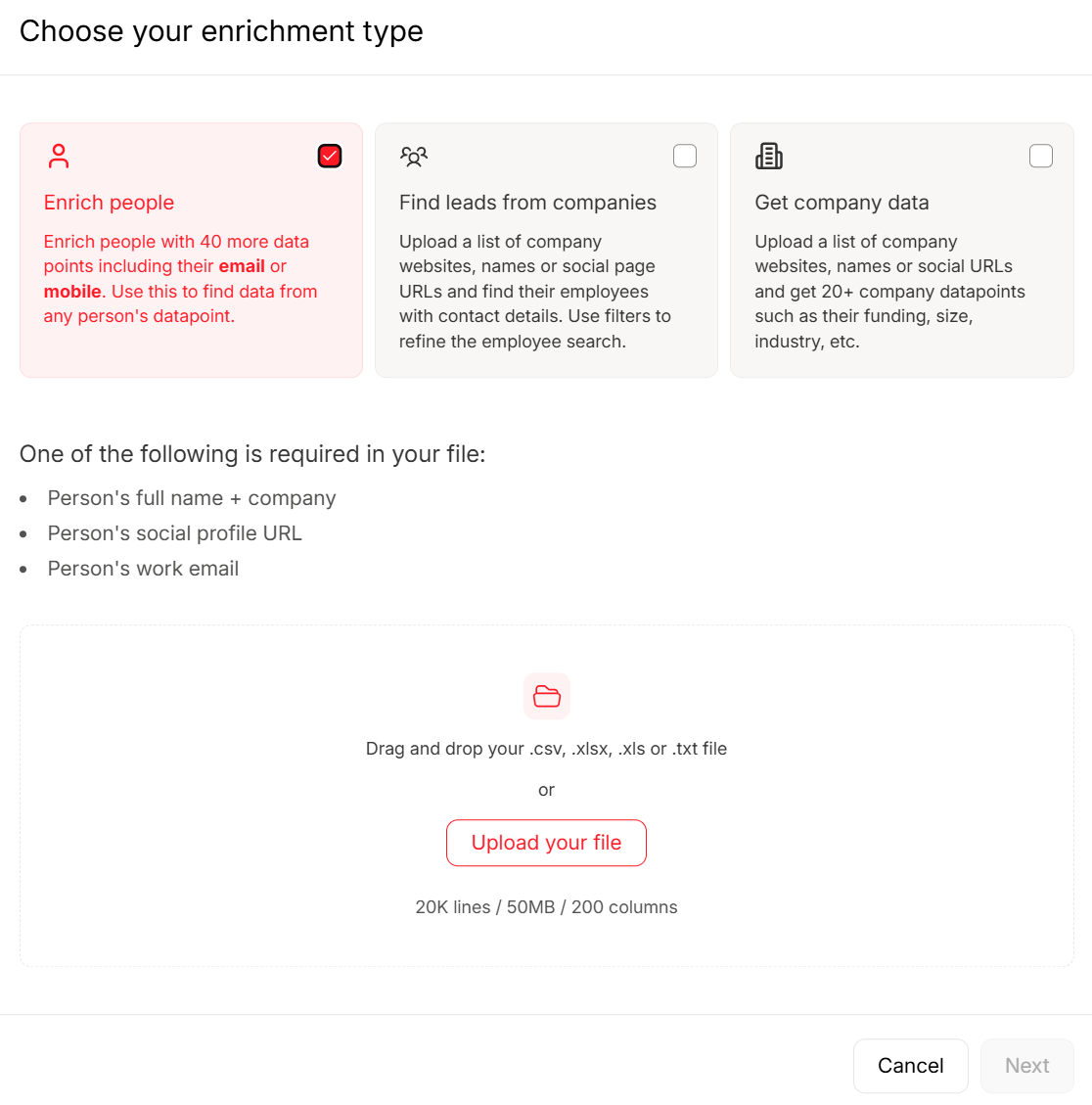
Where Prospeo shines for email CRM teams is enrichment. Upload a CSV or connect your HubSpot or Salesforce instance, and it returns 50+ data points per contact at an 83% enrichment match rate. Email accuracy sits at 98% - teams like Snyk cut bounce rates from 35-40% down to under 5% after switching their data source, and their AE-sourced pipeline jumped 180%. (If you're comparing providers, see our breakdown of data enrichment services.)
Pricing is refreshingly simple: ~$0.01 per email, credit-based, no annual contracts. The free tier gives you 75 verified emails and 100 Chrome extension credits per month. Native integrations with Salesforce, HubSpot, Instantly, Lemlist, and Clay mean it slots into whatever stack you're already running.
Every tool on this list suffers from the same problem: CRM data decays within weeks. Prospeo refreshes 300M+ profiles every 7 days - 6x faster than the industry average. Snyk cut bounce rates from 35% to under 5% and grew AE-sourced pipeline 180% by fixing data quality at the source.
Your email CRM deserves 98% accurate data at $0.01 per email.
HubSpot - Best Free All-in-One
Use this if: You need a single platform for marketing, sales, and service - and you want to start for free.
Skip this if: You're a small team that'll outgrow the free tier quickly but can't stomach the jump to Professional.
HubSpot commands roughly 31.6% of the marketing automation market, and the free tier is genuinely useful: 1,000 contacts, 2,000 email sends per calendar month, forms, and a basic CRM. For a solo founder or tiny team, that's enough to run real campaigns.
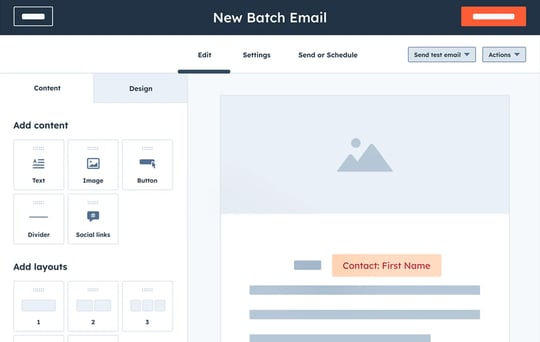
The problem is the pricing cliff. Starter runs $20/mo, which is reasonable. But Professional jumps to $100/mo plus a required $1,500 onboarding fee. That's one of the steepest free-to-paid transitions in SaaS. If you're a 5-person team that needs automation workflows, A/B testing, and custom reporting, you're looking at $600+ in your first month before you send a single email.
Watch out: That onboarding fee is required on Professional. Budget for it from day one.
ActiveCampaign - Best Automation Engine
ActiveCampaign has the best visual automation builder on this list. Full stop. If your workflows involve branching logic, lead scoring, conditional waits, and multi-channel triggers, nothing else comes close at this price point.
Starter runs $19/mo for 1,000 contacts. Plus is $59/mo, Pro is $89/mo. Those prices scale with contact count - at 5,000 contacts, Starter jumps to $99/mo and Pro hits $235/mo.
The CRM isn't included by default; you'll need the Pipelines add-on starting around $50/mo to get deal management. Here's the thing: ActiveCampaign made a significant billing change in November 2025. New accounts now get charged for all contacts - including unsubscribed, bounced, and unconfirmed. Older accounts are grandfathered on active-contacts-only billing. If you're signing up fresh, your contact count and your bill includes people who can't even receive your emails.
Watch out: That billing change is a hidden cost multiplier. Clean your list aggressively before importing, or you're paying for dead weight. (Related: email bounce rate benchmarks and what to do when you’re above them.)
Brevo - Best Budget Option
Brevo's pricing model is the reason it's on this list. While most tools charge per contact or per seat, Brevo charges by emails sent. That's a massive difference if you have a large contact database but don't email everyone every week.
The free plan is generous: 300 emails per day and up to 100,000 contacts. Starter begins at $9/mo for 5,000 emails. Standard is $18/mo for the same volume and adds marketing automation, A/B testing, and landing pages. Even at 20,000 emails per month, you're only paying $29/mo on Starter or $65/mo on Standard.
The CRM is lightweight but functional - contact management, deal pipelines, and task tracking are all included. It won't replace Salesforce for complex sales processes, but for small teams running campaigns alongside basic deal tracking, it's hard to beat the value.
Watch out: Brevo branding appears on all emails sent from the Starter plan. Removing it costs an extra $10/mo. Standard and above include branding removal.
Instantly - Best for Cold Outreach
Instantly isn't a traditional CRM. It's a cold outreach platform that added CRM functionality - and for teams running high-volume prospecting, that order of operations actually makes more sense.
The pricing is modular. Outreach starts at $37/mo with unlimited email accounts and 5,000 emails/month. The CRM module is a separate $47/mo. The Leads database is another $47/mo. If you want the full stack - outreach, CRM, and lead sourcing - you're looking at $131/mo. Every plan includes unlimited seats, which is unusual and valuable for growing teams.
The modular pricing adds up fast. But if your team's primary motion is cold email, Instantly's warm-up infrastructure, inbox rotation, and sending optimization are purpose-built for deliverability in a way that marketing CRMs simply aren't.
Watch out: You'll likely need at least two modules to get real value. Budget for $80-131/mo, not the $37 headline price. (If you’re building sequences, use these sales prospecting techniques to avoid spray-and-pray.)
Salesflare - Best Inbox-Native Sales CRM
Use this if: Your sales team lives in Gmail or Outlook and hates manual data entry.
Skip this if: You need marketing automation or campaign sending - Salesflare is sales-only.
Salesflare focuses on live inbox and calendar sync, automatic contact enrichment, and email tracking so reps spend less time doing CRM admin. Growth starts at $29/user/mo annually, Pro at $49/user/mo. The Pro plan includes 100 lead credits for enrichment. It's the closest thing to a CRM that fills itself in - and inbox-native tools like Salesflare or Streak are consistently where teams land when they refuse to do data entry.
Pipedrive - Best Deal-Focused CRM
Pipedrive's visual pipeline is still one of the best in the business for deal management. The catch: email marketing isn't built in. You'll need the Campaigns add-on at $16/mo for 1,000 contacts, on top of the Essential plan at $24/seat/mo.
That split pricing means Pipedrive works best for teams that care more about deal velocity than campaign volume. If you're sending newsletters and nurture sequences daily, look elsewhere. If you're tracking 50 deals through a structured pipeline, Pipedrive earns its keep.
Zoho CRM - Best for Ecosystem Users
Zoho CRM's free tier supports 3 users, Standard starts at $20/user/mo, and Professional runs $35/user/mo for teams that need workflow rules, scoring, and forecasting. Email automation is limited without adding Zoho Campaigns as a separate product.
If you're already in the Zoho ecosystem - Books, Desk, Projects - the integrations are native and the total cost of ownership is hard to beat. If you're not, the learning curve and fragmented product suite can feel overwhelming. Zoho is the best value play for teams already committed to its world, and a frustrating maze for everyone else.
Freshsales - AI-Assisted Sales CRM
Free for 3 users. Growth plan at $11/user/mo. Freddy AI handles lead scoring, next-best-action suggestions, and deal insights that surface which opportunities need attention. For small sales teams that want AI assistance without enterprise pricing, Freshsales delivers genuine utility at a fraction of what Salesforce Einstein costs. The trade-off is a smaller integration ecosystem and less community support than HubSpot or Pipedrive.
EngageBay - All-in-One for Small Teams
Free tier covers 500 contacts and 1,000 emails. Basic plan runs $14.99/user/mo and includes marketing automation, CRM, and a helpdesk. EngageBay is the budget all-in-one play - you get email sequences, landing pages, deal tracking, and ticket management in a single platform. Nothing is best-in-class, but everything works well enough that a 3-5 person team can run their entire customer lifecycle without stitching together four different tools.
Nimble - Relationship-Focused CRM
$24.90/seat/mo annually. Email marketing is a $15/mo company-wide add-on. Enrichment credits run 100 for $10/mo. Nimble's strength is contact enrichment from social profiles and web sources - it automatically builds rich contact profiles from minimal input. Good for relationship-driven sales where knowing someone's background matters more than blasting volume. Less suited for high-volume outreach.
Streak - Best Gmail-Only CRM
Streak lives entirely inside Gmail - no separate app, no context switching. Pro runs $59/user/mo and adds mail merge, shared pipelines, and reporting. If you're a solo founder or freelancer whose entire workflow happens in Gmail, Streak eliminates the adoption problem entirely because there's nothing new to learn. The limitation is obvious: it's Gmail-only, so Outlook users and teams that need multi-channel campaigns should look elsewhere.
Pricing Comparison
Here's what these tools actually cost when you stop looking at headline prices and start calculating real spend for a small team over six months.
| Tool | Free Plan | Starting Price | Pricing Model | Example 6-Mo Cost |
|---|---|---|---|---|
| Prospeo | 75 emails/mo | ~$0.01/email | Per credit | $300-600* |
| HubSpot | 1K contacts | $20/mo | Per seat + tier | $600-3,600 |
| ActiveCampaign | No | $19/mo | Per contact | $114-954 |
| Brevo | 300 emails/day | $9/mo | Per email sent | $54-390 |
| Instantly | No | $37/mo (outreach) | Modular | $786+ |
| Salesflare | No | $29/user/mo | Per seat | $870 |
| Pipedrive | No | $24/seat/mo | Per seat + add-on | $720-1,080 |
| Zoho CRM | 3 users | $20/user/mo | Per seat | $600 |
| Freshsales | 3 users | $11/user/mo | Per seat | $330 |
| EngageBay | 500 contacts | $14.99/user/mo | Per seat | $449.70 |
| Nimble | No | $24.90/seat/mo | Per seat + add-ons | $747 |
| Streak | No | $59/user/mo | Per seat | $1,770 |
*Prospeo is a data layer, not a standalone CRM - $300-$600 assumes ~50k-100k verified emails over 6 months. Pair with any CRM above.
How to Choose by Team Size
The right email CRM depends less on features and more on how your team actually works.
Solo founder or freelancer: Brevo's free plan or Streak inside Gmail. Don't overcomplicate it. You need to send emails and track deals, not configure enterprise workflows.
Small sales team (2-10 reps): Salesflare if your team lives in email and hates data entry. HubSpot Free if you want marketing and sales in one place and can live within the contact limits. Either way, evaluate what the tool costs at 6 months, not on day one - that's the advice that keeps surfacing on r/CRM and it's spot-on.
Marketing-heavy team: ActiveCampaign if automation complexity is your competitive advantage. HubSpot Professional if you need reporting, attribution, and a unified platform - just budget for that $1,500 onboarding fee.
Enterprise (50+ seats): Salesforce or HubSpot Enterprise. At this scale, you're buying ecosystem and customization, not features.
Let's be honest: if your average deal size is under $15K, you probably don't need a $100+/mo CRM. A $9 Brevo plan with clean data will outperform a bloated HubSpot Professional instance full of stale contacts every single time. The bottleneck is almost never the tool - it's the data inside it. (If you want a quick framework, start with sales pipeline challenges and map tools to the bottleneck.)
Mistakes That Kill CRM and Email ROI
1. Picking the biggest name without testing workflow fit. The #1 reason CRMs fail isn't missing features - it's that teams don't use them. If logging a deal feels like extra work, reps won't do it. Run a 14-day trial with your actual workflow before committing. Reddit threads on CRM adoption failure repeat the same pattern: teams buy the most popular tool, customize nothing, and abandon it within 90 days. If your team lives in Gmail, an inbox-native tool like Salesflare will outperform HubSpot despite having a fraction of the features.
2. Ignoring data quality. CRM data goes stale fast. Every bounced email damages your sender reputation, which tanks deliverability for your entire domain. We've watched teams spend months building sequences on top of a database where 30%+ of the emails were dead. Verify contacts before importing them - real-time verification catches bounces, spam traps, and stale addresses before they do damage.
3. Not calculating total cost of ownership. HubSpot's $1,500 onboarding fee. ActiveCampaign's billing change that charges for bounced contacts. Pipedrive's email marketing add-on. Brevo's branding removal fee. These aren't hidden - they're just not on the homepage. Add them up before you sign.
4. Overbuying features your team won't use. We've seen teams buy enterprise CRM plans because they "might need" advanced reporting or AI scoring, then use 20% of the platform for a year. Start with the tier that matches your current workflow. You can always upgrade. Downgrading is psychologically harder and often contractually impossible.
FAQ
What's the difference between a CRM and email marketing software?
A CRM manages contacts, deals, and your sales pipeline, while email marketing software sends campaigns and tracks engagement. An email CRM combines both - letting you nurture leads and close deals without switching tools. Most modern platforms blur this line, but the core distinction still matters for choosing the right starting point.
Is there a good free email CRM?
HubSpot's free tier is the strongest option: 1,000 contacts, 2,000 email sends per month, plus deal tracking. Brevo is better for email-heavy teams with 300 sends per day and up to 100,000 contacts. EngageBay and Freshsales also offer free tiers for up to 3 users each.
What's the best email CRM for small teams?
For sales-focused teams of 2-10, Salesflare ($29/user/month) or HubSpot Free. Salesflare wins on inbox automation by reducing manual admin and keeping communication history tied to the right records. For marketing-focused small teams, Brevo or EngageBay offer the best value under $15/mo.
How do I keep my CRM data clean?
Verify emails before importing them using a dedicated verification tool - 98% accuracy with a 7-day refresh cycle is the benchmark to aim for. Catch bounces, spam traps, and stale addresses before they damage deliverability. Re-verify your database quarterly and remove contacts that haven't engaged in 6+ months.
Can I use a CRM for cold email outreach?
Yes, but pair it with a dedicated outreach tool like Instantly or Lemlist. Cold email requires separate sending infrastructure - dedicated domains, warm-up protocols, inbox rotation - to protect your primary domain reputation. Your CRM tracks the relationship; your outreach tool handles the sending.