

EmailListVerify vs Leadsforge: You're Probably Comparing the Wrong Tools
These two tools don't actually compete. EmailListVerify cleans email lists. Leadsforge builds them. That's like comparing a dishwasher to a grocery store - both involve dishes, but they solve completely different problems.
If your bounce rate is creeping above the 2% threshold that tanks deliverability, you need verification. If you have no list at all, you need prospecting. Let's break down what each one does, what it costs, and whether you even need both.
30-Second Verdict
EmailListVerify is a verification tool - hand it a list, it tells you which emails are valid, risky, or dead. Leadsforge is a lead generation platform that finds prospects using an AI chat interface.
What Each Tool Actually Does
EmailListVerify is a straightforward bulk verification service. Upload a CSV, get results sorted into 18 status classifications - most verifiers give you three or four buckets, so that granularity is genuinely useful when you're deciding what to do with borderline "risky" addresses. It claims 97% accuracy and processing speeds north of 100k verifications per hour. There's also an email finder that uses 5 credits per email found, but it's an add-on. The core product is hygiene. No lead database, no prospecting.
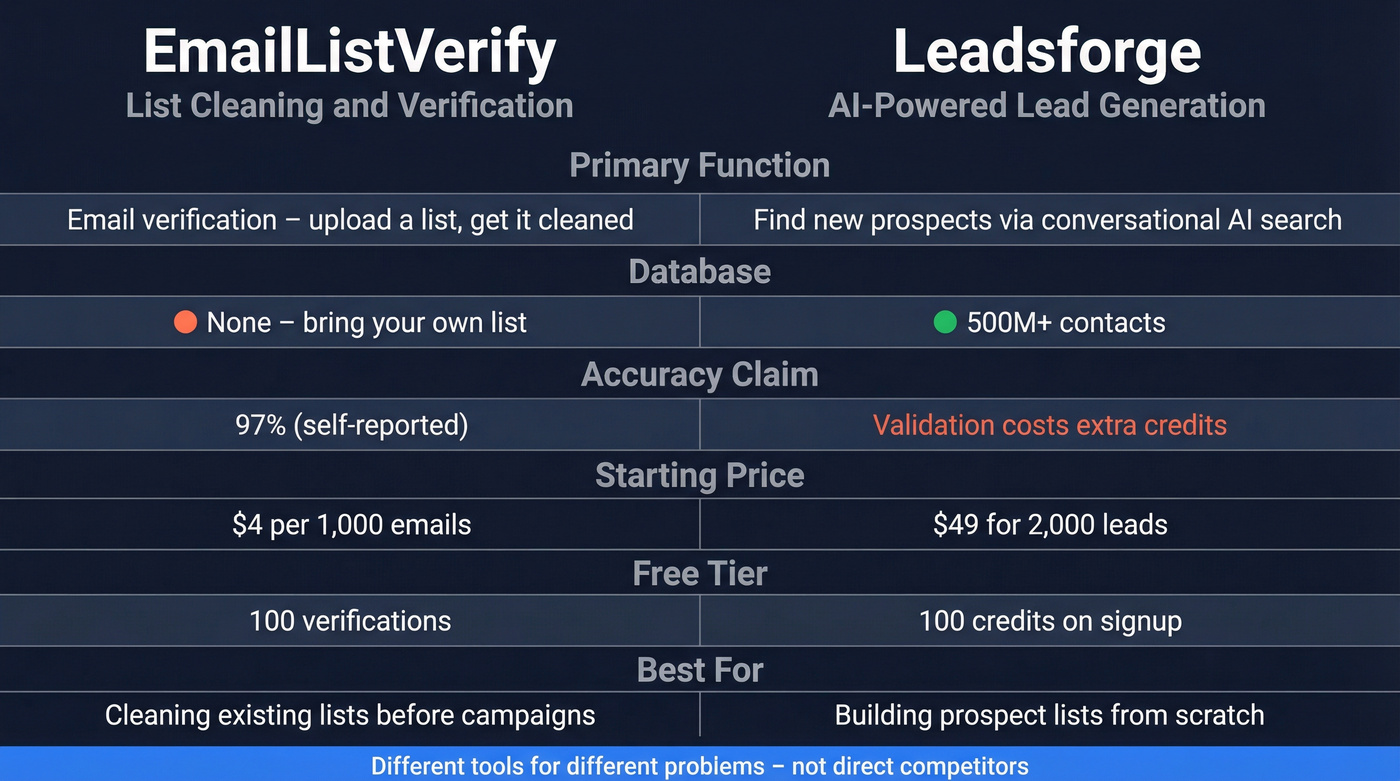
Leadsforge takes the opposite approach entirely. It's an AI-driven prospecting platform where you describe your ICP in natural language and it returns matching contacts from a stated 500M+ contact database. Think of it as a conversational search layer on top of multiple data sources, with extras like "find company followers" (paste a competitor's company profile URL and pull matching followers) and intent data signals. Worth noting: Leadsforge is technically still in pre-launch according to its own site, and email validation uses additional credits - so you'll either budget for that or pair it with a dedicated verifier.
| Category | EmailListVerify | Leadsforge |
|---|---|---|
| Primary function | Email verification | Lead generation |
| Database size | None (BYO list) | 500M+ contacts |
| Free tier | 100 verifications | 100 credits on signup |
| Key strength | 18-status granularity | Conversational AI search |
| Integrations | Mailchimp, HubSpot | HubSpot Marketing Hub, Salesforge |
| Best for | List cleaning | Building prospect lists |
Pricing Breakdown
| Tool | Starting Price | Volume Example | Free Tier |
|---|---|---|---|
| EmailListVerify | $4/1,000 emails | $199/50k, $349/100k | 100 verifications |
| Leadsforge | $49/2,000 leads | Scales by credit tier | 100 credits |
EmailListVerify's pay-as-you-go pricing is clean. Four dollars per thousand emails, credits never expire, and you can anchor common volumes at $199 for 50k and $349 for 100k. For regular campaigns, subscription plans range from $139/mo for 5,000 emails/day up to $989/mo for 100,000/day.
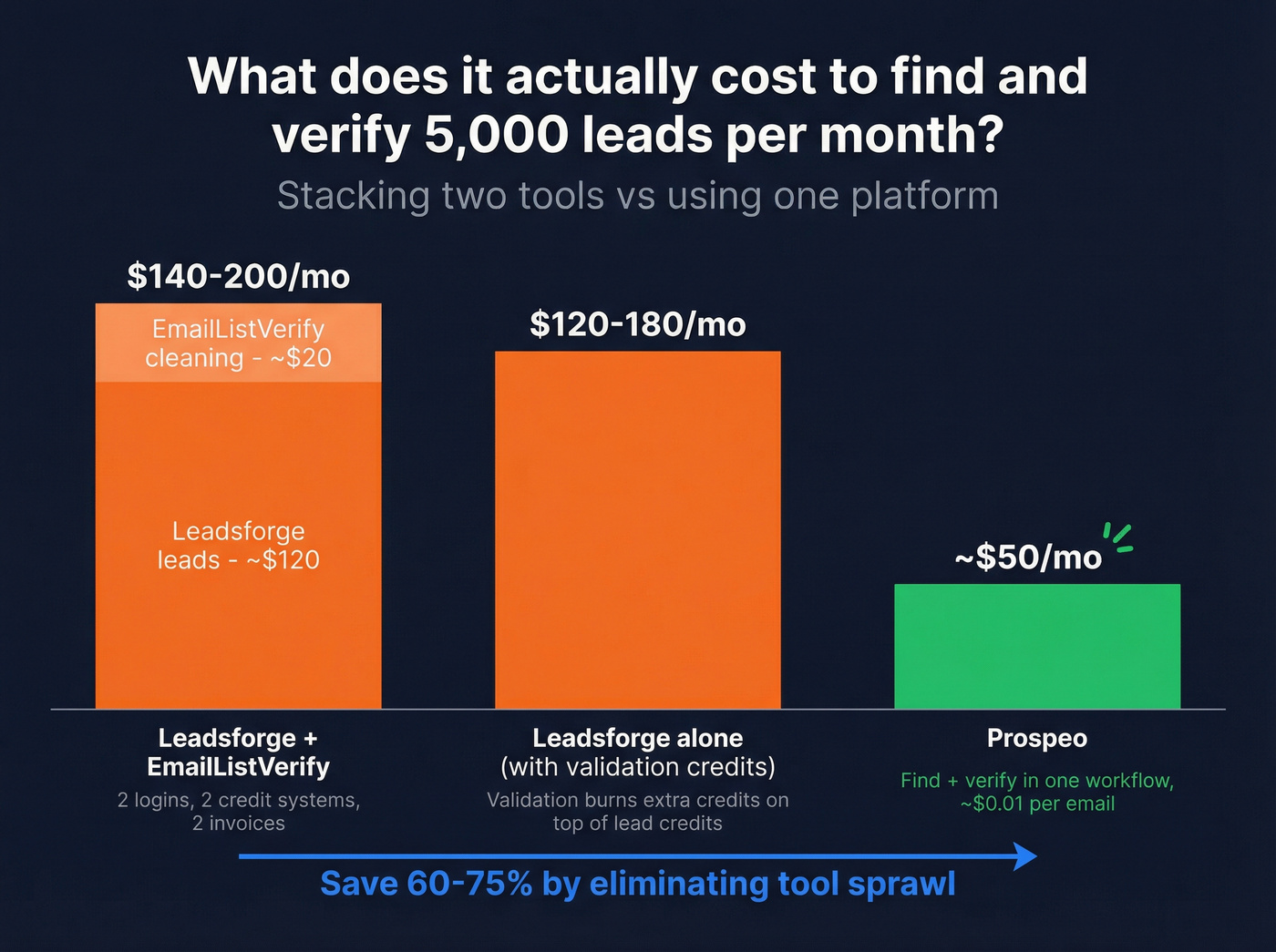
Leadsforge's $49 for 2,000 leads looks reasonable until you realize validation is separate and burns extra credits. Credits roll over, which helps if your usage is spiky. But if you need to find and validate 5,000 leads per month, expect to land around $120-200/month once you account for the extra validation credits or a second tool.
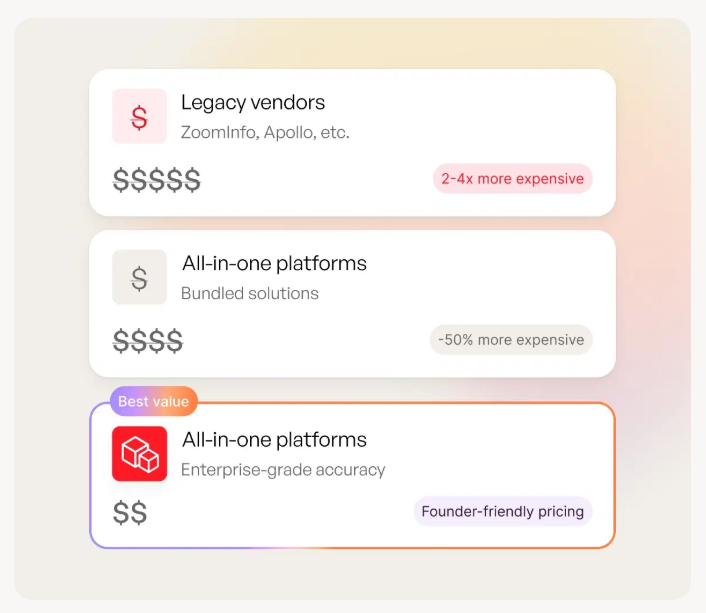

Stacking Leadsforge for prospecting and EmailListVerify for cleaning means two credit systems, two invoices, and $150+/month. Prospeo combines 300M+ profiles, 30+ search filters, and built-in 5-step email verification - all refreshed every 7 days. At ~$0.01 per verified email, you spend less and get 98% accuracy.
Find leads and verify them in one click - no second tool required.
What Real Users Say
EmailListVerify
In a practitioner thread on r/Emailmarketing, the standout praise was for those 18 different status classifications - particularly the connection-related statuses that help you make smarter calls on borderline results instead of just nuking everything that isn't "valid."
The downsides? The UI feels dated and clunky. And in the real world, verification outcomes can differ between bulk checks and single checks depending on whether the verifier connects to the mail server at that moment. "Unknown" results are part of the game. API setup can also be technical for smaller teams without a developer on hand.
Leadsforge
Leadsforge holds a 4.5/5 on G2 across 12 reviews, with users praising speed and CRM integration. Reviewers also call out responsive customer support and time savings versus manual research.
The Trustpilot score of 4.0 across 11 reviews tells a slightly different story. Complaints about exported data quality, inconsistent fields, and at least one reviewer flagging the service as hard to cancel. For a pre-launch product, that's a yellow flag we'd want to watch.
When to Choose Each
Choose EmailListVerify if:
- You already have prospect lists from events, webinars, or purchased databases
- You need to clean a legacy list before a re-engagement campaign
- You want granular status codes, not just valid/invalid
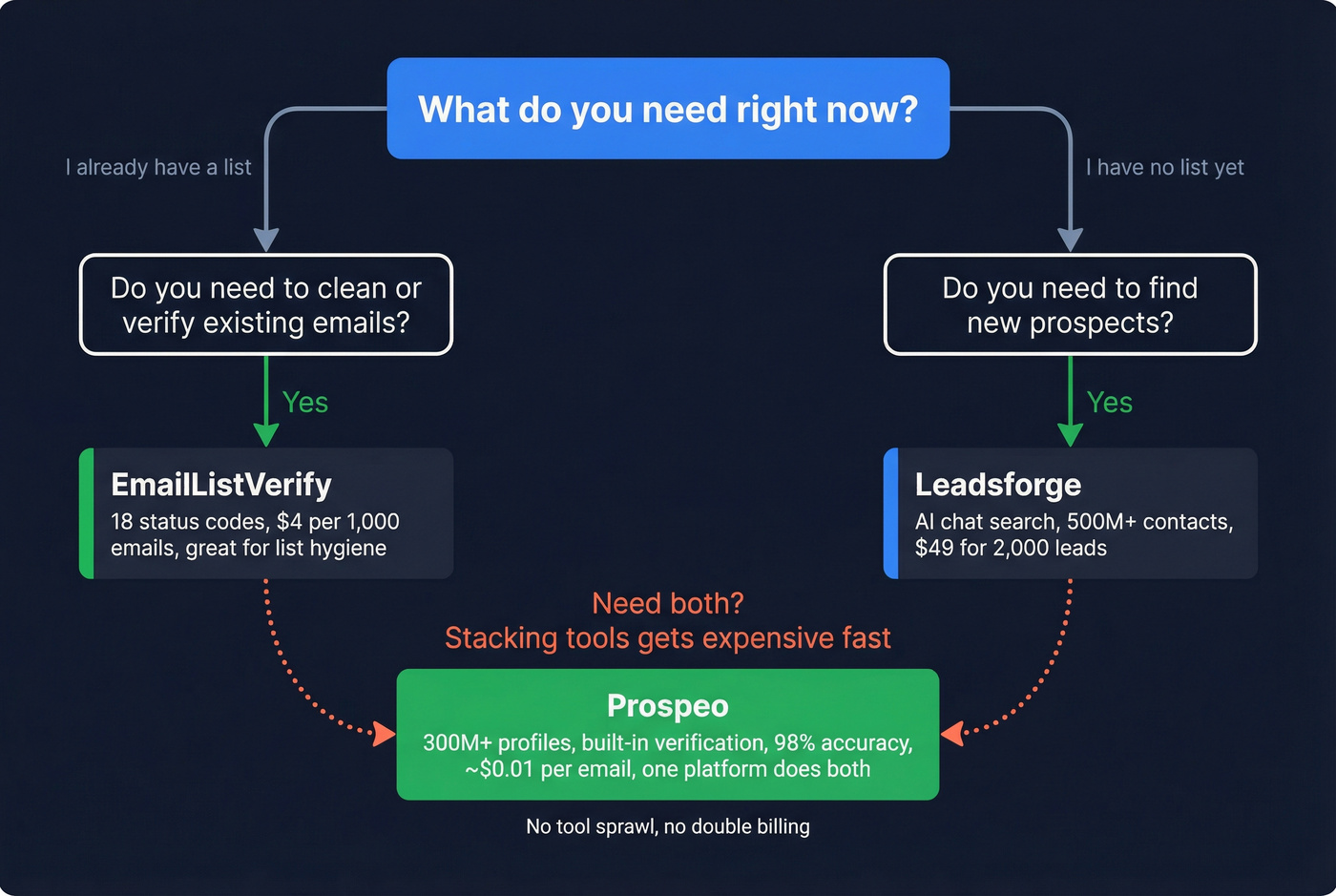
Choose Leadsforge if:
- You're starting from zero and need to build prospect lists fast
- You prefer describing your ICP conversationally rather than clicking through filters
- You're already in the Salesforge ecosystem and want native integration
Skip both if you need prospecting and verification under one roof. Stacking two tools means managing two credit systems, two logins, and two invoices - and the math rarely works out in your favor.
One Platform, No Tool Sprawl
Here's the thing: most teams weighing EmailListVerify vs Leadsforge don't need two tools. They need one that does both. We've seen teams burn through $150+/month stacking platforms when a single solution costs a fraction of that.
Prospeo kills the two-tool workflow. It's a B2B data platform with 300M+ professional profiles, 143M+ verified emails, and built-in real-time verification. Email accuracy hits 98% thanks to a proprietary 5-step verification process with catch-all handling, spam-trap removal, and honeypot filtering. Records refresh every 7 days - the industry average is six weeks, which means most databases are already stale by the time you download them. Search across 30+ filters and layer in intent data across 15,000 topics, plus technographics and job changes. At roughly $0.01/email, finding and verifying 5,000 contacts costs a fraction of what you'd spend stacking a lead tool plus a separate verifier. There's a free tier with 75 verified emails per month to test it - no contracts, no sales calls.
EmailListVerify claims 97% accuracy. Leadsforge charges extra credits just to validate what it finds. Prospeo's proprietary verification catches spam traps, honeypots, and catch-all domains in a single workflow - 98% email accuracy, 143M+ verified emails, zero tool sprawl.
75 free verified emails per month. No contracts, no sales calls.
FAQ
Can Leadsforge replace EmailListVerify?
No. Leadsforge finds leads, but email validation is separate and uses additional credits. They're complementary tools, not substitutes - you'd still need a dedicated verifier or a unified platform that bundles prospecting and verification into one credit system.
Is EmailListVerify's 97% accuracy realistic?
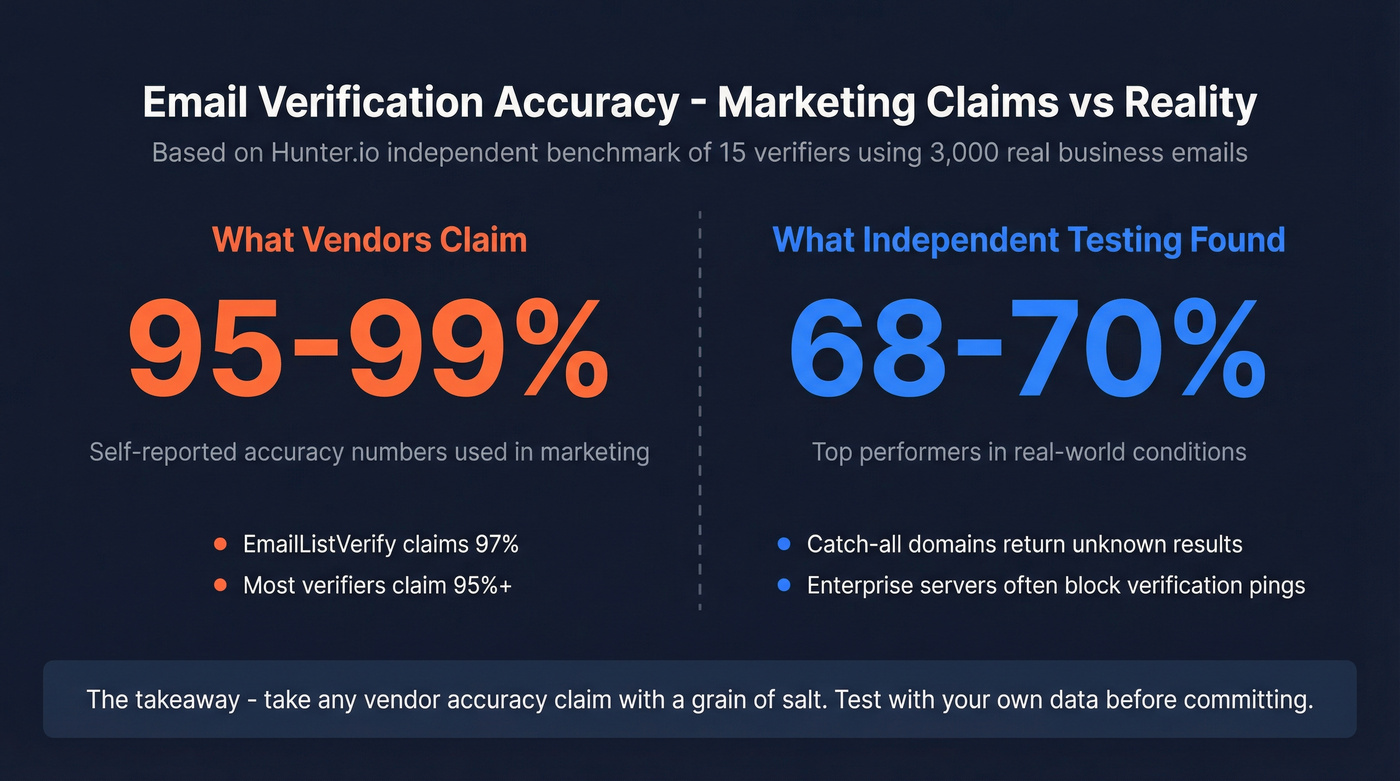
Vendor accuracy claims of 95-99% are marketing numbers. Hunter's benchmark of 15 verifiers using 3,000 real business emails showed top performers landing around 68-70% accuracy on that dataset. "Unknown" and catch-all results are unavoidable, especially on enterprise domains with stricter server configurations. Take any vendor's self-reported number with a grain of salt.
What's the cheapest way to find and verify B2B emails?
Stacking a lead tool plus a separate verifier means paying for lead credits and then paying again to validate. A unified platform with built-in verification - like Prospeo at ~$0.01/email - covers both for significantly less. For teams that need both capabilities, the two-tool stack is the expensive way to solve a one-tool problem.