

EmailListVerify vs SalesIntel: Which One Do You Actually Need?
One tool cleans your email list. The other builds it from scratch. Comparing EmailListVerify and SalesIntel is like comparing a car wash to a car dealership - they both involve cars, but you'd never confuse the services. EmailListVerify runs about $24 per 10,000 verifications. SalesIntel costs a median of $17,599/year. That gap tells you everything about how different these products are.
30-Second Verdict
EmailListVerify wins if you've already got a list - exported from your CRM, scraped from events, inherited from a departing rep - and need to scrub it before hitting send. Pay-as-you-go, no contract, done in hours.
SalesIntel wins if you need net-new B2B contacts with direct dials, especially in the US. Its human-verified database and intent add-ons make it a prospecting platform, not a hygiene tool.
Skip both if you want sourcing and verification in one workflow without an annual contract. Prospeo covers 300M+ profiles with 98% email accuracy and a 7-day refresh cycle - starting free.
They're Not the Same Category
Let's be direct: the only overlap here is the word "verification," and it means different things in each context.
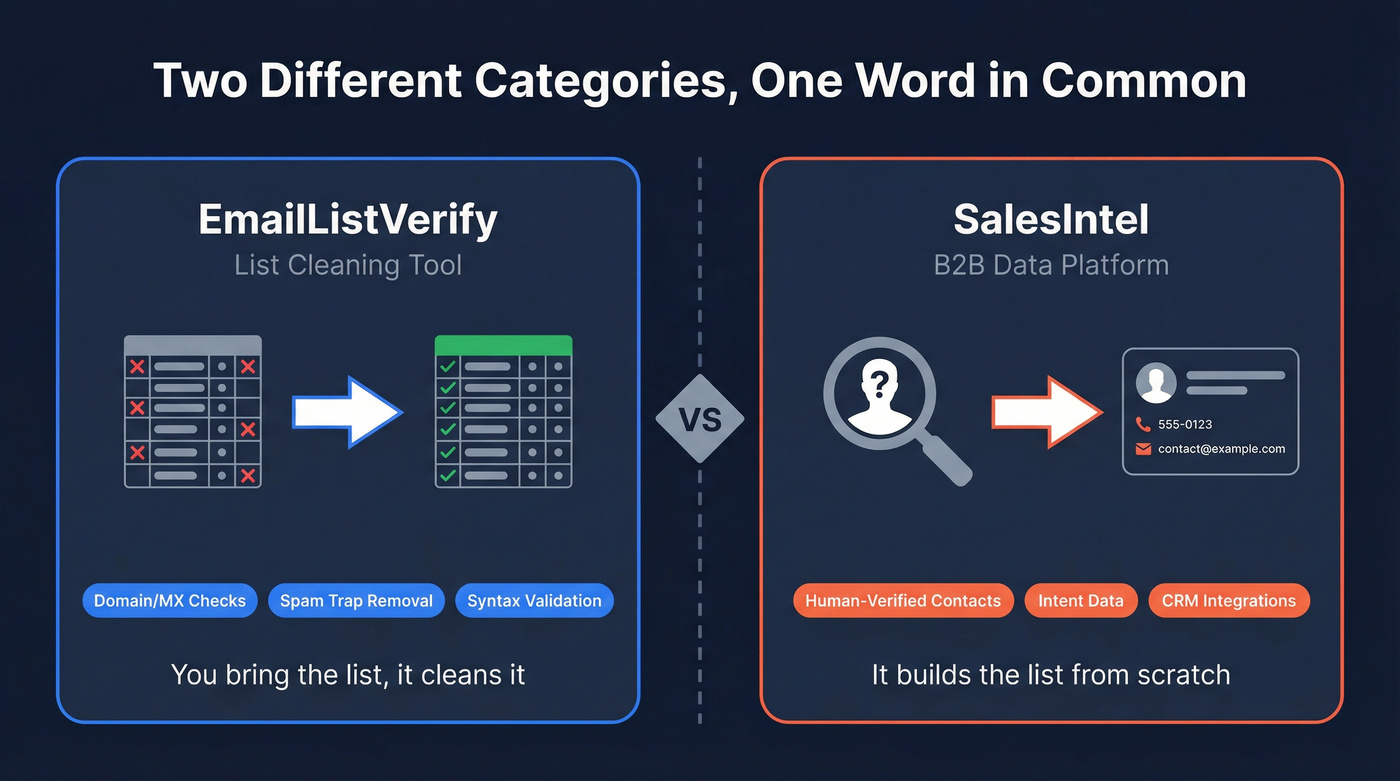
EmailListVerify takes a list you already have and runs it through domain checks, MX validation, syntax verification, and spam-trap removal. The goal is deliverability - keeping your bounce rate low so your domain doesn't get torched.
SalesIntel verifies contacts inside its own database so you pull accurate records when prospecting. It's a data platform with verification baked in, not a standalone cleaning service. You might need both. Or neither.
EmailListVerify at a Glance
EmailListVerify does one thing fast: bulk email list cleaning at 100,000 verifications per hour.
Strengths: 97% accuracy on verification results, true pay-as-you-go credits that never expire, 100 free verifications to test, GDPR compliance with 256-bit SSL, and deduplication plus syntax, MX, and spam-trap removal in one pass. The tool returns 18 distinct status classifications - useful granularity if you want to set your own risk thresholds rather than relying on a simple valid/invalid binary. Reddit threads on r/Emailmarketing have flagged this as a real advantage over competitors that only give you a thumbs-up or thumbs-down.
Tradeoffs: A handful of integrations, a dated UI, and an email finder feature that burns 5 credits per lookup - not a prospecting database. Zero intent data, zero company intelligence.
For pure list hygiene, the economics are unbeatable. But don't expect it to help you find anyone new.
SalesIntel at a Glance
SalesIntel is a full B2B sales intelligence platform built around human-verified contact data. The database covers 200M+ decision-maker contacts, 54M+ verified mobile numbers, and 40M+ companies, all refreshed on a 90-day cycle. It positions itself as a cost-conscious alternative to ZoomInfo - and for mid-market US teams, that pitch lands.
The human verification angle is the core differentiator. SalesIntel employs 250 full-time researchers plus 2,000 certified Research-on-Demand researchers, verifying 1.75M contacts every week. Layer in intent data with 60K+ signals and visitor identification for ABM workflows, and you've got a proper GTM data stack. CRM integrations with Salesforce, HubSpot, Outreach, Salesloft, Marketo, Microsoft Dynamics, and Zoho round things out.
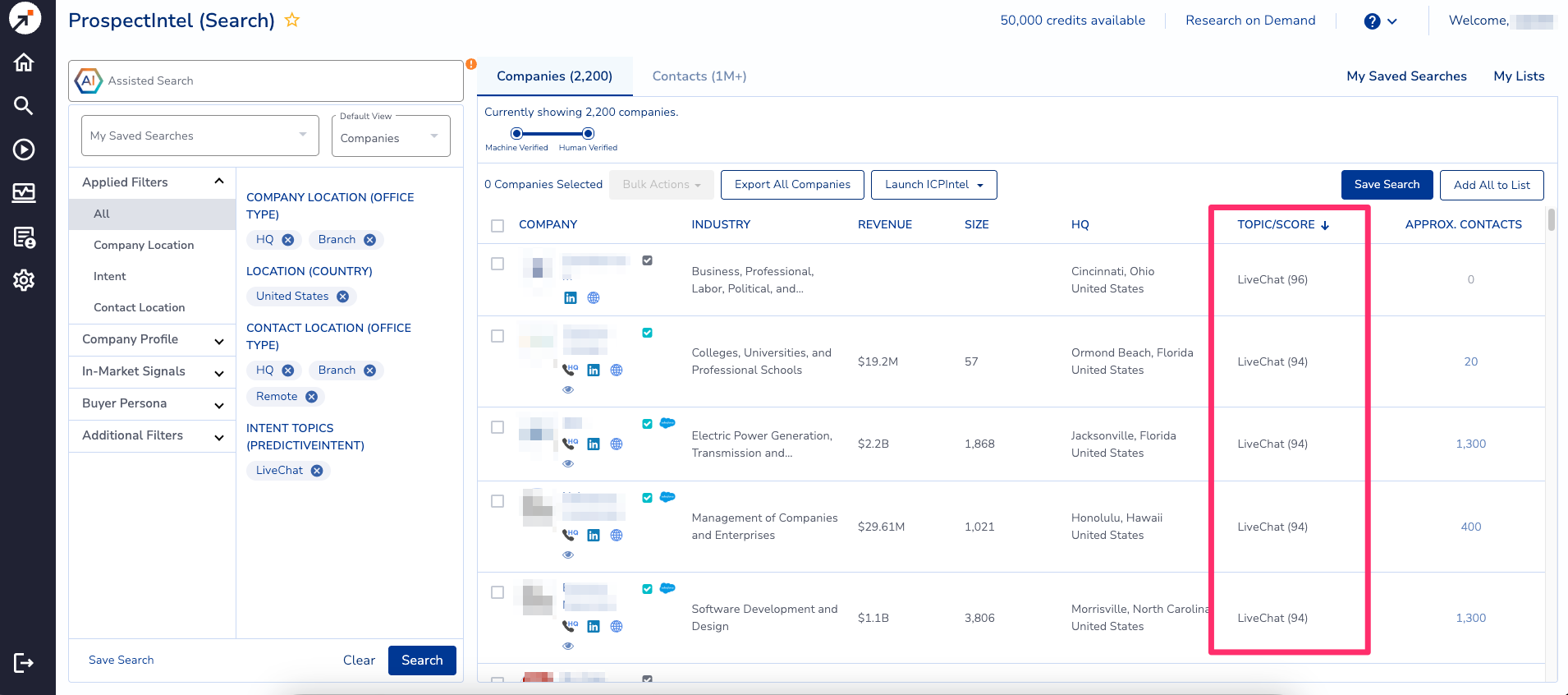
On G2, SalesIntel holds a 4.3/5 across 538 reviews. Users praise ease of use and CRM integrations. The recurring complaints? Outdated data and inaccurate contacts - ironic for a platform that leads with "human-verified." Coverage also thins significantly outside North America. If you're selling into EMEA or APAC, set expectations accordingly.

EmailListVerify cleans lists but can't find contacts. SalesIntel finds contacts but charges $17K+/year and refreshes every 90 days. Prospeo gives you 300M+ profiles with 98% email accuracy on a 7-day refresh cycle - sourcing and verification in one workflow, starting at $0.01/email.
Stop paying twice for what one platform handles natively.
How Verification Actually Works in Each Tool
Both tools "verify" emails, but the mechanisms are completely different.
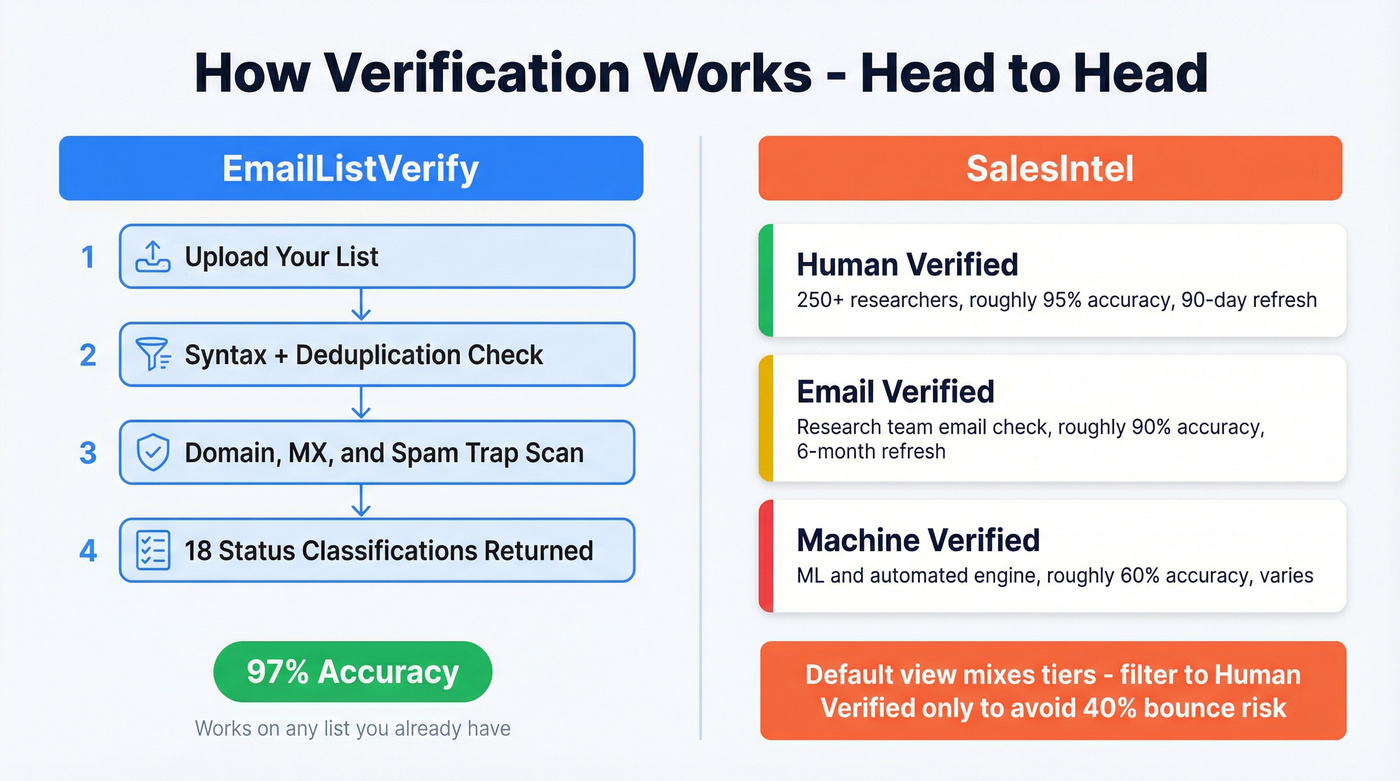
EmailListVerify runs your existing list through automated domain/MX/syntax checks in bulk. It tells you which emails are valid, risky, or dead. No contact data, no enrichment - just a clean/dirty verdict on what you already have.
SalesIntel uses a tiered system inside its database:
| Tier | Method | Accuracy | Refresh |
|---|---|---|---|
| Human Verified | Researchers manually verify | ~95% | 90 days |
| Email Verified | Research team email-only check | ~90% | 6 months |
| Machine Verified | ML/automated engine | ~60% | Varies |
By default, SalesIntel shows human and email verified contacts. A slider expands results to include machine-verified records - but at ~60% accuracy, you're rolling the dice on four out of ten contacts. We'd strongly recommend filtering to human-verified only if you care about bounce rates at all.
Side-by-Side Comparison
| Prospeo | EmailListVerify | SalesIntel | |
|---|---|---|---|
| Primary job | Prospecting + verification | List cleaning | B2B prospecting |
| Best for | Sourcing + verifying in one step | Pre-send hygiene | Net-new US contacts |
| Verification | Real-time, 5-step | Bulk domain/MX/syntax | Tiered (human/ML) |
| Accuracy | 98% email accuracy | 97% (vendor-reported) | ~95%/90%/60% by tier |
| Data sourcing | 300M+ profiles, 143M+ emails, 125M+ mobiles | None | 200M+ contacts, 54M+ mobiles |
| Refresh cycle | 7 days | N/A | 90 days |
| Pricing model | Self-serve credits | Pay-as-you-go | Annual contract |
| Cost anchor | ~$0.01/email + free tier | ~$24/10K emails | ~$17,599/yr median |
| Integrations | Salesforce, HubSpot, Clay, Zapier, Make | ~11 tools | Salesforce, HubSpot, Outreach, Salesloft+ |
| Pick this if... | You want one tool for both jobs | You only need to clean a list | You need US contacts + intent signals |
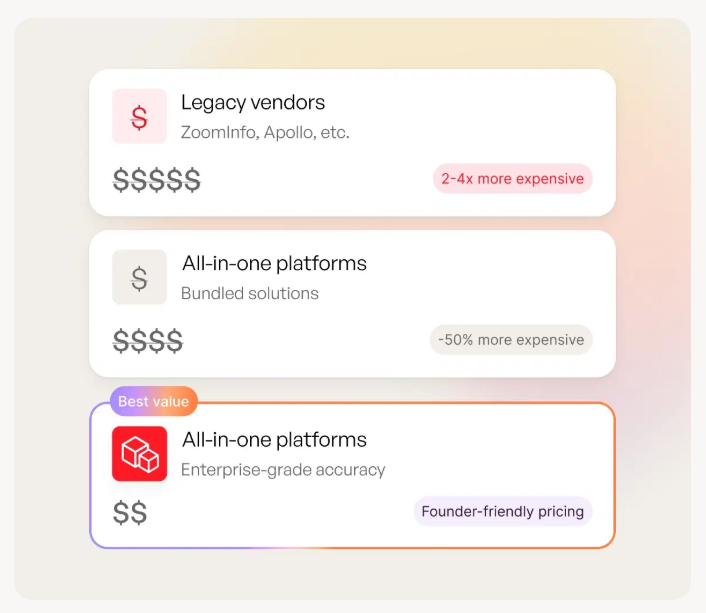
Here's the thing most teams comparing these two are actually looking for a single platform that sources and verifies. Paying $17K+/year for contacts and then paying again to clean them is a workflow tax that shouldn't exist in 2026.
What It Costs in Practice
Cleaning 50K emails before a campaign. EmailListVerify: roughly $120, no contract. Upload, verify, download. That's it.
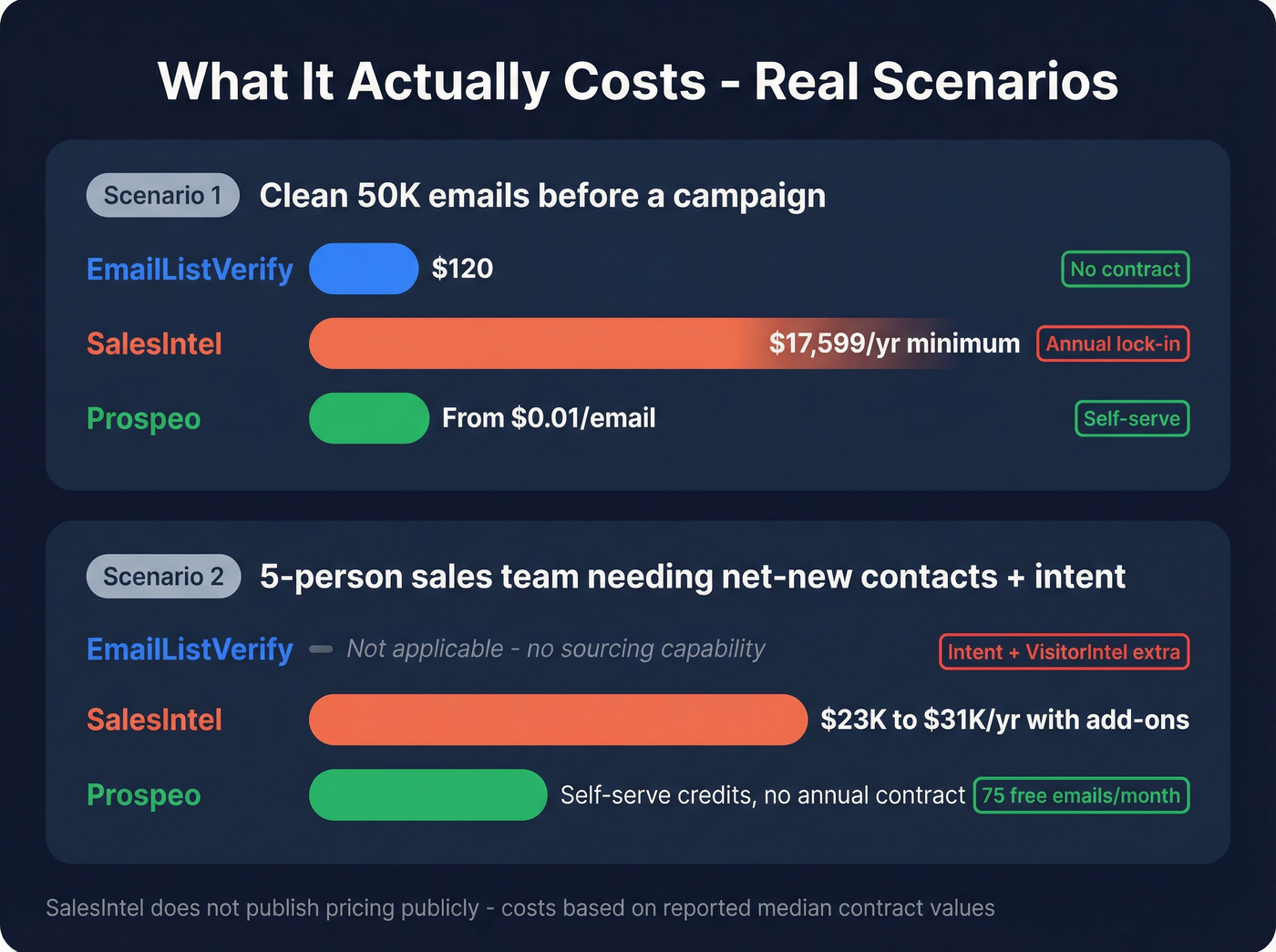
A 5-person sales team needing net-new contacts. SalesIntel's median contract runs $17,599/year, but add intent data ($5K-$10K/year) and VisitorIntel ($1K-$3K/year) and you're budgeting $23K-$31K annually. Every plan requires an annual commitment, and SalesIntel doesn't publish pricing on its site - which makes comparison shopping genuinely frustrating. We spent more time trying to pin down their actual costs than testing the product itself.
Which Should You Pick?
Your CRM list is stale and you're about to launch sequences - go with EmailListVerify. Clean it, reduce bounces, protect your domain. Simple.
If you're trying to fix deliverability end-to-end, start with an email deliverability guide and track your email bounce rate before you scale volume.
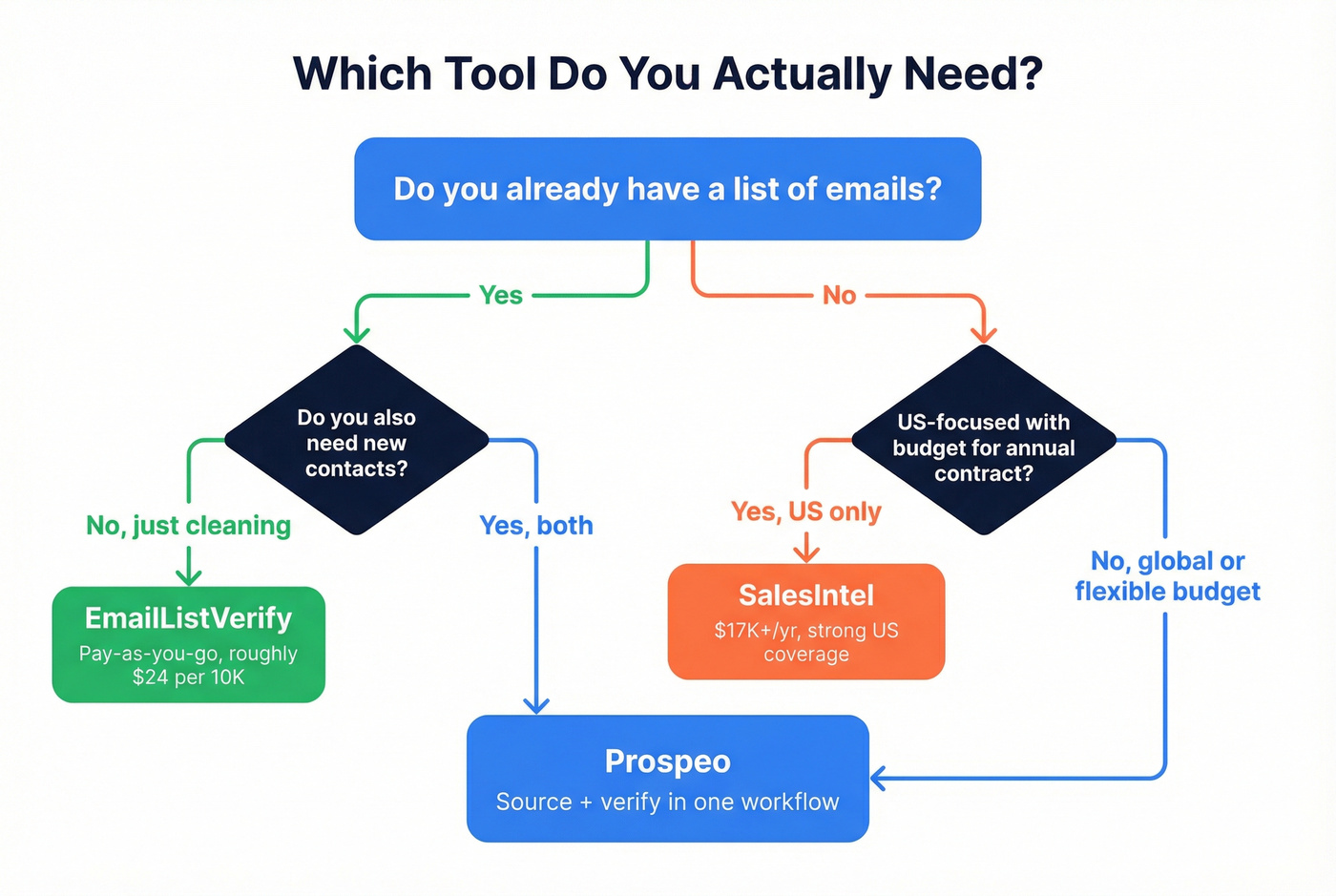
You need to build targeted prospect lists from scratch - that's SalesIntel's category, not a verifier's.
You're US-focused and want intent signals layered on contacts - SalesIntel earns its price here, assuming you can stomach the annual commitment.
You're selling outside North America - skip SalesIntel. Coverage drops off hard. Look at tools with global databases instead.
You need both sourcing and verification without juggling two tools - keep reading.
Do Both in One Place
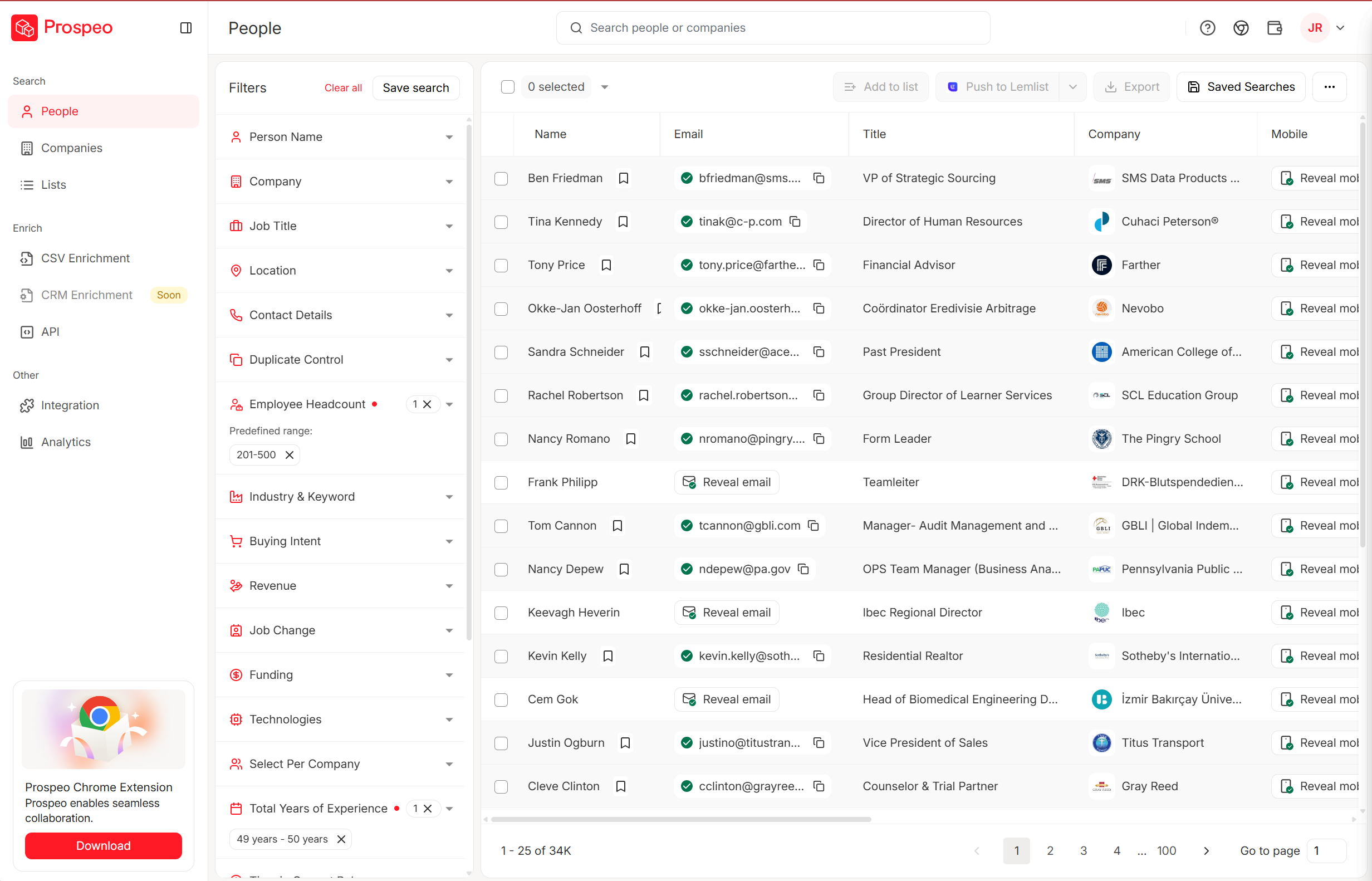
Most teams don't need a separate verifier and a separate database. With Prospeo's B2B database, you search 300M+ profiles using 30+ filters - buyer intent, technographics, job changes, funding, headcount growth - and every email comes back with 98% verified accuracy on a 7-day refresh cycle. That's not a 90-day refresh with a slider that drops you to 60% accuracy. It's real-time verification built into the prospecting workflow, with 125M+ verified mobile numbers on top.
Combining sourcing and verification in one workflow cuts list-building time by hours each week. One of our customers, Stack Optimize, built from $0 to $1M ARR while maintaining 94%+ deliverability and sub-3% bounce rates across all their clients - no separate verification tool needed. Native integrations with Salesforce, HubSpot, Clay, Zapier, Make, Lemlist, Instantly, and Smartlead mean your data flows straight into campaigns without manual CSV gymnastics.
SalesIntel's machine-verified tier hits ~60% accuracy. EmailListVerify can't source a single contact. Prospeo's 5-step verification delivers 98% email accuracy across 143M+ verified emails and 125M+ mobile numbers - no annual contract, no sales call required.
Get enterprise-grade data without the enterprise price tag.
FAQ
Is SalesIntel an email verification tool?
Not in the traditional sense. SalesIntel verifies contacts within its own database using a tiered system - human verified at ~95%, email verified at ~90%, and machine verified at ~60%. It won't bulk-clean an external list the way dedicated verification tools do.
Can I use EmailListVerify to find new leads?
It has an email finder, but at 5 credits per lookup it's expensive compared to actual prospecting databases. EmailListVerify is purpose-built for cleaning lists you already have. For net-new discovery, you need a different category of tool entirely.
Why does SalesIntel say "unlimited" but still feel limited?
"Unlimited" applies to export and enrichment credits per user per month. Research on Demand is capped at 10 credits per user monthly, intent data is a paid add-on, and some users report a 500-contact export limit per pull. The annual commitment adds fine print too - read the contract carefully before signing.
What's a good alternative that combines both capabilities?
Prospeo merges net-new B2B prospecting with real-time 5-step email verification - 300M+ profiles, 143M+ verified emails, 98% accuracy, and a 7-day data refresh. Self-serve pricing starts free with 75 emails per month and no annual contract, making it practical for teams that don't want to juggle two separate tools.