

FindThatLead vs Null Bounce: Different Tools, Different Jobs
Comparing FindThatLead vs Null Bounce is like comparing a Swiss Army knife to a scalpel. One finds emails, sends campaigns, and stores leads in a built-in CRM. The other verifies email lists via CSV uploads or an API. They're both rated 4.0/5 on G2, but that's where the similarities end.
Here's the thing: most teams weighing this comparison don't actually need to choose between them. They need a single platform that handles both jobs well. But if you're set on one or the other, here's the honest breakdown.
30-Second Verdict
- Pick Null Bounce if you already have a list and just need cheap, fast verification. At $15 for 10,000 emails, it's hard to beat on price.
- Pick FindThatLead if you need to find emails AND run outreach campaigns from one dashboard. The $49/mo plan bundles credits for prospecting and outreach in one place.
Side-by-Side Feature Comparison
| Feature | FindThatLead | Null Bounce | Winner |
|---|---|---|---|
| Email finding | ✅ | ❌ | FindThatLead |
| Email verification | ✅ (uses credits) | ✅ (dedicated) | Null Bounce (cheaper) |
| Cold email sending | ✅ Built-in | ❌ | FindThatLead |
| Chrome extension | ✅ | ❌ | FindThatLead |
| API | ❌ | ✅ RESTful API | Null Bounce |
| CRM integrations | 7 listed | None listed | FindThatLead |
| G2 rating | 4.0/5 (93 reviews) | 4.0/5 (1 review) | FindThatLead (more data) |
| Free trial | 7-day trial | 100 free verifications | Null Bounce |
| Paid starting price | $49/mo | $5/1,000 emails | Null Bounce |
| Credits expire? | Monthly reset | Never | Null Bounce |
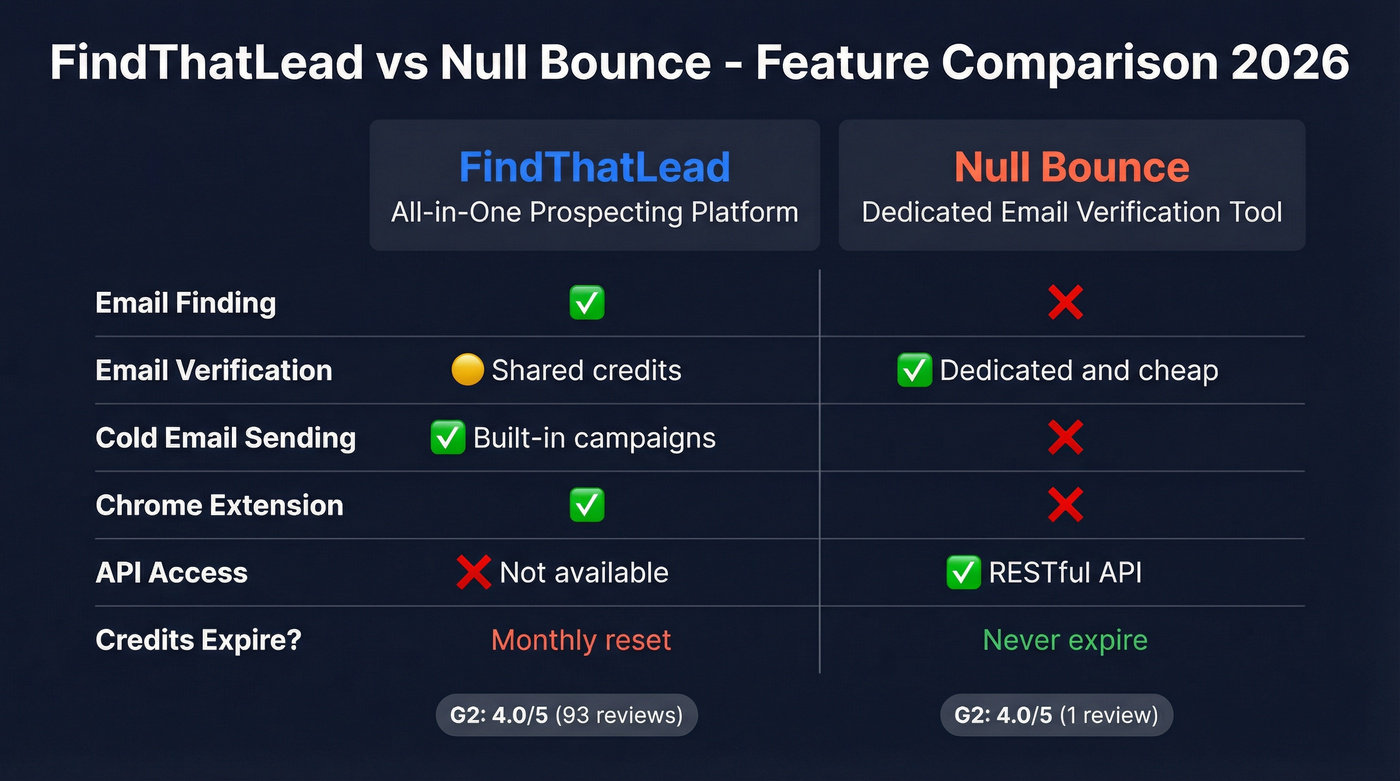
FindThatLead is a prospecting-and-outreach platform. Null Bounce is a verification utility. They solve different problems.

FindThatLead shares credits across finding, verifying, and sending. Null Bounce can't find emails at all. Prospeo finds and verifies in one platform - 98% email accuracy, proprietary 5-step verification, and credits starting at $0.01/email. No monthly resets. No juggling two tools.
One platform. Finding and verification. 98% accuracy. Start free today.
Deep Dives
FindThatLead
Pick FindThatLead if you're a solo founder or small sales team that wants prospecting, verification, and cold email in one dashboard. We've seen this tool work well for teams that want simplicity over power - everything lives in one place, even if nothing is best-in-class.
The tiers break down like this:
- Growth ($49/mo): 5,000 monthly credits, 2 campaign accounts, Chrome extension, up to 400 emails/day.
- Startup ($150/mo): 18,000 monthly credits, 4 campaign accounts, up to 500 daily emails, 4 users.
- Suite ($399/mo): 30,000 monthly credits, 10 campaign accounts, up to 750 daily emails, 6 users.
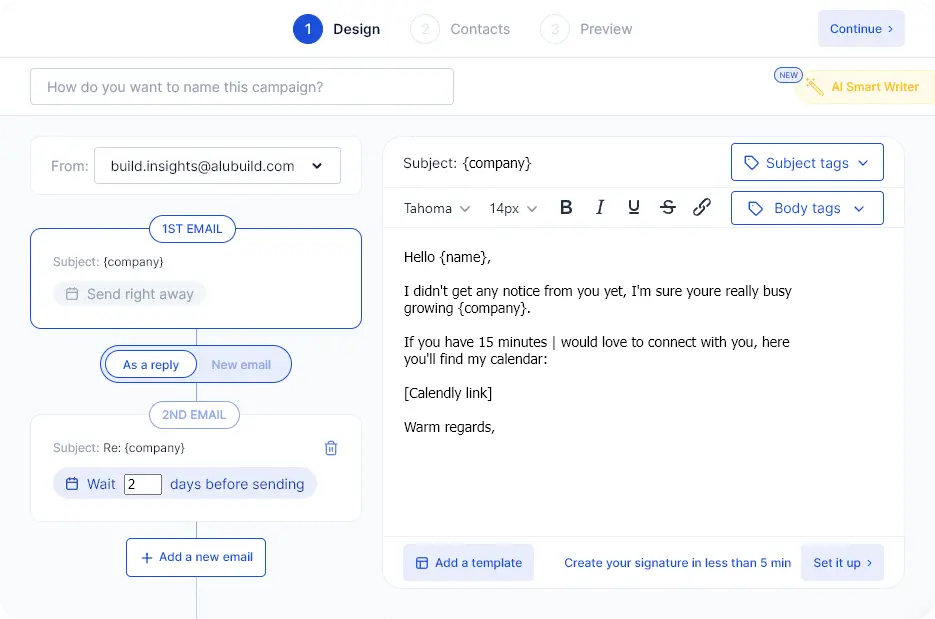
One detail worth knowing: FindThatLead requires at least two sources to confirm an email before marking it valid. That's a meaningful quality gate, and it shows in the G2 reviews - users consistently praise email accuracy and ease of use. The platform is also GDPR-compliant and EU-focused, which matters if you're prospecting European contacts. Recent reviews do flag gaps in coverage for smaller local businesses, though.
The dealbreaker for technical teams: no API. If you're running enrichment pipelines or need programmatic access, FindThatLead won't work. Credits are also monthly - a slow prospecting month means wasted budget, and there's no rollover.
Null Bounce
Null Bounce strips email verification down to its essentials. Upload a CSV, wait (100,000 emails process in under 2 hours), and download your cleaned file. The verification stack covers syntax validation, disposable email detection, catch-all domain checking, MTA/MX validation, hard bounce detection, and anti-greylisting. For a budget tool, that's solid.
The pricing is genuinely cheap. Credits never expire. Duplicates are free. Unknown results don't cost you anything - you only pay for successfully validated emails. Uploaded data gets erased after 30 days unless you delete it sooner, and team accounts let you invite unlimited teammates with role-based access, which is a nice touch for agencies managing multiple client lists.
The catch: with only a single G2 review and no published accuracy percentage, you're taking a leap of faith. That lone reviewer praised Yahoo accuracy but flagged the lack of bulk API and integrations as pain points. We couldn't find usable Reddit threads about either tool, so most of the public signal here comes from G2 alone.
Pricing Breakdown
We've run these numbers enough times to know the sticker price never tells the full story.
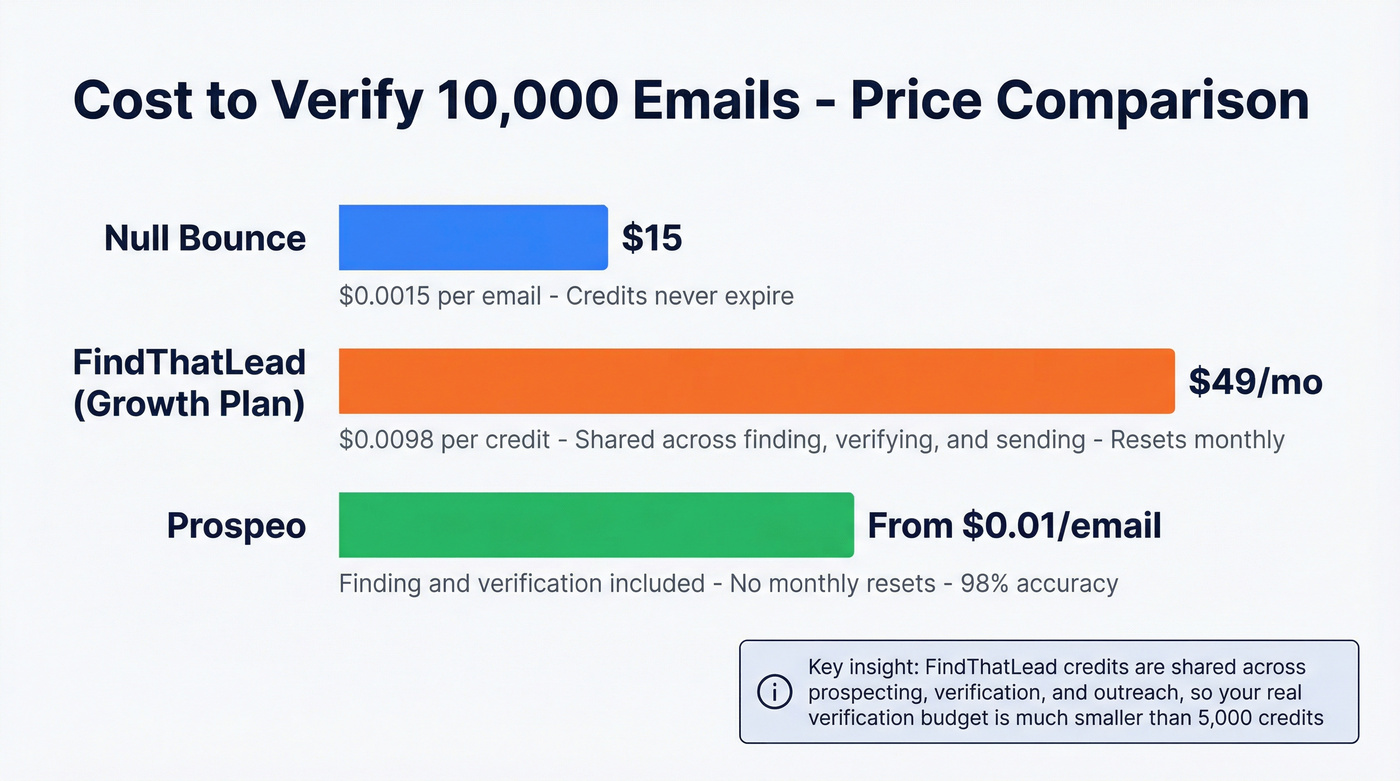
To verify 10,000 emails, Null Bounce costs $15. FindThatLead's Growth plan is $49/mo for 5,000 credits - but those credits are shared across the platform, so your effective verification budget shrinks fast if you're also prospecting and sending campaigns from the same pool.
Purely on verification, Null Bounce runs about $0.0015/email at the 10K tier. FindThatLead's blended cost per credit lands around $0.0098, and verification eats from the same shared pool as everything else.
The other wrinkle: FindThatLead credits reset monthly. Miss a month, lose them. Null Bounce credits sit there until you use them. For teams with inconsistent volume - say, an agency that ramps hard in Q1 and Q3 but coasts through summer - that difference matters more than the per-unit price.
When Neither Tool Is Enough
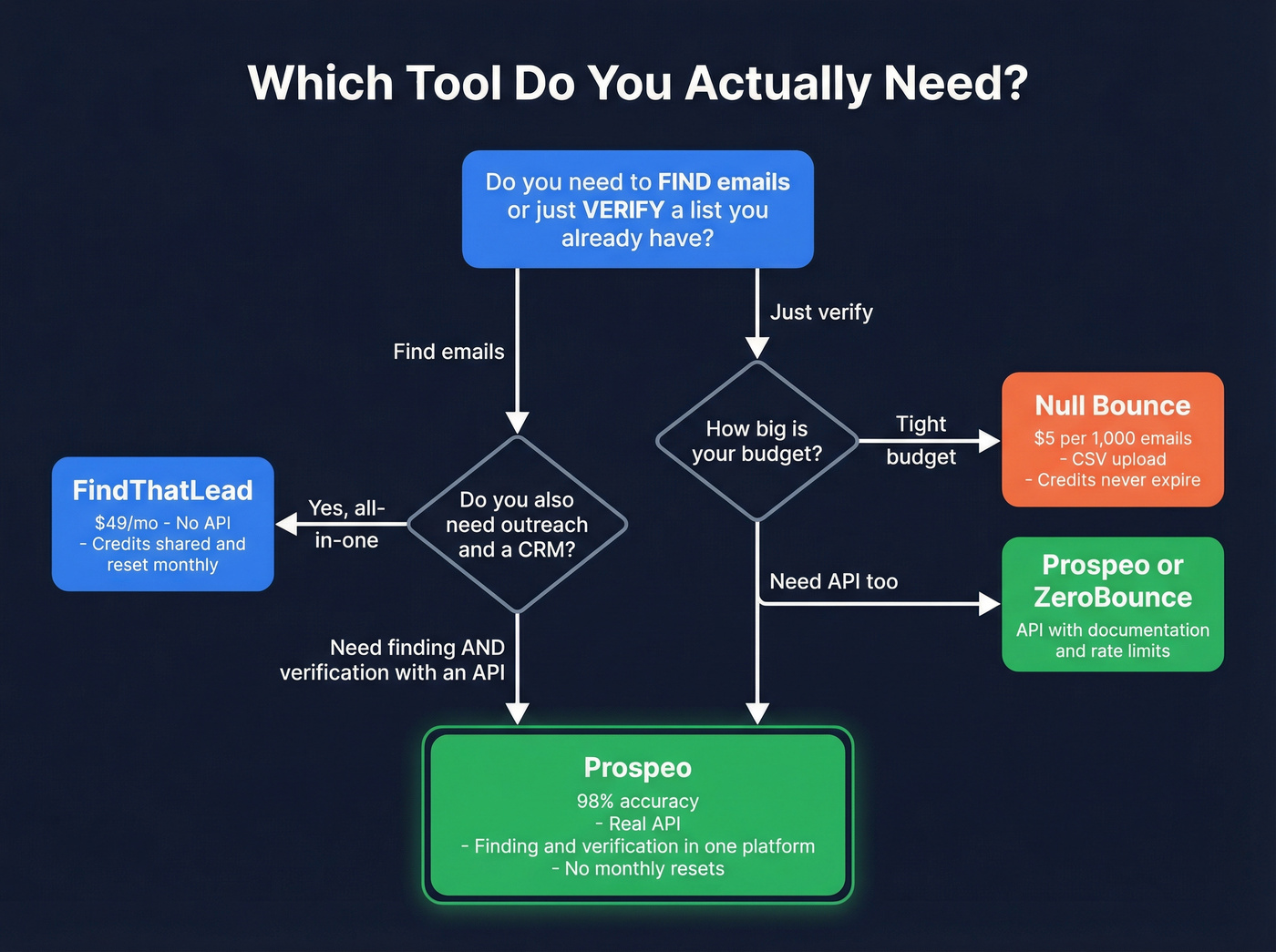
FindThatLead can't verify at scale. No API, monthly credit caps, and credits shared across finding, verifying, and sending. Null Bounce can't find emails at all. If you need both prospecting and verification, you're juggling two tools, two billing cycles, and two dashboards.
If you're building a more complete outbound stack, it also helps to understand lead generation workflow basics and how lead scoring impacts who you verify and contact first.
Let's be honest about accuracy marketing, too. A Hunter benchmark testing 15 verifiers on 3,000 real emails found the top overall accuracy was 70%. A separate Dropcontact benchmark from February 2026 tested 15 email finders on 20,000 real contacts and found effective enrichment rates ranging from roughly 40% to 55%, with hard bounce rates between 0.9% and 1.1%. Every tool markets "99% accuracy," but real-world performance varies dramatically on enterprise domains with catch-all configurations.
If you're trying to reduce bounces, it's worth tracking your email bounce rate and following a real email deliverability guide instead of relying on tool claims alone.

Industry benchmarks show top verifiers hit ~70% accuracy. Prospeo's proprietary infrastructure - with catch-all handling, spam-trap removal, and honeypot filtering - delivers 98% verified email accuracy across 143M+ emails refreshed every 7 days. Plus a real API with 92% match rate.
Skip the accuracy gamble. Get 98% verified emails with a real API.
FAQ
Is Null Bounce accurate?
One reviewer called it "extremely accurate, especially with Yahoo." But with only a single G2 review and no published accuracy percentage, independent validation is thin. Industry benchmarks show top verifiers hit around 70% overall accuracy - expect meaningful variability on catch-all and enterprise domains regardless of which tool you use.
Does FindThatLead have an API?
No. FindThatLead doesn't offer an API as of 2026. If you need real-time verification or automated enrichment workflows, you'll need a different tool. Prospeo, Hunter, and ZeroBounce all offer APIs with proper documentation and rate limits.
Can I use FindThatLead just for verification?
Technically yes - verification is included in FindThatLead's credit system. But at $49/mo for 5,000 credits shared with email finding and outreach, it's expensive for verification alone. Null Bounce at $5 per 1,000 emails is far cheaper if cleaning lists is all you need.
Which tool is better for deliverability?
Neither tool alone solves deliverability. Null Bounce handles list hygiene - removing invalid addresses before they damage your sender reputation. FindThatLead's two-source validation reduces bad emails entering your pipeline. Teams with the best deliverability combine accurate prospecting data with pre-send verification, which is why single-platform solutions that bundle both tend to outperform cobbled-together stacks.