

Follow Up Email After a Meeting: Templates & Tips for 2026
You just finished a promising discovery call. The prospect seemed engaged, asked sharp questions, even hinted at budget. You meant to send a follow up email after a meeting that afternoon. It's now Thursday. The prospect emails your manager asking what was actually agreed on.
That's the moment most deals start dying - not because the meeting went badly, but because nobody documented what happened next.
What You Need (Quick Version)
Send your follow-up the same day - ideally within two hours, and always within 24. Use the 5-part structure: appreciation, recap, key decisions, action items with owners and deadlines, and a clear next step. Keep the whole thing under 150 words. Never write "just following up" without adding something new: a resource, a clarification, a specific question. And thread your reply to the original calendar invite or email chain so mobile readers don't lose context. If you just want the templates, jump to the scenario-specific ones below.
Why Post-Meeting Follow-Ups Matter
Here's the uncomfortable truth: 44% of salespeople give up after a single attempt. One follow-up increases your chance of getting a response by 11%. The math is embarrassingly simple - most people just don't do it.
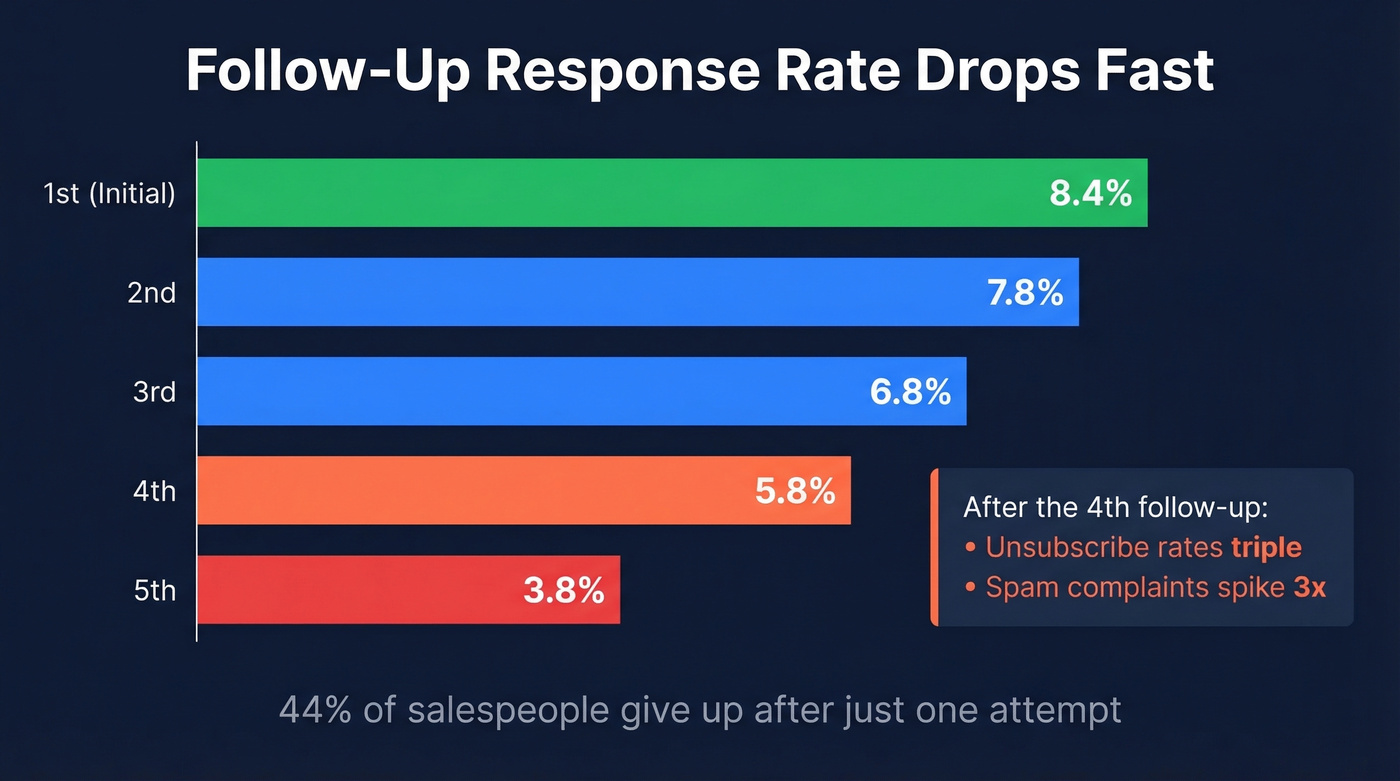
But persistence has diminishing returns. The response-rate decay curve tells the story:
| Follow-Up # | Response Rate |
|---|---|
| 1st (initial) | 8.4% |
| 2nd | 7.8% |
| 3rd | 6.8% |
| 4th | 5.8% |
| 5th | 3.8% |
After the fourth follow-up, unsubscribe rates triple and spam complaints spike more than threefold. Cold outreach averages around 3% reply rates. Your post-meeting email should blow past that - you've already had a conversation. Speed and relevance beat volume every time.
There's a reason the advice "always send a short written summary of what was decided" keeps circulating on r/sales - it prevents the "that's not what we discussed" conversation three weeks later. A meeting recap email isn't just polite. It's a paper trail.
Follow-Up vs. Recap vs. Thank-You
These three get conflated constantly.
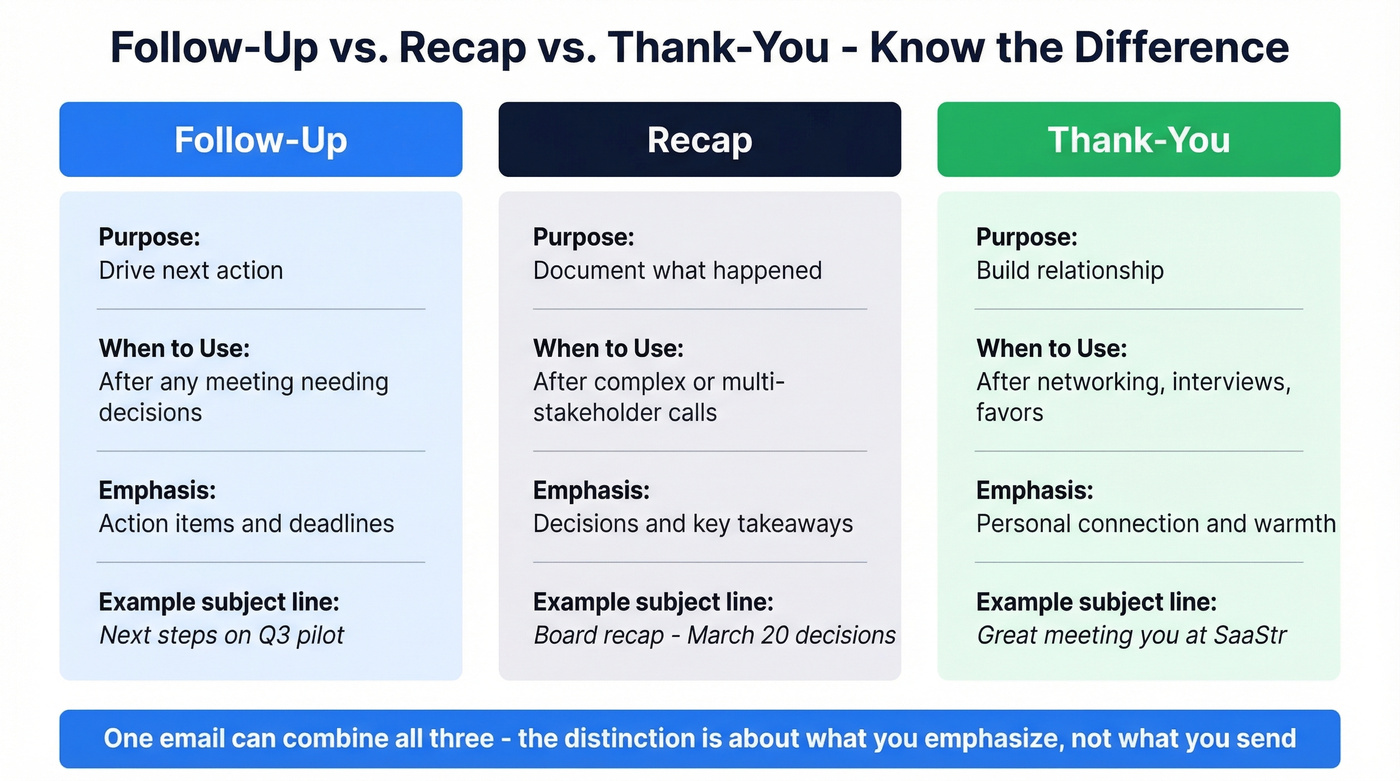
| Type | Purpose | When to Use |
|---|---|---|
| Follow-up | Drive next action | After any meeting needing decisions |
| Recap | Document what happened | After complex or multi-stakeholder calls |
| Thank-you | Build relationship | After networking, interviews, favors |
A single email can combine all three. Your sales demo follow-up should thank the prospect, recap what you showed, and push toward a next step. The distinction matters when you're deciding what to emphasize, not what to send.
The 5-Part Structure
Every effective post-meeting message hits these five beats:
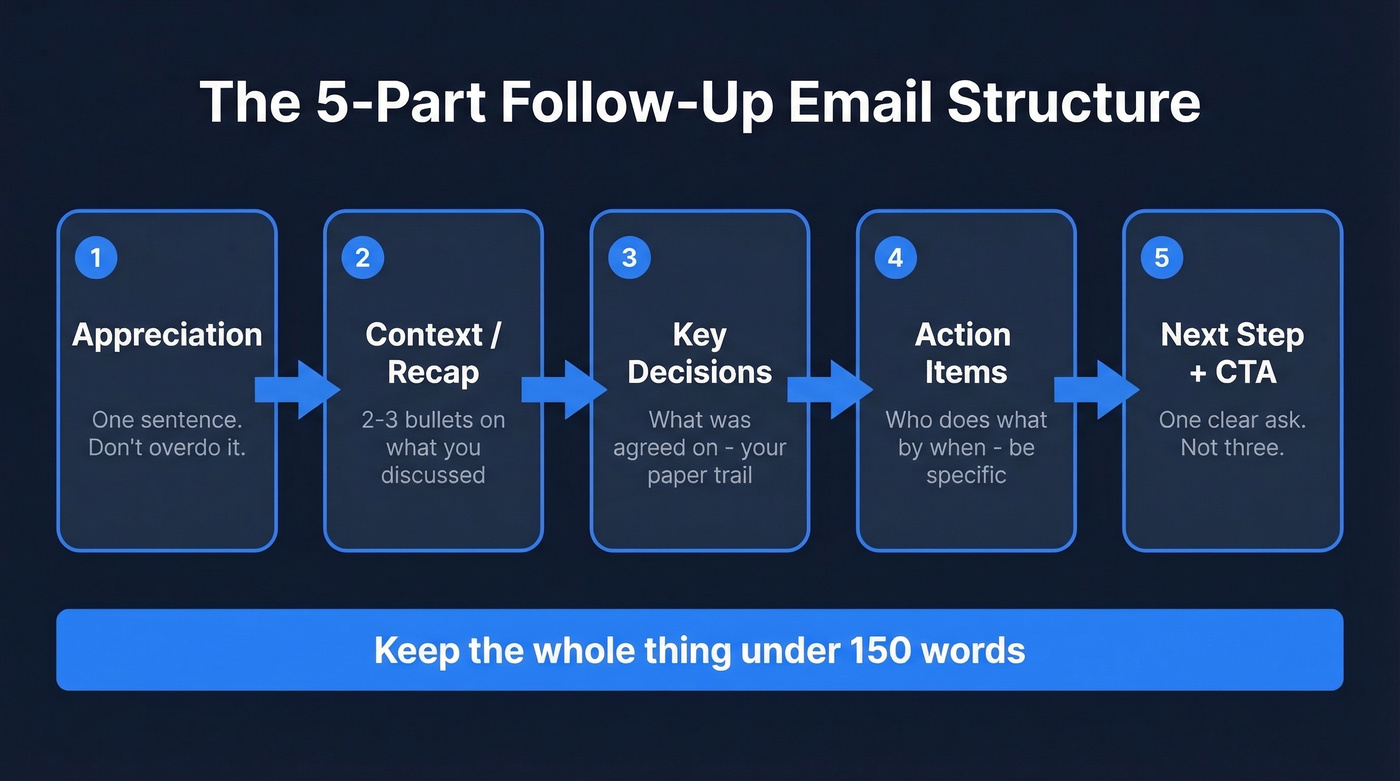
- Appreciation - One sentence. Don't overdo it.
- Context/Recap - What you discussed, in two to three bullets.
- Key Decisions - What was agreed on. This is the paper trail.
- Action Items - Who does what by when. Be specific.
- Next Step + CTA - One clear ask. Not three.
Keep the whole thing under 150 words. Here's what that looks like in practice:
Subject: Re: Q3 campaign kickoff - next steps
Hi Sarah,
Thanks for making time today. Quick recap:
- We're moving forward with the ABM pilot targeting financial services accounts
- Your team will share the target account list by Friday
- We'll have creative mockups ready by June 12
I'll send a calendar invite for the June 14 review. Let me know if I missed anything.
Best, [Name]
That's 68 words. It covers all five parts, and the prospect knows exactly what's happening next.
Pro tip: Draft a skeleton follow-up before the meeting starts, then fill in the specifics as soon as it ends. This eliminates the blank-page problem that causes most delays.
When to Send Your Follow-Up
Speed beats perfection. We've seen teams dramatically reduce no-responses just by sending a decent recap the same day instead of waiting for a polished one two days later. Here's the timing matrix:
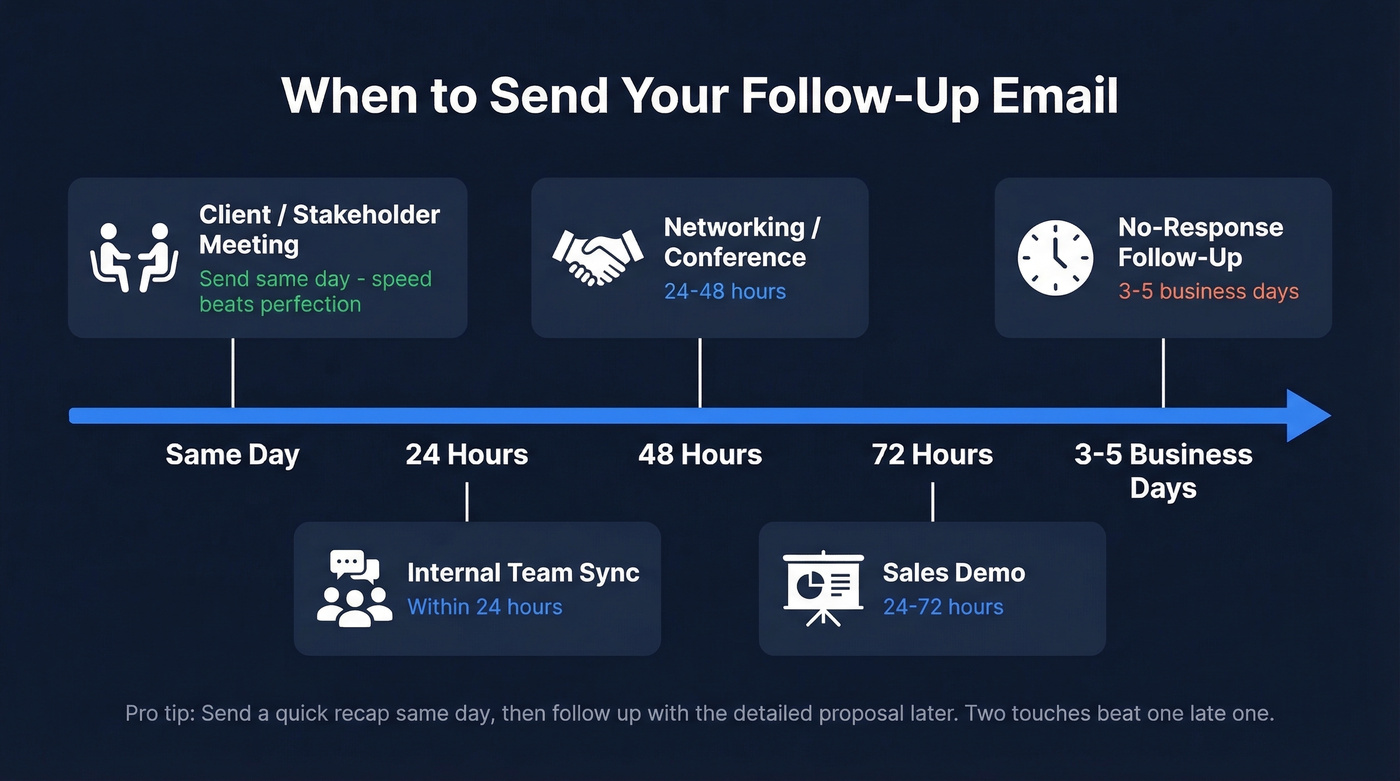
| Meeting Type | Send Within |
|---|---|
| Internal sync | 24 hours |
| Client/stakeholder | Same day |
| Sales demo | 24-72 hours |
| Networking event | 24-48 hours |
| No-response follow-up | 3-5 business days |
For sales demos, the 24-72 hour window exists because you sometimes need to customize a proposal or pull together pricing. But if you can send a quick recap the same day and follow up with the detailed proposal later, do that. Two touches beat one late one.

A perfect follow-up email means nothing if it bounces. Prospeo's 98% email accuracy and 7-day data refresh ensure your post-meeting recap actually reaches the prospect's inbox - not a dead address.
Stop crafting follow-ups that land in the void.
6 Mistakes That Kill Your Reply Rate
"Just following up" with no new info
The r/sales subreddit nailed the bad version of this: "Hey _____ just following up, did you receive our quote? let me know if you have any questions!" That email says nothing. It adds no value. It just reminds the prospect you exist, which isn't a compelling reason to reply.
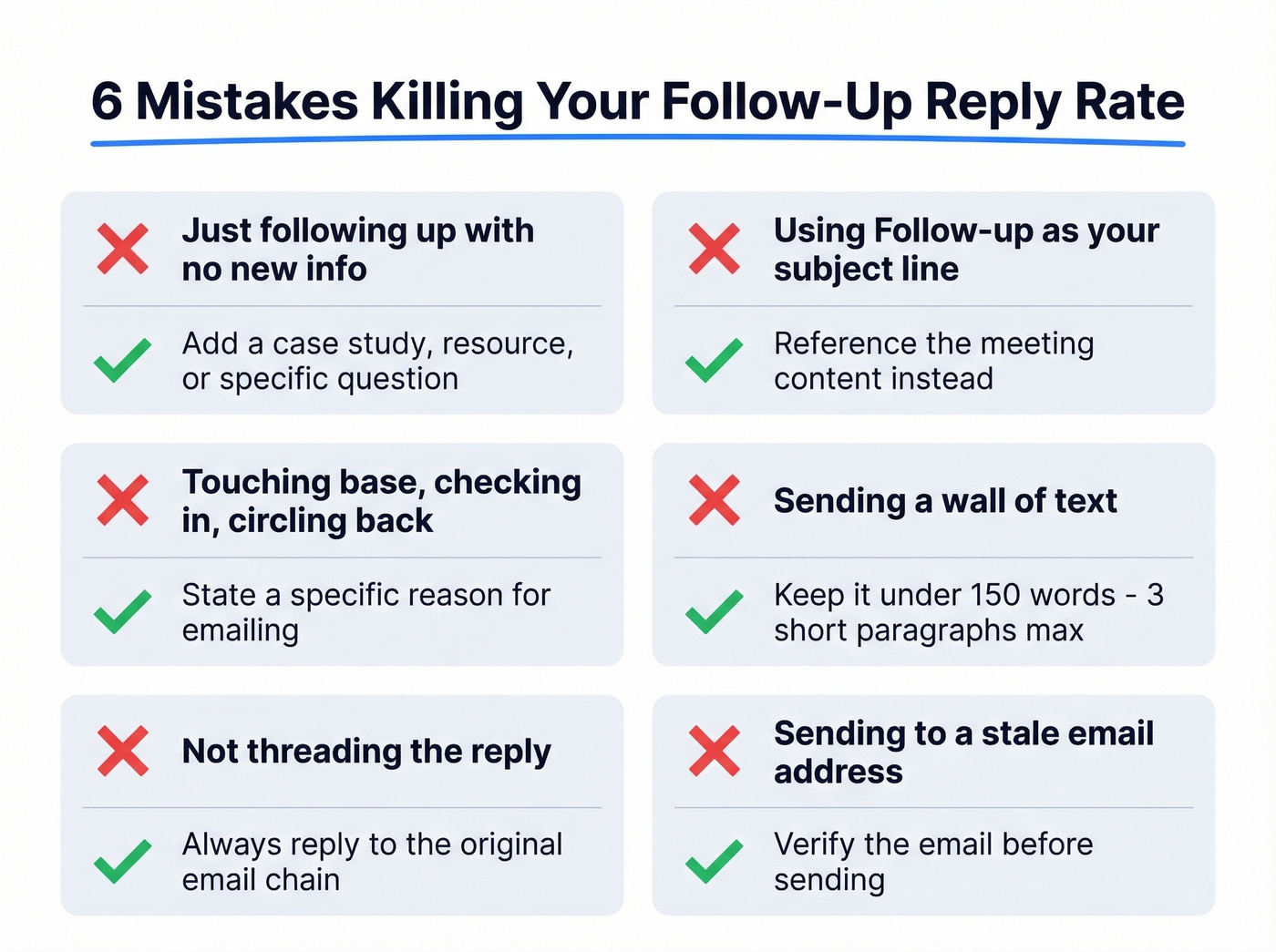
The fix: Every message referencing your meeting notes should add something - a relevant case study, a clarification on pricing, a specific question about their timeline. "I pulled together a comparison of how [similar company] handled the same integration challenge" gives them a reason to open. If you need more options, borrow a few lines from these sales follow-up templates.
Using "Follow-up" as your subject line
NetHunt's research flags this one, and they're right. "Follow-up" as a subject line tells the reader nothing. It's the email equivalent of "hey."
The fix: Reference the meeting content. "Next steps on the Q3 pilot" or "ABM account list - ready when you are." For more ideas, swipe from these email subject line examples.
"Touching base" / "Checking in" / "Circling back"
These phrases signal that you have nothing to say but feel obligated to email anyway. The prospect knows it. You know it. Replace the filler phrase with a specific reason for the email. "Sharing the ROI calculator we discussed" beats "just circling back" every time. If you want alternatives that still sound human, see how to say just checking in professionally.
Sending a wall of text
Look - if your follow-up is longer than 150 words, you're over-explaining. Prospects scan emails on phones between meetings. Three short paragraphs max. Write the email, then cut it in half. If you can't, you're trying to do too much in one message.
Not threading the reply
GMass's analysis highlights this: when you send a follow-up as a new email instead of replying to the original thread, you break context. On mobile, the recipient has no idea what meeting you're referencing. Always reply to the original email chain or calendar thread.
Sending to a stale email address
If you're seeing bounces, fix deliverability before you fix copy. Start with your email bounce rate, then work through a full email deliverability guide so your follow-ups actually land.
8 Ready-to-Use Templates
Internal Team Meeting Recap
Subject: [Meeting topic] - action items
Team, thanks for a productive session. Here's what we landed on:
- [Decision 1]
- [Decision 2]
Action items:
- [Name]: [Task] by [Date]
- [Name]: [Task] by [Date]
Next check-in: [Date/Time]. Holler if I missed anything.
Sales Discovery / Demo Follow-Up
Subject: Re: [Company] x [Your Company] - next steps
Hi [Name],
Great conversation today. A few things stood out:
- [Pain point they mentioned] - we've seen [similar company] solve this with [approach]
- [Feature/capability] maps directly to your [specific goal]
I'm attaching [resource/proposal/case study]. Want to reconvene [Day] to walk through pricing?
Client Meeting Follow-Up
Subject: Re: [Project name] - decisions + next steps
Hi [Name],
Thanks for today. Here's what we agreed:
- [Decision with owner and deadline]
- [Decision with owner and deadline]
I'll have [deliverable] ready by [Date]. Let me know if anything needs adjusting.
Networking / Conference Follow-Up
Subject: Good meeting you at [Event] - [specific topic]
Hi [Name],
Enjoyed our conversation about [specific thing you discussed]. Your point about [detail] stuck with me.
I'd love to continue the conversation - [would you be open to a 15-min call next week / here's that article I mentioned]?
Skip this template if you're tempted to pitch immediately. Networking follow-ups are about building the relationship, not closing a deal. If you jump straight into a demo request, you'll burn the connection.
Job Interview Follow-Up
Subject: Thank you - [Role title] conversation
Hi [Name],
Thank you for the conversation about the [Role] position. I'm excited about [specific aspect of the role/team/mission].
Our discussion about [specific challenge they mentioned] reinforced my interest - it's exactly the kind of problem I've tackled at [previous company]. Looking forward to next steps.
Investor / Board Meeting Follow-Up
Subject: [Company] board recap - [Date]
Hi all,
Summary of today's session:
- Key decisions: [List]
- Open items: [List with owners]
- Next board meeting: [Date]
Deck and financials attached. Flag anything I missed by EOD Friday.
No-Response Second Touch
Each follow-up should address a different objection - cost, urgency, trust, need. Don't just repeat yourself louder.
Subject: Re: [Original subject]
Hi [Name],
I know things get buried. Wanted to share [new resource/data point/relevant update] that ties back to our conversation about [topic].
Is [specific next step] still on your radar for [timeframe]?
Final "Breakup" Follow-Up
Subject: Re: [Original subject] - closing the loop
Hi [Name],
I've reached out a couple of times and haven't heard back - totally understand if the timing isn't right.
I'll close this out on my end. If [project/initiative] comes back up, I'm here. Just reply to this thread.
Breakup emails work because they remove pressure. Counterintuitively, they often get the highest reply rates of any sequence.
Adapting Follow-Ups for Remote Meetings
Remote attendees miss sidebar conversations, body language, and the hallway debrief. Your follow up email after a meeting is their single source of truth - treat it that way. If you're running a lot of virtual calls, these remote sales meeting tips help keep recaps clean and actionable.
Even when most attendees were in the room, if one person dialed in, the follow-up needs to work for them. That means including the recording link or transcript if available, a shared doc where notes live, time-zone-aware deadlines ("EOD Friday" means different things in London and San Francisco), and enough context about why something was decided - not just what was decided. Remote participants who only see the outcome without the reasoning will second-guess it in the next meeting, and you'll relitigate the whole thing.
Subject Lines That Get Opened
Subject lines between 41-50 characters can boost CTR by up to 17.57%. Here's the real rule, though: if your subject line contains the word "follow-up," rewrite it.
Sales follow-ups:
- "Next steps on [project/initiative]"
- "[Company] x [Your Company] - proposal attached"
- "The ROI calc we discussed"
Internal recaps:
- "[Meeting topic] - action items"
- "Decisions from today's sync"
Networking:
- "Great meeting you at [Event]"
- "[Topic you discussed] - that article I mentioned"
No-response:
- "Quick update on [topic]"
- "Closing the loop on [project]"
- "One more thing re: [specific detail]"
Tools That Automate Follow-Ups
Sales reps spend 21% of their day writing emails. Salesforce data shows reps spend just 30% of their time actually selling - the rest goes to admin, data entry, and drafting messages. AI transcription tools reclaim a chunk of that lost time by generating recaps from your meeting recordings. If you're evaluating options, start with these best AI tools for automating sales follow-ups and compare against dedicated follow up email software.
| Tool | Starting Price | Best For |
|---|---|---|
| Otter.ai | Free-$20/mo | Safe default, solid transcription |
| Fireflies.ai | Free-$10/mo (annual) | Searchable meeting history |
| Fellow | Free-$25/user/mo | Teams with structured agendas |
| Grain | Free-$48/user/mo | Sales teams needing CRM sync |
AI tools draft the recap, but you add the judgment. Auto-generated summaries miss nuance, tone, and political context. Use them as a starting point, then edit for the human stuff - what was said between the lines, who seemed hesitant, what wasn't discussed but should've been.
Let's be honest: most teams obsess over the perfect follow-up template when the real problem is simpler. They just don't send one fast enough. In our experience, a rough, honest recap sent 30 minutes after the call beats a beautifully formatted email sent three days later. Every time.
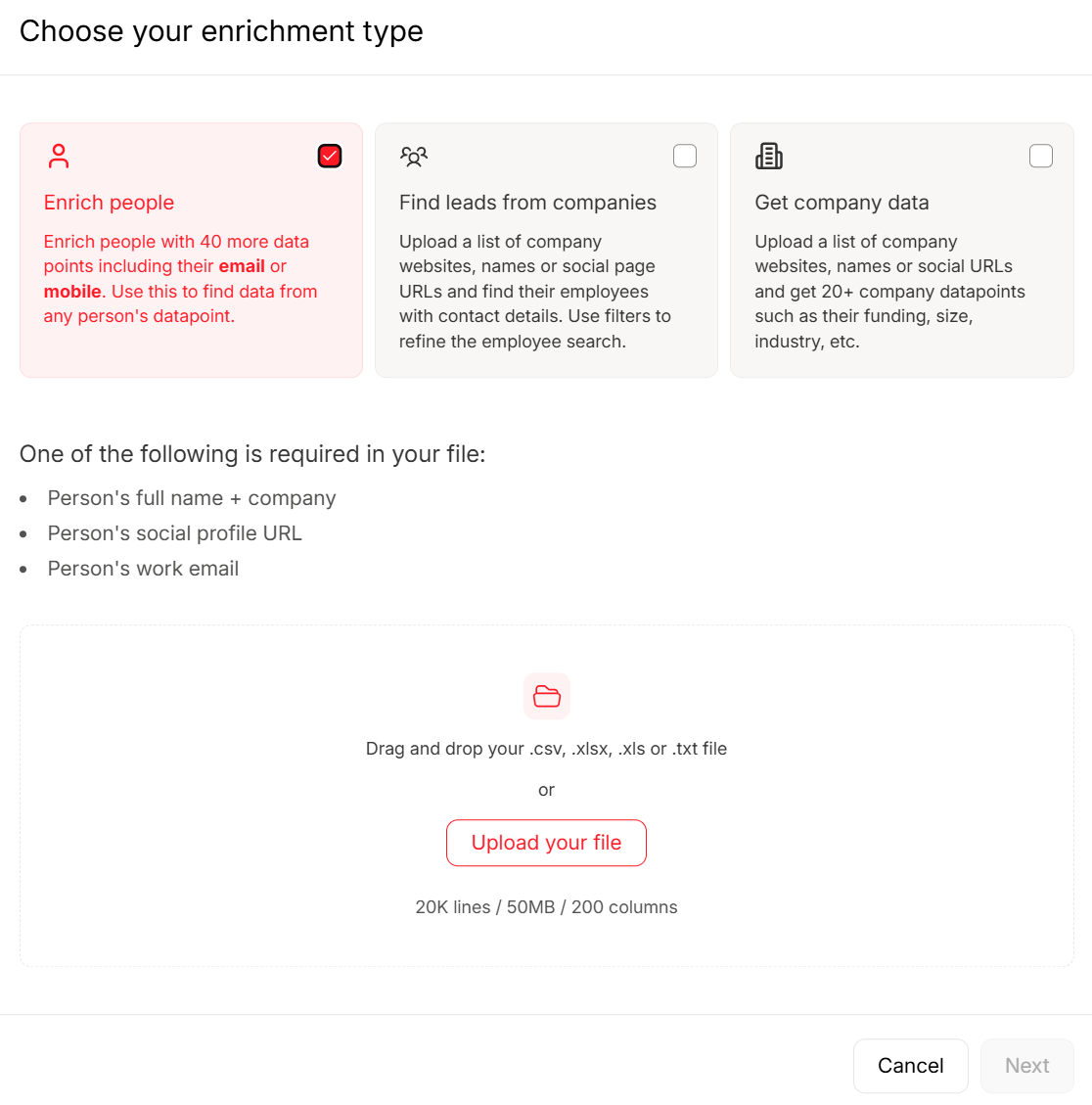
Stale email addresses silently kill reply rates. Prospeo verifies 143M+ emails through a 5-step process with catch-all handling and spam-trap removal - so your meeting follow-ups connect every time.
Send follow-ups to emails that actually work - starting at $0.01 each.
FAQ
How long should a follow up email after a meeting be?
Under 150 words. Cover appreciation, a brief recap, action items with owners and deadlines, and one clear next step. If it takes more than 150 words, split the detail into an attached doc or shared workspace rather than bloating the email body.
How many follow-ups is too many?
Three is the sweet spot for warm contacts. After three unanswered attempts, unsubscribe rates triple and spam complaints spike. Switch channels at that point - a phone call, a mutual connection, or a breakup email that removes the pressure.
Should I follow up if the meeting went badly?
Yes - it's more important than you think. A professional recap after a difficult meeting creates a written record of what was discussed and prevents revisionism. Keep it factual, under 100 words, and focused on documented next steps rather than rehashing the tension.
How do I make sure my follow-up actually reaches the recipient?
Verify the email address before sending. Bounced messages damage your sender reputation and waste the touchpoint entirely. Prospeo's email finder runs a 5-step verification process at 98% accuracy - the free tier covers 75 lookups per month, enough for most individual follow-up workflows.