

How Long Should a Marketing Email Be? (The Real Answer)
You just checked the word count on your draft - 347 words - and now you're second-guessing everything. Every article you've read says "50-125 words." Your email is nearly triple that. So how long should a marketing email be, really?
That popular rule is based on a study that wasn't even measuring marketing email clicks. Let's fix your mental model.
The Quick Version
- Promotional and cold emails: under 150 words. Get to the point, get out.
- Newsletters: 200-1,000+ words. Value density matters more than brevity.
- The "50-125 words" rule everyone cites? It measured reply rates, not marketing email clicks. Stop treating it as gospel.
Where the "50-125 Words" Rule Comes From
In 2016, Boomerang analyzed 40 million+ emails from their users. Emails between 50 and 125 words got response rates above 50%. That stat ricocheted across every marketing blog - HubSpot helped spread it, others parroted it - and it became canon.
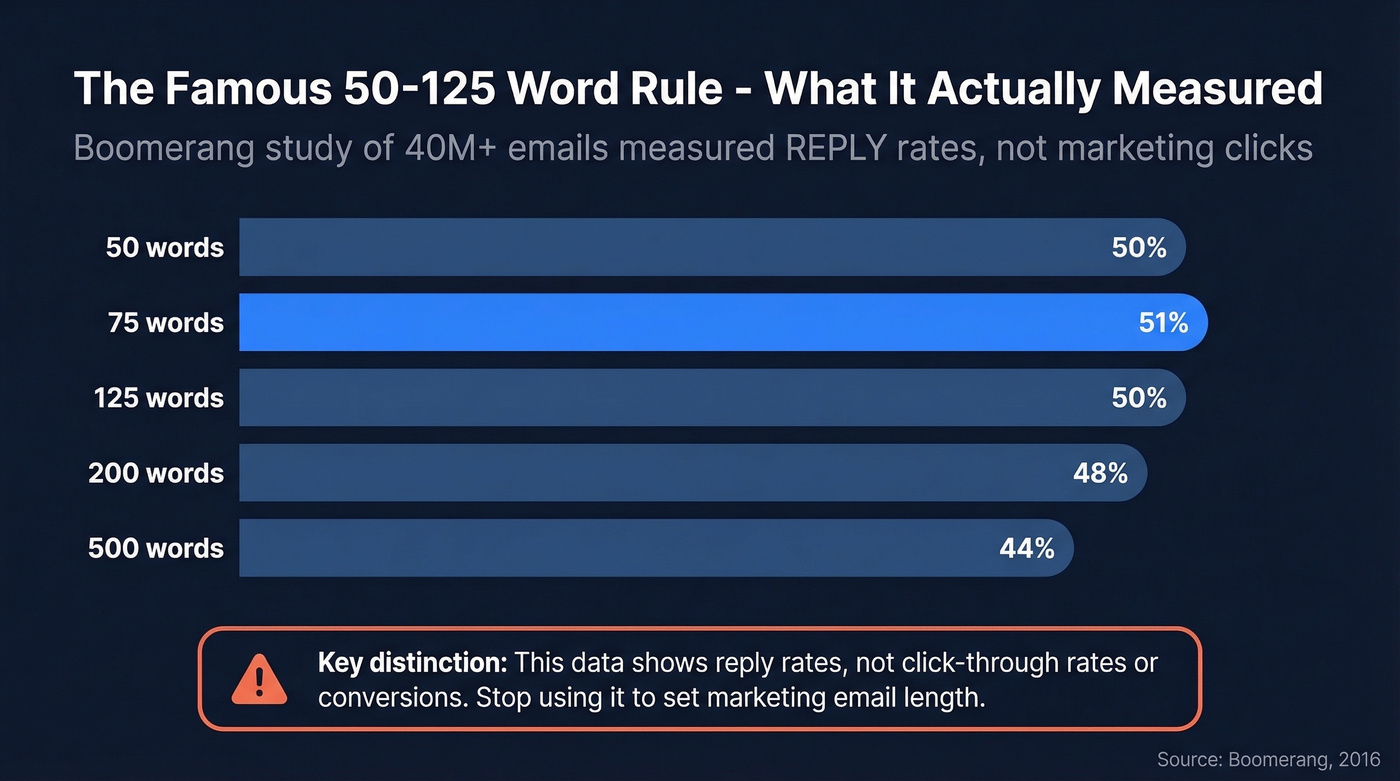
The problem? Boomerang was measuring response/reply rates, meaning whether someone hit reply. It wasn't measuring marketing outcomes like CTA clicks or conversions.
Here's the data that gets quoted most often:
| Word Count | Response Rate |
|---|---|
| 50 | 50% |
| 75 | 51% |
| 125 | 50% |
| 200 | 48% |
| 500 | ~44% |
Response rates declined slowly past 125 words and stayed above ~44% all the way to 500. The dropoff was a gentle slope, not a cliff. That distinction matters a lot more than most marketers realize.
Top Performers Send Longer Emails
If short emails were the only thing that worked, you'd expect top performers to keep everything under 125 words. They don't.
An AWeber analysis of 1,000 emails from 100 high-revenue marketers found the average email ran 434 words. And 24.1% of those emails exceeded 600 words. Ann Handley's newsletter averages 1,838 words per send - and it works because the content delivers genuine value every single time.
We've tested this ourselves. Our best-performing sends are rarely our shortest. When the content is good, length stops being the deciding factor.

You're A/B testing word count while bad data silently kills your sender reputation. Prospeo's 5-step verification catches invalid addresses, spam traps, and catch-all domains - so every send reaches a real inbox. 98% email accuracy at ~$0.01/email.
Fix your list before you fix your copy length.
Match Email Length to Type
The real answer isn't a single number. It's a matrix. The ideal email copy length depends entirely on what you're sending and who you're sending it to.
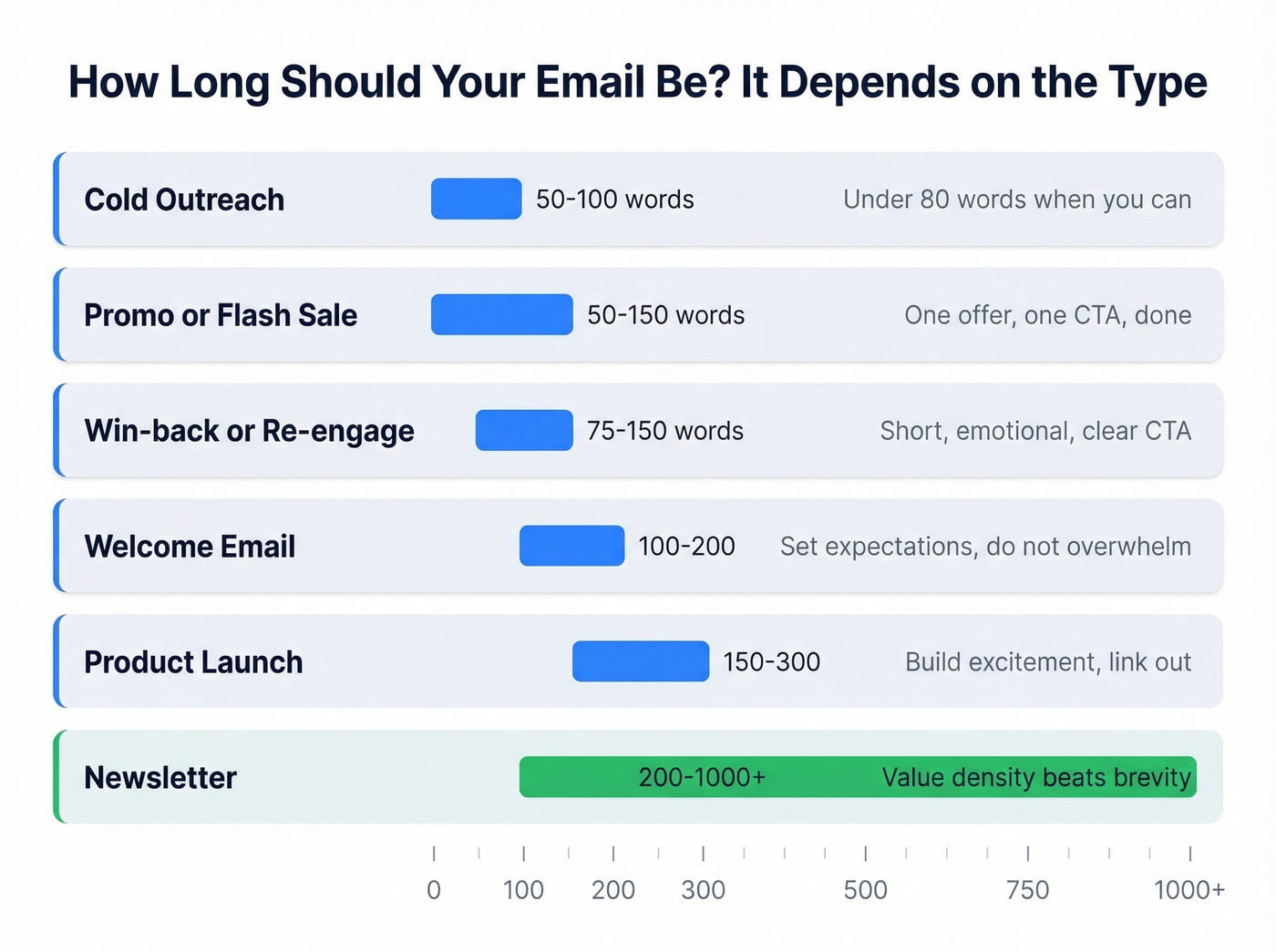
| Email Type | Length | Rationale |
|---|---|---|
| Promo / flash sale | 50-150 words | One offer, one CTA, done |
| Welcome email | 100-200 words | Set expectations, don't overwhelm |
| Newsletter | 200-1,000+ words | Value density beats brevity |
| Cold outreach | 50-100 words | Under ~80 words when you can |
| Win-back / re-engage | 75-150 words | Short, emotional, clear CTA |
| Product launch | 150-300 words | Build excitement, link out |
Cold outreach deserves a special note. Hook choice drives big swings in reply rates - timeline hooks pull a 10.01% reply rate versus 4.39% for generic problem hooks. In one cold email A/B test across 206 prospects, changing the opening line - not the word count - lifted reply rates from 9.8% to 18%. You can obsess over trimming five words, or you can write a better opening line. The opening line wins every time.
Campaign Monitor breaks email anatomy into four parts: subject line, preheader, body copy, and CTA. Most teams obsess over body copy length while ignoring the preheader entirely - that's 40-100 characters of prime real estate going to waste.
Formatting Beats Word Count
A 400-word email that's well-formatted will outperform a 100-word wall of text. Every time.
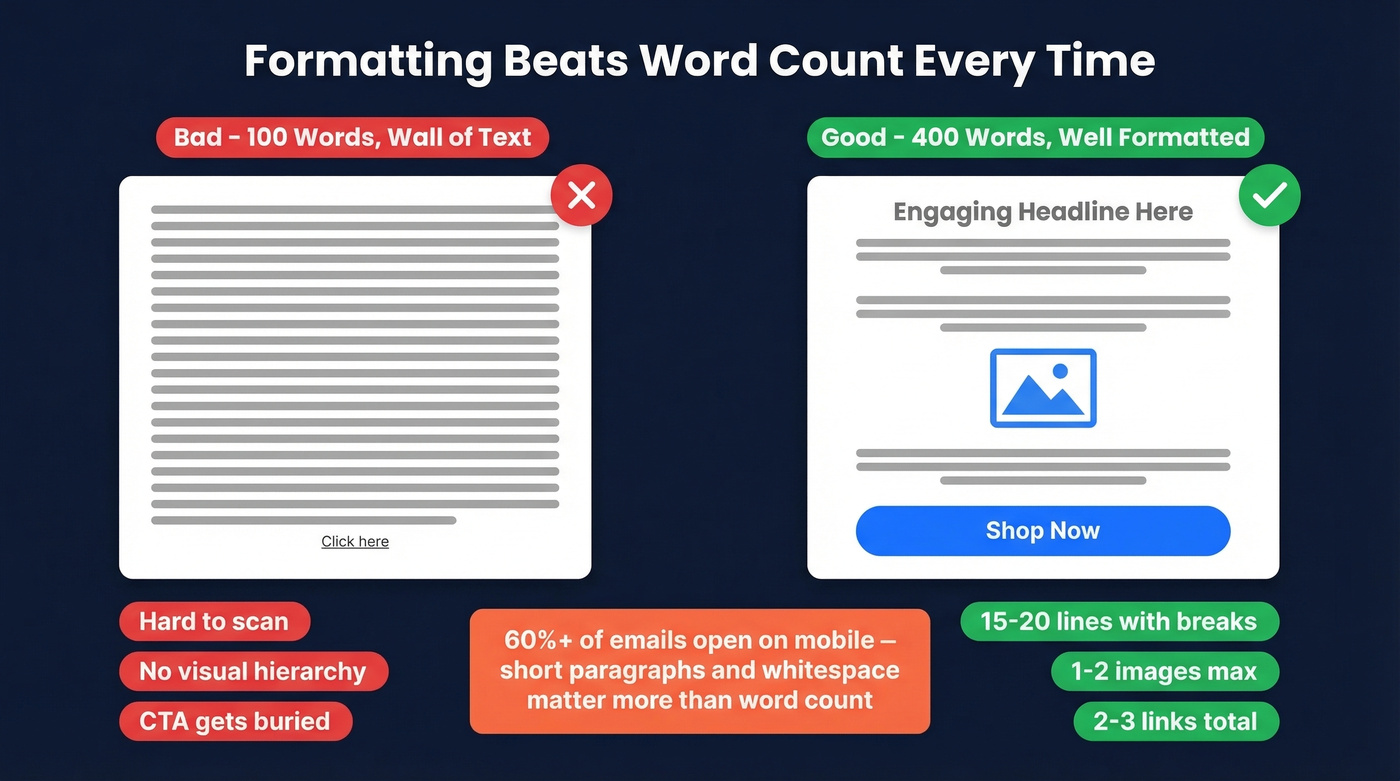
Constant Contact's practical guidance: aim for 15-20 lines of text with clear visual breaks, 1-2 images, and one bold CTA button. Keep links to 2-3 total - more than that and clicks dilute. Write plainly, too. Many email copy guides recommend a very low reading level because skimmability beats cleverness.
Mobile matters more than most people think. Over 60% of all email opens happen on mobile devices. That 600-word email looks very different on an iPhone than in your desktop preview. Short paragraphs and generous whitespace matter more than hitting a magic word count.
Measure What Actually Works
Stop tracking open rates. Apple Mail Privacy Protection pre-fetches emails, inflating open rates across the board.
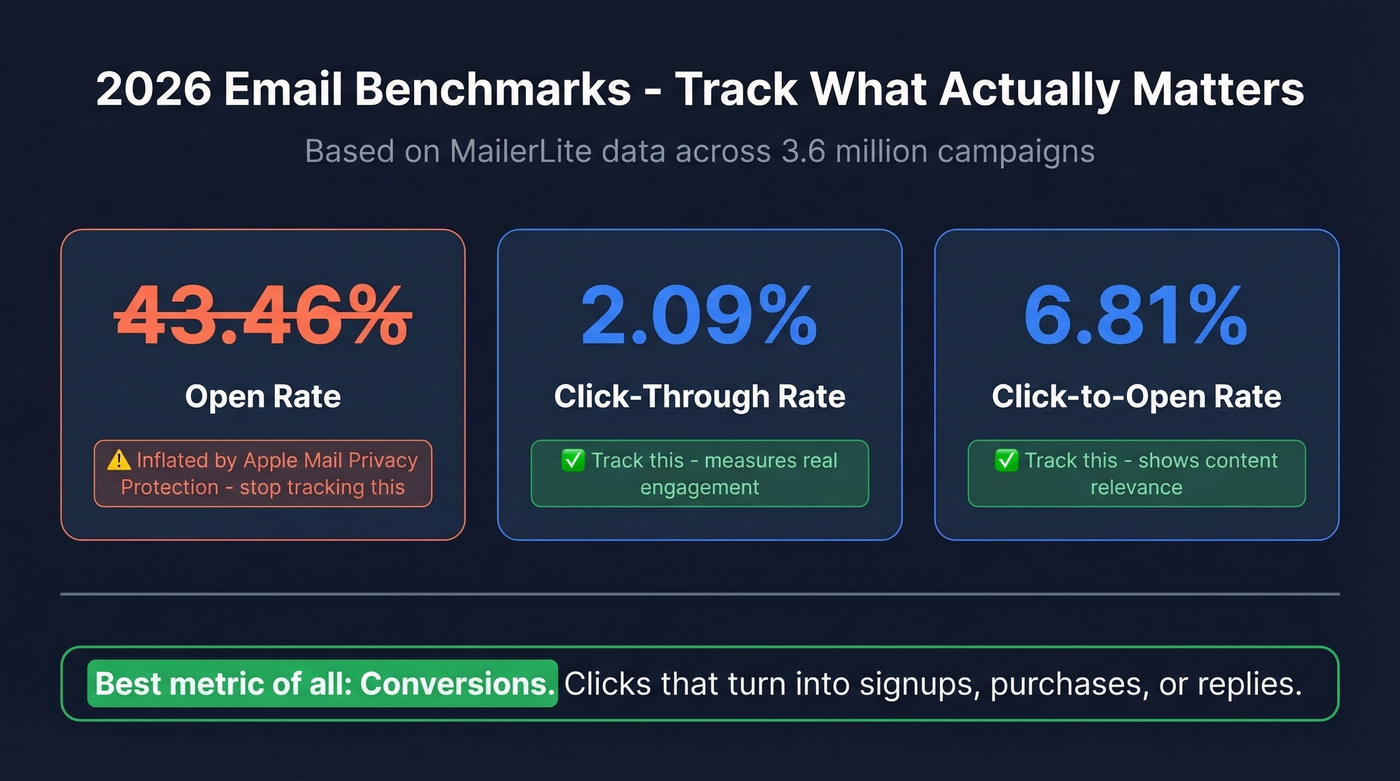
MailerLite's 2026 benchmarks across 3.6 million campaigns show a 43.46% open rate - artificially high. Track click-through rate (2.09% benchmark), click-to-open rate (6.81%), and conversions instead. Those numbers don't lie.
The Factor Nobody Mentions - List Quality
Here's the thing: most teams debating email length are solving the wrong problem entirely. A perfectly crafted 75-word email means nothing if it bounces. We've watched teams spend weeks A/B testing copy length while 30%+ of their list was hitting invalid addresses. That's not an email length problem - it's a data problem that tanks sender reputation faster than any formatting mistake ever could.
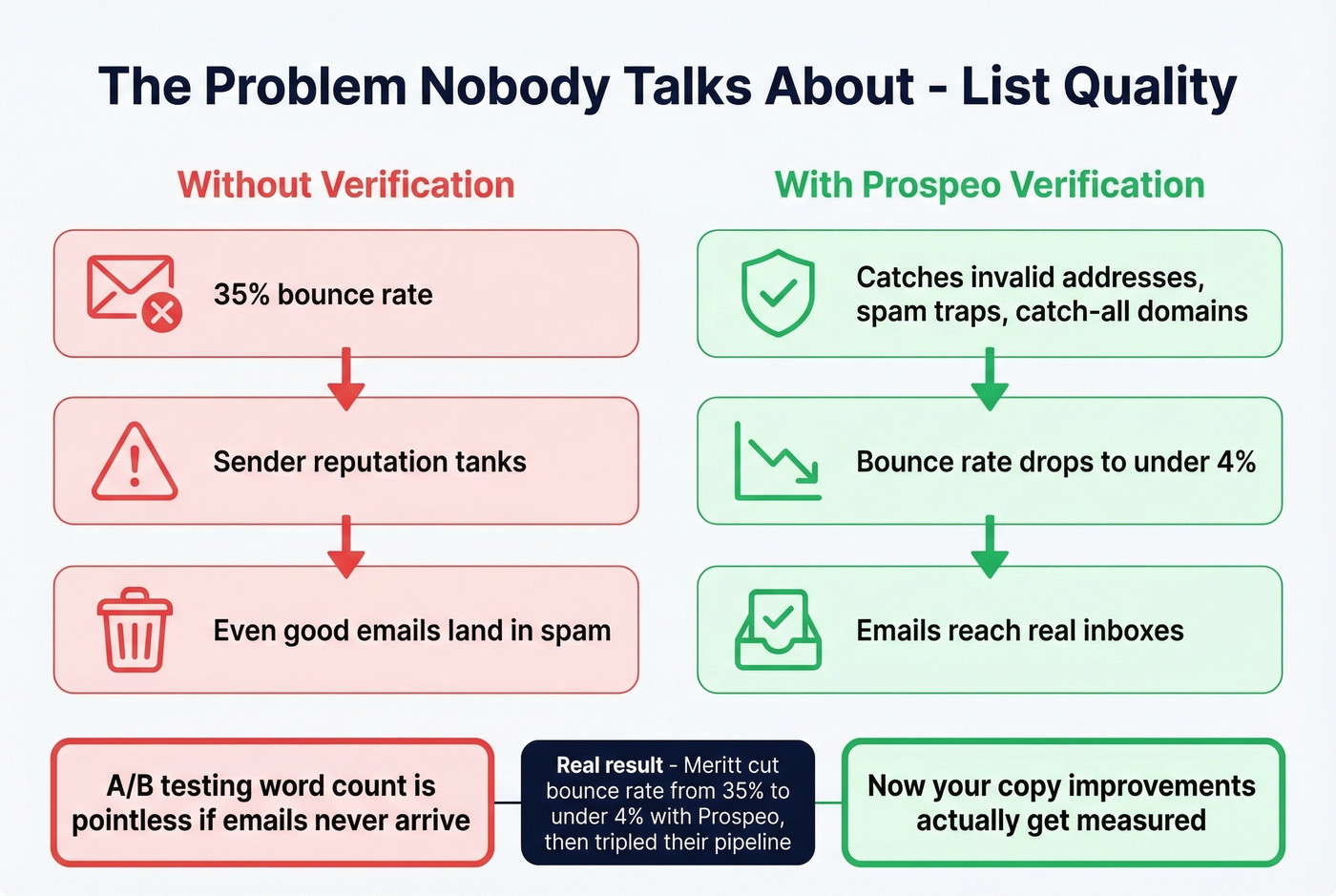
Meritt, a Prospeo customer, cut their bounce rate from 35% to under 4% by running their list through verification before sending. Before you A/B test word count, make sure your emails actually reach inboxes with a solid email deliverability process.
Top-performing emails need top-performing lists. Meritt cut their bounce rate from 35% to under 4% with Prospeo - then tripled their pipeline. No contracts, no sales calls, 75 free emails to start.
Clean data beats perfect word count every single time.
FAQ
Is 500 words too long for a marketing email?
Not for newsletters or value-driven sends. AWeber found 24.1% of top-performing marketing emails exceed 600 words. Match length to the value you're delivering - subscribers will read long emails when the content earns their attention.
How long should an email subject line be?
Aim for 28-50 characters. Most mobile inboxes truncate after 40 characters, so front-load the key information. Subject lines under 28 characters can look incomplete and hurt open rates.
Does email length affect deliverability?
Word count alone doesn't hurt deliverability. Sending to unverified addresses does - bounces and spam traps destroy sender reputation far faster than a long email body. Cleaning your list with a verification tool before every campaign is the single highest-ROI move you can make for deliverability.