

How to Ask Someone for Their Email Without Being Awkward
You're at a conference, the conversation's going great, and then it hits - that pause where you both know you should exchange contact info but neither of you knows how to do it without making it weird. We've all fumbled this moment.
The good news? There are scripts for every scenario below. The better news? In most B2B situations, you don't need to ask at all.
The Quick Version
- State why you need their email and offer yours first - reciprocity wins every time.
- Use the right script for the situation (six copy-paste options below).
Why People Share (or Ghost You)
Three psychological principles explain almost every email exchange. Get these right and the ask feels natural instead of forced.
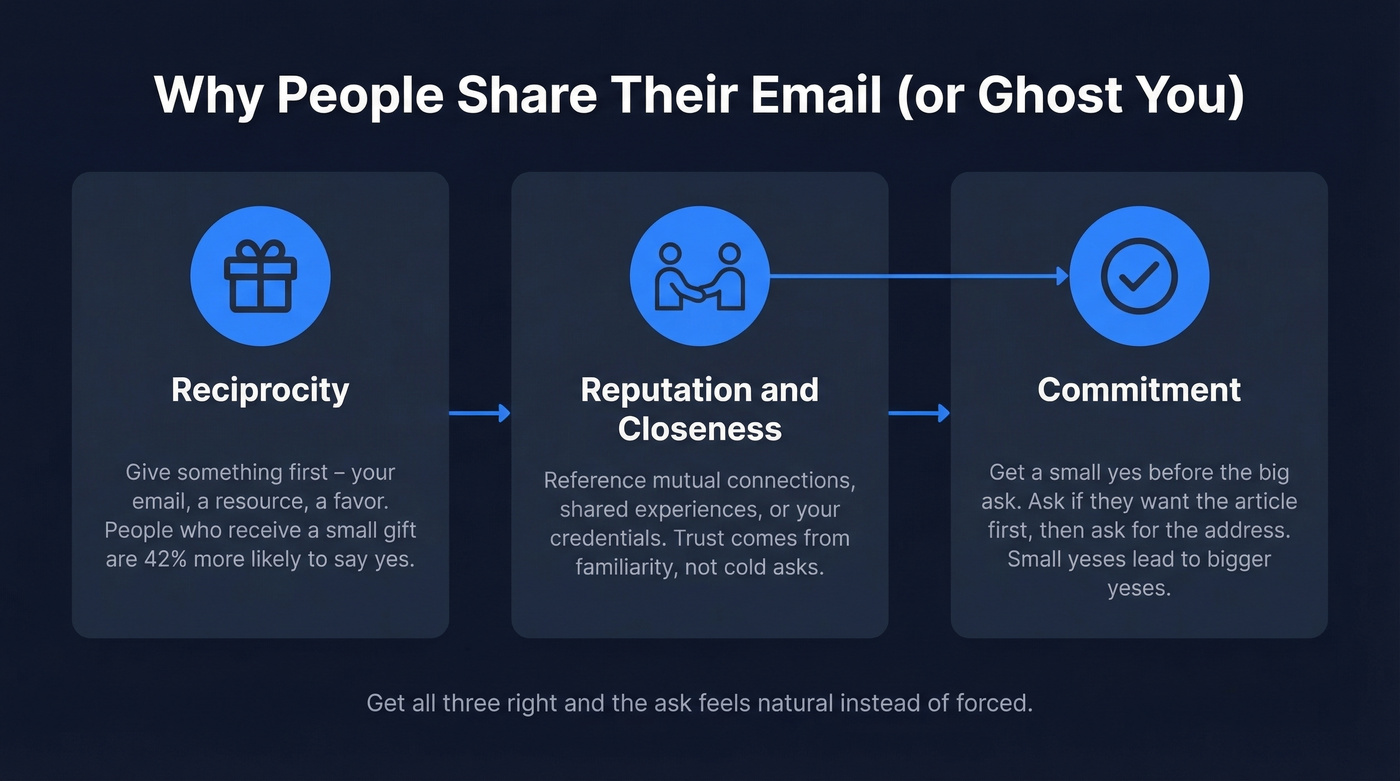
Reciprocity. Give something before you ask. A study on persuasion principles found that giving visitors a small gift made them 42% more likely to buy. Offer your email, a resource, or a specific favor before requesting theirs.
Reputation and closeness. A meta-analysis of 338 trust studies found that the trustee's reputation and shared closeness between parties were the strongest predictors of trust. Reference mutual connections, shared experiences, or your credentials before making the ask.
Commitment. Getting a small "yes" first makes a bigger "yes" easier. Cialdini's research showed that rephrasing a restaurant reservation confirmation as a question ("Will you call if you need to cancel?") reduced no-shows by 67%. Start with something low-stakes - "Would it be helpful if I sent you that article?" - before asking for the address itself.
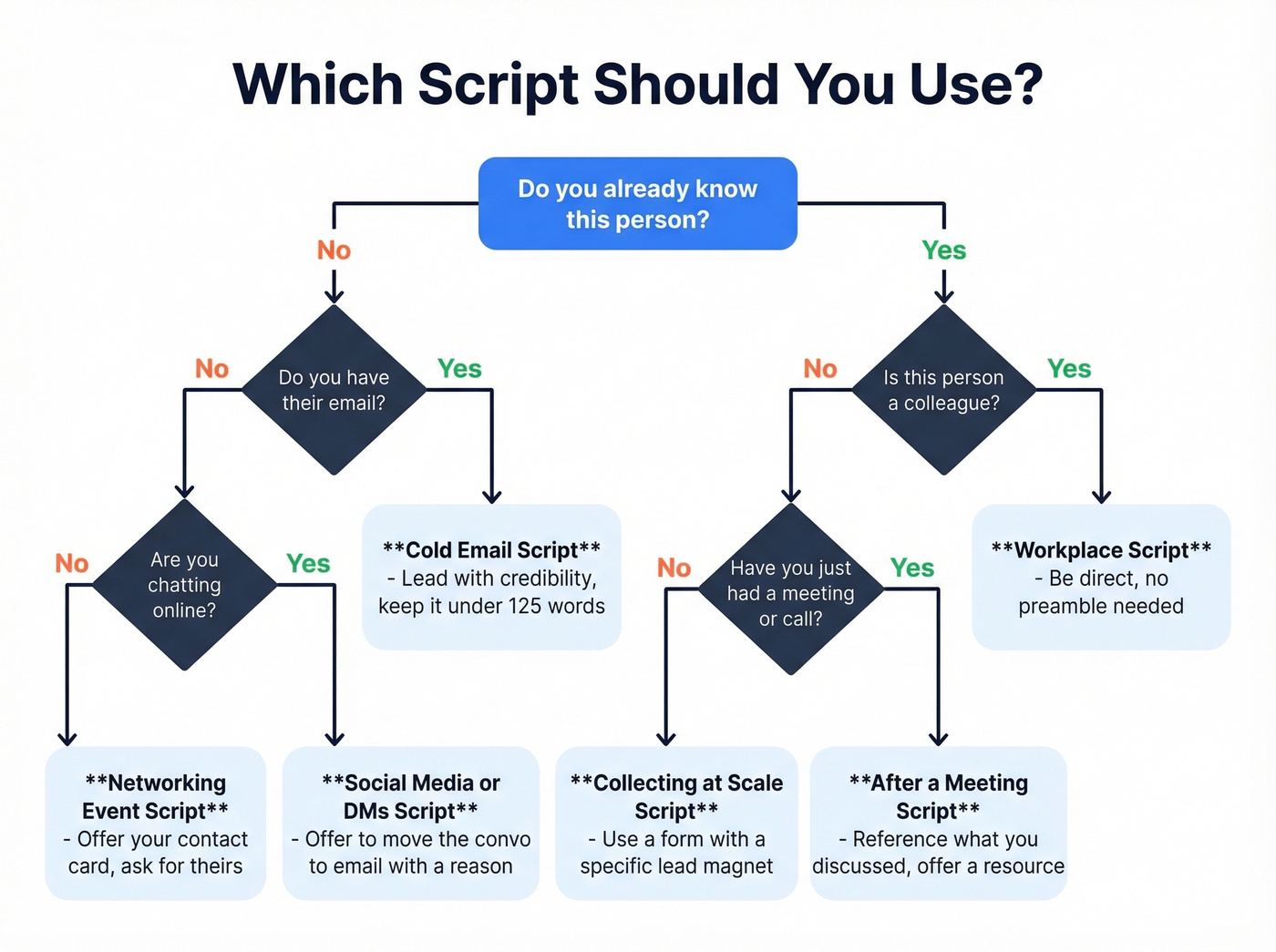
Six Scripts You Can Steal
At a Networking Event
The conversation did the hard work. This just formalizes it.
"I'd love to continue this conversation. What's the best email to reach you? Here - let me pull up my contact card so you have mine too."
Hand over your phone with a blank contact form open. It removes the friction of spelling out an address in a loud room. Follow up the next day referencing something specific you discussed - the warmth you built in person fades fast without reinforcement.
After a Meeting or Call
You've already spoken but only have a general company email or calendar invite address.
"Thanks for the great conversation today. I'd love to send over [specific resource you discussed]. What's the best email for that? Mine is [your email] - feel free to use it anytime."
If you need a few solid follow-up options, borrow from these sales follow-up templates.
Cold Email to a Stranger
You have their email already (or found it - more on that below) but need them to engage. Keep it under 125 words, send mid-morning Tuesday through Thursday, and bold your actual request so it's impossible to miss when they're skimming.
If you're building a sequence, this B2B cold email sequence guide will help you structure it.
"Hi [Name], I'm [Your Name] from [Company]. I came across your [talk / article / work on X] and wanted to reach out because [one specific, relevant reason]. I'd love to [specific ask - send a resource, schedule 15 minutes, get your take on something]. Would [day/time] work, or is there a better email to continue this conversation?"
The credibility signal in sentence two is everything. Without it, you're just another stranger in their inbox.
On Social Media or DMs
You've been chatting in DMs and want to move to email. Here's what works versus what doesn't:
Do this: "This thread's getting long - mind if I send you a proper email with [the details / the resource / my proposal]? What address works best?"
Not this: "Hey can I get your email?" No reason, no value, no response.
One light nudge is fine if they don't reply. Two is the absolute limit. If you do follow up, use a polite chaser email instead of a generic ping.
Workplace or Internal
You need a colleague's preferred email for a project or introduction. No preamble needed - just be direct.
"Hey [Name], I'm putting together [project/intro/resource] and want to make sure I'm reaching you at the right address. What email do you prefer for this kind of thing?"
Collecting Emails at Scale
You're building a list through forms, popups, or landing pages. You can't just request addresses with no value in return.
"Get [specific deliverable] - free. Enter your email below and we'll send it straight to your inbox. No spam, unsubscribe anytime."
80% of consumers are more willing to purchase from a brand when the experience feels personalized. Name the specific value (a template, a checklist, a discount), include a privacy assurance, and keep form fields to a minimum. Every extra field kills conversions - roughly 50% drop per additional field beyond email.
If you're doing this for outbound, these lead generation metrics help you track what’s actually working.

You just read six scripts for asking someone for their email. Here's the truth: in B2B, you rarely need to ask. Prospeo gives you access to 143M+ verified emails with 98% accuracy, refreshed every 7 days. Find anyone's professional email for ~$0.01 - no guessing patterns, no awkward asks, no bounced messages killing your sender reputation.
Skip the ask. Find their verified email in seconds.
Mistakes That Kill Your Chances
No context, no reply. Asking "Can I have your email?" with zero explanation is the fastest way to get ignored. Always state why you need it and what you'll send.
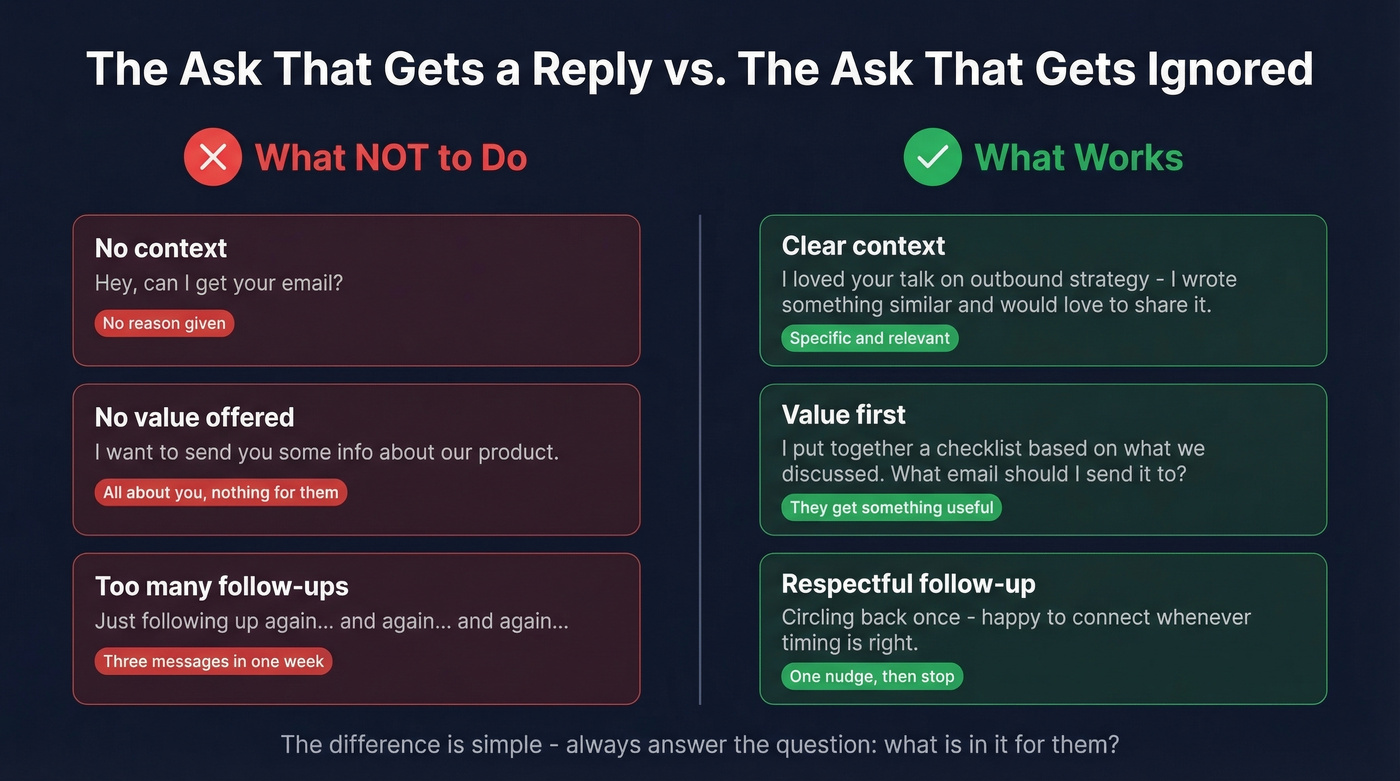
Asking without offering value. If there's nothing in it for them - no resource, no connection, no reason - they have no incentive to share. Give before you ask. This applies to forms too: every additional field you add without increasing perceived value drives people away.
Too many follow-ups. One follow-up after 3-5 days is fine. Three follow-ups in a week is aggressive. If they haven't responded after two attempts, respect the silence. They've answered by not answering. (If you want the timing rules, see when should i follow up on an email.)
Here's the thing: if you're selling deals under $15k and agonizing over how to phrase an email request to a prospect, you're solving the wrong problem. Just find their address directly and reach out with something valuable. The ask itself matters far less than what you're offering.
What If Someone Asks YOU?
Sometimes you're on the receiving end of a vague "Can I get your email?" with no context.
You don't owe anyone your inbox. A simple redirect works:
"Sure - what's it regarding? Depending on the topic, [alternative channel] might actually be faster."
This forces specificity without being rude. The consensus on Quora threads about this exact question tends to agree: ask for the reason, offer an alternative channel if it's easier, and share your email only when the context makes sense.
Skip the Ask Entirely in B2B
In most professional situations, you don't need to ask at all. Nearly 49.9% of companies use a first-name@domain.com pattern, based on Hunter's analysis of 12M+ email addresses. And across roughly 905,000 company websites, 18.7% list at least one email publicly.
If you’re doing this at scale, name to email workflows are usually faster than guessing patterns.
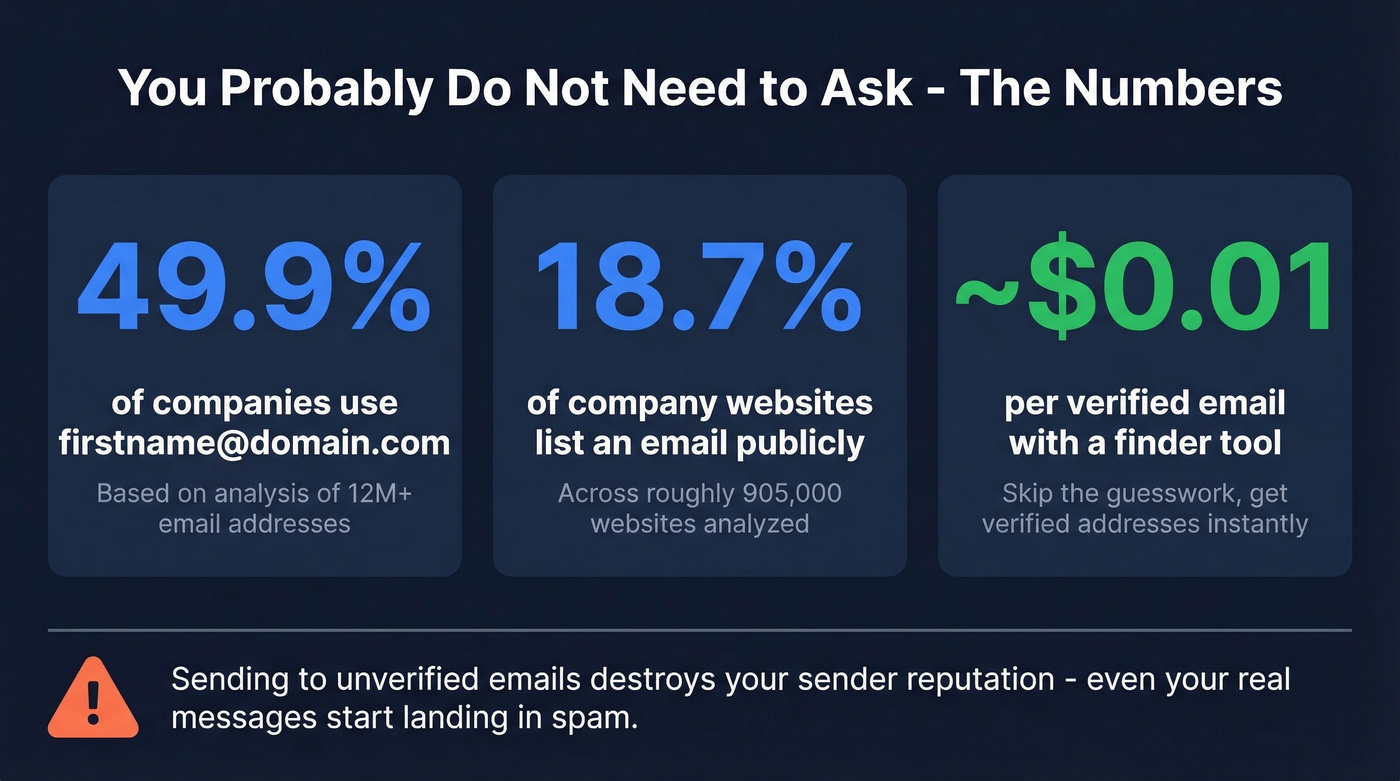
The old approach - guess the pattern, then verify with a separate tool - works but takes time and still risks bounces. Unverified emails destroy your sender reputation, and once that's damaged, even your legitimate messages start landing in spam. Use an email deliverability guide to fix the root causes, and keep an eye on your email bounce rate.
Hunter offers a free account with 50 searches per month, which works for one-off lookups. For any kind of volume - building lists, enriching CRM records, running outbound campaigns - you'll want a platform with built-in verification and a larger database. That's where Prospeo's 143M+ verified emails and 7-day data refresh cycle make a real difference.
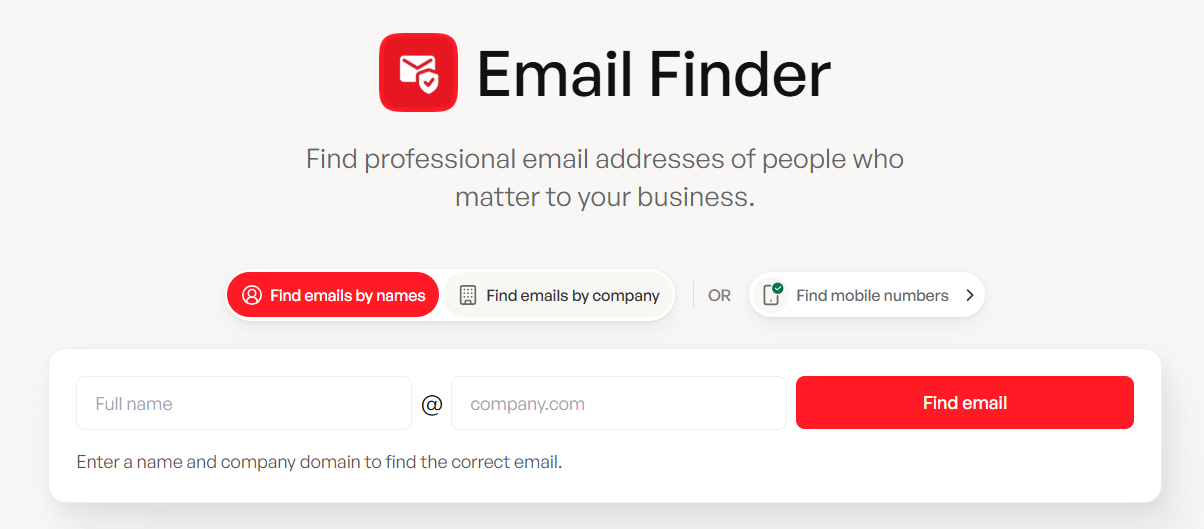
Every unverified email you send chips away at your domain reputation. Prospeo's 5-step verification - with catch-all handling, spam-trap removal, and honeypot filtering - means the addresses you find actually land in inboxes. Teams using Prospeo book 35% more meetings than Apollo users because the data connects them to real people.
Stop guessing email patterns. Start sending to verified addresses.
FAQ
Is it rude to ask for someone's email address?
Not if you state why you need it and offer context. Lead with a reason ("I'd love to send you that article we discussed"), and the request feels natural rather than intrusive. Offering your own email first turns it into an exchange, not a demand.
How do I find someone's work email without asking?
Use an email finder tool. Paste their name and company domain, and you'll get a verified address in seconds. Prospeo covers 143M+ verified emails at 98% accuracy; Hunter offers 50 free searches per month for lighter use.
What if someone ignores my email request?
Send one follow-up after 3-5 business days referencing your original message. If there's still no reply, let it go. Pushing harder rarely changes the outcome and often damages the relationship.
What's the best way to collect emails at scale?
Offer a specific, high-value lead magnet - a template, checklist, or discount - in exchange for an opt-in. Keep form fields to one or two, include a clear privacy assurance, and personalize the experience.