

slug: how-to-follow-up-with-potential-clients
How to Follow Up with Potential Clients Without Sounding Desperate
"Hey _____ just following up, did you receive our quote? Let me know if you have any questions!"
You've sent this email. We've all sent this email. It doesn't work - and deep down, you already know that.
The popular claim that "80% of sales require 5+ follow-ups" gets repeated everywhere, but it's almost never cited to a real primary source. The actual data on following up with potential clients tells a different story entirely.
What You Need (Quick Version)
- Your first follow-up is your best shot - reply rates peak at email #1 (8.4%) and decline from there. Make it count.
- Agree on a concrete next step during the initial conversation so your follow-up has a reason to exist.
- Verify your contact data before you start any sequence. A perfectly crafted follow-up means nothing if it bounces.
What 16.5M Emails Reveal
Belkins analyzed 16.5 million cold emails across 93 business domains throughout 2024. The highest reply rate - 8.4% - came from the first email. Every additional follow-up pulled that number down. Sending 4+ emails in a sequence more than tripled spam complaints and unsubscribe rates.
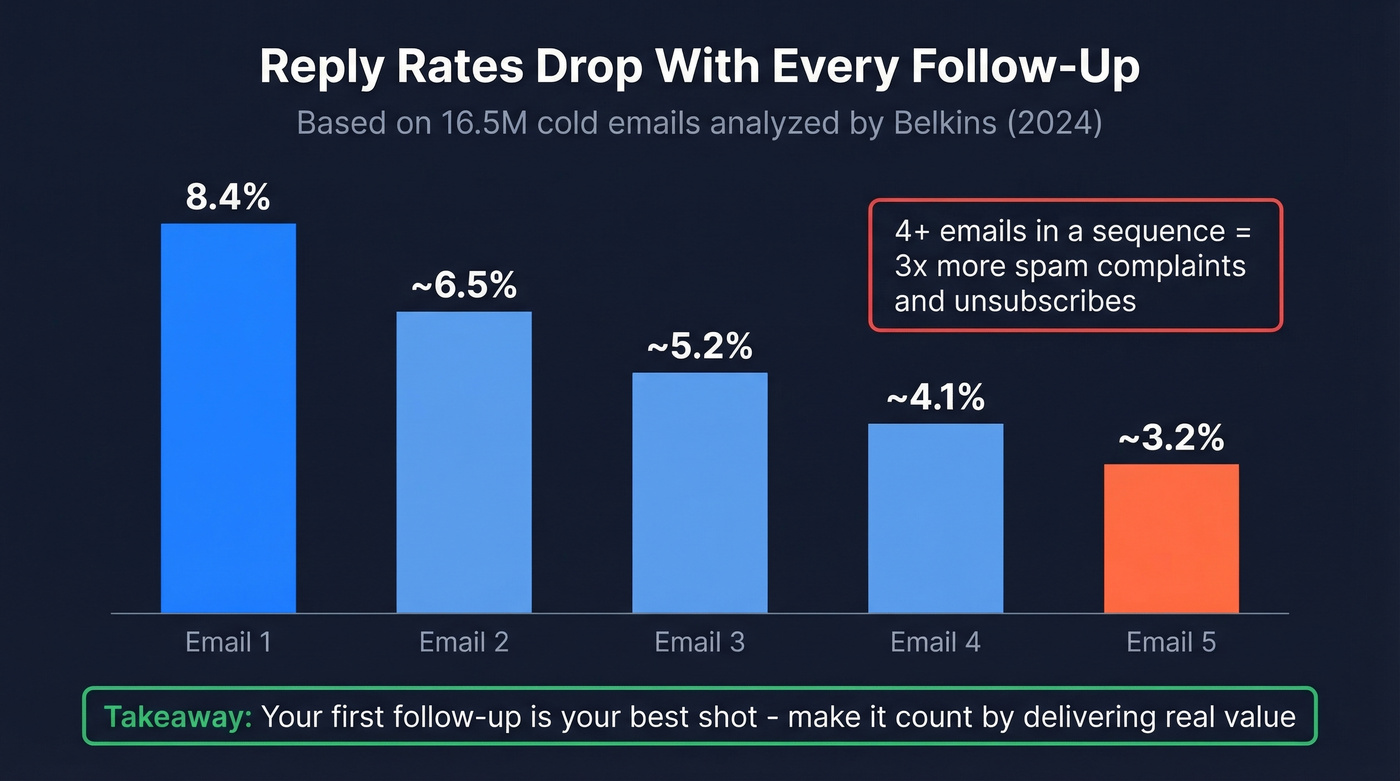
Here's the nuance most people miss: company size changes the math completely. SMBs tolerate more touchpoints. Enterprise prospects ghost quickly and punish persistence - they'll mark you as spam before they'll reply to your fifth "just checking in." The takeaway isn't "never follow up." It's that each follow-up needs to earn its place in the sequence by delivering something new.
Set the Stage Before You Ever Hit Send
The best follow-up strategy starts before you send a follow-up. American Express's guidance nails this: agree on a concrete next step during the initial meeting. Schedule the follow-up before you leave the conversation.
End every call with a specific date and time for the next touchpoint - not "let's circle back next week." Reframe the follow-up as logistics, not a sales push. "I'm finalizing my schedule for next week - does Thursday at 2 work?" beats "just wanted to check in" every time.
Two small moves that pay off disproportionately: ask prospects how they prefer to be contacted so you're not guessing on channel, and if they ask a question in any channel, pick up the phone instead of typing a reply. Voice builds trust faster than text.
A Multi-Channel Cadence That Works
Eight to twelve touchpoints across multiple channels is the sweet spot. Space them 2-3 days apart - shorter feels desperate, longer lets them forget you.
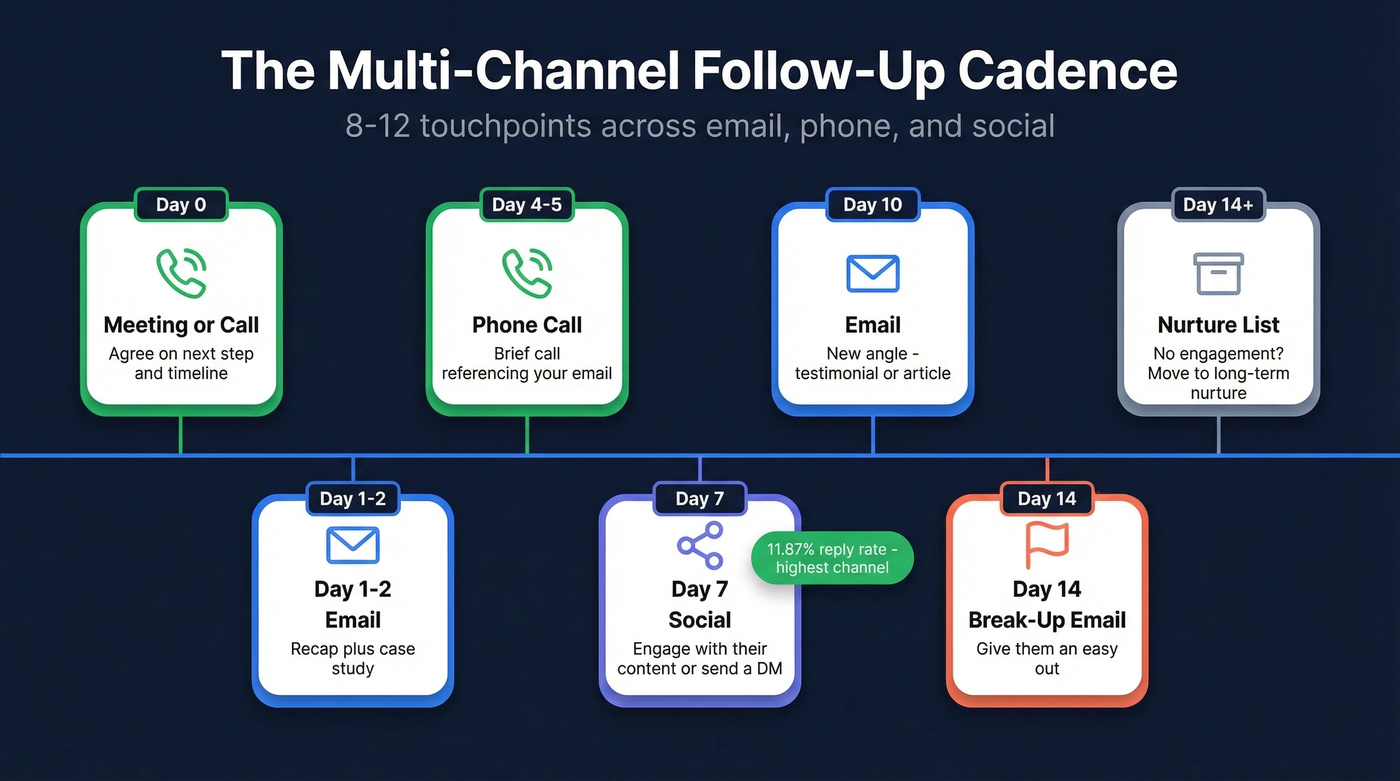
| Day | Channel | Action |
|---|---|---|
| 0 | Meeting/Call | Agree on next step + timeline |
| 1-2 | Recap + case study | |
| 4-5 | Phone | Brief call referencing email |
| 7 | Social | Engage with their content or DM |
| 10 | New angle - testimonial or article | |
| 14 | Email/Phone | Break-up email |
| 14+ | - | No engagement? Nurture list |
That social message + profile visit combo from the Belkins data hit an 11.87% reply rate - higher than any email-only sequence. If you're sticking to email only, you're leaving the highest-converting channel on the table.

Every follow-up that bounces is a wasted touchpoint - and a hit to your domain reputation. Prospeo's 5-step verification delivers 98% email accuracy with a 7-day refresh cycle, so the contacts you sequence today are still valid next week.
Stop crafting perfect follow-ups for email addresses that don't exist.
Five Mistakes That Kill Follow-Ups
1. Bumping with no new information. "Just making sure you saw this" isn't a follow-up - it's a guilt trip. Every touchpoint needs to deliver something the prospect didn't have before.
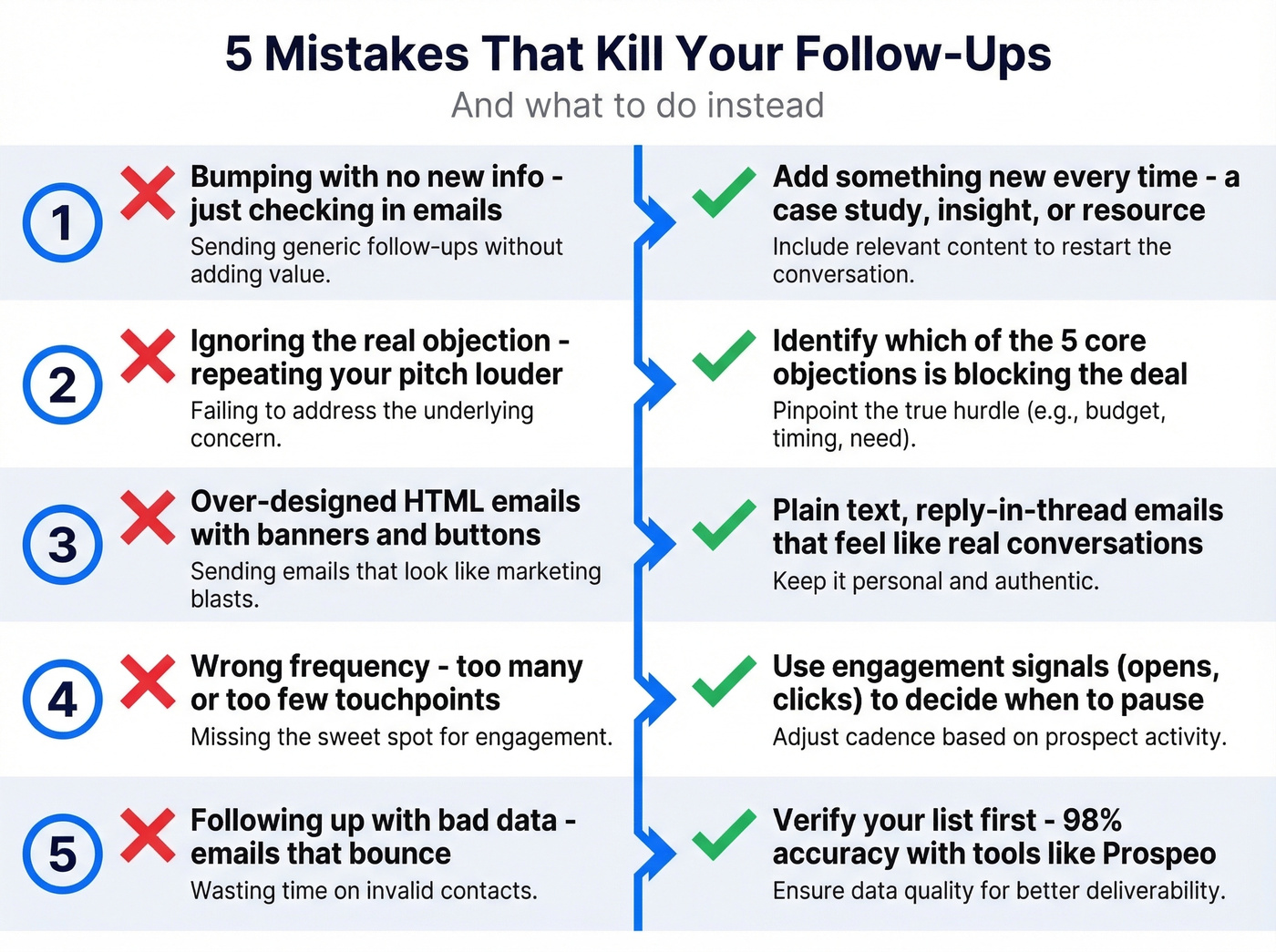
2. Ignoring the real objection. There are five core objections: no need, not worth the cost, no urgency, don't want it, or don't trust you. Your follow-up should address whichever one is actually blocking the deal, not repeat your pitch louder. If you want a deeper breakdown of how to handle pushback, see our guide to sales objections.
3. Over-designed emails. HTML templates with banners and buttons scream "marketing blast." Short, plain-text, reply-in-thread emails get treated like real conversations. We've seen this firsthand running outbound for our own team - stripping the formatting consistently lifted reply rates. (More on this in Plain Text vs HTML Emails.)
4. Wrong frequency. Too many emails and you're spam. Too few and they forget you exist. There's no universal magic number, which is why the cadence table above uses engagement signals to decide when to stop. If you're trying to dial in timing, use our data-backed guide on how long to wait for a follow-up email.
5. Following up with bad data. Your follow-up copy doesn't matter if the email bounces. Before launching any sequence, run your list through a verification tool. Prospeo's 5-step process catches invalid addresses, spam traps, and catch-all domains at 98% accuracy, and its 7-day data refresh means the contacts you pull today are still good next week. If you want the underlying mechanics, read our data verification process.
Templates That Actually Get Replies
Let's be honest - most follow-up templates floating around are terrible. They're either too generic or so obviously templated that prospects can smell the automation. Here are four we've tested that consistently pull responses. For more options, you can also pull from these follow-up campaign examples.
After the First Meeting
Hi [Name], great speaking today. I'm finalizing my schedule for next week - does [specific day] at [specific time] work for a 20-minute walkthrough of the proposal? I'll send over the summary doc in the meantime.
Post-Proposal Silence
Hi [Name], rather than ask "did you get it," I wanted to share how [similar company] cut their [metric] by [X%] after implementing - thought it might help frame the decision. Happy to walk through it live.
After a Trigger Event
Hi [Name], saw [company] just [raised a round / opened a new office / posted 5 SDR roles]. When we spoke in [month], timing wasn't right - figured this might change the math. Worth a 15-minute revisit?
The Break-Up Email
Hi [Name], I haven't heard back and don't want to clog your inbox. If the timing isn't right, totally understand - just let me know either way and I'll close out my notes.
One tactical note: signal-triggered sends - firing a follow-up after an email open or site visit - can lift response rates 35-60% compared to batch-and-blast timing. Most sequencing tools support this, so there's no reason not to use it. If you're building a repeatable system, our guide on how to build follow-up email sequences goes deeper.
Tools to Systematize Follow-Ups
You don't need to remember every touchpoint manually. The tools fall into a few buckets.
Cold email sequencers like Lemlist (~$39-$99+/mo) and Apollo (free tier to ~$49-99/mo) handle automated multi-step sequences with built-in deliverability features. For a broader shortlist, see our roundup of cold email outreach tools.
Sales engagement platforms like Outreach and Salesloft (~$100-$200+/user/mo) add phone, social, and analytics layers. Skip these if your average deal size is under $5k - you'll spend more on the tool than the ROI justifies.
CRM-based sequencing through HubSpot or OnePageCRM works for smaller operations. OnePageCRM's "Next Action" method is worth stealing: set a next action and due date after every single interaction, creating a locked loop that persists until the deal closes or dies. No prospect slips through the cracks. It's simple, and it works because it removes the decision of "should I follow up?" from the equation entirely.
When to Stop Following Up
Two weeks of zero engagement across all channels - no opens, no clicks, no replies - means it's time to move the prospect to a nurture list. If your unsubscribe rate climbs above 0.5%, you've pushed too hard for that segment.
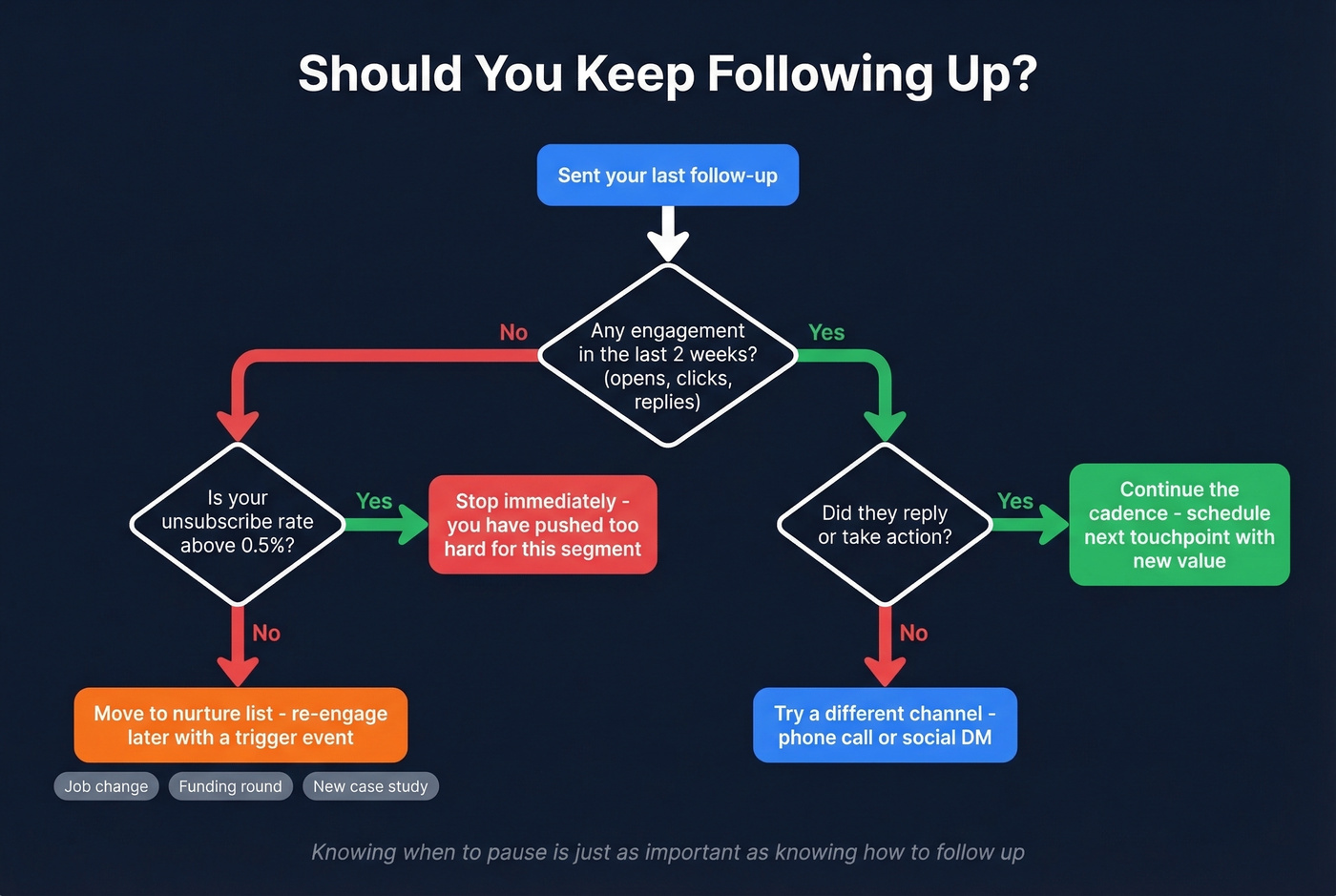
This isn't giving up. It's reallocating effort to people who might actually buy.
Re-engage later when you have a genuine trigger: a job change, a funding round, a relevant case study. Knowing how to follow up with potential clients also means knowing when to pause - and having the discipline to do it. The r/sales consensus backs this up: the reps who obsess over dead leads are the same ones missing quota because they're not filling the top of the funnel. If you need more top-of-funnel ideas, use these sales prospecting techniques.
Multi-channel cadences only work when you have the right data for every channel. Prospeo gives you verified emails, direct dials from 125M+ mobile numbers, and LinkedIn profiles - all in one search with 30+ filters to nail your ICP.
Build your follow-up list with data that actually connects you to buyers.
FAQ
How many follow-ups should I send?
Reply rates peak at email #1 (8.4%) and decline with each additional message. Aim for 8-12 multi-channel touchpoints total, but move prospects to a nurture list after two weeks of zero engagement across every channel.
What's the best gap between follow-ups?
Two to three days between touchpoints. Anything shorter triggers spam complaints and unsubscribes; anything longer than five days lets prospects forget the conversation entirely.
Should I use email only or multiple channels?
Multi-channel outperforms email-only by a wide margin. Social messages paired with profile visits hit an 11.87% reply rate in the Belkins study - 40% higher than the best email-only result. Combine email, phone, and social for maximum coverage.
When should I send a break-up email?
After your final scheduled touchpoint with no response - typically around day 14. Keep it short, remove all pressure, and give them an easy out. A surprising number of prospects reply to the break-up email specifically because it signals you won't keep pestering them.