

How to Get Clients for Web Development in 2026: A Data-Backed Playbook
You just finished building a website for a friend's business - for free - and now you're staring at an empty inbox wondering where the paying work is. Every guide tells you to "network" and "use social media" without telling you what to actually say, what response rate to expect, or how many conversations it takes to close a single deal. That ends here.
What You Need (Quick Version)
If we had to start from zero today, here's the three-move framework:
- Email 50 people you already know (week 1)
- Cold email 20 local businesses per week (weeks 2-4)
- Send 5 Upwork proposals per day for 30 days (weeks 2-5)
Stop building your portfolio. Start sending emails. Two mock projects and 200 outreach touches will get you further in 30 days than a pixel-perfect portfolio site that nobody visits.
The Pipeline Math Behind Client Acquisition
96% of visitors aren't ready to buy on first contact. That single stat should reshape how you think about finding web development clients. It's not about finding the one perfect prospect - it's about creating enough at-bats.
In B2B services, Visitor-to-Lead conversion runs 2-5%. Lead-to-MQL sits around 25-35%. MQL-to-SQL is often 13-26%. For service businesses like web development, SQL-to-Closed rates hover around 46-59% depending on how well you qualify.
Here's what that means if you're doing cold outreach: with a total reply rate of 5-10% and a positive reply rate of 1-3%, 200 outreach touches usually turn into 10-20 replies and 2-6 interested conversations. Want 2 new clients this month? Plan for hundreds of touches, not dozens.
The math is boring but liberating. You don't need a viral tweet or a lucky referral. You need consistent volume through the right channels.
Pick Your Channels
You don't need 10 channels. You need 2, executed well.
| Channel | Time to First Client | Monthly Cost | Effort | Scalability |
|---|---|---|---|---|
| Cold email | 2-4 weeks | ~$30/mo | Medium | High |
| LinkedIn outreach | 3-6 weeks | Free-low | Medium | Medium |
| Upwork | 2-6 weeks | Free to start | High | Medium |
| Referrals | 1-4 weeks | Free | Low | Low |
| Local SEO | 2-6 months | Free-low | Medium | High |
| Content marketing | 3-6 months | Free | High | High |
| Paid ads | 1-4 weeks | $500+/mo | Low | High |
For most freelance web developers, the winning combo is cold email plus one other channel. Cold email gives you control and speed. The second channel - Upwork, referrals, or LinkedIn - adds deal flow while your email engine warms up.
Content marketing (blogging, YouTube tutorials, case study write-ups) is the best long-term play, but it takes 3-6 months to generate inbound leads. Start it now, but don't rely on it for your first clients.

You need 200+ outreach touches to land 2 web dev clients. One bounced email batch can torch your domain and kill the entire campaign. Prospeo verifies every email through a 5-step process - 98% accuracy, catch-all handling, spam-trap removal. At $0.01 per email, 200 verified contacts costs you $2.
Don't nuke your domain before your first campaign even starts.
Channels That Actually Work
Finding Businesses That Need You
Before you send a single email, you need targets. Open Google Maps, search for businesses in your area - dentists, plumbers, restaurants, law firms - and click through their websites. You'll quickly find businesses with no website at all, or sites that are clearly outdated, running on templates from 2016 with broken contact forms and stock photos that scream "we forgot this existed." Those are your prospects.
Run localized Google queries like "dentist [your city]" and scan the results for outdated sites. Build a spreadsheet of 100 businesses in your first sitting. It takes about two hours, and you'll have a month's worth of outreach targets.
If you want to speed this up, use a Google Maps lead scraper to collect targets faster.
Cold Email Outreach
Cold email is the fastest path to paid web development work. Here's the thing: the structure is dead simple. Subject line, personalized first line, value prop, CTA. Keep every email under 100 words.
This template framework works for the "outdated website" angle:
Subject: Quick thought on [Company]'s website
Hey [First Name],
I was looking at [company].com and noticed [specific observation - slow load time, no mobile optimization, outdated design element]. For a business like yours, that's probably costing you leads.
I build websites for [niche] companies and could put together a quick mockup showing what an updated version would look like. No cost, no commitment.
Worth 10 minutes this week?
The r/coldemail community will tell you there's no universal "best" cold email template. Once widely copied, any template becomes recognizable and stops working. The framework matters more than the words.
Follow up 2-3 times, spaced 3-5 days apart. Expect a 1-3% positive reply rate and 5-10% total reply rate. That's normal. Don't panic.
One thing that'll tank your outreach before it starts: sending to unverified email addresses. Bounced emails destroy your sender reputation, and once your domain is flagged, every email you send - even to real addresses - lands in spam. We've seen freelancers nuke their outreach capability in a single week by skipping verification. If you need options, compare an email finding tool and an email verifier website before you commit. Prospeo's Chrome extension lets you browse any company website and pull the owner or marketing manager's verified email in one click, with catch-all verification built in. The free tier gives you 75 emails per month, enough to test your first campaign without spending anything.
If you're starting from a brand-new domain, follow an email domain warmup plan before you scale volume.
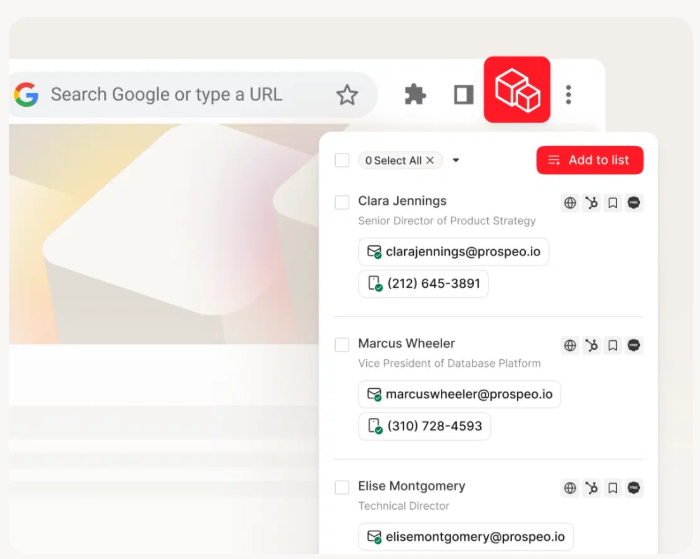
Scanning Google Maps for outdated websites is smart. But manually hunting for the owner's email on each site burns hours. Prospeo's Chrome extension - used by 40,000+ people - pulls the decision-maker's verified email from any company website in one click. The free tier gives you 75 emails per month, enough to test your first cold email campaign without spending a dollar.
Build your first 75-prospect list in under an hour, completely free.
LinkedIn Outreach
LinkedIn outreach often outperforms cold email on reply rates. An Expandi analysis of 70,130+ campaigns found LinkedIn DM reply rates average 10.3% versus 5.1% for cold email. Connection request approval sits at 29.61%, and messenger campaigns push reply rates up to 16.86%.
The playbook: send a personalized connection request that leads with an observation about their business, not a pitch. Once they accept, ask a question, reference something specific on their website, and let the conversation develop naturally. Don't lead with "I build websites." Lead with "I noticed your booking page doesn't work on mobile - is that intentional?"
If you want to systematize this, borrow a simple 30-60-90 day sales plan and track your weekly outreach volume.
Upwork
Use this if: you're an experienced developer who can write strong proposals and want steady deal flow without building your own lead gen engine.
Skip this if: you're a beginner who plans to compete on price. You'll race to the bottom and hate every project.
Upwork connects 18M+ freelancers with buyers, so standing out requires specificity. Winning proposals run 150-250 words with at least 2 personalized references to the job post and embedded portfolio links. A 30-second video pitch boosts engagement by about 20%.
Rate bands for web developers: entry-level runs $25-$45/hr, intermediate $45-$80/hr, and expert specialists command $80-$150+/hr. The highest-paying niches right now are e-commerce development (Shopify, headless commerce), AI-powered web apps, and modern stacks like React/Next.js.
Referrals and Your Network
This is the lowest-friction channel and should be your first move. Email 50 people you already know - friends, family, former colleagues, anyone who runs or knows someone who runs a business. Use a simple script:
"I'm now doing web development professionally. If you know anyone who needs a website built or updated, I'd appreciate the introduction."
Offer a 10-15% referral incentive on any introduction that closes. Paige Brunton's guide calls this the single best starting point for new web designers, and in our experience, she's right. Your first paying client almost always comes from someone you already know.
If you want to formalize it, set up a simple referral incentive program so it runs without awkward back-and-forth.
Online Communities
Don't overlook Reddit, Discord servers, and Facebook groups. Local subreddits, industry-specific Discords, and small business Facebook groups are full of people actively asking for web development help. One developer on r/dubai landed a paying client simply by answering someone's question about website builders. The key is to be genuinely helpful first - answer questions, share advice, build credibility - and the inbound inquiries follow.
Local SEO
Local SEO is a slow burn, but it compounds. 46% of all Google searches look for local information, and 76% of smartphone local searchers visit a business within 24 hours.
Claim and fully complete your Google Business Profile - every field, photos, posts, Q&A - and maintain NAP consistency (Name, Address, Phone) across every directory. Actively request reviews from every client. Create location-specific service pages like "Web Development in [City]" and build local citations through chambers of commerce. Realistic timeline: 2-6 months to see meaningful traffic. But once it's working, you're getting inbound leads while you sleep.
What to Charge New Clients
Four pricing models exist, and picking the wrong one will cost you thousands over a year. Hourly works when scope is uncertain or the project is maintenance-heavy. Project-based works when you can define deliverables tightly - but scope creep will eat your margin if you're not careful. Value-based pricing ties your fee to business impact, so a $50K/year revenue lift justifies a $5K website. Retainers provide predictable monthly income, something like $5,000/mo for 40 hours of availability.
You don't have 2,080 billable hours per year. You have 1,000-1,500. If you're targeting $80K net, that means charging $80-$120/hr depending on overhead. Always add a buffer - if you estimate 40 hours, quote 50-60.
For context, one freelancer on r/webdevelopment charges $1,800 for a 10-page WordPress/Elementor site. After Upwork's 10% fee and paying a designer, net profit lands at 65-68%.
Let's be honest: if you're charging less than $1,500 for a website, you're attracting the clients who'll make your life miserable. The cheapest clients demand the most revisions, the most hand-holding, and the most scope creep. Raising your prices doesn't just increase revenue - it filters for better clients.
Mistakes That Kill Your Pipeline
We've watched freelancers sabotage their own businesses with the same handful of mistakes. The r/freelance community has catalogued these painfully well:
- Require 50% upfront. No exceptions. Clients who won't pay a deposit will ghost you mid-project.
- Use a written proposal listing every single deliverable - hosting, logo mockups, forms, email setup, everything. If it's not in the proposal, it's not included.
- Define "small edits" and timebox them to 60 days. Otherwise you're doing free work six months after launch.
- Ask clients for 3 websites they like before you start designing. This eliminates the "I'll know it when I see it" problem.
- Turn down bad-fit clients even when money is tight. One nightmare client costs you three good ones in lost time and energy.
Another pipeline killer: sending cold emails to unverified addresses. Every bounce damages your sender reputation. Verify every email before you send - any verification tool works, just don't skip this step. If you run into deliverability issues, learn how to improve email reputation before you send your next batch.
After one freelancer redesigned their site to feature portfolio work prominently, roughly 30% of prospects referenced specific projects during sales calls, and conversions increased about 10%. Your portfolio matters - just not more than outreach volume.
FAQ
How do I get web development clients with no portfolio?
Build 2-3 mock projects or redesign existing sites as case studies. Outreach volume matters more than portfolio perfection - a mediocre portfolio with 200 emails sent beats a stunning portfolio with zero outreach every time.
What's the best freelance platform for web developers?
Upwork wins for volume and variety, with entry-level rates starting at $25-$45/hr and expert specialists earning $80-$150+/hr. Toptal pays premium rates but has a rigorous acceptance process. Start with Upwork, optimize your proposals, and graduate to direct clients as your reputation builds.
How many cold emails should I send per day?
Start with 20-30 per day from a warmed-up domain. At a 1-3% positive reply rate, that's 1-4 qualified conversations per week - enough to close 2-4 clients per month with consistent follow-up.
Should I specialize in a niche?
Yes. Specialists command $45-$80+/hr versus generalists at $25-$45/hr. "I build websites for dental practices" beats "I build websites" in every cold email and every Upwork proposal. Pick a niche, own it, and watch your close rate climb.
What's the fastest free way to find prospect emails?
Prospeo's free tier gives you 75 verified emails per month with 98% accuracy and catch-all verification. Browse any company website, pull the decision-maker's email in one click, and start sending outreach the same day - no credit card required.