

How to Propose a Business Collaboration That Actually Gets a Reply
A founder on r/EntrepreneurRideAlong sent 47 generic collaboration pitches to adjacent companies. Three polite responses. Zero follow-through. Then he flipped the approach - led with a specific problem, proposed a concrete value exchange - and 23% of his signups now come through partner referrals. His "let's grab coffee" meetings flopped too: 12 sit-downs with vague synergies, zero actual partnerships.
Here's the thing about proposing a business collaboration: the difference isn't your product. It's your pitch. Generic partnership emails see 1-5% positive reply rates. Targeted, problem-first outreach pushes that to 10-15%. And your first message should be around 150 words - not a 10-page proposal document. The formal proposal comes after they agree to a conversation.
Find the Right Collaboration Partner
The best collaborations happen between companies that share the same ideal customer profile but don't compete. A project management SaaS and a time-tracking tool. A boutique fitness studio and a wellness supplement brand. If your customers would naturally buy both products, you've found a match.
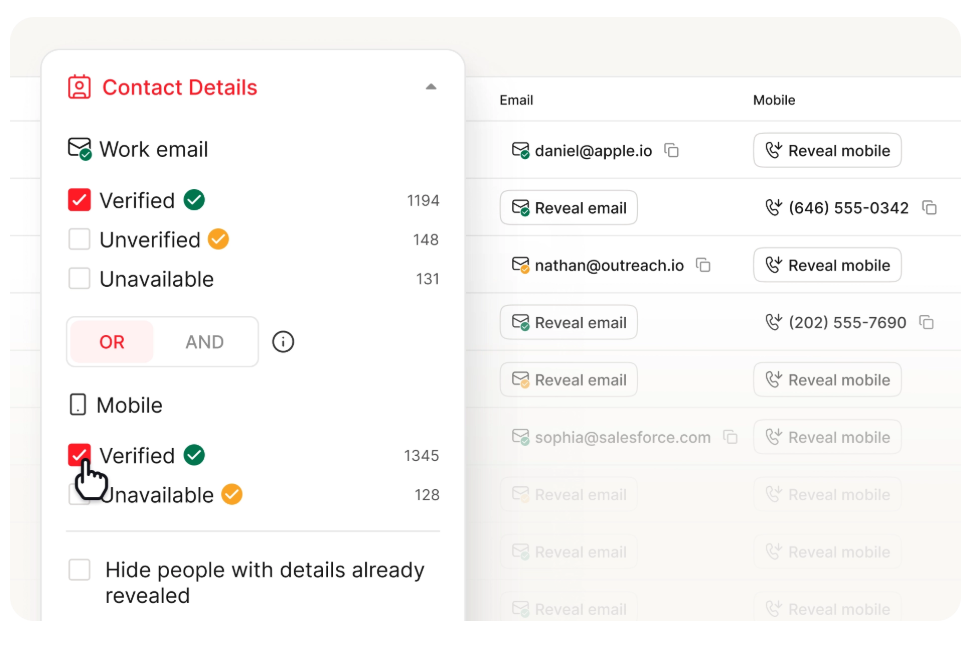
But finding the right company is only half the problem. Emails to info@ addresses die in shared inboxes. You need the head of partnerships, the VP of marketing, or the founder - depending on company size. We've seen this play out dozens of times: someone identifies the perfect partner company, writes a great pitch, and sends it to a generic inbox where it sits unread for weeks. Use Prospeo's email finder to search across 300M+ professional profiles, filter by role and company, and get verified emails with 98% accuracy. The free tier gives you 75 emails per month, which is more than enough for a targeted partnership campaign.
Write a Partnership Pitch Email That Gets Replies
If your email could be sent to 50 companies without changing a word, it belongs in the trash. Here's the structure that works:
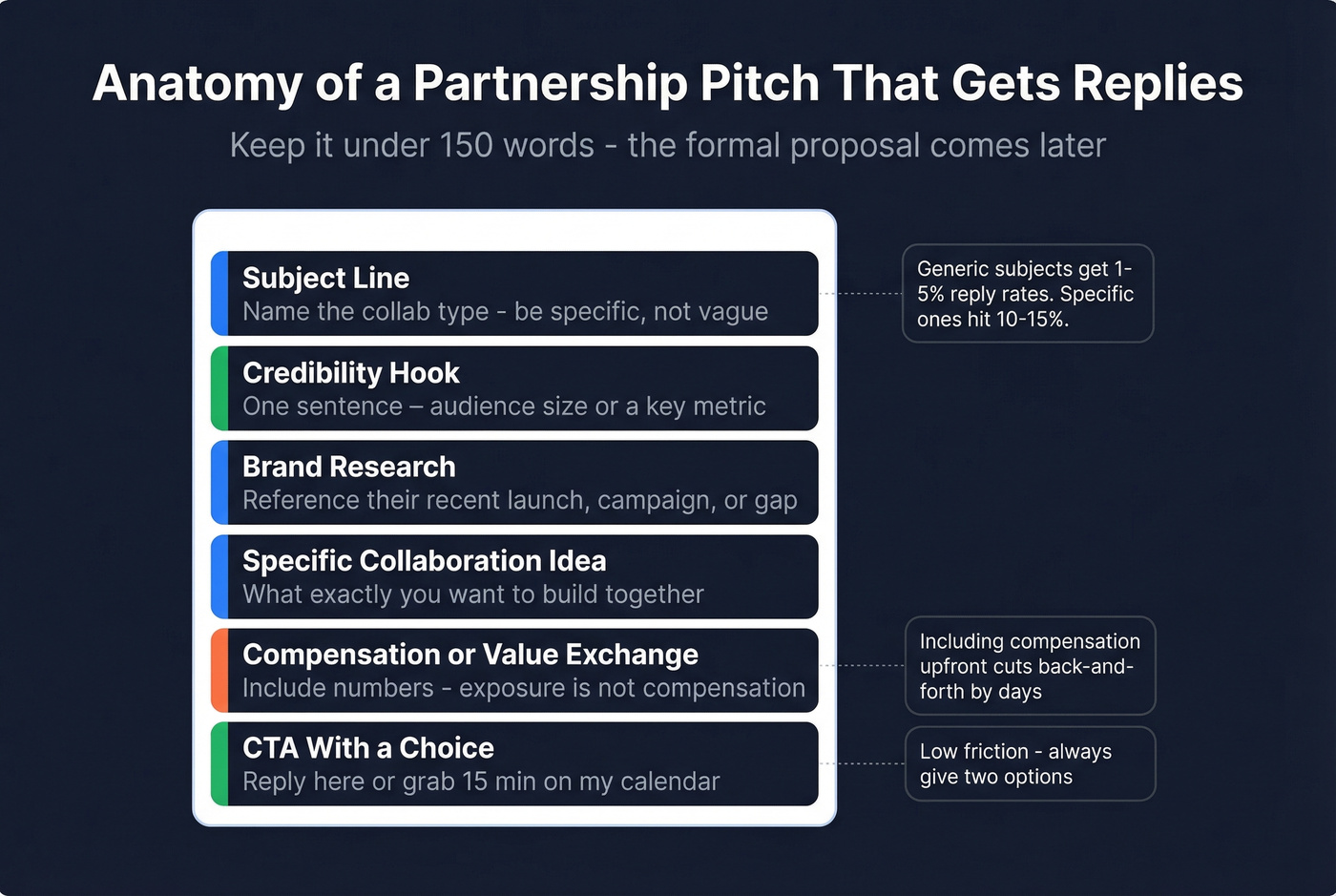
- Subject line: Name the collaboration type. "Co-branded webinar idea for [Company]" beats "Partnership opportunity." (Need ideas? See these subject line examples.)
- Credibility hook: One sentence - audience size, a relevant metric, a shared customer.
- Brand research: Reference something specific. A product launch, a campaign, a gap you noticed.
- Specific collaboration idea: What, exactly, you're proposing.
- Compensation or value exchange: Include this in the first email. Vague pitches about "exposure" get deleted.
- CTA with a choice: "Reply here or grab 15 minutes on my calendar." (If you want more options, use these email call to action patterns.)
Including collaboration details and compensation upfront cuts the "what's your budget?" back-and-forth and gets you to a yes or no faster.
Example 1: B2B SaaS Partnership
Subject: Co-branded webinar series - [Your Company] + [Their Company]
Hi Sarah,
I run content at [Your Company] - we help mid-market SaaS teams automate onboarding. Our last webinar series pulled 500+ registrants per session, mostly VP-level product and CS leaders.
I noticed [Their Company] just launched your new analytics dashboard. Your customers are exactly the audience we're reaching, and I think a co-branded webinar on "onboarding metrics that predict retention" would be a win for both lists.
We'd handle production, promotion to our 12K subscriber list, and post-event content. Happy to split lead capture 50/50.
Worth a 15-minute call this week? [Calendar link] - or just reply here.
Best, [Name]
Example 2: Creator-Brand Pitch
Subject: Helix Mattress x travel content idea
Hi Helix team,
I'm Jessica - travel creator with 1M+ followers across TikTok, Instagram, and YouTube. I've been following Helix since your science-backed clinical trials and the Wired "best mattress" feature.
I'd love to integrate Helix into an upcoming travel vlog series - "best sleep on the road" angle. Dedicated TikTok + IG Reel + YouTube integration. Rate: $750 flat + product.
Can we hop on a quick call to align on goals? [Calendar link]
Jessica
Both emails share specific numbers, a tailored idea, clear compensation, and a low-friction CTA. Adapt every detail to your situation - these are starting points, not finished products. (For more, see our guide to personalized outreach.)
Structure the Collaboration Deal
For your first collaboration, start with a flat fee or commission model. Revenue shares sound fair in theory, but they create accounting headaches and trust issues when neither party has worked together before. We've found that the simplest deal structure almost always wins for round one.
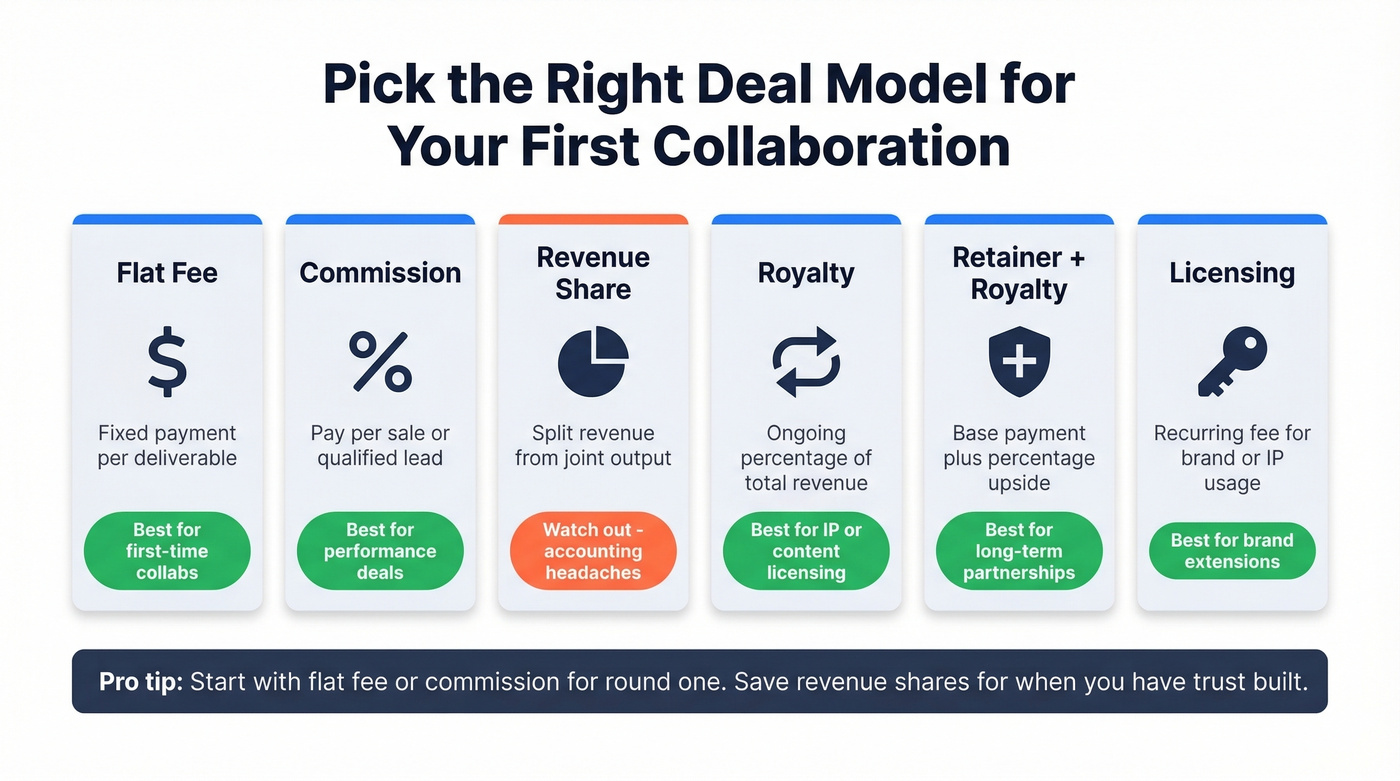
| Model | Mechanic | Best For |
|---|---|---|
| Flat fee | Fixed one-time payment per deliverable | First-time collabs |
| Commission/affiliate | Percentage paid per sale or qualified lead | Performance-based deals |
| Revenue share (50/50) | Split revenue from joint output | Co-created products or courses |
| Royalty | Ongoing percentage of total revenue | IP or content licensing |
| Retainer + royalty | Base payment plus percentage upside | Long-term partnerships |
| Licensing | Recurring fee for IP or brand usage rights | Brand extensions |
The Reddit founder who landed 23% partner referrals structured his deals with concrete commitments: 5 qualified prospect introductions per month, 20% commission, and monthly reviews. Whatever model you pick, agree on three things upfront: how you'll split value, how often you'll report results, and how either side can exit. Thirty days' notice is standard.
If your collaboration involves revenue sharing, your accountant will want to know about ASC 808 guidelines for collaborative arrangements - a niche detail that saves headaches later.

A perfect partnership pitch sent to info@ is a wasted pitch. Prospeo searches 300M+ profiles so you reach the head of partnerships or VP of marketing directly - with 98% email accuracy and a 7-day data refresh cycle.
Stop pitching shared inboxes. Start reaching decision-makers.
Draft the Formal Proposal Document
This comes after they say yes to a conversation. Not before. Nobody reads a 10-page proposal from someone they just met.
Keep it under three pages:
- Executive summary (2-3 sentences)
- Collaboration objectives and shared goals
- Roles and deliverables for each party
- Timeline with milestones
- Financial terms and payment schedule
- Success metrics (specific numbers, not "increased awareness")
- Exit criteria and termination terms - spell out what triggers an early end and how assets gets divided
- Next steps and signing timeline
One thing most guides skip: if your collaboration involves proprietary methods, product roadmaps, or original IP, protect it before you pitch. An NDA is inexpensive, and a provisional patent filing typically costs a few hundred to a few thousand dollars - a small price compared to losing a competitive advantage.
Follow Up - Most People Won't
One email isn't a strategy. RAIN Group's research shows it takes an average of 8 touches to get a meeting. Most people send one pitch, hear nothing, and assume the answer is no. The answer is usually "I haven't seen it yet."
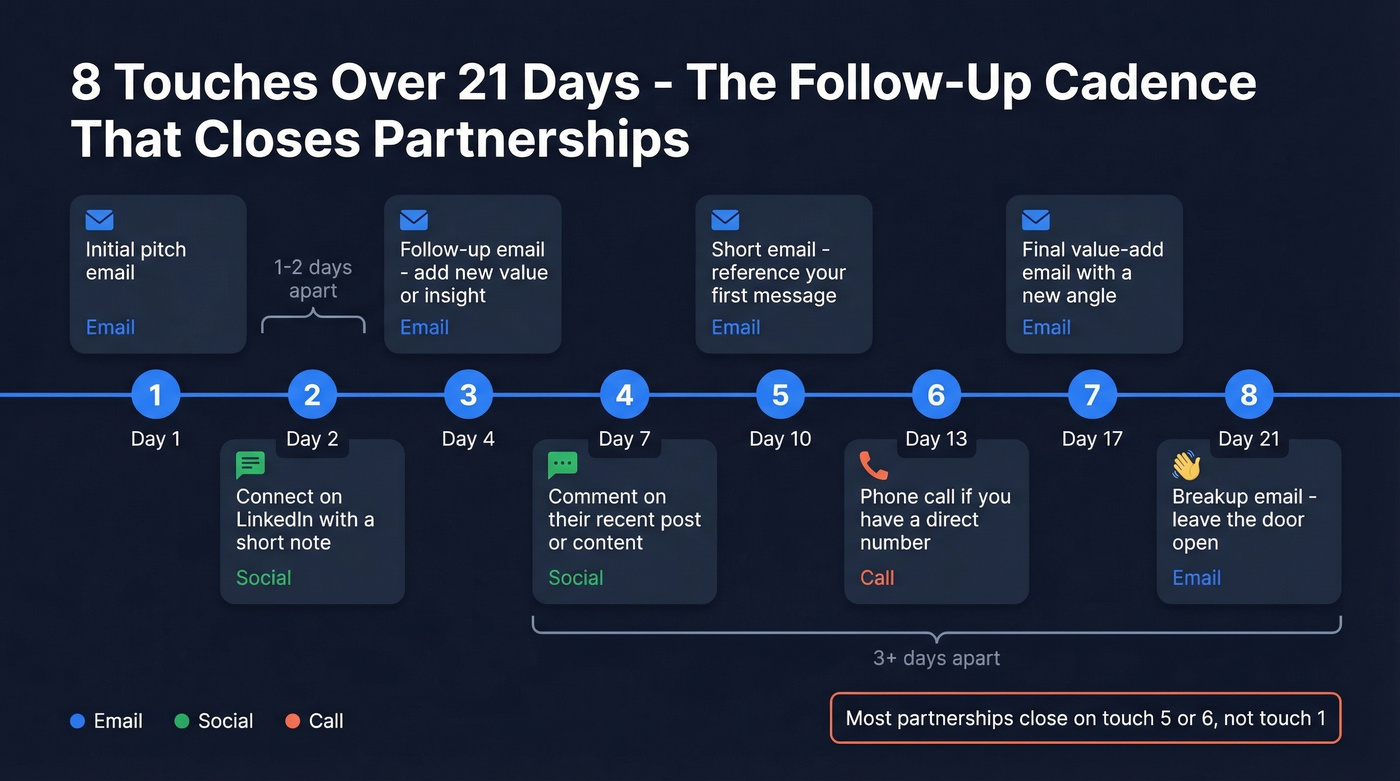
Build a cadence across 17-21 days. Start with 1-2 days between early touches, then expand to 3+ days. Mix at least three channels - email, a short message on a professional platform, a phone call if you have a direct number. In our experience, partnership outreach converts on touch five or six far more often than touch one, so the people who quit after two emails are leaving real deals on the table. If you need a starting point, borrow these sales follow-up templates and adapt them for partnerships.
Mistakes That Kill Collaboration Proposals
Let's be honest - most partnership pitches fail for boring reasons, not strategic ones.
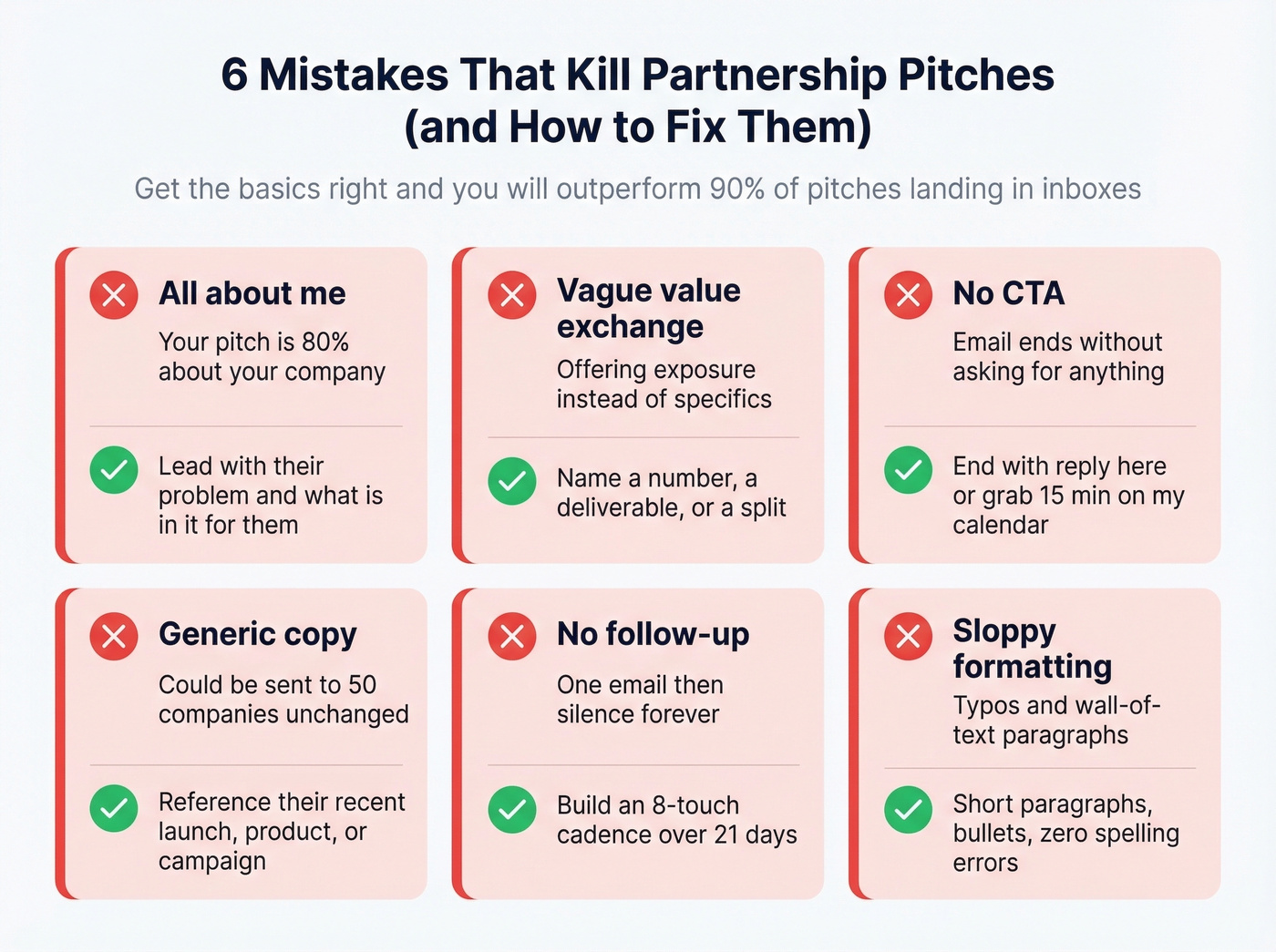
"Me, myself, and I." If your pitch is 80% about your company, you've already lost. The recipient doesn't care about your mission statement. They care about what's in it for them. (This is the core of email copywriting that converts.)
Vague value exchange. "Exposure" isn't compensation. Give a number or a specific deliverable. Skip this approach entirely if you can't quantify what you're offering.
No CTA. If you don't ask for a next step, you won't get one. Every email needs a clear, low-friction ask. (More examples: email wording to schedule a meeting.)
Generic copy. Templates are starting points, not finished products. If you didn't reference something specific about their business, they'll know you batch-sent it. Use a few sales prospecting techniques to find real personalization angles.
No follow-up. This is the #1 reason good partnerships never happen. One email and silence kills more deals than bad pitches do. If you're unsure on timing, see when should i follow up on an email.
Sloppy formatting. Spelling errors and wall-of-text emails signal you don't care about details - and if you don't care about details in the pitch, why would they trust you in a partnership?
Get the basics right - find the right person, lead with their problem, follow up relentlessly - and you'll outperform most partnership pitches landing in inboxes this year. Proposing a business collaboration is less about polish and more about specificity: name the problem, quantify the upside, and make the next step effortless.
The Reddit founder's 23% partner referral rate started with reaching the right people. Prospeo's 30+ filters let you find companies by tech stack, headcount growth, and funding - then grab verified emails for $0.01 each.
Build your dream partner list in minutes, not weeks.