

Ideal Customer Profile Questions: The Only Ones That Matter
You closed a deal after nine months of back-and-forth. Champagne. High-fives. Sixty days later, they churn. The problem wasn't your product - it was the customer. They never fit your ICP because nobody asked the right questions to build a real one.
We've watched this play out dozens of times across our own pipeline and our customers' pipelines, and the root cause is almost always the same: the ICP was built on vibes instead of data, and nobody bothered to pressure-test it with the people who actually know what a good customer looks like.
What You Need (Quick Version)
You don't need 50 ICP questions. You need about 20 good ones asked to the right people.
Organize by stakeholder - CS, sales, best customers, and leadership each answer different questions. Add disqualification criteria, because knowing who to reject is half the battle. Score your ICP on a 100-point model so sales actually uses it. Operationalize the document by turning criteria into a live prospect list. And review quarterly, since ICPs drift as your product, pricing, and market evolve.
Three Mistakes That Kill Your ICP
1. Guessing instead of using data. Picking firmographics that "feel right" without analyzing closed-won deals. Poor lead qualification is one of the fastest ways to waste pipeline, and it starts here.
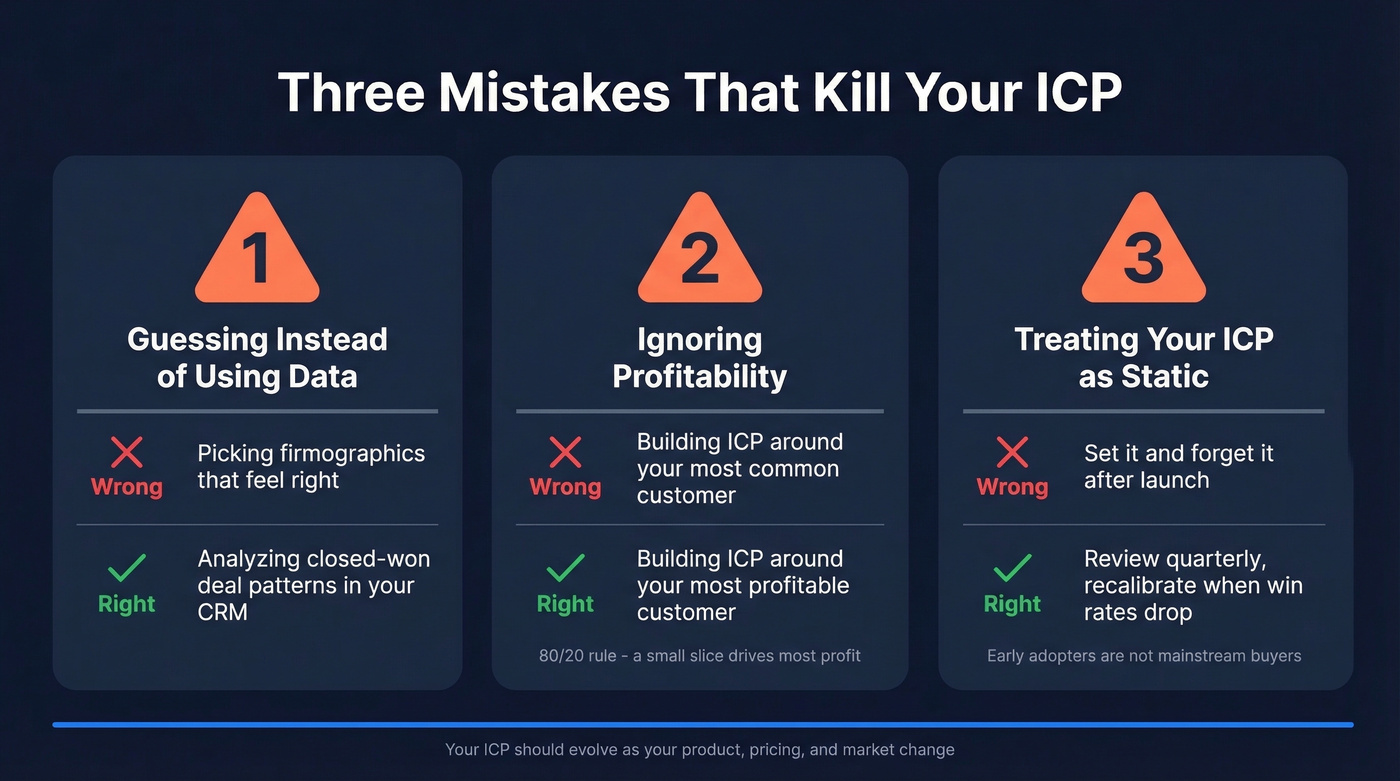
2. Ignoring profitability. the 80/20 rule shows up constantly in practice - a small slice of customers drives a disproportionate share of profit. If you're building an ICP around your most common customer instead of your most profitable one, you're optimizing for the wrong thing. We made this mistake early on and spent six months chasing accounts that looked great on paper but generated almost no expansion revenue.
3. Treating your ICP as static. Early adopters aren't mainstream buyers. The companies that loved your MVP won't look like the companies that buy your mature product. As r/b2bmarketing regulars put it: most B2B personas are built like B2C demographic profiles when what you actually need is firmographics, buying committee structure, and decision journey mapping.
ICP Questions Organized by Stakeholder
Generic question lists fail because they don't tell you who to ask. Start interviews with customers who've been with you 12+ months and spend above average - they're your proxy for "ideal."
CS / Delivery Team
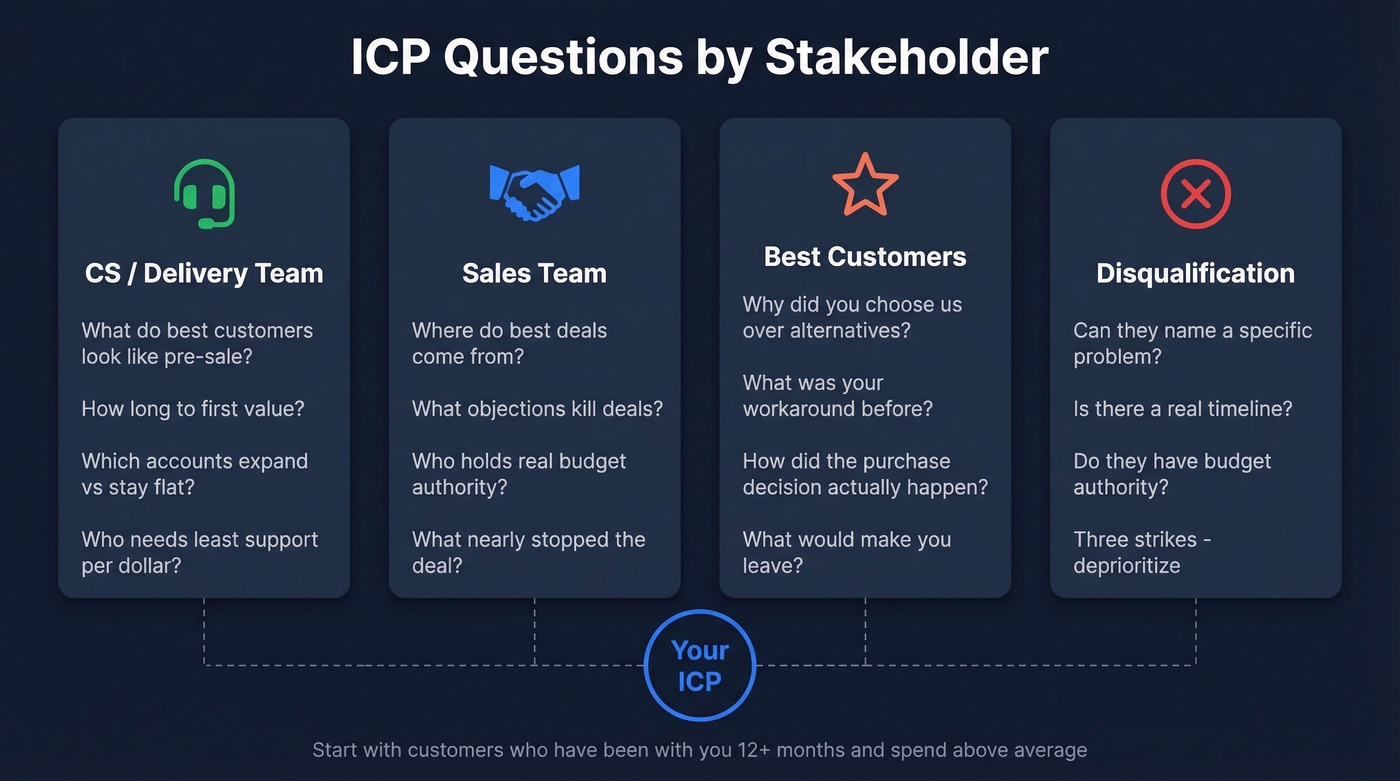
Your CS team sees the post-sale reality that sales never does. Ask them what your best customers look like before they sign - industry, size, maturity - and how long those accounts take to reach first value. Find out which accounts expand versus stay flat, who the day-to-day contact is, and which accounts require the least support relative to revenue. Their answers reveal which customers actually succeed versus which ones just signed a contract.
Sales Team
Focus on sourcing and friction. Where do your best deals come from? What objections kill deals? Who's on the buying committee, and who actually holds budget authority? What's the average time-to-close for best-fit accounts?
And the gold question: what nearly stopped the deal from closing?
That one surfaces the real decision criteria and process blockers that should feed directly into your ICP. Skip it and you'll end up with a profile that describes who buys but not how they buy.
Best Customers
Use the "tell me the story" approach rather than yes/no questions. Why did you choose us over alternatives? What were you doing before - what was the workaround? Walk me through how the purchase decision actually happened. What nearly stopped you from buying? What would make you leave?
Also ask about outlier use cases. Sometimes your "black sheep" customer reveals an adjacent ICP segment you've been ignoring entirely.
Disqualification (Negative ICP)
Here's the thing: an ICP without disqualification criteria is half-finished. Use a three-strike approach. Can they name a specific problem, or is the pain vague? Is there a timeline, or is it "sometime next year"? Do they have budget authority or a clear path to it - MEDDIC's economic buyer question? Three strikes and you deprioritize. This protects your team's time for accounts that can actually close.

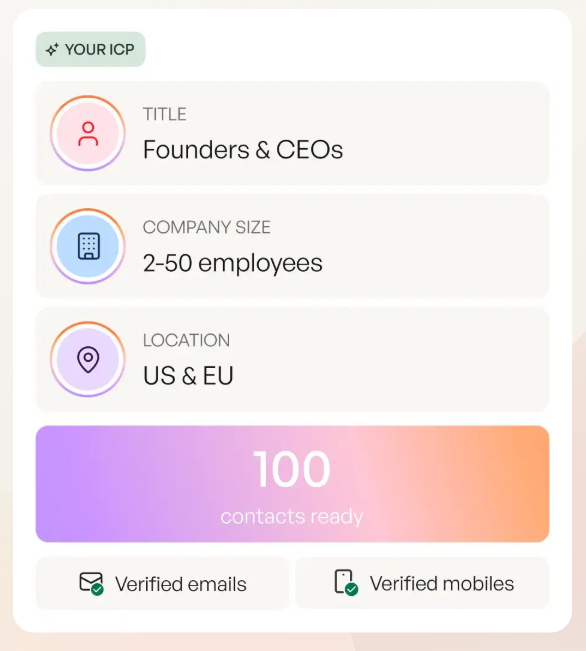
You just scored your ICP - now fill it with real contacts. Prospeo's 30+ search filters map directly to your ICP criteria: industry, headcount, tech stack, buyer intent, and funding signals. 98% email accuracy means your Tier A accounts actually get your message.
Turn your ICP document into a pipeline in under five minutes.
A Completed ICP Example
70-80% of your wins share 3-5 common traits. Here's what a completed profile looks like after running through your interview questions:
| ICP Criterion | Example Value |
|---|---|
| Industry | B2B SaaS |
| Employee count | 50-500 |
| Revenue | $5M-$50M |
| Tech stack | 5+ disconnected tools |
| Pain | 10+ hrs/week manual data entry |
| Buying committee | VP Ops (decider), CFO (payer), Ops team (users) |
| Trigger | New funding or leadership change |
| Disqualification | No ops role, <$2M revenue, no budget authority |
Fill this with your own CRM data and interview findings - not guesses. If you want a starting point, use an Ideal Customer Profile Template and customize from there.
Score Your ICP
A document nobody references is worthless. A scoring model inside your CRM gets used daily.
If you haven't already, align this with your lead scoring rules so reps can separate fit from intent without guessing.
| Category | Points | Example Criteria |
|---|---|---|
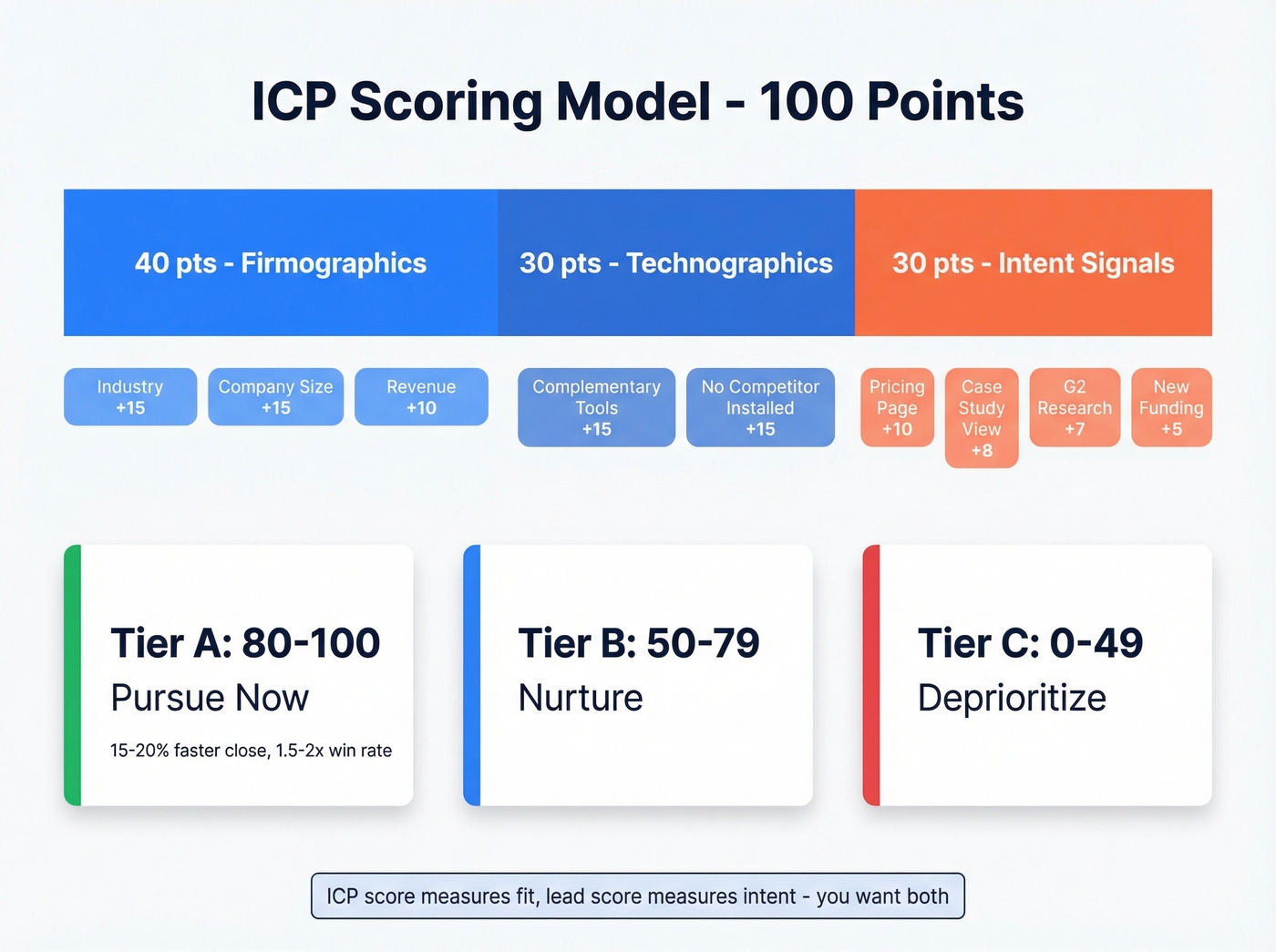
| Firmographics | 40 | Industry +15, size +15, revenue +10 |
| Technographics | 30 | Complementary tools +15, no competitor +15 |
| Intent signals | 30 | Pricing page +10, case study +8, G2 +7, funding +5 |
Tier A (80-100): Pursue now. Tier B (50-79): Nurture. Tier C (0-49): Deprioritize.
One distinction worth making: ICP score measures fit, lead score measures intent. You want both. Top teams see Tier A accounts close 15-20% faster than Tier B, with win rates running 1.5-2x higher. Combine the two and your pipeline gets dramatically cleaner - we've seen teams cut their average sales cycle by three weeks just by refusing to work Tier C accounts.
From ICP Document to Prospect List
Most ICP guides end right here. Great - you have a document. Now what?
This is where sales prospecting techniques and list-building discipline matter more than another PDF.
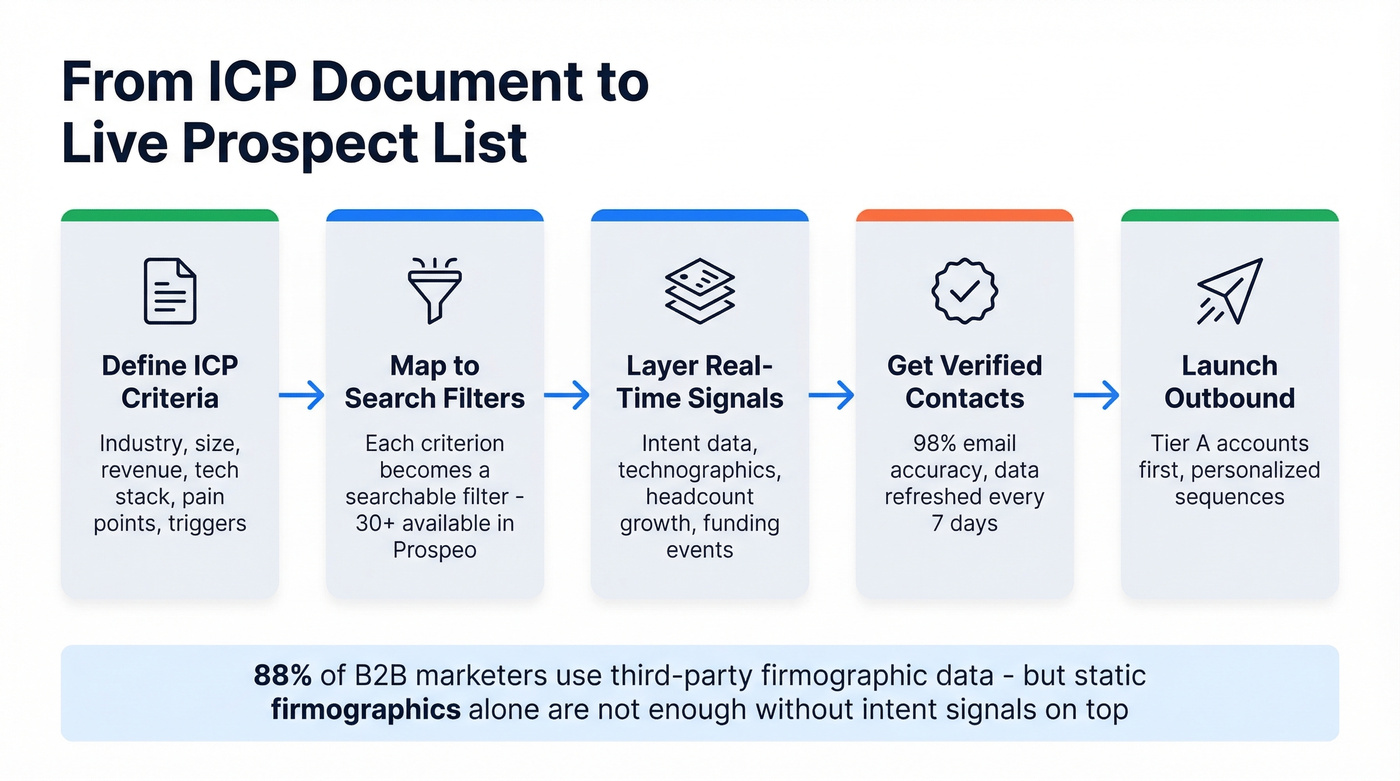
Let's be honest: 88% of B2B marketers use third-party firmographic data to find matching accounts, but static firmographics alone aren't enough. You need to layer real-time signals on top - intent data, technographics, headcount growth, funding events. Without those signals, you're working a stale list and hoping for the best.
Define something like "B2B SaaS, 50-500 employees, using Salesforce, showing intent on workflow automation" in Prospeo's database and you get a verified prospect list with 30+ filters covering buyer intent, technographics, and funding signals. Data refreshes every seven days, so you're not emailing someone who left the company two months ago.
If you're comparing sources, start with a shortlist of B2B company data providers and pick the one that matches your ICP depth (firmographics + technographics + intent).
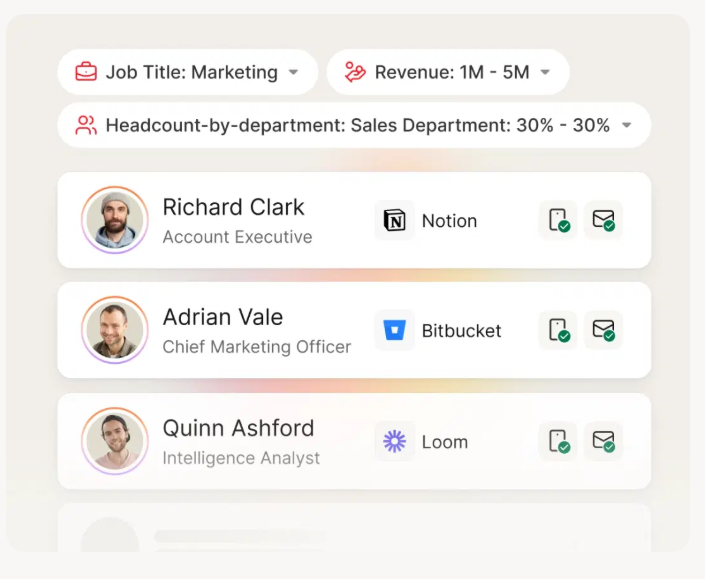
An ICP built on stale data defeats the purpose. Prospeo refreshes 300M+ profiles every 7 days - not the 6-week industry average - so your prospect list matches reality. Layer Bombora intent data across 15,000 topics to find accounts actively researching your category right now.
Stop emailing people who left the company two months ago.
FAQ
How often should I update my ICP?
Quarterly at minimum. If Tier A win rates drop below historical averages, your profile needs recalibration - market shifts, new competitors, or product changes can move the goalposts faster than you'd expect.
How many customer interviews do I need?
10-15 of your best customers is the sweet spot. When 70-80% share the same 3-5 traits across firmographics and buying behavior, you've reached saturation and can confidently define your profile. Fewer than 10 and you're probably pattern-matching on noise.
What's the difference between an ICP and a buyer persona?
An ICP tells you which companies to pursue - industry, size, tech stack, revenue. A buyer persona tells you who inside those companies to talk to - their title, goals, and objections. Build the ICP first, then layer personas on top.
How do I turn ICP criteria into an actual prospect list?
Map each ICP criterion to a searchable filter in a B2B data platform. Combine industry, headcount, technographics, intent topics, and funding stage. Most teams go from finished ICP to first outbound list in under an hour - the bottleneck isn't the tool, it's having clear criteria to begin with.