

Inbound Sales Script: Templates, Rebuttals, and Benchmarks for 2026
Your SDR gets a demo request notification. The prospect filled out a form three minutes ago - they're at their desk, still thinking about your product. Your SDR pulls up the CRM: no phone number. The email bounces. By the time someone finds the right contact info, it's been four hours and the prospect booked a demo with your competitor.
No inbound sales script fixes that. That's a speed and data problem, and even when reps do connect, too many open with "start me at the beginning" - despite having the prospect's form answers right in front of them.
Your script should fit on one page. Everything here is built around that principle.
What You Need (Quick Version)
Three things to build an inbound call playbook from scratch:
- A speed-to-lead SLA under 5 minutes. Responding in the first minute drives a 391% increase in conversions. Wait 30 minutes and you're 21x less likely to even qualify the lead.
- Filled-in scripts for your top two scenarios. Not a template with [product/service] placeholders - actual words your reps can say out loud.
- Verified contact data so reps aren't burning the 5-minute window on dead numbers. Prospeo verifies emails and mobile numbers in real time - 98% email accuracy - so your team dials a live human, not a voicemail box.
Speed to Lead - The Script Starts Before You Speak
The average B2B sales team takes 42 hours to respond to a new inbound lead. Forty-two hours. A RevenueHero study of 1,000 companies found that 63.5% never responded at all.
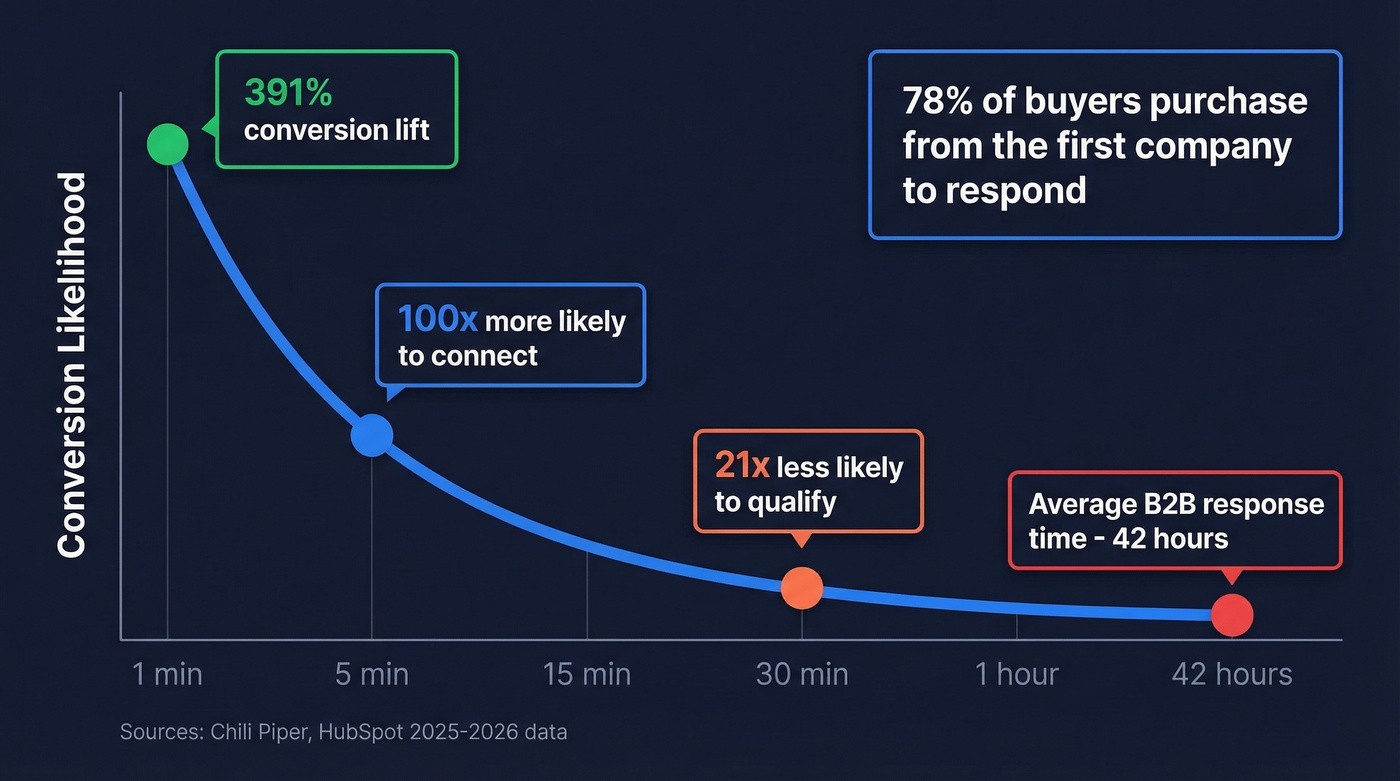
Responding within five minutes makes you 100x more likely to connect and convert compared to waiting 30 minutes. Responding in the first minute? That's the 391% conversion lift. And here's the stat that should make this non-negotiable: 78% of buyers purchase from the first company to respond. You're not improving odds - you're winning the deal before competitors even pick up the phone.
The decay curve is brutal. Over 40% of high-intent inquiries arrive during evenings and weekends, creating a typical 61-hour silence window from Friday evening to Monday morning. Three days of leads going cold while your team is offline.
The fix: set a formal response-time SLA. Companies with one respond within 15 minutes 54.9% of the time, compared to just 29.5% without one. Yet 38% of companies that say five-minute response is essential fail to meet their own standard. Let's be honest - if you can't measure it, you can't fix it.
Inbound Call Benchmarks - What Good Looks Like
Before you write a single line of script, you need to know what "good" means. Invoca analyzed 60M+ phone calls across nine industries:
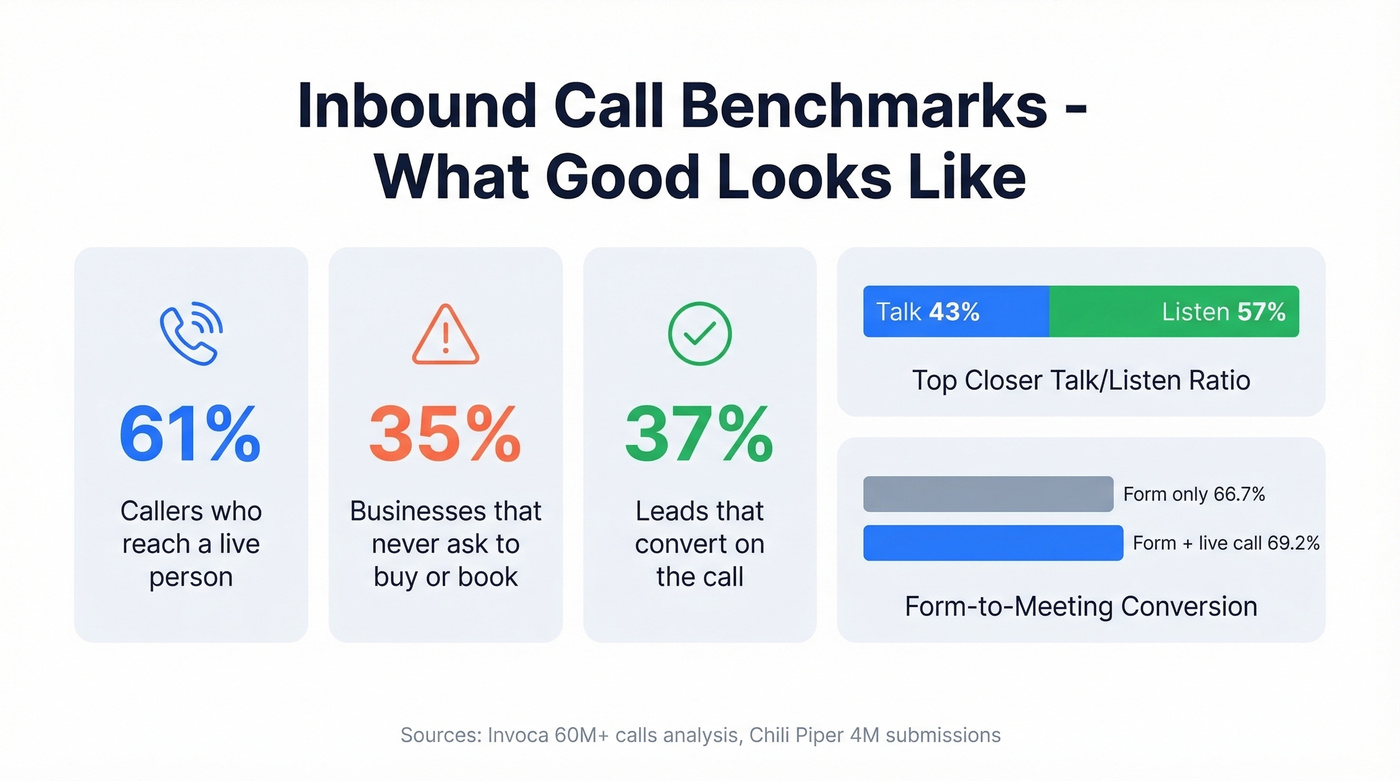
| Metric | Benchmark |
|---|---|
| Callers who reach a person | 61% |
| Businesses that never ask to buy/book | 35% |
| Leads that convert on the call | 37% |
Two more benchmarks worth tracking:
- Talk/listen ratio (top closers): 43:57. If you're doing most of the talking, you're pitching, not discovering.
- Form-to-meeting conversion (qualified hand-raisers): 66.7% baseline, 69.2% with a live call option.
That 35% number is staggering. More than a third of businesses never ask their inbound leads to buy or book an appointment. They answer the phone, have a conversation, and let the prospect hang up without a next step. In our experience, this single failure accounts for more lost pipeline than bad discovery or weak pitches combined.
The form-to-meeting data comes from Chili Piper's analysis of ~4 million submissions. Simply adding a live call option lifts conversion from 66.7% to 69.2%. At 1,000 demo requests a month, that's roughly 40 additional meetings - for doing nothing more than picking up the phone.
Pre-Call Preparation Checklist
Inbound leads are warm, but they're not exclusive. They're evaluating several tools at once. Preparation separates the rep who books the follow-up from the rep who gets ghosted.
Company research: Team size, department headcount, funding stage, recent news, and current tech stack. Five minutes of homework beats five minutes of awkward discovery questions.
Prospect research: Role, title, tenure, shared connections, and any content they've published or engaged with.
CRM and form data: Read the form submission. Read the chat transcript. Never make them repeat themselves.
Contact verification: Before you dial, verify the lead's contact info. Stale CRM data means bounced emails and dead numbers. One enrichment pass through a tool like Prospeo returns 50+ data points per contact, giving your rep context before they even say hello - and flagging disconnected numbers before they waste the speed-to-lead window. (If you’re comparing vendors, start with data enrichment and lead enrichment.)
Compliance note: If you're recording the call, disclose it upfront. "This call may be recorded for quality purposes - is that okay?" takes three seconds and keeps you on the right side of two-party consent laws.
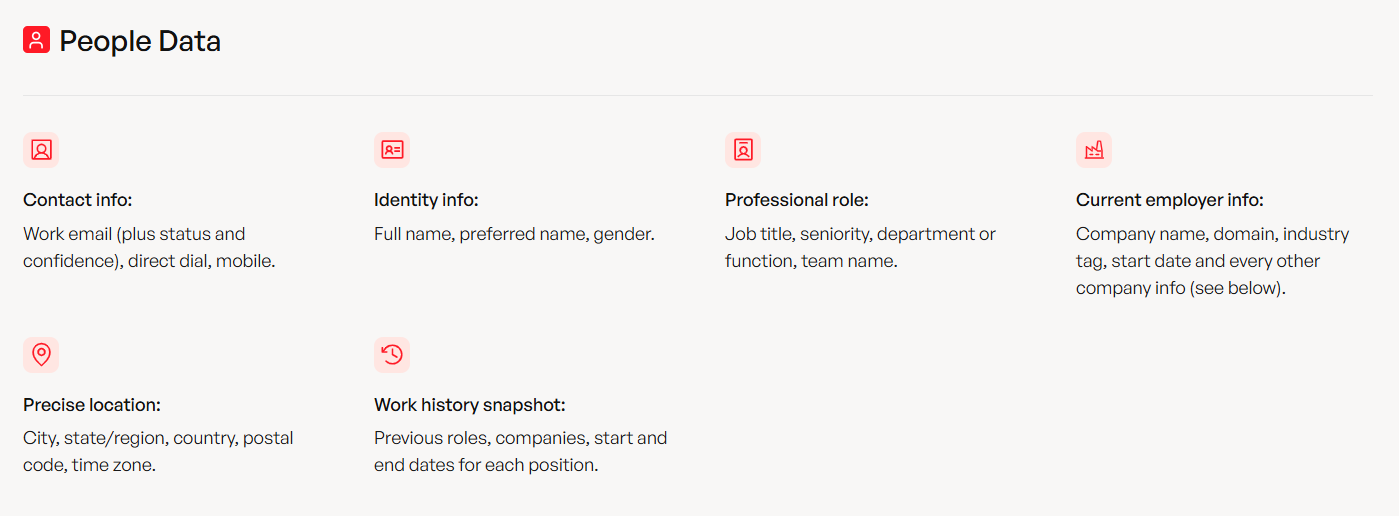

Your 5-minute speed-to-lead window dies the second your rep dials a disconnected number. Prospeo enriches every inbound lead with 50+ verified data points - direct dials, mobile numbers, emails - at 98% accuracy, so your team calls a real human, not a voicemail graveyard.
Stop burning your speed-to-lead window on dead contact data.
The Script, Stage by Stage
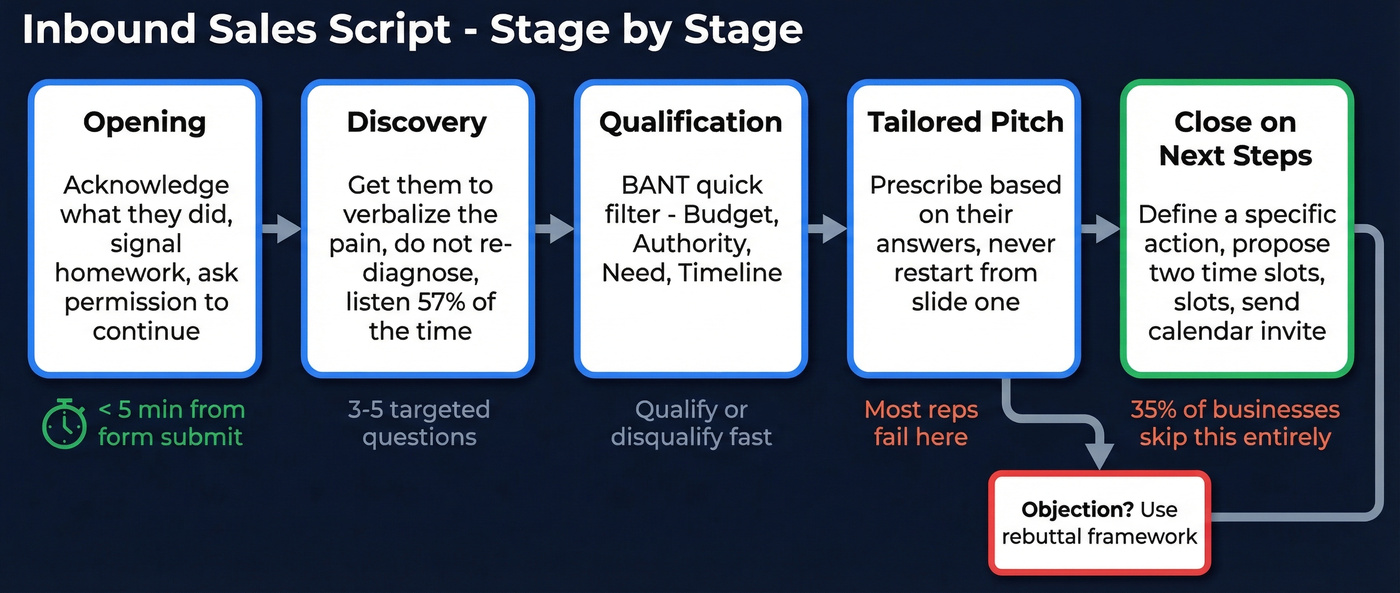
Every script below uses a fictional SaaS context - a project management platform called "Launchpad" - so you can hear how the words actually sound. Swap in your product, keep the structure.
Opening (Two Variants)
Variant 1: Trial signup follow-up
"Hey Sarah, this is Marcus from Launchpad. I saw you just signed up for a trial about 10 minutes ago - wanted to personally reach out and say hi. Do you have a couple of minutes? I'd love to help you get the most out of it. And quick question - what's the best way to reach you if we get disconnected?"
Variant 2: Demo or pricing inquiry
"Hi Sarah, this is Marcus from Launchpad. You submitted a demo request on our site - thanks for that. I've got your form responses in front of me, so I don't want to make you repeat anything. Before I walk you through what we do, can I ask a couple of quick questions to make sure I'm showing you the right stuff?"
Both openers accomplish the same thing: acknowledge what the prospect already did, signal that you've done your homework, and ask permission to move forward.
Discovery Questions
Don't re-diagnose. Get them to verbalize the pain.
- "You mentioned on the form that you're managing projects across three teams - what's breaking down in that workflow right now?"
- "What made you start looking for a new tool this week specifically?"
- "If you could fix one thing about how your team tracks work today, what would it be?"
- "Walk me through what happens when a project falls behind schedule. Who feels it first?"
- "How will you decide if we're a good fit?"
That last question is the one most reps skip, and it's the most valuable. It gets the prospect to articulate their buying criteria out loud - criteria you can mirror back in every follow-up. We've found it consistently surfaces objections that would otherwise ambush you two calls later.
The goal isn't to check boxes. Top closers speak only 43% of the time and listen for the remaining 57%. (If you want a deeper bank, use these discovery questions.)
Qualification (BANT Quick-Filter)
- Budget: "Do you have budget allocated for a tool like this, or would this need to go through an approval process?"
- Authority: "Who else would need to weigh in before you could move forward?"
- Need: "On a scale of 1-10, how urgent is solving this? What happens if nothing changes in the next 90 days?"
- Timeline: "Are you looking to have something in place by a specific date?"
Tailored Pitch
Here's the thing: this is where most reps blow it. They hear the prospect's answers, nod along, then restart the product tour from slide one as if the last five minutes didn't happen. Don't do that. Prescribe based on what they just told you.
"So it sounds like the biggest issue is visibility - your PMs don't know what's behind schedule until it's already late. Here's how Launchpad handles that: every project gets a real-time status dashboard that flags blockers automatically. Your three team leads would each see their own view. Based on what you described, I'd set you up with our Team plan, which covers up to 50 users."
Close on Next Steps
Never hang up without a defined action. This is where 35% of businesses fail.
"Here's what I'd suggest: let me set up a 30-minute walkthrough with you and your head of operations - you mentioned she'd need to see it. I've got Thursday at 2 PM or Friday at 10 AM. Which works better? I'll send a calendar invite with a short agenda so she knows exactly what we're covering."
(If you need a tighter process, map this to the steps to close a sale.)
Objection Handling: 6 Rebuttals That Work
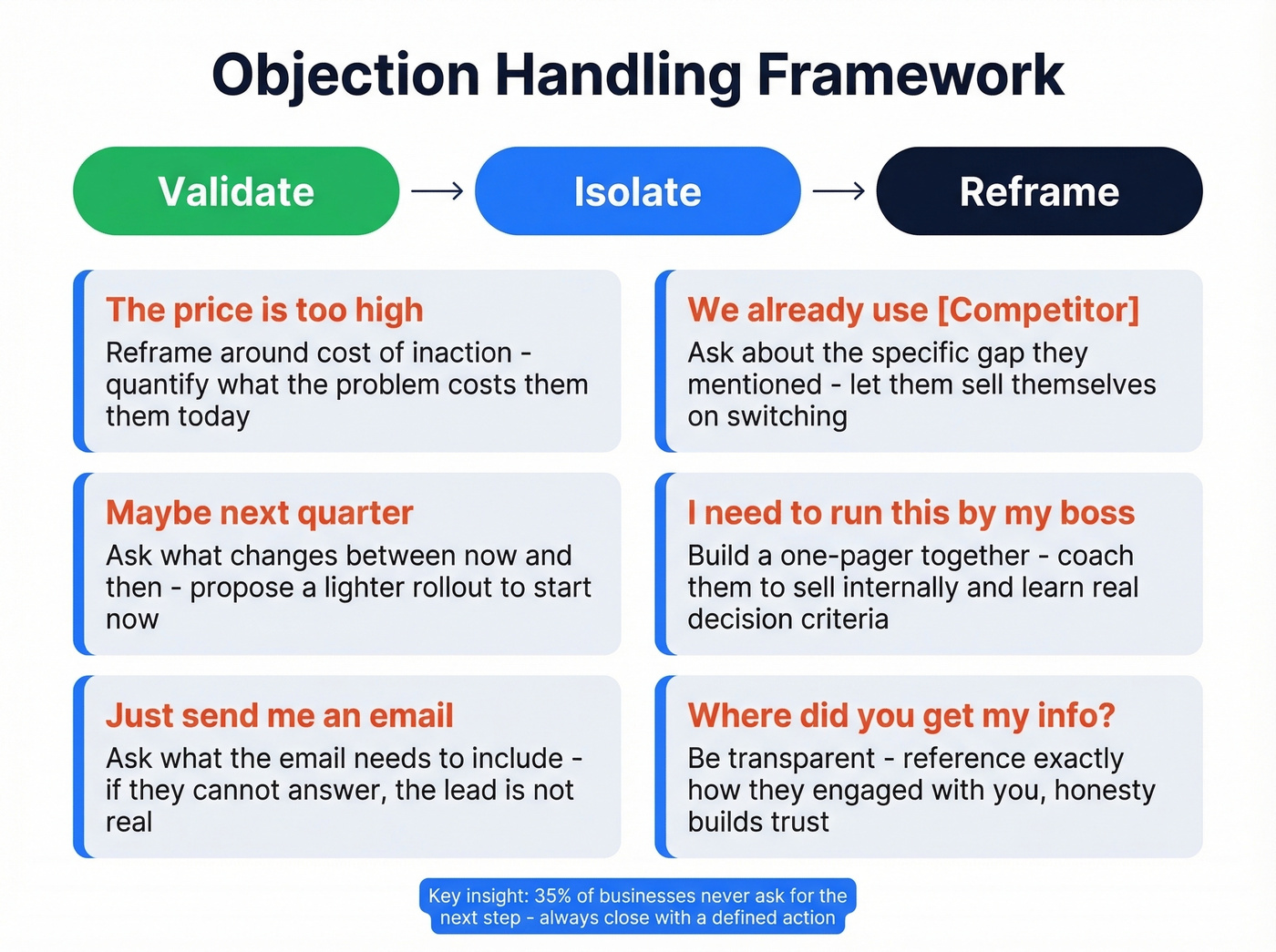
Every rebuttal follows the same core structure - validate the concern, isolate whether it's the real blocker, then reframe - but the execution varies depending on the objection type.
"The price is too high."
Validate: "Totally fair - budget matters." Isolate: "If price wasn't an issue, is this the solution you'd choose?" If yes, reframe around cost of inaction: "You mentioned missed deadlines are costing you roughly two client escalations a month. What's that worth in retention risk?" (To reduce how often this comes up, see how to reduce sales objection rate.)
"We're already using [Competitor]." This one's actually good news - it means they already see the value of the category. Don't trash the competitor. Ask: "How are you currently handling the cross-team visibility piece? That seemed like the gap when we talked." Let them articulate the gap themselves. Nine times out of ten, they'll sell themselves on switching.
"The timing isn't right - maybe next quarter."
Rep: "I get it, there's always a lot going on. What changes between now and next quarter that makes it a better time?"
Prospect: "We'll have more bandwidth after the product launch."
Rep: "Makes sense. If you're losing two project cycles in the meantime, that's 12 weeks of the same problem. What if we got you set up now with a lighter rollout - just your core team - so you're not starting from scratch in Q3?"
"I need to run this by my boss." Don't fight it. Arm them instead: "Let's build a quick one-pager together that covers the three things she'll care about. What would those be?" Now you're coaching them to sell internally - and you've just learned the real decision criteria.
"Just send me an email." Usually a brush-off. "Happy to - what's the one thing that email needs to include for you to take a second look?" If they can't answer, the lead isn't real. If they can, you've just uncovered their actual buying criteria in a sentence. (Use these sales follow-up templates to keep it crisp.)
"Where'd you get my info?" Transparency wins. "You filled out a demo request on our site last Tuesday - I'm following up on that. Is now still a good time, or should we reschedule?"
Choosing a Qualification Framework
BANT gets a bad rap, but for high-velocity inbound triage it's still the fastest filter. When your team handles 50+ demo requests a week, you need a framework that takes 90 seconds, not 20 minutes.
For enterprise inbound with multi-stakeholder buying committees, MEDDIC is the right tool. The question bank goes deeper: "What metrics will you use to measure success? Who signs the contract? What's the formal evaluation process?" (If you’re implementing it, start with MEDDIC sales qualification.)
NEAT Selling sits in between - useful when your discovery needs to focus on economic impact rather than checking qualification boxes. We've seen it work well for teams selling into finance and operations where ROI framing matters more than feature comparisons.
Look, most teams over-engineer their qualification process. If your average deal size is under $10k, BANT is all you need. Start there, then layer in MEDDIC questions for deals that make it past the first call. Don't build a 20-question framework for a product that sells in two conversations.
7 Script Mistakes That Kill Inbound Deals
"Start me at the beginning." The prospect already filled out a form. They told you their problem, their company, their role. Asking them to repeat it signals you didn't prepare - and as one practitioner breakdown noted, it's the fastest way to lose credibility on an inbound call.
Not stating your name. Sounds basic. It still happens. Reps launch into questions without introducing themselves, and the prospect spends the first 30 seconds wondering who they're talking to.
Talking more than 50% of the time. Top closers maintain a 43:57 talk-to-listen ratio. If you're doing most of the talking, you're pitching, not discovering.
Forced rapport. "That's why I like you" after two minutes of conversation isn't rapport - it's cringe. A popular Reddit thread on inbound call technique put it well: preparation is the best rapport builder. Be direct, be prepared, be helpful.
No next steps before hanging up. This is the 35% problem from the Invoca data. If you don't book the follow-up before the call ends, you're relying on email to re-engage a warm lead. Good luck with that.
Calling with bad contact data. Your CRM says the lead's number is 555-0142. It's disconnected. The email bounces. By the time someone finds the right number, it's been two hours. Run your inbound list through a verification tool before your team touches it - one enrichment pass flags bad numbers before they waste a rep's time. (If you’re evaluating options, compare data enrichment services and SDR tools.)
Bait-and-switch. The prospect booked a call with your senior consultant. A junior SDR shows up instead. That mismatch kills trust instantly. If the rep on the call isn't the person they expected, acknowledge it upfront and explain why.
Industry-Specific Discovery Tweaks
The core script structure works across industries, but your discovery questions need to match the prospect's world. Three quick adaptations:
Healthcare: Replace generic pain questions with compliance-aware ones. "How are you currently handling patient data when projects cross departments? Who owns HIPAA sign-off on new tools?"
Financial services: Lead with risk and audit. "What does your current approval workflow look like for client-facing deliverables? How many people touch a compliance review before it ships?"
Home services / local business: Speed and simplicity matter most. "When a new lead calls in, what happens if nobody picks up? How many calls a day are you missing right now?" Invoca's data shows these industries have some of the highest call-to-conversion rates - if someone answers.
The best inbound script in the world converts at 0% if your CRM is full of stale numbers and bounced emails. Prospeo refreshes 300M+ profiles every 7 days - not every 6 weeks like competitors - so reps walk into every call with verified contacts and real context.
Give your reps data as fresh as the lead sitting at their desk.
FAQ
How long should an inbound sales script be?
One page max - five or six discovery questions, three objection rebuttals, and a closing line that books the next step. Reps won't use a 10-page branching decision tree; they'll improvise badly instead. Keep it tight enough to memorize the structure, flexible enough to adapt live.
What's the ideal response time for inbound leads?
Under five minutes. Responding in the first minute increases conversions by 391%, and 78% of buyers purchase from the first responder. The average B2B team takes 42 hours. Set a formal SLA - companies with one hit 15-minute response 54.9% of the time versus 29.5% without.
How do I verify contact data before calling inbound leads?
Run your list through a real-time verification tool before reps dial. Prospeo, for example, checks emails at 98% accuracy and verifies mobile numbers against 300M+ profiles on a 7-day refresh cycle, flagging disconnected numbers so your team spends the speed-to-lead window on conversations, not dead lines.