

How to Write an Intro Email to a Prospective Client That Gets Replies
The average rep sends 344 cold emails to land a single meeting. The average reply rate across billions of sends? 3.43%. Those numbers aren't a death sentence - they're a filter. Top performers book 8.1x more meetings than the average rep, and the difference isn't talent. It's structure.
We've spent months testing intro emails across different industries, list sizes, and sending setups. The patterns that work are surprisingly consistent, and most of them have nothing to do with being a better writer.
The Quick Version
- Lead with the prospect's problem. Pitching in a cold email drops reply rates by up to 57%.
- Keep it under 80 words. Three to four sentences. That's the whole email.
- End with an interest CTA - "Worth exploring?" beats calendar asks in cold outreach (more on email call to action best practices).
- Verify every address before you send. We've seen teams start at an 11% bounce rate and have to fix deliverability before anything else moved.
What the Data Actually Says
A study of 5.5M emails found personalized subject lines hit a 46% open rate versus 35% without, and reply rates jumped from 3% to 7%. The sweet spot for subject line length is 2-4 words. Beyond seven words, performance drops. Buzzwords and numbers in subject lines reduce open rates by up to 17.9%, so keep them plain. If you want more options, pull from these cold email subject line examples.
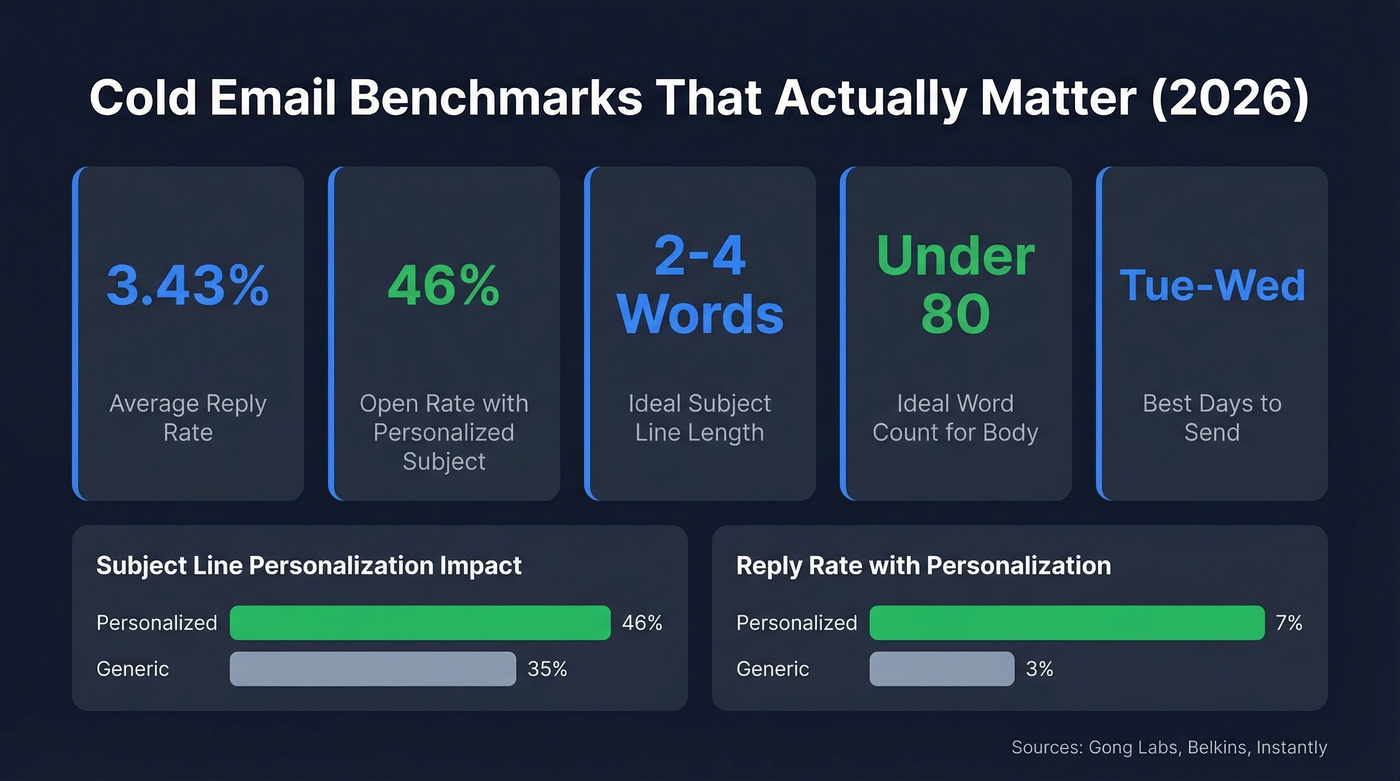
For the body, an analysis of 28M+ prospecting emails is definitive: stay under 100 words, aim for 3-4 sentences, and never pitch your product. Describe the prospect's problem and ask if they're interested in learning more (see email copywriting for the full framework).
That "interest CTA" framework comes from a Gong Labs study of 304,174 emails. Asking "Is this worth exploring?" consistently beat both open-ended and specific meeting requests. You're selling the conversation, not the calendar invite. Tuesday and Wednesday produce the highest reply rates, with Wednesday edging ahead (more detail in our guide on the best time to send cold emails).
3 Templates That Book Meetings
These templates are for cold first-touch outreach - an introduction email to someone who doesn't know you yet. If you're following up after a referral or meeting, the structure changes, but the principles stay the same: brevity, prospect-first framing, and a low-friction ask. For more variations, see our company introduction email examples.
The Problem-First Template
Subject: [2-4 word personalized question]
Hi [First Name],
You handle [specific responsibility] at [Company] - which usually means [pain point they care about].
We help [similar role/company type] [specific outcome] without [common objection].
Worth a quick look?
r/sales practitioners report booking 6-7 meetings per week with this structure, dropping 100-500 prospects into automated cadences. Every line earns the next. Use this as your default when you don't have a specific trigger event.
The Trigger-Based Template
Subject: Quick question
Hi [First Name],
Saw [Company] just [specific trigger: new VP hire / Series B / product launch]. Congrats.
When teams hit that stage, [common challenge] becomes urgent. We helped [similar company] [one-line result].
Interested in hearing how?
Trigger events work better than generic personalization because they give you a legitimate reason to reach out right now. The subject line "Quick question" pulled 39% opens in one practitioner's testing. Simple beats clever every time.
The Mini Case Study Template
Subject: [Prospect's company name] + [outcome]
Hi [First Name],
[Similar company] was dealing with [specific problem]. We [specific action], and they [quantified result] in [timeframe].
Would something like that be useful for [Company]?
One r/sales contributor reported this format booking 12 meetings in a single day - nearly 2x the problem-first template. The key is specificity: one result, one company, one number. If you need a sample introductory email for prospective client conversations, this is the highest-converting starting point we've found.
Mistakes That Kill Replies
Starting with "I" instead of "You." The email is about them, not you.
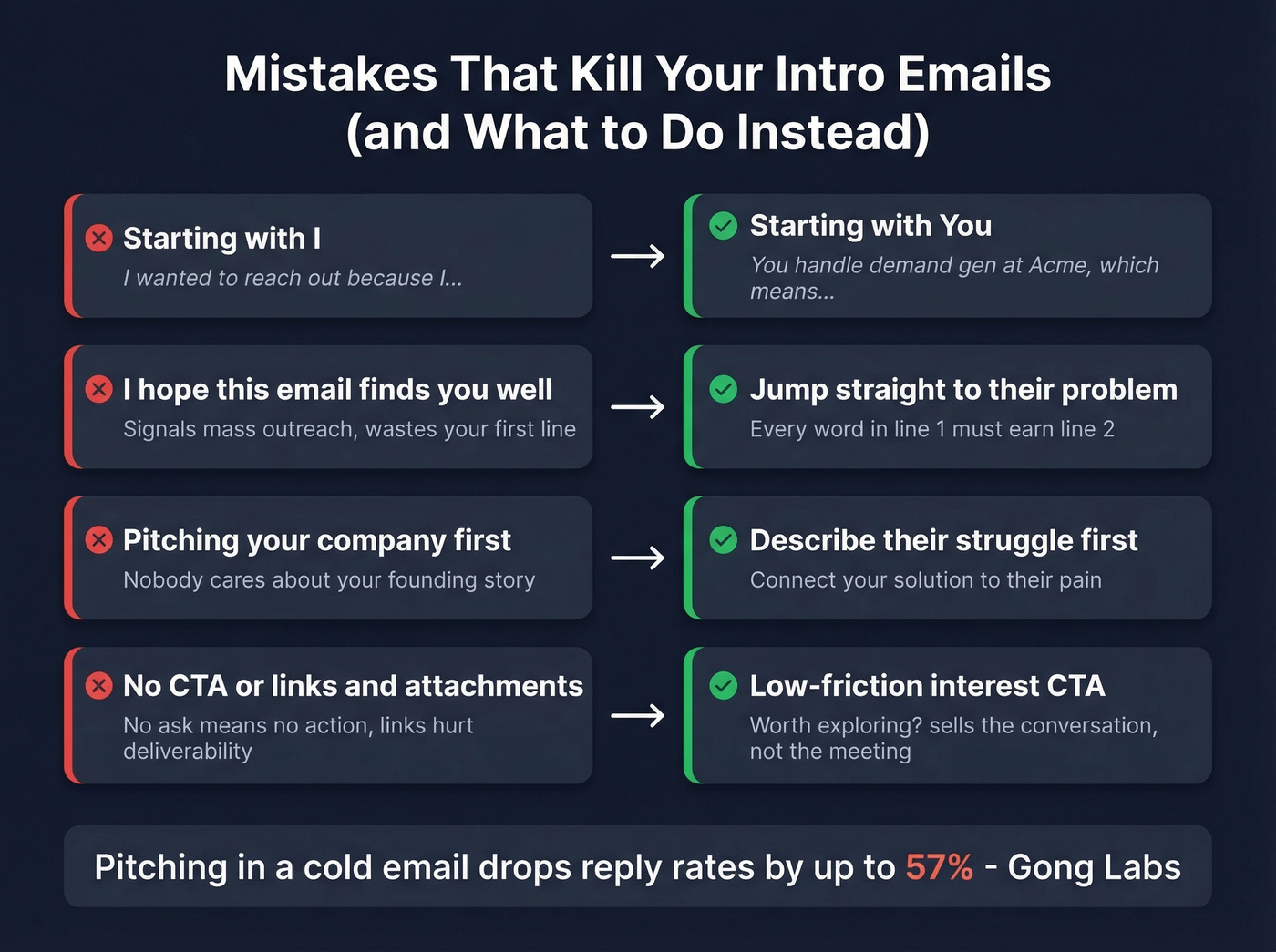
"I hope this email finds you well." Delete this forever. It signals mass outreach and wastes your most valuable real estate - the first line.
Describing your company before their problem. Nobody cares about your founding story in a sales email. Lead with what they're struggling with, then connect your solution to that struggle.
No CTA. If you don't ask, they won't act. And skip links or attachments in the first email - they can hurt deliverability when you're a new sender.

You just read that teams double reply rates by fixing bounce rates before touching copy. Prospeo's 5-step verification delivers 98% email accuracy across 143M+ verified addresses - so every intro email you craft actually reaches the inbox it was written for.
Stop perfecting emails that bounce. Fix the list first.
The Infrastructure Nobody Talks About
Here's the thing: most teams don't have a copywriting problem. They have a data problem. We've seen teams double their reply rates just by fixing their bounce rate - before touching a single word of copy (start with email bounce rate benchmarks and fixes).
One r/Entrepreneur case study tells the whole story. A team expanded from 3 to 7 sending domains, capped at 26 emails per day per domain, and manually verified every address. Bounce rate dropped from 11% to under 2%. Reply rate doubled from 3% to 6%. Total cost: roughly $420/month for 16 qualified leads.
They also sent Tue-Thu and targeted 8-11am in the recipient's timezone.

Bad addresses cause bounces, which damage domain reputation, which send even great emails to spam. It's a death spiral that no amount of clever copywriting can fix. Verify every address before you send. Prospeo handles this with 98% email accuracy across 143M+ verified addresses, and the free tier gives you 75 verifications per month - enough to test your first campaigns without spending anything. (If you're scaling, also watch your email velocity.)
Those trigger-based templates only work if you reach the right person at the right time. Prospeo tracks 15,000 intent topics and refreshes data every 7 days - so you can send intro emails the week a prospect's company raises funding, hires a new VP, or starts researching your category.
Find prospects with live trigger signals at $0.01 per verified email.
Follow-Up Strategy
Don't give up after one send. 58% of replies come from the first email, but the other 42% come from follow-ups. Aim for 4-7 touchpoints total, spaced 3-4 days apart. If you want plug-and-play sequences, use these cold email follow-up templates.
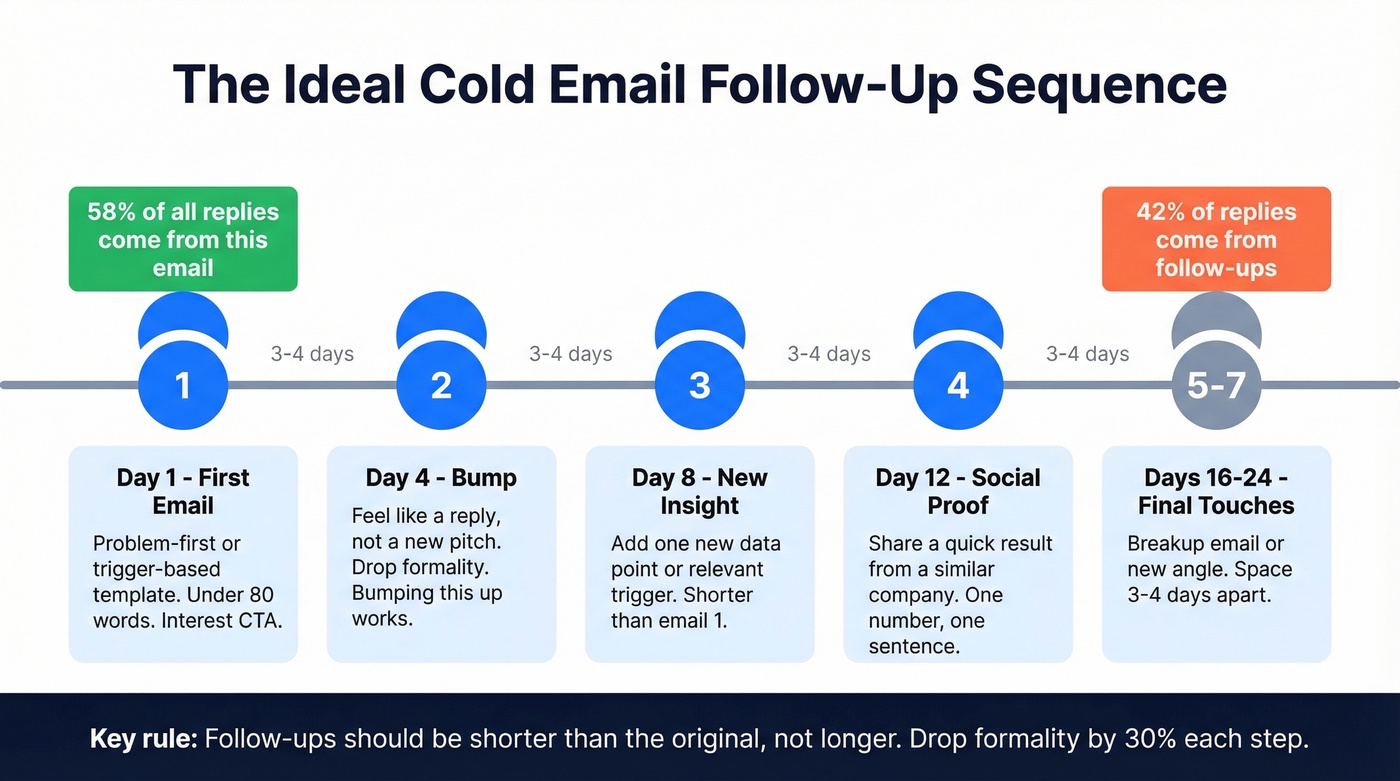
Make step two feel like a reply, not a new pitch. Dropping formality - "Bumping this up" or adding one new insight - works roughly 30% better than restating your value prop. In our experience, the best follow-ups are shorter than the original email, not longer.
Responding to an Introduction Email
If you're on the receiving end, or coaching prospects on what to do next, the best response is brief and direct. Acknowledge the outreach, state whether the timing works, and suggest a next step or decline politely. Reps who make responding easy with a low-friction interest CTA see significantly higher conversion from open to reply.
Compliance Essentials
Let's be honest - most reps skip this section. Don't.
CAN-SPAM applies to B2B outreach. Penalties run up to $53,088 per violation. Include a valid physical address and a clear opt-out mechanism. GDPR covers EU prospects with fines up to EUR 20M or 4% of global turnover. B2B cold email is permissible under legitimate interest, but you must explain who you are, how you got their info, and offer an easy opt-out.
If you're using a double opt-in introduction email approach - where a mutual contact confirms both parties want to connect before you send - you sidestep most compliance concerns entirely. Never use deceptive "Re:" subject lines to fake a prior conversation. It's a compliance violation and an instant trust killer.
FAQ
How long should an intro email to a prospective client be?
Under 80 words - ideally 3-4 sentences. A 28M-email analysis found that emails in this range get the highest reply rates. Cut every sentence that doesn't earn the next one.
What's a good reply rate for cold introductory emails?
The 2026 benchmark average is 3.43%. Top performers hit 5.5%+. If you're below 3%, fix your data quality and deliverability before rewriting copy - bad addresses tank results faster than bad messaging.
How do I avoid landing in spam when emailing prospects?
Verify every address before sending and target under 2% bounce rate. Avoid links in the first email, cap sends at 25-30 per domain per day, and use a verification tool like Prospeo to keep your sender reputation clean. The free tier covers 75 verifications per month.
Is a formal letter different from a cold email to a potential client?
The format differs - a formal letter is longer and often mailed physically - but the core principles overlap. Lead with the prospect's problem, keep the ask low-friction, and personalize beyond the first name. Cold email compresses that structure into 3-4 sentences for speed and scalability.