

Best Lead Generation Tools in 2026: Honest Picks for Every Budget
Your SDR manager just Slacked you: bounce rate hit 18% on last week's sequence. That's not a data problem - it's a money problem. At $18.75 per manually sourced prospect versus $0.05-0.15 from a decent database, every bounced email is lighting cash on fire.
91% of marketers say lead generation is their top priority, yet 61% call it their greatest challenge. The market has exploded to $7.4 billion and is projected to hit $16.2B by 2034 - more options than ever, and more ways to pick the wrong stack. About 30% of B2B contact data goes stale every year, which means the list you bought in January could be bouncing 15%+ by summer.
We've tested most of the tools on this list across real campaigns. Here's what's actually worth your time.
Our Top Picks at a Glance
| Scenario | Tool | Why |
|---|---|---|
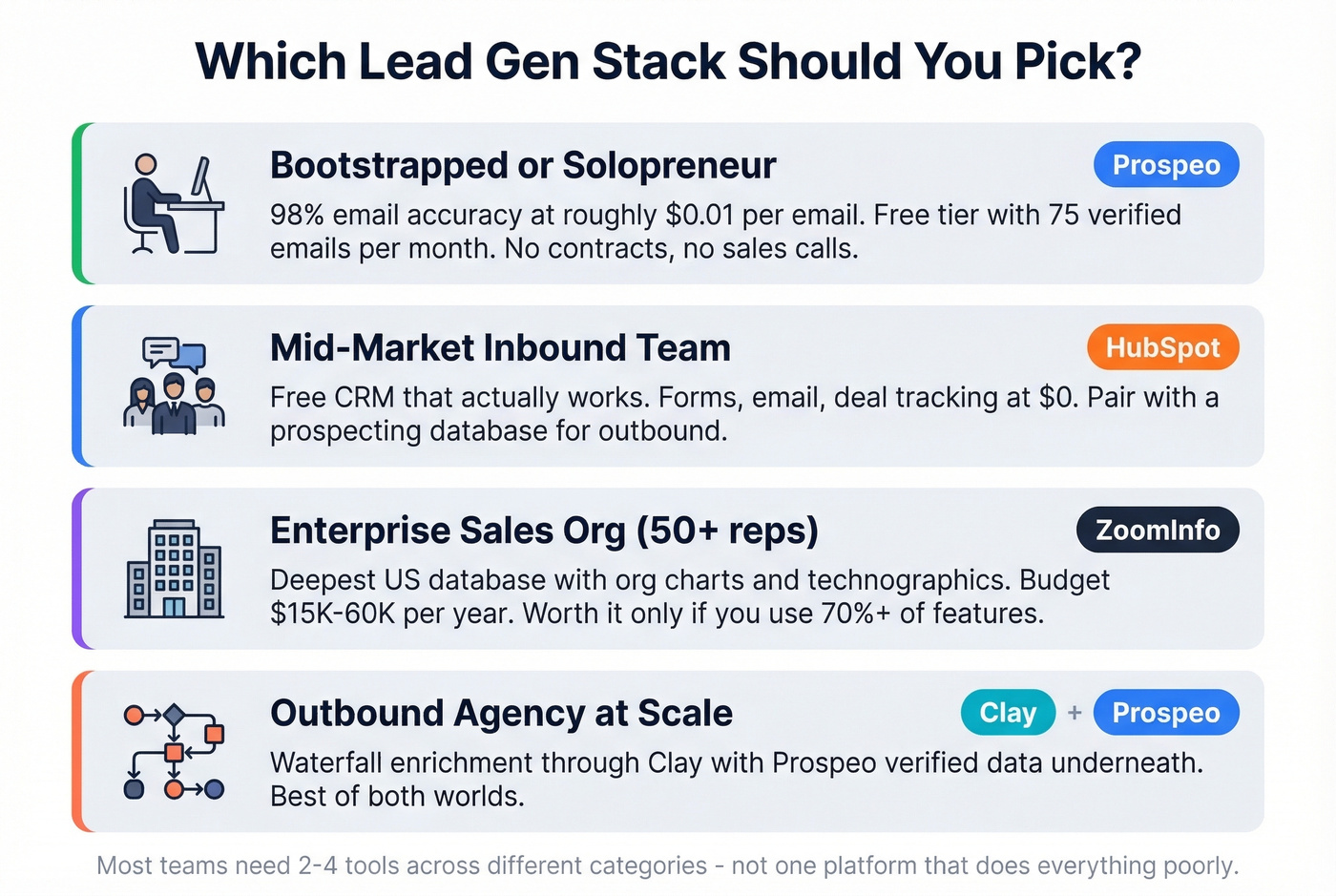
| Bootstrapped / solopreneur | Prospeo | 98% email accuracy, ~$0.01/email, free tier |
| Mid-market inbound + CRM | HubSpot | Genuinely useful free CRM with forms and email |
| Enterprise database | ZoomInfo | Deepest US database - if you can stomach $15K+/yr |
| Outbound agency at scale | Clay + Prospeo | Waterfall enrichment with verified data underneath |
What Are Lead Generation Tools?
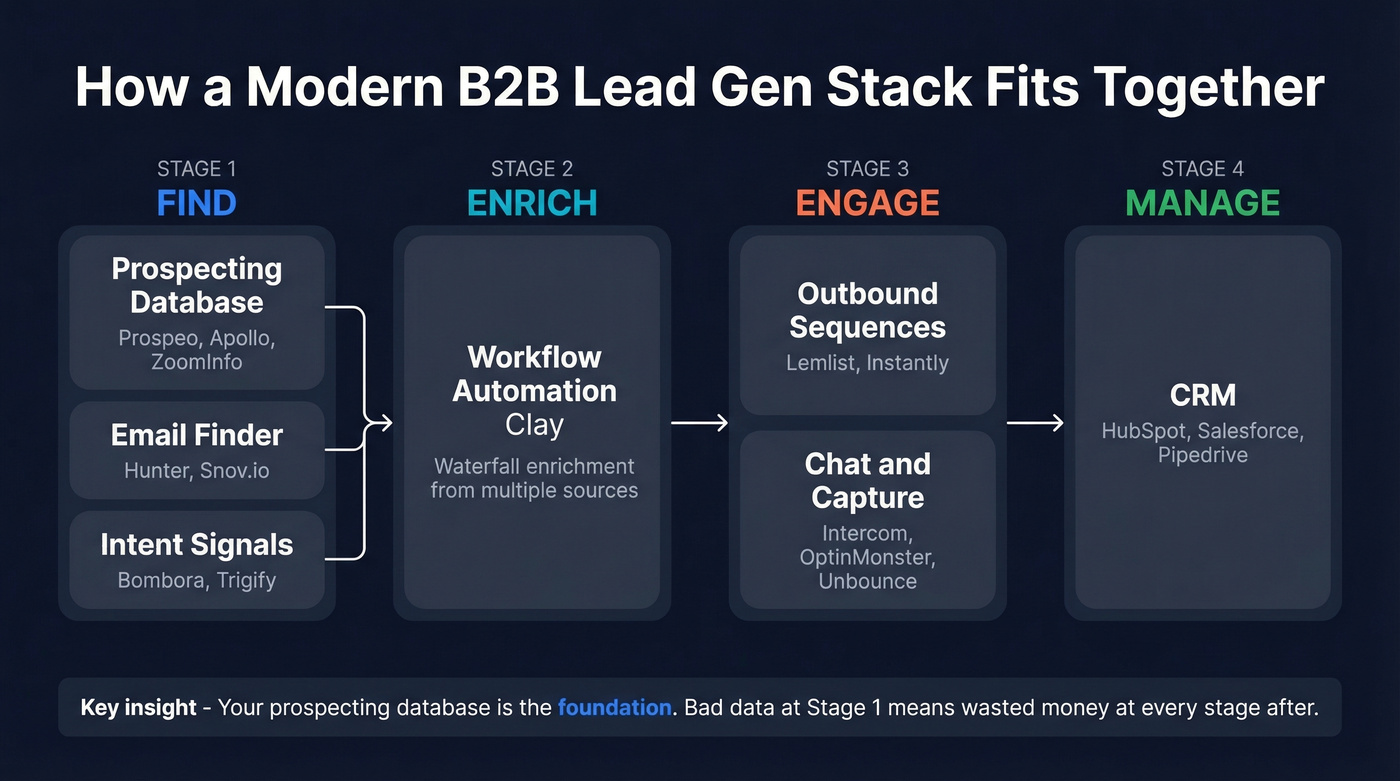
Not all lead gen tools do the same thing. The category is broad enough to be confusing, so here are the seven buckets that matter.
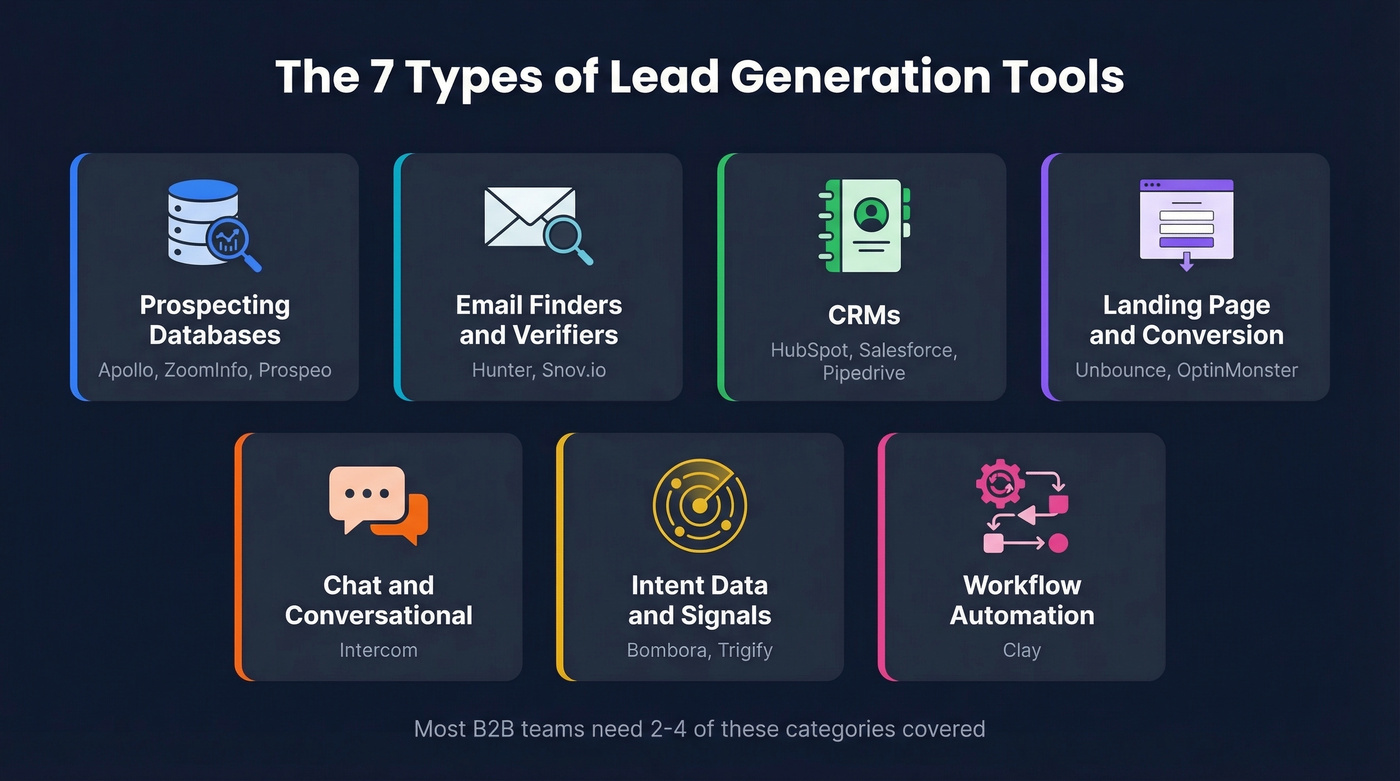
Prospecting databases are the core - platforms like Apollo and ZoomInfo that give you searchable contact data with emails, phone numbers, and firmographics. Email finders and verifiers like Hunter and Snov.io focus narrowly on finding and validating email addresses. CRMs such as HubSpot, Salesforce, and Pipedrive manage relationships after you've found the lead.
Landing page and conversion tools like Unbounce and OptinMonster capture inbound interest, while chat and conversational tools like Intercom engage website visitors in real time. The fastest-growing category is intent data and signal platforms - tools like Bombora and Trigify that tell you who's actively researching solutions like yours. And workflow automation platforms like Clay stitch everything together.
Most teams need two to four of these categories covered. B2B buyers now engage across roughly 10 channels - up from five in 2016 - so your stack needs to feed multiple touchpoints without creating data chaos.
If you want a deeper breakdown of categories and use cases, start with our guide to B2B lead generation software.
Full Comparison Table
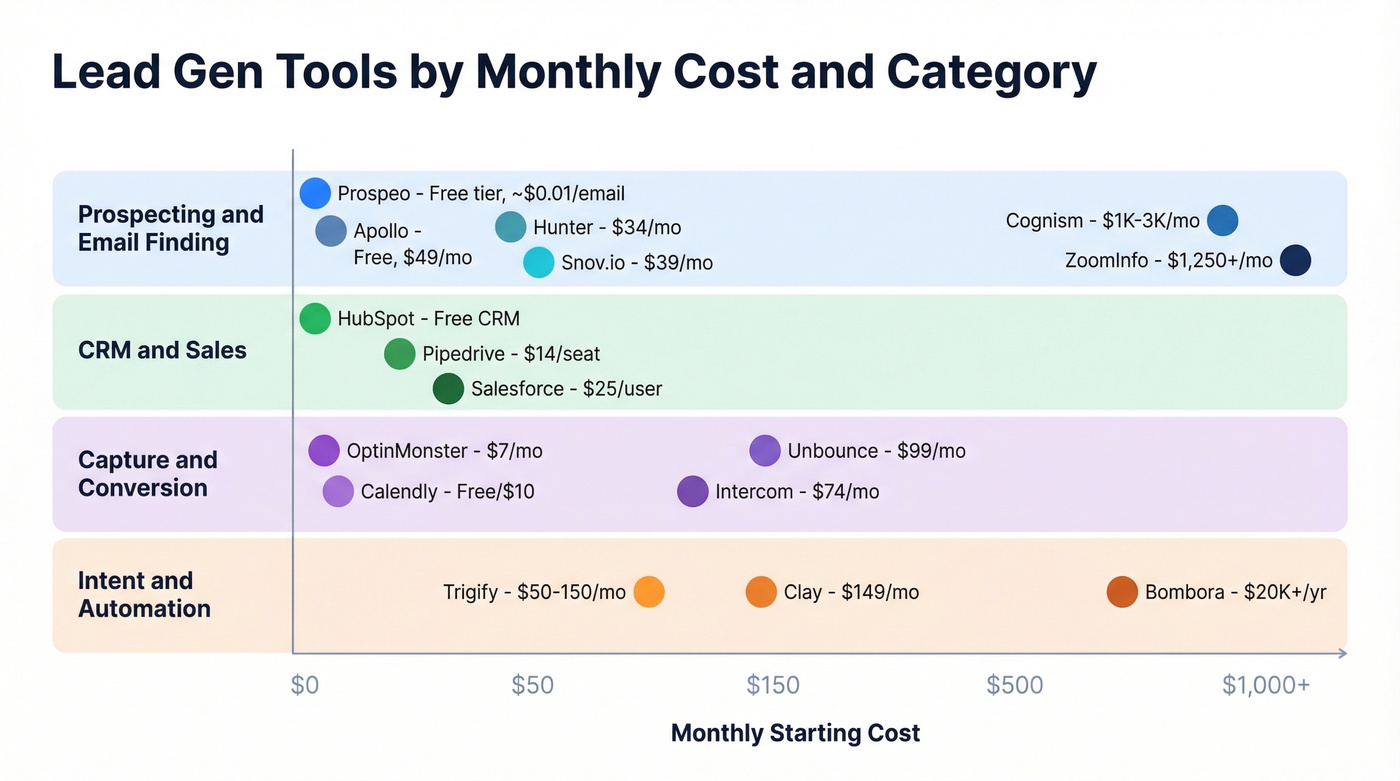
Here's the full picture at a glance. Pricing reflects current published rates or reliable community estimates.
| Tool | Category | Starting Price | Best For |
|---|---|---|---|
| Apollo.io | Database + sequences | Free; $49/mo paid | SMB all-in-one prospecting |
| ZoomInfo | Enterprise database | ~$15K/yr | Large US sales orgs with budget |
| Hunter.io | Email finder | Free; $34/mo annual | Simple, transparent email finding |
| Cognism | Database (EMEA focus) | ~$1K-3K/mo | European market coverage |
| Snov.io | Email finder + drip | $39/mo | Solo outreach on a budget |
| Clay | Workflow automation | Free; ~$149/mo | Multi-source enrichment workflows |
| HubSpot | CRM + inbound | Free; paid from $15/seat/mo | Inbound + free CRM starter |
| Salesforce | Enterprise CRM | $25/user/mo | Deep customization for structured orgs |
| Pipedrive | SMB CRM | $14/seat/mo | Small team pipeline management |
| Dealfront | Website visitor ID | Free; $99/mo | Reverse IP lead capture |
| OptinMonster | Lead capture | $7/mo | Pop-ups and exit intent |
| Intercom | Chat + AI bot | ~$74/mo | SaaS website engagement |
| Unbounce | Landing pages | $99/mo | Paid ad landing pages |
| Calendly | Scheduling | Free; $10/seat/mo | Lead-to-meeting conversion |
| Trigify | Signal triggers | ~$50-150/mo | Timing-based outreach |
| Bombora | Intent data | ~$20K+/yr | Buyer research signals at scale |
Best Tools by Category
Prospecting and Email Finders
Prospeo
Use this if you care more about data accuracy than feature count. Prospeo's database covers 300M+ professional profiles with 143M+ verified emails at 98% accuracy and 125M+ verified mobile numbers that hit a 30% pickup rate. The 7-day data refresh cycle is unusual - most competitors refresh every four to six weeks, which is why your "verified" lists start bouncing after a few months.

The search filters go deep: buyer intent powered by 15,000 Bombora topics, technographics, job changes, headcount growth, funding signals, and more. The Chrome extension has 40K+ users and works across company websites and professional profiles. Native integrations push contacts straight into Salesforce, HubSpot, Lemlist, Instantly, Smartlead, and Clay.
If you're specifically comparing databases, see our ranked list of the best B2B contact databases.
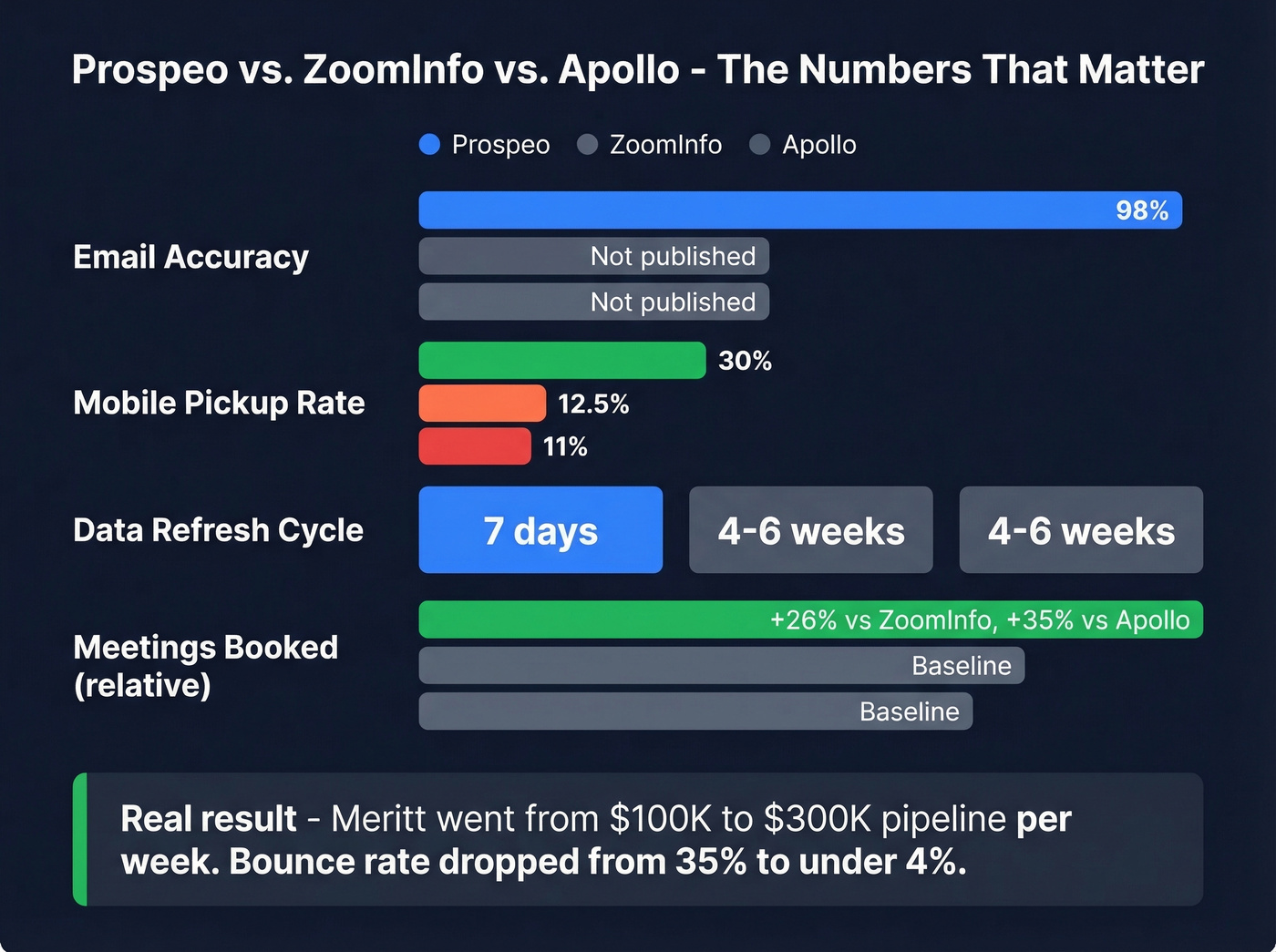
The numbers tell the story: teams book 26% more meetings compared to ZoomInfo and 35% more compared to Apollo. Mobile pickup runs at 30% versus 12.5% at ZoomInfo and 11% at Apollo - that's the difference between reaching a prospect and leaving a voicemail with a gatekeeper. One customer, Meritt, tripled their pipeline from $100K to $300K per week after switching, and their bounce rate dropped from 35% to under 4%.
Pricing is refreshingly simple - roughly $0.01 per email, with a free tier giving you 75 verified emails per month. No annual contracts, no sales calls required. Prospeo focuses on doing the data layer exceptionally well rather than bundling mediocre features you'll never touch.
Pair with: a dedicated outreach tool like Lemlist or Instantly for sequences. Prospeo handles the data, they handle the sending. Best-of-breed beats all-in-one every time. (If you need copy help too, use these sales outreach email templates.)

You just read that 30% of B2B contact data goes stale every year. Prospeo refreshes every 7 days - not every 6 weeks. That's why teams see bounce rates drop from 35% to under 4% and book 26% more meetings than ZoomInfo users.
Stop lighting budget on fire with bounced emails. Test the data yourself.
Apollo.io
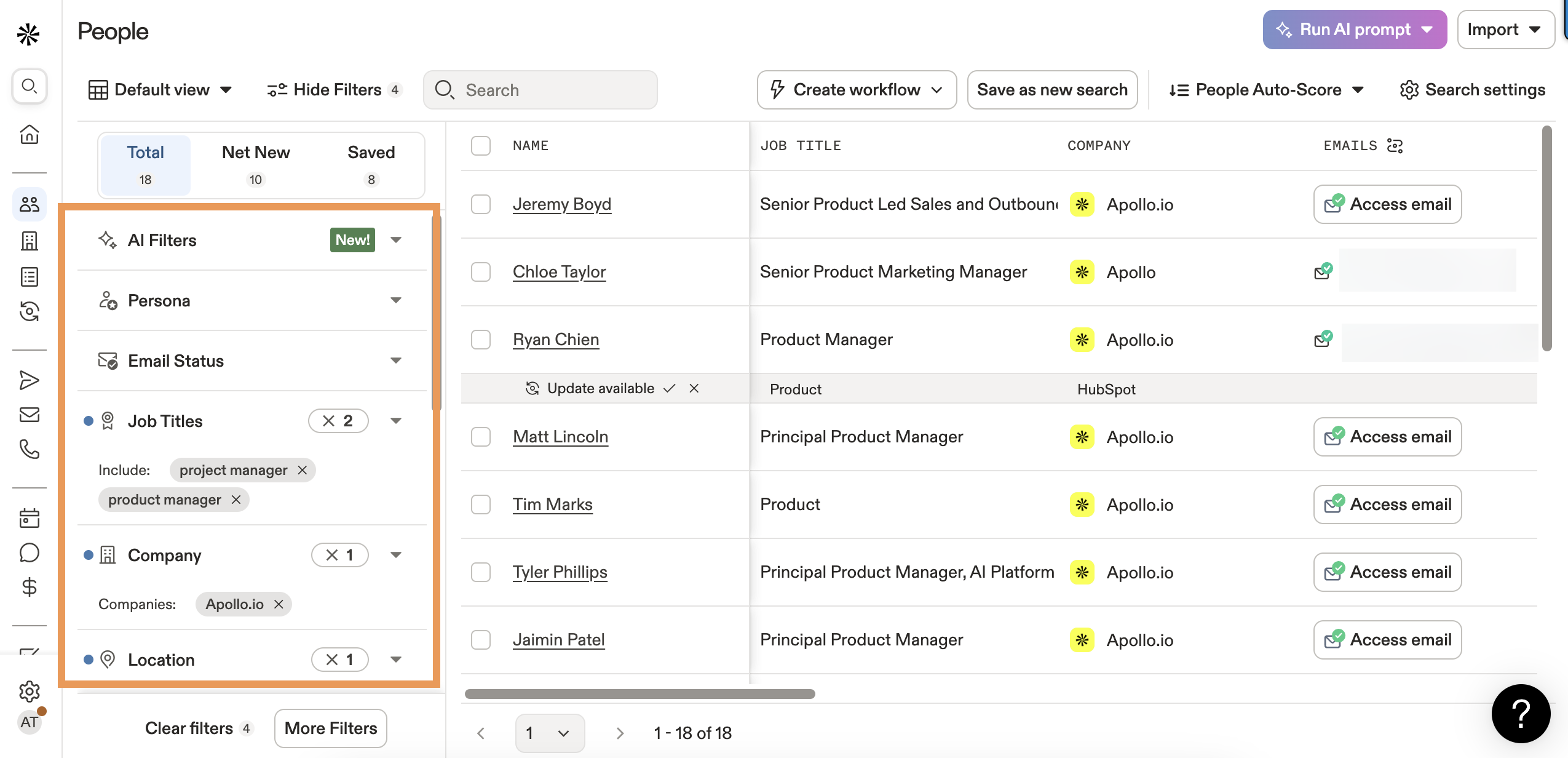
Apollo is the obvious starting point for most SMB teams that want prospecting, sequences, and a dialer in one platform. The database covers 275M+ contacts, and the free plan is generous enough to validate whether outbound works for your business before spending a dollar.
Pros:
- Free tier with basic contact access and two sequences
- All-in-one: database, sequences, dialer, analytics
- Basic plan at $49/mo, Professional at $79/mo, Organization at $119/mo (minimum 3 seats)
Cons:
- Credits don't roll over - use them or lose them each billing cycle
- Mobile number reveals consume significantly more credits, making phone-heavy workflows expensive fast
- Data freshness is a recurring complaint on Reddit; one r/coldemail user flagged Apollo's database as "outdated" when prospecting local businesses
- Hybrid pricing means unpredictable monthly bills
If you're evaluating alternatives, our full guide to lead finder tools breaks down what to pick by workflow.
ZoomInfo
ZoomInfo is the enterprise default for a reason: 100M+ professionals, 14M+ company profiles, strong direct dial coverage, org charts, and technographics that nobody else matches in the US market.
Here's the thing: ZoomInfo is still the best all-in-one enterprise platform. But most teams don't need all-in-one. A 10-seat contract with intent data and mobile numbers can run $35-60K/year. That's a Series A company's entire tool budget. If you're a 50+ rep org running outbound, ABM, and intent from one platform, ZoomInfo earns its price. Everyone else is overpaying for features they'll never touch.
Pricing tiers: Professional starts at $15,000-$18,000/year. Advanced runs $22K-$28K. Elite hits $35K-$45K+. Annual contracts only, with 60-day cancellation windows and 10-20%+ renewal increases. The #1 complaint on Reddit and review sites is price - and specifically, paying for modules that sit unused.
EMEA and APAC data has noticeable gaps, and there's a steep learning curve. Most teams use maybe 30% of the platform. Strong integrations with Salesforce, HubSpot, Outreach, and Salesloft partially offset the complexity.
For more options in this category, see our roundup of sales leads databases.
Hunter.io
Hunter does one thing well and doesn't pretend otherwise. If you just need email finding and verification without a full database, the pricing is the most transparent in the category: free at 50 credits/month, Starter at $34/mo annual, Growth at $104/mo, Scale at $209/mo. Every plan includes unlimited users, which is rare.
Skip it if you need phone numbers, intent data, or any kind of prospecting workflow. For teams that already have a database and just need a verification layer, Hunter is a clean, no-nonsense option. If you're comparing verifiers, our list of email checker tools is a good next read.
Snov.io
Snov.io bundles email finding with drip campaigns in a single tool, starting at $39/mo for Starter and $79/mo for Pro. It's a solid pick for solopreneurs or early-stage founders who want to run outreach without stitching together three separate platforms. The email finder is competent, the drip sequences are basic but functional, and the price is right. It won't replace a dedicated database for larger teams, but for one-person outbound operations, it covers a lot of ground cheaply.
Cognism
Cognism's 400M+ contact database has the strongest EMEA coverage in the category - that's where it beats ZoomInfo outright. Phone-verified mobile numbers are a real differentiator for teams running cold call campaigns in the UK, DACH, and Nordics. Custom pricing typically lands at $1K-3K/mo for small teams, with annual contracts. If you're US-only and budget-conscious, you'll get more value per dollar from Apollo or a self-serve database.
LinkedIn Sales Navigator
Worth a brief mention since it shows up in every lead gen conversation. Sales Nav starts at $99/mo and is useful for account mapping and social selling, but it's not a data export tool - you can't pull emails or phone numbers directly. Most teams pair it with a separate prospecting database for actual contact data. It's a research layer, not a prospecting engine.
CRM and Sales Platforms
HubSpot
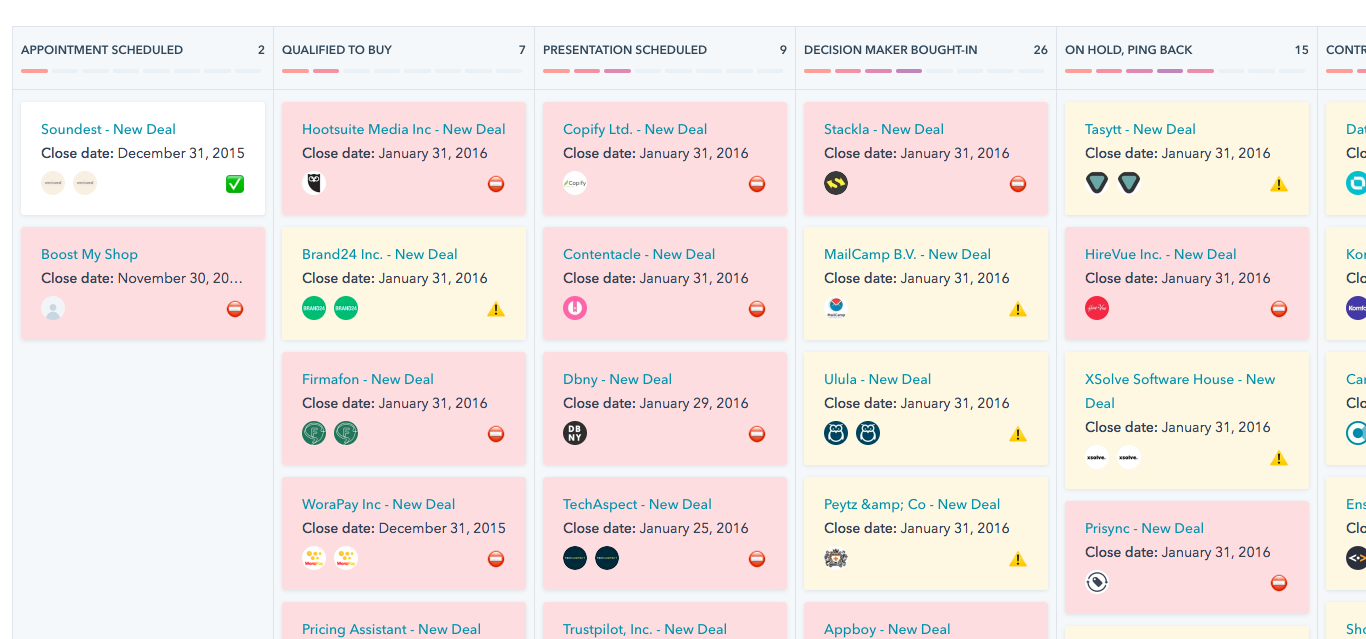
HubSpot's free CRM is a real product - not a crippled trial. You get contact management, deal tracking, forms, and basic email marketing at $0. Landing pages, lead scoring, and marketing automation come with paid Marketing Hub tiers: Starter at $15/seat/mo, Professional at $90/seat/mo, Enterprise at $150/seat/mo.
HubSpot is where leads go after you find them - it doesn't help you find them. Pair it with a prospecting database on the data side, and HubSpot becomes the system of record that ties everything together. The trap: HubSpot gets expensive fast once you scale past the free tier and start needing automation workflows, custom reporting, and additional seats. (If you're building process around it, this CRM lead generation guide helps.)
Salesforce Sales Cloud
Salesforce is the industry-standard CRM and also the most complex one. Starter at $25/user/mo is accessible, but most mid-market teams end up on Enterprise at $175/user/mo or Unlimited at $350/user/mo. It's not a prospecting tool - it's the operating system where leads live after you've sourced them. Best for structured sales organizations that need deep customization, reporting, and a massive ecosystem of integrations. Fewer than 10 reps? Salesforce is overkill.
If you're struggling with messy records and duplicates, prioritize CRM hygiene before adding more tools.
Pipedrive
Pipedrive starts at $14/seat/mo and gives small sales teams a visual, drag-and-drop pipeline without the complexity of Salesforce. Under 10 reps and want simplicity? This is the right CRM.
Workflow Automation and Intent
Clay
Clay is the practitioner favorite right now - one Reddit user put it simply: "Clay is doing it for me again." It's a workflow automation layer, not a database itself. It queries dozens of data providers, then enriches, scores, and routes leads based on your logic. The output quality from a well-built Clay waterfall is significantly better than any single-source approach.
Free tier available, paid plans from ~$149/mo. The learning curve is real - Clay rewards teams that invest time building custom workflows. If you want plug-and-play simplicity, start with a database directly. But once you've built your workflows, the compounding returns are massive. In our experience, teams using Clay as their central enrichment hub often see match rates 2-3x higher than relying on a single provider.
Trigify
Trigify monitors signal-based triggers - job changes, funding rounds, new hires - and surfaces them as prospecting opportunities. Pricing runs ~$50-150/mo depending on volume. Best for teams that want to reach prospects at the exact moment they're most likely to buy.
If you're building a signal-driven motion, our guide to sales buying signals is a useful companion.
Bombora
Bombora is the intent data layer tracking buyer research signals across thousands of topics. Expect ~$20K+/year as a standalone. Most teams access Bombora intent through other platforms rather than buying it directly, which saves a separate contract.
Inbound and Conversion Tools
OptinMonster
Pop-ups, exit-intent overlays, and A/B testing for content-heavy sites. Plans run from $7/mo to $49/mo on annual billing. Best for blogs and resource sites that need to convert organic traffic into email subscribers.
Intercom
Live chat plus AI chatbot for capturing website visitors in real time. Starts around $74/mo. Best for SaaS companies with high-traffic pricing and product pages where a well-timed chat message can convert a browser into a demo request.
Unbounce
AI-powered landing page builder starting at $99/mo and $145/mo for the Optimize tier. Best for paid ad campaigns that need dedicated landing pages without involving your dev team.
Calendly
Free tier, paid from $10/seat/mo. Calendly isn't a prospecting tool in the traditional sense, but it reduces the friction between "interested" and "booked meeting" - which is where a surprising number of leads die. Nurtured leads produce 47% higher order values, so anything that shortens the path to a conversation pays for itself.
Dealfront (Leadfeeder)
Dealfront uses reverse IP lookup to identify anonymous website visitors, starting at $99/mo with a free plan available. Skip it if your site gets under 1,000 monthly visitors - the math just doesn't work at low traffic volumes.
If you're leaning inbound-heavy, you may also want these inbound lead generation tools.
The best lead generation stack isn't one tool - it's verified data feeding your outreach. Prospeo gives you 300M+ profiles, 125M+ verified mobiles with 30% pickup, and intent signals across 15,000 topics. All at ~$0.01/email with no contract.
Build your lead gen stack on data that actually connects you to buyers.
The ROI Math Behind Your Stack
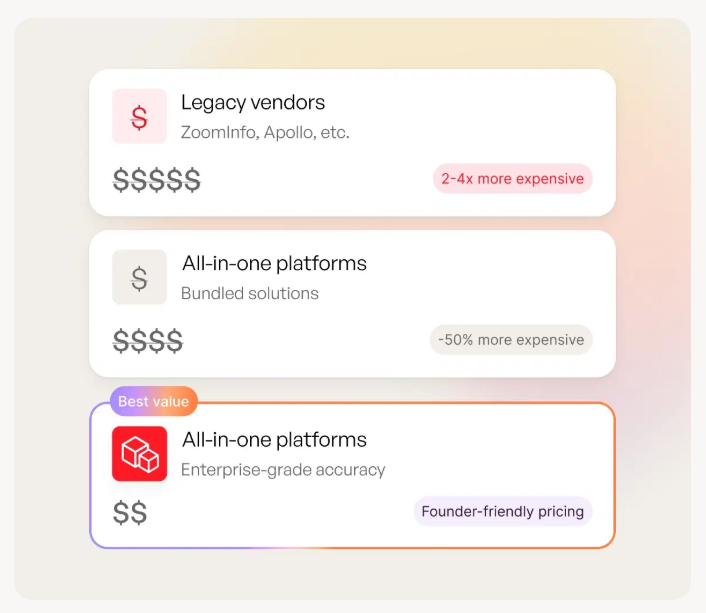
Let's make this concrete. A full-time SDR costs roughly $60K/year. At about two prospects researched per hour, that's $18.75 per manually sourced contact. A database subscription at $99-299/mo delivering 2,000+ contacts drops the cost to $0.05-0.15 per contact. For context, average cost-per-lead in healthcare and tech runs $180-$250 - so even modest improvements in sourcing efficiency compound fast.
But cheap data is the most expensive data if it bounces. Email verification reduces bounce rates from 15-30% down to 2-5%. That's not just a deliverability stat - it's your sender reputation, your domain health, and ultimately your ability to land in inboxes at all. One customer, Snyk, saw AE-sourced pipeline jump 180% after switching to verified data, with bounce rates dropping from 35-40% to under 5%. Another agency, Stack Optimize, built from $0 to $1M ARR while maintaining 94%+ client deliverability and zero domain flags - entirely on the back of clean data.
ZoomInfo's cost per lead works out to roughly $1 per contact at typical volumes. Self-serve databases with verification built in can run $0.01. Even if ZoomInfo's database is 10% larger in the US, you're paying 100x more per record. For most teams, that premium doesn't hold up.
If you want to benchmark this properly, use our cost per lead guide.
How AI Is Changing Lead Generation
AI in lead gen isn't about replacing your SDRs. It's about three things: scoring, timing, and personalization.
AI lead-scoring models reduce qualification time by up to 30%. That matters because 79% of marketing leads never convert into sales - AI scoring helps your reps focus on the 21% that will. Predictive models analyze firmographic signals, intent data, and engagement patterns to surface in-market buyers before they fill out a form.
Timing is the other big lever. Contacting an inbound lead within 5 minutes makes you 9x more likely to qualify them. After one hour, you're still roughly 7x more likely than waiting a day. After 24 hours, that likelihood drops 98%+. AI-powered routing and alerts make that speed possible without someone manually monitoring a dashboard.
Intent data remains the most underused category in the stack. Tools that track what companies are actively researching - and surface those signals to your reps - consistently outperform spray-and-pray prospecting. Every major platform update in 2026 has leaned harder into intent signals, and the trend is accelerating. An emerging adjacent category worth watching: AI/LLM visibility, where brands optimize to appear in AI-generated answers. It's early, but it's becoming a real inbound channel.
For a deeper dive, see our breakdown of AI lead generation.
Mistakes That Kill Your ROI
These are the patterns we see kill pipeline over and over:
- Over-relying on purchased lists without verification. A 20% bounce rate doesn't just waste sequences - it damages your domain reputation for months.
- Ignoring lead qualification. 67% of sales teams say poor qualification is the top reason deals don't close. Cold calling success rates average just 2.3%, though high-performing teams hit 5-11%.
- No follow-up strategy. The five-minute response window is real. Most teams respond in hours, not minutes.
- Weak lead magnets. Generic "download our ebook" offers attract generic leads. Specificity converts.
- Buying the most expensive tool instead of the right tool. A $40K/year ZoomInfo contract doesn't help if your reps only use the search bar.
- Skipping email verification. This is the cheapest, highest-ROI step in the entire stack, and teams still skip it. It's genuinely frustrating how often we see teams burn through domains because they treated verification as optional.
- Not tracking cost-per-lead by source. If you can't tell me which tool produces your cheapest qualified meetings, you're guessing.
If you want a full teardown (with fixes), read our guide on lead generation mistakes.
How to Build Your Stack
You need two to four tools, not twenty-six. Here's how to think about it by budget:
| Budget | Stack | Monthly Cost |
|---|---|---|
| $0/mo | Prospeo free + HubSpot free + Calendly free | $0 |
| $100-300/mo | Prospeo + Hunter + HubSpot Starter | ~$150-250 |
| $500-1,500/mo | Clay + Salesforce Starter + Dealfront | ~$700-1,200 |
| $15K+/yr | ZoomInfo or Cognism + Salesforce Enterprise + Bombora | $2,500-6,000/mo |
The $0 stack is legitimately functional. You get 75 verified emails per month, a real CRM tracking your deals, and scheduling handled. You'll hit limits fast, but it's enough to validate your outbound process before investing.
For early-stage teams, the $100-300/mo tier is the sweet spot. Verified data handles the prospecting layer, Hunter adds a secondary verification option, and HubSpot Starter gives you basic automation. Our team has seen this combination outperform much more expensive setups, simply because the data going in is clean from the start.
The enterprise tier ($15K+/year) only makes sense when you have 20+ reps and need the workflow breadth of ZoomInfo or Cognism. For everyone else, the mid-market stack delivers better ROI per dollar. If your average deal size is under $10K, you almost certainly don't need enterprise-grade tooling - invest in better targeting instead.
If you're trying to source lists specifically, start with our guide to B2B lead lists.
FAQ
What is a lead generation tool?
A lead generation tool is any software that helps you find, capture, or qualify potential customers - from prospecting databases that surface contact information to inbound platforms that convert website visitors. The common thread is moving strangers into your pipeline so your sales team has someone to talk to.
Can I build a lead gen stack for free?
Yes. Prospeo's free tier (75 verified emails/month), HubSpot's free CRM, and Calendly's free scheduling give you a functional outbound and inbound stack at $0/month. You'll hit volume limits quickly, but it's enough to validate your process before spending.
How often does B2B contact data go stale?
About 30% of B2B contact data becomes outdated every year. A list built in January can have a 15%+ bounce rate by summer. Look for providers with weekly or monthly refresh cycles - the industry average is six weeks.
Is ZoomInfo worth the price for small teams?
Usually not. At $15,000+/year with annual contracts, ZoomInfo is built for 50+ rep organizations running outbound, ABM, and intent from one platform. Teams under 20 reps get better ROI from self-serve platforms with transparent, pay-as-you-go pricing.
What's the most important feature to evaluate?
Data accuracy. A list of 10,000 contacts with a 20% bounce rate damages your sender reputation and wastes your sequences. A smaller, cleaner list with 98%+ verified emails will outperform it every time. Verification should be the first thing you evaluate in any lead generation tool.