

The 15 Best B2B Lead Generation Software Tools for 2026
84% of sales reps missed quota last year. For most teams, the B2B lead generation software they're using is a big reason why. Cold email reply rates hover around 2%, and 80% of B2B sales interactions now happen through digital channels. The math is brutal: if your data is only 75% accurate, one in four emails bounces, your domain reputation tanks, and every downstream metric - reply rate, meetings booked, pipeline - collapses with it.
We've tested and tracked 15 tools across pricing, accuracy, and real-world results. Data accuracy is the variable that separates teams that scale from teams that stall. A 98% accurate list and a 75% accurate list produce completely different businesses.
Our Picks (TL;DR)
| Pick | Best For | Starting Price |
|---|---|---|
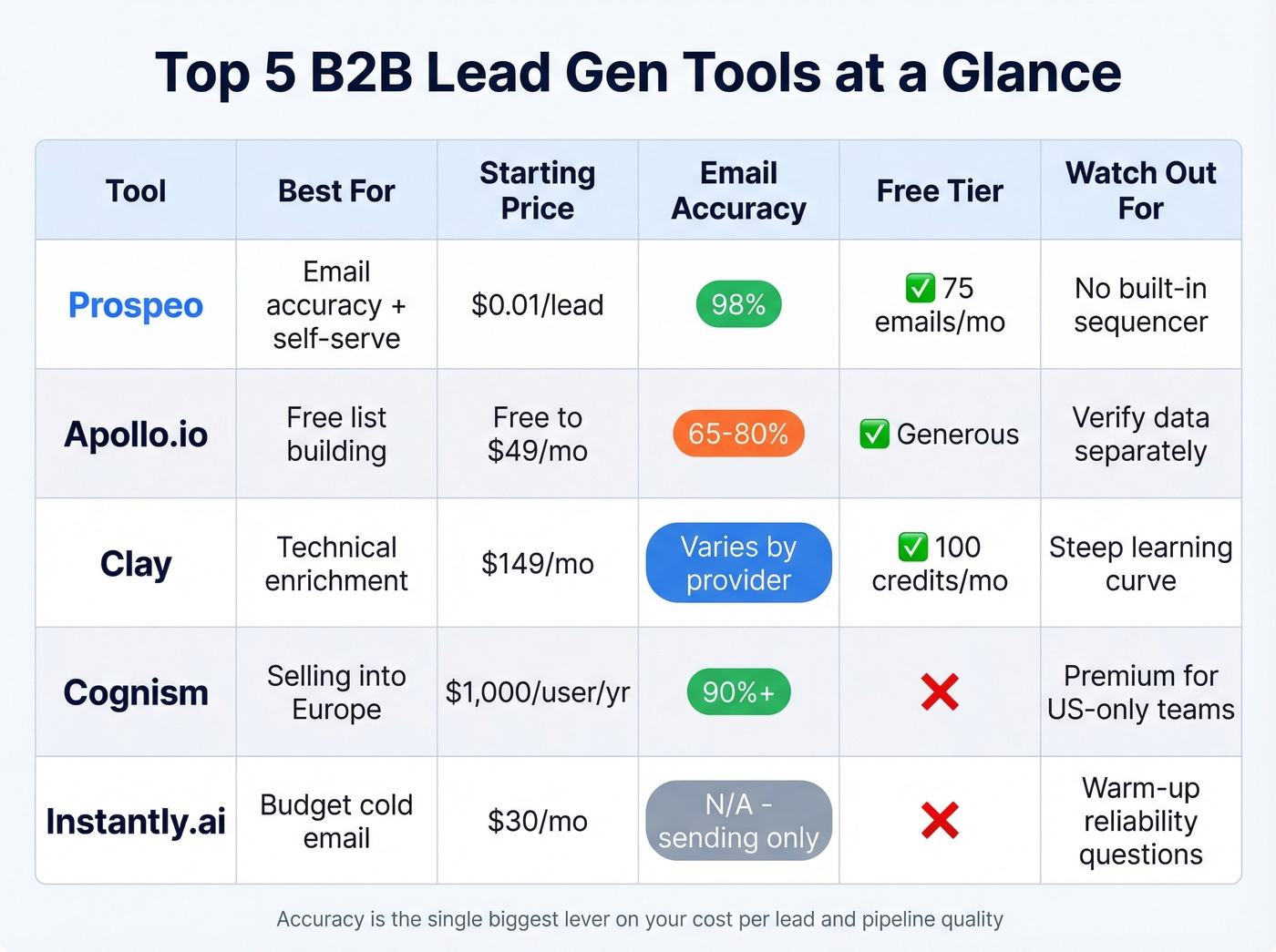
| Prospeo | Email accuracy + self-serve | Free; ~$0.01/lead |
| Apollo.io | Free list building (verify separately) | Free; $49/mo/user |
| Clay | Technical enrichment workflows | Free; $149/mo |
| Cognism | Selling into Europe (GDPR + DNC) | ~$1,000/user/yr |
| Instantly.ai | Budget cold email infrastructure | ~$30/mo |
What a B2B Lead Actually Costs
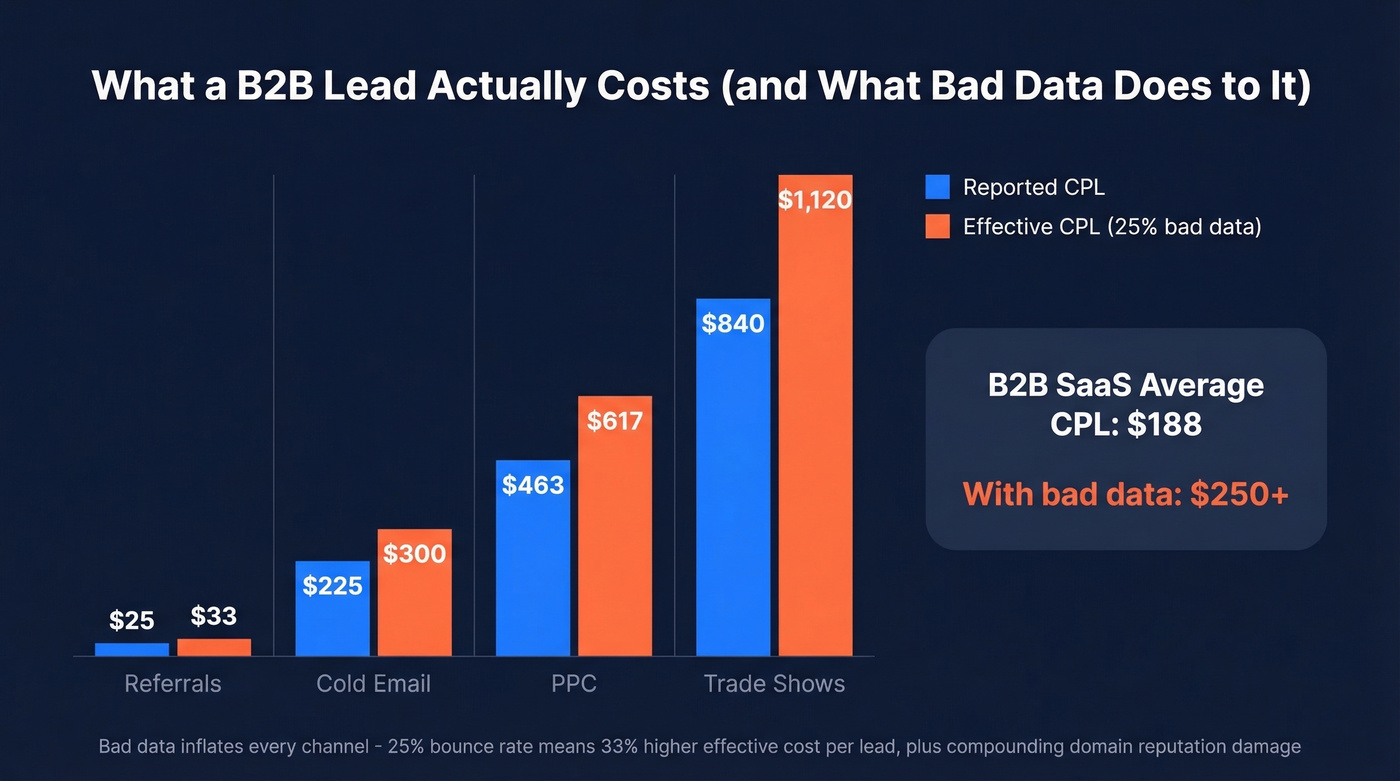
Before you pick software, understand what you're actually paying per lead. These numbers from Sopro's benchmarks haven't moved much:
| Channel | Avg CPL |
|---|---|
| Referrals | $25 |
| Cold email | $225 |
| PPC | $463 |
| Trade shows | $840 |
The B2B SaaS average sits at $188. But here's what those numbers don't capture: bad data inflates every channel's cost. If 25% of your cold emails bounce, your effective CPL isn't $225 - it's closer to $300, plus the domain reputation damage that makes your next campaign perform worse.
Sales reps spend roughly 20% of their time researching prospects, and bad data wastes another 30%. The prospecting tools you choose for data quality have a multiplier effect on everything else in the stack.
Categories of Lead Gen Tools
Buyers now use roughly 10 interaction channels during a purchase, up from 5 in 2016. That's why your stack needs to cover multiple categories. Before scrolling through 15 tools, figure out which ones you actually need:
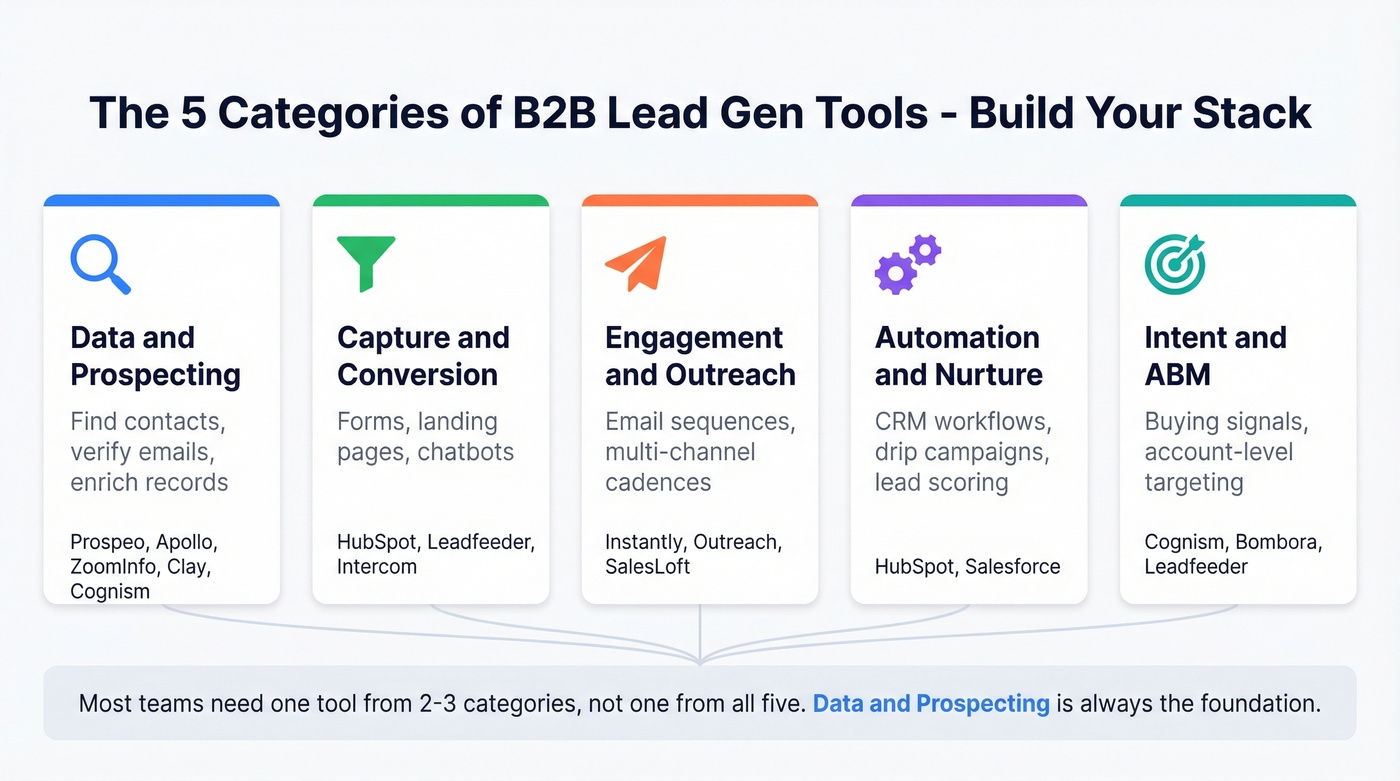
- Data & Prospecting - Find contacts, verify emails, enrich records. This is the foundation. (If you're comparing providers, start with data & prospecting tools.)
- Capture & Conversion - Forms, landing pages, chatbots. Turn website visitors into leads.
- Engagement & Outreach - Email sequences, multi-channel cadences, dialers. Activate the leads you've found. (For more options, see outbound lead generation tools.)
- Automation & Nurture - CRM workflows, drip campaigns, lead scoring. Keep leads warm until they're ready. (A solid lead scoring model makes this work.)
- Intent & ABM - Buying signals, account-level targeting, topic-based intent. Know who's in-market before you reach out.
AI-powered scoring, automated enrichment, and intent prediction are becoming standard. The question is which tools implement them well. Most teams need one tool from two or three of these categories. Not one from all five.
15 Top B2B Lead Generation Tools for 2026
Data & Prospecting
Prospeo
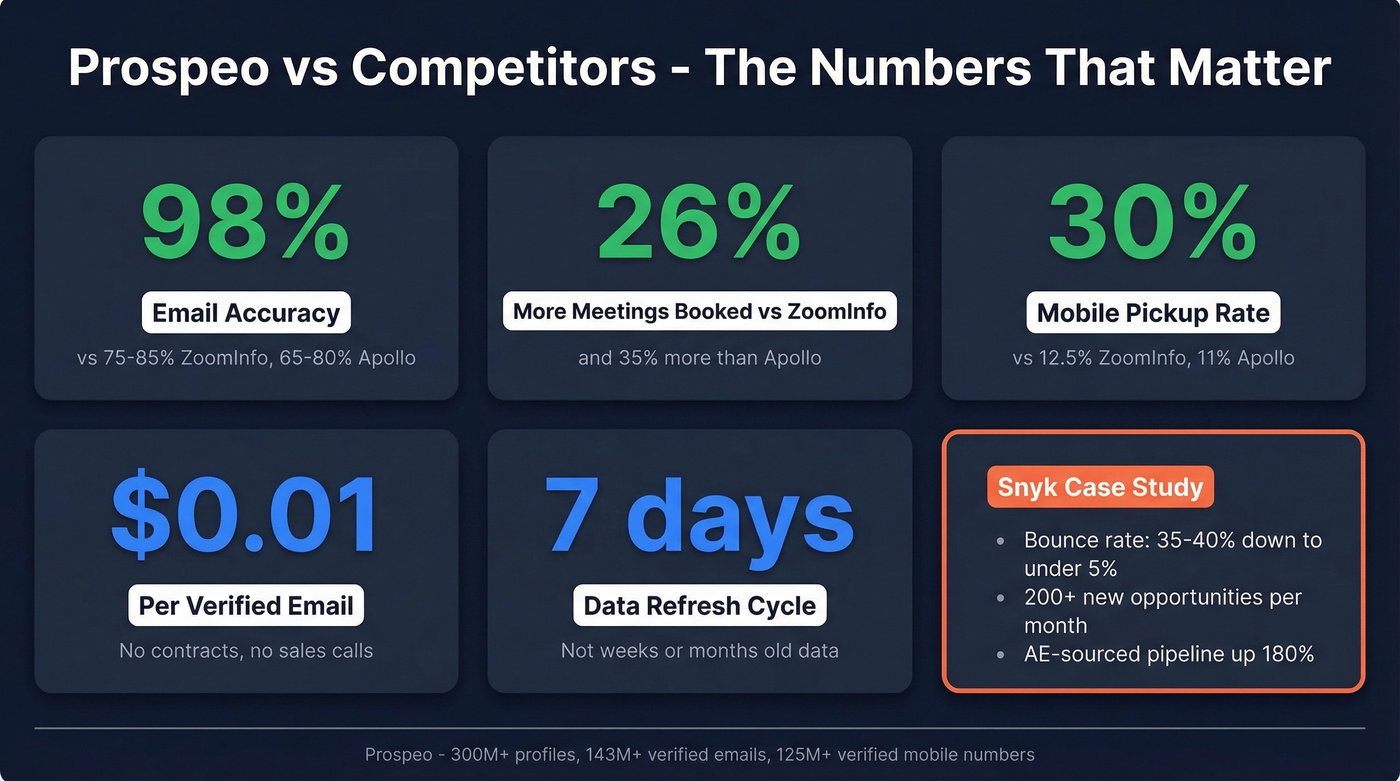
Use this if: You want the most accurate email data available without enterprise pricing or sales calls. Prospeo's database covers 300M+ professional profiles with 143M+ verified emails and 125M+ verified mobile numbers. Email accuracy sits at 98%, and a 7-day data refresh cycle means you're not emailing people who changed jobs six weeks ago.
The 30+ search filters include buyer intent powered by Bombora across 15,000 topics, technographics, job changes, funding events, and headcount growth. The Chrome extension has 40,000+ users and works across company websites and CRMs. Native integrations push directly into Salesforce, HubSpot, Instantly, Smartlead, Lemlist, Clay, Zapier, and Make.
The numbers against competitors tell the story: teams using Prospeo book 26% more meetings than ZoomInfo users and 35% more than Apollo users. Mobile numbers connect at a 30% pickup rate, compared to 12.5% for ZoomInfo and 11% for Apollo. Snyk's 50-person AE team dropped their bounce rate from 35-40% to under 5% and generated 200+ new opportunities per month, with AE-sourced pipeline up 180%. Stack Optimize built from $0 to $1M ARR with client deliverability above 94% and zero domain flags.
Pricing is transparent and self-serve. ~$0.01 per email, 10 credits per mobile number. The free tier gives you 75 verified emails and 100 Chrome extension credits per month. No contracts, no sales calls.
Pair with Instantly or Smartlead if you need sending infrastructure - Prospeo focuses on giving you the best data, not building another mediocre sequencer. (If you’re building a repeatable outbound motion, use these sales prospecting techniques to tighten targeting.)

Bad data inflates your cost per lead and kills domain reputation. Prospeo's 98% email accuracy and 7-day refresh cycle mean fewer bounces, lower CPL, and campaigns that actually scale. Snyk cut bounce rates from 35% to under 5% and added 200+ opportunities per month.
Stop paying $225 per lead when 25% of them bounce.

Apollo.io
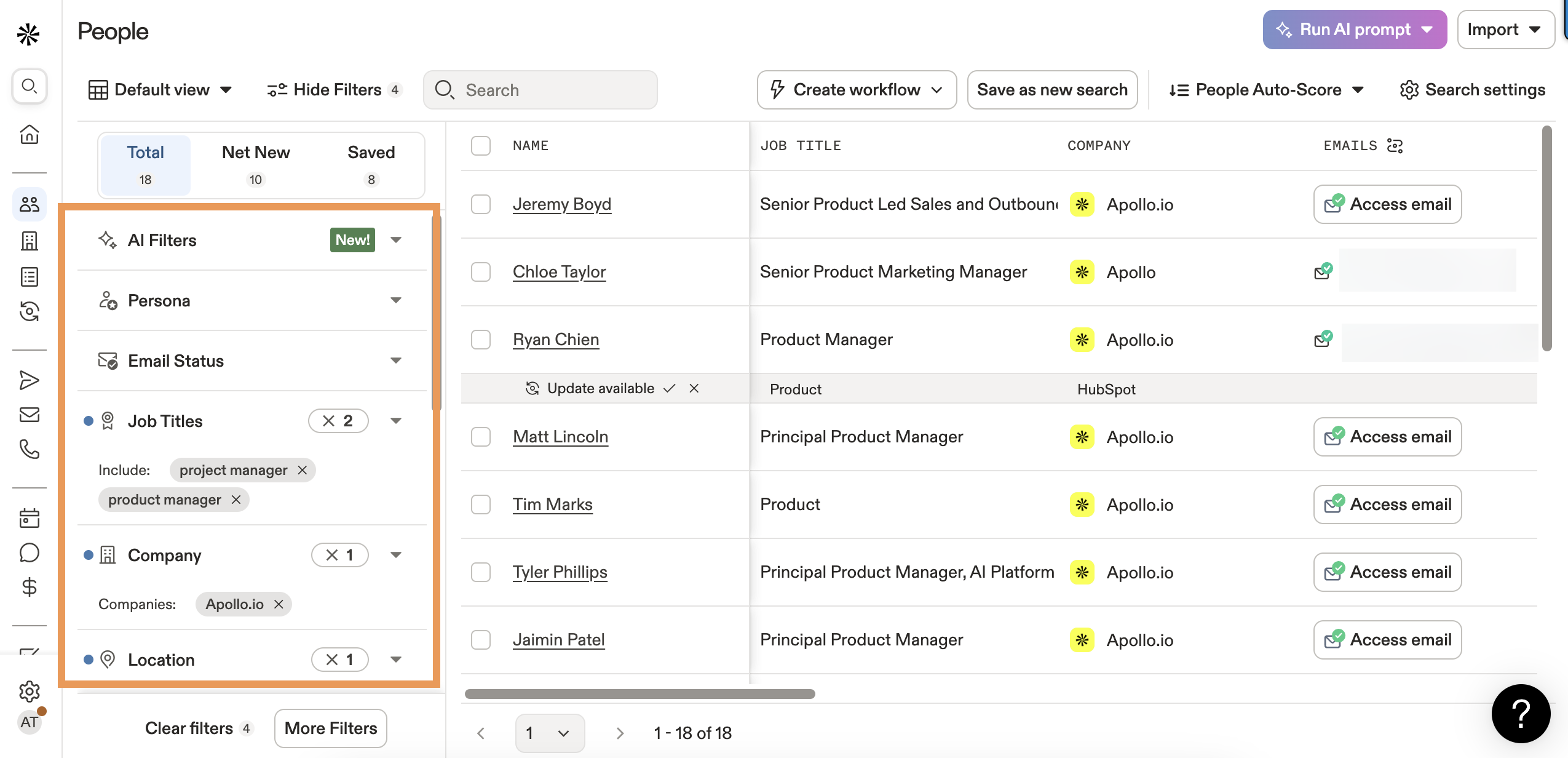
Use this if: You're starting from zero budget and need a list fast. Apollo's free tier is genuinely useful, and it appears in 1,167 G2 category reports - more than any other sales tool on the platform. The built-in sequencer, dialer, and intent signals make it a true all-in-one.
Skip this if: You're sending at scale without a separate verification layer. Apollo's data is largely user-populated, and practitioners consistently cite 65-80% accuracy. The consensus on r/LeadGeneration is blunt: Apollo is a "jack of all trades, master of none." The dialer uses Twilio VoIP numbers that get flagged as spam, and experienced senders recommend turning off open and click tracking entirely to protect email deliverability.
Pricing: Free and paid plans from $49/user/month, scaling to $149+/user/month depending on tier and billing.
Our take: Best free starting point in the category. But run every Apollo list through a dedicated verification tool before you hit send. The 15-20% bad data rate will destroy your domain faster than the free tier saves you money. (If you want more options, compare free lead generation tools.)
ZoomInfo
Here's the thing: ZoomInfo is still the deepest US B2B contact database on the market. But most teams don't need that depth, and they definitely don't need to pay for it.
A 200+ person sales org that needs intent data, conversation intelligence, and workflow automation in one contract will get value from ZoomInfo's GTM operating system. Everyone else is overpaying. Pricing starts at $14,000-$25,000+/year. Add intent data and mobile numbers, and enterprise deals hit $30,000+. Most teams we've talked to have 3-5 active users paying $5,000-$10,000 per person. The #1 complaint on Reddit and G2? Auto-renewal clauses and difficulty canceling.
Pricing: ~$14,000-$25,000+/year starting. Enterprise $30,000+. Annual contract required. No public pricing page.
Our take: ZoomInfo is overpriced for 90% of teams that buy it. Accuracy runs 75-85%, which sounds fine until you compare it to tools hitting 98% at a tenth of the cost. If your average deal size doesn't justify five-figure data contracts, you almost certainly don't need ZoomInfo-level infrastructure.
Clay
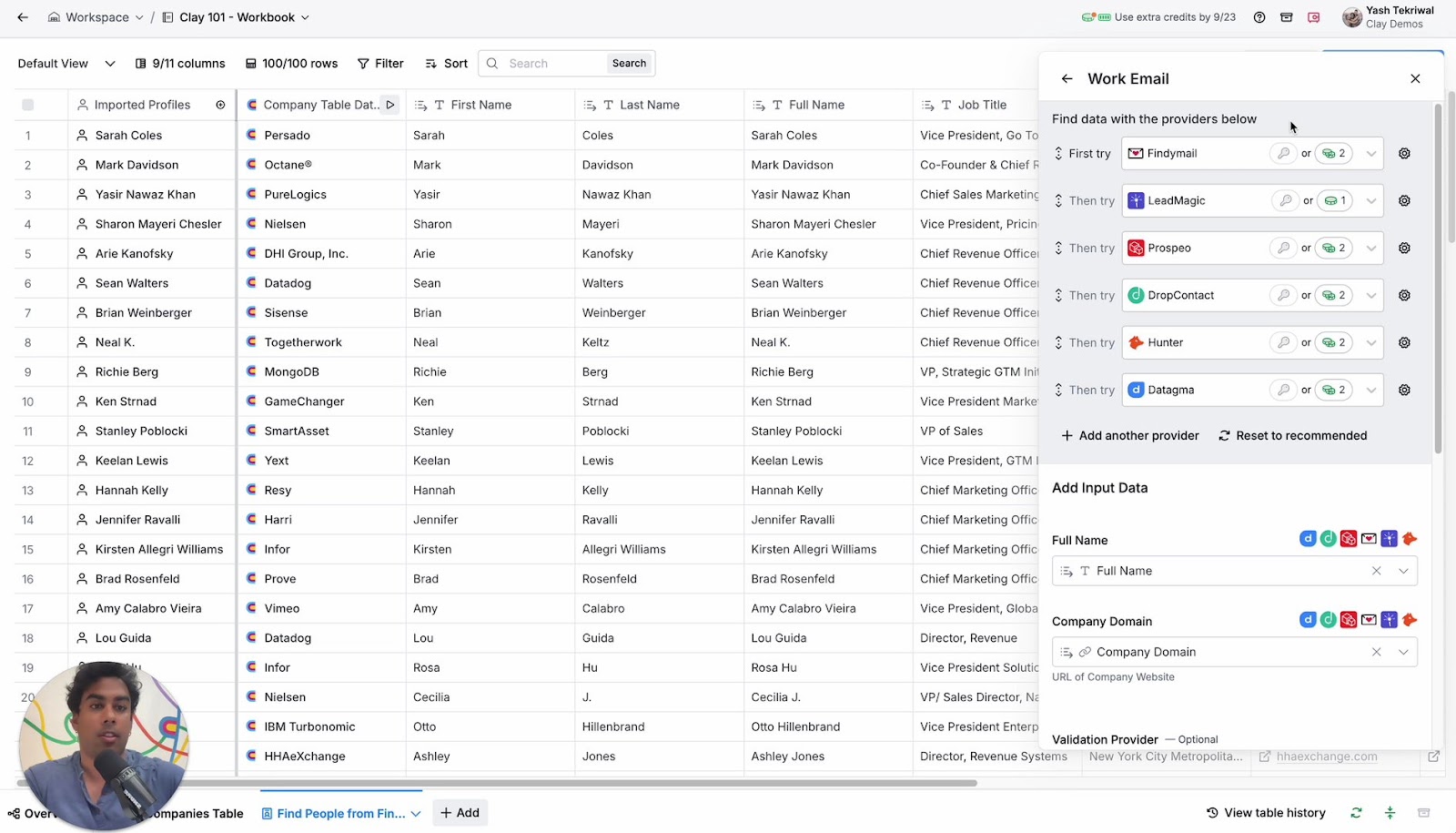
Clay is the sales intelligence tool that RevOps teams won't shut up about - and for good reason. It orchestrates data from 150+ providers through waterfall enrichment workflows: if Provider A doesn't have the email, it automatically tries Provider B, then C. OpenAI used Clay to push enrichment coverage from 40% to 80%. Backed by a $100M Series C in June 2025 at a $3.1B valuation, Clay has serious momentum.
Skip this if: You're a 5-person sales team that just needs emails. Clay's learning curve is steep, pricing gets unpredictable at scale, and CRM integrations are gated behind the $720/month Pro plan. Incredible for technical teams, overkill for everyone else. (If you’re implementing this kind of workflow, see Clay list building.)
Pricing: Free (100 credits/month) / $149/month. Pro with CRM integrations: $720/month. Clay also offers a 14-day trial with 1,000 credits.
Cognism
Use this if: You're selling into Europe and compliance isn't optional. Cognism checks against 15+ Do-Not-Call lists, is GDPR and CCPA compliant, and is purpose-built for teams selling into Europe. Where Cognism wins over ZoomInfo: EMEA data depth and regulatory compliance. Where ZoomInfo still wins: US database breadth and platform features.
Skip this if: Your entire TAM is North America and you don't care about DNC compliance. You'll pay a premium for compliance infrastructure you don't need.
Pricing: ~$1,000/user/year (annual). Two packages (Grow, Elevate), proposal-based.
Engagement & Outreach
Instantly.ai
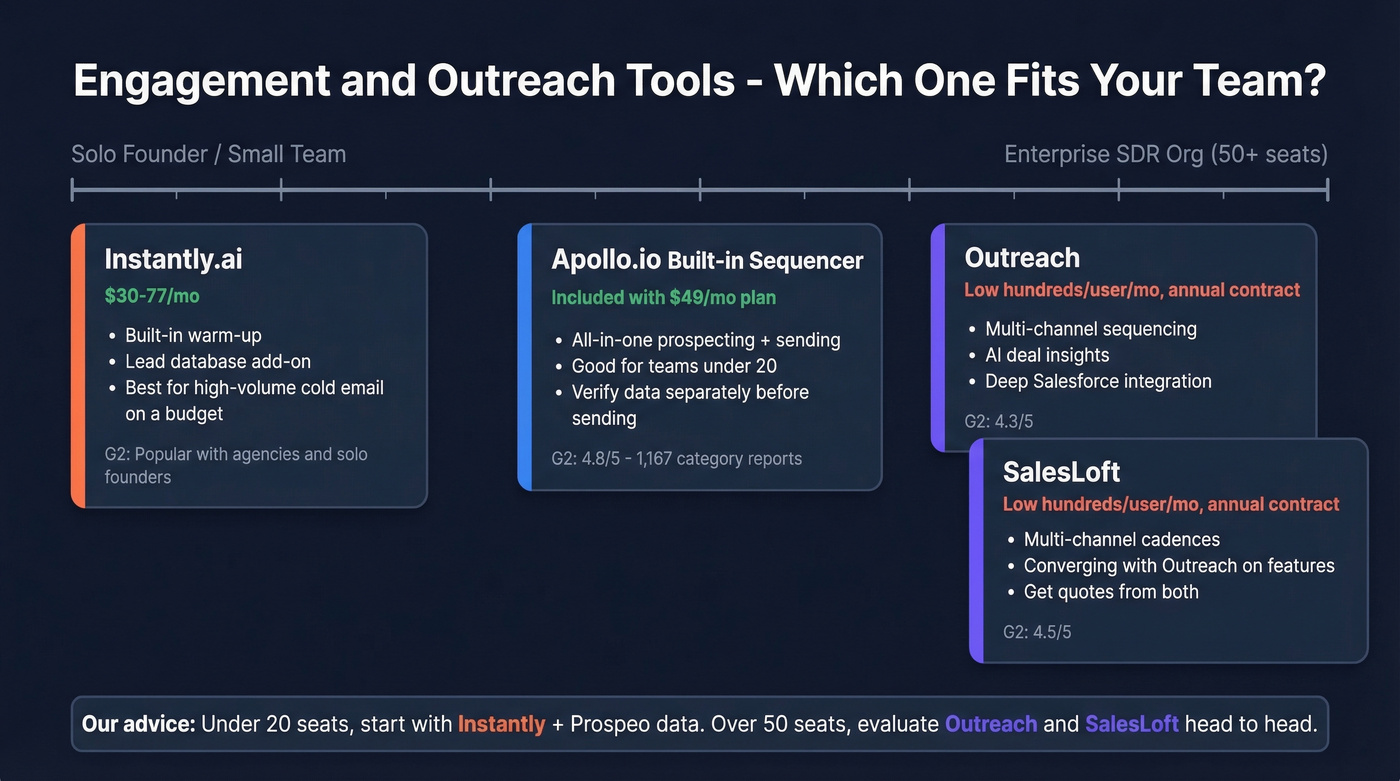
Instantly became the go-to budget cold email infrastructure play. Built-in warm-up and a lead database add-on make it attractive for agencies and solo founders running high-volume outbound. The Growth plan starts at ~$30/month, Hypergrowth at ~$77/month. Practitioners on Reddit have questioned warm-up tool reliability broadly, calling it "fake engagement" that shouldn't be trusted blindly. Pair it with a strong data source and you've got a capable sending engine at a fraction of Outreach's price. (If you’re scaling volume, track email velocity to avoid deliverability cliffs.)
Outreach
The enterprise sales engagement platform. Multi-channel sequencing, AI-powered deal insights, and deep Salesforce integration make it a default for large SDR teams. Pricing isn't public - it's sold on annual contracts, with per-seat pricing that typically lands in the low hundreds per user per month. If you're under 20 seats, look at Instantly or Apollo's built-in sequencer first. G2 rating: 4.3/5.
SalesLoft
Similar positioning to Outreach. Multi-channel cadences, analytics, and CRM sync. Also sold on annual contracts with per-seat pricing in the low hundreds per month. If you're evaluating Outreach, get a Salesloft quote too - the feature sets are converging fast. G2 rating: 4.5/5.
Capture & Conversion
HubSpot
HubSpot's free CRM is the obvious starting point for inbound-led teams. Forms, landing pages, email marketing, and lead scoring are all built in - the free tier is genuinely powerful for early-stage companies. Marketing Hub scales from $15/month to $3,600/month billed annually. HubSpot doesn't solve outbound data, but it's the best CRM foundation to build on. G2 rating: 4.4/5. (If you’re comparing CRMs, here are more examples of a CRM.)
Leadfeeder (Dealfront)
Leadfeeder identifies companies visiting your website and matches them to firmographic data. It pairs well with a prospecting tool when you want to turn anonymous traffic into outbound lists. The free plan covers basic identification; paid plans start at $99/month billed annually. It won't give you contact-level data on its own - you'll need a data provider to turn company visits into actionable outreach.
Intercom
Live chat and AI chatbot for qualifying inbound leads and routing conversations to the right team. Solid for SaaS companies with meaningful website traffic. Pricing runs $29-$132/seat/month billed annually.
OptinMonster
Lead capture popups, exit-intent forms, and on-site targeting. A conversion optimization tool, not a prospecting tool. Starts at $7/month billed annually.
Unbounce
Landing page builder with AI-powered copy and design optimization. If you're running PPC or paid social, Unbounce helps squeeze more conversions from existing traffic. Plans range from $74-$625/month billed annually.
Intent & ABM
Bombora
The major intent data provider behind many platforms' "buyer intent" signals. Direct access is typically priced for serious ABM programs, which is why many teams access Bombora data through platforms that bundle it in. If you're running serious ABM, Bombora's signal quality is the benchmark. (To operationalize this, use identifying buying signals as your scoring baseline.)
Pricing: ~$25,000-$50,000+/year. Annual contract.
Trigify
An emerging signal-based prospecting tool gaining traction in RevOps circles. It's early-stage and worth watching. Pricing requires contacting their team; expect $200-$500/month.
You don't need a $25,000/year contract to get accurate B2B data. Prospeo gives you 300M+ profiles, 30+ filters, intent data, and verified mobiles at ~$0.01 per email - with native integrations into every tool on this list.
Enterprise-grade lead gen software without the enterprise price tag.
Pricing at a Glance
| Tool | Starting Price | Free Tier? | Contract? | Best For |
|---|---|---|---|---|
| Apollo.io | $49/user/mo | Yes | No | Free list building |
| ZoomInfo | ~$14K/yr | No | Annual | Enterprise GTM suite |
| Clay | $149/mo | Yes | No | Waterfall enrichment |
| Cognism | ~$1K/user/yr | No | Annual | EU compliance |
| Instantly.ai | ~$30/mo | No | No | Budget cold email |
| Outreach | Not public | No | Annual | Enterprise sequences |
| Salesloft | Not public | No | Annual | Multi-channel cadences |
| HubSpot | $15/mo | Yes | No | Inbound CRM |
| Leadfeeder | $99/mo | Yes | No | Visitor identification |
| Intercom | $29/seat/mo | No | No | Live chat + bots |
| OptinMonster | $7/mo | No | No | Lead capture popups |
| Unbounce | $74/mo | No | No | Landing pages |
| Bombora | ~$25K+/yr | No | Annual | Intent data |
| Trigify | ~$200-$500/mo | No | TBD | Signal prospecting |
How to Build Your Lead Gen Stack
You need 2-3 tools, not 10. Zapier's research frames this well: a functional lead gen stack covers locate, contact, engage, and manage. That's a sales intelligence tool, a sequencer, and a CRM. Everything else is optimization.
Three stacks we'd recommend based on team size and budget:
Budget stack ($100-$200/month): Prospeo for verified data + Instantly for sending + HubSpot Free for CRM. This gets a 2-3 person team running outbound with accurate data, reliable email deliverability, and a real pipeline view. Total cost under $200/month.
Mid-market stack ($500-$1,500/month): A dedicated contact database with strong verification + Outreach for multi-channel sequences + Salesforce for CRM. The verification layer is non-negotiable here - bad data at scale doesn't just waste money, it destroys sender reputation across your entire domain portfolio. (If deliverability is a priority, follow an email deliverability guide before scaling.)
Enterprise stack ($3,000-$8,000+/month): Cognism for GDPR-compliant European data + Clay for waterfall enrichment + Salesloft for engagement + Bombora for intent signals. This is the full ABM play for teams selling six-figure deals into regulated markets.
The common thread across all three: a dedicated verification layer sits between your data source and your sequencer. That single decision - where your data gets cleaned - has the highest impact on everything downstream.
Mistakes That Kill Lead Gen ROI
Misaligned handoffs. Marketing and sales don't agree on what "qualified" means. Leads rot in a queue while both teams point fingers. Define your MQL-to-SQL criteria before you buy any software.
Trusting "verified" labels. Every contact database says their data is verified. Run your own verification pass anyway. We've seen the difference between 79% and 98% accuracy firsthand - it's the difference between a healthy domain and a blacklisted one. (If you’re troubleshooting, start with email bounce rate benchmarks and fixes.)
Slow lead activation. Up to 50% of sales go to the first vendor to respond. If your lead routing takes 24 hours, you've already lost half your pipeline to a competitor who responded in 20 minutes.
Generic nurture sequences. "Just checking in" emails don't nurture - they annoy. Segment by intent signal, industry, and buying stage. One-size-fits-all drips are a waste of verified contacts.
Fragmented attribution. When your CRM, marketing automation, and intent platform don't talk to each other, you can't tell which channel actually drives revenue. Fix the plumbing before you scale the spend.
GDPR & Compliance Essentials
EU regulators have issued over 6.2 billion euros in GDPR fines since 2018. The maximum penalty is 20 million euros or 4% of global annual turnover - whichever is higher. This isn't theoretical risk.
For B2B cold outreach, you typically don't need explicit consent. Legitimate interest is the lawful basis, but it requires a documented three-part Legitimate Interest Assessment: purpose (why you're reaching out), necessity (why email is the right channel), and balancing (does the prospect's privacy interest outweigh yours?). The proposed ePrivacy Regulation was withdrawn in February 2025, so country-level rules still vary.
Practical compliance checklist: provide a privacy notice within one month or at first contact, keep outreach role-relevant, include a clear opt-out, set a retention period, and respond to data subject access requests within 30 days. Cognism's DNC list checking is the strongest compliance differentiator in the data provider space. Any lead generation platform you deploy in the EU should at minimum support opt-out management and data retention controls.
FAQ
What's the best B2B lead generation software in 2026?
For data accuracy and self-serve pricing, Prospeo leads with 98% email accuracy at $0.01/lead. Apollo.io is the best free starting point for list building. ZoomInfo only makes sense for large enterprise teams that'll use the full GTM suite.
How much does lead generation software cost?
It ranges from free (Apollo, HubSpot CRM) to $50,000+/year (Bombora, ZoomInfo enterprise). Most mid-market teams spend $200-$500/month across 2-3 tools covering data, engagement, and CRM.
Do I need multiple lead gen tools?
Yes - no single platform covers data, engagement, and CRM well. A functional stack is one data/verification tool, one sequencer, and one CRM. Trying to do everything in one platform means compromising on data quality or deliverability.
Is cold email GDPR compliant?
B2B cold email can be lawful under legitimate interest, but you need a documented Legitimate Interest Assessment, clear opt-out in every message, and a privacy notice delivered within one month of first contact. Country-level ePrivacy rules still vary across the EU.
What's a good email bounce rate for outbound?
Under 5%. Above that, deliverability and inbox placement drop fast. A smaller, verified list outperforms a massive, unverified one every time.