

The 15 Best Lead Generation Websites and Tools for 2026
Your SDR team just ran a 5,000-email campaign and 600 bounced. That's a 12% bounce rate - enough to torch your domain reputation and tank every sequence you send for the next quarter. 63% of marketers say generating leads is their top challenge, but the real problem isn't generating leads. It's generating accurate ones.
The market for lead gen platforms is bloated. Most "best tools" roundups list 25+ options without telling you which ones actually work. You don't need all of them. You need two or three that deliver verified data, fit your workflow, and don't quietly drain your budget through credit overages and annual lock-ins.
We evaluated these tools based on data accuracy, pricing transparency, user reviews, and real-world performance.
Our Top Picks
- Prospeo - Best for verified contact data and email accuracy. 98% email accuracy, ~$0.01/email, free tier, no contract.
- Apollo.io - Best budget all-in-one for SMBs. Free tier, 275M+ contacts, built-in sequencing.
- Leadfeeder - Best for identifying anonymous website visitors before they fill out a form.
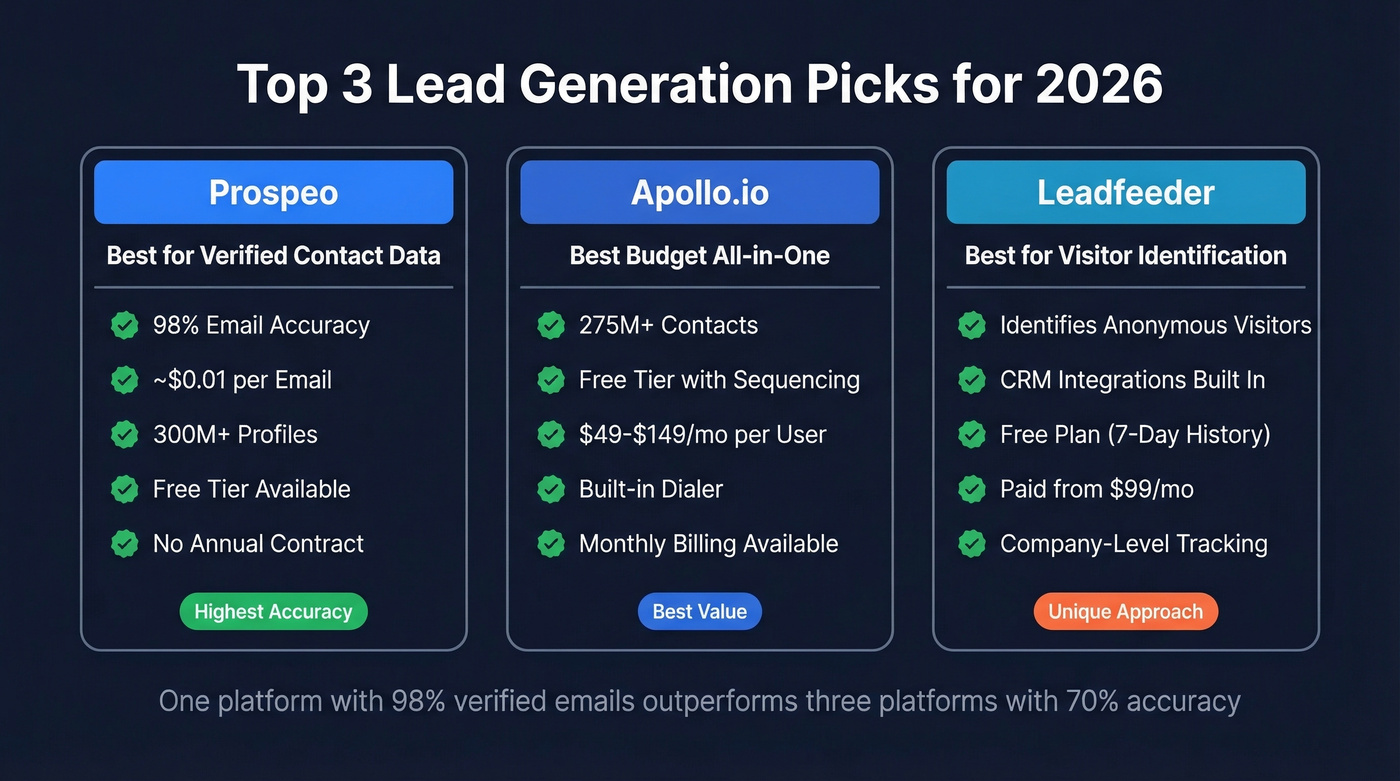
Here's the thing: stop collecting tools and start collecting accurate data. One platform with 98% verified emails will outperform three platforms with 70% accuracy every time. If your average deal size is under $10K, you almost certainly don't need a $30K ZoomInfo contract - a self-serve data platform and a good CRM will get you further.
If you want a broader view of what’s changing this year, see these lead gen trends shaping 2026 budgets.
The 15 Best Lead Gen Platforms for 2026
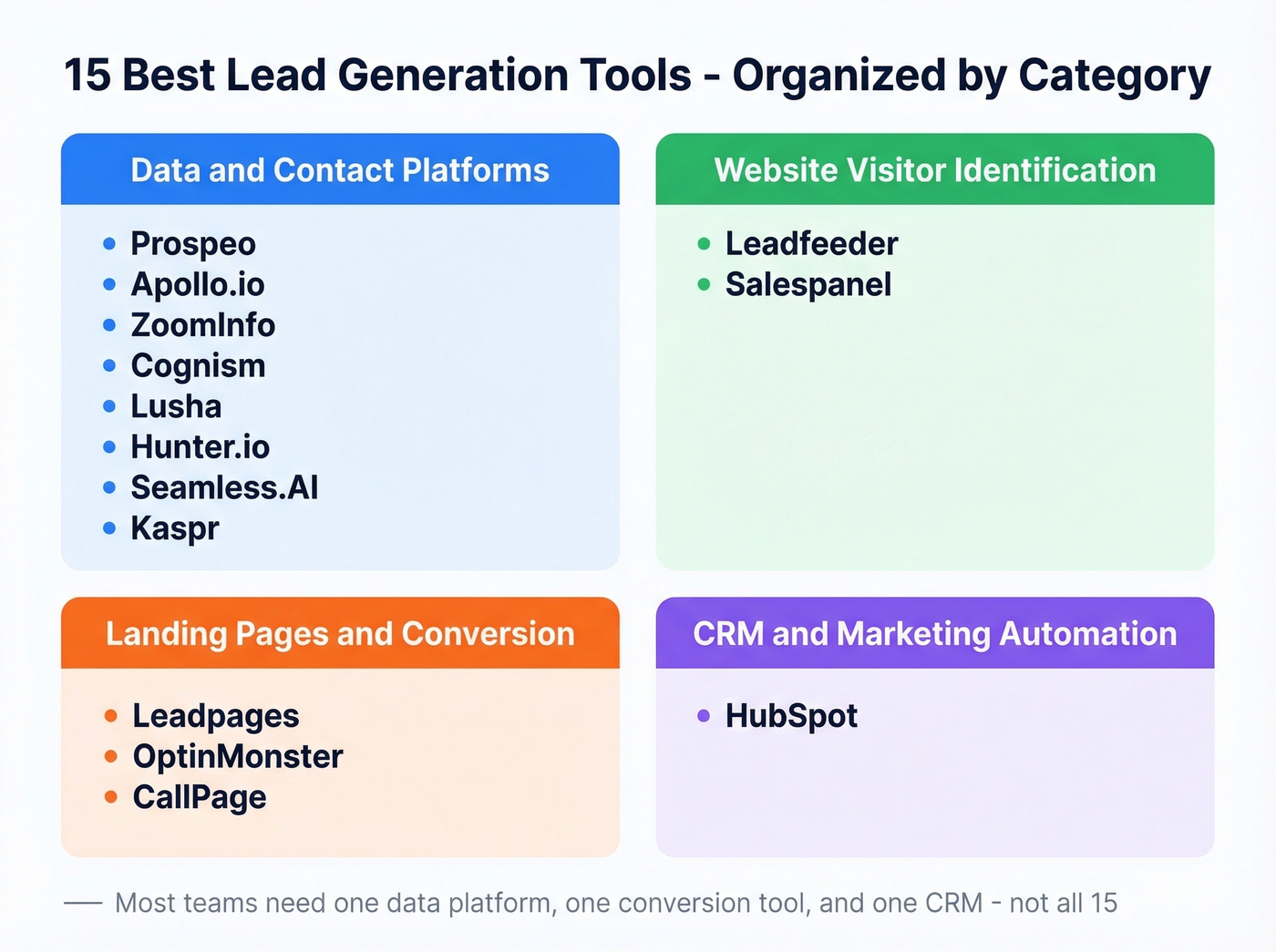
Data & Contact Platforms
Prospeo
Prospeo's database covers 300M+ professional profiles, 143M+ verified emails, and 125M+ verified mobile numbers - all refreshed on a 7-day cycle. The industry average refresh is six weeks. That gap matters when you're prospecting into fast-moving markets where people change roles constantly.

The search interface offers 30+ filters including buyer intent (15,000 Bombora topics), technographics, job changes, headcount growth, and funding rounds. The Chrome extension has 40K+ users and works across company websites, professional profiles, and CRMs - one click to pull verified emails and mobile numbers.
If you’re building a repeatable outbound motion, these sales prospecting techniques pair well with verified data.
Pros:
- 98% email accuracy with proprietary verification - the highest we've tested
- ~$0.01 per email, 10 credits per mobile number, free tier (75 emails + 100 Chrome extension credits/month)
- No contracts, no annual lock-in, no "talk to sales" gate
Cons:
- No built-in email sequencing or meeting booking - pair with Instantly, Smartlead, or Lemlist for outreach
Best for: Teams that need verified data without enterprise pricing. Outbound agencies scaling campaigns without burning client domains. Skip if: You need a full sales engagement suite with built-in sequencing and meeting booking.

You just read about 15 lead gen platforms. Here's what separates the best from the rest: data accuracy. Prospeo delivers 98% verified emails from 300M+ profiles, refreshed every 7 days - not 6 weeks. At ~$0.01/email with no contract, you stop paying for bounces and start building real pipeline.
75 free emails/month. See what accurate lead gen actually looks like.
Apollo.io
Apollo is the obvious starting point for SMB teams that want prospecting, enrichment, and sequencing in one platform. The database covers 275M+ contacts, and the free tier is genuinely usable. Paid plans run $49-$149/mo per user depending on tier and billing cycle.
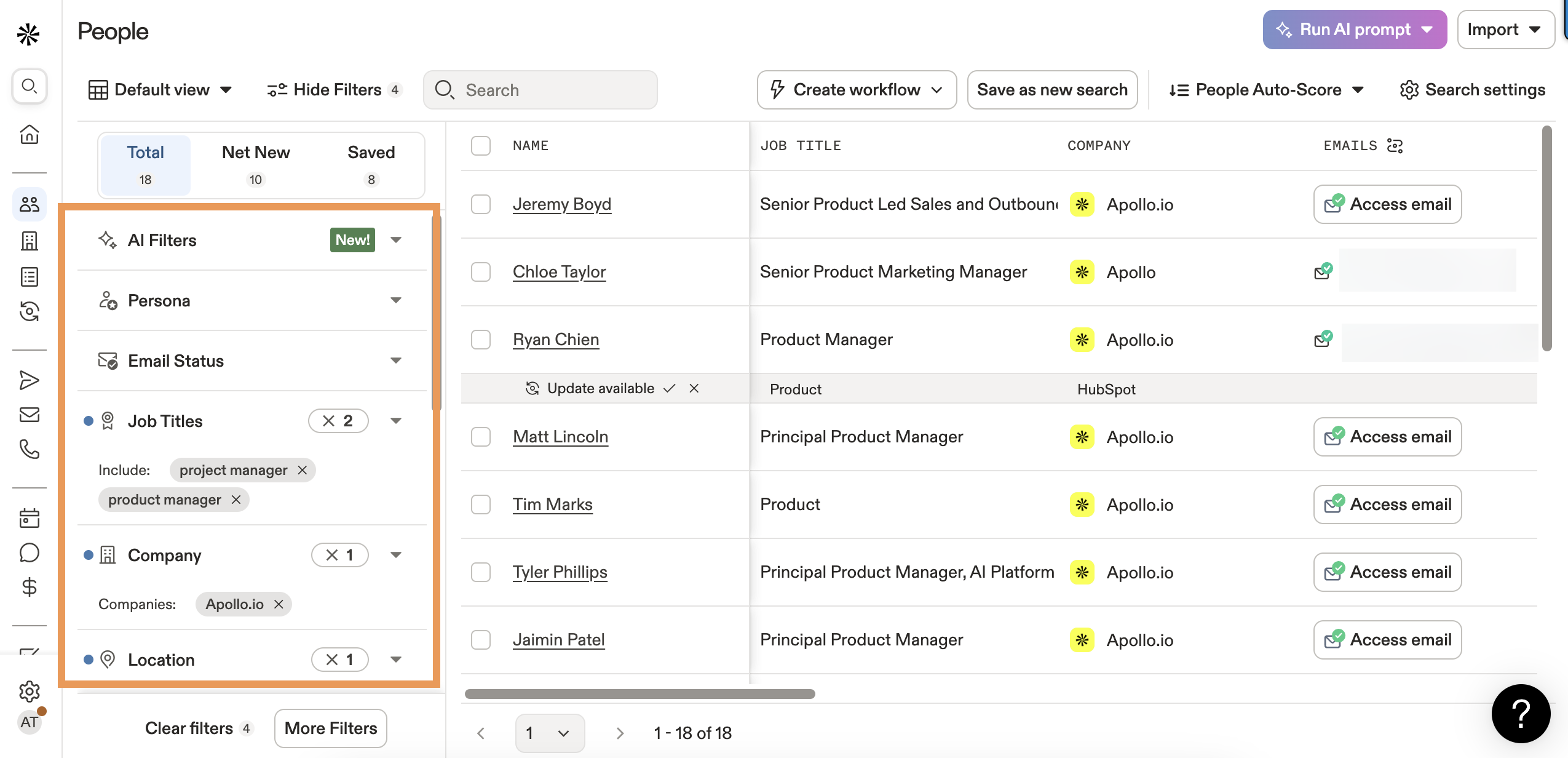
The catch is Apollo's credit system. Free users get just 5 mobile credits and 10 export credits per month. Even on the Organization plan ($119-$149/mo), you're capped at 200 mobile credits per user. In our testing, a 5-person team burns through those faster than you'd expect. There's also consistent chatter on r/coldemail about Apollo's database freshness slipping - worth testing before you commit to an annual plan.
If you’re comparing databases specifically, start with this breakdown of sales prospecting databases.
Pros:
- Genuinely usable free tier with prospecting + sequencing
- 275M+ contacts with built-in email sequences and dialer
- Monthly billing available
Cons:
- Mobile credits run out fast, especially on free/lower tiers
- Email verification isn't as tight as dedicated data platforms
Best for: SMBs wanting all-in-one prospecting + engagement on a budget. Skip if: Email accuracy is mission-critical for your outbound campaigns.
ZoomInfo
ZoomInfo is the enterprise benchmark - 500M+ professional contacts, 200M+ verified business emails, 135M verified phone numbers, and intent data baked in. For a 200+ person sales org running outbound, ABM, and intent from one stack, the breadth is hard to beat.
But let's talk cost. Professional+ starts at $14,995/year for 3 seats. Advanced+ jumps to $29,995. Elite+ hits $35,995. Most teams pay $30K-$75K+ per year once you add seats ($2,500 each), global data modules, and credit overages. Vendr's procurement data shows companies with ~1,000 employees paying $50,200-$113,800 annually. Discounts of 30-65% are common if you negotiate, but you'll still land well above $20K for most configurations.
The #1 complaint on Reddit? Price - specifically, paying for modules you don't use and getting locked into auto-renewing annual contracts that are notoriously hard to exit.
Pros:
- Deepest US database with intent, technographics, and org charts
- True all-in-one GTM platform for large sales orgs
Cons:
- $30K-$75K+/year puts it out of reach for most SMBs
- Annual contracts with auto-renewal and module bloat
Best for: Enterprise teams with budget and a need for all-in-one GTM. Skip if: Your team is under 20 reps. You'll overpay for features you won't touch.
Cognism
Cognism wins on two fronts: EMEA data quality and GDPR compliance. Their Diamond Data program phone-verifies mobile numbers by actually calling them - a step most competitors skip entirely. They bundle Bombora intent data and DNC list scrubbing, which matters if you're dialing into the UK or EU where compliance isn't optional.
Where Cognism beats ZoomInfo: European mobile coverage and regulatory peace of mind. Where ZoomInfo still wins: US database depth and workflow breadth. Expect ~$1,000-$3,000/mo for small teams, scaling up from there on annual contracts.
Best for: Teams selling into EMEA that need compliant, phone-verified data.
Lusha
Use this if you're an individual rep who needs fast contact lookups without a complex platform. Lusha's Chrome extension is dead simple - find emails and phone numbers in seconds. Plans run $29-$99/mo.
Skip this if you need bulk prospecting or sequencing. Lusha is a lookup tool, not a workflow platform.
Hunter.io
Hunter does one thing well: find and verify professional email addresses. The free plan gives you 25 searches/month, and paid plans scale from $49 to $499/mo for high-volume teams. The domain search feature is particularly useful for mapping out an entire company's email structure before you start outreach.
If you’re evaluating alternatives in this category, compare options in our Hunter alternatives guide.
Best for: Simple email finding at scale, especially for content marketers doing link-building outreach. Skip if: You need phone numbers, intent data, or anything beyond email.
Seamless.AI
Seamless.AI takes a different approach - on-demand search that builds contact records on the fly rather than pulling from a static database. Free tier available, paid plans up to ~$147/mo. The AI-powered engine surfaces contacts quickly, but accuracy varies more than with pre-verified databases.
Best for: Reps who want to build targeted lists fast without pre-built databases. Skip if: You need consistently verified data. Real-time search means real-time variability.
Kaspr
Chrome extension focused on European data. Free sign-up available, paid plans from ~$49/mo. GDPR/CCPA aligned with CRM integrations. Think of it as Lusha's European cousin - quick lookups with solid EU coverage, lighter on overall database depth.
Best for: Individual reps prospecting into European markets.
Website Visitor Identification
Leadfeeder
Most of your website traffic leaves without filling out a form. Leadfeeder identifies which companies visit your site, what pages they view, and how long they spend - then pushes that data to your CRM so sales can follow up before prospects move on. We've found this category of tool especially valuable for mid-market B2B companies where the sales cycle is long and buying committees browse anonymously for weeks before reaching out.

The free plan shows the last 7 days of visitors. Paid plans start at $99/mo billed annually and scale up to $1,199/mo based on the number of identified companies. It integrates with HubSpot, Salesforce, and Pipedrive.
If you want to operationalize this data, build a simple lead generation workflow so nothing slips through.
Pros:
- Purpose-built for visitor ID - doesn't require a $30K+ platform commitment
- CRM integrations push data where your team already works
Cons:
- Only identifies companies, not individual visitors
- Pricing scales quickly with traffic volume
Best for: Marketing teams wanting to connect anonymous web traffic to pipeline. Skip if: Your site gets under 500 visits/month - there won't be enough data to act on.
Salespanel
Visitor tracking plus lead scoring in one lightweight tool. Starting around ~$99/mo, it's a strong alternative to Leadfeeder for teams that want scoring logic built into their visitor identification workflow.
Landing Pages & Conversion Tools
Leadpages
If you're running paid campaigns, you need dedicated landing pages - not your homepage. Leadpages builds them fast with drag-and-drop templates, A/B testing, and conversion-optimized layouts. Plans start at $37/mo with unlimited landing pages and traffic.
Best for: Marketers running Google or Meta ads who need high-converting landing pages without a developer.
OptinMonster
Pop-ups, exit-intent overlays, and on-site conversion optimization. Plans run ~$9-$49/mo billed annually. It's not a lead gen platform in the traditional sense - it's a conversion layer that squeezes more leads out of existing traffic. Pairs well with any CRM or email tool.
CallPage
Speed-to-lead matters. CallPage adds a callback widget to your site - a visitor clicks, enters their number, and gets a call from your sales team in seconds. 14-day free trial, then expect ~$100-$300/mo depending on call volume. It's niche, but for high-intent pages like pricing or demo requests, the conversion lift is real.
CRM & Marketing Automation
HubSpot
HubSpot bundles everything from CRM to email sequences to landing pages to live chat. The free tier is genuinely powerful for startups. Marketing Hub ranges from free up to $3,600/mo.
The strength is having lead capture, nurturing, and CRM in one platform with no data syncing headaches. The weakness is that HubSpot's contact database isn't a prospecting tool - you're not searching for new leads, you're managing the ones who come to you. Pair it with a dedicated data platform like Prospeo for outbound, and use HubSpot for everything after first touch.
If you’re still deciding what “CRM” even means in practice, here are real examples of a CRM with pricing.
Pros:
- Free CRM is legitimately useful, not just a teaser
- Inbound lead gen + nurturing + CRM with zero integration headaches
Cons:
- Not a prospecting tool - you still need a data source for outbound
- Marketing pricing jumps steeply as you scale
Best for: Teams wanting inbound lead gen + nurturing + CRM in one ecosystem. Skip if: You only need contact data for outbound prospecting.
Salesforce Marketing Cloud
Enterprise marketing automation starting ~$1,250-$4,200+/mo. If you're already on Salesforce CRM, it's the natural extension. For everyone else, it's overkill for lead gen specifically.
Pricing Comparison
A tool advertised at $99/month can become $3,452 in year one after per-user fees, credit overages, and add-on modules. Here's what these lead generation websites actually cost:
| Tool | Free Tier? | Starting Price | Typical Annual | Contract? |
|---|---|---|---|---|
| Prospeo | Yes (75 emails + 100 extension credits/mo) | ~$0.01/email | Scales with usage | No |
| Apollo.io | Yes | $49/user/mo | $588-$1,788/user | Monthly option |
| ZoomInfo | No | $14,995/yr | $30K-$75K+ | Annual |
| HubSpot | Yes (CRM) | $0-$3,600/mo | $0-$43,200 | Annual |
| Leadfeeder | Yes (7 days) | $99/mo (annual billing) | $1,188-$14,388 | Monthly option |
| Cognism | No | Custom | ~$12K-$36K+ | Annual |
| Lusha | Yes (limited) | $29/mo | $348-$1,188 | Monthly option |
| Hunter.io | Yes (25/mo) | $49/mo | $588-$5,988 | Monthly option |
| Seamless.AI | Yes (limited) | Up to ~$147/mo | ~$1,764+ | Annual option |
| Leadpages | 14-day trial | $37/mo | $444-$888 | Monthly option |
| OptinMonster | No | $9/mo (annual) | $108-$588 | Annual |
| CallPage | 14-day trial | ~$100/mo | ~$1,200-$3,600 | Annual option |
| Kaspr | Yes | ~$49/mo | ~$588+ | Monthly option |
| Salespanel | No | ~$99/mo | ~$1,188+ | Monthly option |
| Salesforce MC | No | ~$1,250/mo | $15K-$50K+ | Annual |
Leadfeeder's range reflects scaling by number of identified companies. ZoomInfo's range reflects seat count and module add-ons.
A 12% bounce rate doesn't just waste emails - it wrecks your domain for months. Prospeo's 5-step verification and 7-day data refresh keep bounce rates under 4%. Stack Optimize built a $1M agency on it with zero domain flags across all clients.
Replace your bouncing lead gen tool with 98% accuracy at a penny per email.
Lead Generation Benchmarks
Before you pick tools, know what "good" looks like. A Ruler Analytics study analyzing 100M+ data points across 14 industries found the average qualified lead conversion rate is 2.9%. Forms convert at 1.7%, calls at 1.2%. Anything above 3% is strong; above 5% is exceptional.
For more context on what “good” looks like by funnel stage, see our average B2B lead conversion rate benchmarks.
Channel economics vary dramatically:
| Channel | Avg Conversion | CPL Range |
|---|---|---|
| Email marketing | 6.5% | $30-$45 |
| Content/SEO | 1.8% | $30-$60 |
| Webinars | 11.2% | $60-$80 |
| Google Ads | 4.5% | $90-$150 |
| LinkedIn Ads | 3.2% | $120-$200 |
The average B2B CPL across all channels is $84. Here's a quick ROI gut-check: if your average deal is $5,000 and your close rate is 10%, you need 2 closed deals from every 20 leads at $84 CPL ($1,680 spend) to stay above a 3:1 LTV:CAC ratio. If the math doesn't work at your ACV, fix your targeting before you buy more tools.
For outbound specifically, cold email response rates average ~7%, and cold calls convert to meetings at 2-3%. Top-performing teams hit 5% on cold calls. Expect first meetings within 2-4 weeks of campaign launch. Set expectations accordingly - outbound is a volume game backed by data quality.
If you’re tightening deliverability, start with these email reputation tools and this email deliverability guide.
Turn Your Website Into a Lead Capture Machine
Your tools don't matter if your website leaks leads.
Simplify your forms. 3-field forms convert 27% better than 5-field forms. Name, email, company. That's it. You can enrich the rest with any data platform after capture.
If you’re enriching form fills automatically, compare the best data enrichment services.
One CTA per page. When visitors see "Request a Quote" and "Schedule a Consultation" and "Download the Guide" on the same page, they choose none. Pick the highest-intent action and make it the only option.
Add social proof near your CTAs. G2 ratings, Capterra badges, customer logos, specific results like "helped 500+ teams reduce bounce rates by 80%." Place them within visual proximity of your conversion point.
Use landing pages for paid traffic. Your homepage serves five audiences. A landing page serves one. We've seen teams double their paid campaign conversion rates just by sending traffic to a focused landing page instead of the homepage - it's one of the highest-ROI changes you can make without spending another dollar on ads.
Make signup low-friction. "No credit card required" isn't just a nice touch - it's a conversion lever. Every friction point you remove increases your capture rate.
Five Mistakes That Kill Your Pipeline
1. Over-reliance on purchased lists. Buying a list of 50,000 "marketing directors" sounds efficient until half the emails bounce and your domain gets flagged. Quality beats quantity every time.
If you’re considering list buying, read this first: Is it illegal to buy email lists?
2. Ignoring lead qualification. Not every form fill is a lead. Without scoring or qualification criteria, your sales team wastes hours chasing people who downloaded a whitepaper and will never buy.
3. No follow-up system. The average lead goes cold within 5 minutes of expressing interest. If your follow-up is "someone will email them eventually," you're losing deals to competitors who respond in seconds.
4. Weak lead magnets. "Subscribe to our newsletter" isn't a lead magnet. It's a request for attention with no value exchange. Offer something specific - a benchmark report, a calculator, a template that solves an immediate problem.
5. Ignoring data quality. Look, a 15% email bounce rate doesn't just waste one campaign. It destroys your sender reputation, which tanks deliverability on every future campaign you send. We've seen teams cut their bounce rate in half just by switching to a platform with built-in verification. This is the mistake that compounds fastest and takes the longest to recover from. Verify contacts before outreach - always.
FAQ
What is a lead generation website?
A lead generation website is any site or platform designed to capture, identify, or source potential customers for a business. This includes data platforms that find contact information, visitor identification tools like Leadfeeder, and sites optimized to convert traffic into leads through forms, CTAs, and landing pages.
How much do lead generation tools cost?
Most SMB teams spend $50-$200/month per user, while enterprise contracts like ZoomInfo run $30K-$75K+/year. Free tiers exist at Apollo, HubSpot, and Hunter. Prospeo starts at ~$0.01/email with a free tier and no contract - the most affordable end of the spectrum for verified data.
What's a good conversion rate for a lead gen site?
The average qualified lead conversion rate is 2.9% across industries based on 100M+ data points. Forms convert at 1.7%, calls at 1.2%. Anything above 3% is strong; above 5% is exceptional and typically indicates tight audience targeting paired with optimized landing pages.
Do I need a data platform or a lead gen agency?
Start with a self-serve data platform if you have SDRs or any internal sales capacity - it's faster, cheaper, and gives you direct control over targeting. Agencies make sense when you lack headcount or need multi-channel campaign management across outbound, content, and paid simultaneously.
What's the biggest mistake in B2B lead generation?
Using unverified data. A 15% email bounce rate damages your domain reputation and tanks future deliverability across every campaign you send. Always verify contacts before outreach - the cost of verification is a fraction of the cost of rebuilding a burned domain.