How Lead Scoring Enrichment Actually Works (and a Matrix You Can Copy)
Your SDR calls the "hottest lead" in the queue. Turns out, that person left the company three months ago. The title's wrong, the company size is outdated, and the score that flagged them as high-priority was built on stale data.
Companies lose roughly 12% of revenue to poor data quality. That's not a rounding error - it's the difference between hitting your number and missing it. Lead scoring enrichment exists to close that gap, and the teams doing it well are converting MQLs to SQLs at about 1.5x the rate of those who aren't.
What You Need (Quick Version)
Three things: a two-dimensional scoring model (fit + intent), an enrichment source with a weekly refresh cycle, and a 10-field scoring matrix. Not a 47-variable monster.
Map enriched firmographics to a fit score. Map behavioral signals to an intent score. Connect an enrichment tool with a weekly refresh to your CRM so scores stay current. Enriched leads convert 20-30% better than non-enriched ones, and top-score leads hit 30-45% win rates versus 20-30% overall. The math isn't complicated.
What Is Lead Scoring Enrichment?
Scoring assigns a number to each lead based on how likely they are to buy. Enrichment fills in the data that makes that number mean something. They're two halves of the same system - and once you see how enriched data improves scoring accuracy, the ROI case becomes obvious.
Without enrichment, you're scoring on whatever the lead typed into your form. With it, you're scoring on verified job title, company revenue, tech stack, headcount, and intent signals. The five enrichment categories that matter most:
- Firmographic - company size, revenue, industry
- Demographic - title, seniority, location
- Technographic - tools they use
- Behavioral - page visits, form fills, email engagement
- Intent - third-party signals showing active research
One emerging category worth watching: anonymous visitor enrichment. Reverse-IP tools can identify companies visiting your site before anyone fills out a form, feeding your scoring model with intent signals you'd otherwise miss entirely.
The enrichment pipeline itself is straightforward: collect raw data, classify and normalize it, append it to existing records, validate accuracy, integrate into your CRM, then refresh on a recurring cycle. Most teams overcomplicate this. The cycle that matters most is the refresh - stale enrichment is barely better than no enrichment at all.
Fit Score vs. Intent Score
Most teams treat lead scoring as a single number. That's the first mistake.
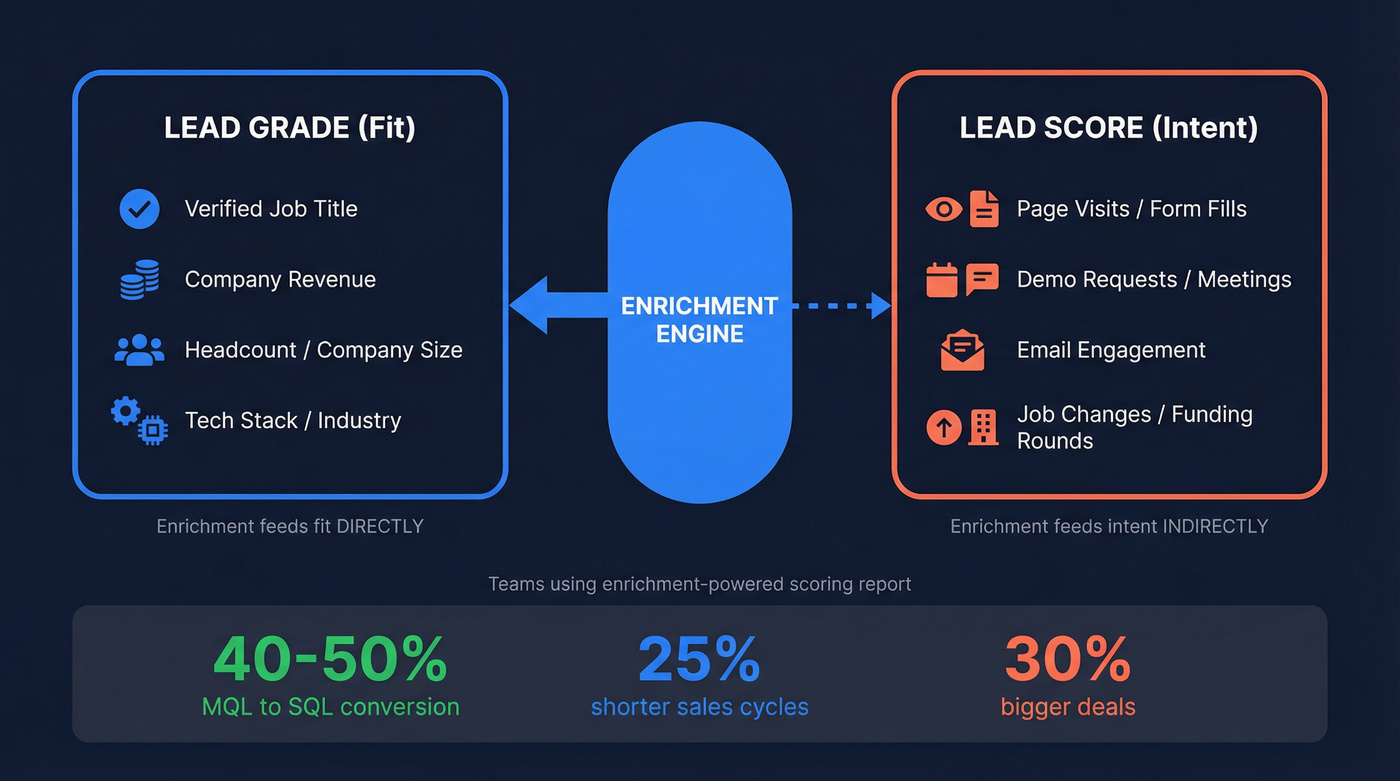
Lead score = intent. This captures behavior - page visits, form submissions, content downloads, meetings booked. It tells you how engaged someone is right now.
Lead grade = fit. This captures firmographics and demographics - title, company size, industry, tech stack. It tells you whether they match your ICP regardless of what they've clicked on.
Enrichment feeds fit directly. When you enrich a record with verified title, company revenue, and headcount, your fit score becomes accurate instead of aspirational. Enrichment feeds intent indirectly too - job change signals, funding rounds, and hiring surges are enrichment-derived data points that indicate buying intent.
The benchmarks tell the story. Typical teams convert MQLs to SQLs at 25-35%. High-alignment RevOps orgs practicing scoring with enriched data hit 40-50%. Teams using enrichment-powered scoring also report 25% more SQLs, 25% shorter sales cycles, and 30% bigger deals. That gap is the enrichment dividend.
A Scoring Matrix You Can Copy
Most scoring guides give you theory. Here are actual numbers you can plug into your CRM today. This matrix uses HubSpot's fit + engagement model, but the logic works anywhere.
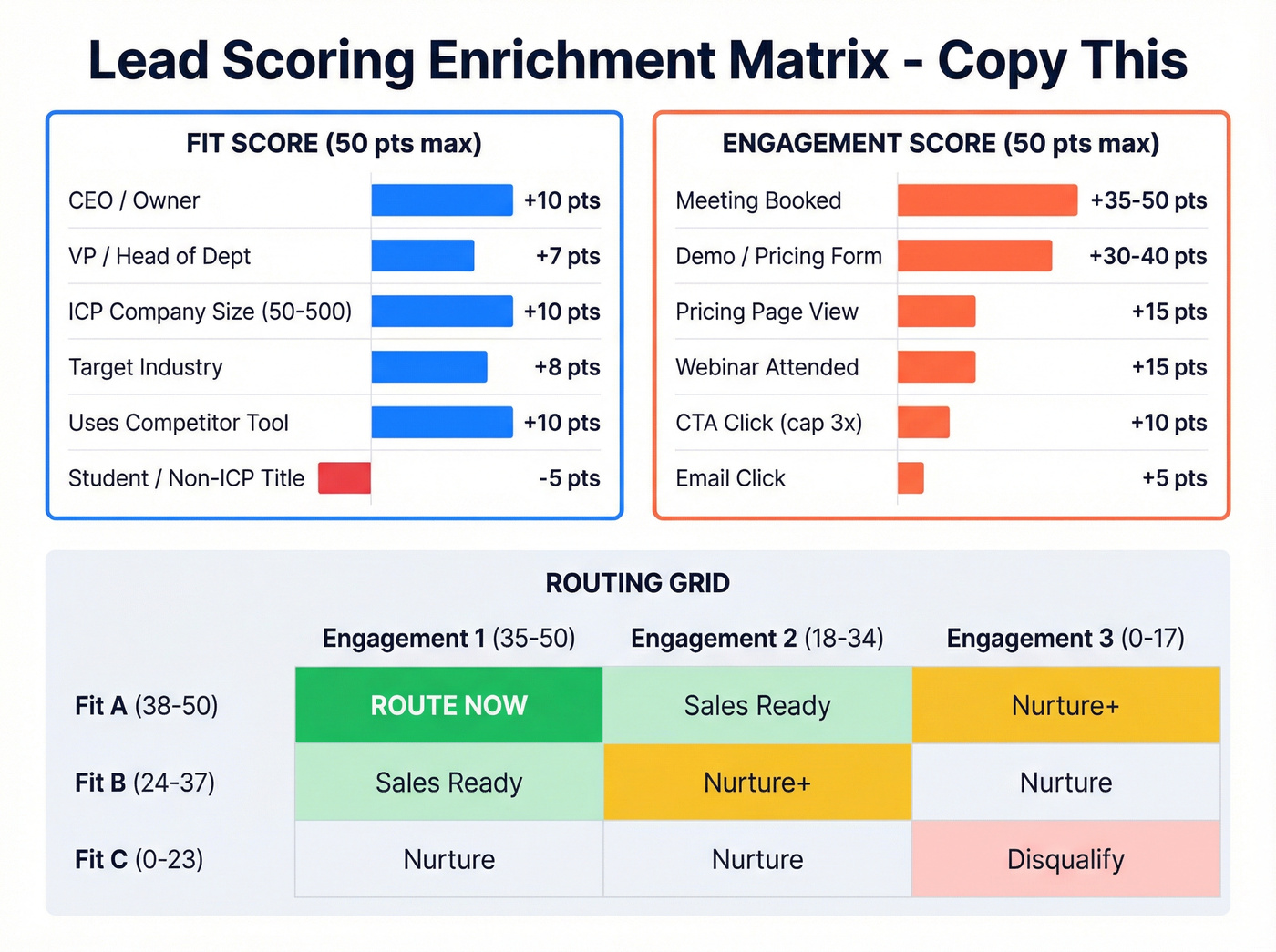
Start with a total score of 100, split 50/50 between fit and engagement.
Fit Scoring (50 Points Max)
| Attribute | Value | Points |
|---|---|---|
| Title | CEO / Owner | +10 |
| Title | VP / Head | +7 |
| Title | Manager | +4 |
| Title | Student / HR (non-ICP) | -5 |
| Company Size | 50-500 (ICP) | +10 |
| Company Size | 500-5,000 | +7 |
| Industry | Target vertical | +8 |
| Tech Stack | Uses competitor | +10 |
Engagement Scoring (50 Points Max)
| Action | Points | Notes |
|---|---|---|
| Demo/pricing form | +30-40 | Highest intent |
| Meeting booked | +35-50 | Route immediately |
| Pricing page view | +15 | Time-boxed window |
| CTA click (high-intent) | +10 | Cap at 3 times |
| Marketing email click | +5 | Frequency-based |
| Webinar attended | +15 | Registered only: +7 |
Threshold Routing Grid
Set thresholds using letter-number combos:
| Fit Grade | Score Range | Engagement Tier | Score Range |
|---|---|---|---|
| A | 38-50 | 1 | 35-50 |
| B | 24-37 | 2 | 18-34 |
| C | 0-23 | 3 | 0-17 |
An A1 lead gets routed to sales immediately. A C3 stays in nurture. Simple.
Two guardrails: HubSpot's time frame rules and decay rules can't coexist in the same scoring group - use time frame for short-term intent signals and decay for fading engagement. Marketing Hub Pro caps your total score at 100; Enterprise goes up to 500.
Why Static Scoring Breaks
A scoring model built on form-fill data from six months ago is a liability. Titles change. Companies get acquired. Headcounts double. 60% of marketers cite bad or incomplete data as the single biggest blocker to effective lead management - and stale scoring is where that pain hits hardest.
Let's be honest: if your enrichment data is older than 30 days, your scoring model is lying to your sales team. Dynamic enrichment signals - job changes, funding rounds, hiring trends, tech stack updates - keep scores aligned with reality. But only if the enrichment actually refreshes. This is exactly why data enrichment for scoring needs to be a recurring process, not a one-time project.
Speed matters on the other end too. Leads contacted within 5 minutes are 21x more likely to convert than those contacted after 30 minutes. Stale enrichment doesn't just hurt scores - it slows routing, which kills conversion. We've seen teams increase rep capacity from around 40 qualified leads per month to 55 by cutting qualification time and removing dead records from the queue with recurring enrichment.

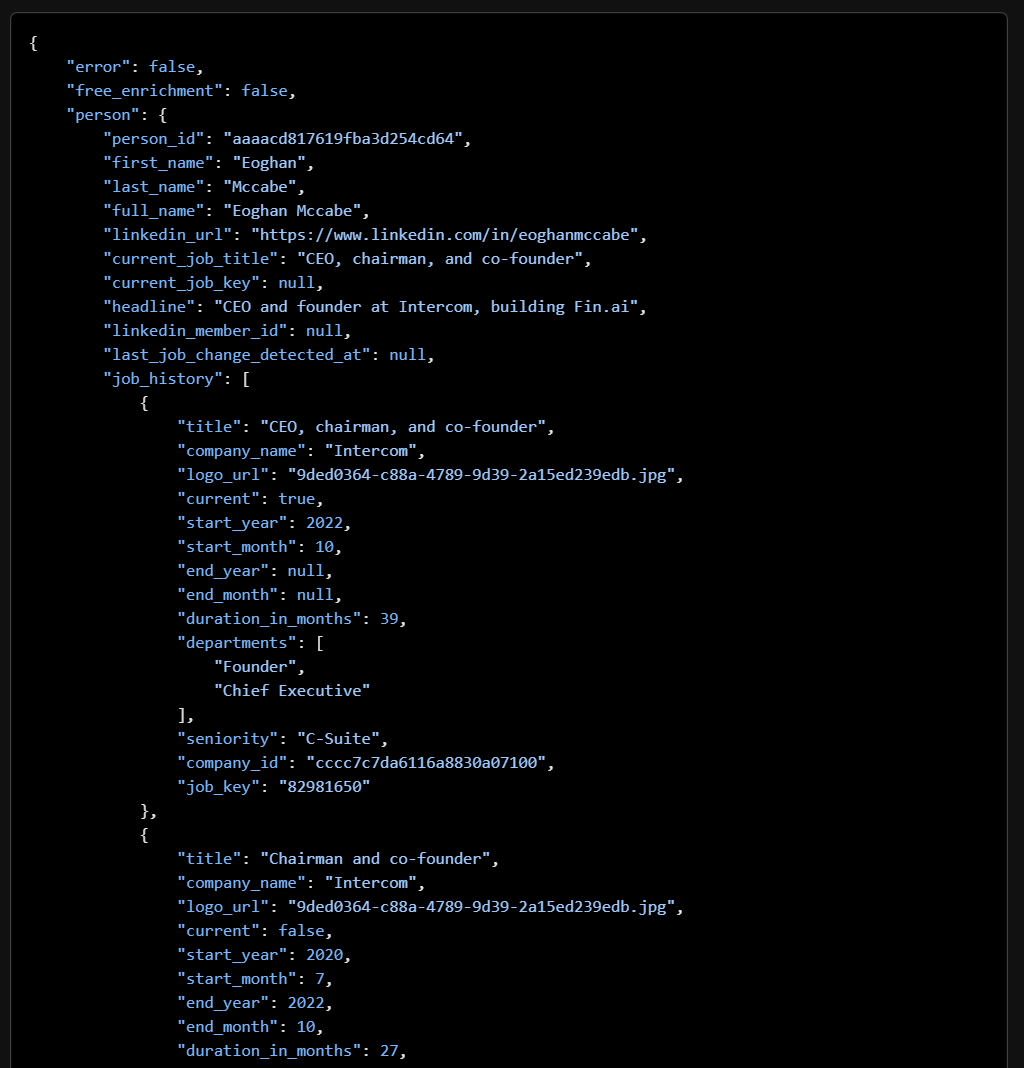
Your scoring model needs 10 accurate fields, not 40 stale ones. Prospeo returns 50+ verified data points per contact - title, revenue, headcount, tech stack, intent - with a 92% match rate and 7-day refresh cycle. That's the enrichment engine your fit scores actually deserve.
Stop scoring leads on data that expired last quarter.
7 Scoring Mistakes Enrichment Fixes
What enrichment solves:
- Not involving Sales in scoring design. Enriched data gives both teams a shared vocabulary - verified titles and company sizes, not form-fill guesses.
- Needless complexity. Enrichment lets you score on 8-10 high-quality fields instead of 40 noisy ones.
- Demanding perfect titles. Enrichment normalizes "Head of Growth" and "VP Growth Marketing" into the same seniority bucket.
- Scoring email opens. Bot clicks and spam filters make open tracking unreliable. Enrichment-derived intent signals are far more trustworthy.
- Fantasizing about data you don't have. If your CRM's "Industry" field is blank on 60% of records, you can't score on it. Enrichment fills those gaps.
- Overthinking demo leads. If someone requests a demo, route them. Period. Enrichment helps you prioritize the queue, not gatekeep it.
- Letting stale records pile up. Weekly enrichment flags records where the contact has left or the company has changed materially.
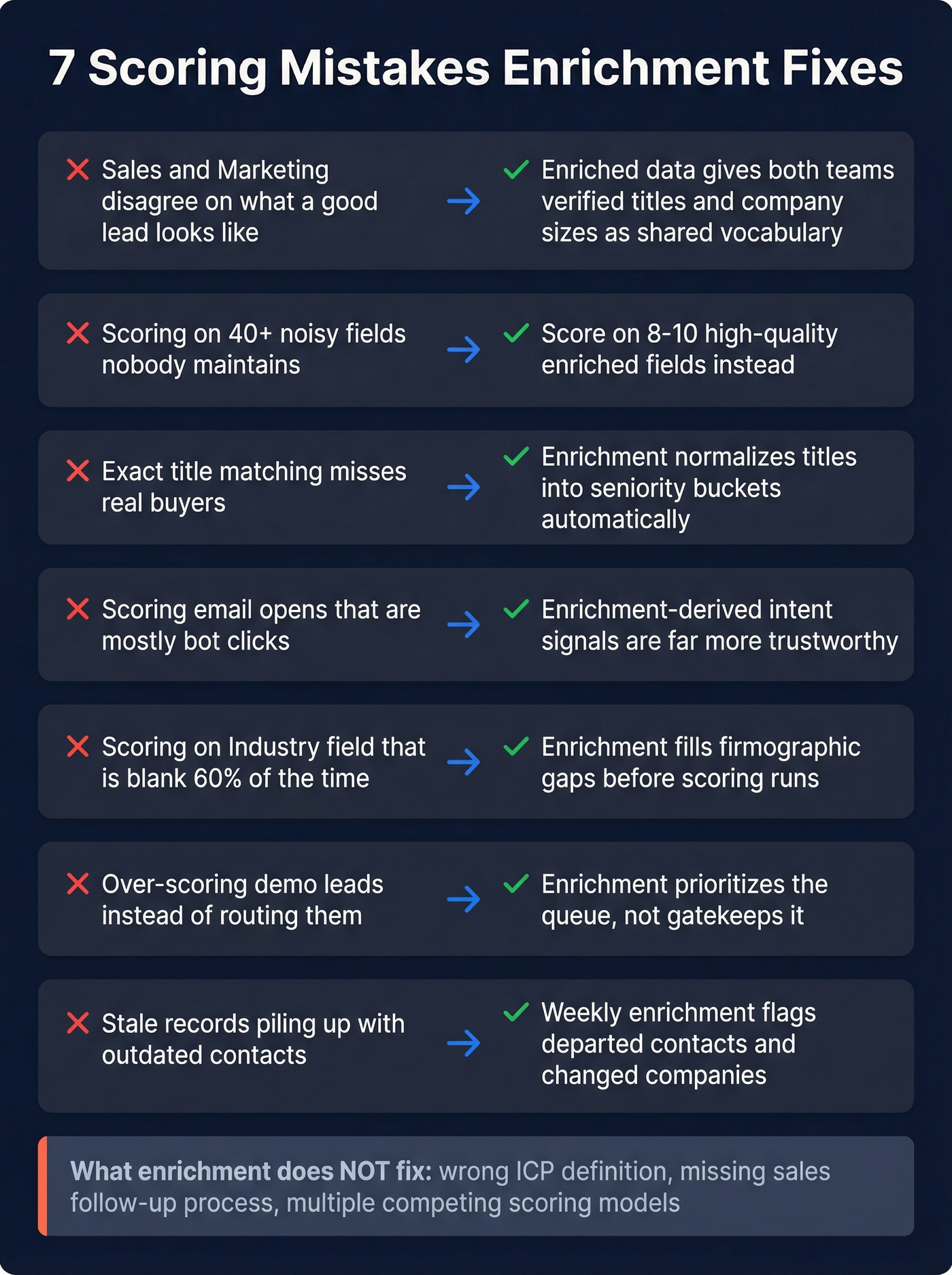
What enrichment doesn't fix:
Wrong ICP definition - enriching the wrong companies just gives you detailed data about the wrong people. No sales follow-up process - the best score doesn't matter if leads sit for three days. And multiple competing models - one scoring model per business, or you'll drown in conflicting priorities.
Rule-Based vs. Predictive Scoring
| Rule-Based | Predictive (ML) | |
|---|---|---|
| Setup | Manual point values | Trained on outcomes |
| Signals | 10-20 fields | Hundreds of signals |
| Maintenance | Quarterly tuning | Periodic retraining |
| Data needed | Any CRM | 1,000+ closed-won |
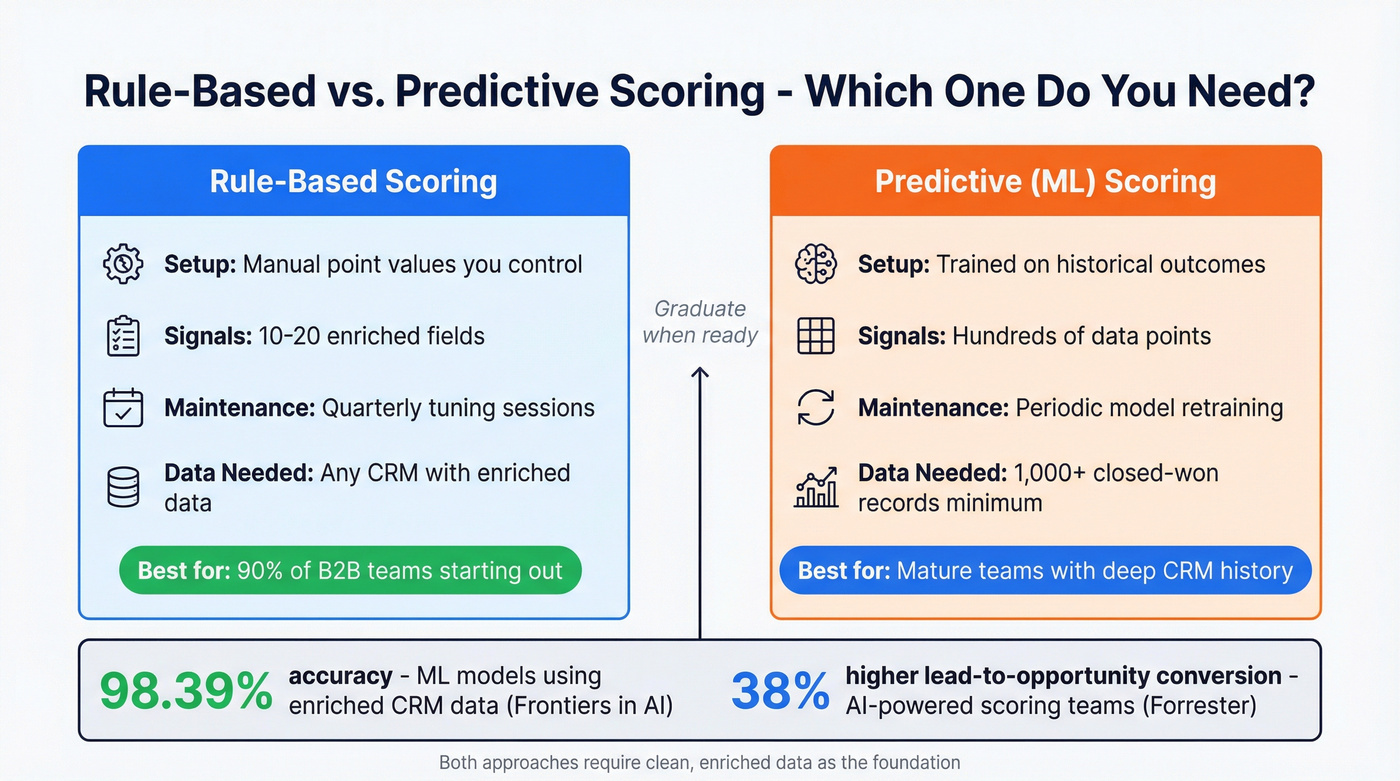
Here's our take: 90% of B2B teams should start rule-based and graduate to predictive after they've accumulated 1,000+ closed-won records. The matrix above will outperform a poorly trained ML model every time.
Research published in Frontiers in Artificial Intelligence found ML models using enriched CRM data achieved 98.39% accuracy predicting B2B lead conversions. Forrester's research shows 38% higher lead-to-opportunity conversion and 28% shorter sales cycles for teams using AI-powered scoring. But those results require clean, enriched data as the foundation. Garbage in, garbage out - even with machine learning.
Enrichment Tools for Scoring
Your scoring model needs a data source. Here's what's worth evaluating in 2026.
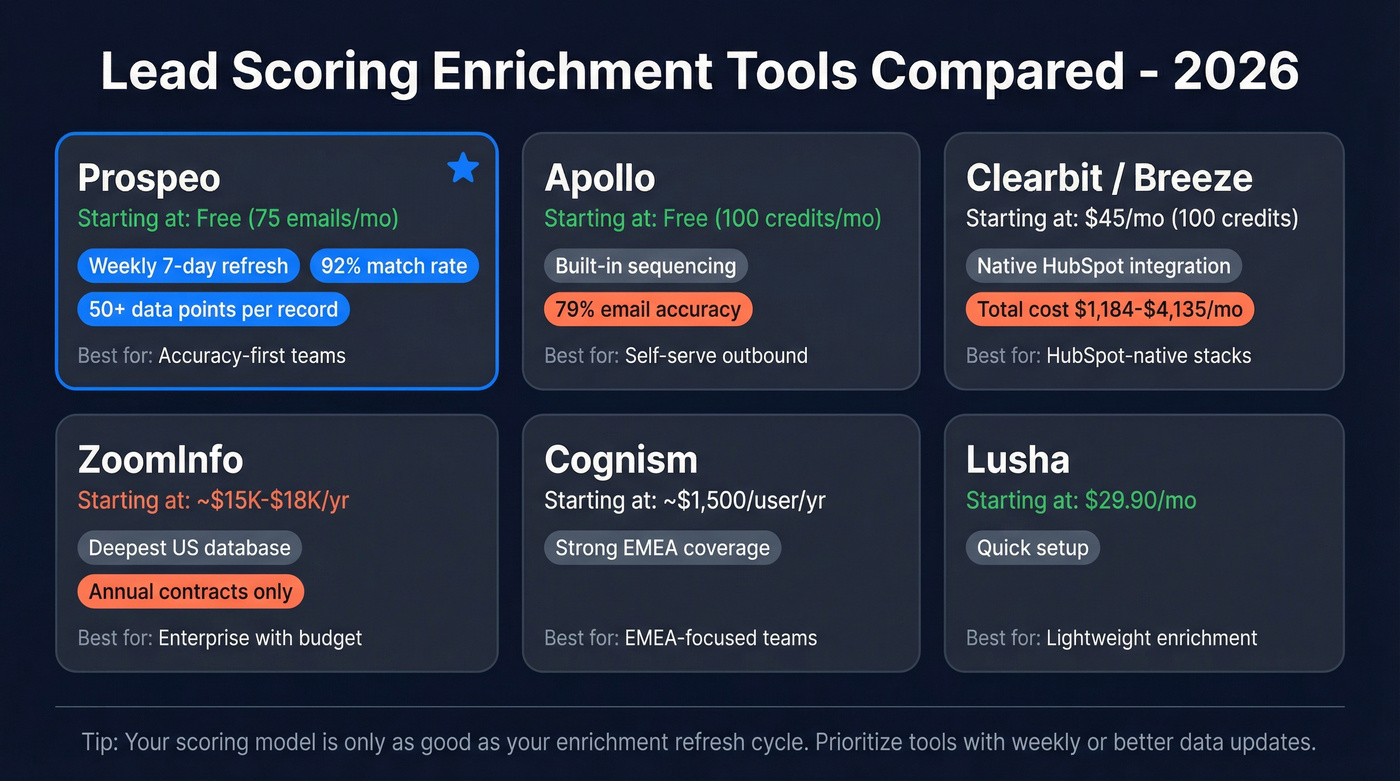
| Tool | Starting Price | Best For |
|---|---|---|
| Prospeo | Free (75 emails/mo) | Accuracy-first teams needing weekly-refresh enrichment |
| Apollo | Free (100 credits/mo) | Self-serve outbound |
| Clearbit/Breeze | $45/mo (100 credits, annual) | HubSpot-native stacks |
| ZoomInfo | ~$15K-$18K/yr | Enterprise with budget |
| Cognism | ~$1,500/user/yr | EMEA-focused teams |
| Lusha | $29.90/mo | Lightweight enrichment |

Prospeo
The 7-day refresh cycle is what matters for scoring - your fit scores stay current week to week, not month to month. The enrichment API returns 50+ data points per record with a 92% match rate, covering title, seniority, company size, tech stack, and intent signals across 15,000 Bombora topics. With 98% email accuracy and 300M+ professional profiles, the data feeding your scoring model is verified rather than guessed. Native integrations with HubSpot, Salesforce, Clay, and Make mean enriched data flows directly into scoring fields without middleware. Pricing starts free, scales at roughly $0.01 per email, no contracts.
Apollo
The best free starting point for teams building their first scoring model. 100 credits per month free, paid plans from $59/user/month. Apollo's built-in sequencing means you can act on scores without switching tools, though email accuracy sits around 79% - noticeably lower than what we've seen from dedicated verification providers.
Clearbit (Breeze Intelligence)
If your entire stack is HubSpot, this is the path of least resistance - enrichment that writes directly to HubSpot properties with no middleware. Starts at $45/mo for 100 credits on an annual plan, but that's on top of your HubSpot subscription. Total platform cost runs $1,184-$4,135/mo depending on tier.
Skip ZoomInfo If You Only Need Enrichment
Professional tier runs $15K-$18K/year for 1-3 seats, annual contracts only. The US database depth is unmatched, but you're paying for a full GTM platform. The consensus on r/sales is pretty consistent: great data, painful contracts. If you're spending $15K+ on ZoomInfo just for enrichment, you're overpaying by 10x.
Cognism
Strong for EMEA-focused teams. Diamond-verified mobile numbers are useful for European outreach where direct dials matter more than email. Expect $15K-$25K/year for small teams.
Lusha
Affordable at $29.90/mo, good for individual contributors enriching small batches. Skip it if you need systematic, API-driven enrichment at scale.
The 48-Hour Implementation Blueprint
You don't need a quarter-long project. Here's how to wire enrichment-powered scoring into your CRM in two days.
Day 1: Connect and map. Hook your enrichment source to your CRM. Map enriched fields - title, company size, industry, tech stack - to your CRM properties. A high match rate means most records come back enriched on the first pass. Then assign point values using the matrix above: CEO = +10, VP = +7, target industry = +8.
Day 1 (afternoon): Set thresholds. A1 and A2 leads go to sales immediately. B1 leads enter a fast-track nurture. Everything else stays in marketing. Configure Slack or email notifications for leads that cross your high-score threshold - use Make or Zapier if your CRM doesn't support native alerts.
Day 2: Test it. Run a 2-week A/B test comparing conversion rates and time-to-contact before and after enrichment-powered scoring. We've seen teams cut qualification time by 30-40% in the first two weeks, which alone justifies the setup effort.
Stale enrichment kills routing speed, and slow routing kills conversion. Prospeo's 7-day data refresh keeps your CRM current - verified emails at 98% accuracy, 125M+ direct dials, and intent signals across 15,000 topics. At $0.01 per email, recurring enrichment finally makes financial sense.
Feed your scoring matrix data that's actually fresh.
Lead Scoring Enrichment FAQ
What's the difference between lead scoring and lead enrichment?
Scoring assigns a numerical value based on purchase likelihood; enrichment fills in missing data - title, company size, tech stack, intent signals - so the scoring model has accurate inputs. One is the math, the other is the data that makes the math reliable.
How often should enrichment data refresh?
Do I need predictive scoring or is rule-based enough?
Start rule-based if you have fewer than 1,000 closed-won records. A fit + intent matrix with 10 enriched fields will outperform a poorly trained ML model. Graduate to predictive after 2-3 quarters of clean, enriched data - Forrester's research backs this progression.
What's a good free tool for enrichment-powered scoring?
Prospeo's free tier includes 75 email credits and 100 Chrome extension credits monthly with full enrichment - enough to validate a scoring model on a small pipeline. Apollo offers 100 free credits but with lower email accuracy (79% vs. 98%).
How much does lead scoring enrichment improve conversion rates?
Teams using enriched scoring data typically see MQL-to-SQL conversion jump from 25-35% to 40-50%, with 25% shorter sales cycles and 30% larger deal sizes. The exact lift depends on your baseline data quality - the worse your current data, the bigger the improvement. HubSpot's benchmarking data tracks similar ranges across their customer base.