

Cold, Warm, and Hot Leads: Stop Guessing Temperature and Start Measuring It
The average B2B organization generates 1,877 leads per month at a mean cost of $198.44 each. That's roughly $373K per month flowing into your pipeline. Most teams treat that investment like a garage sale - everything gets the same price tag, the same follow-up cadence, the same rep attention.
The problem isn't volume. It's that classifying cold, warm, and hot leads is treated as a vibe check instead of a measurement. A rep calls a lead "hot" because they had a good conversation. Marketing calls one "warm" because someone downloaded a PDF. Nobody agrees on definitions, nobody scores anything, and the pipeline forecast becomes fiction.
What Are Cold, Warm, and Hot Leads?
Lead temperature is a function of two variables - ICP fit and demonstrated interest. A lead can match your ideal customer profile perfectly and still be ice cold if they've never heard of you. Conversely, someone who downloads every whitepaper but works at a two-person agency with no budget isn't warm - they're just curious.
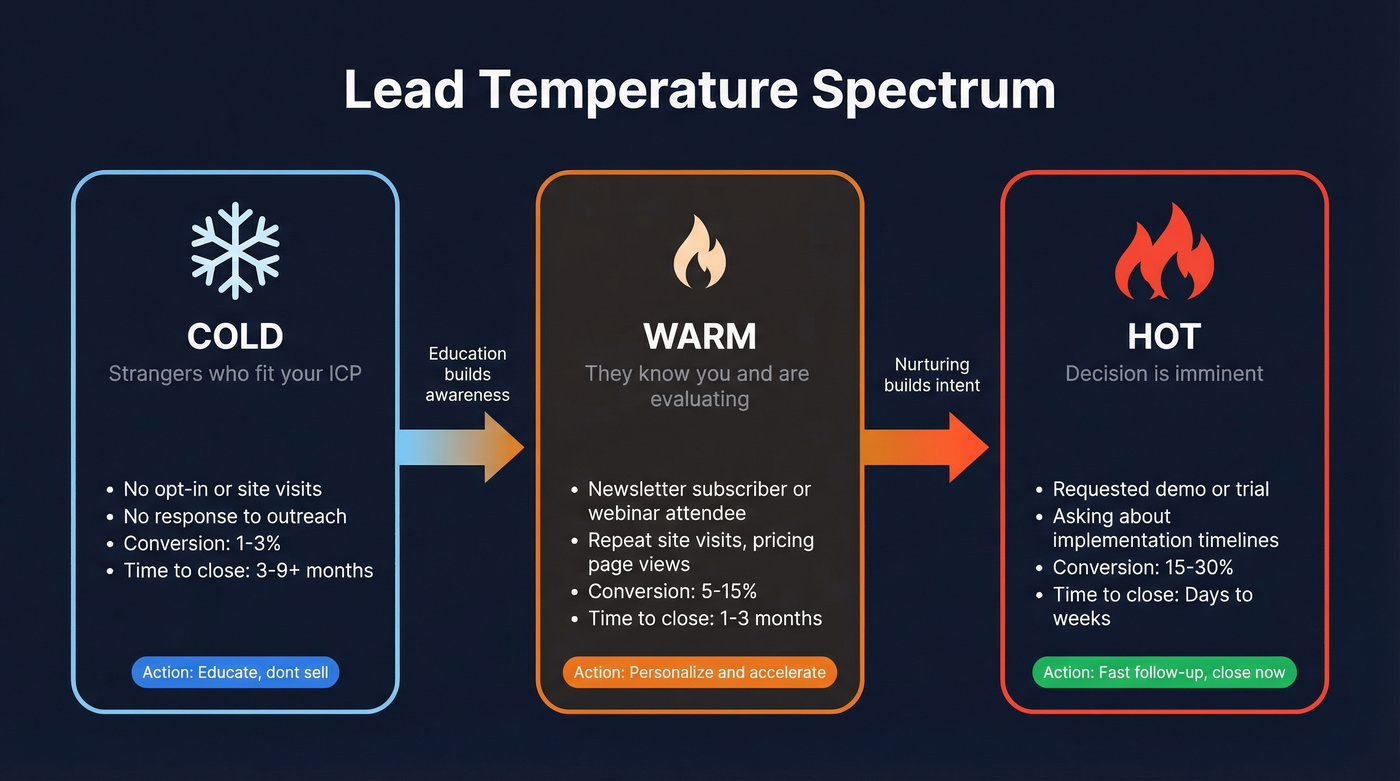
So what does each temperature actually look like?
Cold leads are strangers who happen to fit the profile. No opt-in, no site visit, no response to outreach. Your job is education, not selling.
Warm leads know you exist and they're evaluating. They've subscribed to your newsletter, attended a webinar, or keep visiting your pricing page. The engagement is real, but buying intent is still forming.
Hot leads ask about implementation timelines, request demos, and compare you against a competitor. The decision is imminent - weeks, not months. "Hot" should mean a deal is closing soon, not that someone seemed enthusiastic on a call three weeks ago.
| Lead Type | ICP Fit Required | Behavioral Signals | Conversion Range | Typical Time-to-Close |
|---|---|---|---|---|
| Cold | Yes | None or minimal | 1-3% | 3-9+ months |
| Warm | Yes | Opt-ins, site visits, content | 5-15% | 1-3 months |
| Hot | Yes | Demo, pricing, negotiation | 15-30% | Days to weeks |
When you compare cold versus warm versus hot side by side, the gap in conversion rates makes the case for segmentation on its own.
Why Lead Temperature Matters
The average qualified-lead conversion rate across 14 industries is just 2.9%. Without segmentation, you treat that 2.9% as a fixed reality instead of a number you can move.
Here's what actually happens when teams skip classification: 61% of B2B marketers send all leads directly to sales, but only 27% of those leads are actually qualified. Reps waste hours chasing prospects who aren't ready to buy while hot leads cool off waiting for a callback. And 97% of people ignore cold calls, so the reps who do reach cold prospects mostly hear dial tones.
Let's be honest - classification isn't a nice-to-have. It's the difference between a pipeline forecast your CFO can trust and one that's mostly fiction.
How to Score Leads by Temperature
Build Your Scoring Model
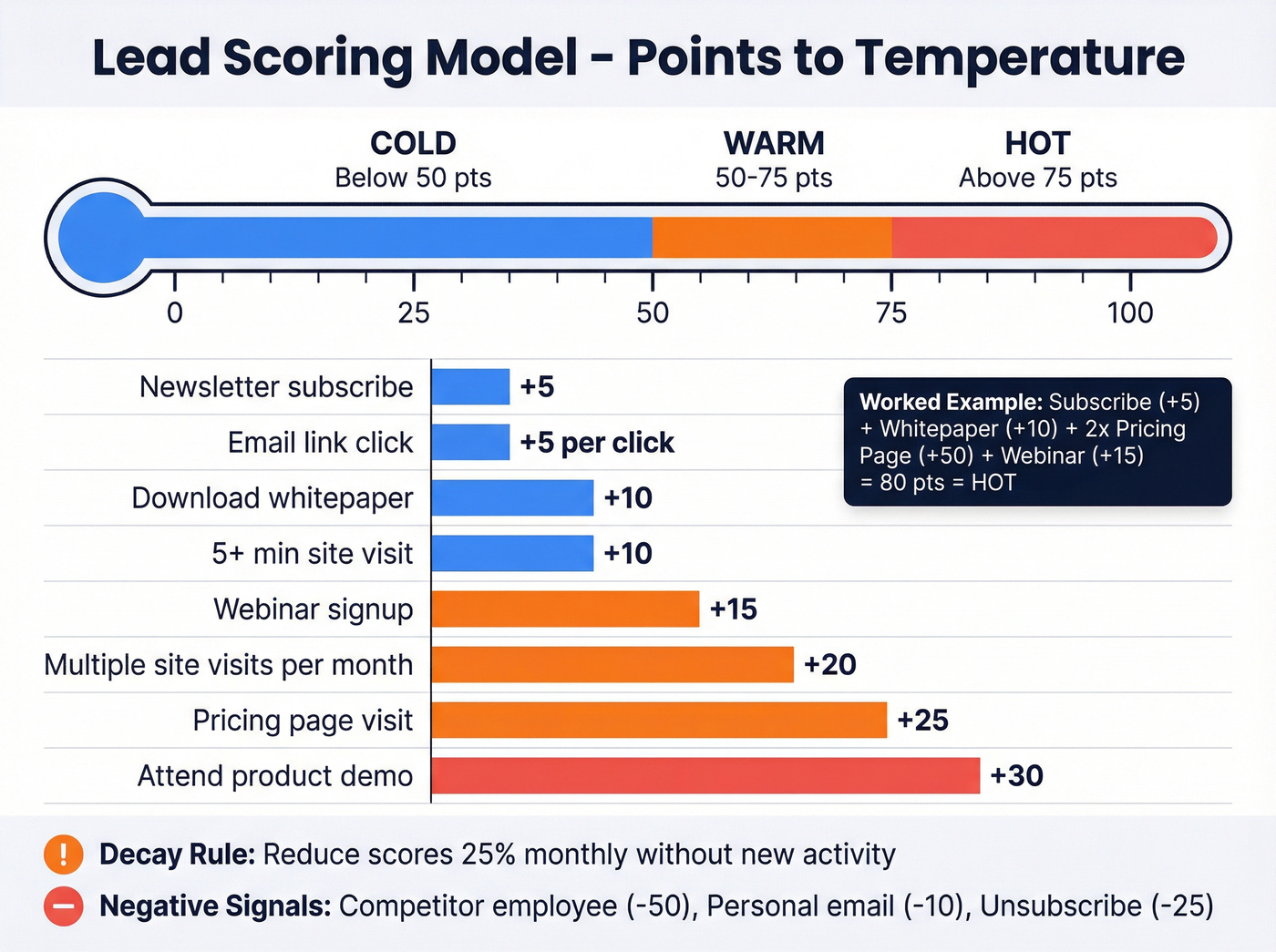
Gut feel doesn't scale. You need a point-based system that turns behaviors into numbers. Here's a framework adapted from UserGems:
| Action | Points |
|---|---|
| Newsletter subscribe | +5 |
| Download whitepaper | +10 |
| Webinar signup | +15 |
| Multiple site visits/month | +20 |
| Pricing page visit | +25 |
| Attend product demo | +30 |
| 5+ min site visit | +10 |
| Email link click | +5 per click |
Thresholds: above 75 points = hot (sales contacts immediately), 50-75 = warm (nurture sequence), below 50 = cold (education cadence).
In our experience, teams that start with 5-7 criteria outperform those who try to score everything on day one. You don't need 30 rules - you need the right five. A worked example: a lead subscribes to your newsletter (+5), downloads a whitepaper (+10), visits your pricing page twice (+50), and attends a webinar (+15). That's 80 points. Hot. Sales calls today.
Add Decay and Negative Scoring
A score without decay is a lie. Someone who visited your pricing page six months ago isn't hot anymore. Reduce scores by 25% monthly without new activity. A lead who was "warm" at 60 points drops to 45 in one month and 34 in two - automatically reclassified as cold.
Negative scoring matters just as much. A competitor's employee downloads your case study? That's a -50, not a +10. Personal email address instead of corporate? -10. Unsubscribe from your newsletter? -25. Set your MQL threshold at the top 20% of leads by score.
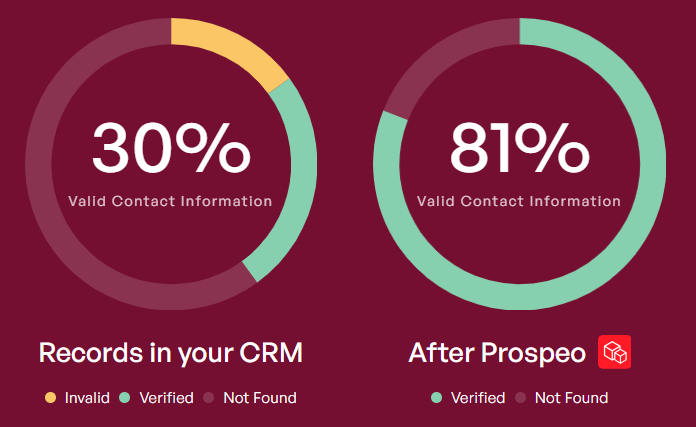
One thing that kills scoring models: garbage input data. If your CRM records have outdated emails and wrong job titles, your scoring criteria fire on phantom signals. We've seen teams rebuild their entire scoring model only to realize the real problem was stale contact records. Enrich CRM data with verified information so your model works with accurate inputs - tools like Prospeo's enrichment API return 50+ data points per contact at a 92% match rate, which gives your scoring engine something real to work with.

Stale CRM data turns hot leads cold. Prospeo enriches every contact with 50+ verified data points at a 92% match rate - so your scoring model fires on real signals, not phantom ones. Data refreshes every 7 days, not the 6-week industry average.
Stop scoring leads against outdated records. Start with data you can trust.
Match the Right Framework to Each Lead Type
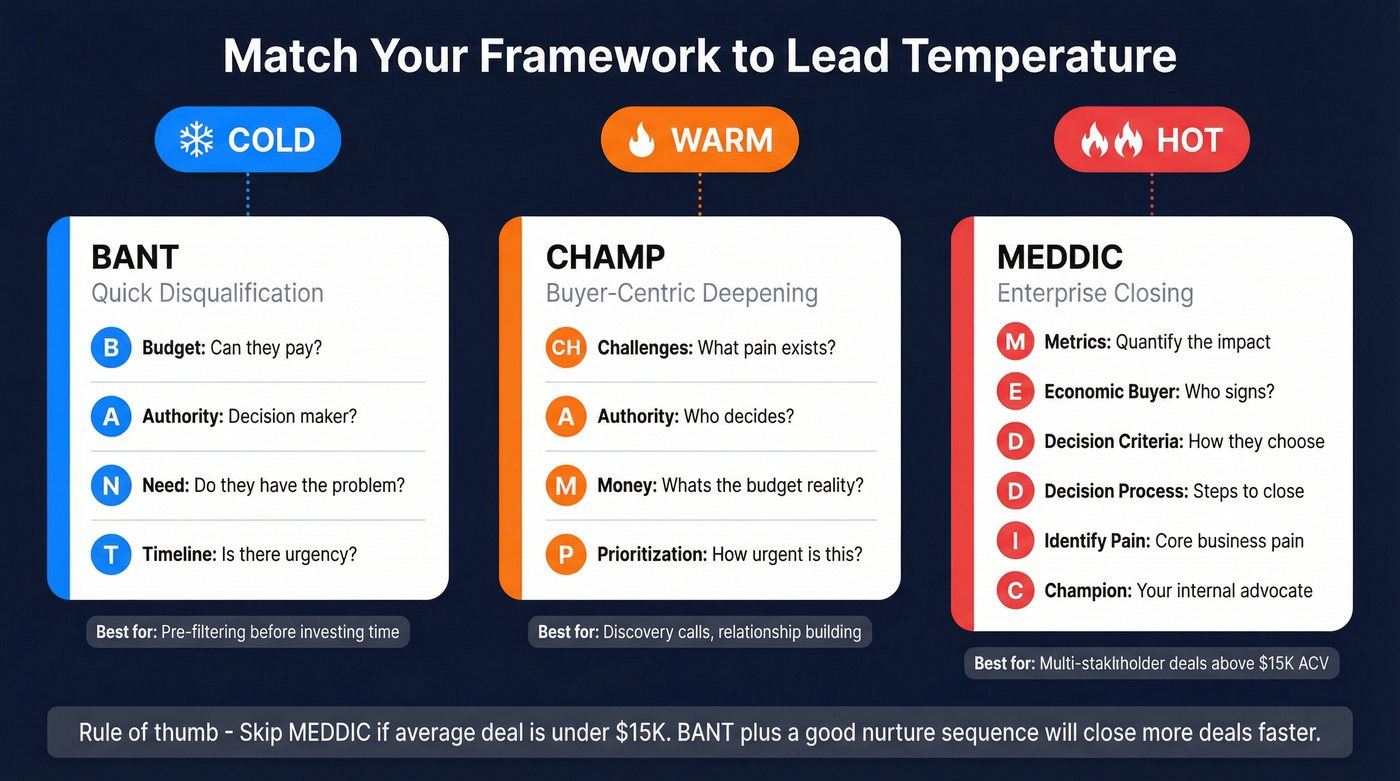
Not every lead needs the same qualification conversation. Map your framework to the temperature.
| Framework | Best For | Lead Temperature | When to Use |
|---|---|---|---|
| BANT | Quick disqualification | Cold | Pre-filter before investing time |
| CHAMP | Buyer-centric deepening | Warm | Discovery calls, challenge-first |
| MEDDIC | Enterprise closing | Hot | Multi-stakeholder, high-ACV |
BANT (Budget, Authority, Need, Timeline) works as a fast pre-filter for cold leads. Can they pay? Are you talking to a decision-maker? Do they have the problem? Is there urgency? If any answer is no, move on. BANT is too shallow for complex deals, but it's perfect for disqualifying quickly.
CHAMP flips the script - start with Challenges, then Authority, Money, Prioritization. It's more buyer-centric and works well for warm leads where you're deepening the relationship. You already know they're interested; now you need to understand their pain.
MEDDIC is the enterprise closer's framework. Modern buying groups include 6-10+ stakeholders, and MEDDIC forces you to map the decision process, identify champions, and quantify the economic impact. Reserve it for hot leads where the deal size justifies the effort.
Skip MEDDIC if your average deal is under $15K. BANT plus a good nurture sequence will close more deals faster than a heavyweight framework applied to lightweight deals.
What to Do With Each Lead Type
Cold Leads - Multi-Touch, Content-First
Cold outreach is a volume game with a quality floor. It takes an average of 5 touches to engage a prospect and roughly 9 for executives. Your first email isn't supposed to close - it's supposed to earn the second touch.
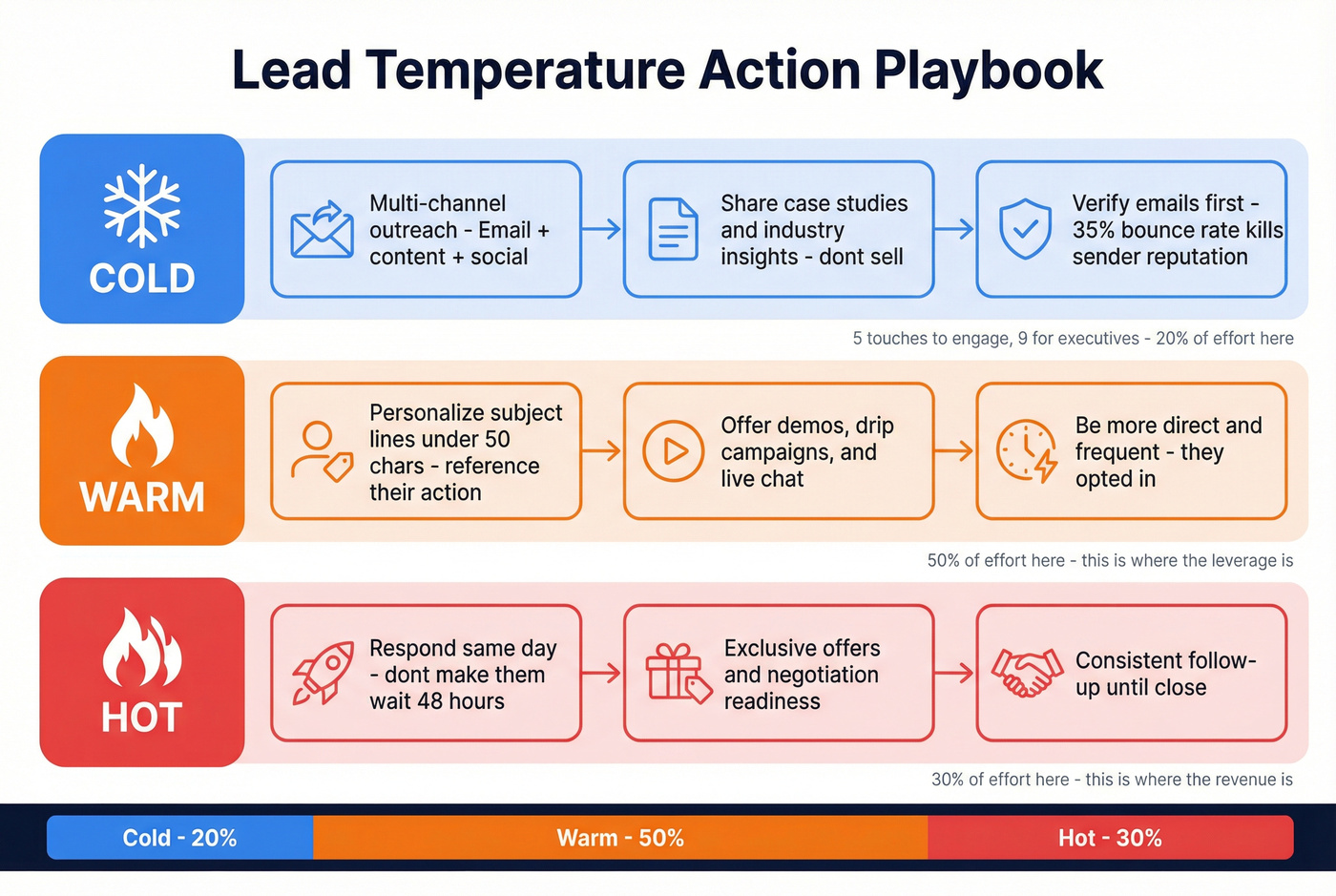
Go multi-channel: email plus content plus social. Don't sell - help. Share a relevant case study, a benchmark they'd care about, an insight about their industry. The 97% cold call ignore rate tells you everything. If your only channel is the phone, you're dead on arrival.
Here's the thing - your cold outreach cadence is only as good as your contact data. If 30% of emails bounce on the first sequence, your sender reputation tanks and even the good addresses stop landing in inboxes. Verify before you send, every time. One of our customers, Meritt, dropped their bounce rate from 35% to under 4% just by running lists through verification before hitting send - and their pipeline tripled as a result.
Warm Leads - Personalize and Accelerate
Warm leads have given you permission. They've opted in, clicked, attended, or responded. Now make it count.
33% of recipients open emails based on the subject line alone - keep yours under 50 characters and reference the specific action they took. "Following up on your webinar question" beats "Quick check-in" every time. Offer demos, drip campaigns, and live chat. These leads are evaluating; give them reasons to choose you.
One compliance advantage worth noting: when someone opts in, you can be more direct, more frequent, and more specific in your messaging than you can with pure cold outreach. Use that latitude.
Hot Leads - Fast Follow-Up, Close
Speed kills deals - in a good way. Hot leads are comparing options right now. Exclusive offers, consistent follow-up, and negotiation readiness are the playbook. Don't make them wait 48 hours for a proposal.
A resource allocation split that works for most teams: 20% of effort on cold prospecting (filling the top of funnel), 50% on warm nurturing (where the leverage is), and 30% on hot closing (where the revenue is). If you're spending 80% of your time on cold outreach and wondering why pipeline stalls, this is why.
Three Mistakes That Create Fake Pipeline
1. No clear ICP definition. Without a documented ICP, every lead looks "pretty good" to someone. The result is inconsistent pipeline quality, longer sales cycles, and win rates that swing wildly quarter to quarter. Define your ICP before you score anything.
2. No structured qualification framework. When qualification is subjective - "I think they're interested" - you get unpredictable forecasts and wasted effort. Pick BANT, CHAMP, or MEDDIC. Use it consistently. Train reps on it. We've seen teams cut their average sales cycle by weeks just by standardizing how they qualify.
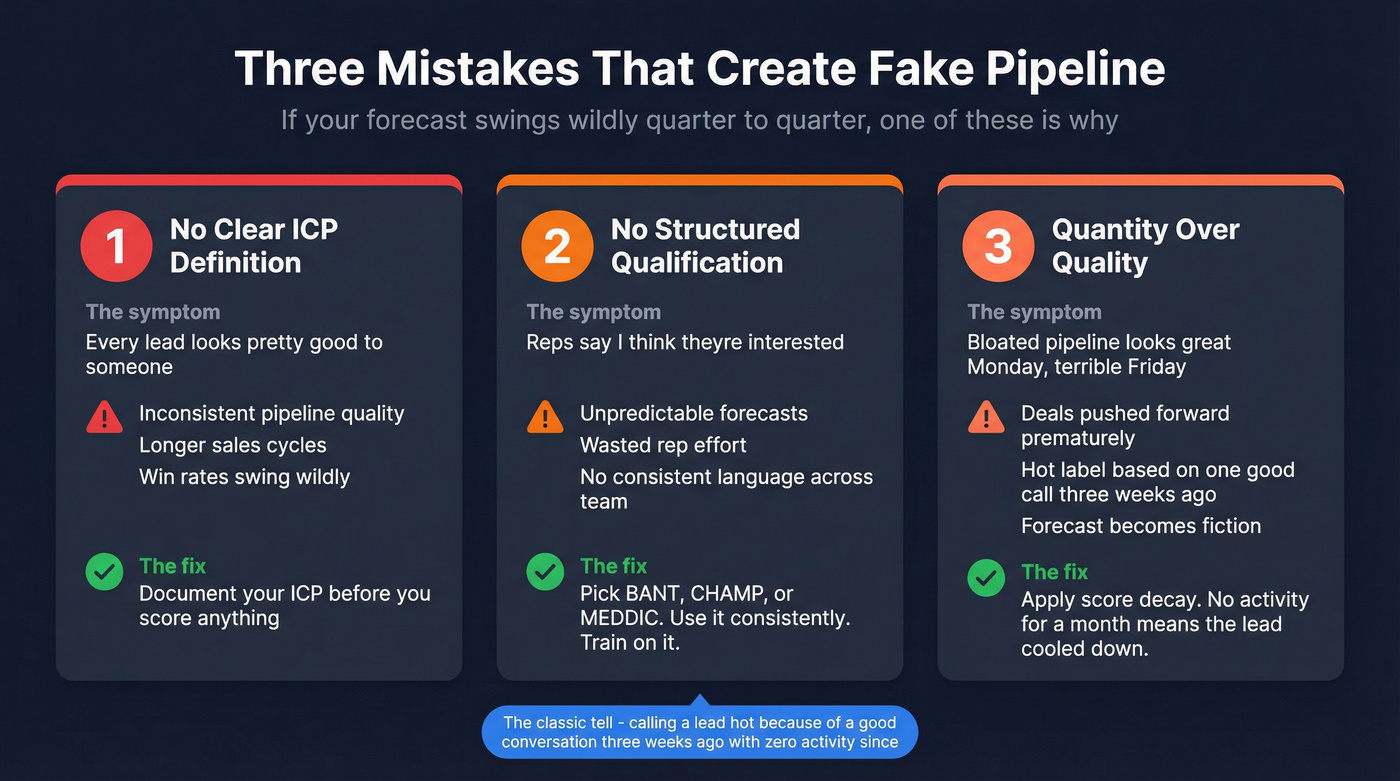
3. Quantity over quality. Bloated pipelines feel good in Monday's forecast meeting and terrible in Friday's revenue review. Reps push deals forward prematurely because the pipeline "needs to look healthy." The classic tell: calling a lead "hot" because someone had a good conversation three weeks ago. If there's been no activity since, that lead decayed to warm - or cold - and your forecast is lying to you.
Cold outreach only works when you reach real inboxes. Prospeo delivers 98% email accuracy and 125M+ verified mobile numbers with a 30% pickup rate - so your 9-touch sequences actually land. At $0.01 per email, bad data is no longer an excuse.
Turn cold leads into warm conversations with contact data that connects.
FAQ
Can a hot lead turn cold?
Absolutely. Lead temperature isn't permanent - it's a snapshot. Without new engagement, a hot lead's score should decay by roughly 25% per month. A lead who requested a demo eight weeks ago and went silent isn't hot anymore. Re-classify continuously, or your pipeline becomes a graveyard of optimistic labels.
How often should I re-score leads?
Monthly at minimum, real-time if your CRM supports it. Platforms like HubSpot and Salesforce can trigger score updates on behavioral events automatically. Stale scores produce stale forecasts, and stale forecasts produce bad quota setting and bad board meetings.
What's the fastest way to warm up cold leads?
Start with verified contact data so your outreach actually lands, then layer a multi-touch cadence with relevant content. Expect 5-9 touches across email, content, and social before most cold leads engage. Keep bounce rates under 4% so every touch counts.
What are the main types of leads in sales?
Most teams classify leads into three tiers based on engagement: cold, warm, and hot. Cold leads haven't interacted with your brand, warm leads have shown interest through actions like content downloads, and hot leads are actively evaluating a purchase. Layering a scoring model on top turns subjective labels into measurable, actionable signals.