


LogValid vs Lusha: Verification or Enrichment? (2026)
LogValid verifies emails. Lusha finds contacts. Comparing them is like comparing a spell-checker to a search engine - they solve fundamentally different problems, and with roughly 70% of B2B data going stale every year, you probably need both capabilities. The real question is whether you need two tools or one.
30-Second Verdict
- Use LogValid if you already have a contact list and need to clean it before outreach. Pure verification at $0.0005 per email.
- Use Lusha if you need to find new contacts - emails, phone numbers, company data - for outbound prospecting (see sales prospecting techniques).
What Each Tool Actually Does
LogValid
LogValid is a focused verification platform. You feed it emails, it tells you which ones are real. It handles real-time verification, bulk uploads, API integration, catch-all detection, disposable email filtering, and spam-trap identification. One GoodFirms reviewer noted that the "clear categorization of risk levels" made it easy to prioritize list segments - and that tracks with what we've seen from similar tools.
Pricing is remarkably cheap: $1 per 2,000 credits, which works out to $0.0005 per verification, with 500 free credits to start.
The trust signal picture is thin, though. LogValid was founded in 2024 and holds perfect 5.0 scores on SourceForge and GoodFirms - but that's across just 5 total reviews. Trustpilot shows 3.7 from a single review. The tool works, but the track record is still being written.
Lusha
Lusha is a sales intelligence platform with a much broader scope. Its Chrome extension reveals emails and phone numbers from professional profiles, with direct Salesforce and HubSpot integrations. Lusha also markets "list verification" workflows and explicitly claims it can replace dedicated email verification tools.
Credits burn fast, though: 1 credit per email reveal, 10 per phone number. The free tier gives you 70 credits/month. Paid plans run around $29.90/mo (Pro) to $69.90/mo (Premium), with the Scale plan requiring a sales call and gating advanced features like intent data and API access. Lusha's database covers 280M+ business profiles, and it's rated 4.3/5 on G2 across 1,400+ reviews.
The catch: Reddit users on r/sales consistently flag outdated phone numbers as a pain point, and real-world email accuracy runs around 81%. Solid for data enrichment, not verification-grade.
Side-by-Side Comparison
| Feature | LogValid | Lusha | Prospeo |
|---|---|---|---|
| Primary function | Verification | Contact discovery | Both |
| Database size | N/A | 280M+ profiles | 300M+ profiles |
| Verification depth | Catch-all, spam trap | Built-in list validation | 5-step, catch-all |
| Pricing model | Usage-based | Credit-based | Credit-based |
| Cost per email | $0.0005/verify | 1 credit/reveal | ~$0.01/verified |
| Free tier | 500 credits | 70 credits/mo | 75 emails/mo |
| Best for | List cleaning | Finding contacts | Find + verify |
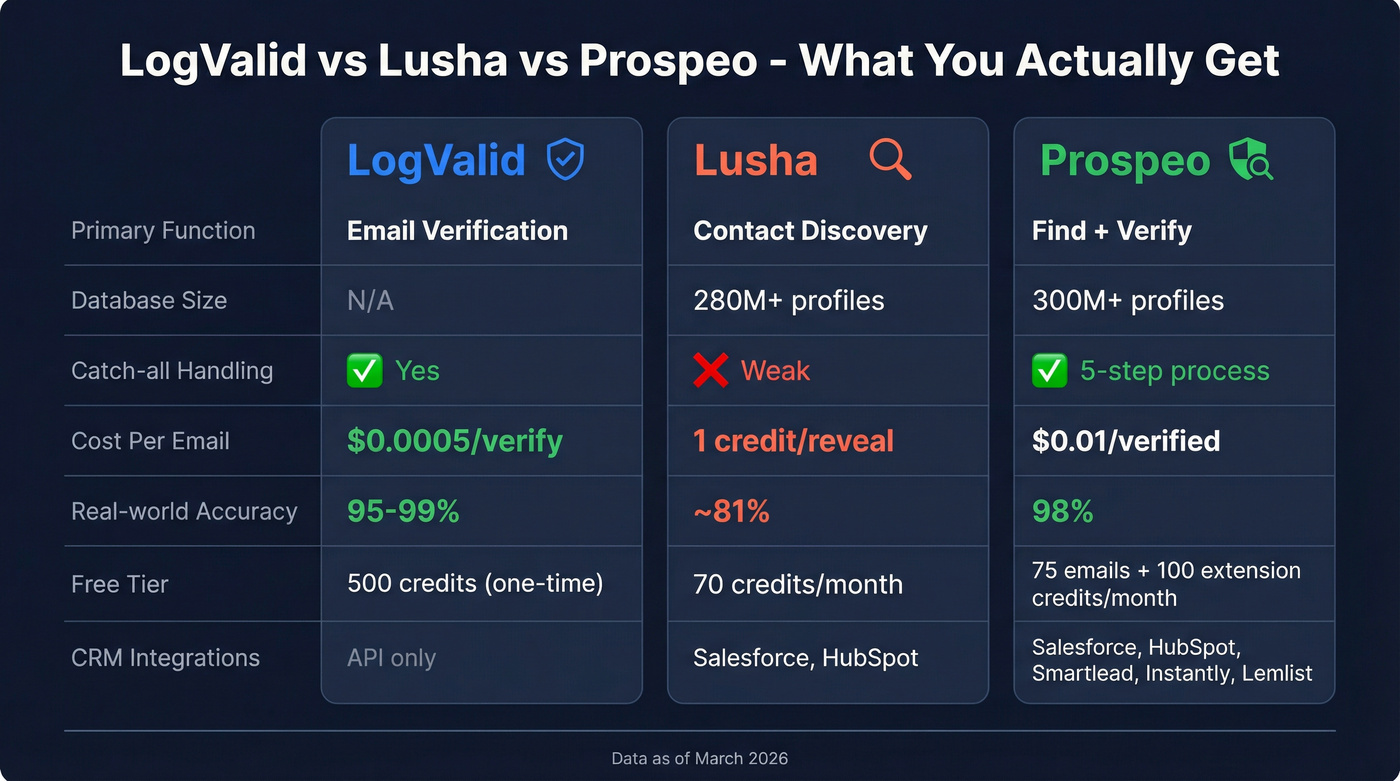
That cost column tells the story. LogValid is absurdly cheap for pure verification. Lusha's pricing reflects the fact that you're paying for discovery, not just validation. Prospeo sits in between - you get both finding and verifying in one transaction for about a penny.
For more context on how these tools fit into a modern stack, compare them against other SDR tools and outbound lead generation tools.

LogValid verifies at $0.0005. Lusha finds at 1 credit per reveal. Prospeo finds AND verifies in one step - 300M+ profiles, 5-step verification with catch-all handling, 98% email accuracy, all for ~$0.01 per verified contact.
Stop stitching two tools together for one workflow.
Can Lusha Replace a Verifier?
Lusha claims yes. They say they replace dedicated verification tools entirely, and they market 95% email accuracy. Real-world tests tell a different story.
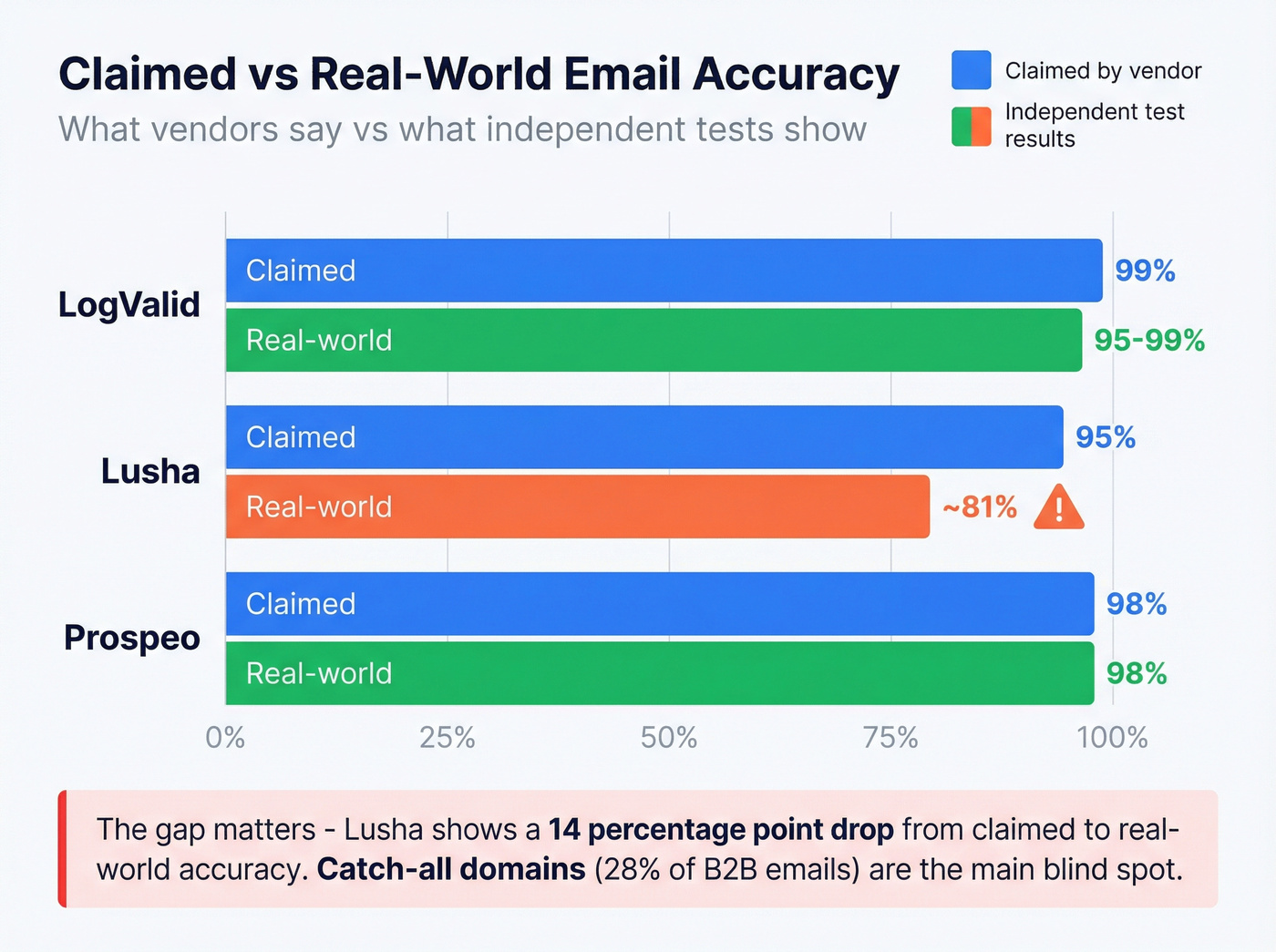
One Reddit user reported getting only 30% verified results when running known-good contacts through Lusha. Independent benchmarks put Lusha's real-world accuracy around 81%. Dedicated verification tools hit 95-99.5% in the same tests.
Here's the thing: Lusha's built-in validation doesn't handle catch-all domains with the rigor of a dedicated verifier. In a real B2B dataset, catch-all domains represent about 28% of all emails. That's a massive blind spot. We've seen this pattern repeatedly - enrichment tools claim verification capabilities, but the catch-all handling just isn't there.
Lusha is a great finder. It's not a replacement for verification.
When to Use Each Tool
LogValid makes sense when you already have contacts from any source - scraped lists, event signups, aging CRM records - and need to clean them before hitting send. (If you’re troubleshooting bounces, see email bounce rate.)
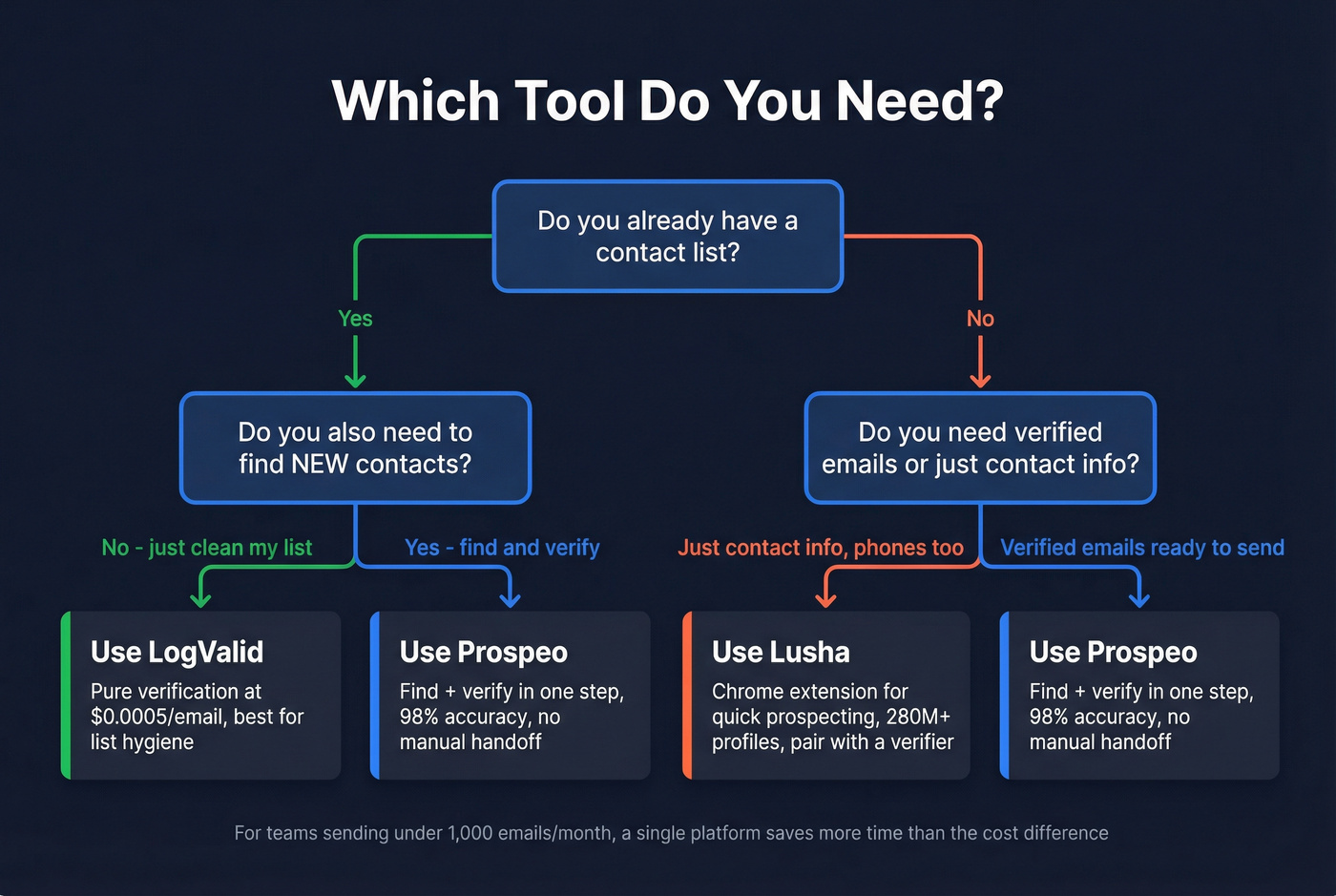
Lusha makes sense when you're building outbound lists from scratch, enriching thin CRM records with phone numbers, or need a quick Chrome extension workflow for one-off prospecting.
You can pull contacts from Lusha, then run them through LogValid before launching sequences. The workflow works, but it means managing two tools, two billing systems, and a manual handoff step. For teams sending under 1,000 emails a month, that overhead rarely justifies the savings.
The Single-Platform Alternative
Let's be honest: if you're managing two subscriptions for what should be one workflow, something's off. Prospeo eliminates the seam between finding and verifying contacts entirely.
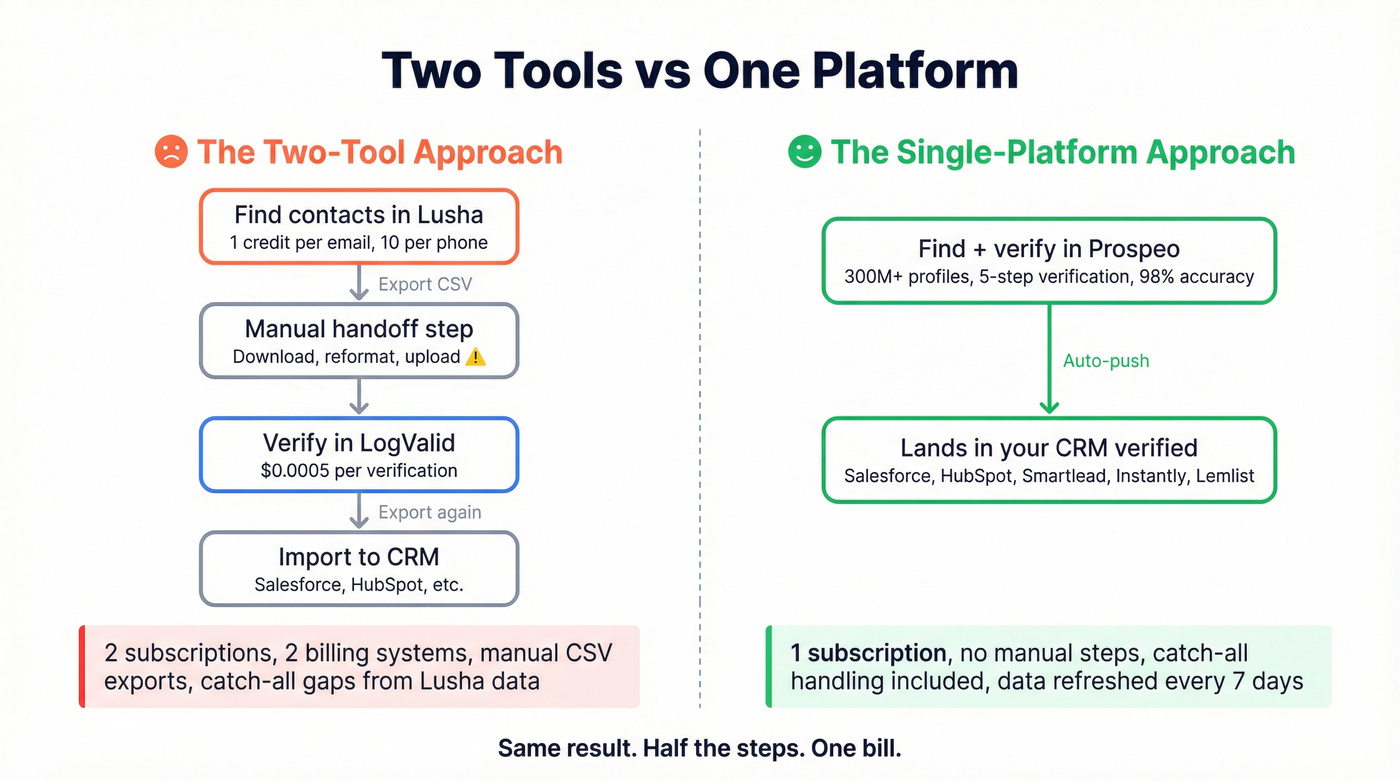
The database covers 300M+ professional profiles with 143M+ verified emails, all running through a 5-step verification process that includes catch-all handling, spam-trap removal, and honeypot filtering. Email accuracy hits 98%, and data refreshes every 7 days versus the 6-week industry average. The Chrome extension (40K+ users) works on any website or CRM, and native integrations push verified contacts straight into Salesforce, HubSpot, Smartlead, Instantly, or Lemlist. No stitching, no CSV exports, no praying that your verifier catches what your finder missed.
Pricing starts free - 75 verified emails plus 100 Chrome extension credits per month, no contract, no credit card.
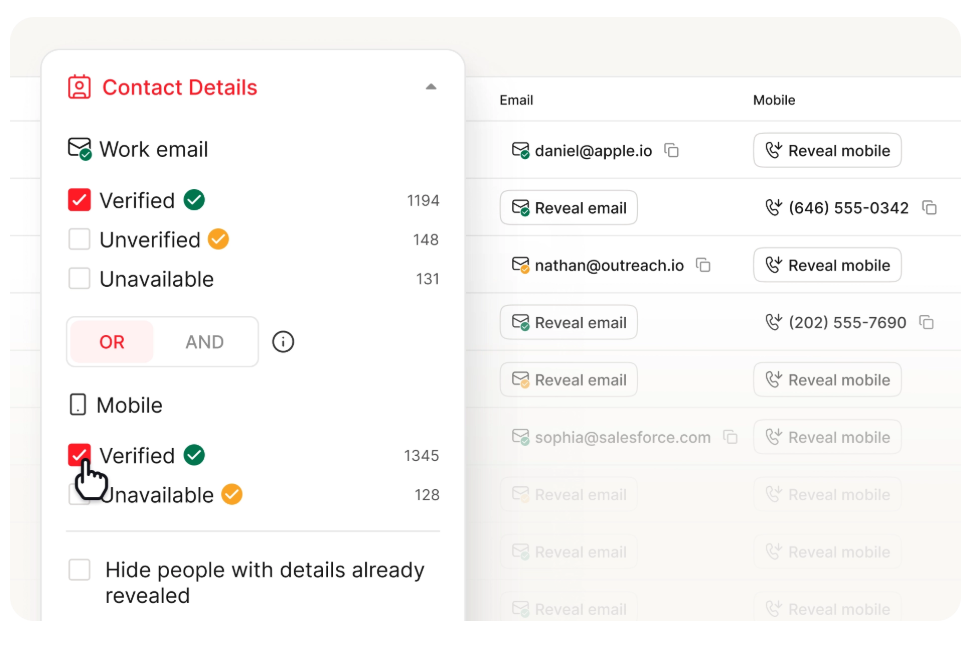
The two-tool approach only makes sense at scale where you're already committed to Lusha's enrichment ecosystem and need a cheap verification layer on top. For everyone else, one platform that does both saves more time than the cost difference justifies.
If you’re comparing more options, see our breakdown of data enrichment services and sales prospecting databases.
Catch-all domains are 28% of B2B emails - and Lusha's verification can't handle them. Prospeo's 5-step process catches what enrichment tools miss, with data refreshed every 7 days instead of the 6-week industry average.
One platform. Find, verify, and push to your CRM in seconds.
FAQ
Is LogValid accurate enough for large-scale outbound?
It covers catch-all detection, spam traps, and disposables at nearly unbeatable per-verification cost. The main risk factor is its thin review footprint (fewer than 10 reviews total), which makes it hard to gauge reliability at truly high volume. If you're sending 50K+ emails a month, we'd want to see a longer track record before going all-in.
Why is Lusha's accuracy lower than advertised?
Lusha claims 95% but real-world tests show roughly 81%. It's an enrichment tool, not a dedicated verifier - catch-all resolution and spam-trap filtering aren't its core strength. For verification-grade results, pair it with a verifier or use a platform that runs multi-step verification natively.
Can I use LogValid and Lusha together?
Absolutely - pull contacts from Lusha, verify through LogValid before outreach. It works but means two subscriptions and a manual handoff step. A single platform handling both discovery and verification typically saves more time than the cost difference justifies, especially for teams sending under 1,000 emails per month.