

Networking in Sales: A System That Builds Pipeline
You just got back from a conference with 47 new contacts. A week later, you haven't followed up with a single one. That stack of business cards isn't a pipeline - it's a pile of wasted opportunity.
Networking in sales isn't a personality trait. It's a system with three parts: pick the right rooms, run a 7-touch follow-up sequence, and verify your contact data so nothing bounces. If you only do one thing after reading this, fix your follow-up.
Why Warm Intros Beat Cold Outreach
96% of prospects research companies before engaging with a sales rep, and 71% prefer doing that research on their own. Meanwhile, 69% of cold email senders report performance declining year over year. AI-generated outreach has made everyone skeptical of anything that smells templated.
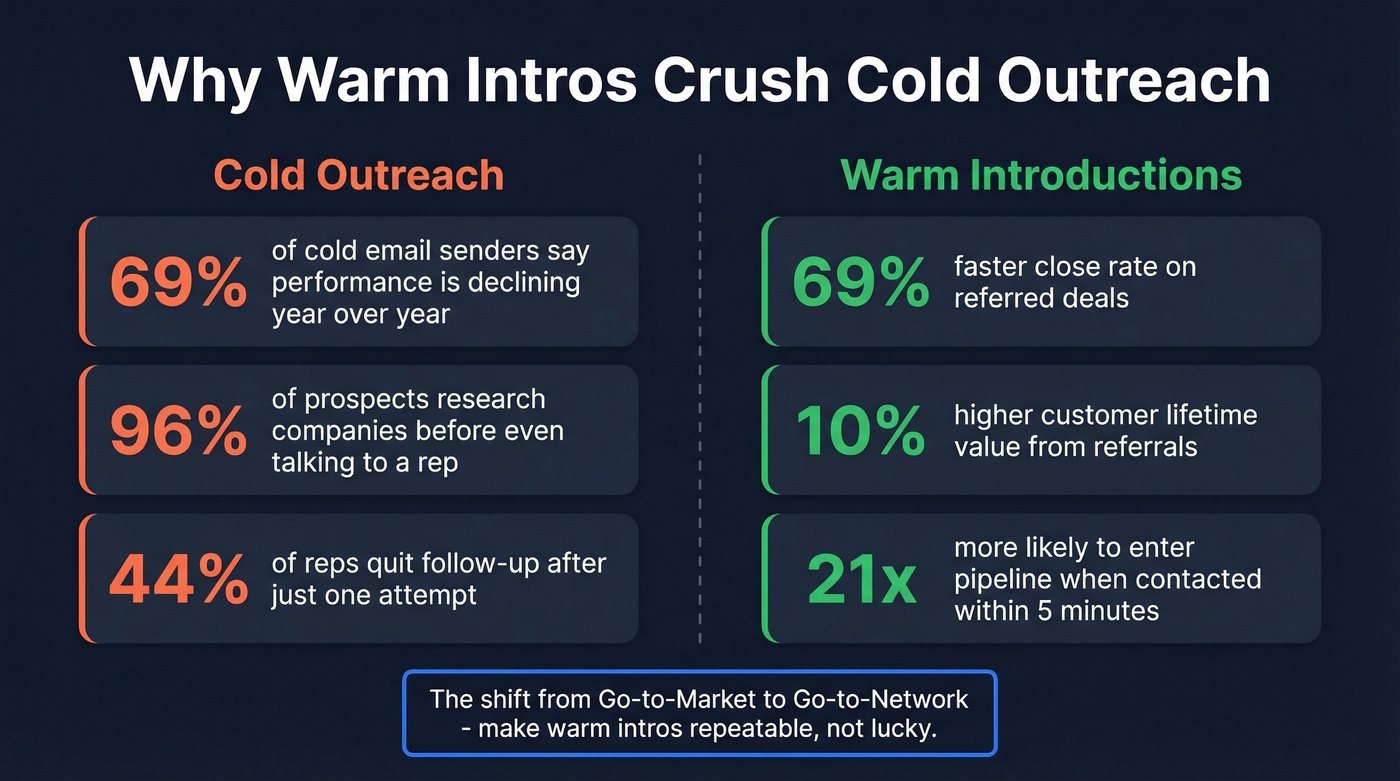
Warm introductions cut through that noise. Referred deals close 69% faster and deliver 10% higher customer lifetime value than cold outreach. Commsor calls this shift "Go-to-Network" - operationalizing warm introductions so they're repeatable, not lucky. The math isn't subtle. Yet most reps treat relationship-building like a personality exercise instead of a revenue channel.
Network Structure Beats Size
Harvard Business Review's research makes a counterintuitive point: having more contacts doesn't automatically translate into more leads and more sales. Different configurations of sales networks produce different results, and salespeople who understand those dynamics outperform competitors who just collect connections.
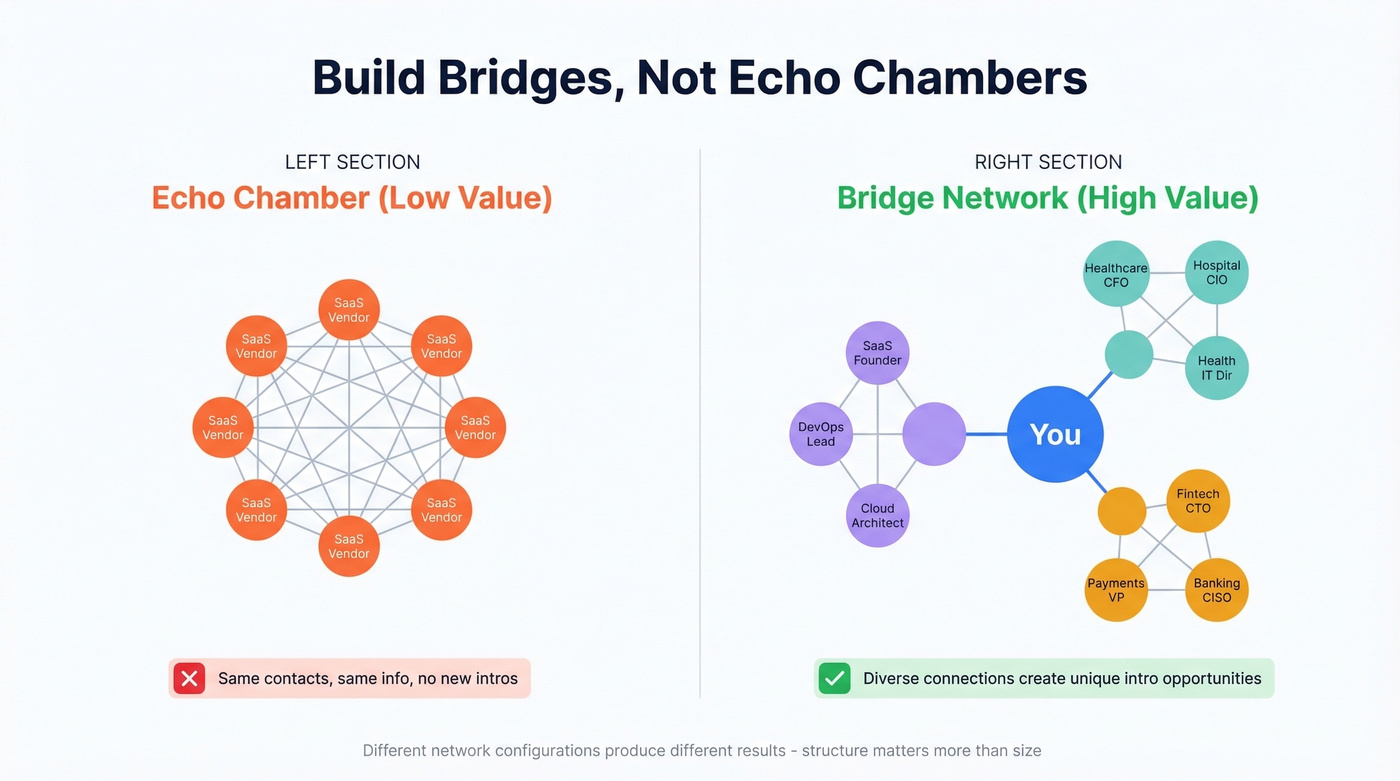
Here's the thing: if you sell cybersecurity and all your contacts are other cybersecurity vendors, you're in an echo chamber. But if you're also connected to CFOs in healthcare and CTOs in fintech, you create bridges across groups - and that's where introductions become uniquely valuable. Build bridges, not cliques.
Best Channels for Sales Networking
Not all channels deliver equally. SPOTIO's data shows prospects engage most at industry events (34%), followed by LinkedIn (21%) and text/SMS (21%). Events win because they compress relationship-building into hours instead of weeks. And with 9 out of 10 companies sticking with hybrid selling models, reps who combine in-person events with digital follow-up see up to 50% higher revenue growth.
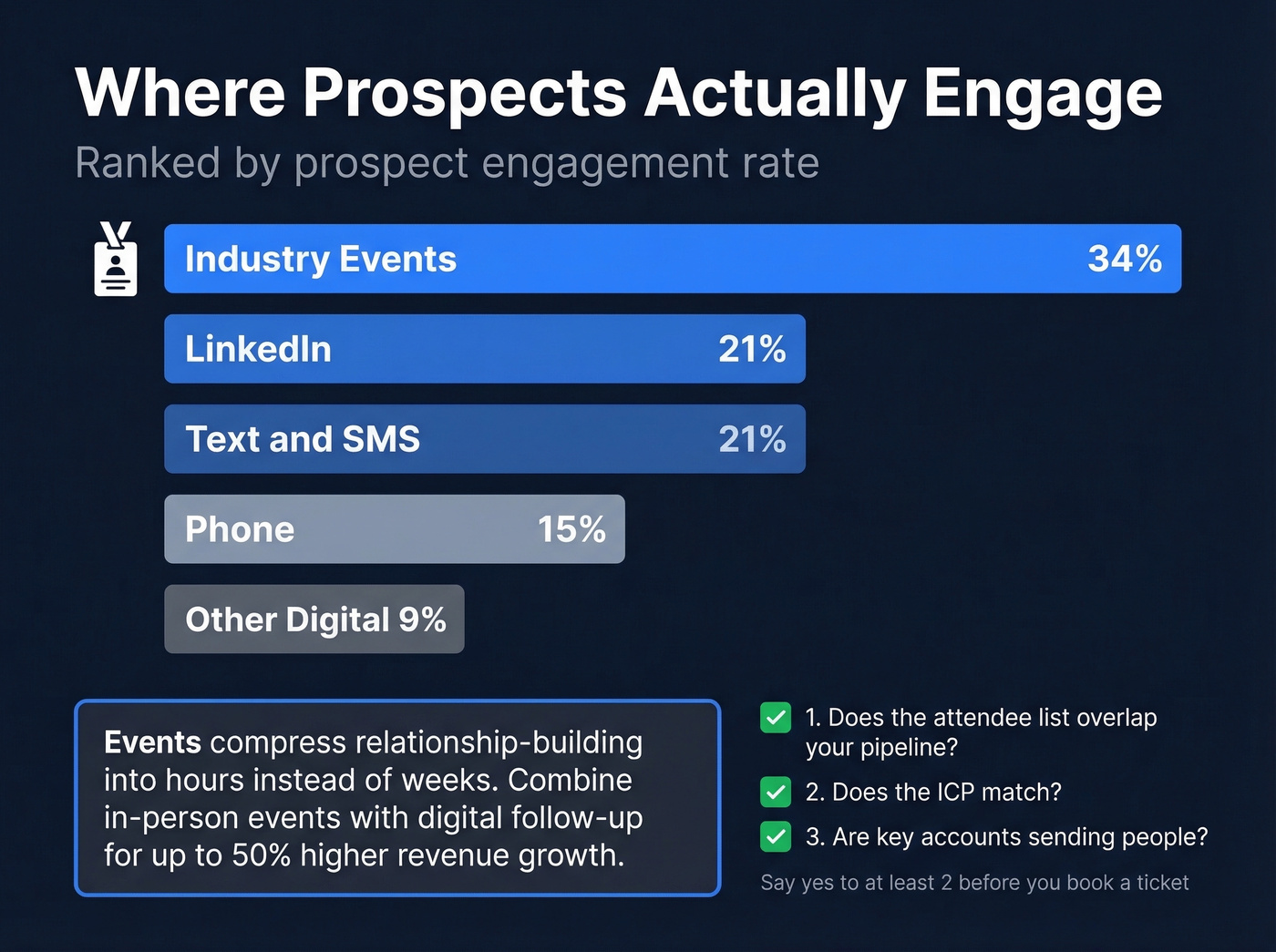
Before you book a ticket, filter events by three criteria: Does the attendee list overlap with your active pipeline? Does the ICP match? Are key accounts sending people? If you can't answer yes to at least two, skip it.
| Event | Date (2026) | Location | Price |
|---|---|---|---|
| SaaStr Annual | May 12-14 | San Francisco | $599 |
| LeadsCon | Apr 22-24 | Las Vegas | $999 |
| INBOUND | Sep 16-18 | Boston | $1,199 |
| OutBound Conference | Nov 9-12 | Las Vegas | $1,297 |
| Sales Success Summit | Oct 12-13 | Austin | $1,599 |
| Gartner CSO & Sales Leader | May 19-20 | Las Vegas | ~$3,825 |
| Sales Innovation Expo | Nov 18-19 | London | Free |
If you attend one event in 2026, make it SaaStr Annual or INBOUND. Either way, plan to invest in the conversations around the conference - the dinners, meetups, and side events are where relationships compound fastest.

You just collected 47 contacts at a conference. Touch 1 needs to land within 5 minutes - but it can't land if the email bounces. Prospeo verifies emails at 98% accuracy with a 7-day data refresh, so your follow-up sequence hits real inboxes, not dead ends. 75 free verified emails per month covers your next event.
Don't let bad data kill your 7-touch sequence before it starts.
The 7-Touch Follow-Up System
This is the centerpiece. 80% of sales require at least five follow-up contacts, but 44% of reps quit after one attempt. That gap is your biggest networking leak.
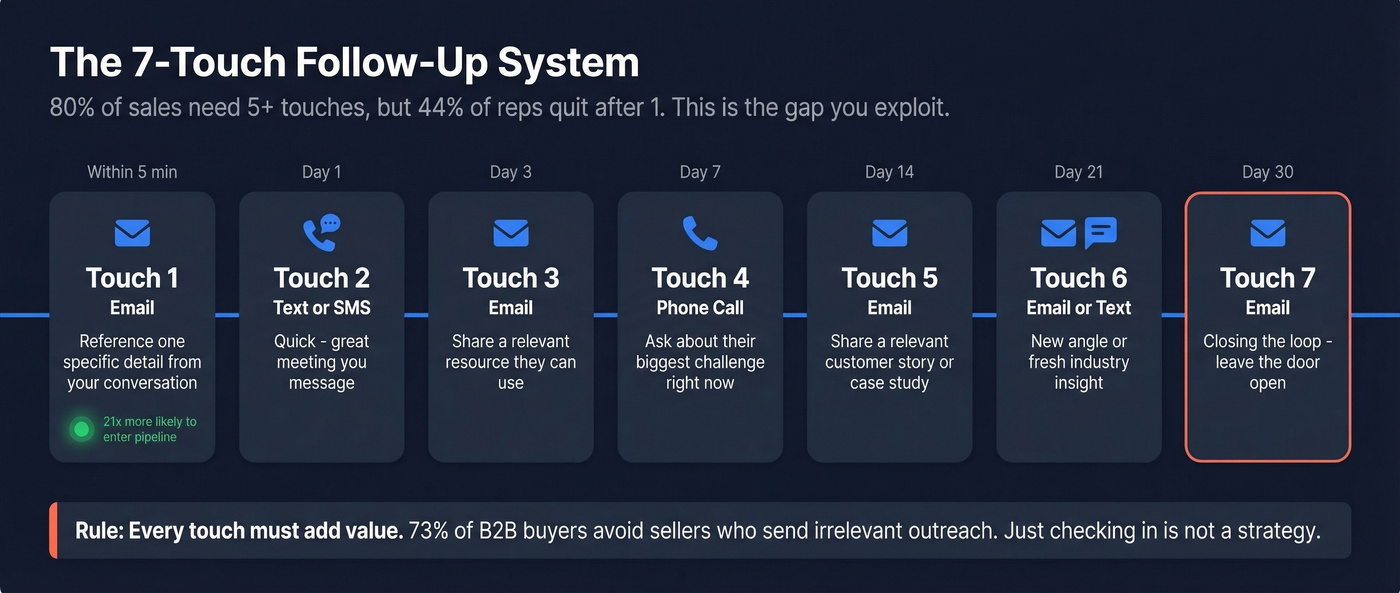
Leads contacted within five minutes are 21x more likely to enter your pipeline than those contacted after 30 minutes. Not five hours - five minutes. We've seen reps triple their referral pipeline just by nailing touches one through three. That single habit separates reps who build pipeline from relationship-building and reps who collect business cards that gather dust.
| Touch | Timing | Channel | Purpose |
|---|---|---|---|
| 1 | Within 5 min | Reference one specific detail | |
| 2 | Day 1 | Text/SMS | Quick "great meeting you" |
| 3 | Day 3 | Share a relevant resource | |
| 4 | Day 7 | Phone | Ask about their challenge |
| 5 | Day 14 | Share a relevant customer story | |
| 6 | Day 21 | Email/text | New angle or industry insight |
| 7 | Day 30 | "Closing the loop" - open door |
Each touch must add value. 73% of B2B buyers avoid sellers who send irrelevant outreach, so "just checking in" isn't a follow-up strategy - it's a confession that you have nothing useful to say. Share a case study, a relevant article, a specific insight about their industry. If you don't have something worth sending, wait until you do. If you need a starting point, steal a few sales follow-up templates and customize them to the event context.
Let's be honest: most reps treat networking events as lead-gen blitzes. The ones who build real pipeline are the ones who follow up for 30 days, not 30 minutes.
Three Mistakes That Kill Deals
Pitching before connecting. Bryan Vasquez, Head of Sales at LinkBuilder.io, reported a 20% win-rate lift over two quarters by dropping urgency and pressure tactics in favor of data-backed proposals and tailored value maps. Earn the right to pitch by listening first.
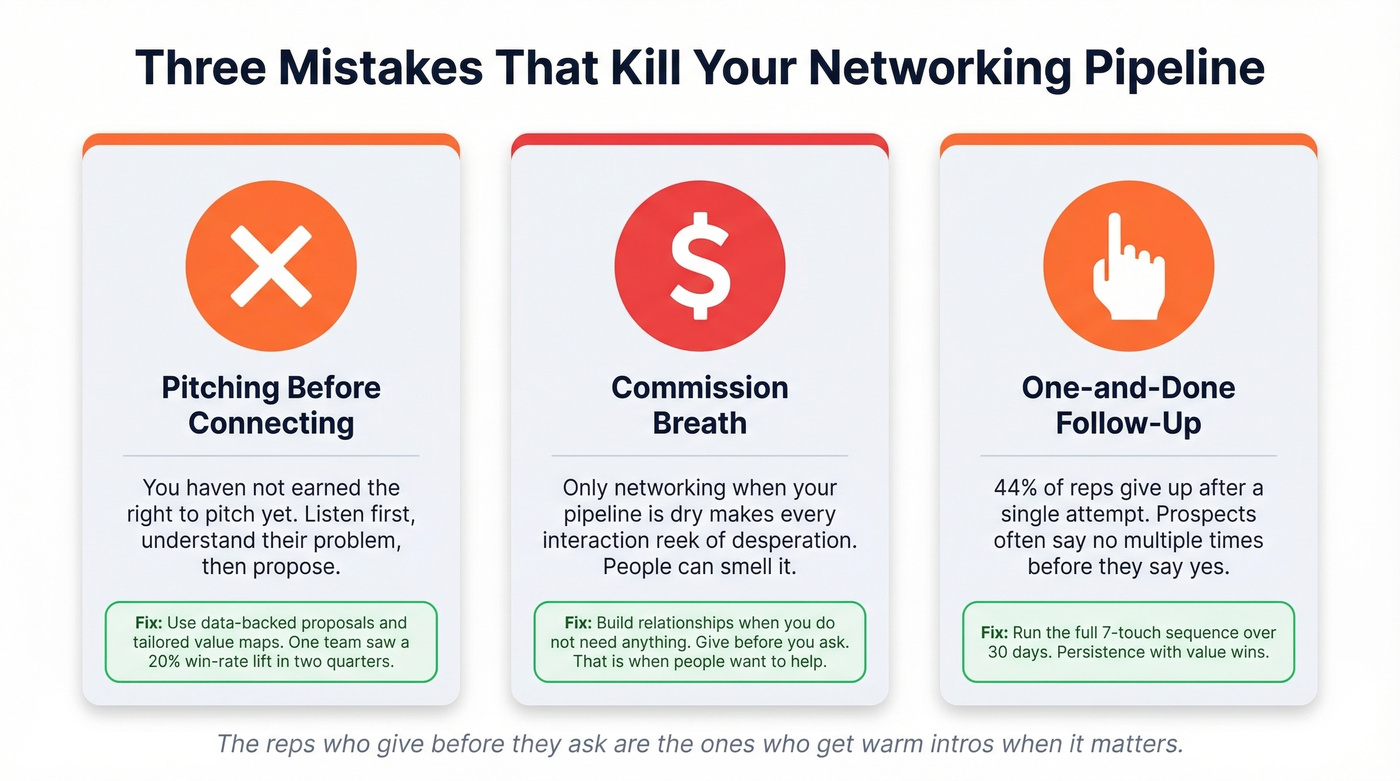
Commission breath. Commsor coined this term, and it's real. If you only network when your pipeline is dry, every interaction reeks of desperation. Build relationships when you don't need anything - that's when people actually want to help you. The consensus on r/sales echoes this constantly: the reps who give before they ask are the ones who get warm intros when it matters.
One-and-done follow-up. 44% of reps give up after a single attempt. Prospects often say "no" multiple times before they say "yes." If you're quitting after one email, you're not networking - you're waving. This is also why importance of follow-up isn't a motivational poster topic; it's a math problem.
Your Sales Networking Tech Stack
Sales reps spend 60% of their time on non-selling tasks. If networking isn't systematized, it won't survive your calendar. You need three things.
CRM for relationship tracking. Tag every networking-sourced contact in your CRM - HubSpot, Salesforce, whatever you use. If you can't report on networking as a pipeline channel, you can't justify the time you spend on it. This is also how you start turning your network into a measurable, repeatable revenue source instead of a vague "I know people" claim during pipeline reviews. If you're still evaluating tools, start with a shortlist of contact management software and pick the one your team will actually use.
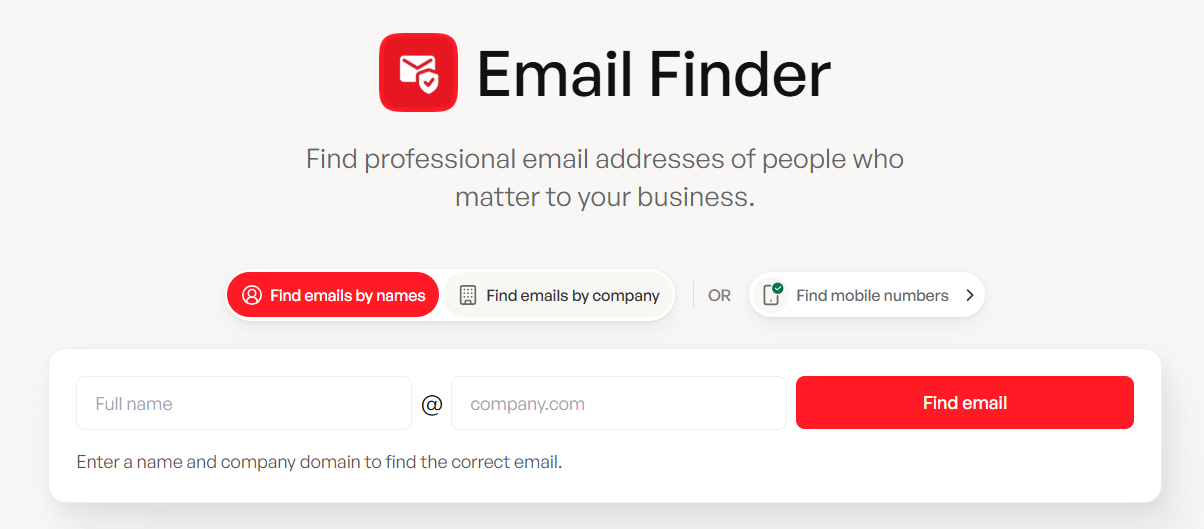
Verified contact data. You met the right people - now make sure your follow-up emails actually land. Prospeo verifies contact data in seconds: paste a name and company, get a verified email with 98% accuracy. Data refreshes every 7 days, so the emails you pull post-event are current, not stale. The free tier gives you 75 verified emails per month, which covers most post-event follow-up without spending a dime. If you're troubleshooting deliverability, it helps to understand your email bounce rate and how to check if an email will bounce before you hit send.
Calendar blocking. Block 2-3 hours per week for networking activities. One hour on online communities, one hour on follow-ups, one hour on event prep. In our experience, the reps who protect this time on their calendar are the only ones who actually do it consistently. Treat it like sales activities, not "extra credit."
One more thing worth saying: if your average deal size is under five figures, you probably don't need a massive networking budget. Skip the $3,800 Gartner conference. Focus on digital communities and one or two targeted events per year. The 7-touch follow-up system works regardless of how many events you attend - it's the execution that matters, not the ticket price.
Warm intros close 69% faster, but only if your contact data is current. Prospeo refreshes 300M+ profiles every 7 days - not every 6 weeks like competitors. Paste a name and company, get a verified email in seconds. At $0.01 per email, your entire post-event follow-up costs less than a coffee.
Turn every handshake into a verified, reachable contact for a penny each.
FAQ
Does networking actually generate measurable pipeline?
Yes. Referred deals close 69% faster and deliver 10% higher customer lifetime value than cold outreach. Track networking-sourced opportunities in your CRM the same way you track any other channel: tag the source, measure conversion rates, and report the numbers quarterly.
How much time should reps spend networking per week?
Block 2-3 hours. Since reps already spend 60% of their time on non-selling tasks, networking needs a protected calendar slot or it won't happen. Split it: one hour on online communities, one hour on follow-ups, one hour on event prep.
What's the best way to follow up after an event?
Send a personalized email within five minutes of meeting someone - reference one specific detail from your conversation. Then run a 7-touch sequence over 30 days, varying channels between email, phone, and text. Each touch should add value, not just "check in."
How do I verify contact info from events?
Business cards and event badges often have outdated emails. Use a verification tool like Prospeo to confirm the address is valid before your first follow-up. A bounced email kills the momentum of a warm connection - verify first, then sequence.