

Odoo vs SuiteCRM: The Honest Comparison Most Sites Get Wrong
Most teams treat Odoo and SuiteCRM as equivalent products. They're not. One is an ERP suite that happens to include a CRM module. The other is a standalone CRM that happens to be free to download. The Odoo vs SuiteCRM decision comes down to this distinction - get it wrong and you're six months into an implementation that doesn't fit.
30-Second Verdict
Pick Odoo if you need CRM plus ERP - inventory, accounting, HR, e-commerce - in one platform and you're willing to pay per user as you scale.
Pick SuiteCRM if you need a fully open-source standalone CRM and you've got a developer who can handle self-hosting and customization.
Skip both if you lack dev resources and just need a CRM that works fast. HubSpot Free or Twenty will get you moving faster.
What Each Tool Actually Is
Odoo is an open-core ERP suite with 5M+ users. Its CRM is one module in a larger ecosystem spanning accounting, inventory, manufacturing, HR, e-commerce, and project management. The Community Edition is fully open-source; Enterprise locks advanced features behind per-user pricing. Think of it as "ERP that includes a CRM," not "a CRM." If you’re still mapping what counts as a CRM vs an ERP module, see examples of a CRM.
SuiteCRM is a pure CRM - forked from SugarCRM Community Edition in 2013 and maintained as a fully open-source project since. It handles contacts, pipeline, workflow automation, and reporting. That narrower focus is both its strength and its limitation. If your main need is organizing people and accounts, compare it to other contact management software.
Feature-by-Feature Breakdown
G2's head-to-head data shows SuiteCRM edging Odoo on several satisfaction metrics despite having fewer reviews. The gap isn't dramatic, but it shows up consistently.
| Feature | Odoo | SuiteCRM | Edge |
|---|---|---|---|
| G2 Rating | 4.1/5 (176 reviews) | 4.2/5 (99 reviews) | SuiteCRM |
| Meets Requirements | 8.2 | 8.7 | SuiteCRM |
| Ease of Setup | 7.6 | 8.3 | SuiteCRM |
| Quality of Support | 7.8 | 8.0 | SuiteCRM |
| Ease of Use | 8.2 | 8.0 | Odoo |
| Pipeline Mgmt | Visual kanban, polished | Functional, dated UI | Odoo |
| Workflow Automation | Strong (Studio add-on) | Strong (native) | Tie |
| Reporting | Advanced with BI tools | Basic, extensible | Odoo |
| Customization | Studio (paid tier) | Full open code access | SuiteCRM |
| Integrations | Thousands of apps | Needs custom work | Odoo |
| Mobile App | Native iOS/Android | Responsive web only | Odoo |
Here's the thing: Odoo's lower "Ease of Setup" score is misleading. It's harder to set up because there's more to set up. When you're only using the CRM module, the experience is comparable. The complexity kicks in once you layer ERP modules on top. If you’re trying to prevent process bloat during rollout, these sales pipeline challenges show up fast.

Pricing in 2026
Most comparison sites get SuiteCRM's pricing wrong because they treat it like a per-user product. It isn't. SuiteCRM Hosted uses flat monthly plans recommended by user ranges, with no per-user license fees. Prices are listed in GBP; we've included USD approximations.
For Odoo, the cleanest public USD anchor is G2's entry-level pricing for Odoo CRM: $24 per app, per user, per month. The totals below use that $24/user/mo figure to keep things consistent.
| Plan | SuiteCRM Hosted (GBP / ~USD) | Odoo CRM Entry-Level (~USD) |
|---|---|---|
| Starter (up to 10 users) | £143/mo (~$182) | ~$240/mo (10 x $24) |
| Business (up to 50 users) | £198/mo (~$251) | ~$1,200/mo (50 x $24) |
| Premium (up to 150 users) | £308/mo (~$391) | ~$3,600/mo (150 x $24) |
The crossover is dramatic. A 50-person team on SuiteCRM Hosted Business pays ~$251/mo. That same team on Odoo CRM pays ~$1,200/mo - and that's before you add modules beyond CRM.
Odoo's one-app-free tier is genuinely useful: unlimited users on a single module, and CRM qualifies. But it's a gateway. The moment you add a second app, you move into paid per-user pricing across the board. Custom-tier pricing commonly lands around $37.40/user/mo billed annually, and implementation services cost extra.
Self-hosting SuiteCRM isn't free either. In our experience, teams spend $500-1,500/mo on infrastructure and dev time for a "free" CRM once you factor in servers, SSL, backups, security patches, and someone who knows PHP. If you’re budgeting for the full stack, it helps to understand sales operations metrics that get impacted by tooling overhead.

Choosing between Odoo and SuiteCRM is step one. Step two is filling your pipeline with contacts that actually convert. Prospeo enriches your CRM with 98% accurate emails and 125M+ verified mobile numbers - with native integrations that push data straight into your system.
Bad data kills CRM ROI faster than picking the wrong platform.
What Real Users Say
SuiteCRM - the good: G2 reviewers consistently praise customizability and cost control. No licensing fees, predictable spend, and an open codebase you can bend to fit your process.
SuiteCRM - the frustration: The UI. Reddit threads on r/selfhosted are blunt: "requires a lot of clicks to do basic actions" and "UI looks too clunky." G2 reviewers echo this - "dated UI" and "poor design" come up again and again.
Odoo - the good: Modern, polished interface. The breadth of ERP modules is unmatched in the open-source world. For teams that need CRM + inventory + accounting, nothing else comes close at this price point.
Odoo - the frustration: The open-source promise feels hollow once you hit the feature gaps between Community and Enterprise. The consensus on r/selfhosted is telling: "seems to not be fully open - lot of upselling and cross-selling." You get pushed toward paid tiers faster than you'd expect. If you’re evaluating other CRM paths, this Bitrix24 vs HubSpot breakdown is a useful contrast.
Is SuiteCRM 8 Ready?
Let's be honest: SuiteCRM 8 is still in a transition phase. Version 8.10 is expected in March 2026 with email compose improvements, new file storage options, and an image field, but the first SuiteCRM 8 Extended Support Release is still "in the works" per the official roadmap. The project is actively maintained - security releases 8.9.3, 7.15.1, and 7.14.9 all shipped in March 2026 - but the version split is real.
Meanwhile, SuiteCRM 7.15 shipped in December 2025 as an Extended Support Release, extending 7.x support for at least two more years. If you're choosing SuiteCRM today, you'll almost certainly run 7.x in production and plan a migration to 8.x later.
We think this is the biggest risk factor most teams underestimate. You're building on a branch in maintenance mode, not active development.
Which One to Pick
Small team, no developer: Skip both. HubSpot Free gets you running in an afternoon. Twenty is worth a look too - one Reddit user called it "AMAZING" after bouncing off both SuiteCRM and Odoo. If you need quick wins beyond the CRM itself, start with free lead generation tools.
Need CRM + ERP in one platform: Odoo. Nothing in the open-source world matches its module breadth, and the CRM interface is genuinely pleasant to use day-to-day.
Standalone CRM with a developer on staff: SuiteCRM. Full code access, no licensing fees, flat-rate hosted pricing that stays flat as you grow.
Budget-sensitive team of 20+: SuiteCRM Hosted. Flat-rate pricing crushes Odoo's per-user model at scale - the math isn't even close once you pass 15-20 seats.
Data sovereignty or compliance requirements: Either tool works. Both support on-prem deployment with full data control, which is the real reason most teams choose open-source CRMs over SaaS alternatives in the first place.
Our hot take: this debate is the wrong question for 80% of people searching this term. Most teams don't need an open-source CRM - they need one that works without a developer. And the teams that genuinely need open-source usually need it for compliance, not cost savings.
The Data Problem Neither CRM Solves
Both Odoo and SuiteCRM are only as good as the data inside them. 47-73% of CRM implementations fail to deliver expected ROI, and bad contact data is a major contributor. You can spend months perfecting pipeline stages and workflow automations - none of it matters if your contacts bounce. If you’re seeing bounces already, use these email bounce rate benchmarks to diagnose what’s normal vs broken.
Whichever CRM you pick, the next problem is filling it with verified contacts. Prospeo handles this layer: 98% email accuracy across 300M+ professional profiles, 50+ data points per enrichment, and a 7-day data refresh cycle. It plugs into any CRM via API, or you can enrich a CSV export from Odoo or SuiteCRM directly. For a broader view of vendors in this category, see data enrichment services.
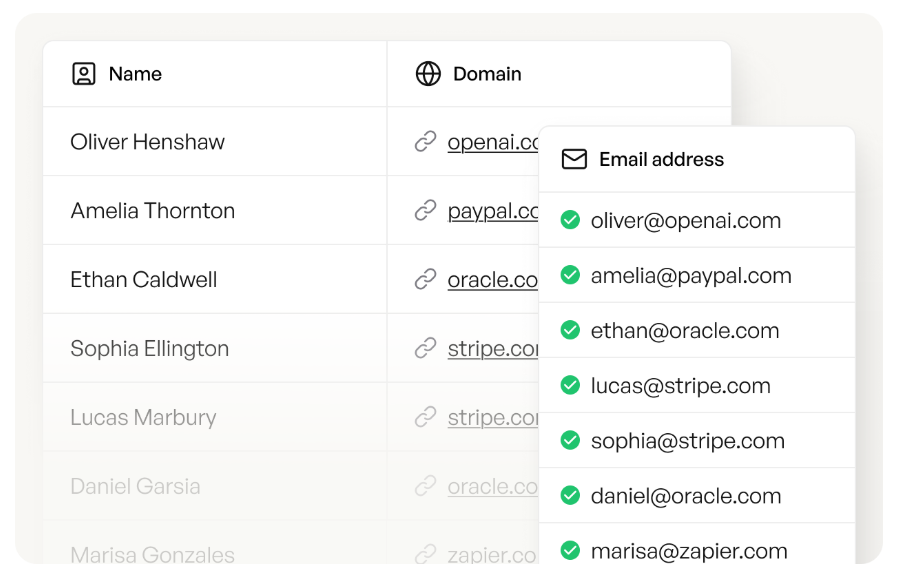
Flat-rate or per-user, neither CRM pricing matters if your reps are emailing dead addresses. Prospeo delivers verified contact data at $0.01 per email with a 7-day refresh cycle - so your open-source CRM runs on data that's actually current.
Stop debating CRM costs and start closing with data that connects.
FAQ
Is SuiteCRM really free?
The software is free to download and self-host with no license fees. You'll pay for hosting, maintenance, and customization though. SuiteCRM Hosted starts at ~£143/mo (~$182). Budget $500-1,500/mo minimum for a production self-hosted deployment once you factor in servers, backups, and developer time.
Can Odoo work as a standalone CRM?
Yes - Odoo offers one app free with unlimited users, and CRM qualifies. But the moment you add a second module like invoicing or email marketing, you pay per-user across the platform. Plan your budget around module two from the start.
How do I keep CRM data accurate after setup?
Use a data enrichment tool that verifies contacts on an ongoing basis. Prospeo refreshes its database every 7 days and returns 50+ data points per contact at 98% email accuracy - connect it via API to Odoo, SuiteCRM, or any CRM to keep records clean automatically.
Which open-source CRM is better for large teams?
SuiteCRM's flat-rate hosted pricing makes it significantly cheaper at scale. A 150-user team pays ~$391/mo versus ~$3,600/mo on Odoo. If your primary need is CRM without ERP modules, SuiteCRM delivers better cost efficiency for teams above 20 users.