Ontraport vs Salesforce: Which CRM Actually Fits Your Business in 2026?
Every page-one result for "ontraport vs salesforce" is either owned by Ontraport, a template comparison page from G2 or monday.com, or essentially empty. And Ontraport's own comparison page? It claims you'd need to spend $129,830/month on Salesforce to match its features. That number includes a $108,000/month Personalization package that no SMB on earth would buy. It's marketing theater, not analysis.
Here's the thing: these two platforms aren't really competitors. Ontraport is an all-in-one marketing and sales tool for course creators and coaches. Salesforce is an enterprise CRM that happens to have a small business tier. Comparing them is like comparing a Swiss Army knife to an industrial toolbox - they solve different problems for different people.
Let's figure out which one (if either) actually fits your business.
30-Second Verdict
Pick Ontraport if you're a solo operator or small team (1-5 people) selling courses, memberships, coaching, or digital products and you want email, CRM, payments, and landing pages in one platform.

Pick Salesforce if you have 10+ salespeople, a complex B2B pipeline with multiple deal stages, and the budget to spend 2-3x your subscription cost on implementation and admin.
The Real Pricing Comparison: Ontraport vs Salesforce in 2026
Pricing is where this comparison gets interesting - and where most articles get it wrong. G2 still lists Ontraport's entry price at $29/month, and other comparison sites show $24. Both are either legacy tiers or flat-out outdated. Here's what you'll actually pay.
Ontraport Pricing Breakdown
| Plan | Monthly Price | What It Adds |
|---|---|---|
| Basic | $79/mo | CRM, email, forms, SMS |
| Plus | $147/mo | Payments, memberships |
| Pro | $297/mo | Split automations, lead scoring |
| Enterprise | $249/mo | Private IPs, enterprise security |
Yes, Enterprise is cheaper than Pro. That pricing structure is confusing, and Ontraport doesn't explain it well - Enterprise appears to be a base price that scales with usage limits.
Additional users cost $9/month each. Annual billing saves roughly 17% (two months free). There's a 14-day free trial with no credit card required. Ontraport also enforces a rigid refund policy: multiple users report that overage charges are non-reversible, even when triggered by list growth they didn't anticipate.
But here's the number that matters: contact-based overages. One Reddit user running 43,000 opt-in contacts reported paying roughly $600/month - despite being grandfathered into an older plan. Their rate had increased by $80+ with no warning. If you're growing a list, Ontraport's sticker price is just the starting point. The Dynamic CMS add-on runs another $41-$124/month depending on displayed records.
Salesforce Pricing Breakdown
Salesforce's small business pricing is more straightforward, but the sticker price is deceptive for different reasons:
| Plan | Price/User/Mo | Key Detail |
|---|---|---|
| Free Suite | $0 | Max 2 users |
| Starter Suite | $25 (annual) | $35 if monthly |
| Pro Suite | $100 (annual) | Annual contract required |
| Enterprise | $175 (annual) | AI + Agentforce |
The Free Suite is genuinely new and nobody else in the comparison space mentions it. Two users, basic lead/contact/opportunity management, simple email marketing. Limited, but it exists.
Starter jumps to $35/user/month if you don't commit annually. Pro Suite requires an annual contract - no month-to-month option. Enterprise pricing comes from Salesforce's SMB pricing page; you'll sometimes see slightly different numbers ($165) on third-party review sites that reference the Sales Cloud list price.
Total Cost of Ownership - 5-Person Team, Year One
This is the comparison that actually matters.

| Cost Category | Ontraport Pro | Salesforce Pro Suite |
|---|---|---|
| Subscription | ~$3,600-$4,000/yr | $6,000/yr ($100x5x12) |
| Extra users | ~$430/yr (2 extra) | Included in per-seat |
| Contact overages | $0-$3,000/yr | $0 (unlimited contacts) |
| Implementation | $0-$2,000 | $15,000-$50,000 |
| Training | $0-$500 | $2,500-$25,000 |
| Admin/consultant | $0 | $5,000-$15,000/yr |
| Year One Total | ~$4,000-$9,000 | $28,500-$96,000 |
Read that again. For a 5-person team, Salesforce Pro Suite can cost 3-10x more than Ontraport Pro in year one. The subscription is the smallest part of the Salesforce bill. And Ontraport's upper bound climbs fast if your contact list grows past 10,000 - that $600/month Reddit user is proof.
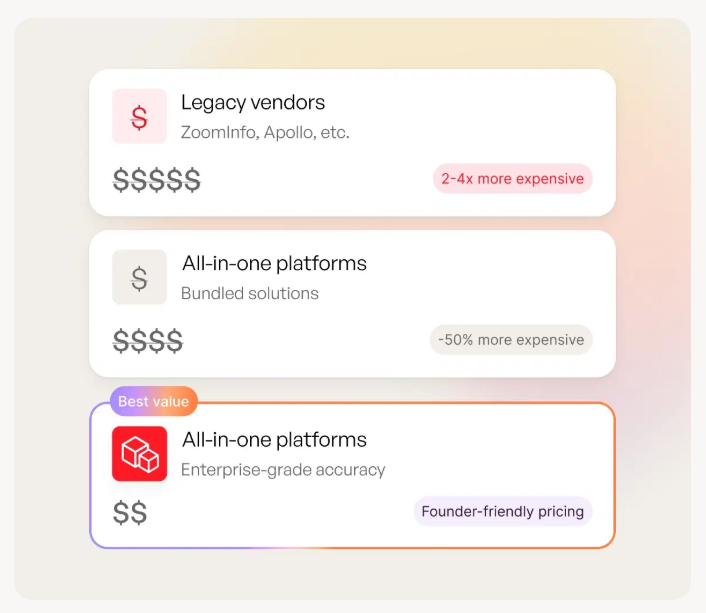

Salesforce's data enrichment add-ons cost $25-$100/user/month on AppExchange. Ontraport has no native B2B data at all. Prospeo gives you 300M+ profiles with 98% email accuracy, 125M+ verified mobiles, and 30+ search filters - starting at $0.01 per email with no annual contracts.
Stop paying CRM add-on prices for data that should cost a penny.
The Hidden Cost of Salesforce (Beyond the Subscription)
Licensing accounts for only 30-40% of a typical Salesforce implementation budget. The rest is a cascade of costs that Salesforce's sales team won't volunteer during the demo:

- Implementation services: $15,000-$50,000 for small businesses. Mid-sized companies? $50,000-$150,000. Organizations starting with $500K annual Salesforce budgets frequently exceed $1M within three years.
- Training: $500-$5,000 per user depending on role complexity. It's not one-and-done either - Salesforce pushes three major updates per year that can break custom elements, requiring recurring testing and retraining.
- Storage overages: $125/month per 500MB of data storage. That's 217x more expensive than external cloud providers. If your team uploads files, attachments, or documents into Salesforce, this adds up fast.
- API call limits: 15,000/day on most editions. If you're running integrations with marketing tools, enrichment platforms, or custom apps, you'll hit this ceiling. Exceeding it means purchasing more capacity or upgrading your edition.
- AppExchange tax: 91% of Salesforce customers use at least one AppExchange app. Premium apps cost $25-$100+/user/month. Need CPQ? Extra. Advanced marketing automation? Extra. Data enrichment? Extra.
- Technical debt: For every $1 spent on custom Salesforce development, $0.41 of technical debt is generated. That's a measured cost of maintaining, debugging, and updating custom code as the platform evolves.
The Reddit post that sums it up best: a single-location retailer titled their thread "Salesforce: Sold as 'Small Business Friendly,' Delivered as a Time-Sucking Nightmare." They paid $6K+ to a third-party consultant who couldn't fix their issues and eventually ghosted. They described the platform as "archaic architecture from the 1990s" with a new label slapped on. They paid for 3 extra user seats that were essentially useless without the right add-ons.
Their question: "Has any small business actually made Salesforce work without a full-time admin and $20k+ in consultants?"
I've talked to dozens of teams in this exact situation. The answer is rarely yes.
Feature-by-Feature Comparison
Scores below come from two sources: G2 (community reviews) and TrustRadius (TR, verified user reviews). They use different scales and methodologies, so compare within columns, not across them.

| Feature | Ontraport | Salesforce | Edge |
|---|---|---|---|
| Ease of Admin (G2) | 8.4 | 7.9 | Ontraport |
| Support Quality (G2) | 9.2 | 8.1 | Ontraport |
| Reporting (TR) | 9.3 | 8.3 | Ontraport |
| Customizability (TR) | 10.0 | 8.6 | Ontraport |
| Lead Scoring (TR) | 2.4 | 8.2 | Salesforce |
| API Quality (TR) | 3.0 | 8.8 | Salesforce |
| Integrations | Zapier-dependent | 9,000+ apps | Salesforce |
| AI/Automation | Basic workflows | Agentforce + Einstein | Salesforce |
The pattern is clear: Ontraport wins on usability and support. Salesforce wins on power and extensibility.
Where Ontraport Wins
Ontraport's visual automation builder is genuinely impressive. You get triggers, goals, filters, split testing, wait timers, and fork/condition elements - all in a drag-and-drop interface that auto-saves every minute and doesn't go live until you publish. We've tested both platforms' automation builders, and Ontraport's is noticeably faster to set up for non-technical users. For a course creator building a launch sequence with conditional paths, it's hard to beat.

Customer support is the widest gap: 9.2 vs 8.1 on G2. Ontraport offers free 7-day-a-week support on all plans. Salesforce's cheaper tiers? You're largely on your own.
The all-in-one value proposition is real for the right user. Email marketing, CRM, payment processing, membership sites, landing pages, SMS - it's all native. No stitching five tools together with Zapier. TrustRadius users rate Ontraport's landing pages 10.0, dynamic content 10.0, and customizability 10.0. For a bootstrapped coaching business or course creator, Ontraport eliminates tool sprawl.
Where Salesforce Wins
Salesforce dominates on reporting, integrations, AI, and scalability. Custom objects score 8.8 on TrustRadius. The AppExchange ecosystem - 9,000+ apps - means you can connect Salesforce to virtually anything without middleware. And 91% of TrustRadius reviewers say they'd buy Salesforce again, which is a strong endorsement from verified users.
Pipeline management is where Salesforce earns its reputation. Multi-stage deal tracking, forecasting, territory management, custom sales paths - these features exist because Salesforce was built for 50-person sales floors, not solo operators. The Agentforce AI layer adds autonomous agent capabilities that Ontraport has no answer for.
Unlimited contacts on all paid plans is a quiet advantage. While Ontraport charges overages as your list grows, Salesforce doesn't penalize you for having more records.
The talent pool matters too. 150,000 companies use Salesforce globally, with a truly international footprint across every continent. Finding a trained admin or consultant is straightforward. Ontraport's user base is overwhelmingly US-centric, and finding an Ontraport specialist is much harder.
Where Both Fall Short
Ontraport's critical weaknesses are severe for B2B teams. Lead scoring: 2.4/10. API quality: 3.0/10. Data quality management: 2.6/10. Email deliverability reporting: 6.0/10. If you're running outbound or need serious integrations, these numbers are disqualifying.
Salesforce's weaknesses are different but equally frustrating. Native marketing automation is limited - you'll need Marketing Cloud (separate product, separate cost). Social media integrations are poor. And on cheaper plans, meaningful support essentially doesn't exist.
Neither platform solves the upstream data quality problem. Your CRM is a container. If you're pouring bad data into it - unverified emails, wrong phone numbers, outdated job titles - neither Ontraport's automation builder nor Salesforce's reporting engine can save you.
What Real Users Say
Ontraport: Loved by Coaches, Frustrating at Scale
Ontraport holds a 4.5/5 on G2 (222 reviews) and 9.6/10 on TrustRadius. Strong numbers - but the review base tells a story. 94.7% of G2 reviewers are small businesses. Top industries: Professional Training & Coaching, Marketing & Advertising, Health/Wellness/Fitness.
This isn't a general-purpose CRM user base. It's coaches, course creators, and wellness practitioners.
The 76% five-star rating is impressive. But the 4% one-star reviews reveal a pattern. One TrustRadius user reported open rates under 9% and couldn't pass DMARC authentication - a deliverability problem that tanks your entire email program. The Reddit user paying $600/month described landing page templates as "wonky" and said even their webmaster struggled with graphic-heavy designs. The deliverability complaints aren't isolated incidents. Multiple users across platforms report the same issue, and for a platform that positions email marketing as a core feature, that's a real problem.
Salesforce: Powerful but Punishing
Salesforce holds a 4.4/5 on G2 - but with 25,418 reviews, that's a far more statistically significant sample. TrustRadius: 8.7/10. Software Advice: 4.4/5 (219 reviews) with a value-for-money score of only 3.9/5.
The user base skews mid-market: 46% of G2 reviewers are mid-sized companies. That's the platform's sweet spot.
The #1 con on G2? Learning curve - mentioned 1,783 times. That's not a minor complaint. It's the defining characteristic of the Salesforce experience for new users.
The Reddit story from the single-location retailer is worth reading in full. They experienced constant sales rep turnover (new contact every couple months), paid a consultant who ghosted, discovered their extra user seats were useless without add-ons, and spent months chasing contradictory information from different support teams. Their conclusion: "The cost here isn't the subscription... it's been my team's time, my time, my patience."
I've seen this pattern repeatedly. Teams buy Salesforce expecting a turnkey solution and discover it's more like buying a house that needs renovation - the purchase price is just the beginning.
Who Should Pick Which (And Who Should Pick Neither)
Pick Ontraport If...
You sell courses, memberships, coaching programs, or digital products. You're a solo operator or a team of 1-5 people. You want email marketing, CRM, payments, landing pages, and membership management in one platform without stitching tools together.
You value responsive customer support (9.2/10 on G2) over feature depth. You don't need robust API integrations or advanced lead scoring. You're okay with Zapier as your integration layer. And you're comfortable with an annual contract - Ontraport's refund policy gives you little flexibility once you commit.
Ontraport is a bootstrapped company with roughly 115 employees, founder-led by Landon Ray. That means slower feature development but also a company that isn't chasing enterprise deals at the expense of its core users. Implementation timeline: 2-4 weeks for basic setup, 1-3 months for complex automations. You can realistically do this yourself with their support team's help.
Skip Ontraport if you're running B2B outbound, need serious API integrations, or have a list over 20,000 contacts (overages will eat your budget).
Pick Salesforce If...
You have 10+ salespeople with complex B2B sales cycles involving multiple stakeholders, deal stages, and approval workflows. You can budget 2-3x the subscription cost for implementation, training, and ongoing admin. You need deep integrations with your existing tech stack. You have (or will hire) a dedicated Salesforce admin.
Salesforce's 150,000-customer install base means you'll never struggle to find trained talent. The ecosystem is mature. The reporting is unmatched. If you need unlimited contacts and enterprise-grade pipeline management, this is the industry standard for a reason. Implementation timeline: 4-8 weeks for basic setup, 3-6 months with customization. Budget $15,000-$50,000 for a proper SMB implementation.
Skip Salesforce if you have fewer than 10 salespeople, your deal cycle is simple, or you don't have budget for implementation and admin beyond the subscription.
Pick Neither If...
You're a 3-10 person team that needs CRM + marketing + prospecting without enterprise complexity or all-in-one limitations.
This is the gap neither platform fills well.
Real talk: If your deals typically close below $10K, you almost certainly don't need either of these platforms. The money you'd spend on Salesforce implementation alone could fund your entire sales stack for two years. Here's what that stack looks like:
- HubSpot free CRM tier or Starter plan (~$20/user/month) handles most mid-range CRM needs - but watch for price creep at scale.
- ActiveCampaign (~$29-$49/month) is the strongest option if email automation is your primary need.
- HighLevel (~$97-$297/month) works well for agencies and service businesses that need white-label client management.
If you want a broader set of options, start with CRM software that fits small teams.
Making Your CRM Actually Work - The Data Problem Nobody Mentions
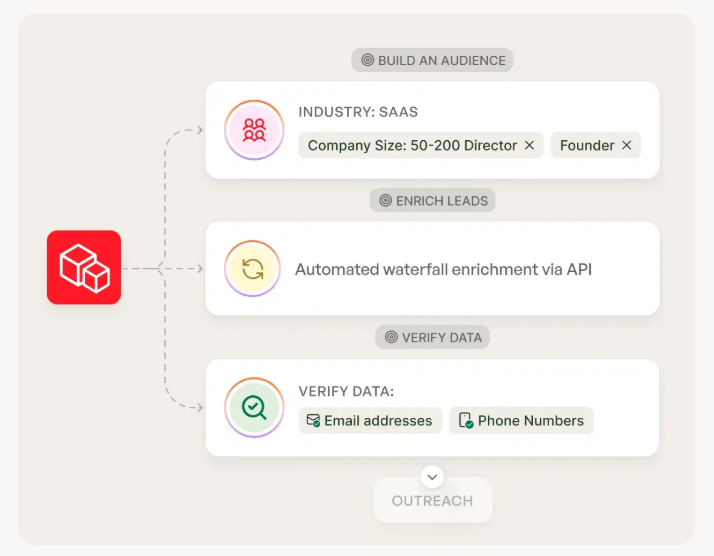
Both Ontraport and Salesforce are relationship management tools. They organize, automate, and report on contacts you already have. Neither one finds new prospects. Neither one verifies that the email address in your database still works. Neither one tells you when a decision-maker changes jobs.
This is the real bottleneck most teams hit 90 days after choosing a CRM. The system is set up, the automations are built, and the pipeline is empty because the data is stale or wrong. We've run the numbers on dozens of implementations, and the teams that invest in data quality before CRM customization consistently outperform those that do it the other way around.
Your CRM is a container. Fill it with verified data, and it becomes a revenue engine. Fill it with garbage, and you've just built an expensive filing cabinet.
That's the real takeaway from this entire comparison - whether you choose Ontraport, Salesforce, or something else entirely, the platform matters less than the data flowing through it. If you're constantly fighting stale records, start with B2B contact data decay and a workflow to keep CRM data clean.
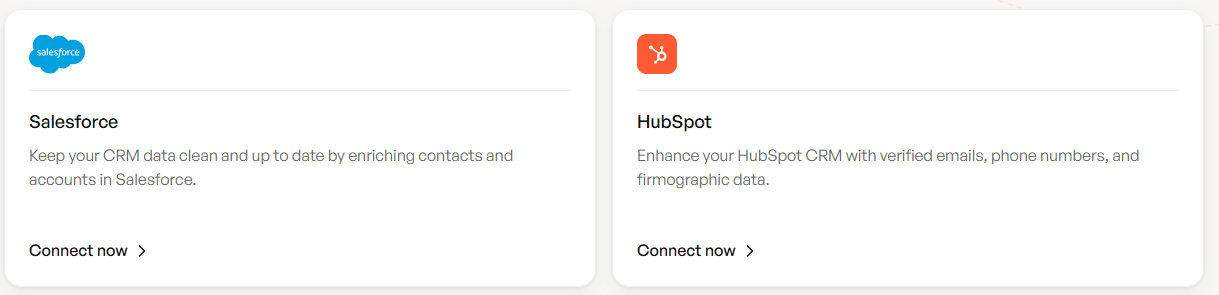
Neither Ontraport nor Salesforce solves the real problem: getting verified contact data into your pipeline. Prospeo enriches your CRM with 50+ data points per contact at a 92% match rate - and refreshes every 7 days, not every 6 weeks like legacy providers.
Feed your CRM clean data instead of fighting dirty records.
FAQ
Is Ontraport really cheaper than Salesforce?
At sticker price, yes - Ontraport Pro for a 5-person team runs roughly $315/month vs $500/month for Salesforce Pro Suite. But Ontraport's contact-based overages can push costs past $600/month, while Salesforce's total cost of ownership (implementation, training, admin) typically reaches 3-5x the subscription. Compare total year-one cost, not monthly sticker price.
Can a small business use Salesforce without a dedicated admin?
The Free Suite and Starter Suite handle basic contact management, but anything beyond that typically requires admin expertise. Reddit users consistently report needing $20K+ in consultants or a full-time admin. The learning curve is the #1 complaint across 25,000+ G2 reviews.
Does Ontraport work for B2B sales teams?
Not well. Ontraport's lead scoring is rated 2.4/10 and its API 3.0/10 on TrustRadius. It's purpose-built for course creators, coaches, and membership businesses - not B2B pipelines with complex deal stages and multi-stakeholder buying committees.
What's the best CRM for a team of 3-10 people?
HubSpot's free CRM tier or Starter plan (~$20/user/month) handles most needs without enterprise overhead. Pair it with Prospeo for verified contact data - 98% email accuracy, native Salesforce and HubSpot integrations, starts free - and you'll have a more capable stack at a fraction of the cost of either Ontraport or Salesforce.
How long does it take to migrate from Ontraport to Salesforce (or vice versa)?
Ontraport to Salesforce typically costs $10,000-$30,000 and takes 2-4 months including data migration and configuration. Salesforce to Ontraport is simpler - estimate $2,000-$5,000 and 2-4 weeks, since Ontraport offers migration support and the target platform is less complex.