

Predictive Intelligence for Sales: What It Is, Why It Fails, and How to Fix It
Only 7% of sales organizations achieve 90%+ forecast accuracy. Predictive intelligence for sales was supposed to fix that. Instead, 79% of sales orgs miss their forecast by more than 10% - that's not a rounding error, it's a structural failure. And most teams keep throwing more software at the problem instead of fixing the root cause.
Here's the short version: predictive intelligence fuses three data layers - fit, opportunity, and intent - to tell reps who to call, when, and why. Most teams fail because the data underneath is stale. Before spending $35K-$130K+/year on an enterprise platform like 6sense, verify your contact data is current. Start with lead scoring, measure against a baseline, and invest in data quality first.
What It Actually Means
Most vendors blur a useful distinction. Predictive analytics is the math. Predictive intelligence is the actionable layer on top - the part that tells a rep "call this account Tuesday morning because they just hired a new CTO and they're researching your competitor."
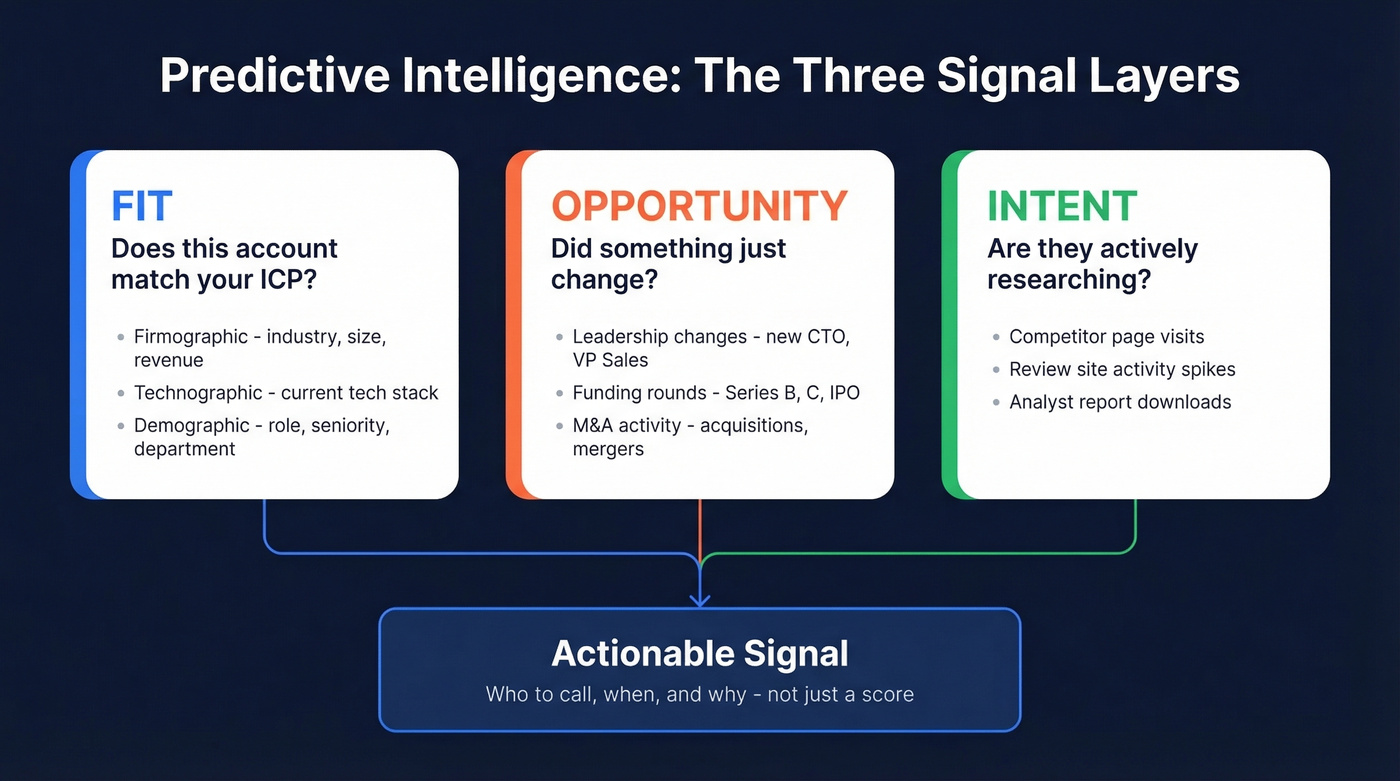
Three data layers make this work:
- Fit - firmographic, demographic, and technographic signals. Does this company match your ICP? Right size, right industry, right tech stack?
- Opportunity - trigger events like leadership changes, new funding rounds, or M&A activity. Something just changed that creates a buying window.
- Intent - behavioral buyer signals. They're visiting competitor pages, reading analyst reports, spiking on review sites.
Intent alone is noise. A company researching "CRM migration" doesn't mean they'll buy yours. But intent combined with strong fit and a fresh trigger event? That's a signal reps can act on immediately - not one that scored highest on a static model six months ago.
Conversation intelligence (analyzing call recordings and email patterns) is emerging as a fourth signal layer, though it requires mature instrumentation and clean system-of-record data to be useful.
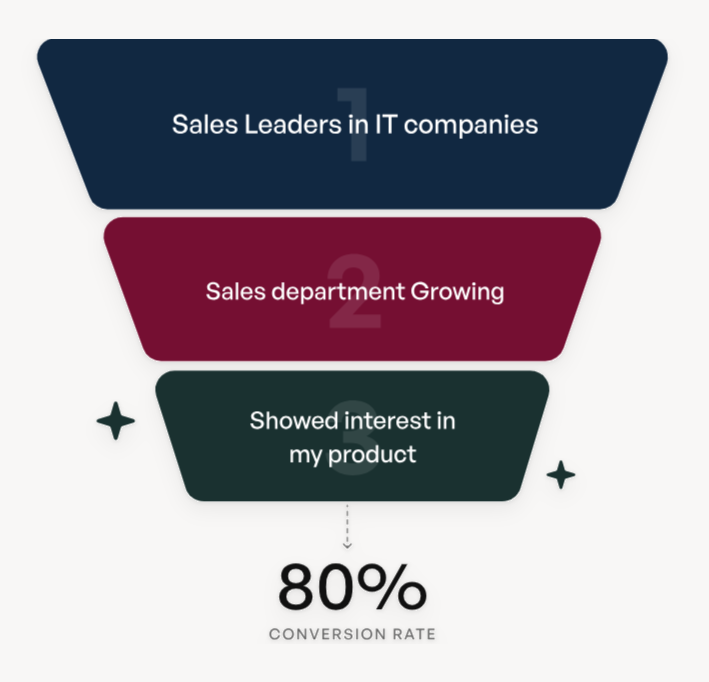
Where B2B Teams See Real Results
Not every use case delivers equally. Your data maturity determines which predictive applications are worth pursuing.
| Use Case | Data Maturity Required | Typical Impact |
|---|---|---|
| Lead scoring | Low-Medium | 50%+ less research time |
| Churn prediction | Medium | High (stable 1st-party data) |
| Pipeline risk flagging | Medium-High | Directional, not precise |
| Revenue forecasting | High | 20-50% more accurate than manual |
| Next-best-action | Very High | Inconsistent results |
Lead scoring is the entry point for a reason. It works best when you use it to reduce noise and manage volume - not as an autonomous decision engine. Teams using sales AI for prospecting report 50%+ reductions in research and qualification time, but only when the underlying data is clean enough to trust.
Churn prediction consistently outperforms acquisition models because it runs on stable first-party product usage data. If you're choosing where to start, retention models give you faster wins. Territory and quota optimization are emerging use cases, but they need very high data maturity and are better suited to orgs with 50+ reps - skip them if you're a 10-person team still cleaning up Salesforce.

Predictive intelligence fails when 25-30% of your contact data has decayed. Prospeo refreshes 300M+ profiles every 7 days - not every 6 weeks - with 98% email accuracy. Your scoring model picked the right accounts. Now actually reach them.
Stop feeding stale data into expensive predictive models.
Why Most Teams Fail
Here's the uncomfortable truth: 81% of sales teams say they're experimenting with or have fully implemented AI. But only 35% of sales pros completely trust their org's data accuracy. That gap is where predictive models go to die.
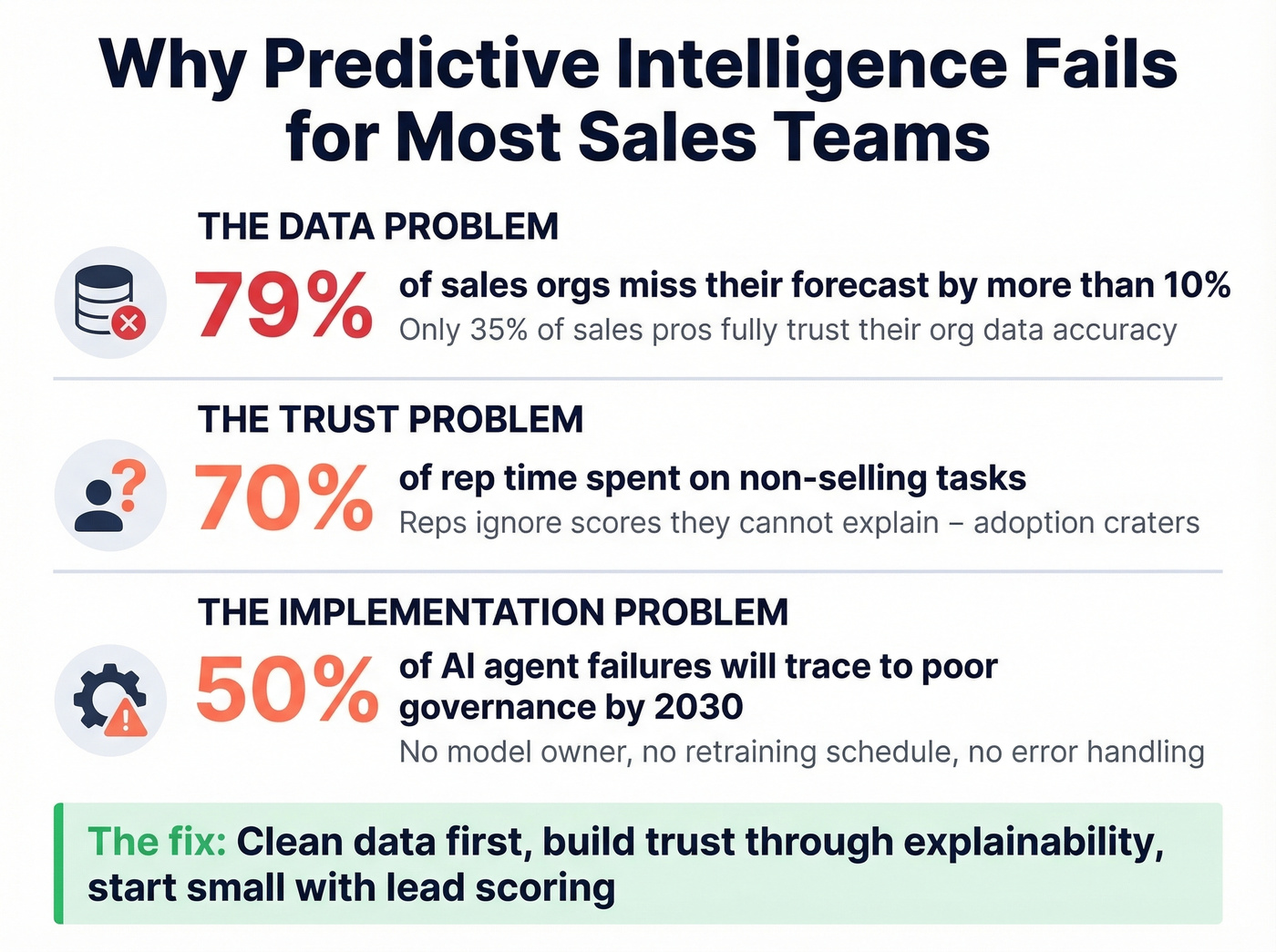
The data problem comes first. A third of sales teams cite lack of resources as their top AI hurdle. The model doesn't matter if your CRM is full of stale records, missing fields, and duplicate accounts. Reps already spend 70% of their time on non-selling tasks. Adding another tool without removing one just makes it worse.
Then comes the trust problem. Reps won't follow a score they can't explain. If your lead scoring model says "call this account" but can't articulate why, reps ignore it. Even the most sophisticated predictive sales analytics tools fail when adoption craters because nobody trusts the output. The consensus on r/SalesOperations is blunt: teams keep buying "more intelligence" tools layered on top of Salesforce, but adoption stays low because reps resist yet another platform they didn't ask for.
Finally, the implementation problem. Salesforce's own engineering team warns against building monolithic AI agents with bloated instructions. Trying to do scoring, forecasting, next-best-action, and territory optimization simultaneously is a recipe for a 6-month implementation that delivers nothing. Gartner predicts that by 2030 50% of AI agent deployment failures will trace back to insufficient governance. If you don't define who owns the model, how often it's retrained, and what happens when it's wrong, you're building on sand.
The Data Foundation Nobody Talks About
Every vendor selling AI-powered sales intelligence talks about "data quality" in the abstract. Let's be honest about what it looks like in practice.
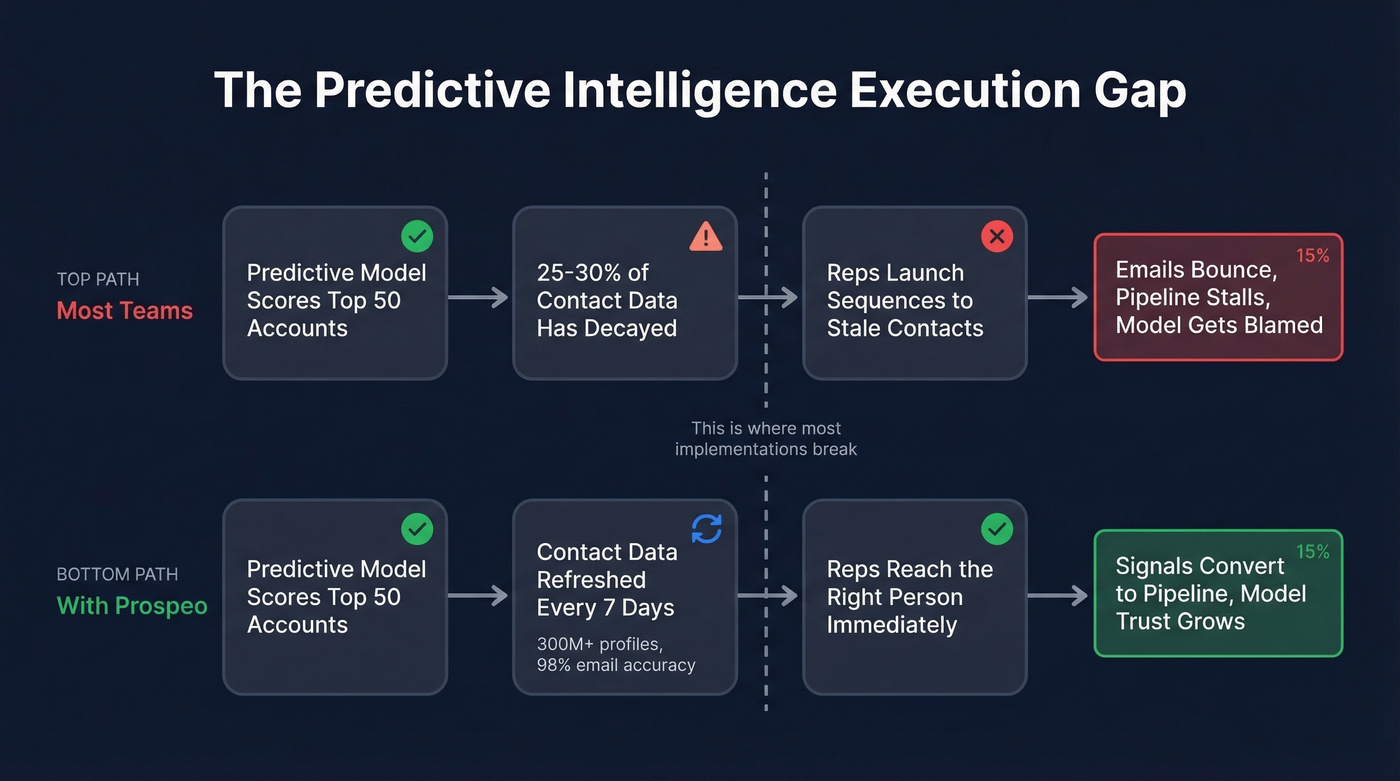
Your SDR team runs a predictive lead scoring model. The top 50 accounts light up. Reps start sequences. And a big chunk of those emails bounce because the contacts changed jobs and your CRM never got updated. The model was right about the accounts - stale contact data made execution impossible.
We've seen this pattern dozens of times. Industry estimates suggest 25-30% of B2B contact data decays annually, and the average refresh cycle is six weeks. That means by the time most teams act on a predictive signal, the person they're trying to reach has already moved on. Prospeo's 7-day refresh cycle across 300M+ professional profiles with 98% email accuracy addresses exactly this gap - it's the "last mile" fix most implementations skip entirely.

How to Get Started
Don't start with a $55K/year platform. Start here:
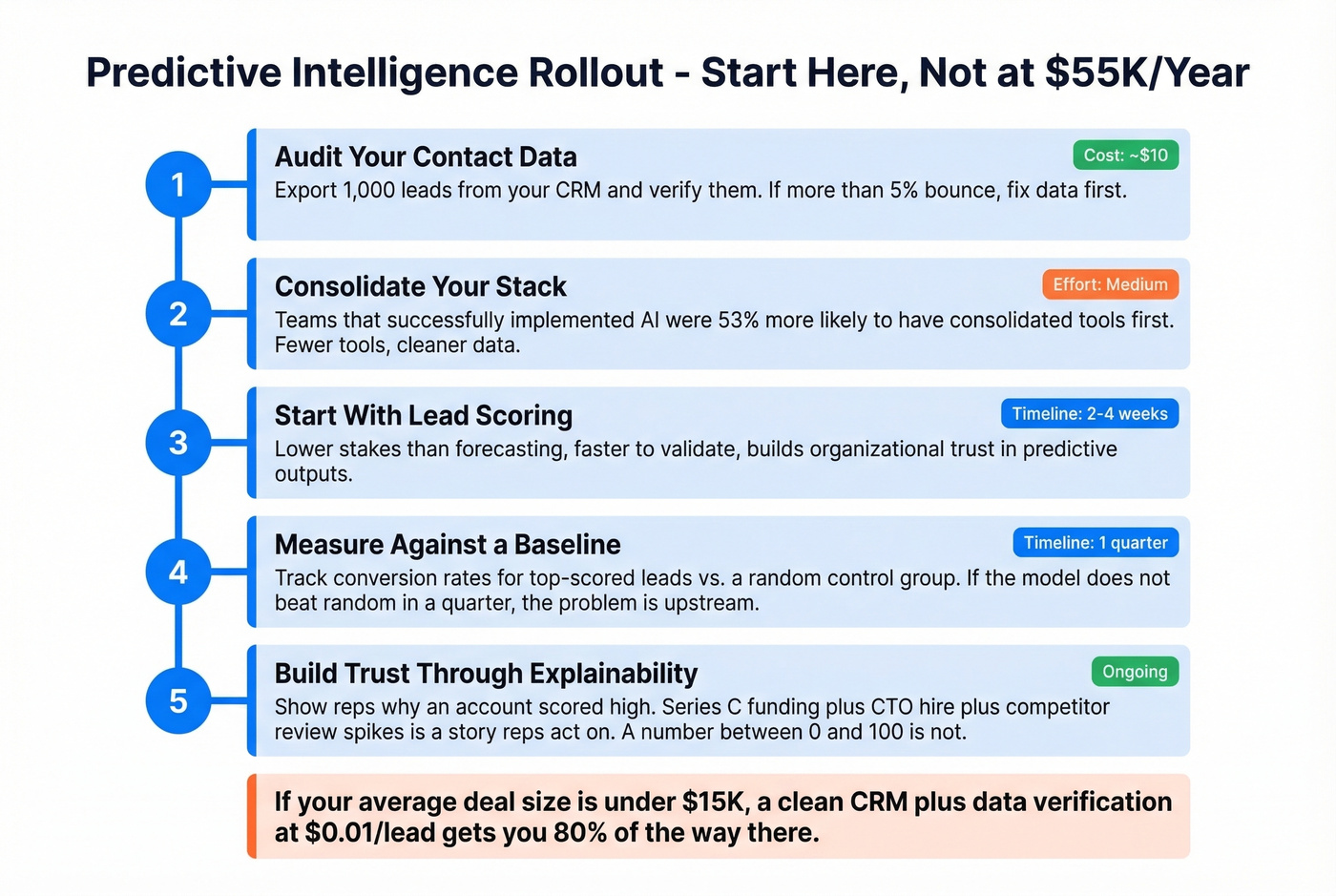
- Audit your contact data. Export 1,000 leads from your CRM and verify them. If more than 5% bounce, your data foundation is the problem - full stop. (If you need a benchmarked tool shortlist, start with an email verifier.)
- Consolidate your stack. Teams that successfully implemented AI were 53% more likely to have consolidated their tech stack first. Fewer tools, cleaner data flows. (A simple RevOps tech stack audit usually finds 3-5 redundant tools.)
- Start with lead scoring, not forecasting. Scoring is lower-stakes, faster to validate, and builds organizational trust in predictive outputs.
- Measure against a baseline. Track conversion rates for top-scored leads vs. a random control group. If the model doesn't beat random within a quarter, the problem is upstream.
- Build trust through explainability. Show reps why an account scored high. "Series C funding + CTO hire + spiking on competitor reviews" is a story a rep can act on. A number between 0 and 100 isn't.
Look, if your average deal size is under $15K, you probably don't need an enterprise predictive platform. A clean CRM, a data verification tool at roughly $0.01/lead, and a disciplined scoring rubric will get you 80% of the way there. In our experience, teams applying predictive intelligence for sales at this level see the biggest gains from data hygiene - not fancier models. (If you're rebuilding your sourcing layer, compare options in our best B2B database guide.)
Step 1 of your predictive intelligence rollout isn't buying a $55K platform - it's verifying your CRM. Prospeo's enrichment returns 50+ data points per contact at a 92% match rate, starting at $0.01/email. Fix the foundation before you build the model.
Audit 1,000 leads for free and see how much has decayed.
FAQ
What's the difference between predictive analytics and predictive intelligence?
Predictive analytics is the statistical modeling layer - regression, classification, time-series forecasting. Predictive intelligence adds the actionable recommendation on top: who to call, when, and with what message. Most B2B teams need both - the math plus the prioritized next steps that actually drive pipeline.
How much does predictive intelligence software cost?
Enterprise platforms like 6sense run $35K-$130K+/year. Mid-market tools like Forecastio start at $199/month. HubSpot includes AI forecasting from $20/user/month. For the data layer underneath, Prospeo starts free with 75 verified emails/month and scales at roughly $0.01/lead - far cheaper than bundling data into an enterprise contract.
What's the fastest way to improve prediction accuracy?
Fix your contact data. With 25-30% of B2B records decaying annually, stale data degrades every model regardless of platform. A verification tool with a weekly refresh cycle eliminates the most common failure point before you touch a single algorithm.