

Sales Onboarding Definition: Guide & Framework for 2026
Most companies don't have an onboarding problem - they have a measurement problem. They dump new reps into a shared Google Drive folder, tell them to "shadow someone for a week," and then wonder why 20% of new sales hires leave within their first 90 days.
Here's a clear sales onboarding definition, how to structure the process, and the metrics that separate real programs from expensive guesswork.
What Is Sales Onboarding?
Sales onboarding is the structured, time-bound program that equips new hires with the product knowledge, skills, tools, and workflows they need to sell effectively. That's it. No fluff required.
What it's not is general HR onboarding. HR onboarding handles paperwork, benefits, and culture orientation. Sales onboarding picks up where HR leaves off and focuses entirely on revenue-readiness: understanding the ICP, mastering the CRM, learning objection handling, and building pipeline. Think of HR onboarding as getting someone into the building. The sales-specific process is getting them ready to sell.
Onboarding vs. Sales Training
These get conflated constantly, but they shouldn't.
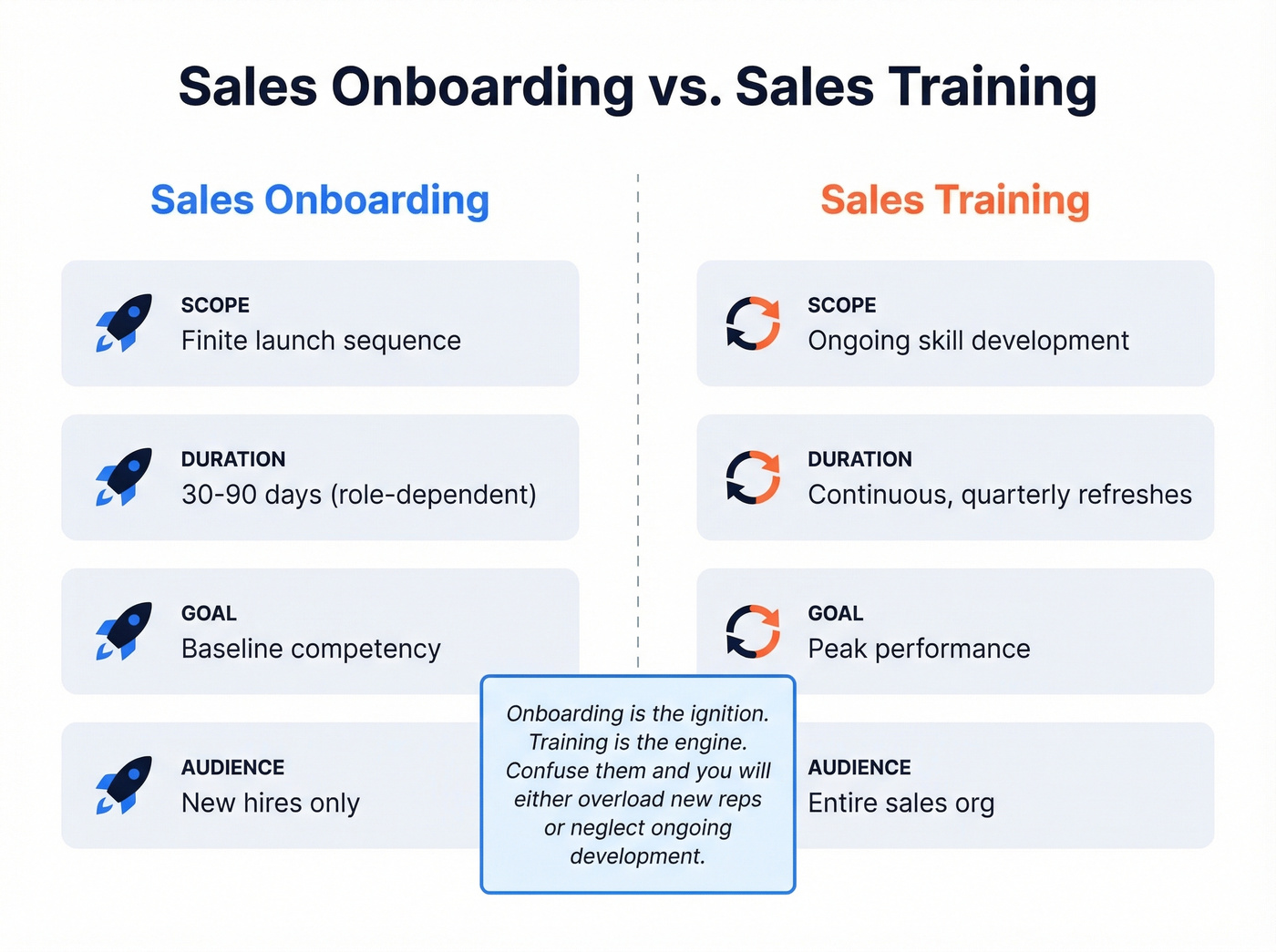
| Sales Onboarding | Sales Training | |
|---|---|---|
| Scope | Finite launch sequence | Ongoing skill development |
| Duration | 30-90 days (role-dependent) | Continuous / quarterly |
| Goal | Baseline competency | Peak performance |
| Audience | New hires only | Entire sales org |
Enablement is the engine that keeps reps sharp over time. Onboarding is the ignition - a one-time launch sequence that gets new hires from zero to functional. Confuse the two and you'll either overload new reps with advanced tactics they can't use yet, or you'll neglect ongoing development because you think onboarding "covered it." (If you want the ongoing side done right, borrow a few ideas from sales training programs that actually stick.)
Why It Matters
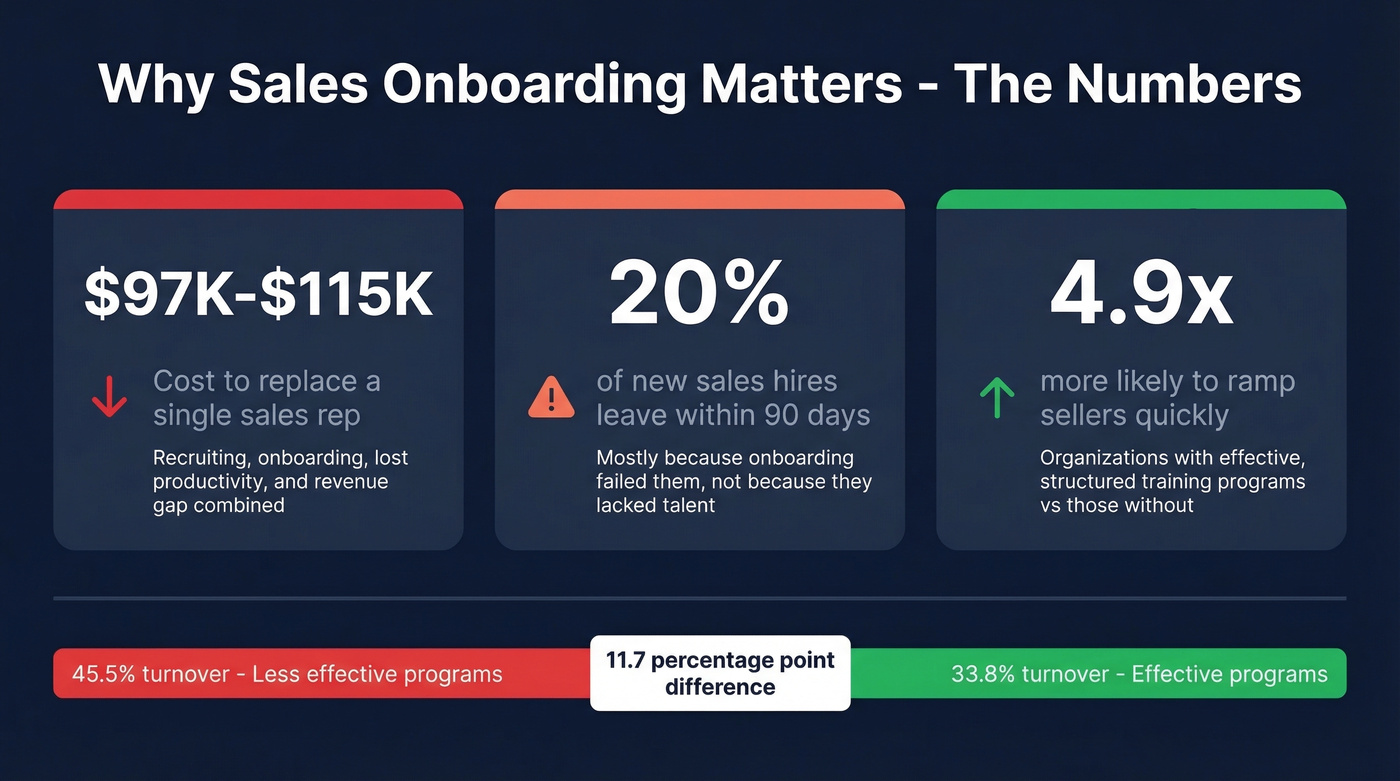
Replacing a single sales rep costs $97,000-$115,000 when you factor in recruiting, onboarding, lost productivity, and the revenue gap while the seat sits empty.
And 20% of new sales hires leave within their first 90 days - mostly because onboarding failed them, not because they weren't talented. RAIN Group's research sharpens the picture: organizations with effective training programs see undesired turnover of 33.8%, compared to 45.5% at less effective orgs. Every rep who churns in the first six months is a six-figure loss and a quarter of pipeline you'll never recover. (If you’re diagnosing the root cause, start with a simple churn analysis before you rewrite the whole program.)

Replacing a churned rep costs $97K+. Bad data accelerates that churn by killing new hire confidence in their first weeks. Prospeo delivers 98% verified emails on a 7-day refresh cycle, so your new SDRs connect with real prospects from day one - not dead leads.
GreyScout cut rep ramp time in half. Your next hire class can too.
The 30-60-90 Day Framework
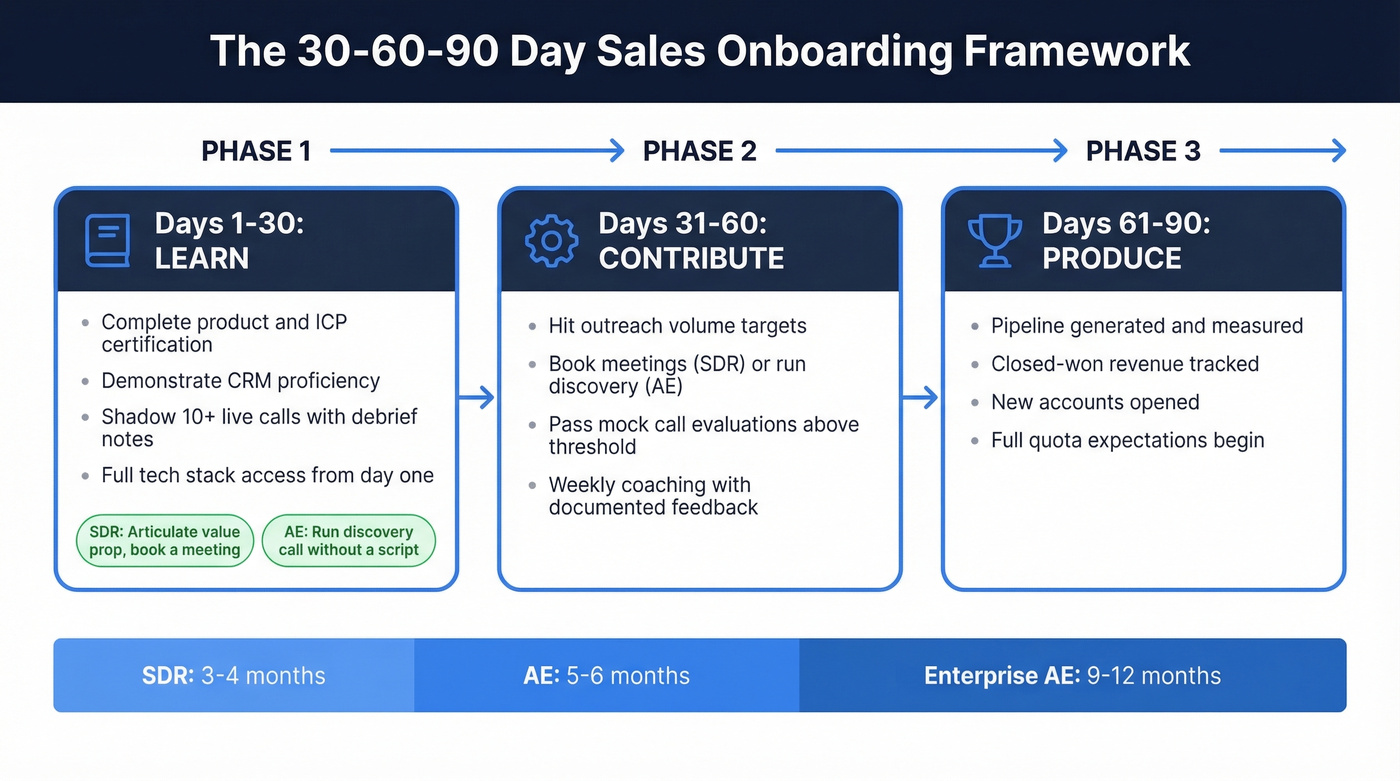
The most reliable onboarding structure breaks into three phases: learn, contribute, produce. Let's walk through each.
Days 1-30: Learn
By day 30, a new rep should have completed product and ICP certification, demonstrated CRM proficiency, and shadowed at least 10 live calls with structured debrief notes. They need full tech stack access from day one: CRM, dialer, verified prospect data refreshed weekly, and the sales playbook. Set SMART goals for each phase - "book 5 meetings by day 45" beats "start prospecting" every time.
SDR milestone: Can articulate the value prop and book a meeting from a cold list. AE milestone: Can run a discovery call without a script.
Days 31-60: Contribute
Reps shift from observation to execution. They should hit outreach volume targets, book a defined number of meetings (SDRs) or run discovery calls (AEs), and pass mock call evaluations above the team's threshold score. Weekly coaching with documented feedback isn't optional here - it's the difference between a rep who builds good habits and one who ingrains bad ones for the next two years.
Days 61-90: Produce
Now it's about outcomes. Pipeline generated, closed-won revenue, new accounts opened. SDRs average roughly 3.6 months to full ramp. AEs run closer to 5.3 months. Enterprise AEs? Budget 9-12 months. In our experience, structured programs with tight milestone tracking can cut these timelines nearly in half. (If you want a rep-ready template, use a dedicated 30/60/90 plan built for sales roles.)
How to Measure Onboarding Success
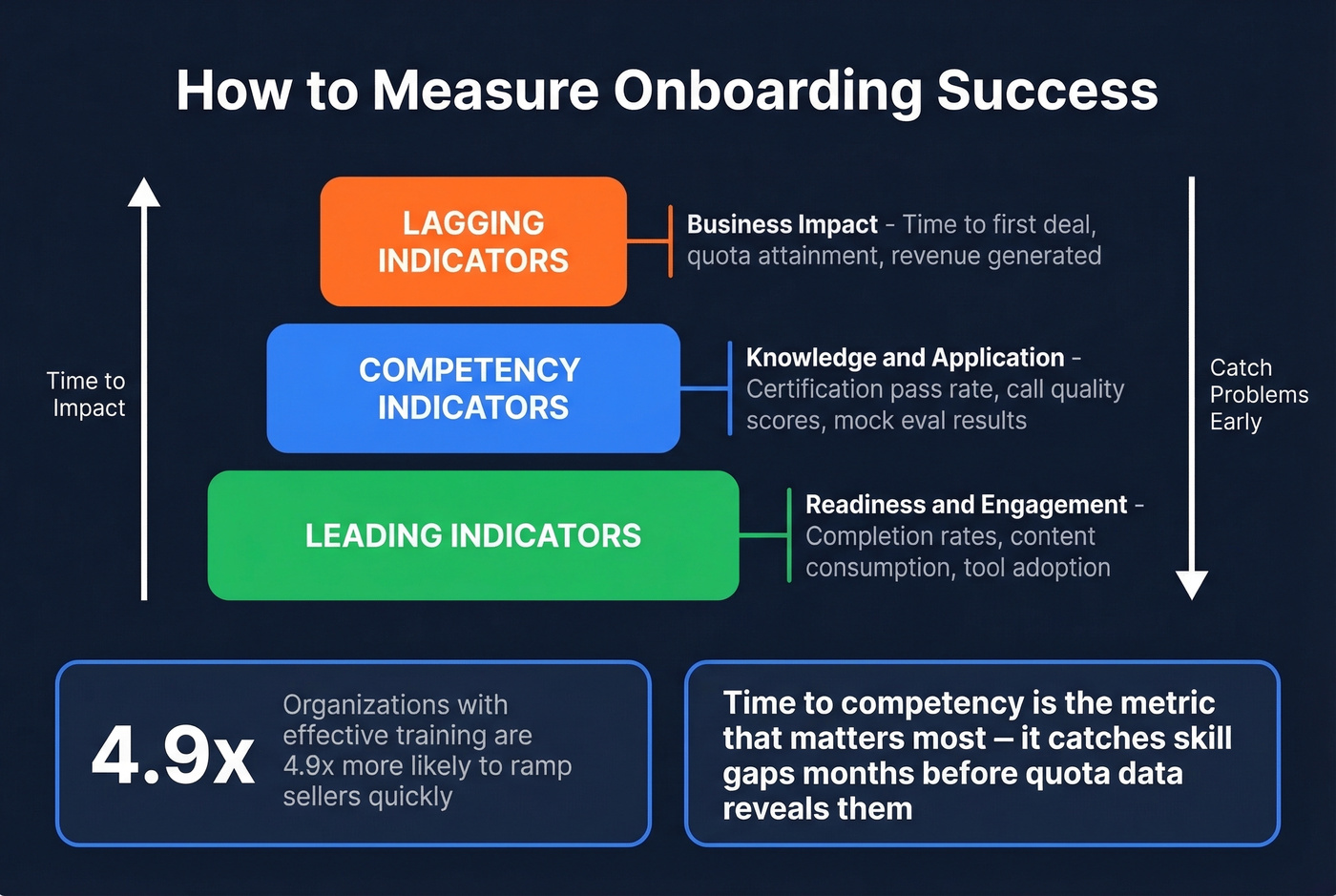
Track a three-layer model, not just quota attainment:
| Layer | What It Measures | Examples |
|---|---|---|
| Leading | Readiness & engagement | Completion rates, content consumption |
| Competency | Knowledge & application | Certification pass rate, call scores |
| Lagging | Business impact | Time to first deal, quota attainment |
Time to competency is the metric that matters most. It catches skill gaps months before quota data reveals them.
Track it simply: ramp time equals start date to first closed-won deal (or first time hitting a defined productivity threshold), and knowledge lift equals post-assessment score minus pre-assessment score. Organizations with effective training programs are 4.9x more likely to ramp sellers quickly. That's the difference between a rep contributing in month three versus month seven. (To connect onboarding to revenue outcomes, align it with your sales operations metrics and reporting cadence.)
Best Practices That Actually Work
Use a structured 30/60/90 plan, not a content dump. Ask any rep on r/sales about their onboarding experience and you'll hear the same story: a shared folder, a week of shadowing, and a "good luck." If your program lives in a Google Drive folder with 47 unorganized documents, you don't have a program. You have a reading list.
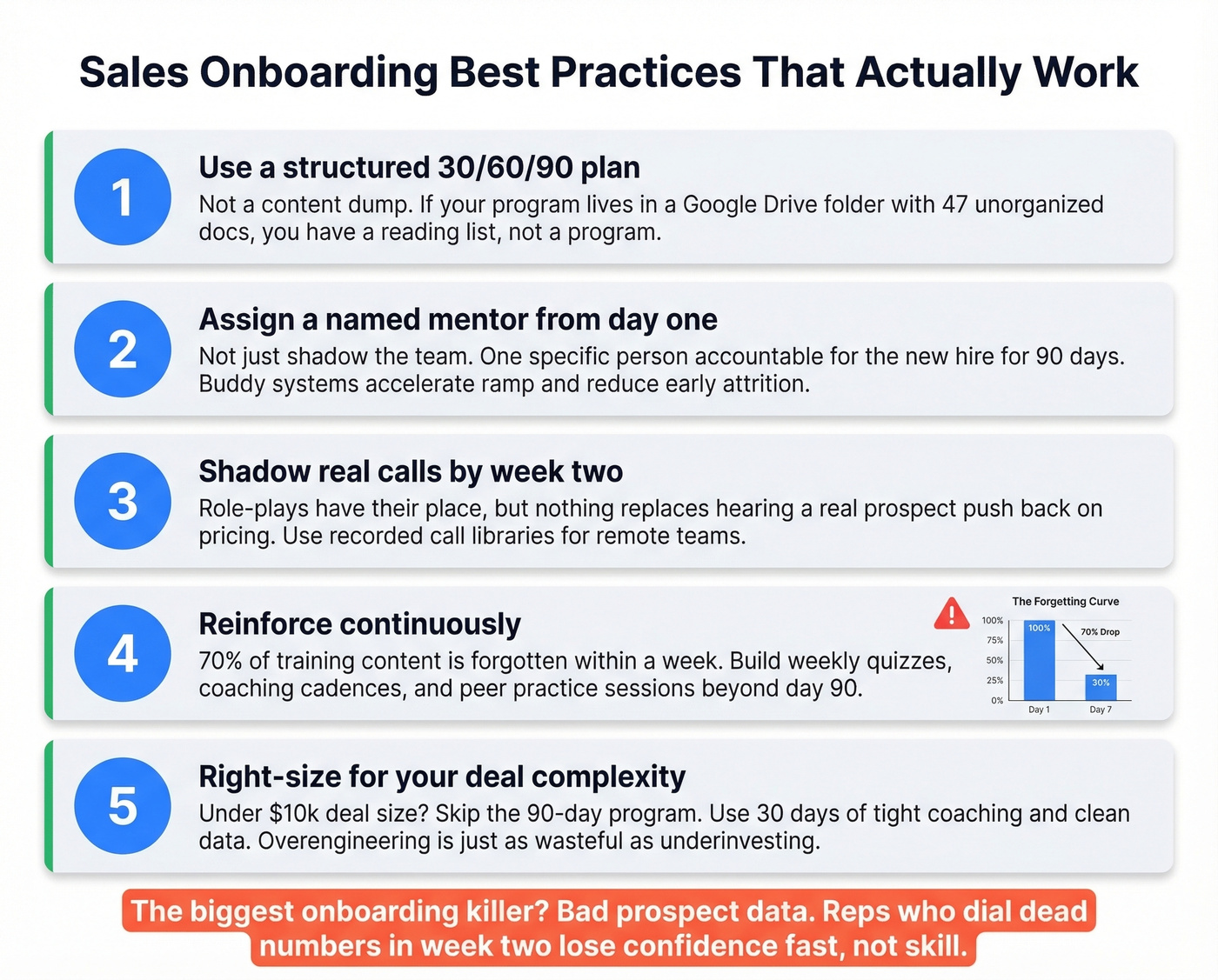
Assign a named mentor from day one. Not "shadow the team." A specific person accountable for the new hire's first 90 days. Buddy systems accelerate ramp and reduce early attrition - we've seen this pattern consistently across the teams we work with.
Shadow real calls early. Role-plays have their place, but nothing replaces hearing a real prospect push back on pricing. Get new reps on live calls by week two with structured debriefs afterward. For remote teams, replace in-person shadowing with recorded call libraries and daily standups for the first 30 days. (If your team is still building the outbound muscle, standardize the basics with a cold calling system and a few proven sales prospecting techniques.)
Reinforce continuously. 70% of training content is forgotten within a week - that's the Forgetting Curve at work. Build reinforcement loops like weekly quizzes, coaching cadences, and peer practice sessions that extend well beyond day 90.

The Data Problem Nobody Talks About
Here's the thing: your new SDR is two weeks in, finally confident enough to make calls. They dial 50 numbers - half are dead. They send 100 emails - 23 bounce. Now they're questioning whether they're bad at the job. But the problem was the data, not the rep.
I've watched this pattern destroy new hire confidence more times than I can count. The reps who struggle most in month one aren't undertrained - they're under-equipped. Prospeo verifies emails at 98% accuracy and refreshes every 7 days, so reps aren't burning confidence on dead leads. GreyScout cut rep ramp time from 8-10 weeks to 4 weeks after switching - that's the kind of acceleration that compounds across every new hire class. (If you’re fixing the data layer, start with data enrichment services and a clear email bounce rate target.)
Skip the 90-day program if your deal size is under $10k. You probably need 30 days of tight coaching and clean data instead. Overengineering onboarding for transactional sales cycles is just as wasteful as underinvesting in it for enterprise ones.
Your 30-60-90 plan means nothing if reps spend week two dialing disconnected numbers and bouncing emails. Prospeo gives new hires 300M+ verified contacts, 125M+ direct dials, and 30+ filters to build clean lists from their first outbound session.
Stop onboarding reps into broken data. Give them pipeline-ready contacts.
FAQ
How long should sales onboarding take?
SDRs typically ramp in 3-4 months, AEs in 5-6, and Enterprise AEs in 9-12. Structured programs with clear milestones and weekly coaching cut these timelines by up to 50%. The biggest variable is deal complexity, not rep talent.
What's the most important onboarding metric?
Time to competency - it catches skill gaps months before quota data does. Track it alongside certification pass rates and call scores. If ramp time isn't improving quarter over quarter, your program needs iteration, not more content.
What tools should new sales reps have on day one?
CRM access, a dialer, the sales playbook, and verified prospect data. The data layer matters more than most leaders realize - bad contact data destroys new rep confidence faster than anything else. Prospeo's free tier gives new hires 75 verified emails per month to start building pipeline immediately, while platforms like HubSpot and Salesforce handle CRM basics.