

15 Sales Tactics Examples Backed by 5M+ Calls and Real Data
Opportunities closed within 50 days have a 47% win rate. Drag past that window and it drops below 20%. Meanwhile, 64% of sellers missed quota last year - not because they lacked hustle, but because they stacked the wrong tactics on bad data.
Every sales tactics example in this article has a stat, a script, or a benchmark attached. No "just be consultative" filler. And here's the contrarian thesis running through all of it: your tactics probably aren't broken. Your contact data is.
Cold Outreach Tactics With Scripts
Open With the Right Line
Gong Labs analyzed 5M+ sales calls and found that opening with "How've you been?" performs 6.6x better than any other cold call opener. Meanwhile, "Did I catch you at a bad time?" tanks your booking rate by 40%.
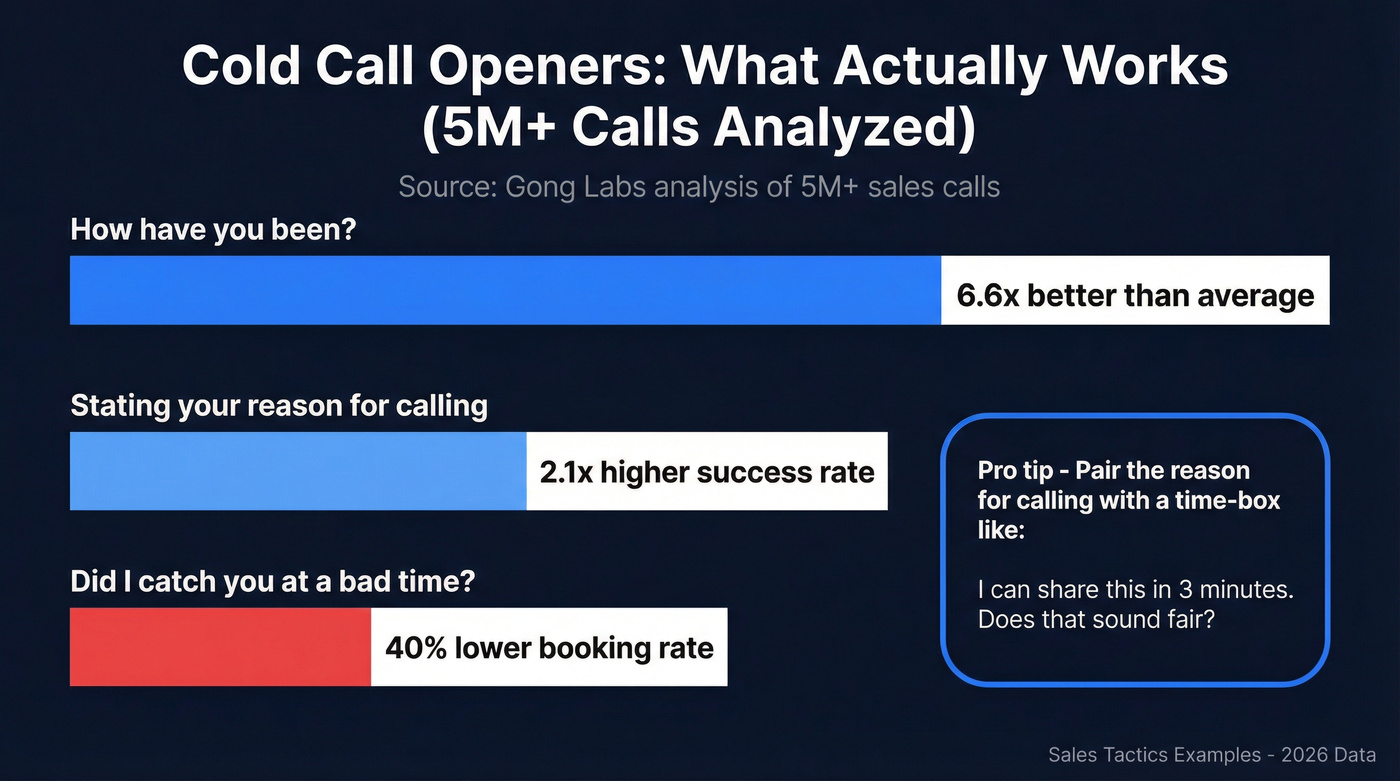
The second-highest-impact move is stating your reason for calling immediately - a 2.1x higher success rate versus burying the purpose. Pair it with a time-box:
"Hi [Name], the reason I'm calling is - in three minutes, I can share how we help [similar company] solve [specific problem]. Does that sound fair?"
Reps in the field swear by a variation they call the "pattern interrupt" - saying something unexpected like "I know you didn't expect this call" to break autopilot rejection. We've seen teams combine the pattern interrupt with Gong's reason-stating framework and outperform either approach alone. It costs nothing to implement but consistently moves the needle.
Call at the Right Time
Tuesday between 10-11am in the prospect's time zone is the sweet spot, per Cognism's cold calling research. That's not a massive edge on its own, but stacking timing with the right opener compounds results. Reps who call at random times and open with weak lines fight two headwinds at once.
Personalize With Signals, Not Guesswork
Generic cold emails pull 3-5% reply rates. Signal-personalized outreach - referencing a job change, a funding round, a tech stack shift - hits 15-25%. That's a 5x difference from the same rep, same offer, same ICP.
The catch? Personalization requires data. You can't reference a prospect's tech stack if your CRM field is blank. Run your list through an enrichment tool before writing a single email. Prospeo, for instance, returns 50+ data points per contact including job titles, technographics, and intent signals at an 83% enrichment match rate - the kind of signal density that turns a generic "saw your company is growing" into a specific, relevant opener.
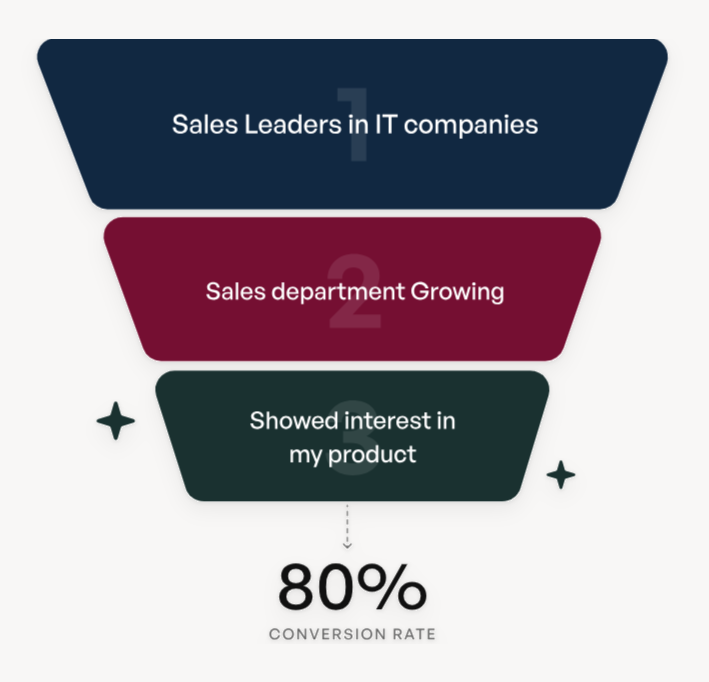
Discovery and Qualification Tactics
Ask Better Questions
Top reps ask questions 54.3% of the time after hearing an objection. Average reps? Just 31%.
The gap isn't confidence - it's curiosity. Instead of defending your product, dig deeper with stems like "Can you help me understand..." and "Can you walk me through..." These prompts generate longer buyer answers, which the same dataset correlates with higher close rates. Your talk-to-listen ratio should sit at 30-40% during discovery. Over 50% means you're pitching, not discovering.
Winning By Design reports a 298% increase in wins and 50% shorter cycles when teams adopt a systems-based diagnostic approach to discovery - treating every call like a doctor's intake, not a product demo. This matters most for B2B selling tactics where multiple stakeholders need to feel heard before a deal advances.
Match Methodology to Deal Size
One framework doesn't fit every deal. Stop using one for everything.
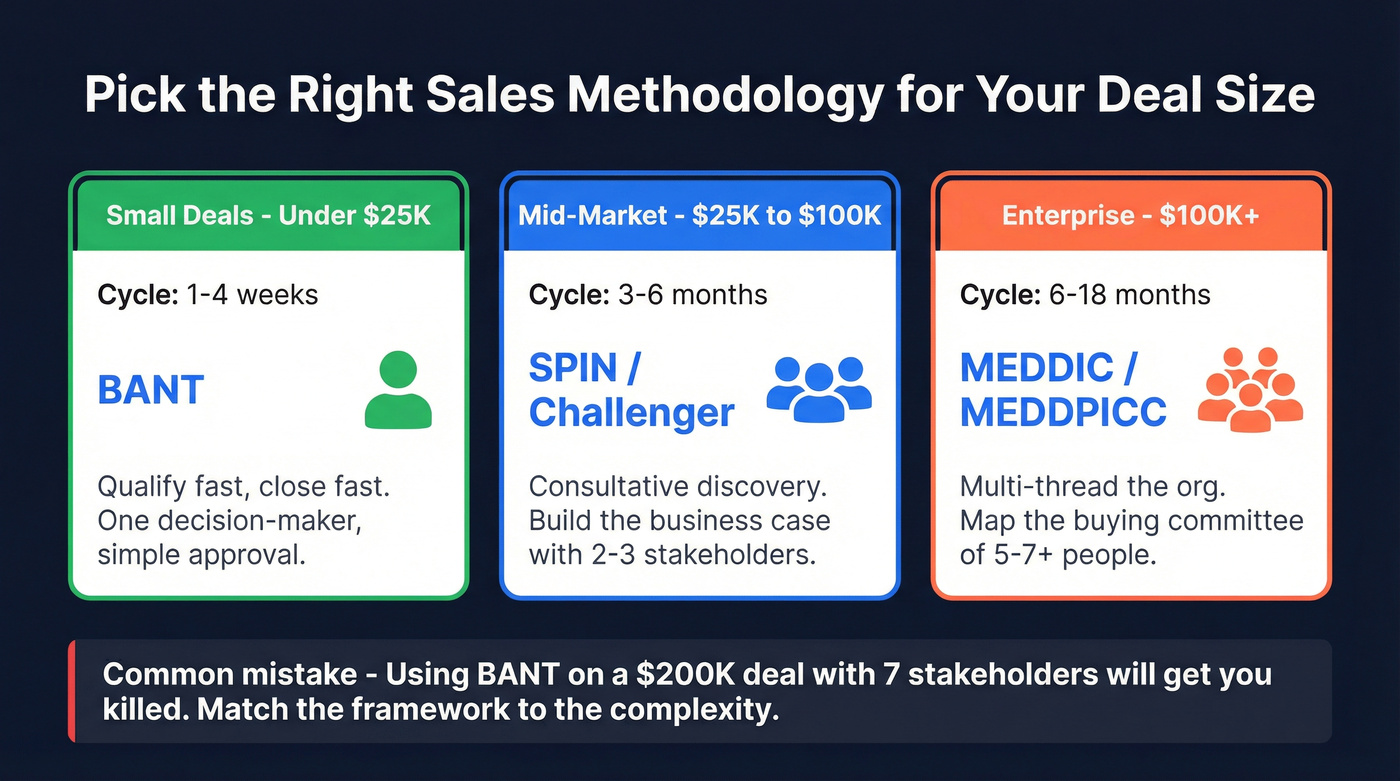
| Deal Size | Cycle | Best Methodology | Key Move |
|---|---|---|---|
| <$25K | 1-4 weeks | BANT | Qualify fast, close fast |
| $25-100K | 3-6 months | SPIN / Challenger | Consultative discovery |
| $100K+ | 6-18 months | MEDDIC/MEDDPICC | Multi-thread the org |
BANT is fine for a $15K deal with one decision-maker. It'll get you killed on a $200K deal with a buying committee of seven.
Closing and Follow-Up Tactics That Work
Close for the Next Step, Not the Deal
Do this: End every call with "Do you have your calendar handy?" It's specific, low-pressure, and converts conversation into commitment.
Skip this if you want results: "So, what do you think?" or "Does that make sense?" - filler questions that let the prospect off the hook without committing to anything.
It takes 5-7 touches to reach a contact for the first time. Most reps stop at two. Plan for at least five across email, phone, and social.
Use Social Proof After the Problem
Drop a customer story right after the prospect raises a concern - not before.
"We had a client in [similar industry] who had the same worry - here's what happened."
89% of people trust recommendations from people they know, and 84% trust online reviews as much as personal ones. A relevant case study is the next best thing. Nobody cares about your logos until they believe you understand their situation.
When a prospect says "I don't have time," don't fold:
"Totally understand. I'll call back [specific date/time] unless there's a better window?"
Respectful, persistent, and it keeps the door open.

Signal-personalized outreach hits 15-25% reply rates - but only if your data has the signals. Prospeo enriches every contact with 50+ data points including technographics, job changes, and intent signals at an 83% match rate. That's the difference between 'saw your company is growing' and a reply.
Stop guessing. Start every sales tactic with data that actually connects.
3 Tactics That Backfire
Pitching before diagnosing. If you're over 50% talk time in discovery, you're solving a problem the prospect hasn't confirmed they have. Ask first, pitch second.
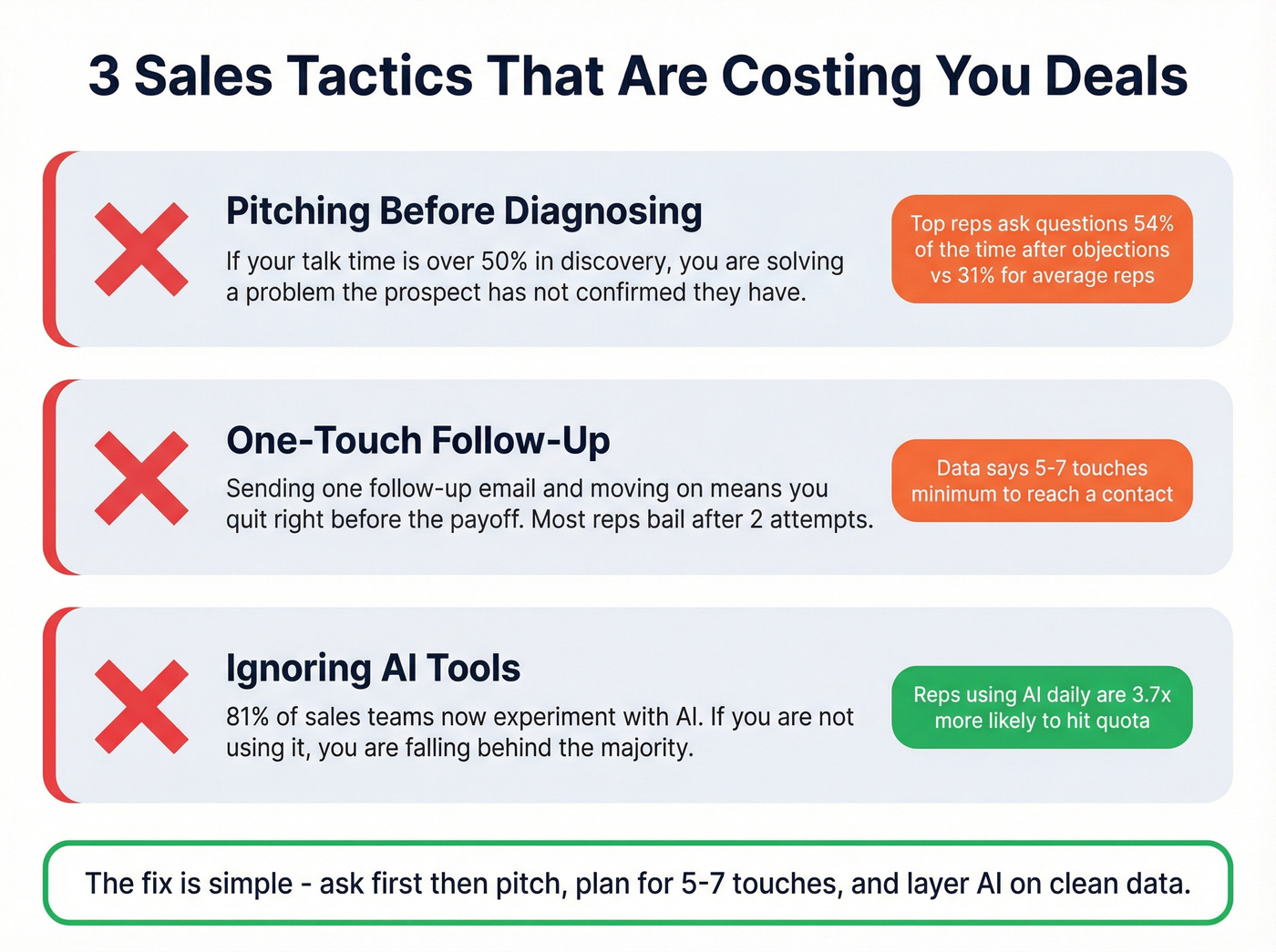
One-touch follow-up. Sending a single follow-up email and moving on means you're quitting right before the payoff. The data says 5-7 touches minimum. Let's be honest - most reps know this intellectually but still bail after two attempts because it feels awkward. Get over it.
Ignoring AI tools. 81% of sales teams now experiment with AI, and reps using AI daily are 3.7x more likely to meet quota. In our experience, teams that layer AI-assisted personalization on top of clean data see compounding returns that manual approaches alone can't match.
Operational Changes That Multiply Results
These aren't talk tracks. They're operating changes that compound every tactic above.
Shrink Your Book to Grow Pipeline
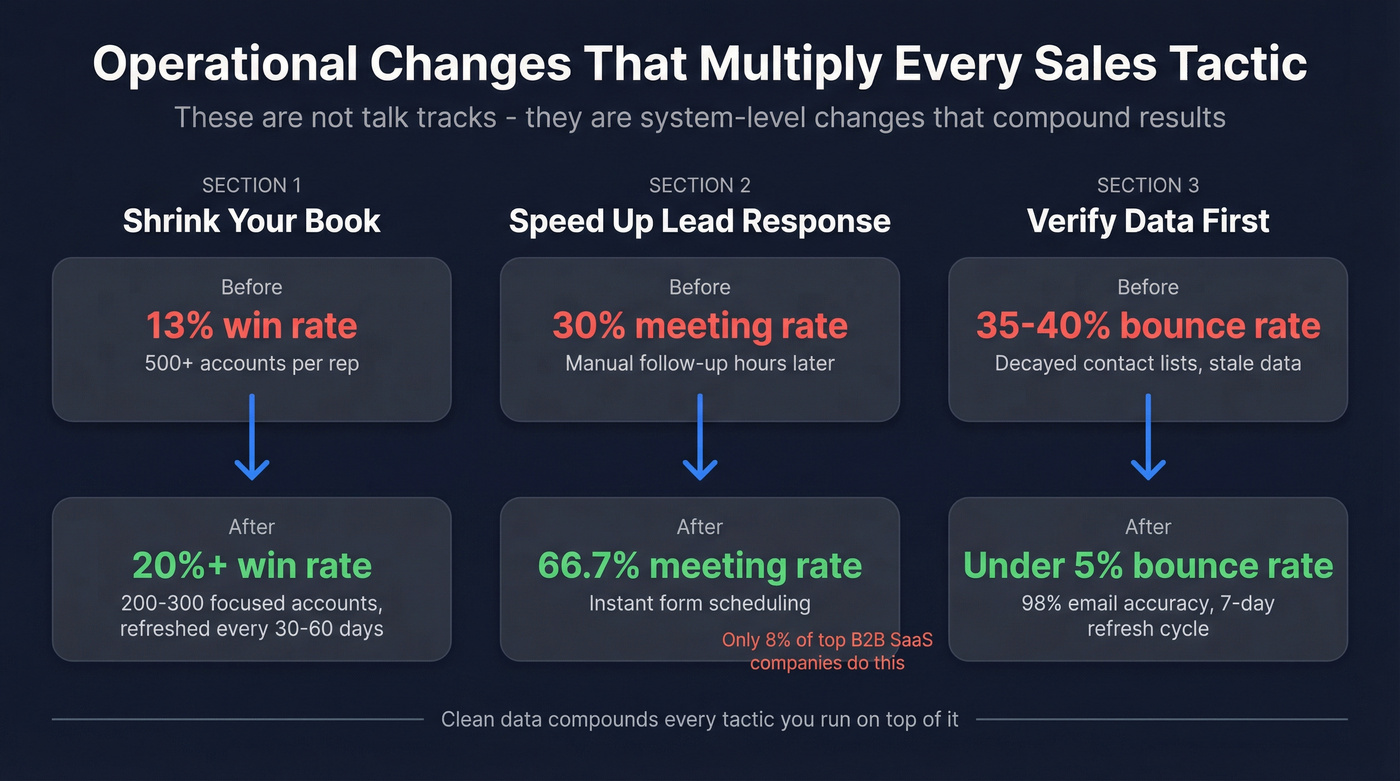
Gradient Works found that trimming rep books from 500+ accounts to 200-300 increased win rates from 13% to 20%+. Sales cycles have lengthened 32% since 2021, and reps spend roughly 2 hours per day actually selling. Give them fewer, better accounts and refresh every 30-60 days. The consensus on r/sales backs this up - reps with bloated books consistently report spending more time on admin than on conversations.
Speed Up Lead Response
Chili Piper analyzed ~4 million form submissions and found that instant form scheduling doubles meeting conversion - from 30% to 66.7%. Yet only 8% of top B2B SaaS companies have it. If your inbound leads wait hours for a follow-up email, you're leaving meetings on the table.
Verify Data Before Every Campaign
Here's the thing most sales leaders won't say out loud: if your average deal size is under $50K, you'll get more pipeline lift from cleaning your contact data than from any new talk track or methodology.
HubSpot's data shows 35% of contact data decays annually. Every tactic above assumes you're reaching the right person - and if a third of your list is dead, your reps are burning hours on voicemail and bounces. We ran into this ourselves when testing outbound sequences for a client campaign: the scripts were solid, the timing was right, but 30%+ of the list was stale. Fixing the data layer moved the needle more than any script revision did.
Prospeo addresses this with 98% email accuracy, 125M+ verified mobile numbers with a 30% pickup rate, and a 7-day refresh cycle versus the six-week industry average. Snyk cut bounce rates from 35-40% to under 5% across 50 AEs after switching. Clean data compounds every tactic you run on top of it.

The Psychology Behind These Tactics
Three principles explain most of the sales tactics examples above.
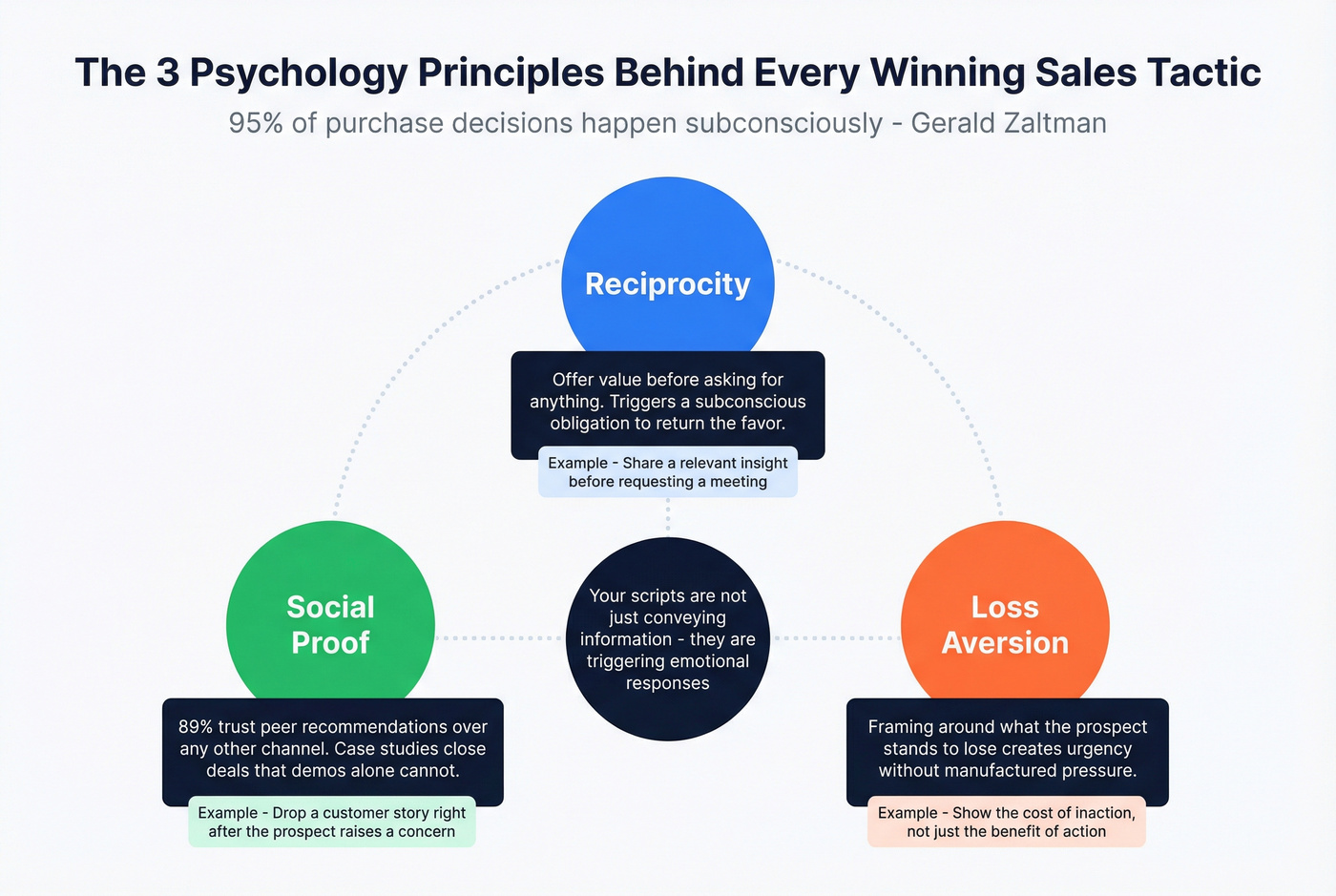
Reciprocity - offering value before asking for anything triggers a subconscious obligation to return the favor. Social proof - 89% trust peer recommendations over any other channel, which is why case studies close deals that demos can't. Loss aversion - framing around what the prospect stands to lose creates urgency without manufactured pressure.
Gerald Zaltman's research found that roughly 95% of purchase decisions happen subconsciously. Your scripts aren't just conveying information - they're triggering emotional responses. The reps who internalize this stop treating objections as logical problems to solve and start treating them as emotional signals to acknowledge.
Every tactic in this article compounds on one thing: reaching the right person with the right message. Prospeo delivers 98% email accuracy, 125M+ verified mobiles with a 30% pickup rate, and refreshes every 7 days - so your 5-7 touch sequences land instead of bounce.
Bad data is why 64% of reps miss quota. Remove that variable now.
FAQ
What's the difference between a sales tactic and a sales strategy?
A strategy is your overall plan - who to target, how to position, which markets to enter. A tactic is a specific action within that plan, like a cold call opener or follow-up cadence. Strategy sets direction; tactics are the moves you execute along the way.
How many follow-ups should I send before moving on?
Plan for 5-7 touches across email, phone, and social before marking a prospect as unresponsive. Most reps stop at two, which means they quit right before the data says contacts typically engage.
Why aren't my outbound tactics getting results?
Usually it's the data, not the tactic. If 35% of your list has decayed, your best scripts hit voicemail and dead inboxes. Verify your list before running any campaign - clean data is the foundation every other tactic depends on.