

SDR Meaning in Tech: The Honest, Data-Backed Guide
You're three months into a new role. You've made 2,000 cold calls. You've booked 8 meetings. Your manager wants 15. You didn't pick the wrong career - but most guides explaining what an SDR does in tech read like recruiting brochures, not reality checks. Here's what the role actually looks like when nobody's selling you something.
The Short Answer
SDR stands for Sales Development Representative. In tech, it's the entry-level sales role responsible for generating pipeline - not closing deals. Median OTE sits at $85k, but only 57.3% of SDRs hit quota. AI is automating the repetitive parts, and the reps who thrive in 2026 specialize and learn to use AI tools rather than compete against them.
The Role Explained
An SDR is the person at the top of the B2B sales funnel who prospects for new business, qualifies leads, and books meetings for Account Executives. They don't close deals. They fill the pipeline so closers have something to work with.
Quick disambiguation: if you Googled "SDR" and landed on a Wikipedia page about software-defined radio, that's a completely different field. We're talking about the sales role - the one that exists at virtually every SaaS company with an outbound motion.
The SDR function is the engine room of tech sales. Unglamorous, repetitive, and critical.
SDR vs BDR vs AE
The titles get confusing because companies use them inconsistently. Traditionally, SDRs handle inbound lead qualification while BDRs run outbound prospecting. In practice, many companies use the titles interchangeably, and 58% of SDRs juggle 75+ accounts per quarter regardless of what's printed on their business card. Plenty of companies don't separate the roles at all.
| Role | Function | Focus | Comp Range |
|---|---|---|---|
| SDR | Qualify & book | Inbound leads | $70k-$102k OTE |
| BDR | Prospect & book | Outbound cold | $75k-$100k OTE |
| AE | Demo & close | Pipeline deals | $120k-$250k+ OTE |
The real distinction isn't the acronym. It's whether you're opening doors or closing them.
What SDRs Actually Do Daily
A typical outbound rep makes 50-80 dials per day, sends dozens of emails, and works multi-channel sequences of 8-12 touches across phone, email, and social. The goal: 12-15 qualified meetings per month.
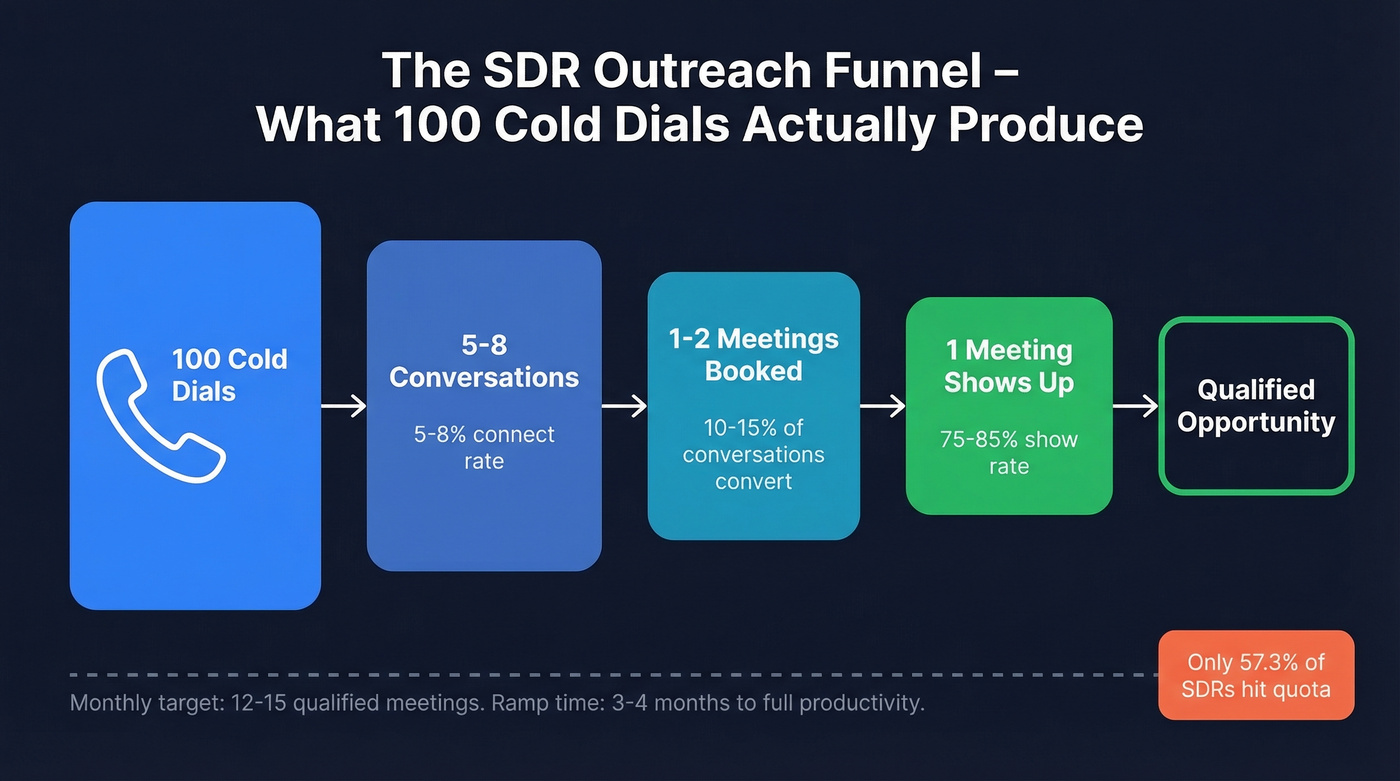
The math is humbling. Cold call connect rates run 5-8%. Of those conversations, maybe 10-15% convert to a booked meeting. Show rates hover at 75-85%. That means for every 100 dials, you're getting 5-8 conversations, converting 1-2 into meetings, and hoping most actually show up. If you're in month two and feeling underwater, that's normal - ramp time runs 3-4 months to full productivity.
The daily loop looks like this: research accounts, build prospect lists, verify contact data, execute sequences, make calls, log activities in CRM, debrief with your AE. Repeat. The "verify contact data" step matters more than most new reps realize - dialing dead numbers or emailing bounced addresses doesn't just waste time, it torches your domain reputation . We've seen teams cut bounce rates from 35% to under 4% just by running contacts through a verification step before loading them into sequences.
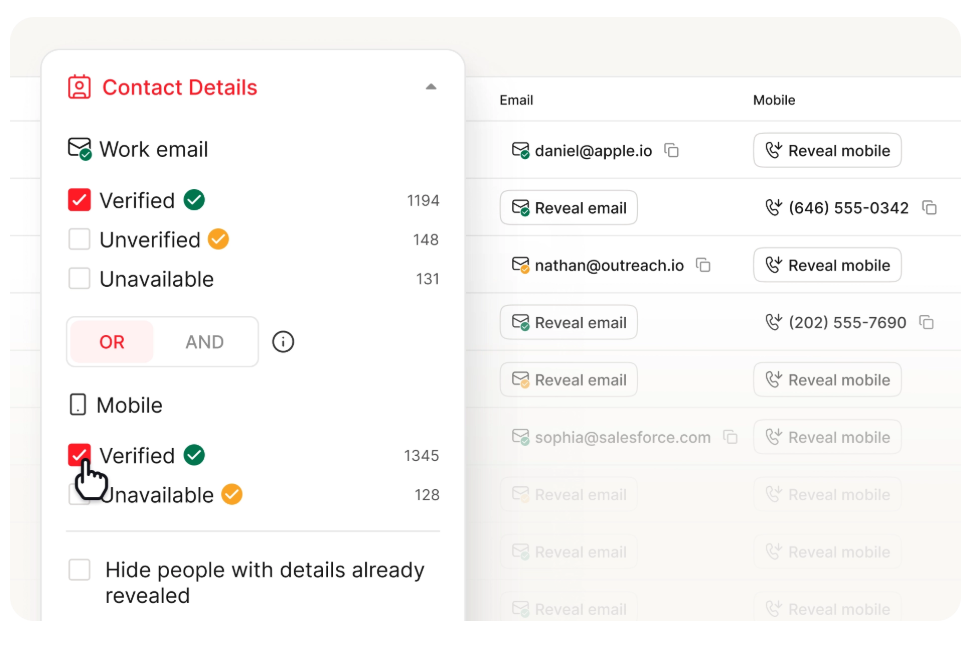

The article says it plainly: dialing dead numbers and emailing bounced addresses torches your domain reputation. Prospeo's 5-step email verification delivers 98% accuracy, and teams consistently drop bounce rates from 35% to under 4%. At $0.01 per email, even a ramping SDR can verify every contact before it hits a sequence.
Stop burning quota on bad data. Verify before you dial.
SDR Compensation in 2026
RepVue's 2026 data puts the median SDR base at $60k with $85k OTE. Top performers hit $127,955. Glassdoor's dataset of 10,000+ salaries shows a median total pay of $102k, though that includes bonuses and commission that aren't guaranteed.
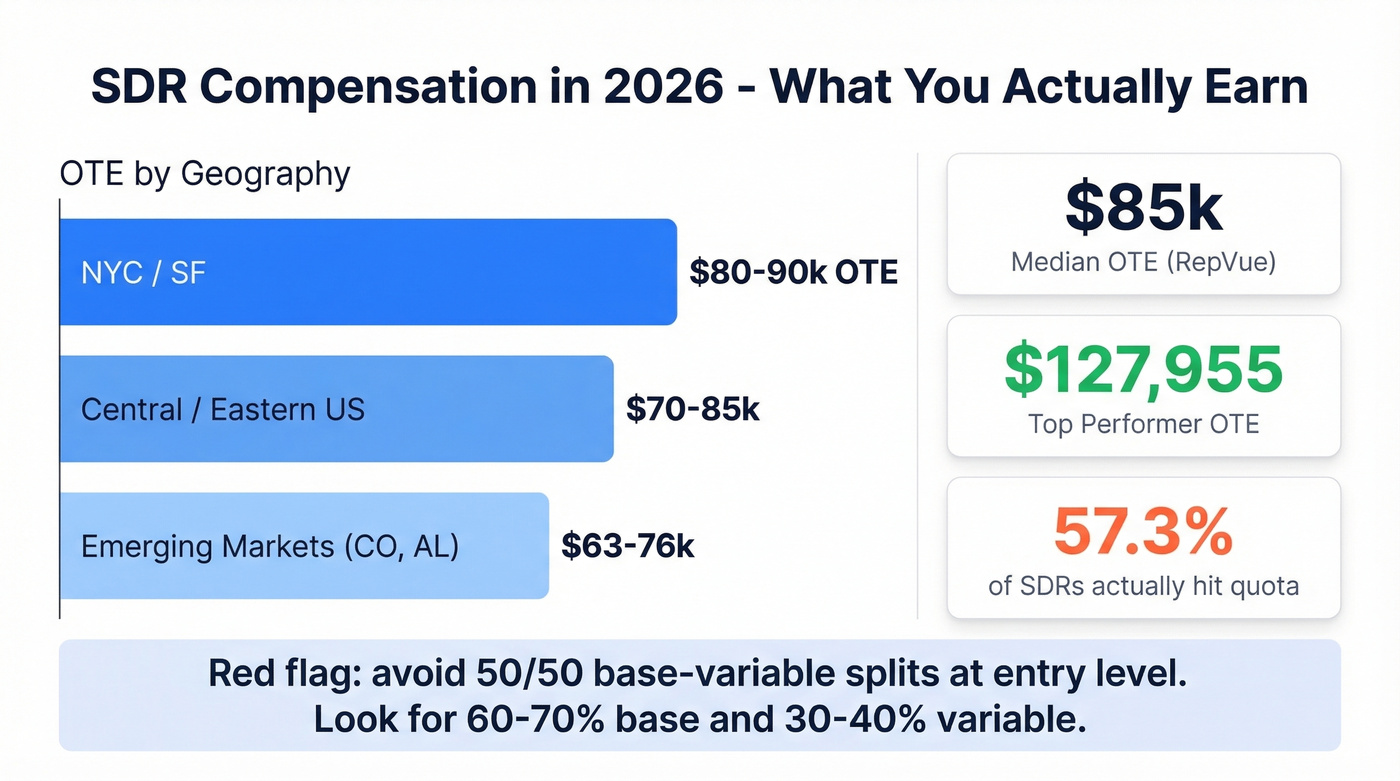
Geography matters. New York or San Francisco reps can expect $80-90k OTE. Central and Eastern time zones run $70-85k. Emerging markets like Colorado Springs or Huntsville come in 10-15% below traditional hubs, per Betts Recruiting's analysis.
Here's the thing about OTE: it's a ceiling, not a floor. Nearly half of reps earn less than the advertised number. The best comp plans split 60-70% base and 30-40% variable. If a company offers you a 50/50 split at the entry level, that's a red flag. New reps shouldn't carry that much comp risk.
The SDR Tech Stack
The average team uses 12-15 tools daily, and the all-in cost runs $2,000-$5,000 per rep per month. The 2026 trend is consolidation - platforms covering 3-4 categories are replacing the bloated 8-tool stack that was standard two years ago.
| Category | Example Tools | Cost Range |
|---|---|---|
| CRM | Salesforce, HubSpot | $25-$300/user/mo |
| Prospecting Data | Prospeo, Apollo | Free-$500+/user/mo |
| Engagement | Outreach, SalesLoft | $75-$150/user/mo |
| Dialer | Orum, Nooks | $50-$350+/user/mo |
| Enrichment | Clearbit, LeadIQ | $30-$200/user/mo |
| Scheduling | Calendly, Chili Piper | $10-$30/user/mo |
| Intent Signals | Bombora, 6sense | $500-$5,000/mo |
| Conversation Intel | Gong, Chorus | $100-$200/user/mo |
Our recommendation: start with three tools - CRM, prospecting data, and a sequencer. Expand only when you've maxed out what those three can do. Prospeo covers prospecting data and enrichment in one platform with 30+ search filters and native integrations into Salesforce, HubSpot, Outreach, and SalesLoft, which cuts the stack and the budget significantly. Skip the intent data tools until you're past 3 reps and have the pipeline volume to justify the spend.
If you're evaluating options, start with a ranked list of SDR tools and then narrow by your motion (inbound vs outbound) and your data quality requirements.

How AI Is Reshaping the Role
A fully loaded human rep costs $75-110k/year. An AI SDR solution runs $15-35k/year. Cost per lead drops from roughly $262 to $39 - an 85% reduction.
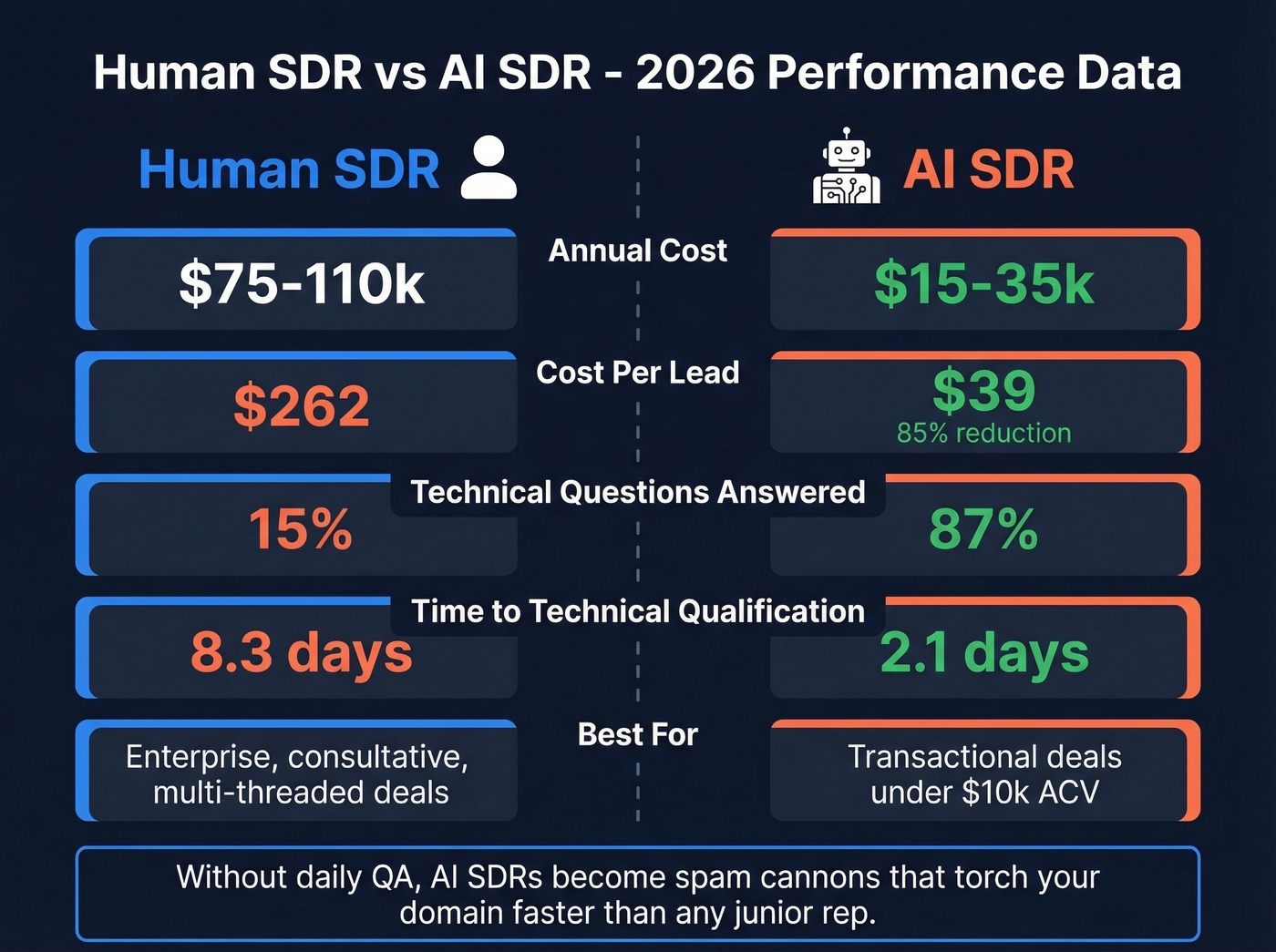
SaaStr tracked AI SDRs across portfolio companies and found AI answered technical questions 87% of the time versus 15% for humans. Time to technical qualification: 2.1 days for AI versus 8.3 for humans. AI was cited in roughly 55,000 U.S. layoffs in 2025 alone.
Let's be honest about the biggest AI SDR failure mode: treating it as set-and-forget. Without daily QA, AI turns into a spam cannon that torches your domain reputation faster than a junior rep ever could.
Here's our read on where this lands. If your average deal size is under $10k and your sales motion is transactional, an AI SDR will outperform a human within 12 months. Enterprise outbound, consultative qualification, and multi-threaded account penetration remain human territory. The reps who survive bring judgment, context, and relationship skills that AI still can't replicate - and that's exactly where the role is shifting, from volume dialer to strategic pipeline consultant.
If you're leaning into AI, pair it with AI cold email outreach best practices so you don't trade speed for deliverability.
Career Path Beyond "SDR to AE"
The standard narrative: do 12-18 months as a Sales Development Representative, get promoted to AE, start closing. Reality is messier. One practitioner on r/sales shared their 7-year journey - one year as an inbound rep, moved to outbound, promoted to AE after 18 months, then fired or laid off three times. They still called the SDR years "some of the most enjoyable" for the learning and camaraderie.
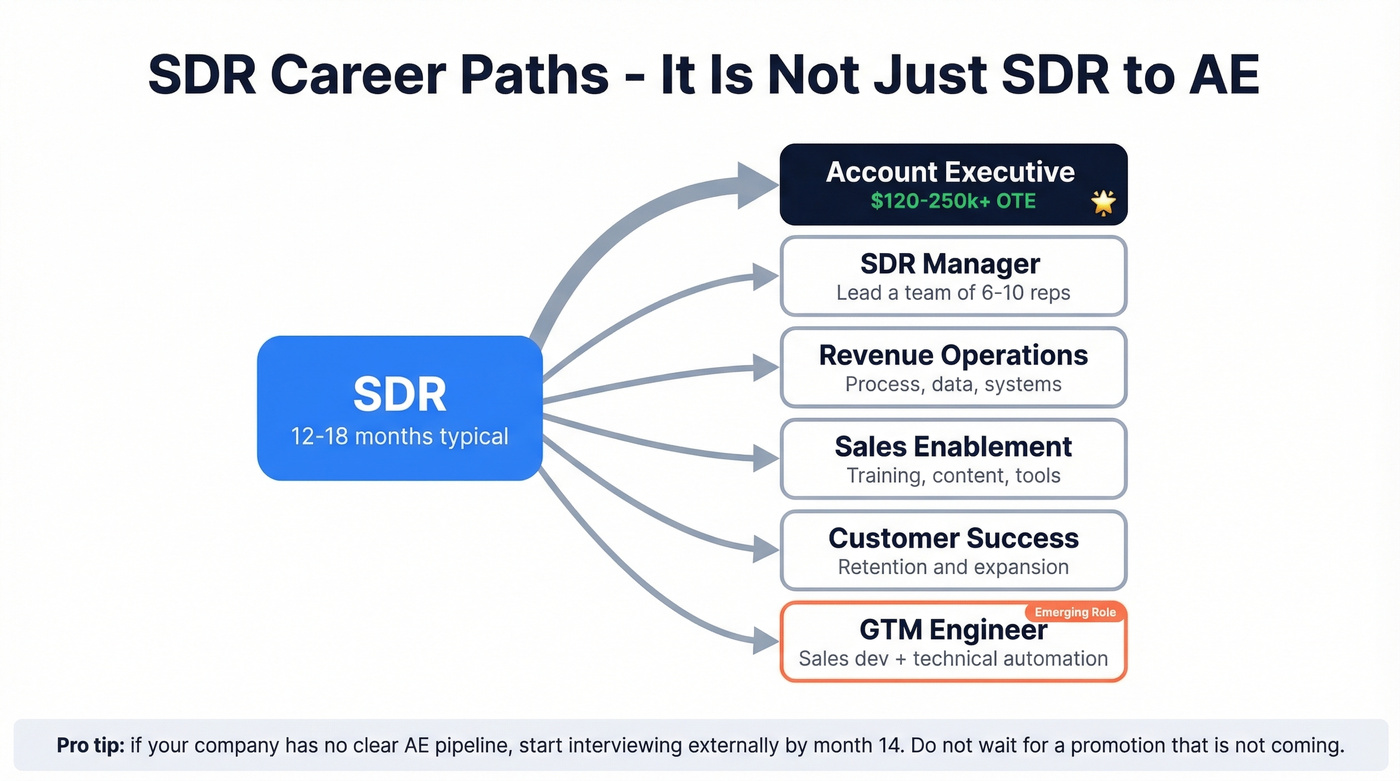
Another common thread on r/sales: productive reps stuck for 2-3 years because their company simply doesn't promote from within. If your org has no clear AE pipeline, start interviewing externally by month 14. Don't wait for a promotion that isn't coming.
The AE path isn't the only path. RevOps, Sales Enablement, Customer Success, SDR Management, and the emerging "GTM Engineer" role are all viable exits. GTM Engineers combine sales development with technical automation - building prospecting workflows, managing data pipelines, and deploying AI tools. The contrarian take: treating the SDR role as a waiting room is the problem. The best reps treat pipeline generation as a craft, and that mindset makes them valuable regardless of which direction they go next.
If you're trying to level up faster, build a real 30-60-90 day plan and treat it like an operating system, not a checklist.
You just read that the average SDR tech stack costs $2,000-$5,000/mo per rep across 12-15 tools. Prospeo replaces your prospecting data, enrichment, and verification tools in one platform - 300M+ profiles, 30+ search filters, native integrations with Salesforce, HubSpot, Outreach, and SalesLoft. Stack consolidation that actually works.
Cut your stack from eight tools to three. Start with the data layer.
FAQ
What does SDR stand for in technology?
Sales Development Representative - the entry-level tech sales role focused on prospecting, qualifying leads, and booking meetings for Account Executives. Not to be confused with software-defined radio, which shares the same acronym.
Is SDR a good career in 2026?
Yes, if you specialize. Median OTE is $85k with top performers earning $127k+. But only 57.3% hit quota, and AI is automating transactional tasks. Enterprise outbound roles offer the strongest trajectory and highest comp upside.
What tools do SDRs need to get started?
Start with three: a CRM (HubSpot's free tier works), a prospecting data platform like Prospeo with 75 free verified emails per month and 98% accuracy, and a sequencer like Instantly or Smartlead. All-in tooling for full teams costs $2,000-$5,000 per rep per month, but you can run lean under $200/month early on.
What's the difference between SDR and BDR?
Traditionally, SDRs qualify inbound leads while BDRs run outbound prospecting. In practice, 58% of reps juggle 75+ accounts per quarter regardless of title. Most companies use the terms interchangeably - focus on the job description, not the acronym.