

Skrapp vs Thomson Data: Which One Should You Use in 2026?
You're comparing a self-serve email finder to a custom list vendor - and that distinction matters more than any feature checklist. When you're weighing Skrapp vs Thomson Data, the real question isn't "which has better features?" It's "which buying model actually fits how your team prospects?"
30-Second Verdict
Use Skrapp for on-demand email finding with transparent, credit-based pricing.
Use Thomson Data for one-time technographic lists - like "every CTO using Salesforce in healthcare" - if you're comfortable with a sales-led buying process and no public reviews to vet beforehand.
One clarification worth calling out: Thomson Data is not Thomson Reuters. They're completely unrelated. Thomson Data is a B2B list vendor out of Frisco, TX. We searched Reddit for Thomson Data discussions and every thread turned out to be about Thomson Reuters CLEAR - zero community presence for the actual company.
What Each Product Actually Is
Skrapp is a self-serve email finder and verification tool. You search its 150M+ business profiles (refreshed daily), find contacts by name, company, or domain, and verify emails before export. There's a Chrome extension for pulling emails while browsing professional profiles and company sites, plus bulk verification for lists you already have.
If you're evaluating this category broadly, it helps to compare other email finder and email verification options too.
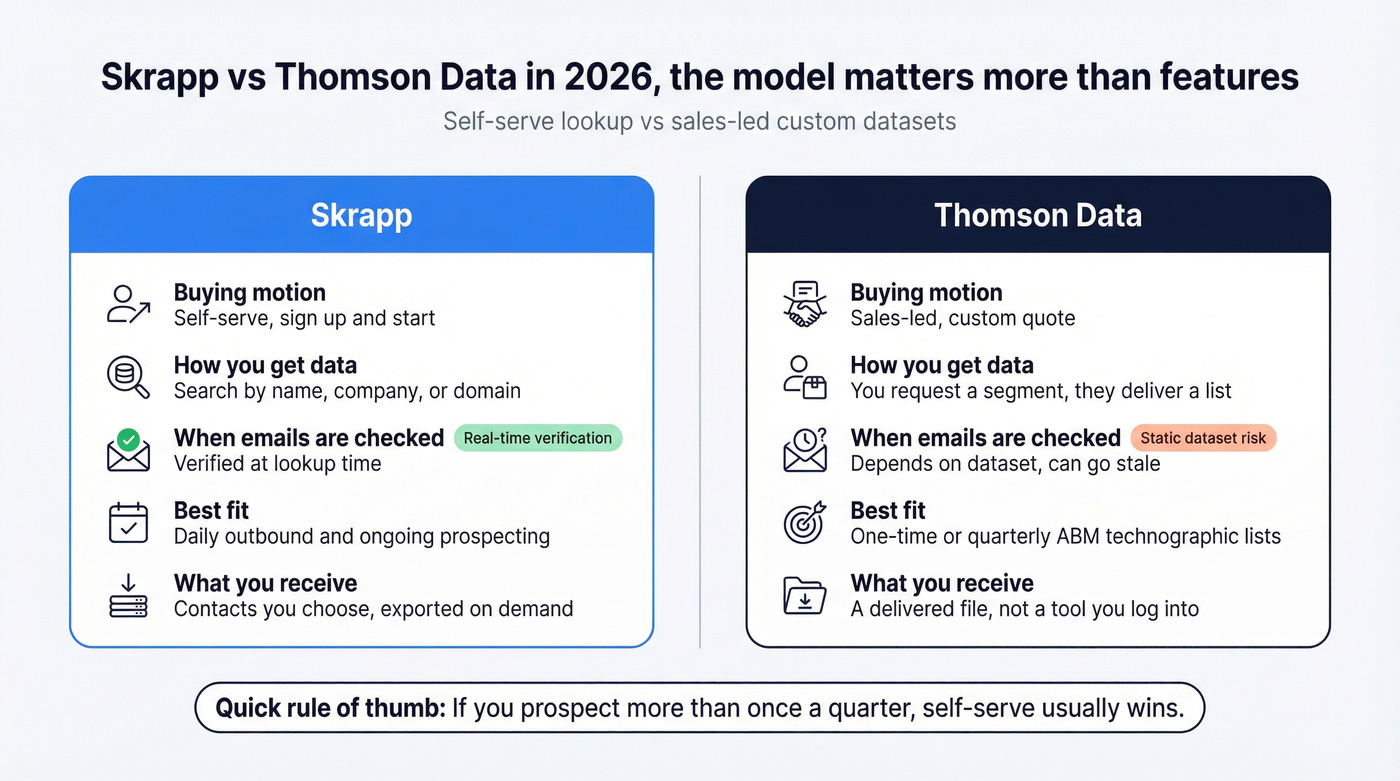
Thomson Data works completely differently. Founded in 2009 and backed by 150+ data experts, it's a custom list vendor. You tell their team what you need - say, IT decision-makers using SAP in manufacturing - and they deliver a segmented dataset. They emphasize GDPR and CCPA compliance and specialize in technology-user lists and technographic segmentation. It's data-as-a-service, not software you log into.
Side-by-Side Comparison
| Skrapp | Thomson Data | Prospeo | |
|---|---|---|---|
| Database | 150M+ business profiles | 70M contacts | 300M+ profiles |
| Email accuracy | 97%+ verification | 90% | 98% (143M+ verified) |
| Pricing | $0-$349/mo | ~$2K-$15K+ per dataset | Free tier; ~$0.01/email |
| Buying motion | Self-serve | Sales-led | Self-serve |
| Data freshness | Daily refresh | Static datasets | 7-day refresh cycle |
| G2 reviews | Active profile | 0 reviews, inactive | Active profile |
| Mobiles | Not a focus | Not a focus | 125M+ verified |
| Best for | Daily outbound | One-time ABM lists | Best overall value |
The Differences That Actually Matter
The real gap isn't features. It's the buying and usage model.
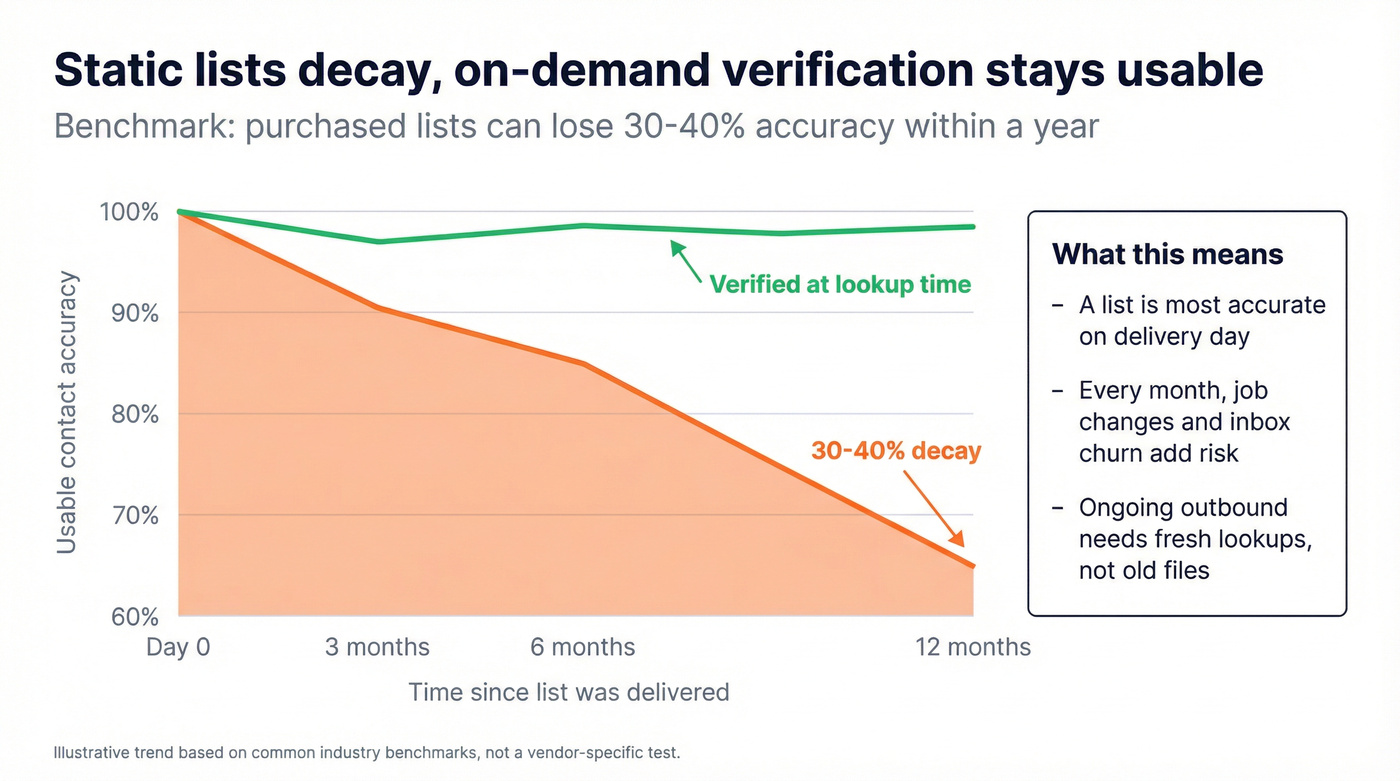
Thomson Data builds lists from what they call "credible sources": trade magazines like Workforce (360,000 registered users) and Chief Executive (228,000 audience), B2B directories, events, and surveys. That's a legitimate approach for building segmented technographic lists, but here's the problem - a static dataset starts decaying the moment it's delivered. Industry benchmarks suggest purchased lists lose 30-40% accuracy within a year as people change jobs, companies restructure, and emails go stale.
Skrapp's model is fundamentally different. You search on demand, and emails get verified at the point of lookup. Current data rather than a list that was accurate three months ago. For ongoing outbound, that distinction is everything.
Here's the thing: if you're running outbound more than once a quarter, you shouldn't be buying static lists at all. The vendor model made sense in 2015. In 2026, self-serve tools with real-time verification are simply better for most teams.
If you're building repeatable outbound, it's also worth tightening your sales prospecting techniques and overall lead generation workflow so the data you buy actually turns into pipeline.

Static datasets decay 30-40% per year. Self-serve email finders skip mobiles and intent signals. Prospeo refreshes 300M+ profiles every 7 days - not daily claims, not quarterly dumps - with 98% email accuracy, 125M+ verified mobile numbers, and 15,000 Bombora intent topics built in.
Stop choosing between stale lists and incomplete data.
Pricing and Predictability
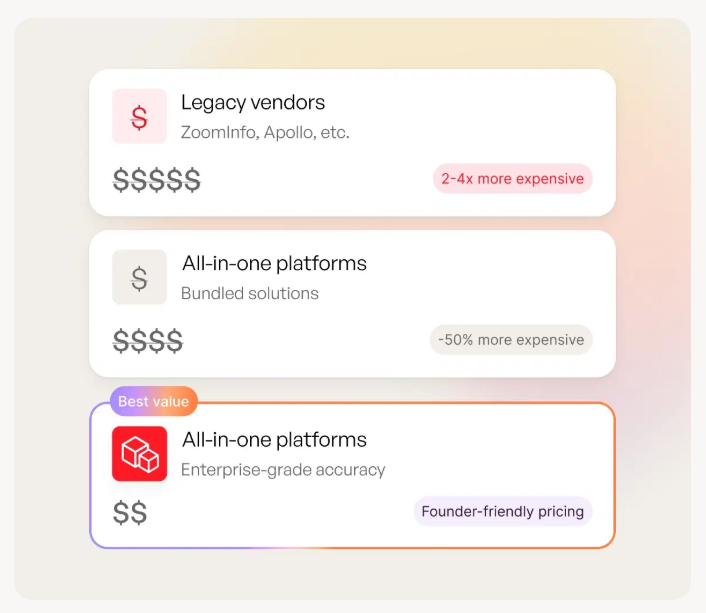
Skrapp is transparent. Free tier at 100 credits/month, paid plans from $30/mo (1,000 credits) up to $262/mo (50,000 credits), with roughly 25% savings on annual billing. You only burn credits on deliverable emails.
If you want the full breakdown, see our deep dive on Skrapp pricing.
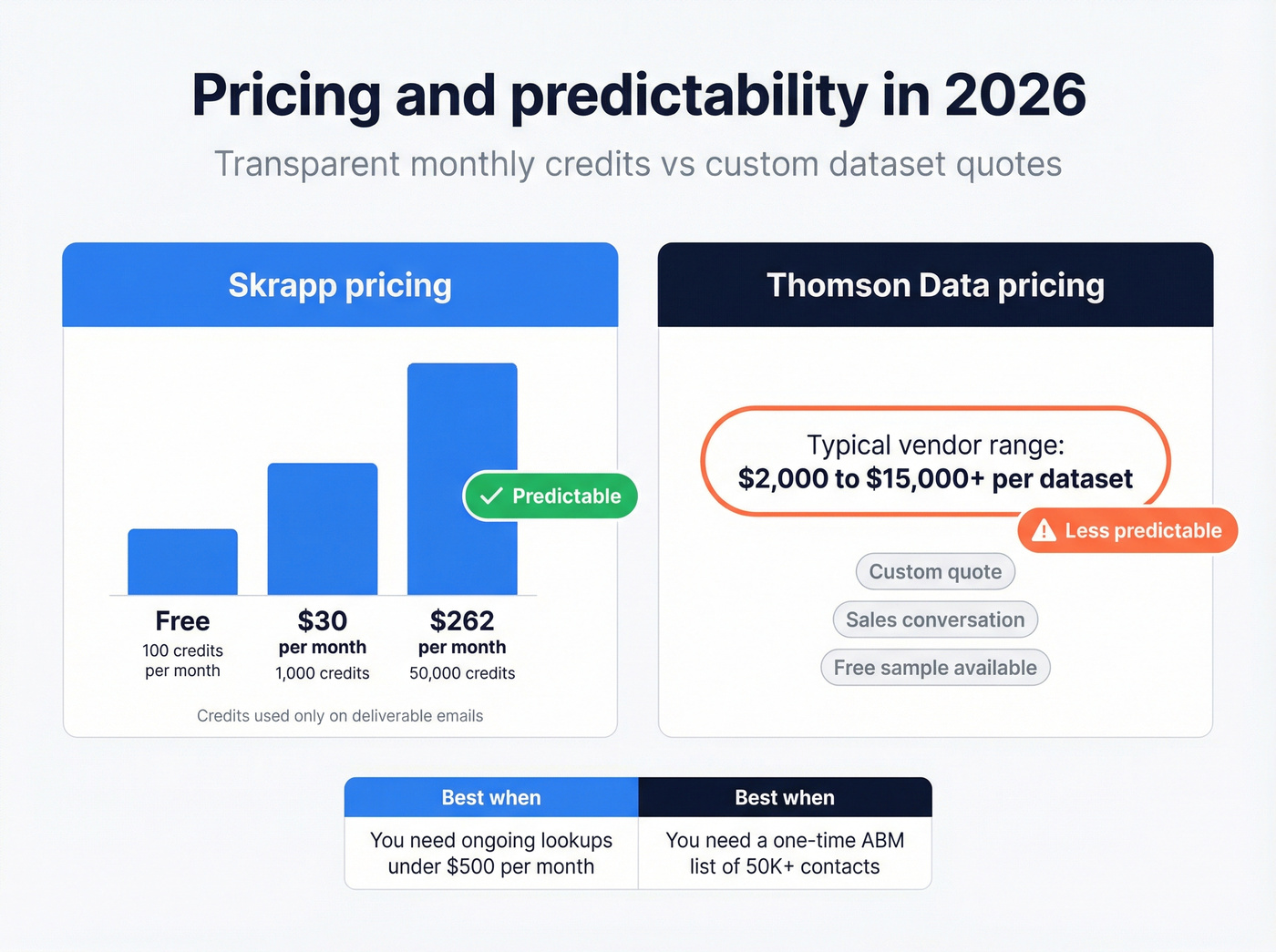
Thomson Data publishes no pricing. Expect a sales conversation and custom quotes. Based on comparable B2B list vendors, budget $2,000-$15,000+ per dataset depending on volume and segmentation depth. They do offer free samples - worth requesting before committing anything.
Trust Signals and Risk
Thomson Data has almost zero public review coverage. Their G2 profile shows 0 reviews and has been inactive for over a year. On Datarade, they hold a 4.7/5 - from just 2 reviews on an unclaimed profile. No Reddit presence either.
If you're trying to reduce risk, it helps to benchmark vendors against other sales prospecting databases and email list providers with more transparent review coverage.
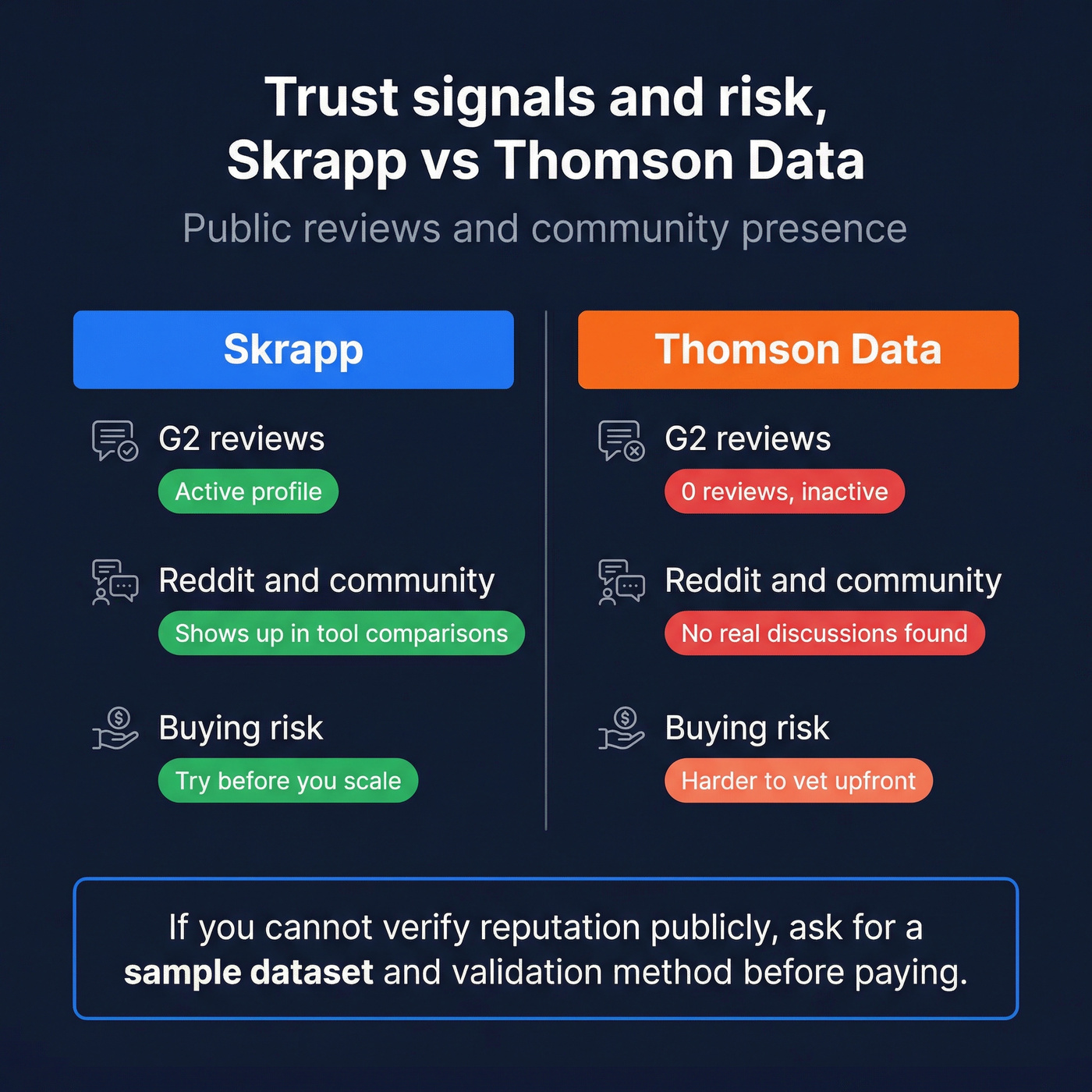
Skrapp, by contrast, has an active G2 profile and shows up consistently in independent tool comparisons.
When to Choose Which
Thomson Data fits when you need a pre-built technographic list for a one-time or quarterly ABM campaign, you have budget for custom datasets, and you prefer a vendor relationship over DIY prospecting. Think of it as hiring someone to build you a fishing net rather than fishing yourself.
If you're running ABM, you may also want to align your targeting with account-based selling best practices.
Skrapp fits when you're running ongoing outbound, want self-serve access without waiting for quotes, and your contact data budget is under $500/month. The Chrome extension makes daily prospecting fast.
If you're doing high-volume outreach, make sure you also have your email deliverability fundamentals right.
Let's be honest - if you need verified emails and direct dials and intent data in one platform, neither tool covers the full picture. That's where a broader platform like Prospeo earns its place, with 125M+ verified mobiles and 15,000 Bombora intent topics layered on top of contact search.

Skrapp caps you at 150M profiles with no mobiles. Thomson Data quotes you $2K+ for a static list you can't refresh. Prospeo gives you 300M+ profiles, direct dials, and technographic filters - self-serve at $0.01/email with a 7-day refresh cycle.
Get the data both tools leave out - for a fraction of the cost.
Final Verdict
Choosing between Skrapp vs Thomson Data comes down to workflow. If you're spending under $500/month on contact data and prospect daily, Skrapp is the clear pick. If you need a one-time technographic list of 50K+ contacts for an ABM play, Thomson Data fills that niche - just go in knowing you can't vet them through public reviews first. For everything else, especially if you need mobiles, intent data, and weekly-refreshed records, Prospeo is the stronger play.
FAQ
Is Thomson Data the same as Thomson Reuters?
No. Thomson Data is a B2B list vendor based in Frisco, TX, specializing in technology-user email lists. Thomson Reuters is a multinational information services company. There's zero corporate connection between them - don't confuse them when researching vendors.
How much does Thomson Data cost in 2026?
No published pricing exists. All datasets are custom-quoted through their sales team. Expect $2,000-$15,000+ depending on segmentation depth and contact volume. They offer free samples, so request one before committing budget.
Can I use Skrapp's free tier for real prospecting?
Yes. The 100 credits/month free tier is enough to test workflows and validate data quality. For sustained outbound, you'll need a paid plan - the $30/month tier covers 1,000 lookups. Prospeo's free tier offers 75 emails plus 100 Chrome extension credits monthly if you want to compare side by side.