

Use of Artificial Intelligence in Sales: What Works, What Doesn't, and Where to Start
88% of companies now use artificial intelligence in at least one business function. Only 1% of leaders call their AI deployment "mature." That gap - between buying AI tools and getting results - is where most sales teams live right now. The tools work. The rollouts don't.
What You Need (Quick Version)
Pick one use case, one role. Clean your contact data first - AI trained on stale records will misprioritize leads and send embarrassing emails to people who left the company two years ago. Budget six weeks for training and 90 days for QA. Measure time saved before measuring revenue. If you do nothing else, verify your email database and start with AI-assisted outbound personalization.
How AI in Sales Actually Works
For SDRs - Outbound and Prospecting
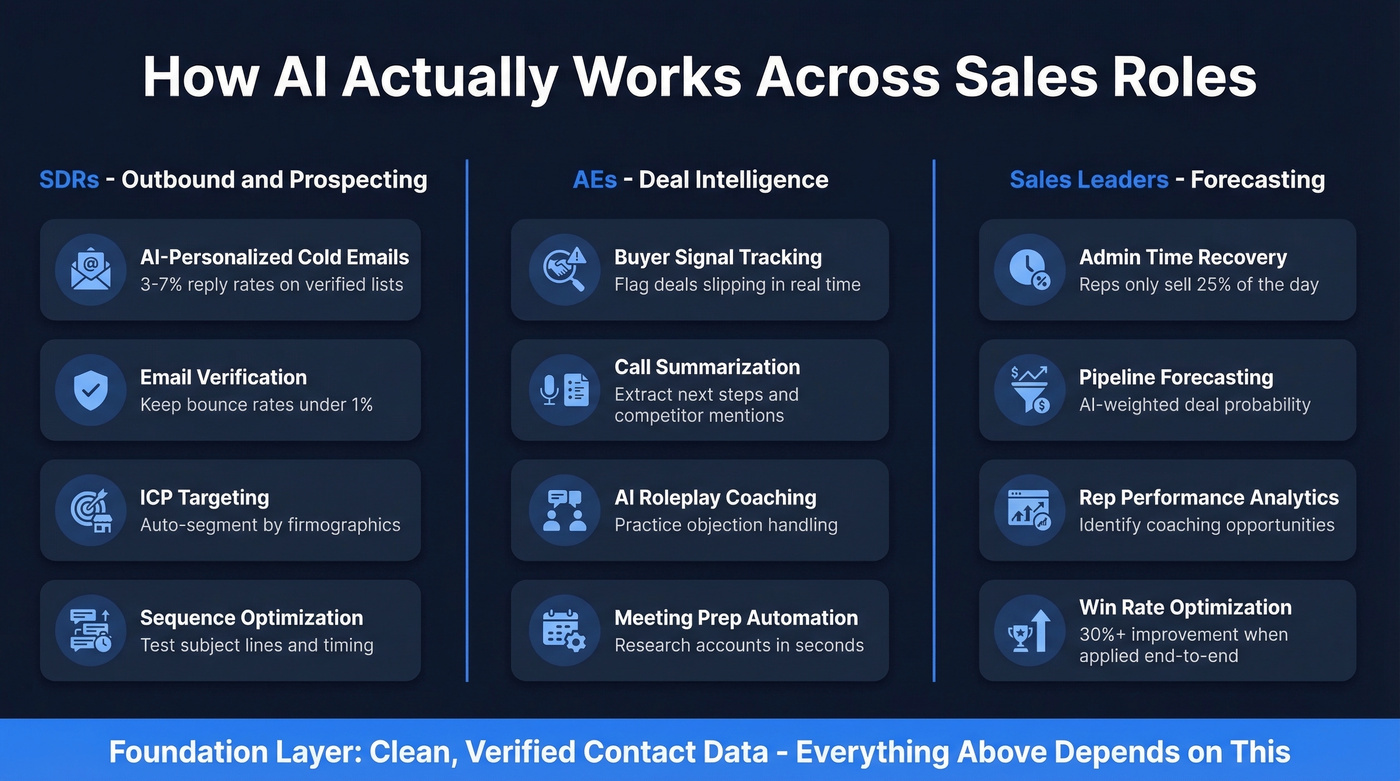
This is where AI pays off fastest. A Snov.io experiment across 3,000 AI-personalized cold emails hit reply rates between 3.2% and 7.1% depending on ICP, with a bounce rate of just 0.5%. The bounce rate is the real story - they verified the list before sending.
Here's the thing: [73% of B2B buyers](https://www.gartner.com/en/newsroom/press-releases/2025-06-25-gartner-sales-survey-finds-61-percent-of-b2b-buyers-prefer-a-rep-free-buying-experience) actively avoid sellers who send irrelevant outreach. AI personalization helps, but it only converts if emails reach real inboxes. A 7% reply rate means nothing if 20% of your sends bounce and tank your domain reputation. We've seen teams celebrate AI-generated copy while ignoring the fact that a quarter of their list was dead on arrival.

For AEs - Deal Intelligence and Coaching
Account executives don't need help writing emails. They need help knowing which deals are slipping and why.
AI deal intelligence tools now surface real-time buyer signals - tracking engagement across content, calls, and emails to flag risk before pipeline reviews. AI roleplay for objection handling saves manager time, and call summarization that extracts next steps and competitor mentions gives reps back hours after every meeting. The combination of these capabilities means AEs spend less time on admin and more time on the conversations that actually move deals forward, which is the whole point of adopting AI in the first place.
For Sales Leaders - Forecasting and Productivity
Reps spend [roughly 25% of their time](https://www.bain.com/insights/ai-transforming-productivity-sales-remains-new-frontier-technology-report-2025/) actually selling. Let's sit with that number for a second. Three-quarters of a seller's day goes to CRM updates, call logging, meeting prep, and internal reporting.
AI's biggest impact for leaders isn't forecasting dashboards - it's clawing back that lost time. Sellers who partner with AI tools are 3.7x more likely to meet quota. Applied end-to-end, teams see 30%+ improvement in win rates. But most teams aren't end-to-end yet. Start by reclaiming admin hours with CRM automation.
Agentic AI - Real vs. Hype
"Agentic AI" means systems that perceive signals, reason about next steps, and execute multi-step workflows on their own - like noticing a champion changed jobs, researching their new company, and drafting a re-engagement sequence without a human touching anything. By late 2026, 40% of enterprise apps will feature agentic capabilities. And while 62% of organizations are at least experimenting with agents, only 23% are scaling them.
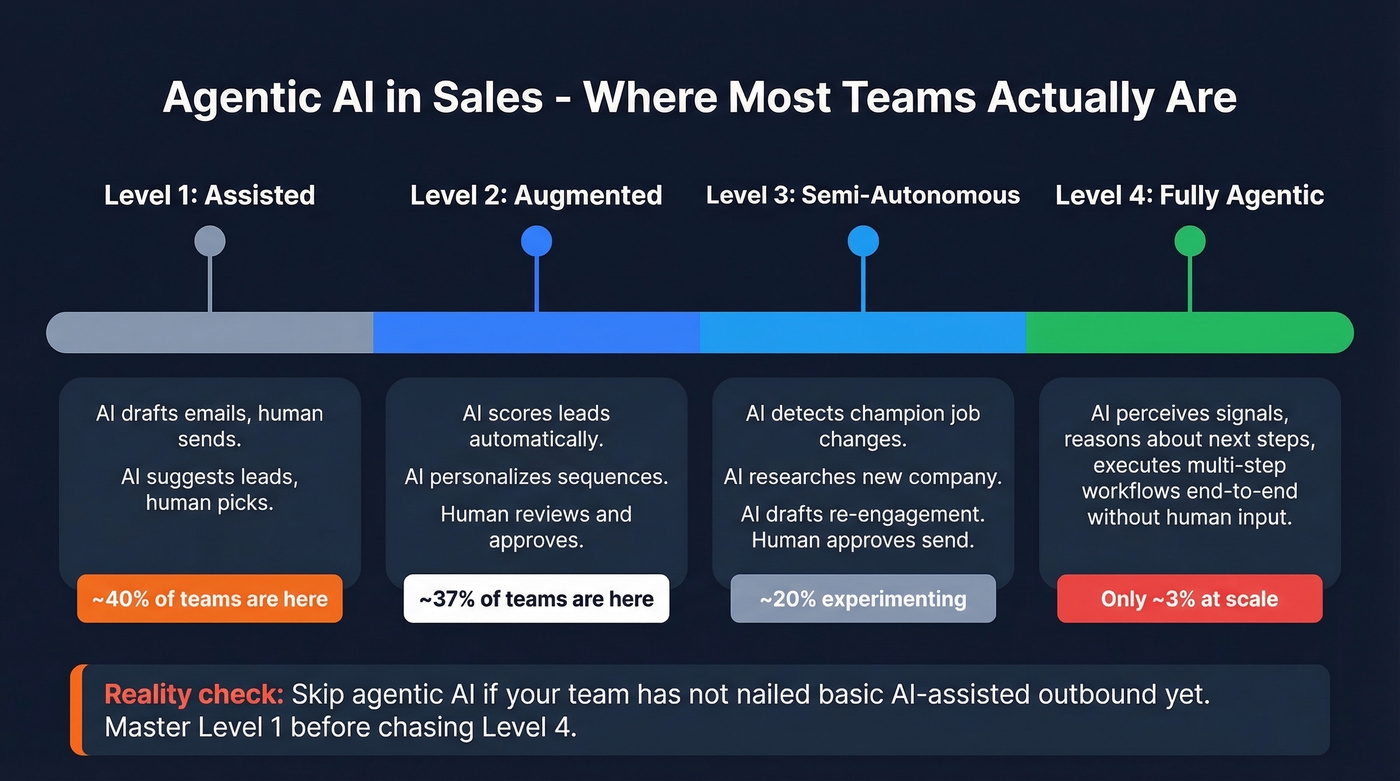
We've seen this movie before. The industry went through the same cycle with chatbots and predictive lead scoring. The technology is real; the implementation timeline is longer than vendors suggest. Skip agentic AI if your team hasn't nailed basic AI-assisted outbound yet - you'll burn budget on a capability you can't operationalize.

Your AI lead scoring, personalization, and agentic workflows all depend on one thing: clean, current contact data. Prospeo's 300M+ profiles are verified through a 5-step process and refreshed every 7 days - not every 6 weeks. That's why Meritt tripled pipeline to $300K/week and cut bounce rates from 35% to under 4%.
Fix your data before you spend another dollar on AI sales tools.
Why AI Sales Initiatives Fail
Bad data. Your AI lead scoring tool just ranked a bankrupt company as your #1 prospect. This happens constantly when models run on stale, unverified contact databases. Garbage in, garbage out isn't a cliche - it's the single most common failure mode we see. If you're sourcing contacts from multiple vendors, start with a verified contact database.
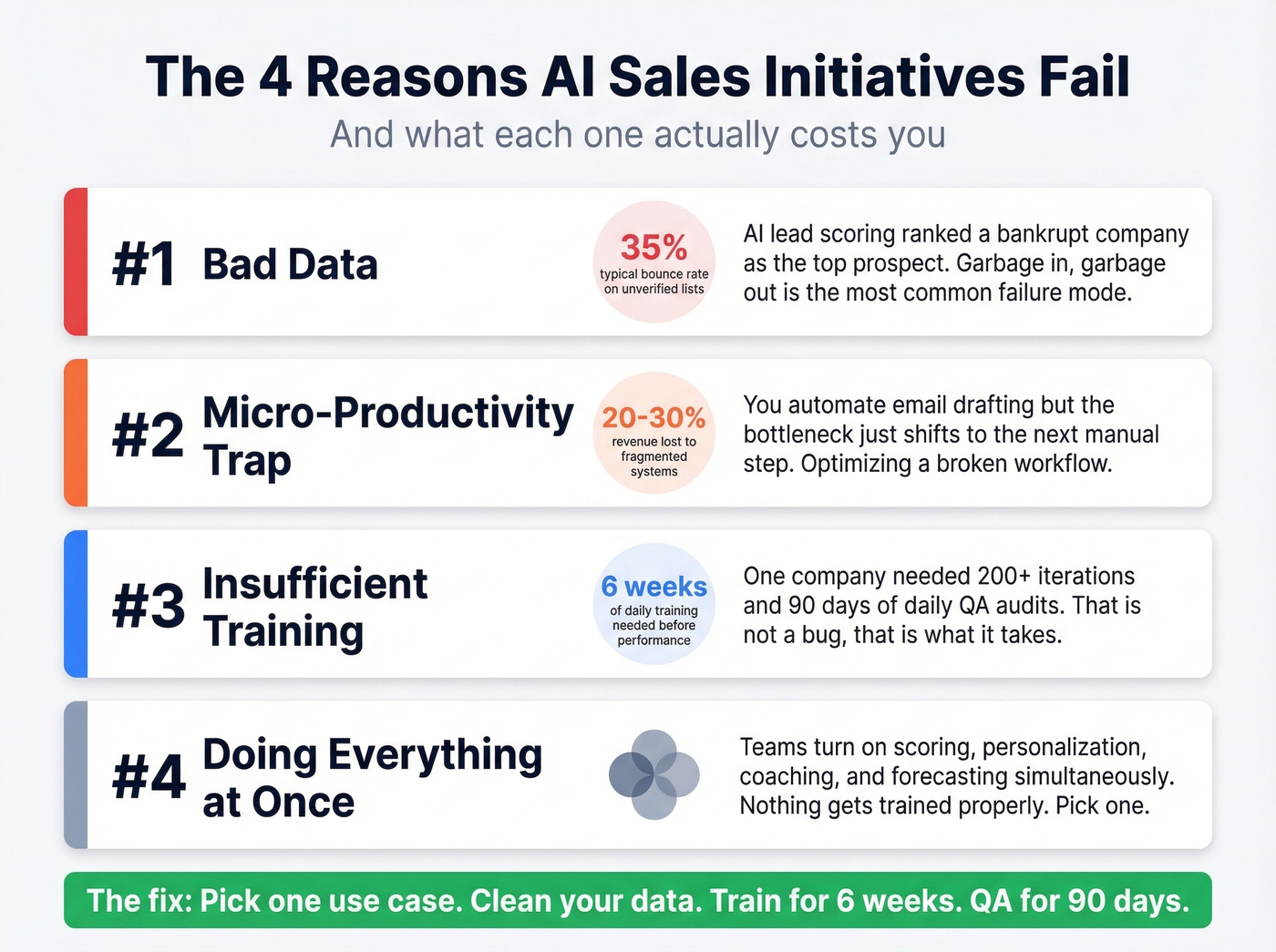
The micro-productivity trap. You automate email drafting and get a small gain, but the bottleneck shifts to the next manual step. Fragmented systems cost teams 20-30% in lost revenue. Without redesigning the process end-to-end, you're optimizing a broken workflow. This is where a tighter RevOps tech stack matters.
Insufficient training. One SaaStr portfolio company took six weeks of daily training and 200+ iterations before their AI SDR tool performed - then ran daily QA audits for 90 days. That's not a bug. That's what it actually takes.
Trying to do everything at once. Teams turn on lead scoring, email personalization, call coaching, and forecasting simultaneously. Nothing gets trained properly. Pick one use case. Master it. Then expand.
Fix Your Data First
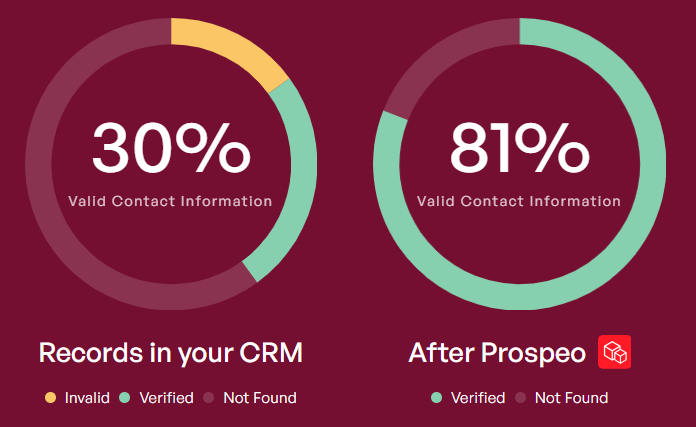
Real talk: most teams don't have an AI problem. They have a data problem dressed up as an AI problem. Every dollar spent on AI tools before cleaning your contact database is wasted.
Prospeo covers 300M+ professional profiles with 98% email accuracy on a 7-day refresh cycle - compared to the six-week industry average. One customer, Meritt, dropped their bounce rate from 35% to under 4% after switching, tripling pipeline from $100K to $300K per week. That's not an AI story. It's a data quality story that makes every AI tool downstream work better. If you're comparing providers, start with the best B2B database benchmarks.
73% of buyers ignore irrelevant outreach. AI personalization only converts when emails actually land. Prospeo delivers 98% email accuracy at $0.01 per email - 90% cheaper than ZoomInfo - so every AI-generated message reaches a real inbox instead of destroying your domain reputation.
Stop feeding your AI tools dead data. Verify your list in minutes.
Compliance Risks Nobody Mentions
LinkedIn took a EUR 310M GDPR fine for behavioral profiling without proper consent. Clearview AI got EUR 30.5M for scraping biometric data. The principle regulators are enforcing is clear: AI inferences drawn from behavioral data count as personal data under GDPR.
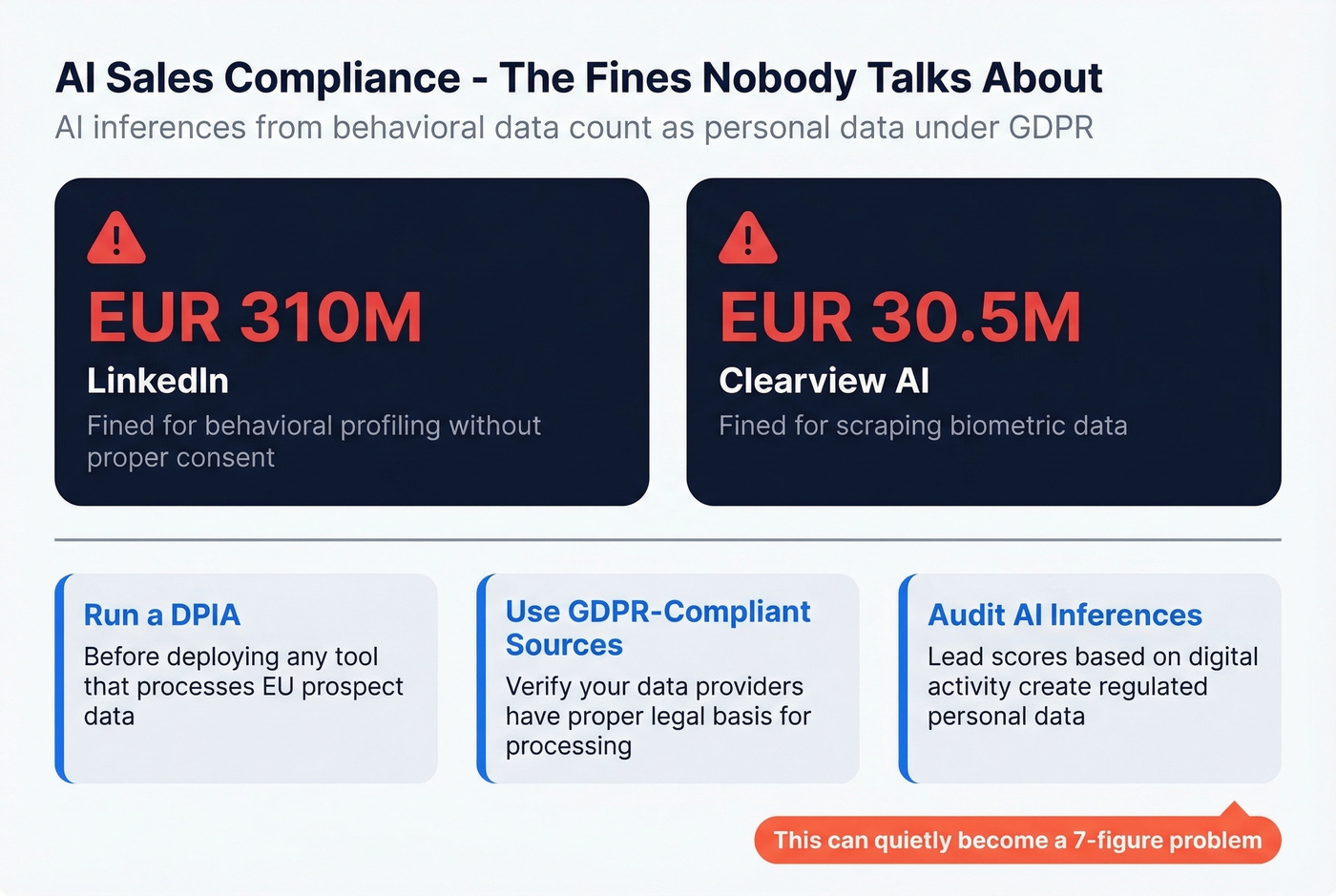
Your AI tools that score leads based on digital activity are creating regulated data. Run a DPIA before deploying any tool that processes EU prospect data. Use GDPR-compliant data sources. This isn't optional - it's the kind of risk that can quietly become a seven-figure problem. For a checklist, align with B2B compliance and consider a GDPR Compliant Database for prospecting.
How to Start Without Wasting 6 Months
- Pick one use case and one role. AI-personalized outbound for SDRs is the highest-ROI starting point for most teams.
- Clean your data first. Verify emails, deduplicate your CRM, remove stale records. Everything else depends on this step. (If you need options, compare email verifier tools.)
- Budget six weeks for training. Daily iteration, not a one-time setup. Treat the AI like a new hire who needs coaching.
- Measure time saved before revenue. Hours reclaimed from admin is the leading indicator that tells you whether the tool is actually working.
- QA daily for 90 days, then 3x per week. Audit AI outputs like you'd audit a junior rep's work - because that's essentially what it is.
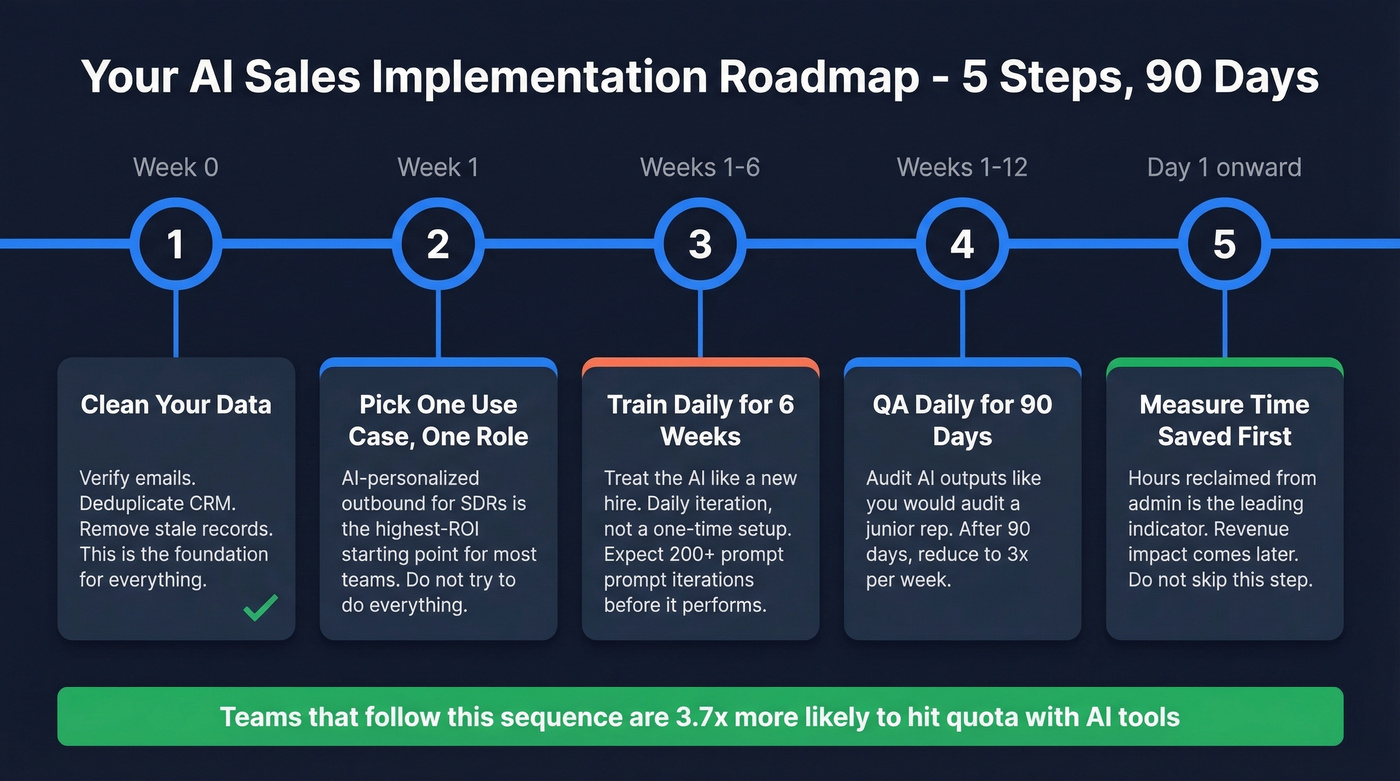
The use of artificial intelligence in sales is accelerating, but the teams winning aren't the ones with the most tools. They're the ones who started with clean data, chose a single high-impact workflow, and iterated relentlessly. Start small, measure honestly, and scale what works. If you want a broader buying list, see the best AI sales tools.
FAQ
Will AI replace salespeople?
No. AI handles admin, data analysis, and first-draft content. Sales reps spend 60% of their time on non-selling tasks - that's what AI replaces, not the relationship-building and negotiation that close deals.
What's the fastest AI win for a sales team?
AI-personalized outbound on a verified contact list. Teams running clean data through AI sequencing tools see 3-7% reply rates on cold email. Start there before investing in forecasting or coaching platforms.
How much do AI sales tools cost?
Conversation intelligence platforms run $100-150/user/month. AI SDR tools range from $1,000-3,000/month. For the data quality layer underneath, Prospeo starts free at 75 emails/month with paid plans from roughly $0.01 per email - far cheaper than rebuilding deliverability after bad data tanks your domain.