

What Is an MQL? The Practitioner's Guide for 2026
A RevOps lead we know ran a quarterly pipeline review last month. Marketing reported 1,200 MQLs. Sales said they'd booked 14 meetings from the batch. That's a 1.17% conversion rate - and a room full of people pointing fingers. The problem wasn't the leads. It was the definition.
Quick Version
An MQL is a lead who matches your ideal profile AND has taken high-intent actions - not just downloaded one ebook. The MQL-to-SQL conversion rate sits between 12% and 21% depending on industry. If yours is below 10%, your MQL definition is too loose, your follow-up is too slow, your data is stale, or all three. Following up within the first hour yields a 53% conversion rate versus 17% after 24 hours. Speed matters as much as scoring.
MQL Meaning Explained
A Marketing Qualified Lead is a prospect who's demonstrated enough interest and fit to warrant a sales conversation but hasn't been vetted by a rep yet. That's the crisp definition. The messy version is whatever your marketing team decided it means last quarter.
Here's what separates a real marketing qualified lead from a mailing list subscriber: an MQL has done something that signals buying intent, not just curiosity. Think pricing page visits, demo request form fills, webinar attendance with follow-up engagement, or repeated content downloads on the same topic cluster. An email subscriber who opened your newsletter twice isn't qualified. A director at a 500-person company who visited your pricing page three times this week and downloaded your ROI calculator? That's a marketing qualified lead.
B2B qualification runs deeper than B2C. Content engagement alone isn't enough - you need firmographic fit (right company size, industry, tech stack) combined with behavioral signals. B2C qualification moves faster: a product page visit or add-to-cart event can trigger follow-up within minutes. In B2B, the qualification process involves more stakeholders and longer timelines, which is exactly why getting the definition right matters so much.
MQL vs SQL
The handoff between marketing and sales is where most pipeline leaks happen. Let's make the distinction concrete.
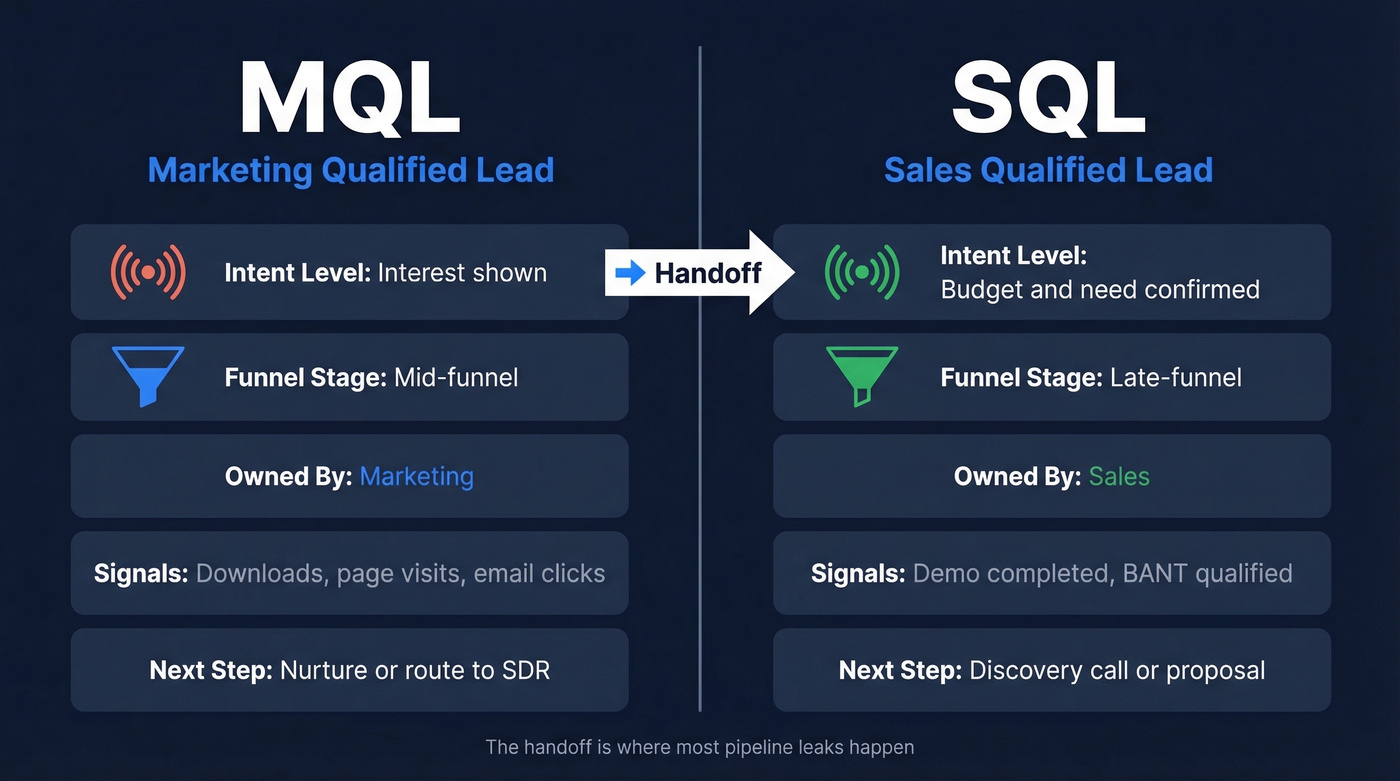
| Dimension | MQL | SQL |
|---|---|---|
| Intent level | Interest shown | Budget/need confirmed |
| Funnel stage | Mid-funnel | Late-funnel |
| Owned by | Marketing | Sales |
| Typical signals | Downloads, page visits, email clicks | Demo completed, BANT qualified |
| Next action | Nurture or route to SDR | Discovery call or proposal |
A marketing qualified lead answers the question "should someone call them?" A sales qualified lead answers "is this a real opportunity?" A lead who downloaded your "State of the Industry" report is an MQL. The same lead who then requested a custom demo and asked about pricing tiers is an SQL.
The frameworks sales teams use to make that second call - BANT, CHAMP, MEDDIC - are SQL qualification methods. They're evaluating budget, authority, need, and timeline. Marketing doesn't have that information yet. That's the whole point of the handoff.
Where alignment breaks down is the gap between these two stages. Marketing celebrates lead volume. Sales ignores half the list. The fix isn't eliminating the qualification stage - it's making sure both teams agree on what qualifies before a single lead gets routed.
The Full Qualification Journey
Most articles stop at MQL and SQL. The real funnel has more stages, and each transition has its own conversion rate.
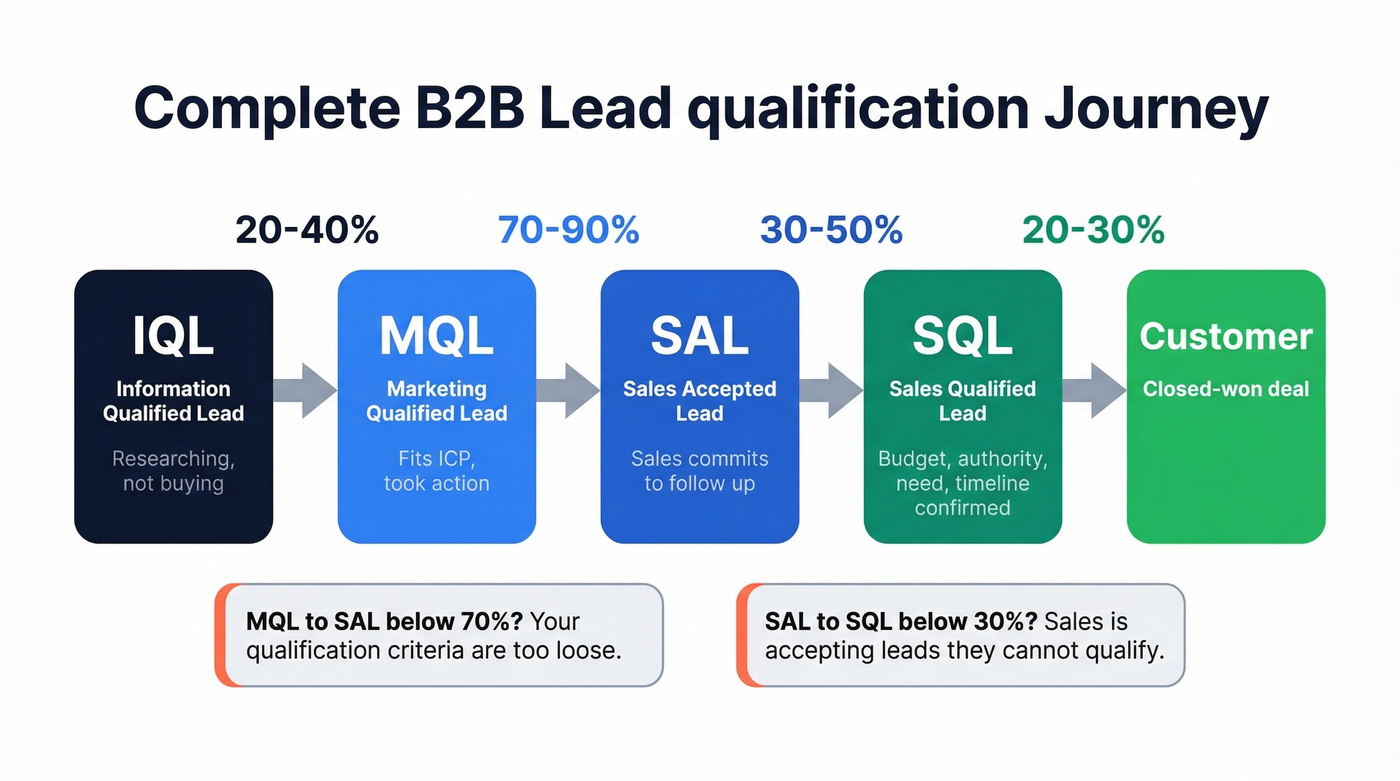
IQL (Information Qualified Lead) - Someone who's engaged with top-of-funnel content. They're researching, not buying.
MQL - Fits your ICP and has taken deliberate actions. Marketing routes them to sales.
SAL (Sales Accepted Lead) - Sales has reviewed the lead and committed to follow up within a defined timeframe. This stage is underrated. It's the formal acknowledgment that prevents the "marketing sent us garbage" argument. If sales accepts the lead, they own the outcome.
SQL - Sales has qualified the lead through discovery. Budget, authority, need, and timeline are confirmed.
Here are the benchmark conversion rates at each stage for B2B:
| Stage Transition | Benchmark Range |
|---|---|
| Lead to MQL | 20-40% |
| MQL to SAL | 70-90% |
| SAL to SQL | 30-50% |
| SQL to Customer | 20-30% |
If your MQL-to-SAL rate is below 70%, sales is rejecting too many leads and your qualification criteria are too loose. If SAL-to-SQL is below 30%, sales is accepting leads they can't actually qualify. Both are fixable, but they require different interventions.
Benchmarks by Industry
Benchmarks are dangerous without context, but they're still the first thing every VP of Marketing asks for. Here's what the data shows, drawn from First Page Sage's analysis of client data.
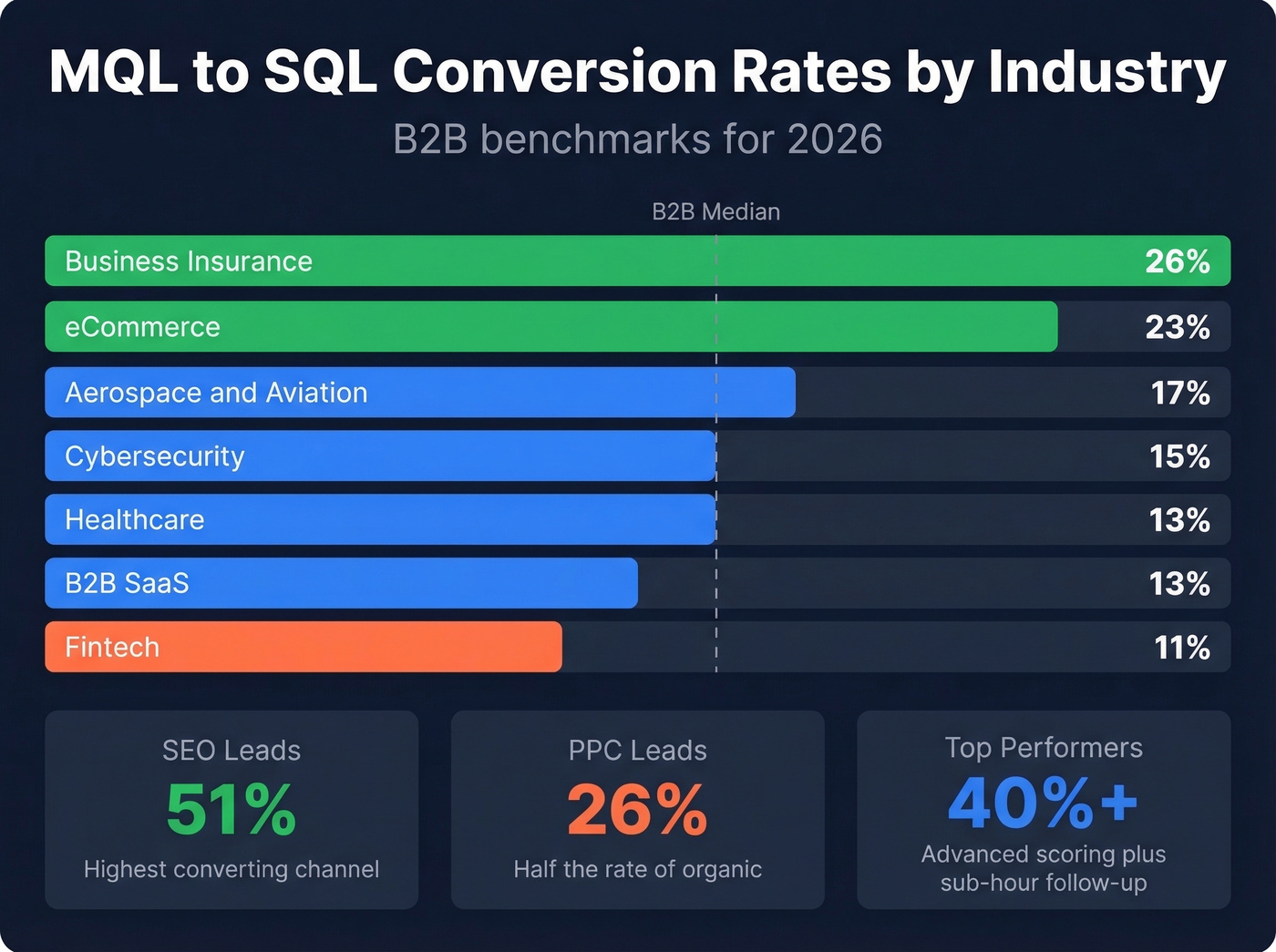
| Industry | MQL-to-SQL Rate |
|---|---|
| B2B SaaS | 13% |
| Fintech | 11% |
| Healthcare | 13% |
| Cybersecurity | 15% |
| Aerospace & Aviation | 17% |
| eCommerce | 23% |
| Business Insurance | 26% |
Business model matters too. B2B companies average 12-21% with a median around 13-15%, B2C/D2C runs 18-22%, and PLG companies see 15-30% because product usage is a stronger signal than content engagement. Top performers with advanced scoring and sub-hour follow-up report conversion rates as high as 40%.
Channel-specific rates tell an even more interesting story. SEO-sourced leads convert at 51%, email marketing at 46%, webinars at 30%, PPC at 26%, and events at 24%. The pattern holds: organic inbound leads convert at roughly double the rate of paid leads. Someone who searched for your solution and found you is further along than someone who clicked an ad.
In our experience, channel-specific rates matter more than industry averages for pipeline planning. And speed matters as much as source - if your SDRs are waiting until Monday morning to work Friday's leads, you're leaving pipeline on the table.

Stale data is the #1 reason MQLs die before reaching sales. Prospeo refreshes 300M+ profiles every 7 days - not every 6 weeks like competitors - so the leads marketing qualifies still have valid contact info when SDRs pick up the phone. 98% email accuracy means your follow-up actually lands.
Stop losing qualified leads to outdated emails and wrong numbers.
How to Build a Scoring Model
Most scoring models fail because they're either too simple (one form fill = qualified) or too complex (nobody understands the math). Behavioral scoring alone can boost conversion rates by up to 40% compared to demographic-only models, so getting this right has real revenue impact. If you want the deeper framework, start with our lead scoring guide.
Sample Scoring Rubric (B2B SaaS)
Demographic/Firmographic Signals:
- Director-level or above: +25 points
- Company size 200-1,000 employees: +15 points
- Target industry match: +10 points
- Wrong geography or student email: -15 points
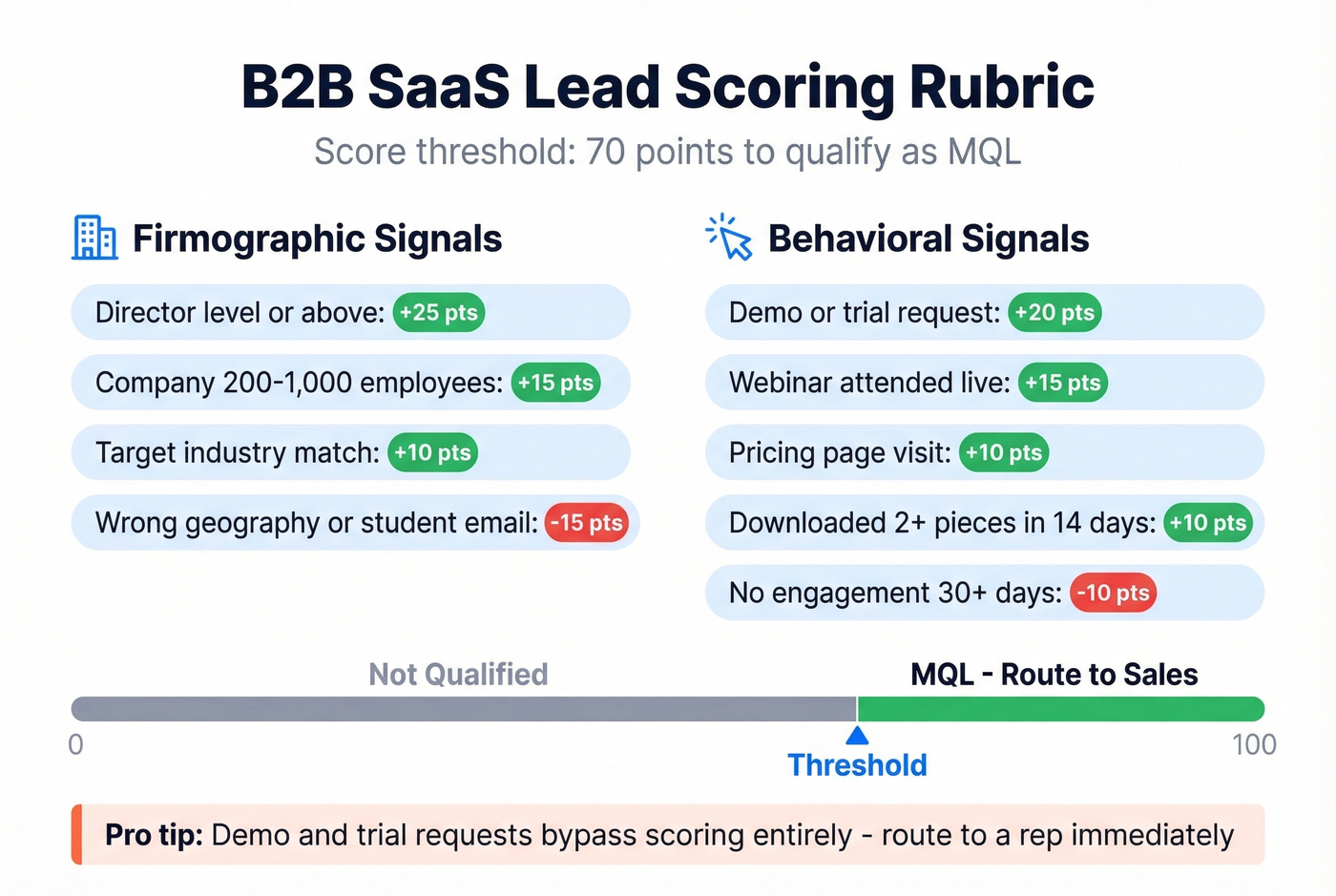
Behavioral Signals:
- Pricing page visit: +10 points
- Demo or trial request: +20 points
- Downloaded 2+ content pieces in 14 days: +10 points
- Webinar attended (live, not just registered): +15 points
- No engagement for 30+ days: -10 points (score decay)
Threshold: 60-80 points. Most teams start at 70 and adjust based on sales capacity. If your SDRs are drowning, raise the threshold. If they're idle, lower it. The threshold isn't sacred - it's a dial you tune quarterly.
Rules That Matter
Negative scoring is non-negotiable. Without it, a lead who visited your site once six months ago stays scored as if they're still interested. Score decay - deducting points for inactivity - keeps your queue current.
Demo and trial requests bypass scoring entirely. If someone fills out a "talk to sales" form, route them to a rep immediately. Don't make them wait for their score to accumulate. Once a lead crosses your threshold, automate the CRM routing in HubSpot, Salesforce, or whatever you're running. Manual handoffs add hours of delay.
One thing we've watched teams overlook: calibrating scores against closed-won and closed-lost data. Pull your last 100 deals, look at what those contacts did before they qualified, and weight those behaviors higher. Pull your last 100 closed-lost, and de-weight whatever they had in common. Your scoring model should learn from your own revenue data, not best-practice blog posts.
Five Mistakes That Kill Your Pipeline
1. Setting the bar too low to inflate numbers. When "anyone who downloads a free checklist" counts as qualified, you'll hit your lead target every quarter and miss your revenue target every quarter. The consensus on r/MarketingGeek is blunt: this is the #1 way marketing loses credibility with sales.
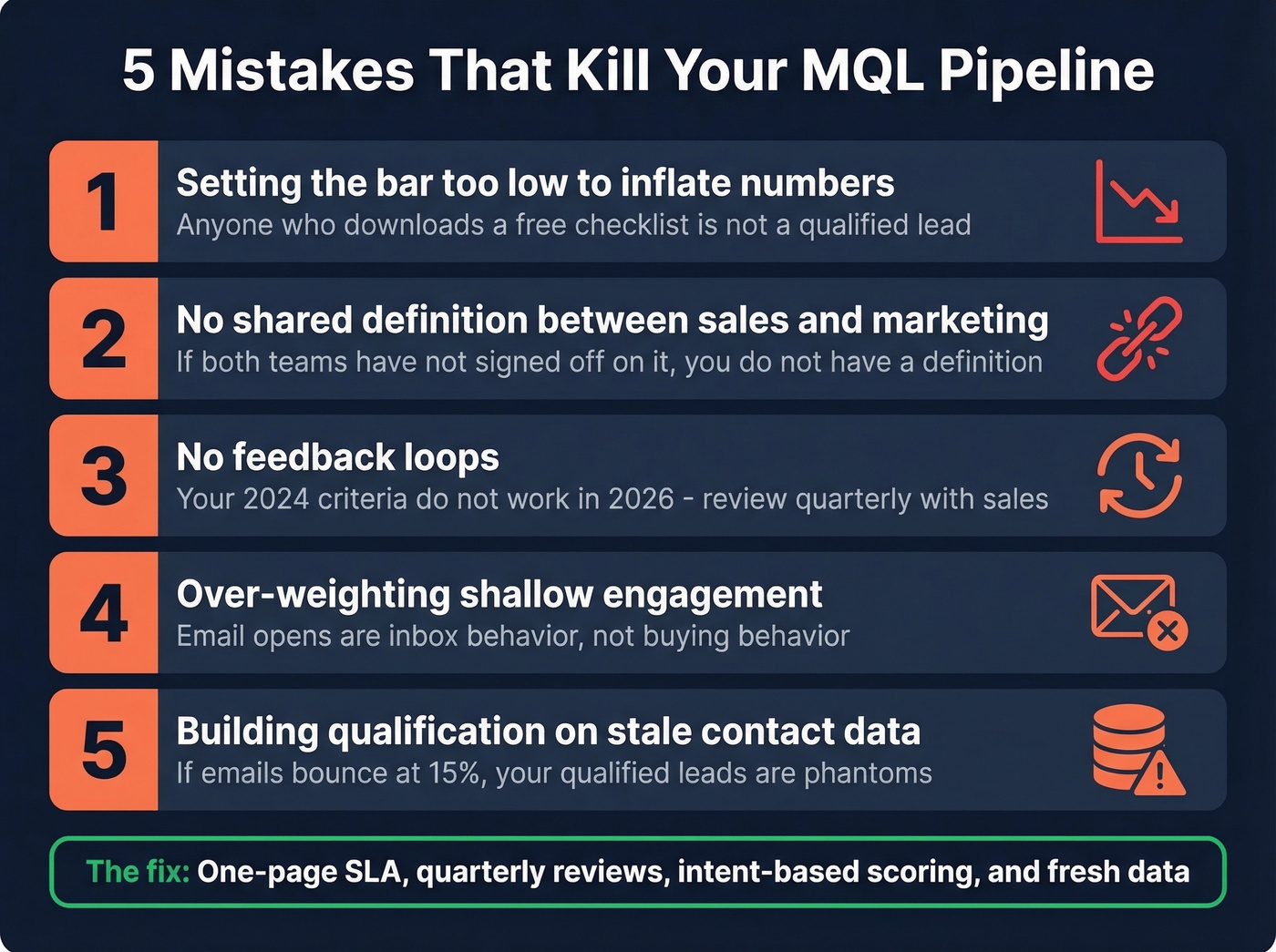
2. No shared definition between sales and marketing. Marketing says leads are fine. Sales says they're garbage. This fight happens in every company that hasn't written down - and jointly agreed to - what makes a lead qualified. Fix it with a one-page SLA that both teams sign off on quarterly.
3. No feedback loops. Your qualification criteria from 2024 don't work in 2026. Markets shift, ICPs evolve, products change. If you're not reviewing criteria every quarter with sales input, your definition is rotting.
4. Over-weighting shallow engagement. Page views and email opens feel like intent. They're not. Someone who opened three emails but never clicked isn't showing buying behavior - they're showing inbox behavior. Weight actions that require effort: form fills, demo requests, webinar attendance. Layer in intent data from providers like Bombora to identify accounts actively researching your category. That signal is worth more than a dozen email opens.
5. Building qualification on stale contact data. Here's the thing - your scoring model is only as good as the data feeding it. If job titles are six months old, company sizes are wrong, and emails bounce at 15%, your "qualified leads" are phantoms. Prospeo refreshes records every 7 days with 98% email accuracy, so your scoring model works on real signals instead of stale CRM entries.
Is the MQL Dead? The 2026 Debate
The marketing qualified lead originated from SiriusDecisions' Demand Waterfall framework in the early 2000s. It standardized the marketing-to-sales handoff at scale - a genuine operational improvement. Then Forrester acquired SiriusDecisions, the framework got baked into exec reporting, and the metric became the default on every board deck and CFO dashboard. Not because it mapped cleanly to buying journeys, but because it was easy to report.
The backlash is real. LinkedIn B2B Institute's 95-5 rule argues that 95% of buyers are out of market at any given time, which means lead-count obsession biases spend toward short-term capture at the expense of long-term demand creation.
So what should you measure instead? Marketing Efficiency Ratio (revenue divided by marketing spend) should sit around 3-5x for healthy B2B. Pair that with LTV:CAC of 3:1 or 4:1 - anything above 5:1 probably means you're under-spending on growth. CAC payback under 12 months is ideal; over 18 months is a problem. And pipeline velocity - how fast deals move through stages, measured in dollars per day - tells you more about marketing's impact than any lead count ever will. (If you're rebuilding your reporting, our funnel metrics breakdown is a good starting point.)
Let's be honest: the marketing qualified lead isn't dead. It's been scapegoated. The companies screaming "MQLs are useless" are the same ones who never bothered defining them properly. The fix isn't deleting the metric from your dashboard - it's demoting it from north-star KPI to internal leading indicator. Use it as a signal for accounts that need attention, not as the metric you optimize your entire marketing budget around.
Skip this whole framework if your average deal size is under $10k and your sales cycle closes in under 30 days. Just route inbound requests straight to reps and measure pipeline.
Beyond MQL: PQLs
If you're running a product-led growth motion, marketing qualified leads are the wrong unit of measurement.
A Product Qualified Lead is a free trial or freemium user who's derived measurable value from your product - not just signed up. The distinction matters. A signup is a lead. A PQL has actually done something inside your product. For an email marketing platform, that means connecting a sending domain, importing a list, and sending at least one campaign. For a project management tool, it means creating a project, inviting a teammate, and moving tasks through stages.
For multi-user B2B products, think at the account level - a PQA (Product Qualified Account). Thresholds include 3+ active users, a core integration connected, and repeat sessions over 14 days. Sales-led motions need MQLs. PLG motions need PQLs. Most companies in 2026 are running hybrid models and need both.
Data Quality Makes or Breaks Qualification
We've watched teams spend quarters debugging their scoring model when the real problem was six-month-old job titles in the CRM. A lead scores as qualified, gets routed to the queue, and the rep picks up the phone. The number is disconnected. They try email - it bounces. That lead was dead on arrival, and it never should've been scored in the first place.
When your CRM data is refreshed weekly instead of quarterly, your scores reflect current reality. Prospeo's enrichment API has a 92% match rate and returns verified emails, verified mobile numbers, and firmographic data - the 50+ data points your scoring model actually needs. If you're evaluating vendors, compare options in our roundup of data enrichment services.
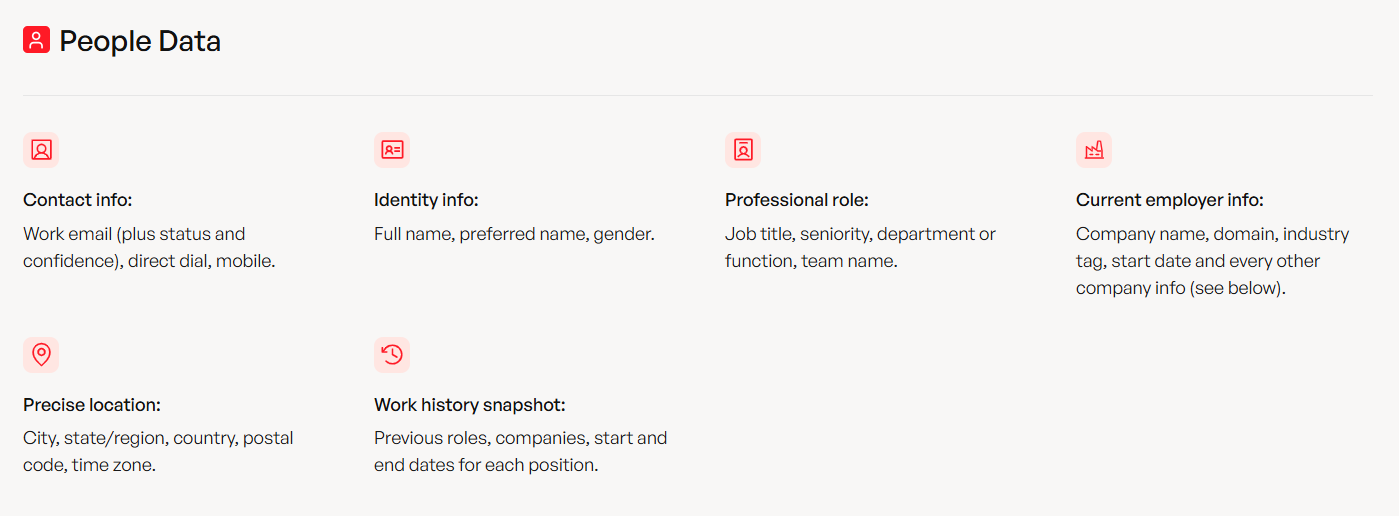
Sub-hour follow-up drives 53% MQL-to-SQL conversion - but only if you have real contact data. Prospeo gives your SDRs 143M+ verified emails and 125M+ direct dials so they can reach MQLs before the intent fades. At $0.01 per email, bad data is no longer an excuse for pipeline leaks.
Route MQLs to reps with verified emails and direct dials from day one.
FAQ
What's a good MQL-to-SQL conversion rate?
The B2B average is 12-21%, with a median around 13-15%. Above 25% signals strong alignment between marketing and sales. Below 10% means your criteria are too loose, follow-up is too slow, or your contact data is stale.
How long should a lead stay in MQL status?
No longer than 7-14 days. Build SLAs that require sales to disposition every qualified lead within a set timeframe - accept, reject, or request more info - and track compliance weekly.
What's the difference between MQL and PQL?
MQLs are qualified by marketing engagement: downloads, page visits, and email clicks combined with firmographic fit. PQLs are qualified by product usage: feature adoption, value milestones, and repeat sessions. PLG companies should prioritize PQLs; sales-led orgs need MQLs.
What is an MQL in simple terms?
An MQL is a lead that marketing has identified as a good fit based on who they are (job title, company size, industry) and what they've done on your site (pricing page visits, demo requests). They haven't talked to sales yet, but their profile and behavior suggest they're worth a conversation.
How do I keep MQLs from becoming a vanity metric?
Tie your qualification criteria to revenue outcomes, not lead volume. Review definitions quarterly with sales, track MQL-to-revenue conversion rather than just MQL-to-SQL, and use enrichment tools to make sure the underlying contact data is accurate. When the metric stays anchored to pipeline impact, it earns its place on the dashboard.