Where Do Recruiters Actually Find Candidates? The Data Behind Every Channel
We ran a sourcing audit with a RevOps team last quarter. They were spending 70% of their time on job boards - the channel that produces about a quarter of actual hires. Meanwhile, their ATS had 12,000 silver-medalist candidates collecting dust. Knowing where recruiters find candidates and which channels actually convert is the difference between filling roles and spinning wheels.
That sourcing math is broken for most recruiting teams, and the pressure's only getting worse. Recruiters now manage 56% more open reqs and handle 2.7x more applications than three years ago. You can't brute-force your way through that volume. You need to source from the right channels, in the right order.
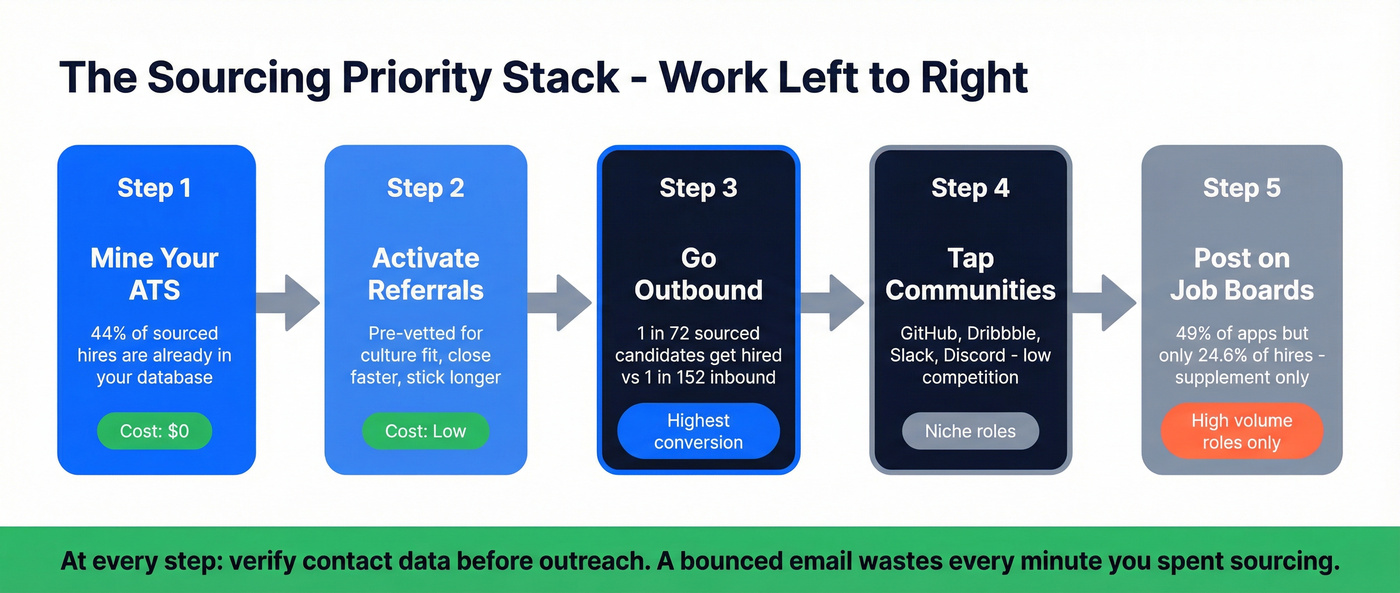
Here's the short version. Mine your ATS first - 44% of sourced hires are rediscovered from existing databases. Go outbound to passive talent, because sourced candidates are 5x more likely to be hired. And verify contact data before outreach, because a bounced email wastes every minute you spent sourcing.
The Passive Candidate Reality in 2026
Only 4.1% of workers are actively looking for a job right now, per BLS data from February 2026. But that number is misleading on its own. Gallup found that half of all U.S. employees are actively seeking or watching for new opportunities. The gap between "applying" and "open to a conversation" is where smart sourcing lives.
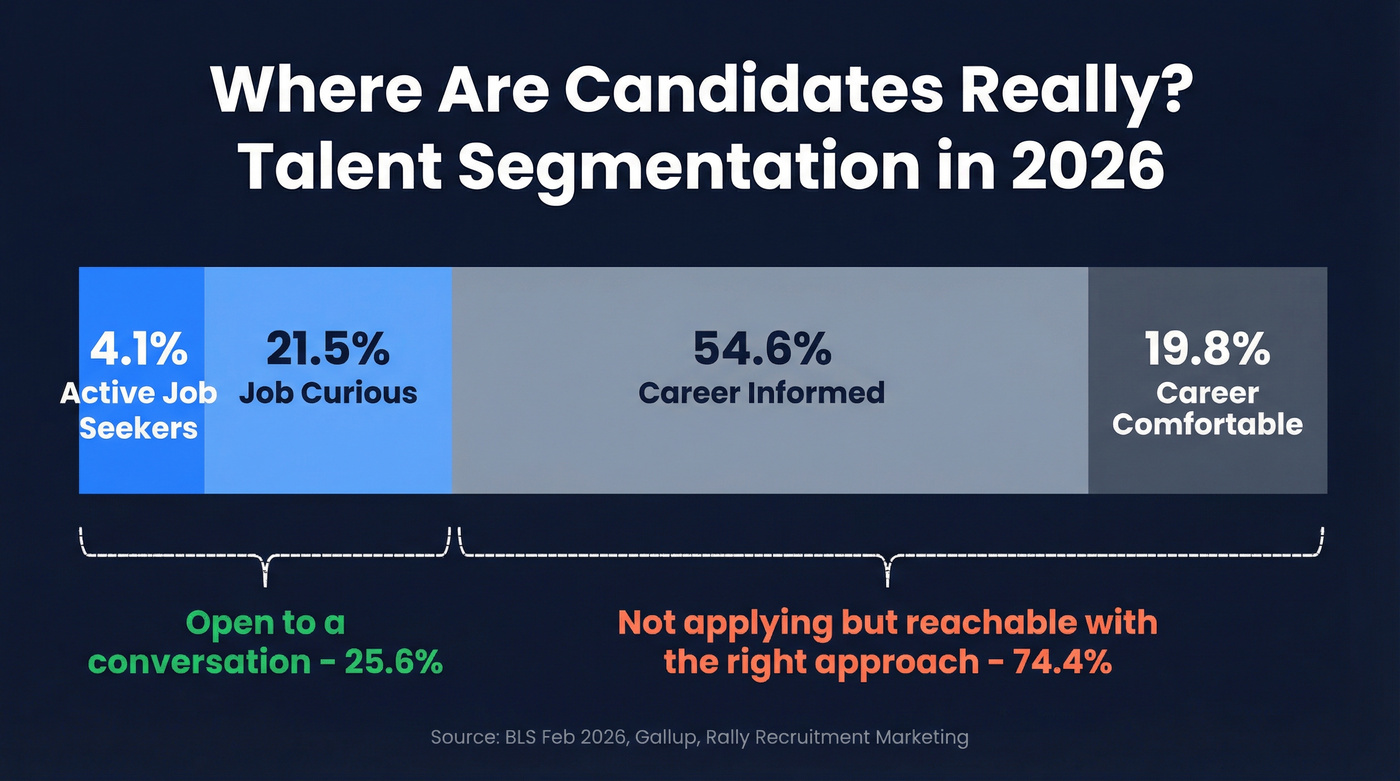
The job-hugging trend makes this harder. IBM's CEO noted attrition dropped to its lowest in 30 years - under 2% compared to a normal ~7%. People aren't leaving, but many are quietly open. Rally's talent segmentation breaks it down: 4.1% are active job seekers, 21.5% are "job curious," 54.6% are "career informed" passively absorbing market signals, and 19.8% are "career comfortable." Your outbound strategy needs to reach the whole spectrum, not just the 4.1% posting resumes.
Where Recruiters Find Candidates: Channel by Channel
The best sourcing teams don't rely on one channel. They stack channels by role type and measure conversion at each stage. Here's what works, ranked by impact.
1. Your ATS/CRM
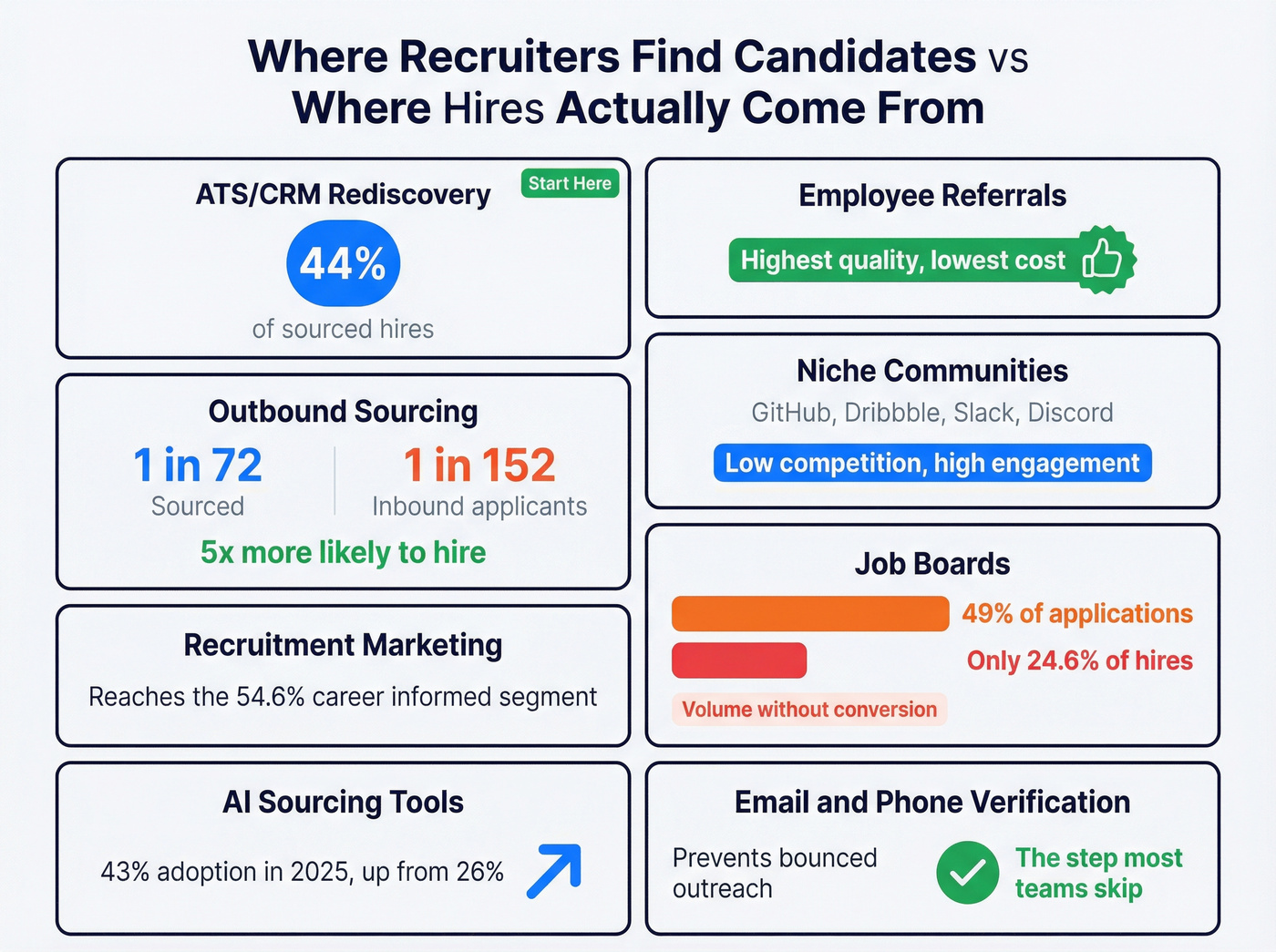
The share of sourced hires rediscovered from existing CRM/ATS databases rose from 29.1% in 2021 to 44.0% in 2024. Nearly half of your next hires are already in your system.
Yet fewer than half of companies actually re-engage past candidates. Tag silver medalists, set re-engagement cadences, and stop treating your ATS like a filing cabinet. This is the single highest-ROI move most recruiting teams aren't making, and it costs nothing beyond the time to build a workflow. If you've got 5,000+ records sitting untouched, start here before you spend another dollar on sourcing tools.
2. Employee Referrals
Referrals deliver the highest quality-to-cost ratio. They're pre-vetted for culture fit, they close faster, and they stick longer.
If your referral program is a dusty Confluence page nobody reads, fix that before buying another tool. A strong employer brand makes referrals easier - people refer to companies they're proud to work for.
3. Outbound Professional Profiles
Sourced candidates are 5x more likely to be hired than inbound applicants. Lever's data puts it at 1 in 72 sourced candidates getting hired versus 1 in 152 outside applicants. Boolean search and X-ray techniques across professional profiles still drive strong results, especially for senior and niche roles where the talent pool is small and competitive. A/B test your subject lines and personalize roughly 20% of each message to the individual - generic outreach gets ignored.
4. Niche Communities
GitHub for engineers. Dribbble for designers. Slack and Discord communities for product, DevOps, and growth roles. Alumni networks for executive searches.
These channels have lower volume but dramatically lower competition. A thoughtful message in a relevant Slack community lands differently than the 47th outreach message a VP of Engineering got this week. The consensus on r/recruiting is that community-sourced candidates tend to be more engaged and responsive than cold outbound - and our experience backs that up.
5. Recruitment Marketing
Targeted campaigns with landing pages and lead-capture forms let you build a talent pipeline before you have an open req. Think of it as demand gen for recruiting: nurture sequences, retargeting, and content that positions your team as a place worth joining. This is how you reach the 54.6% "career informed" segment that isn't applying but is paying attention.
6. Job Boards
Job boards drive 49% of applications but only 24.6% of hires. They still matter for high-volume roles - warehouse, retail, entry-level - but they're a poor primary channel for specialized or senior positions. Use them as a supplement, not a strategy.
7. AI-Powered Sourcing Tools
43% of organizations used AI for recruiting tasks in 2025, up from 26% the year before. AI-powered sourcing tools can surface ranked candidates with minimal manual effort, and AI-driven sourcing agents are moving from novelty to standard workflow. But don't outsource judgment. Algorithms miss strong candidates who don't fit neat keyword filters.
8. Email and Phone Verification
Finding the candidate is half the battle. Reaching them is the other half.
A bounced email or disconnected number kills your momentum and tanks reply rates. Prospeo covers 143M+ verified emails with 98% accuracy and 125M+ verified mobile numbers. Search by 30+ filters, verify in real time, and export directly to your sequencer or CRM. The free tier gives you 75 emails a month with no contracts. If you want to compare options, start with email finder tools built for outreach.
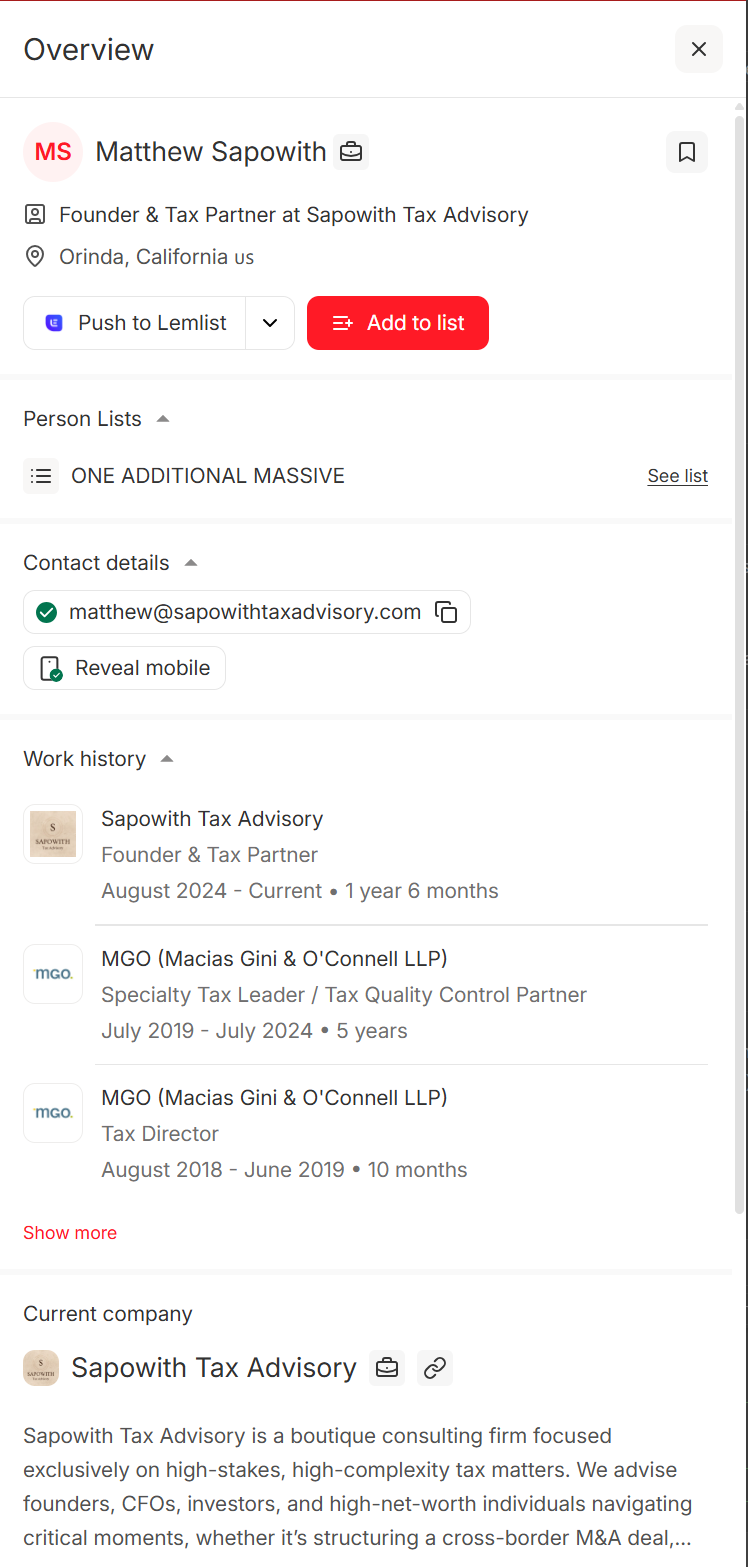

Sourced candidates are 5x more likely to get hired - but only if your outreach actually reaches them. Prospeo gives recruiters 143M+ verified emails at 98% accuracy and 125M+ verified mobile numbers, so every sourced candidate gets a real touchpoint instead of a bounced message.
Stop sourcing candidates you can never reach. Verify before you send.
Channel Comparison
| Channel | Best For | Efficiency Signal |
|---|---|---|
| ATS/CRM rediscovery | Any role with past applicants | 44% of sourced hires |
| Employee referrals | Culture-fit roles | Highest quality, lowest cost |
| Outbound sourcing | Senior/niche roles | 5x more likely to hire |
| Niche communities | Technical/creative | Low competition, high fit |
| Recruitment marketing | Passive talent pipeline | Reaches the "career informed" 54.6% |
| Job boards | High-volume roles | 49% apps, 24.6% hires |
| AI sourcing tools | Scale sourcing | 43% adoption and climbing |
| Email/phone verification | Any outbound campaign | Prevents bounced outreach |
Three Sourcing Mistakes That Cost You Hires
Not calibrating with hiring managers early. Chris Adams, an early Uber sourcer, recommends building a calibration set of ~20 candidate profiles before you start sourcing at scale. Review them together, align on signals, and save yourself weeks of wasted outreach on the wrong profiles.
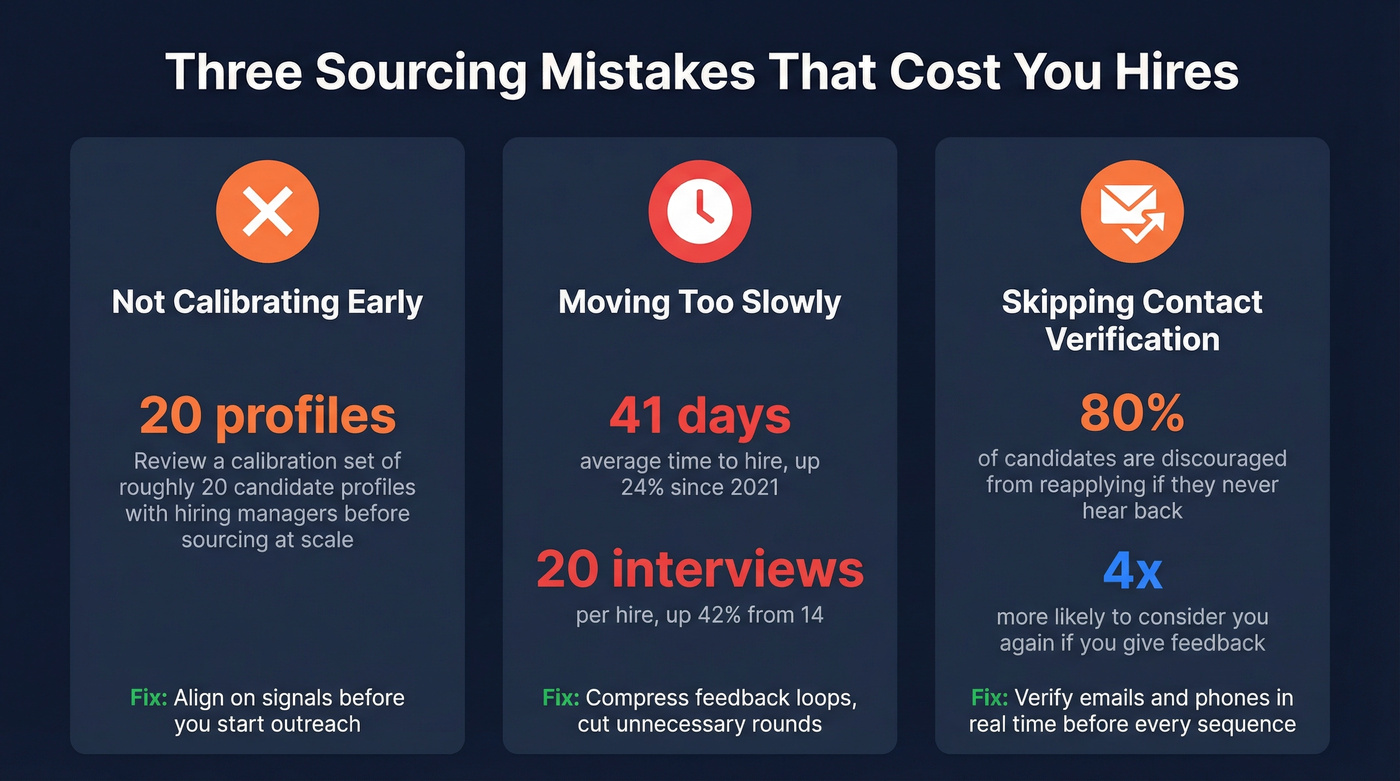
Moving too slowly. Time to hire has increased 24% since 2021, now averaging 41 days, and interviews per hire jumped 42% from 14 to 20. Top candidates don't wait. In our experience, the teams that compress feedback loops and cut unnecessary interview rounds fill roles weeks faster than competitors running five-panel gauntlets. Candidate experience matters here too: people are 4x more likely to consider your company again if you give them feedback, and 80% are discouraged from considering other openings if they never hear back.
Skipping contact verification. You spent 20 minutes sourcing the perfect candidate. Then your email bounces. That's the invisible bottleneck most teams ignore. Verify emails and phones in real time so your outreach actually lands - the sourcing work you've already done only converts if the message arrives. If you're seeing bounce issues, start with a hard bounce triage and then implement an email verification workflow.
Here's the thing: if your team sources fewer than 50 candidates a week, you probably don't need an AI sourcing tool. You need a cleaner ATS, a real referral program, and verified contact data. The basics outperform the shiny stuff almost every time. (If your database is messy, use a CRM hygiene checklist to keep it clean.)
Your ATS has thousands of silver medalists with stale contact data. Prospeo's enrichment engine refreshes records every 7 days and returns 50+ data points per contact - so re-engagement campaigns hit real inboxes, not dead ends. 83% of leads come back enriched.
Reactivate your ATS database with contact data that's actually current.
FAQ
What's the most efficient channel for finding candidates?
Outbound sourcing delivers the highest conversion - sourced candidates are 5x more likely to be hired than inbound applicants. Start with your ATS, since 44% of sourced hires come from existing databases. Layer outbound professional profile searches on top for senior and niche roles.
How do recruiters find passive candidates?
Professional profile searches, niche communities like GitHub and Discord, employee referrals, and recruitment marketing campaigns. Only 4.1% of workers are actively looking, but half are open to the right opportunity. Reaching them requires verified contact data and personalized outreach - not mass blasts.
What's the best way to verify candidate contact info?
Use a real-time verification tool before every outreach sequence. Prospeo verifies emails at 98% accuracy across 143M+ records and includes 125M+ mobile numbers - the free tier covers 75 emails per month with no contracts. Fewer bounces means more conversations from the same sourcing effort.
Are job boards still worth using in 2026?
They drive 49% of applications but only 24.6% of hires. They're useful for high-volume entry-level roles but inefficient as a primary channel for specialized or senior positions. Pair them with outbound sourcing and ATS rediscovery for a balanced pipeline.