

Best Account-Based Marketing Platforms in 2026
The B2B marketing and lead gen market hit roughly $8B in 2023 and is projected to surpass $21B by 2032. A big chunk of that spend goes to account-based marketing platforms - and a big chunk of it gets wasted. One niche B2B marketer on r/b2bmarketing put it bluntly: tools like Demandbase, RollWorks, and 6sense are "incredibly expensive" and "not useful" when your target audience is small and you mainly need to prove your spend is reaching the right accounts. That frustration echoes across ABM forums constantly.
Here's the tension: enterprise suites bundle everything - intent, orchestration, advertising, analytics - and charge accordingly. But most teams don't need everything. They need the right things.
Our Picks (TL;DR)
Best for ABM data quality: Prospeo. 98% email accuracy, 7-day data refresh, intent data across 15,000 Bombora topics. The data foundation every ABM stack needs. ~$0.01/email with a free tier.
Best full-suite ABM platform: Demandbase. Enterprise orchestration, advertising, and analytics in one platform. Median contract $65,981/year based on 175 real deals.
Best if you're already on HubSpot: HubSpot Marketing Hub. ABM features like target account lists, company scoring, and ABM dashboards live inside HubSpot. Professional starts at $800/month, Enterprise at $3,600/month. No separate ABM license required.
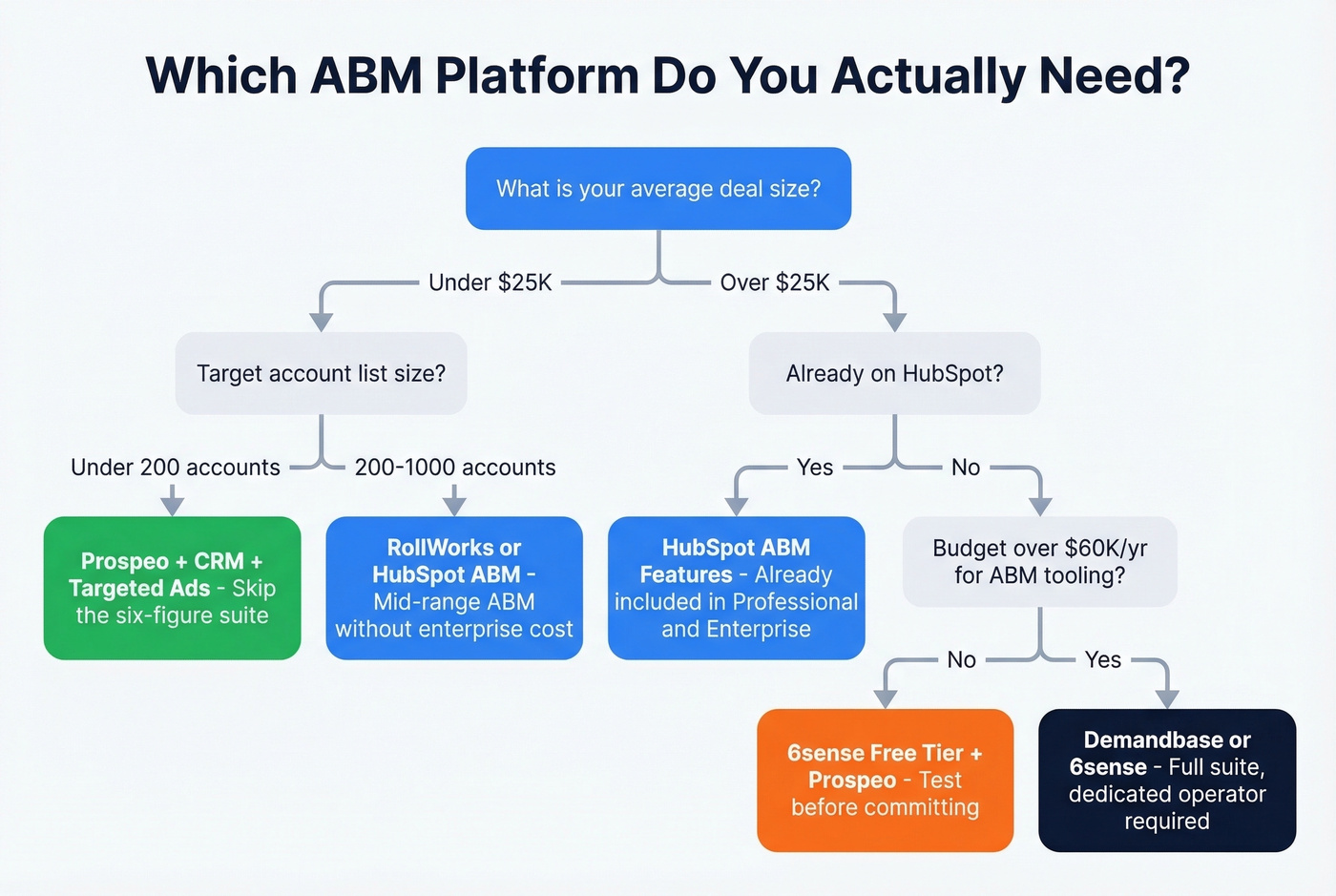
Hot take: If your average deal size is under $25K and your target account list is under 200, you almost certainly don't need a dedicated ABM suite. A verified data source, your CRM, and targeted ad campaigns will outperform a six-figure platform that nobody on your team has time to operate.
How to Evaluate ABM Platforms
Before comparing tools, know what to measure them against. Five criteria separate the platforms that deliver from the ones that drain budget:
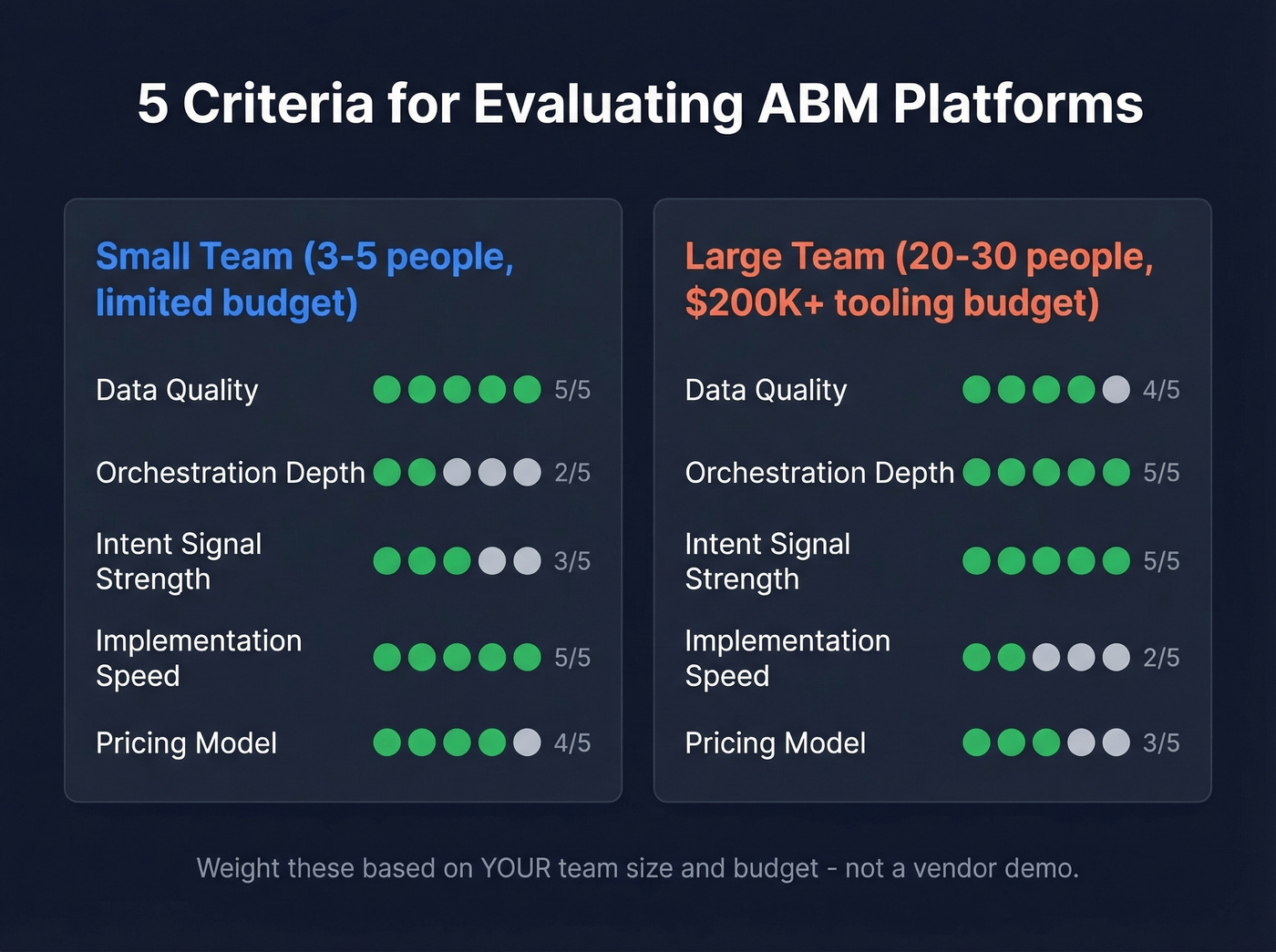
- Data quality - Bounce rates, contact freshness, and coverage of your ICP. Bad data poisons everything downstream (and it’s why an ABM list decays fast without refresh).
- Orchestration depth - Can you coordinate ads, email, web personalization, and direct mail from one place, or are you stitching together point solutions? (More on ABM orchestration.)
- Intent signal strength - First-party research signals beat third-party aggregation. Ask where the intent data actually comes from.
- Implementation complexity - Some platforms go live in a day. Others need 4+ weeks of model training and a dedicated operator.
- Pricing model - Per-seat, per-account, platform fee plus ad spend, or credit-based? The model matters as much as the number.
Weight these based on your team size and budget. A 3-person marketing team should overweight data quality and implementation speed. A 30-person team with $200K in tooling budget can afford to optimize for orchestration depth.
What ABM Platforms Actually Do
ABM platforms sit at the intersection of four capabilities: account identification figures out who you should target, intent data reveals who's actively researching solutions like yours, multi-channel orchestration coordinates how you reach buying committees across ads, email, web, and direct mail, and account-level analytics tell you what's actually working (which is where ABM attribution and ABM reporting get real).
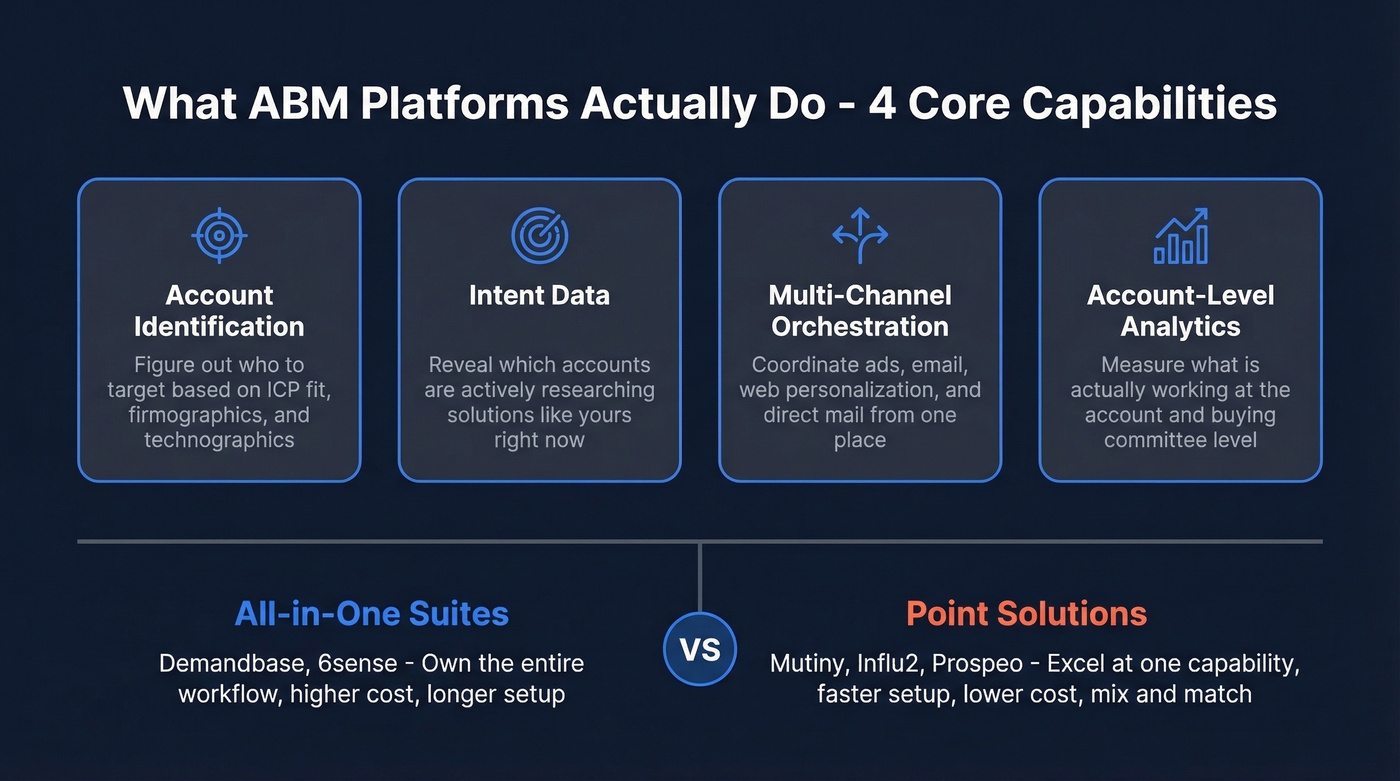
The market splits into two camps. All-in-one suites like Demandbase and 6sense try to own the entire workflow. Point solutions handle one piece exceptionally well - Mutiny for website personalization, Influ2 for person-based ads, or a verified data platform for accurate contact information and intent signals.
Neither approach is inherently better. The right choice depends on your team size, budget, and how much of the stack you've already built.
Platform Comparison Tables
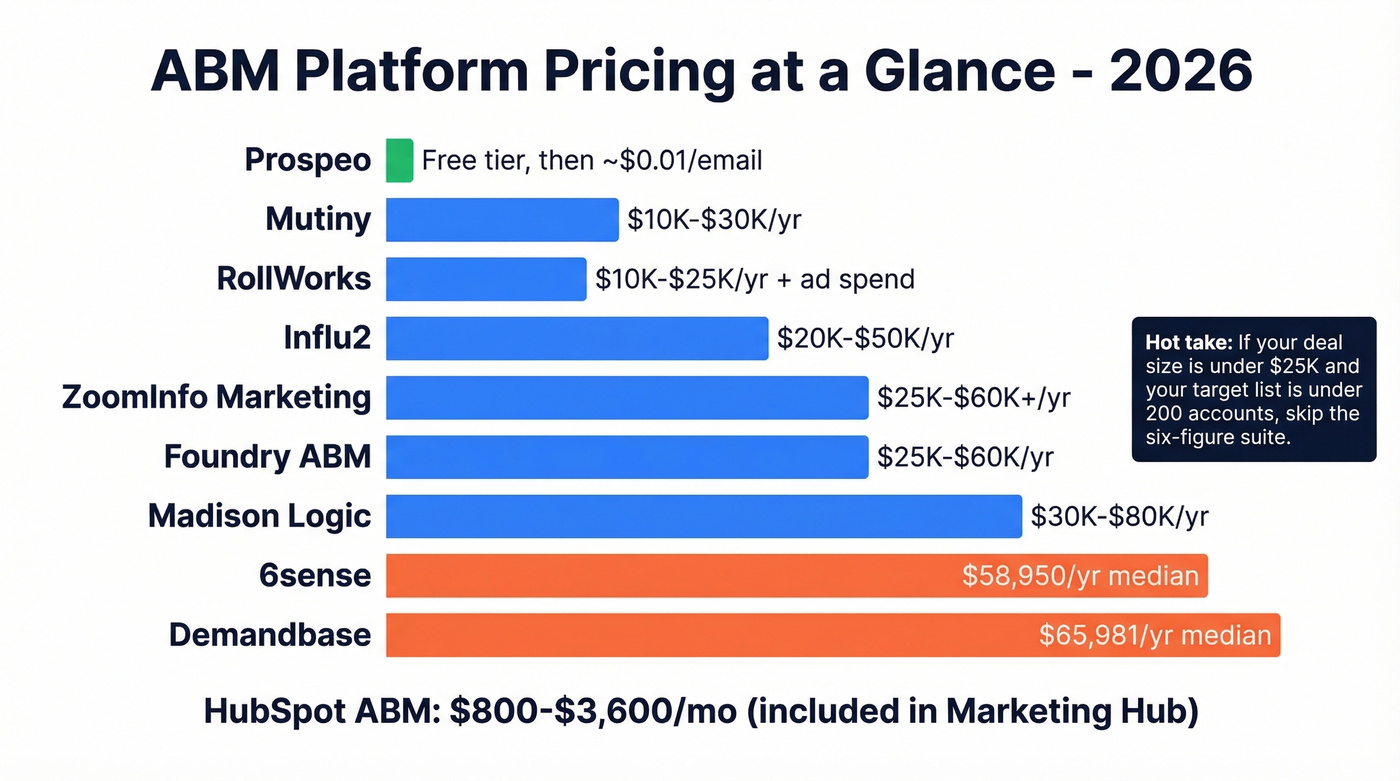
Table 1: Positioning & Pricing
| Platform | Best For | Pricing | Key Strength |
|---|---|---|---|
| Demandbase | Full-suite enterprise ABM | $65,981/yr median | Unified orchestration + ads |
| 6sense | Predictive intelligence | $58,950/yr median | AI-driven intent + prediction |
| HubSpot ABM | HubSpot customers | $800-$3,600/mo | No separate ABM license |
| RollWorks | Mid-market ABM ads | ~$10K-$25K/yr + ad spend | Accessible ABM ad entry point |
| ZoomInfo Marketing | Data-rich ABM campaigns | ~$25K-$60K+/yr | Massive B2B database |
| Madison Logic | Content syndication ABM | ~$30K-$80K/yr | Multi-channel content |
| Influ2 | Person-based advertising | ~$20K-$50K/yr | Contact-level ad targeting |
| Foundry ABM | Intent-driven ABM | ~$25K-$60K/yr | First-party intent network |
| Mutiny | Website personalization | ~$10K-$30K/yr | Website personalization |
Table 2: Implementation & Limitations
| Platform | Setup Time | Key Limitation |
|---|---|---|
| Prospeo | Same day | Pair with a suite for orchestration |
| Demandbase | ~3 weeks | ~$29K onboarding; steep learning curve |
| 6sense | 4+ weeks | Model training needs clean CRM data |
| HubSpot ABM | Days | Less depth than dedicated platforms |
| RollWorks | 1-2 weeks | No contact-level engagement insight |
| ZoomInfo Marketing | 2-3 weeks | ABM feels bolted onto a data platform |
| Madison Logic | 2-4 weeks | Requires existing content library |
| Influ2 | 2-3 weeks | Narrow focus on ads only |
| Foundry ABM | 2-4 weeks | Less flexible orchestration layer |
| Mutiny | 1-2 weeks | Website only - not a full ABM platform |
Our recommendation for most teams: Demandbase if you have the budget and headcount to operate it. Prospeo + CRM + targeted ads if you don't. HubSpot's built-in ABM tools if you're already in that ecosystem (and you can still run proven ABM plays without adding another platform).

29% of marketers say data quality is their #1 ABM challenge. Prospeo solves it with 98% email accuracy, 7-day refresh cycles, and intent data across 15,000 Bombora topics - starting at $0.01/email. No contracts. No sales calls.
Build your ABM program on data that actually connects.
The Best ABM Platforms
Prospeo
Every ABM tool on this list depends on accurate contact data. If your emails bounce and your phone numbers are dead, sophisticated orchestration won't save you (especially once you start scaling ABM prospecting).
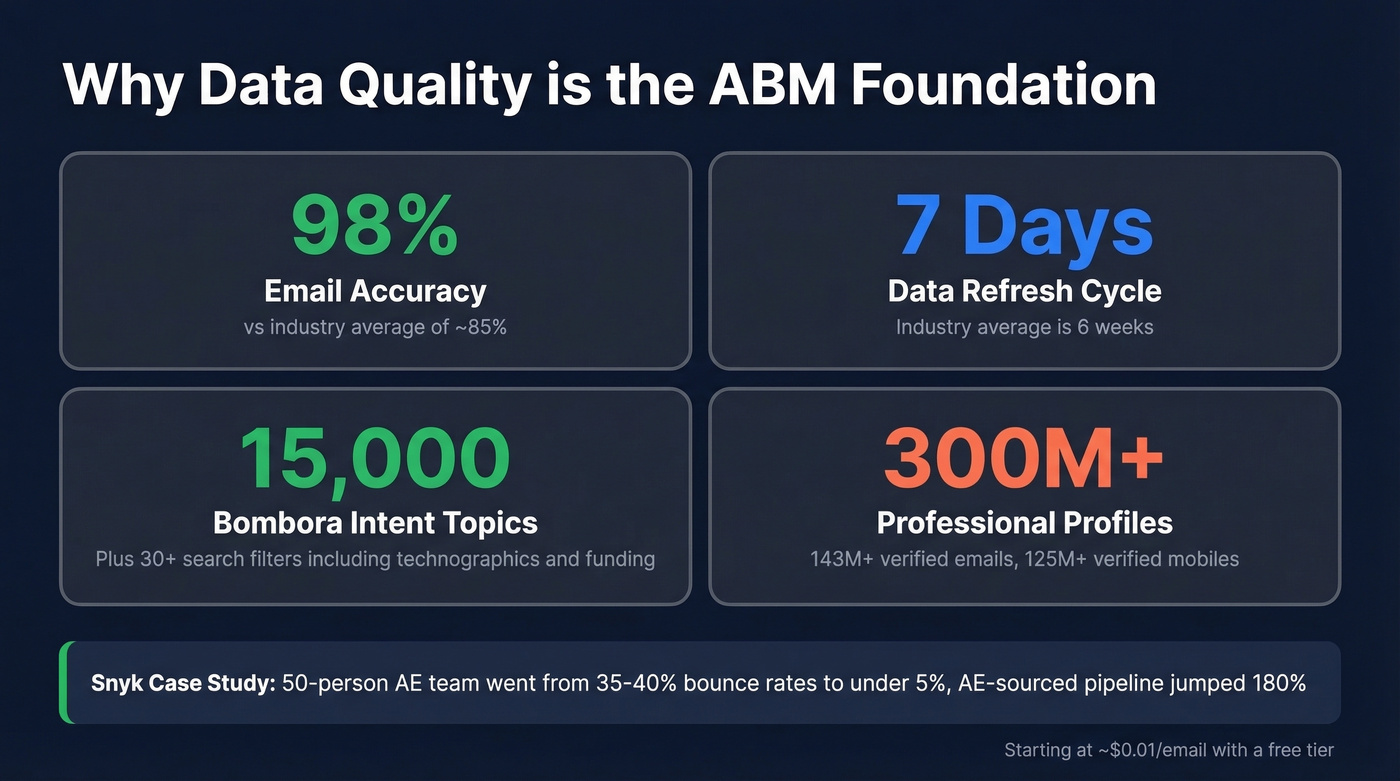
Prospeo's database covers 300M+ professional profiles, 143M+ verified emails, and 125M+ verified mobile numbers with a 30% mobile pickup rate. Email accuracy runs 98%, and data refreshes every 7 days - the industry average is 6 weeks. For account-based programs where you're targeting specific buying committees rather than blasting generic lists, that freshness gap is enormous. We've seen it firsthand: teams running ABM on stale data burn budget on contacts who changed roles months ago.
29% of marketers cite data quality as their top ABM challenge. Snyk's 50-person AE team was running 35-40% bounce rates before switching to Prospeo. After the switch, bounce rates dropped under 5%, and AE-sourced pipeline jumped 180%.
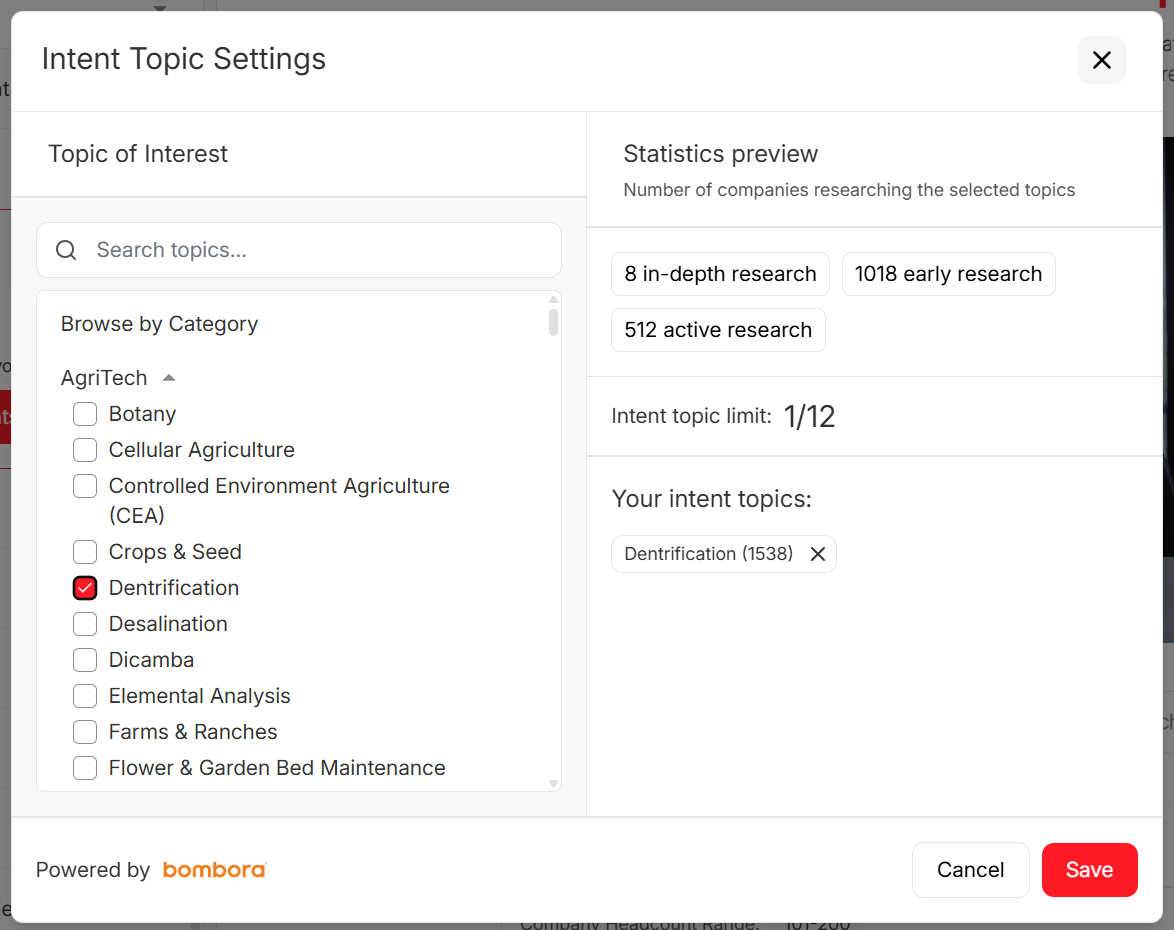
Intent data covers 15,000 Bombora topics, with 30+ search filters including technographics, funding, headcount growth, and job changes. Pricing starts at ~$0.01/email with a free tier. No contracts, no sales calls.
Use this if you need a data quality foundation that makes your entire ABM stack perform. Skip this if you need built-in ad buying - pair Prospeo with one of the suites below.
Demandbase
Demandbase is the closest thing to a true all-in-one ABM suite. It combines account identification, targeted advertising, multi-channel orchestration, and analytics under a single roof. If your org has the budget and the team to run it, it's the most complete option on the market.

The median contract runs $65,981/year based on 175 real deals tracked by Vendr, with a range from $22,860 to $164,265 depending on modules and account volume. Onboarding fees run around $29K, and additional seats cost $1,200-$3,000/year each. Implementation takes roughly 3 weeks if your data foundation is clean.
Pros: Lifecycle ABM orchestration across the full funnel. Strong advertising capabilities. Unified analytics that actually tie campaigns to pipeline.
Cons: The total cost of ownership - platform fee plus onboarding plus seat expansion - can surprise teams who only budgeted for the base contract. The learning curve is steep, and you'll need a dedicated ABM operator to get full value.
6sense
Where Demandbase leads with orchestration and advertising, 6sense leads with predictive intelligence. Its AI models analyze buyer intent signals and predict which accounts are in-market, what stage they're at, and when to engage.

The median annual contract is $58,950 across 316 deals, with a range from $10,621 to $154,859. There's a genuinely useful free tier - 50 data credits per month, plus Company & People Search, Sales Alerts, and a Chrome Extension. But 6sense's predictive models need 4+ weeks of training on your CRM's historical opportunity data before they deliver reliable predictions. That's a real time-to-value gap compared to Demandbase's ~3-week go-live.
Pros: Best-in-class predictive analytics. The revenue intelligence layer gives sales teams genuine buying-stage visibility, not just intent scores. The free tier lets you test before committing.
Cons: Model training takes time and requires clean CRM data. Teams without a dedicated analyst sometimes struggle to act on the volume of data the platform surfaces.
HubSpot ABM
Here's the thing: if you're already running HubSpot Marketing Hub at the Professional tier ($800/month) or Enterprise ($3,600/month), you have ABM features built in. Target account lists, company scoring, ABM dashboards, and account-based reporting - all included, no separate license.
Use this if you're a HubSpot shop with fewer than 500 target accounts and don't need standalone intent data or programmatic advertising. HubSpot's ABM tools are genuinely underrated for teams that want to run focused account programs without adding another $50K+ platform to the stack.
Skip this if you need deep intent signals, predictive buying-stage models, or account-based advertising at scale. HubSpot's ABM features are solid but shallow compared to Demandbase or 6sense.
RollWorks
RollWorks is the most accessible entry point for teams that want ABM advertising without the enterprise price tag. The platform subscription runs ~$10K-$25K/year, plus your actual ad spend on top, priced on a dynamic CPM model. For mid-market teams testing ABM ads for the first time, it's a reasonable starting point.
The catch: RollWorks targets at the account level. You're reaching companies, not individual contacts. You won't see which specific people engaged with your ads, which limits your ability to personalize follow-up outreach.
ZoomInfo Marketing
If you're already paying for ZoomInfo SalesOS, adding the marketing module makes sense. You get access to one of the deepest B2B databases on the market, plus audience building, display advertising, and website visitor tracking. Expect ~$25K-$60K+/year for a marketing-inclusive package.
Buying ZoomInfo standalone for ABM is a different story. The ABM capabilities feel like add-ons to a data platform rather than a purpose-built suite. Demandbase and 6sense run circles around it for orchestration. We'd only recommend ZoomInfo Marketing to teams already embedded in that ecosystem.
Madison Logic
Madison Logic specializes in content syndication and ABM advertising, activating your content across multiple channels to reach target accounts. Contracts typically run ~$30K-$80K/year.
It's a strong fit for teams with a deep content library - whitepapers, reports, webinars - that they want to distribute to specific accounts. It's a weak fit for teams without that content engine already running. You'll spend as much building assets as you will on the platform itself (if that’s your motion, see content syndication lead generation).
Influ2
Influ2 does one thing other ABM ad platforms don't: contact-level targeting. You're not just reaching accounts - you're serving ads to specific people within buying committees. Pricing runs ~$20K-$50K/year. Narrow focus, but powerful if person-based advertising is central to your strategy (and it pairs well with a clear ABM audience plan).
Foundry ABM
Formerly part of TechTarget's portfolio, Foundry ABM brings a strong intent data network built on first-party research consumption signals. Expect ~$25K-$60K/year. The intent data is genuinely differentiated - first-party beats third-party aggregation every time - but the orchestration layer is less flexible than Demandbase or 6sense.
Mutiny
Mutiny personalizes your website for target accounts - different messaging, CTAs, and content based on who's visiting. At ~$10K-$30K/year, it's not a full ABM platform, but it's an excellent complement to one. If you're already driving target accounts to your site and not converting them, Mutiny is worth a serious look.
Do You Actually Need an ABM Platform?
Let's be honest: a lot of teams buy ABM software they don't need. If you're targeting a niche market with a small TAM, a $60K orchestration suite is overkill. You need to prove your spend is reaching the right organizations and hand warm accounts to sales. That's it.
You need a dedicated platform when your target account list exceeds 500 accounts, you're running multi-channel campaigns simultaneously, you need predictive buying-stage intelligence to prioritize accounts, and your sales and marketing teams are large enough to actually operationalize the tool. Without at least three of those conditions, you're paying for capabilities that sit unused.
For teams with under 200 target accounts, budgets below $50K, or marketing teams of 1-3 people, a lightweight stack works better. A verified contact database, a CRM with account-based views, and targeted ad campaigns uploaded directly to ad platforms can outperform a six-figure suite - and you get verified data and intent signals the same day, not 4 weeks from now. In our experience, teams under 200 accounts consistently get more from this approach than from a platform they can't fully staff.
Teams that pair a website personalization tool like Mutiny with a strong data foundation and CRM get meaningful ABM results without the six-figure commitment. Start lean, prove the motion works, then invest in orchestration when you've outgrown the lightweight stack (use a simple ABM maturity model to sanity-check timing).
Snyk's 50 AEs cut bounce rates from 35% to under 5% and grew AE-sourced pipeline 180% - because ABM orchestration means nothing when contacts are stale. Prospeo refreshes 300M+ profiles every 7 days, not every 6 weeks.
Stop burning ABM budget on dead contacts.
What Happened to Terminus?
If you're searching for Terminus, you won't find it as a standalone product anymore. In late 2024, Terminus merged with DemandScience under the DemandScience brand. Terminus was known for multi-channel ad serving across display, connected TV, and audio, and DemandScience is now positioning an expanded omni-channel buying-group engagement suite with flexible contracts and no mandatory 12-month lock-in on day one. But the Terminus brand as you knew it is gone.
Common ABM Mistakes
After working with dozens of ABM implementations, we've seen the same patterns kill programs repeatedly.
Treating ABM as a campaign is the most common mistake. ABM is a strategy, not a 90-day initiative. Teams that expect pipeline impact in one quarter almost always declare failure prematurely. Budget 2-3 quarters before expecting meaningful results - even Demandbase takes 3 weeks to go live, and 6sense needs 4+ weeks for model training.
Poor account selection comes in a close second. Picking 2,000 accounts because "more is better" defeats the purpose entirely. Start with 50-100 accounts you genuinely understand, then expand once you've proven the motion works.
The two silent killers are data quality and sales-marketing misalignment. 29% of marketers cite data quality as their top ABM challenge - bad emails, stale contacts, and duplicate records undermine every downstream activity. And if sales doesn't know which accounts marketing is targeting or doesn't trust the intent signals, the program fails regardless of the platform. Measuring vanity metrics like impressions and clicks instead of account progression, buying committee engagement depth, and opportunity conversion just makes the misalignment harder to diagnose.
FAQ
How much do account-based marketing platforms cost?
Enterprise suites like Demandbase and 6sense run $58,950-$65,981/year median, with large deployments reaching $150K+. Mid-market tools like RollWorks and Mutiny start at $10K-$25K/year. HubSpot includes ABM features at $800/month. Data foundation tools like Prospeo start at ~$0.01/email with free tiers.
How long does ABM take to show results?
Expect 2-3 full quarters before seeing meaningful pipeline impact. Implementation alone takes 3-6 weeks - Demandbase goes live in roughly 3 weeks, while 6sense needs 4+ weeks for model training. Teams that declare failure after one quarter almost always quit too early.
Can small teams run ABM without a dedicated platform?
Yes. Teams with under 200 target accounts and budgets below $50K consistently outperform with a lightweight stack: verified contact data, a CRM with account-based views, and targeted ad campaigns. You don't need a six-figure suite to run focused account programs.
What's the difference between ABM platforms and CRMs?
CRMs like Salesforce and HubSpot store and manage account and contact records. ABM platforms layer on account identification, intent signals, multi-channel orchestration, and account-level analytics. They integrate with your CRM as the intelligence and activation layer on top - they don't replace it.
What ROI should you expect from ABM?
Snowflake reported 2-4x increases in SDR meeting completion rates and 50% faster deal cycles after implementing ABM. Salesforce cites 38% higher sales win rates and 91% larger deal sizes for companies running ABM programs. The lift is real, but exact numbers depend on your execution, market, and sales cycle length.