

Benefits of Personal Selling: What the Data Actually Shows
Your VP just asked why the team needs three more reps instead of doubling the marketing automation budget. The answer is a number most guides on the benefits of personal selling never mention: reps convert at 20-40%. The best-performing digital channel - SEO - converts at 2.6%. That's not a marginal difference. That's an ~8-15x multiplier.
Every article about the importance of personal selling lists "builds relationships" as a benefit without explaining what that means in measurable terms. Let's fix that.
If you sell complex, high-ticket products, personal selling is your highest-ROI channel. If you sell low-ticket at high volume, go hybrid. Either way, fix your data quality first - reps only sell about 2 hours a day, and bad data wastes most of it.
What Is Personal Selling?
Personal selling is direct, one-to-one communication between a salesperson and a prospect. Historically that meant face-to-face meetings. Now, 80% of B2B sales interactions happen virtually, which means "personal" no longer requires "in-person."
The core principle hasn't changed: a human adapts the message based on what the buyer says, does, and needs. That adaptability is what separates personal selling from advertising, where the message is fixed before the audience ever sees it.
Core Advantages of Personal Selling
Higher Conversion Rates
This is the single strongest argument for personal selling, and it isn't close.
| Channel | B2B Conversion Rate | Source |
|---|---|---|
| Personal selling | 20-40% | LA Growth Machine |
| Referrals | ~26% | Landbase |
| SEO | 2.6% | First Page Sage (2026) |
| Email marketing | 2.4% | First Page Sage (2026) |
| Webinars | 2.3% | First Page Sage (2026) |
| Organic social | 1.7% | First Page Sage (2026) |
| SEM/PPC | 1.5% | First Page Sage (2026) |
| Paid social | 0.9% | First Page Sage (2026) |
| Display ads | 0.3% | First Page Sage (2026) |
The digital channel data comes from First Page Sage's benchmark report covering just over 150 agency clients, with data collected from 2019-2024. Ruler Analytics' study across 100M+ data points found an average conversion rate of 2.9% across 14 industries. Sales call-to-appointment conversion rates vary by industry - from ~8% in industrial equipment to ~27% in janitorial - but even the low end dwarfs digital channels.
Even at the conservative 20% floor, direct selling delivers nearly 8x the best digital channel. The trade-off is cost, but for complex, high-ticket deals, the math works overwhelmingly in its favor. One SaaS team showed what this looks like at the account level by sending personalized video messages to their top 100 target accounts: 34 meetings booked, $2.1M in additional pipeline within 90 days.

Trust That Drives Revenue
"Building trust" sounds soft until you see what trust actually causes.
A peer-reviewed study by Guenzi and Georges in the European Journal of Marketing tested what builds trust in sales relationships - and what trust produces downstream. The counterintuitive finding: likeability alone didn't influence trust. Being competent and customer-focused is what moves the needle, while a hard selling orientation actively destroys it.
What trust produces is concrete: higher rebuy intent, more cross-buy, stronger referral behavior, and lower switching intent. A CMSWire survey of 363,000+ CX leaders reinforces this - 67% say detailed case studies are the most effective content for building trust, and 44% say transparent communication strengthens customer confidence. Give your reps case studies and real metrics, not just pitch decks. One-to-one selling is the only channel where a rep can deliver both transparency and proactive guidance in real time.
Real-Time Objection Handling
No email sequence can read a prospect's hesitation and pivot mid-sentence. Personal selling lets reps address concerns the moment they surface - before they calcify into a hard "no."
Here's the thing: 80% of sales require 5+ follow-ups, but 92% of reps quit after 4 attempts. Personal selling doesn't just handle objections. It creates the persistence structure that most deals actually require to close.
Customer Insights No Survey Can Match
Buyers spend only ~17% of their total purchase time engaging with any vendor. That makes every personal interaction a rare, high-value data-collection opportunity - the questions a prospect asks, the objections they raise, the competitors they mention. This is intelligence no NPS survey or form fill can replicate.
Complex Sales Need a Human
67% of customers prefer self-service over speaking to a company representative. That's not an argument against direct selling - it's an argument for deploying it only where it matters.
Self-service works for simple, low-stakes purchases. For multi-stakeholder deals with six-figure contracts and long implementation cycles, self-service falls apart. That's where personal selling earns its ROI. If your average contract value is under $8K, you probably don't need a dedicated field sales motion at all - invest in self-service and inside sales instead. But if you're closing five- and six-figure deals, every dollar spent on rep-led selling returns multiples that no other channel can touch.
The Honest Cost
Use personal selling when: You're selling complex, high-ticket products where the conversion rate multiplier justifies the cost per contact. Enterprise software, financial services, custom manufacturing - anything with a multi-month sales cycle and multiple stakeholders. At $50-200 cost per contact, the unit economics only work when deal sizes are large enough to absorb it.
Skip it when: You're selling a low-ticket product to a high-volume market. Inside reps can cover 4x the prospects at half the cost of field sales, and a hybrid model makes more sense for deals under $5,000.
The real cost isn't just the per-contact spend. It's the productivity drain. Reps spend only ~30% of their time actually selling - roughly 2 hours a day. Where does the rest go? 68% of reps say note-taking and data entry are their most time-consuming tasks. 43% lose 10-20 hours per week to admin work. If most of your sales payroll is effectively spent on non-selling work, fixing that ratio is the fastest way to improve ROI.
Limitations worth knowing:
- High cost per contact - $50-200 means the math breaks on low-ACV products
- Limited scalability - you can't 10x personal selling the way you can 10x ad spend
- Training investment - a bad rep doesn't just fail to close; they actively damage trust

Personal selling converts at 20-40% - but only when reps reach real buyers. Bad data burns those 2 selling hours on bounced emails and wrong numbers. Prospeo delivers 98% accurate emails and 125M+ verified mobiles so every conversation your reps start actually connects.
Stop wasting your highest-ROI channel on dead-end contacts.
The 7-Step Process
Personal selling follows a consistent structure. Here's the framework with a tactical tip for each phase.
Discovery Phase (Steps 1-3)
This is where most deals are won or lost. We've seen reps skip straight to pitching and wonder why nothing closes.
Prospecting and preparation. Use ANUM (Authority, Need, Urgency, Money) or BANT to filter before you dial. Verified contact data eliminates bounced emails and wrong numbers so reps spend more time in actual conversations. (If you need a refresher, start with sales prospecting.)
Approach and introduction. Lead with a relevant insight, not a pitch. Reference a recent funding round, a job posting that signals a pain point, or a competitor move.
Needs assessment. Ask more than you tell. Discovery questions beat feature dumps every time.
Execution Phase (Steps 4-7)
Everything here should flow naturally from what you learned in discovery.
Presentation. Tailor the demo to the specific needs uncovered in step three. Use a product demo checklist to keep it tight. Show the prospect their problem being solved, not your feature list.
Handling objections. Use the LAER framework: Listen fully, Acknowledge the concern, Explore the root cause, then Respond with a specific answer.
Closing. If steps one through five were done well, closing is a natural next step. Summarize the value, confirm the timeline, ask for the commitment directly. If you want a tighter framework, use these steps to close a sale.
Follow-up and relationship building. Post-sale follow-up drives the rebuy, cross-buy, and referral behavior that Guenzi and Georges' research identified as trust outcomes.
Mistakes That Kill Effectiveness
Most personal selling failures aren't strategy problems - they're execution problems. NetSuite's analysis of common sales mistakes maps directly to what we see in the field.
The biggest category is conversational discipline. In our experience, the talk-to-listen ratio is the single fastest diagnostic for a struggling rep. If you're talking more than 40% of the call, you're pitching, not selling. The same reps who over-talk tend to argue with prospects when challenged - even when the prospect's perception is wrong. Disagreeing triggers defensiveness. Stay empathetic, redirect, and know when to walk away.
Beyond that, a few patterns show up repeatedly:
- Emphasizing price over value. Leading with discounts trains the buyer to negotiate on cost. Lead with metrics, case studies, and business impact instead.
- Failing to qualify leads. Every hour on an unqualified prospect is stolen from a real opportunity. Use scoring models before investing rep time (see lead scoring).
- Skipping objection prep. If a rep can't anticipate the top five objections for their product, they aren't prepared. Build an objection playbook from call recordings and CRM data.
- Pitching the wrong stakeholders. Buying groups are getting larger. Stakeholder mapping is the difference between a champion conversation and a dead-end demo.
- Using jargon the buyer doesn't speak. Match the vocabulary to the audience - technical language signals confusion to non-technical buyers.
Personal Selling in 2026: Hybrid Models and AI
The Hybrid Reality
The field-vs-inside debate is over. Hybrid won.
9 out of 10 companies plan to maintain hybrid sales models, and McKinsey's data shows hybrid approaches can drive up to 50% higher revenue growth compared to single-channel strategies. Inside sales reps now make up roughly 40% of high-growth B2B sales teams - up from 10% in 2017. The economics are straightforward: inside reps cover more ground at lower cost, while field reps handle the high-stakes, relationship-intensive deals that justify travel. Hybrid also expands your hiring pool by ~30% since you're no longer constrained by geography.
AI as Copilot, Not Replacement
AI adoption in sales hit 43% in 2024, and 92% of organizations increased AI spend in 2025. But a 2026 editorial in the Journal of Personal Selling & Sales Management flagged a critical gap: trust in AI remains a neglected pitfall affecting both rep adoption and customer acceptance.
The tools that work treat AI as a copilot, not a replacement. WINN.AI is a good example - they raised an $18M Series A in early 2026, tripled ARR in 2025, and report 0% churn among enterprise customers. Their approach: real-time in-call coaching prompts, automatic CRM capture, and follow-up drafting. The rep still runs the conversation. AI handles the admin that eats 70% of their day.
How to Scale Personal Selling
The productivity problem is the core scaling challenge. If reps sell 2 hours a day and spend the rest on admin and prospecting, every minute of actual selling time has to count. The fastest lever isn't hiring more reps - it's eliminating the waste that keeps existing reps from selling.
Automation can free up roughly 20% of sales team capacity. But the highest-impact fix is upstream: data quality. Bad data - bounced emails, wrong numbers, outdated titles - wastes the limited selling time reps have. Every dial to a disconnected number is a minute that could've been a conversation. We've seen teams double their connect rates just by cleaning up their contact data with data enrichment services.
Prospeo gives you 300M+ professional profiles, 143M+ verified emails at 98% accuracy, and 125M+ verified mobile numbers refreshed every 7 days. Intent data powered by Bombora tracks 15,000 topics so reps reach buyers who are actively in-market. The free tier includes 75 verified emails per month plus 100 Chrome extension credits - enough to test whether better data moves your connect rates before committing a dollar.
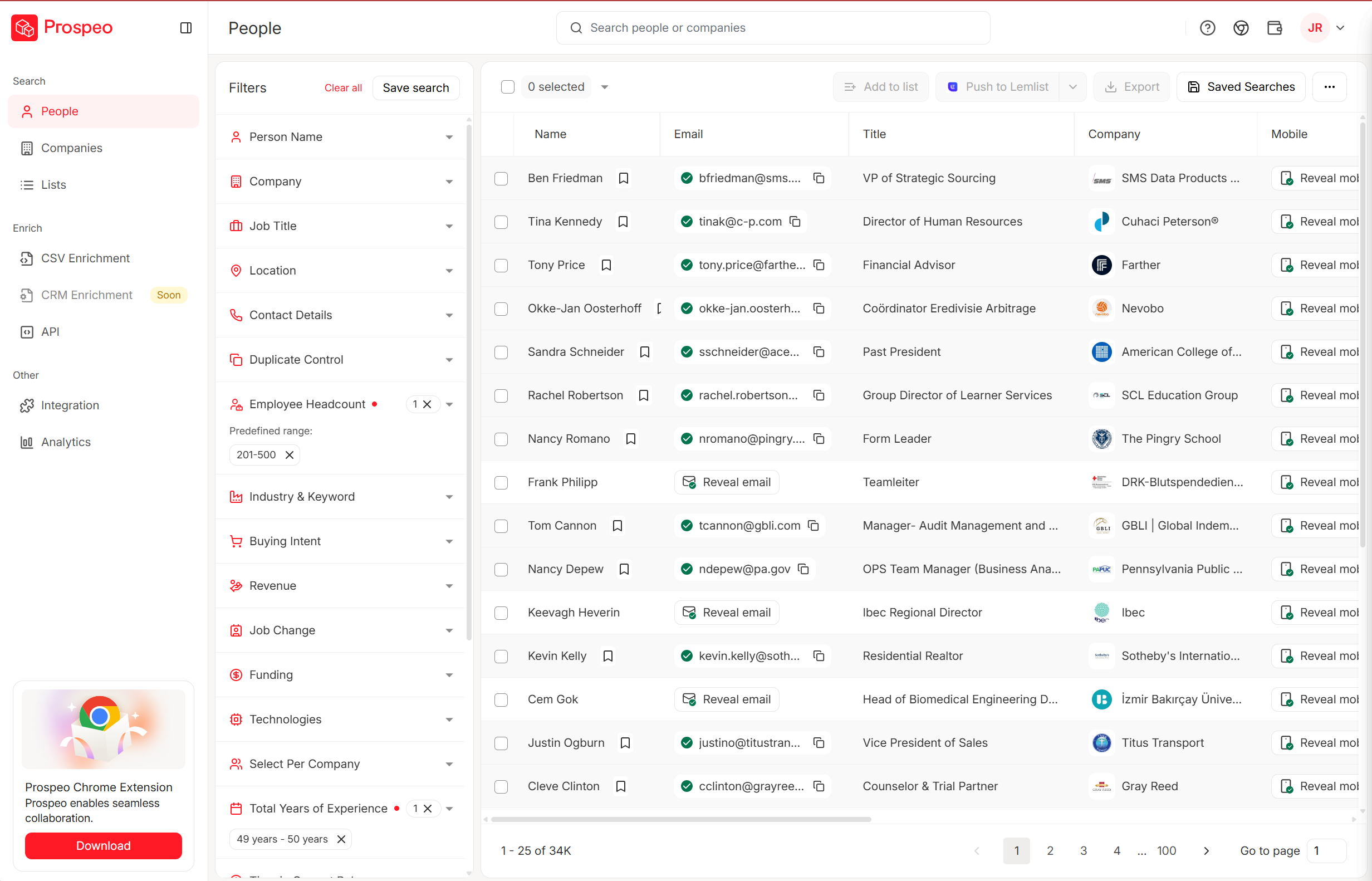
You just read that 68% of reps waste their day on admin and data entry instead of selling. Prospeo's CRM enrichment returns 50+ data points per contact at a 92% match rate - so reps walk into every call armed with the intelligence that builds trust and closes deals.
Turn your reps' 2 selling hours into the most productive part of your pipeline.
FAQ
What is the biggest advantage of personal selling over digital marketing?
Conversion rates. Digital B2B channels convert at 0.3-2.6% on average, while personal selling converts at 20-40% - an ~8-15x multiplier. The trade-off is cost ($50-200 per contact), which is why it delivers the highest ROI on complex, high-ticket deals where the stakes justify the investment.
Is personal selling still relevant in 2026?
More relevant than ever, but the format has changed. 80% of B2B sales interactions are now virtual, and 9 out of 10 companies plan to keep hybrid models. AI handles research, note-taking, and follow-up drafting so reps can focus on the human conversation. Trust, objection handling, and real-time adaptation are things automation can't replicate.
How do you make personal selling more efficient?
Start with data quality. Reps only sell about 2 hours a day - the rest is admin and prospecting. Verified contact data eliminates bounced emails and wrong numbers. Tools like Prospeo provide 98%-accurate emails and verified direct dials refreshed weekly, so reps spend more of those 2 hours in actual conversations instead of chasing dead leads.
How does personal selling compare to automated outreach?
Personal selling adds value automation can't replicate: real-time objection handling, tailored messaging from live buyer signals, and trust built through genuine conversation. Automated sequences scale efficiently but can't read tone or pivot mid-call. Reps who adapt in the moment convert at 8-15x the rate of even the best-performing digital channels.