

Cold Calling Motivation Isn't a Willpower Problem - It's a Systems Problem
It's 8:47 AM. You're staring at a call list. Your coffee's getting cold, and you've already checked Slack three times. You know you should start dialing, but something in your chest tightens every time you hover over the first number.
You're not weak. You're dealing with what psychologists call telephobia - a genuine anxiety response to phone-based rejection. [48% of B2B salespeople](https://hbr.org/2019/02/getting-over-your-fear-of-cold-calling-customers) share this fear, and those who do earn less and miss quota more often. The problem with cold calling motivation isn't your mindset. It's your systems.
The quick fix: Build tomorrow's call list tonight. Start every block with 10 no-expectation warm-up dials. And verify your numbers before you dial - dead numbers drain motivation faster than any "no."
1. The Math That Kills Motivation Myths
Most cold calling advice is a Nike slogan. The actual numbers are freeing once you internalize them.
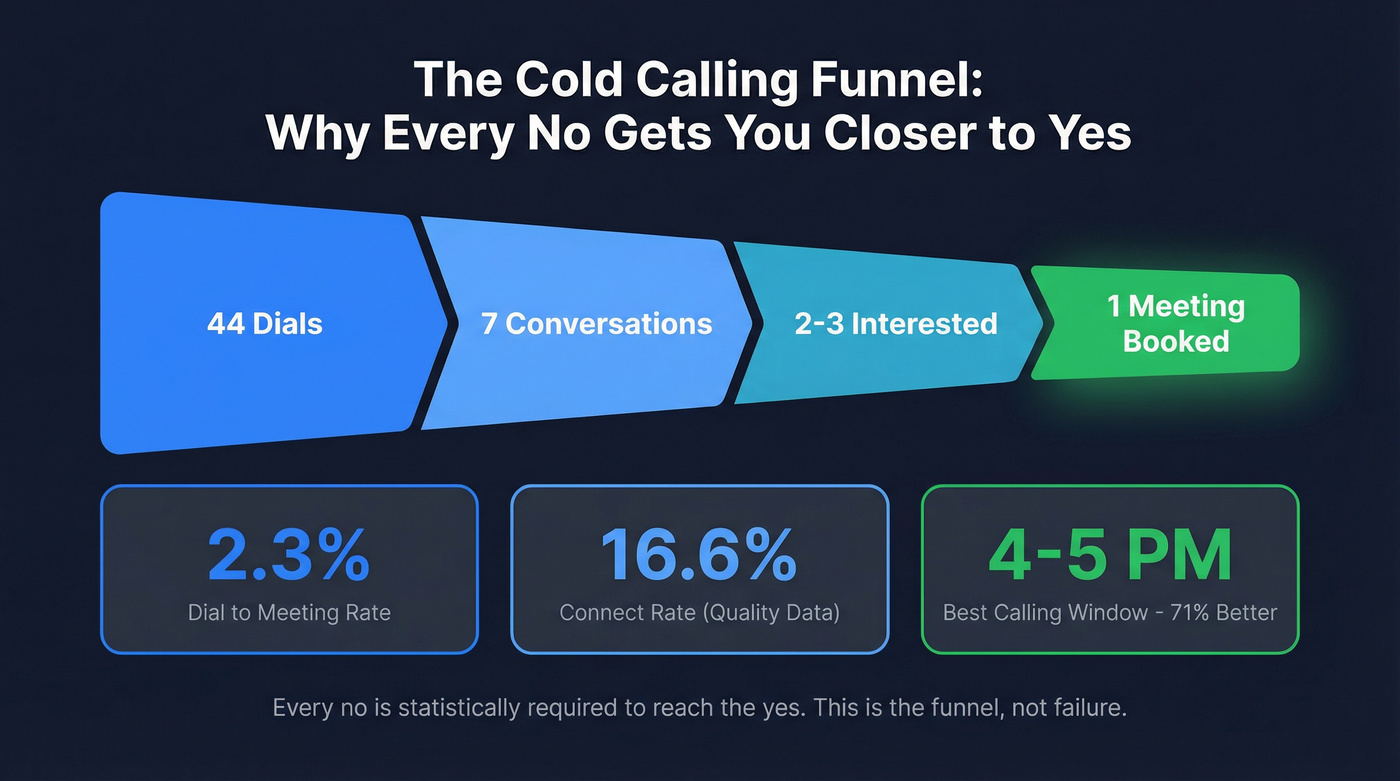
| Metric | Benchmark |
|---|---|
| Dial-to-meeting rate | 2.3% |
| Connect rate (quality data) | 16.6% based on 55K+ dials |
| Attempts to reach | 8 calls |
| Best calling window | 4-5 PM (71% better) |
| Weekly volume (daily callers) | [20-50 calls](https://blog.hubspot.com/sales/state-of-cold-calling) |
| Cold call cost per lead | $300-$500 |
At a 2.3% success rate, you need roughly 44 dials to book one meeting. That's not failure - that's the funnel. Every "no" is statistically required to reach the "yes." When you internalize the math, individual rejections stop feeling personal.
Here's the thing most sales managers won't say out loud: if your connect rate is below 10%, your motivation problem is actually a data problem. With quality data, about 1 in 6 dials reaches a human. With stale lists, that drops below 1 in 10. At $300-$500 per lead, every dead number is money and morale burning simultaneously.
2. Build a Pre-Call System
Motivation follows action, not the other way around. But action requires zero-friction systems.
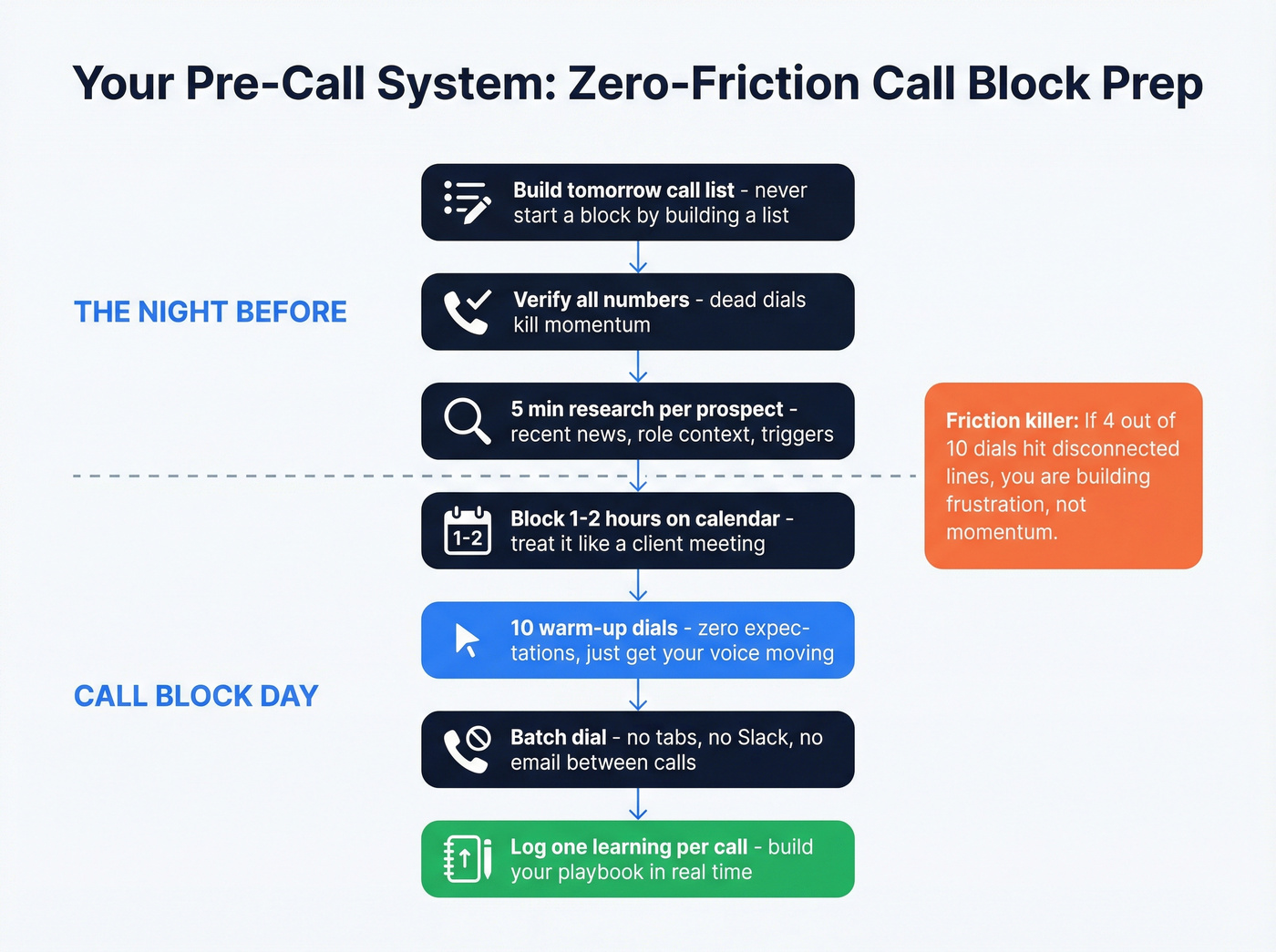
- List built the night before. Never start a call block by building a list. That's procrastination disguised as preparation.
- 1-2 hour calendar blocks. Treat them like client meetings - non-negotiable, visible to your team.
- 10-dial warm-up set. Zero expectations. You're just getting your voice moving. Confidence builds within the first 30 calls of any week.
- Batch research before dialing, not between dials. Every tab you open mid-block is a micro-procrastination event.
- 5-minute research rule. Recent news, role context, a relevant trigger. Enough to sound human, not enough to stall.
One hidden friction source nobody talks about: dead phone numbers. If 4 out of 10 dials go to disconnected lines, you're not building momentum - you're building frustration. Swapping in verified numbers before your call block is the lowest-effort, highest-impact prep you can do. We've tested this ourselves, and the difference in call-block energy is night and day.
3. Kill the Openers That Guarantee Rejection
Some of the motivation drain in cold calling comes from doing things that guarantee bad outcomes. Cut these first.
"Is this Bob?" triggers immediate defensiveness. The prospect knows it's a sales call. Use an assumptive intro: "Hi Bob, this is [name] from [company]."
"Did I catch you at a good time?" is a permission-based exit ramp. You're handing them a polite way to hang up. Try: "I know you're busy, so I'll be brief."
Pitching the product instead of the next step. You're not closing a deal on a cold call. You're selling a 15-minute meeting. That's it.
52% of daily cold callers adapt a script rather than reading one verbatim, and only 28% use a strict script. The sweet spot is a flexible framework - enough structure to reduce call reluctance, enough room to sound like a person.
4. Use a Rejection Reframe System
We've watched SDRs go from dreading their call block to genuinely looking forward to it. The difference was always structural, never motivational.
One technique that consistently works: reframe rejection as data collection. After every call that doesn't convert, log one thing you learned - a timing insight, a gatekeeper pattern, a new objection. Over a week, you'll have a playbook built from real conversations. The shift is subtle but powerful: you stop experiencing rejection and start experiencing research.
That reframe alone can sustain you through even the roughest dial sessions. The consensus on r/sales backs this up - reps who track what they learn per call report far less burnout than those who just track dials and meetings.

You read it above: if your connect rate is below 10%, your motivation problem is a data problem. Prospeo gives you 125M+ verified mobile numbers with a 30% pickup rate - nearly 3x the industry average. That means more live conversations per block, faster momentum, and fewer soul-crushing dead dials.
Replace dead numbers with real conversations starting today.
5. Fire Up Calls with Gamification
Gamification isn't a gimmick when it's designed right. It's operant conditioning - the same reinforcement loops that drive every effective habit system.
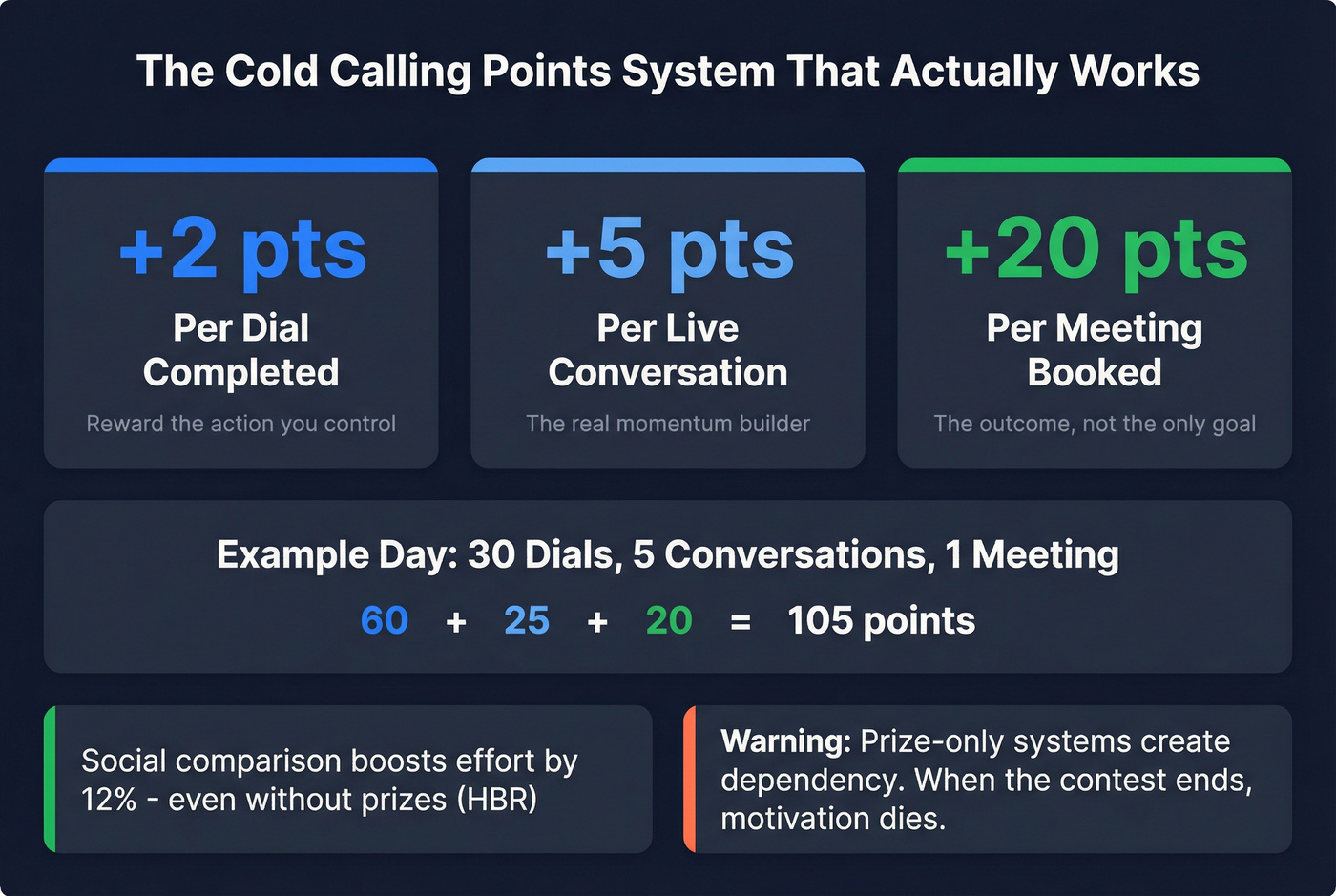
A simple points system that works:
- 2 points per dial completed
- 5 points per live conversation
- 20 points per meeting booked
Track daily. Compare weekly. HBR research found social comparison increases effort by roughly 12% even without material rewards. A shared leaderboard does more than a gift card ever will. Teams that make performance visible see 21% higher productivity, according to Gallup.
But here's the trap: prize-only systems create dependency. When the contest ends, motivation evaporates. Reward the inputs you control - dials, conversations - not just the outcomes you can't.
6. Set an Accountability Trigger
Solo motivation is unreliable.
Pair up with another rep and commit to a daily 2-minute check-in - before your call block, not after. The check-in isn't a debrief; it's a launch sequence. "I'm doing 25 dials in the next 90 minutes. You?" That single sentence creates enough social commitment to override the resistance most reps feel at the start of a block. In our experience, teams cut call-block avoidance in half just by adding this one ritual.
7. Protect Yourself from Burnout
Nearly 90% of sales employees experience burnout. Nearly half report mental health struggles - more than double the general population rate.
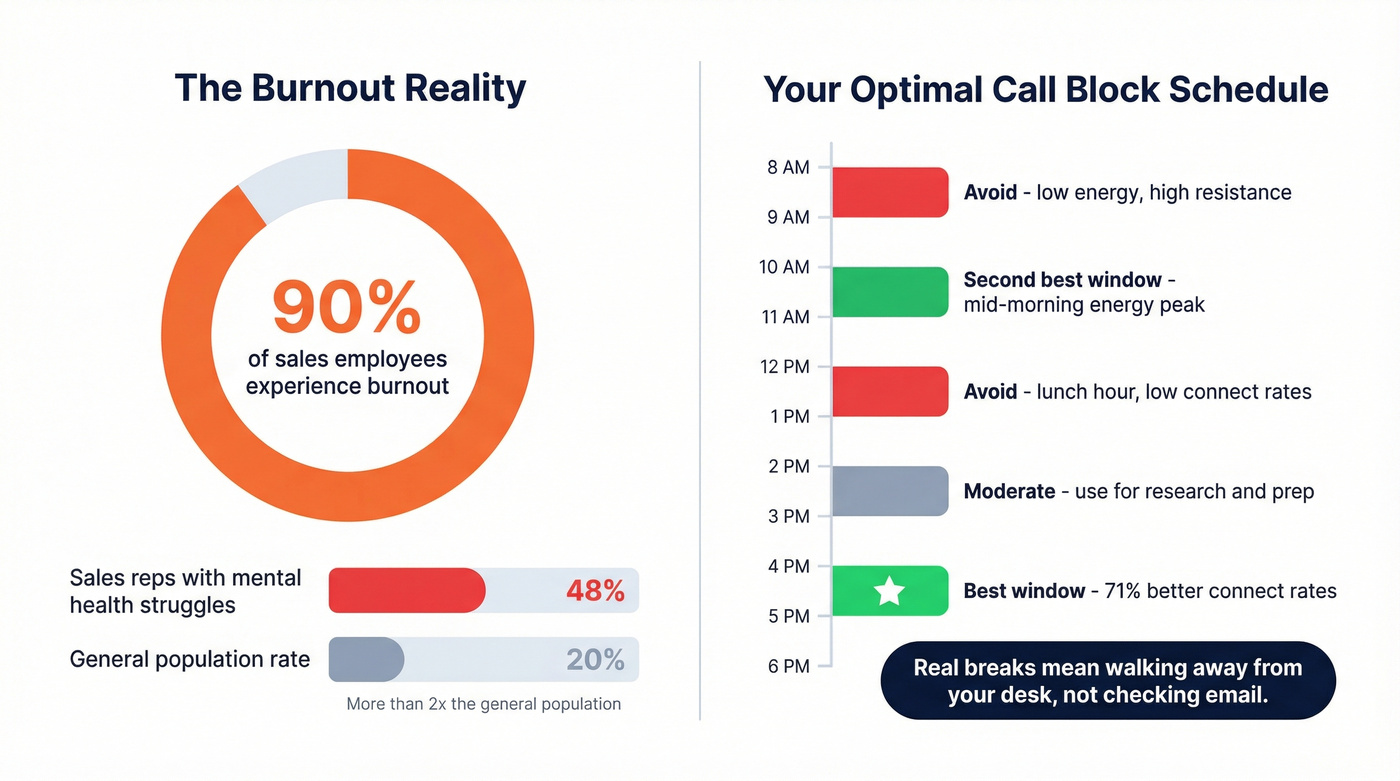
Cold calling combines repetition, rejection, and performance pressure into a burnout recipe. The distinction that matters is eustress vs. distress. Some call anxiety is productive - it sharpens focus. But when exhaustion becomes the baseline, you've crossed into distress. Stop treating that as laziness.
Align your call blocks to your peak energy hours, which for most people means mid-morning or late afternoon. Take real breaks between blocks - walk away from your desk, not "check email." And if you're a manager reading this, stop scheduling call blocks at 8 AM for a team that's been grinding all quarter. That's not discipline. It's cruelty.
8. Fix Your Data Before Your Mindset
This is the highest-leverage motivation hack that requires zero mindset work.
A 16.6% connect rate is the benchmark with quality data. With stale lists, connect rates drop below 10%. Every dead number is a dial with zero chance of a conversation - no learning, no progress signal, just silence. That silence compounds into dread. Let's be honest: if half your dials go to voicemail or disconnected lines, no amount of positive self-talk will fix how you feel at dial 30.
Prospeo's Mobile Finder covers 125M+ verified mobile numbers with a 30% pickup rate, refreshed every 7 days versus the 6-week industry average. For a cold caller, that means more humans answering, more conversations per block, and more of the positive reinforcement that keeps you dialing.
Skip this if you already have a data provider with connect rates above 15%. But if you're seeing single-digit connect rates, the problem isn't your pitch - it's your list.
9. Review One Call Per Day
This is the system most reps skip and every top performer swears by.
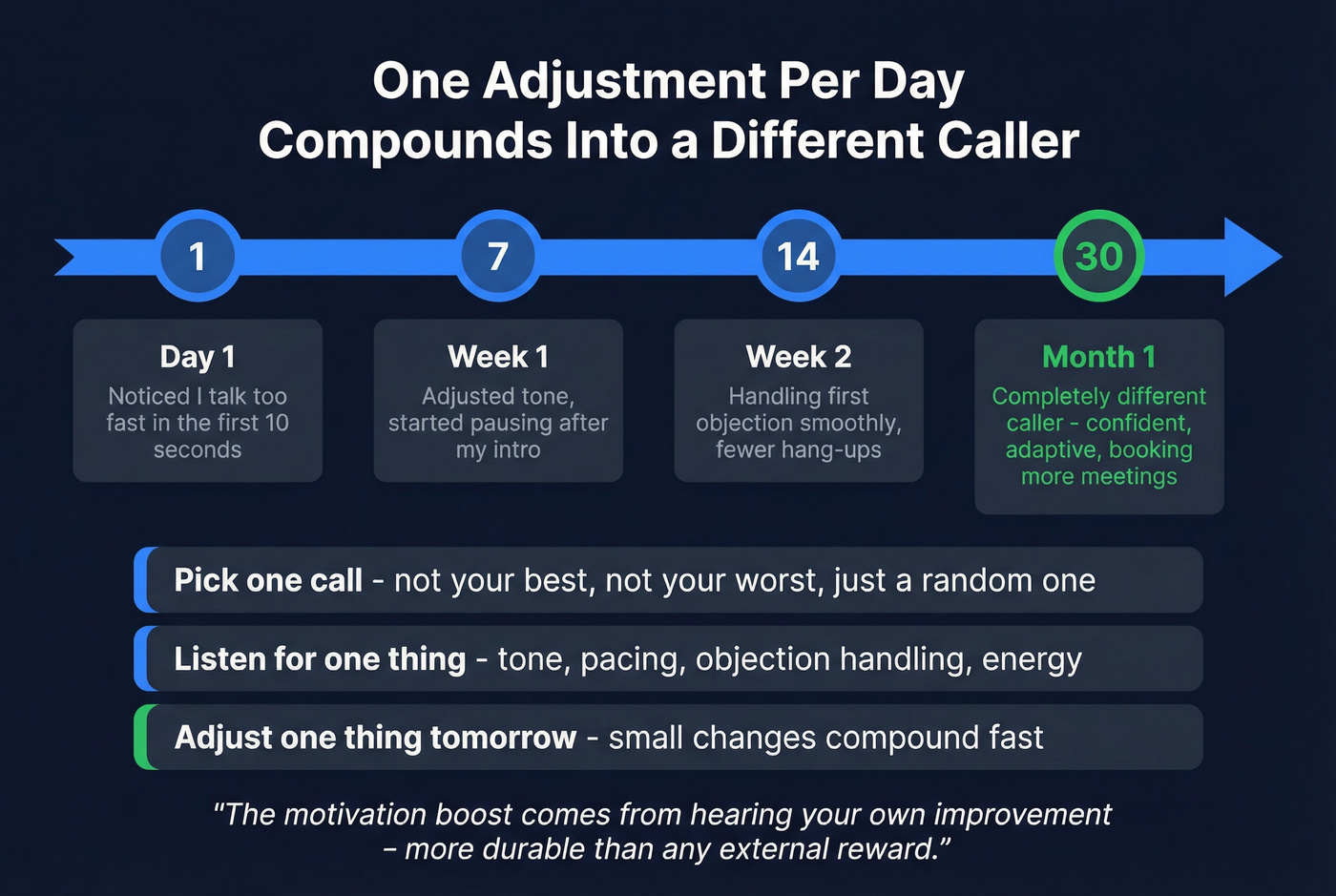
Pick one call from your block - not your best, not your worst - and listen back. You're not grading yourself. You're listening for one thing to adjust tomorrow. Tone, pacing, how you handled the first objection. One adjustment per day compounds into a completely different caller within a month.
The motivation boost comes from hearing your own improvement, which is more durable than any external reward. I started doing this early in my career and it changed everything about how I approached the next day's block.
At $300-$500 per cold call lead, every disconnected number burns budget and morale. Prospeo's 7-day data refresh cycle keeps your call lists current - not 6 weeks stale like other providers. Verified direct dials at $0.01/email and 10 credits per mobile. No contracts, no sales calls required.
Build tomorrow night's call list with numbers that actually pick up.
FAQ
How many cold calls should I make per day?
Most daily callers make 20-50 calls per week, roughly 4-10 per day. Raw volume matters less than list quality - twenty dials to verified, in-market contacts outperform 100 dials to a stale list every time. 24% of sales orgs still use cold calling as a primary channel, so it's mainstream, not outdated.
Is cold calling still effective in 2026?
Yes. 49% of buyers prefer cold calls as a first contact method, and 57% of C-level executives prefer phone over any other channel. The 2.3% dial-to-meeting rate is low in isolation, but it compounds with volume and better data. Cold calling isn't dead - lazy cold calling is.
How do I stop dreading my call block?
Build a pre-call system: list ready the night before, 10 warm-up dials with zero expectations, and verified numbers so every dial has a real chance of connecting. Structure eliminates dread faster than any motivational quote.
What's the best time of day to cold call?
Late afternoon - specifically 4-5 PM - yields 71% better connect rates than other windows. Mid-morning (10-11 AM) is the second-best slot. Avoid calling before 9 AM or during the lunch hour. Align your highest-energy block with these windows for maximum conversations per session.