

Cold Calling Success Rate: Every 2026 Benchmark Explained
The average cold calling success rate in 2026 is 2.7%. For every 100 conversations, roughly 3 turn into booked meetings. That number is almost useless without context.
Across benchmarks cited online, you'll see everything from ~0.5% dial-to-meeting (common when teams dial unverified lists) up to 11.3% conversation-to-meeting (elite internal performance). Most of the gap comes down to how people define "success rate." Some measure dial-to-deal. Others measure conversation-to-meeting. A few don't define it at all. Before you benchmark yourself against any stat, you need to know what's actually being measured.
Three things matter most: verified phone numbers (your connect rate is the foundation), your opening line (a 5x difference between the best and worst openers), and calling at the right time. Tuesday still wins.
Why Every Success Rate Stat Is Different
The number you see depends entirely on where in the funnel someone's measuring. At least three common definitions float around, and most articles don't bother distinguishing between them.
Dial-to-deal measures the percentage of raw dials that eventually close revenue. This is the most punishing metric - typically well under 1%. An SDR on Reddit reported roughly 0.5% dial-to-meeting (about 1 meeting per 200 calls), and that's before the meeting even converts to pipeline.
Conversation-to-meeting measures the percentage of live conversations that result in a booked meeting. Cognism uses this definition in their annual reports, and it's one of the most useful benchmarks. Their 2026 figure of 2.7% falls here.
Vendor-reported conversation-to-meeting can vary depending on how a vendor defines a "conversation." Instantly.ai explicitly notes that their 6.7% benchmark is conversation-to-meeting, not dial-to-deal - a critical distinction most readers miss.
So when you see a stat like "cold calling has a 2% success rate," ask: 2% of what? Dials? Connects? Conversations? The answer changes everything about whether your team is underperforming or crushing it.
2026 Cold Call Benchmarks
Cognism partners with WHAM to track cold calling performance across thousands of reps. Their year-over-year numbers tell a clear story.
| Metric | 2024 | 2025 | 2026 | Source |
|---|---|---|---|---|
| Success rate (conversation to meeting) | 4.82% | 2.3% | 2.7% | Cognism/WHAM |
| Avg. calls to reach prospect | - | 2.9 | 1.55 | Cognism/WHAM |
| Avg. call duration | ~83s | ~93s | - | Cognism/WHAM |
| Cognism internal SDR team success rate | - | 6.7% | 11.3% | Cognism/WHAM |
The drop from 4.82% in 2024 to 2.3% in 2025 looked alarming. The slight rebound to 2.7% in 2026 suggests the floor has stabilized, but the more interesting number is at the top end: Cognism's internal SDR team hit 11.3% in 2026 - more than 4x the industry average - across 200K+ calls. That's what elite looks like.
The calls-to-reach metric deserves attention too. In 2025, it took an average of 2.9 attempts to reach a prospect. In 2026, that dropped to 1.55. The old advice to hammer the same prospect 8+ times is increasingly outdated - 93% of conversations happen by call 3, and 98.6% by call 5.
Here's the headwind every cold caller faces before they even open their mouth: 87% of people don't answer calls from unknown numbers.
The Cold Calling Funnel, Broken Down
Here's the math that actually matters. Start with 1,000 dials.
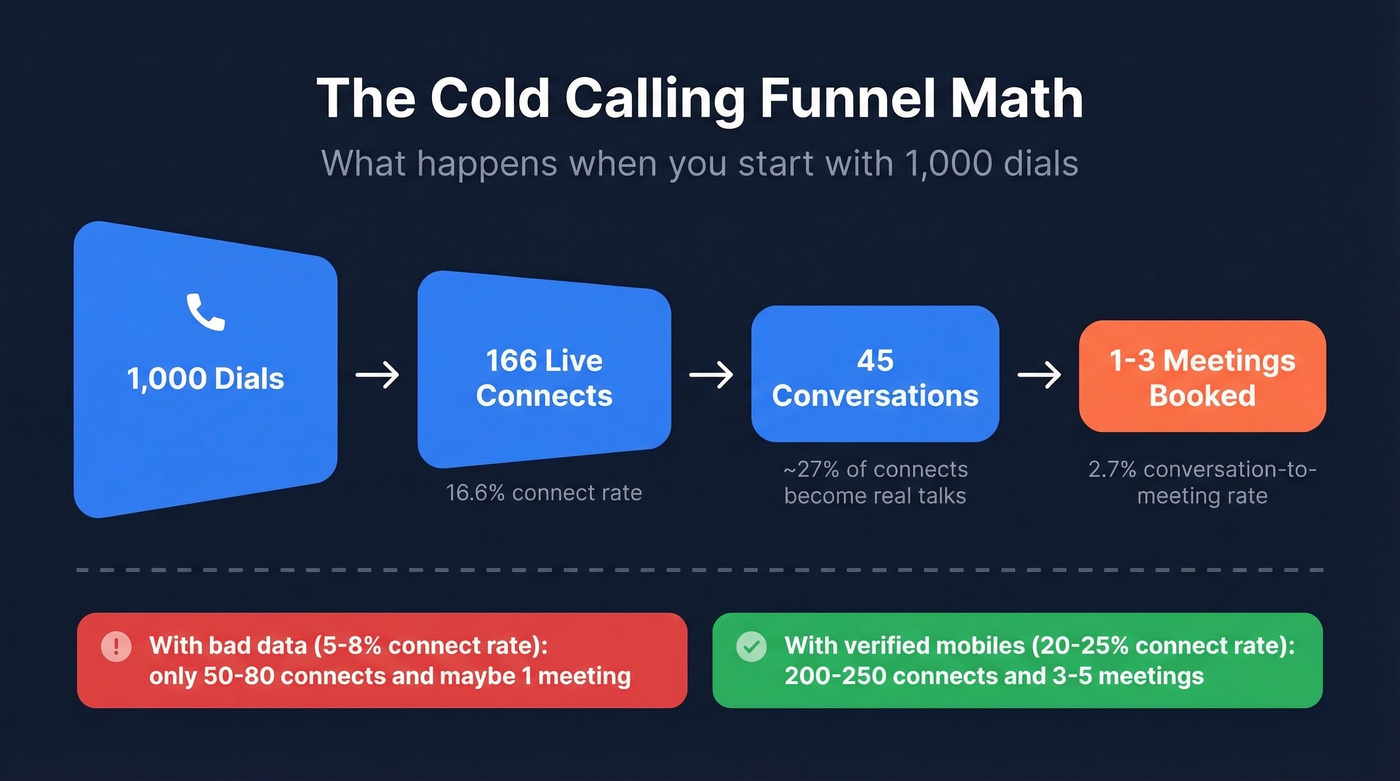
At a 16.6% connect rate - Instantly.ai's benchmark - that's roughly 166 live connects. But not every connect becomes a real conversation. Some are gatekeepers, some are wrong numbers, some hang up in 3 seconds. A realistic conversion from connects to actual conversations is around 25-30%, giving you roughly 45-50 real conversations. At the 2.7% industry average, those conversations produce 1-3 booked meetings.
That's your funnel: 1,000 dials -> ~166 live connects -> ~45 conversations -> 1-3 meetings.
The connect rate is where most teams bleed out. That 16.6% figure assumes decent data. One SaaS SDR on r/sales reported making 180-200 dials per day with a 5-8% connect rate - roughly 1 booked meeting per 200 calls. That's a 0.5% dial-to-meeting rate, and it's common for teams dialing off unverified lists.
In our experience, teams that fix their data before investing in coaching see 2-3x faster improvement in meeting output. Don't obsess over your conversation-to-meeting rate until your connect rate is healthy. If you're connecting on fewer than 10% of dials, you've got a data problem, not a skills problem. If you need a repeatable process, build a cold calling system before you scale headcount.

You just saw the math: 1,000 dials at a 5-8% connect rate produces 1 meeting. Fix the data and that same 1,000 dials produces 3-5x more conversations. Prospeo gives you 125M+ verified mobile numbers with a 30% pickup rate - refreshed every 7 days, not 6 weeks.
Stop dialing dead numbers. Start connecting with decision-makers.
Conversion Rate by Industry
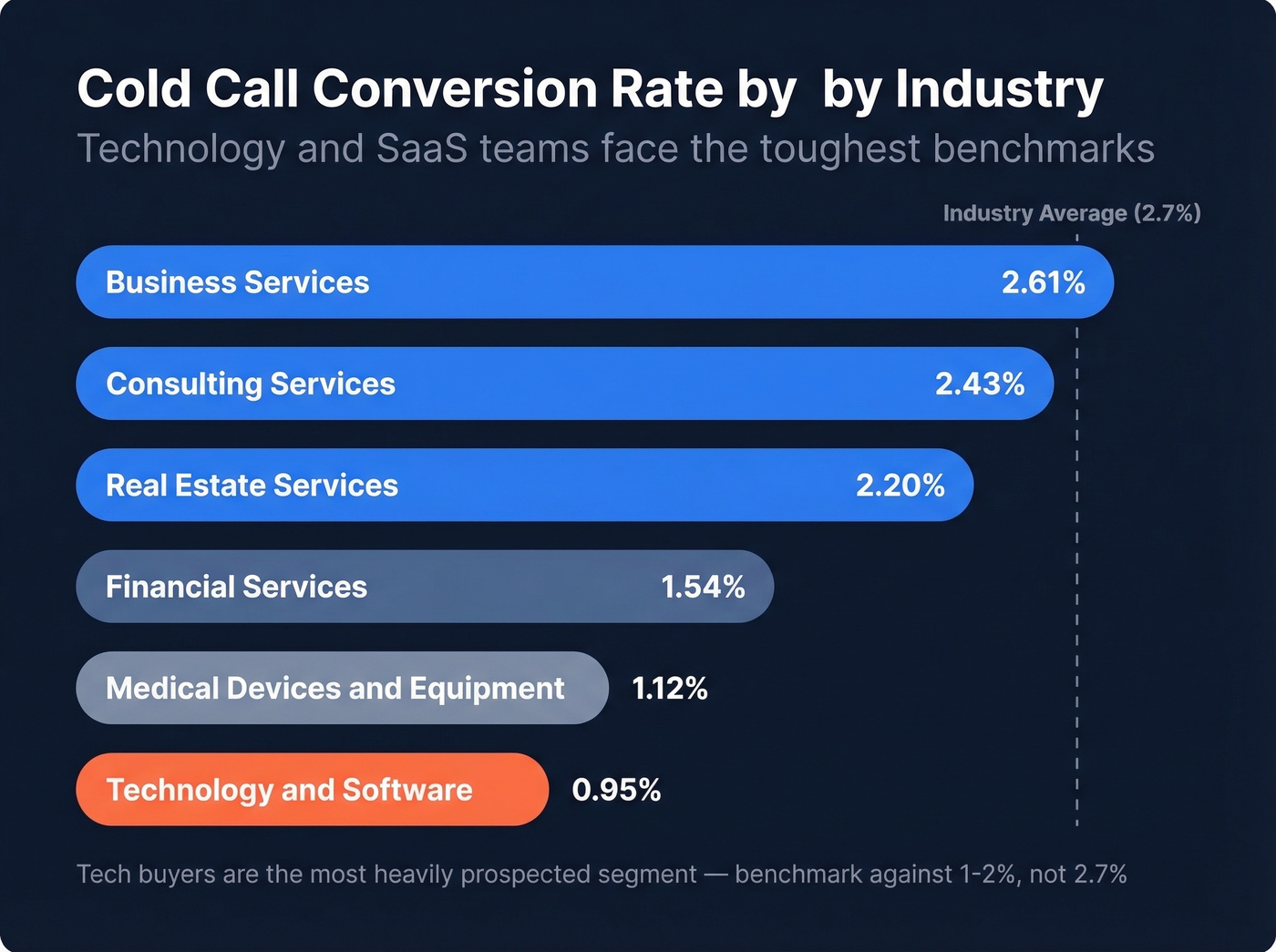
Not all cold calls are created equal. The industry you're selling into changes your cold calling success rate significantly.
| Industry | Conversion Rate |
|---|---|
| Business Services | 2.61% |
| Consulting Services | 2.43% |
| Real Estate Services | 2.20% |
| Financial Services | 1.54% |
| Medical Devices & Equipment | 1.12% |
| Technology & Software | 0.95% |
Technology and software sits at the bottom at under 1%. Tech buyers are the most heavily prospected segment in B2B, and deal complexity creates longer sales cycles with more stakeholders. Deal size inversely correlates with cold call conversion - products over $1M typically see sub-1.2% rates regardless of industry.
If you're selling SaaS and benchmarking against the 2.7% industry average, you're comparing yourself to a number that includes real estate agents and business consultants. Your realistic target is 1-2%. For a broader baseline across channels, compare against the average B2B lead conversion rate.
Let's be honest about what this means for SaaS teams: most shouldn't be optimizing their conversation-to-meeting rate at all. They should be optimizing their connect rate. A SaaS team with a 1.5% conversation-to-meeting rate and a 20% connect rate will book more meetings than a team with a 3% conversation rate and a 6% connect rate. The math always favors reach over persuasion at scale.
What Top Performers Do Differently
Opening Lines That Work
An analysis of 300M+ cold calls by Gong produced definitive data on openers. The gap between the best and worst opening lines is massive.
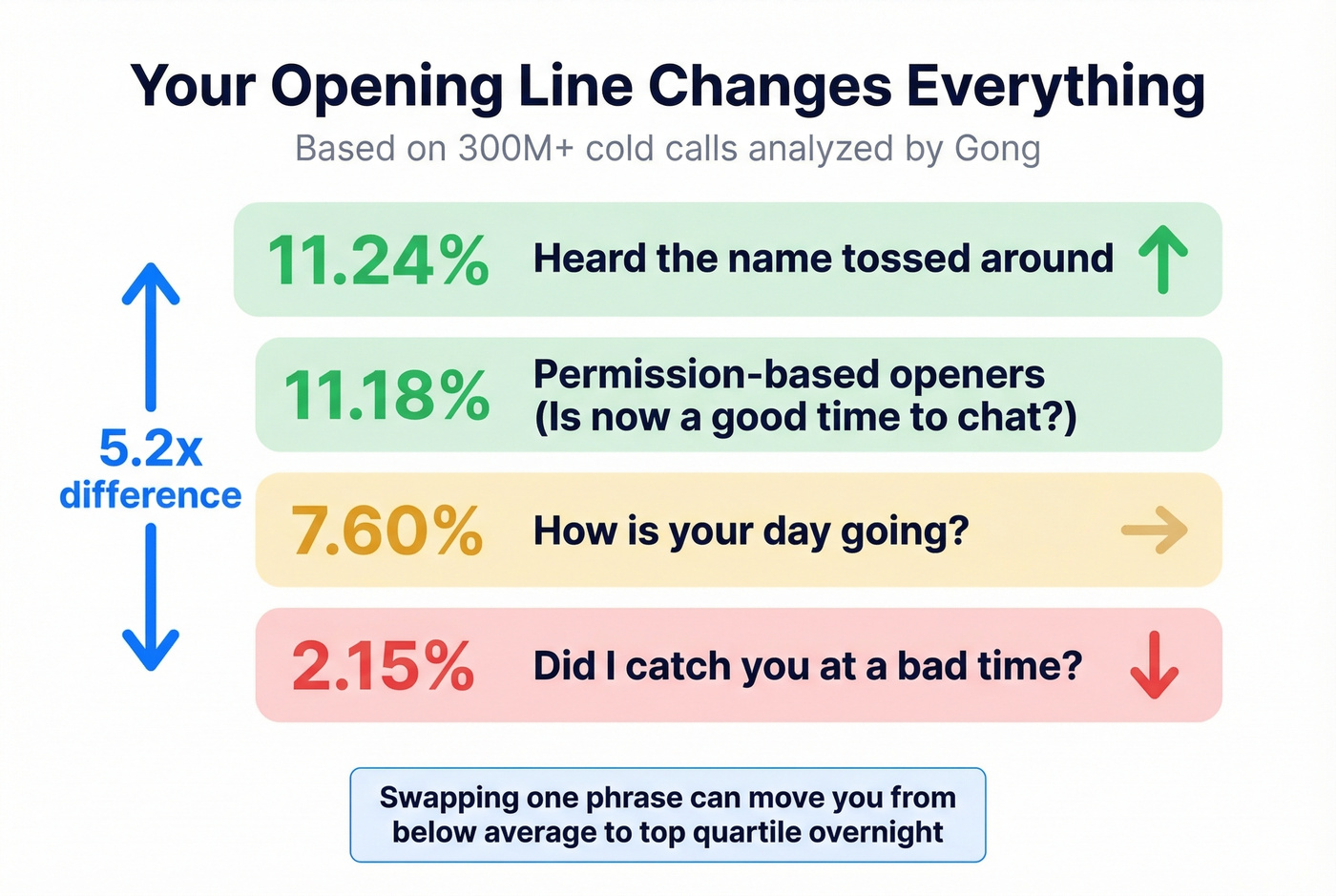
"Heard the name tossed around" hit an 11.24% success rate. Permission-based openers landed at 11.18%. "How's your day going?" came in at 7.6%. And "Did I catch you at a bad time?" - still one of the most common openers we hear in call recordings - dragged results down to 2.15%.
If you're still opening with "Did I catch you at a bad time?" you're cutting your results by 5x compared to a permission-based opener. An earlier 90,380-call study confirmed the same pattern: "How have you been?" hit 10.01% vs. a 1.5% baseline, while "bad time" actually performed below baseline at 0.9%.
Your opening line is the highest-leverage 6 seconds of your entire sales process. Swap one phrase and you can move from below-average to top-quartile performance overnight. If you want more ready-to-use scripts, pull from these talk track examples and adapt them to your ICP.
Timing, Persistence, and Micro-Behaviors
The data on when and how often to call is surprisingly clear. Tuesday is the highest-performing day according to the 2025 Cognism/WHAM annual report. Mid-morning (10-11 AM) and late afternoon (4-5 PM) in the prospect's local time zone tend to outperform other windows. Avoid Monday mornings and Friday afternoons - connect rates drop significantly.
The old playbook of calling 8-12 times is dead. Three well-timed attempts on the right day gets you 93% of the conversations you're ever going to have. Five calls captures 98.6%. Beyond that, you're burning rep time and annoying prospects. If your team struggles with pushback, tighten your approach using a dedicated cold call rejection playbook.
Daily practice correlates with better results too. One benchmark compilation puts daily training as high as 9.03% conversion versus a 2.35% average - a gap that shows what's possible when reps invest in consistent skill development rather than just grinding more dials.
Data Quality Is the Real Lever
We've seen this pattern repeatedly with SaaS SDR teams. A company invests in coaching, call recording software, and new scripts, then wonders why their numbers barely move. Meanwhile, 20-30% of their list has wrong numbers, and reps are burning 50+ dials a day into voicemail boxes that belong to someone who left that company two years ago.
Contact data decays at roughly 2.1% per month. A list you built 6 weeks ago already has ~3% dead numbers - and that's the optimistic scenario. Most teams work lists that are 3-6 months old, where 15-25% of phone numbers are stale. This is exactly where data enrichment services can pay for themselves.
The math is brutal. If 25% of your list has wrong numbers, your effective connect rate drops by 25% before a single rep picks up the phone. A team that should be connecting at 15% is suddenly connecting at 11%. Over thousands of dials, that's dozens of lost meetings per month.
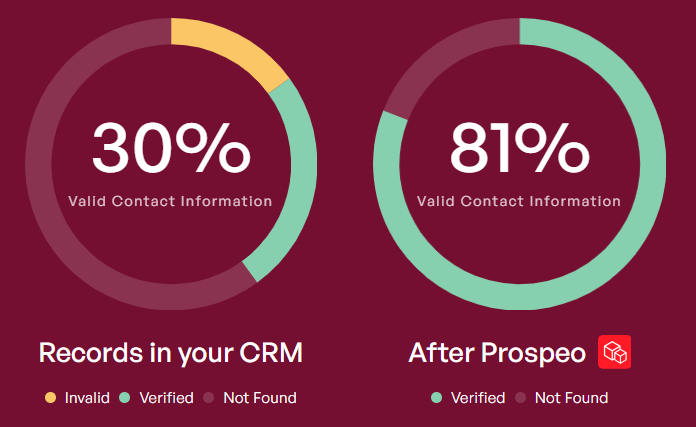
Teams switching to verified mobile data consistently see connect rates jump from the 5-8% range to 20-25%. Meritt tripled their connect rate to 20-25% and dropped their bounce rate from 35% to under 4%. GreyScout saw a similar pattern - pipeline up 140%. Prospeo's mobile finder delivers 125M+ verified numbers with a 30% pickup rate at 10 credits per number, which is a fraction of what you waste dialing dead lines. To keep the rest of your stack aligned, make sure you connect outreach tool to CRM so reps aren’t calling outdated records.
Cold Calling vs. Email vs. Social Selling
Cold calling isn't the only outbound channel, and it's not always the right one.
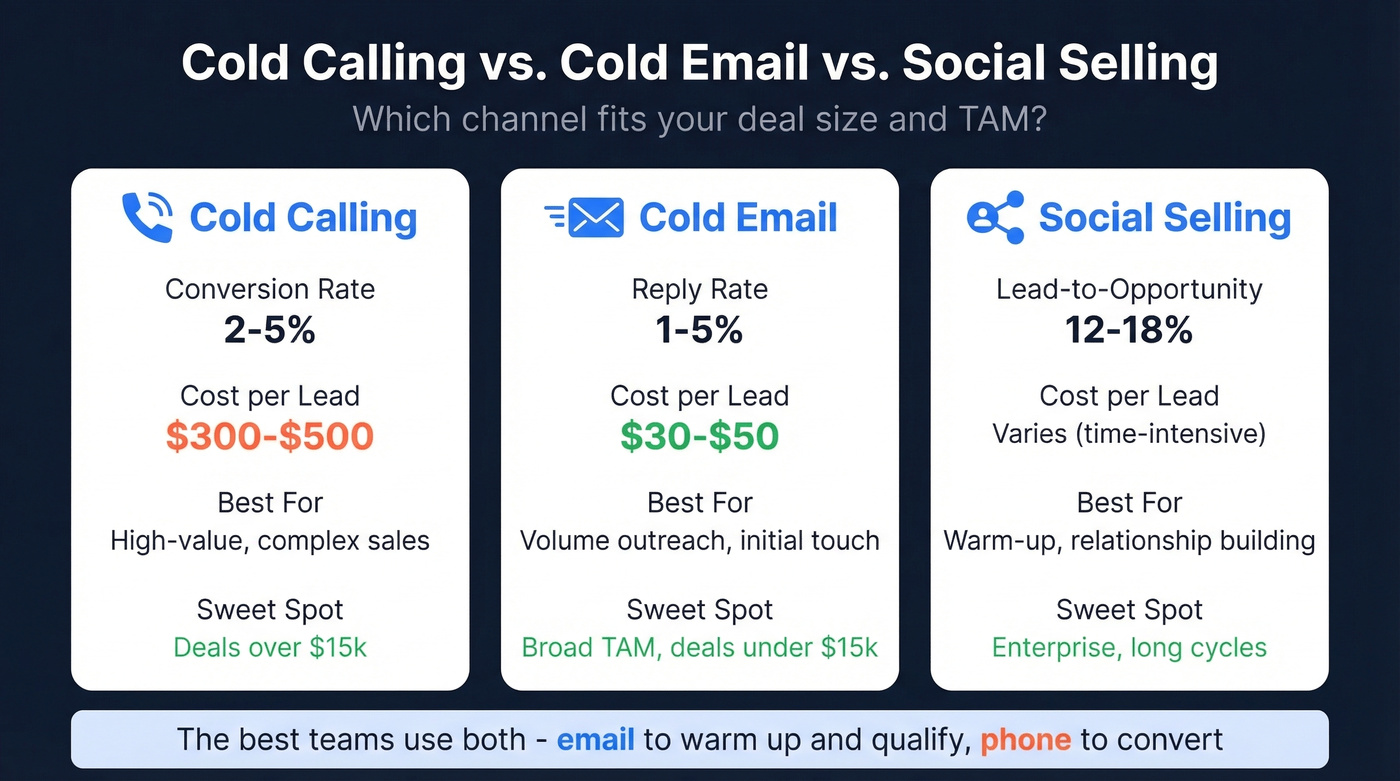
| Channel | Conversion Rate | Cost per Lead | Best For |
|---|---|---|---|
| Cold Calling | 2-5% | $300-$500 | High-value, complex sales |
| Cold Email | 1-5% (reply rate) | $30-$50 | Volume outreach, initial touch |
| Social Selling | 0.5-2% | Varies | Warm-up, relationship building |
Sopro's data across 151M outreach points puts the average cold email response rate at 5.1%, though typical rates range from 1-5%. That looks competitive with phone-based conversion rates, but a reply isn't a meeting, and a meeting from a live conversation converts to pipeline at a significantly higher rate than one from an email thread. On the social selling side, outreach on professional networks generates 12-18% lead-to-opportunity conversion with reply rates of 10-25% - strong for relationship-building but slower to generate pipeline.
A live conversation is worth 10x a reply - but at 6-10x the cost per lead, cold calling only makes sense when you're targeting high-value accounts with verified data. For deals under $15k with broad TAMs, cold email is almost always the more efficient channel. The best teams use both: email to warm up and qualify, phone to convert. If you want a tighter outbound mix, borrow from these sales prospecting techniques and standardize them across reps.
How to Calculate Your Conversion Rate
Two formulas, depending on what you're measuring:
Conversation-to-meeting rate (industry standard): (Meetings Booked / Conversations Had) x 100
Dial-to-meeting rate (the full-funnel view): (Meetings Booked / Total Dials) x 100
Where you fall on the spectrum:
| Tier | Conversation to Meeting Rate |
|---|---|
| Below average | < 2% |
| Average | 2-4% |
| Good | 5-7% |
| Elite | 8-12% |
Track four numbers weekly: total dials, connects, conversations, and meetings booked. If your conversation-to-meeting rate is healthy but your dial-to-meeting rate is terrible, you've got a data or timing problem. If both are low, revisit your opener and pitch. Knowing the cold calling success rate benchmark for your specific industry gives you a realistic baseline to measure against. For a broader view of pipeline math, map these into your funnel metrics.
Skip this section if you're already tracking these metrics in your dialer - you don't need another spreadsheet. But if your team doesn't have a shared definition of "success rate," start here before you start optimizing. If you're onboarding new reps, a simple 30-60-90 day plan for sales reps helps standardize activity and measurement.
SaaS teams converting under 1% on cold calls don't have a pitch problem - they have a reach problem. Prospeo's 30+ filters let you target by buyer intent, tech stack, and job changes, then hand you verified direct dials at $0.01 per lead. That's how you move from 6% connect rates to 20%+.
Book 26% more meetings than ZoomInfo users - with better data at 90% less cost.
FAQ
How many cold calls to book one meeting?
At the 2.7% industry average, you need roughly 35-40 conversations to book one meeting. A typical SDR making 200 dials per day with a 5-8% connect rate books about 1 meeting per day - or fewer with bad data. Teams using verified mobiles compress this by 2-3x thanks to 20-25% connect rates.
What's a good cold call connect rate?
Teams dialing unverified lists typically land in the 5-10% range. Top teams using verified mobile numbers hit 15-25%. If you're below 10%, the problem is your data, not your technique - contact records decay at 2.1% per month.
What's the best day and time to cold call?
Tuesday is the highest-performing day based on 2026 benchmark data. Mid-morning (10-11 AM) and late afternoon (4-5 PM) in the prospect's local time zone outperform other windows. Avoid Monday mornings and Friday afternoons.
Is cold calling dead in 2026?
No. The 2026 industry success rate is 2.7%, up from 2.3% in 2025, showing a stabilizing trend. 96% of B2B prospects do their own research before talking to a rep, which means the cold call isn't introducing your product from scratch - it's accelerating a decision the buyer is already considering. The bar for data quality and execution is just higher than it used to be.
How does cold calling compare to cold email?
Cold call conversion rates of 2-5% are competitive with cold email reply rates of 1-5%, but a live conversation converts to pipeline at a much higher rate than an email reply. The tradeoff is cost: calling runs $300-$500 per lead versus $30-$50 for email. For complex, high-value sales, cold calling remains one of the most effective prospecting methods available.