

How to Build a Cold Email Follow-Up Sequence That Actually Gets Replies
You've sent 500 cold emails this month and gotten 3 replies. Your cold email follow-up sequence isn't broken because of bad templates - it's broken because of bad infrastructure. One practitioner rebuilt their sending setup and doubled their reply rate from 3% to 6% in 62 days. The templates barely changed. Everything underneath them did.
Here's the number that should keep you up at night: 42% of all replies come from follow-ups, not the initial send. If you're sending one email and moving on, you're leaving almost half your pipeline on the table.
What You Need (Quick Version)
- A verified list with under 2% bounce rate. Anything higher tanks deliverability for the entire sequence.
- 4-7 follow-ups spaced 3-4 days apart. Under 4 is quitting early. Beyond 7 is diminishing returns.
- Every email under 50 words with one CTA. Not two. Not a paragraph. One ask.
Ideal Cadence and Spacing
The sweet spot is 4-7 touchpoints. Five is a strong default for most B2B cold email sequence offers because it's persistent without turning into spam.
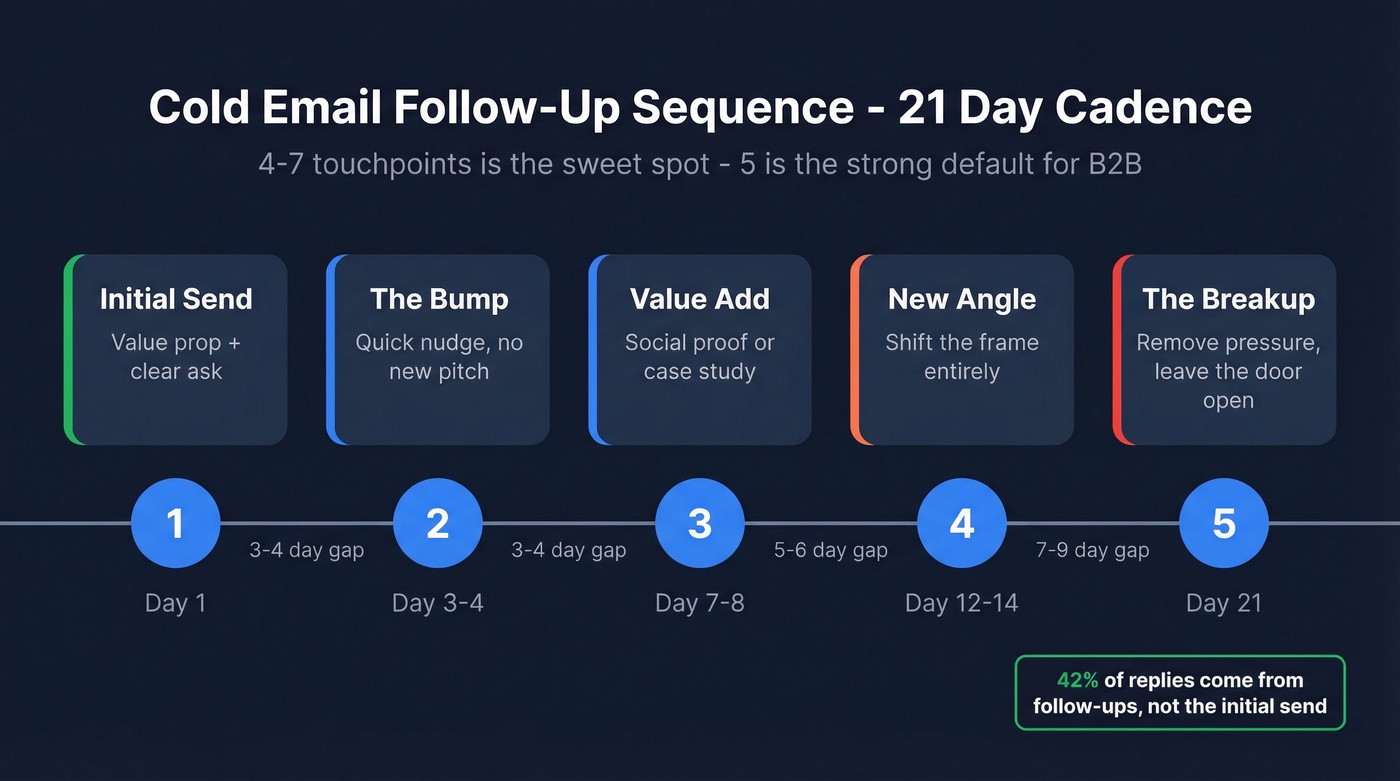
Here's the cadence that balances persistence with not being annoying:
| Touch | Day | Purpose |
|---|---|---|
| Initial | 1 | Value prop + ask |
| FU1 | 3-4 | Bump / nudge |
| FU2 | 7-8 | Value add |
| FU3 | 12-14 | New angle |
| FU4 | 21 | Breakup |
Space follow-ups about 3-4 days apart, staying inside the 2-5 day window. Too tight feels aggressive. Too wide kills momentum.
If your sequencing tool tracks opens, send the value-add to openers and the bump to non-openers - that segmentation alone keeps your follow-ups from feeling generic.
One thing most guides skip: trigger-event timing matters more than your cadence. Sending within 48 hours of a hiring signal, funding round, or job posting produced a 47% click rate and 3.1% email-to-closed-deal conversion in one practitioner's test. That's not a reply rate - that's closed revenue. If you're not timing sends to trigger events, your perfectly spaced cadence is still firing into the void.
Follow-Up Templates Under 50 Words
Emails under 50 words outperform longer ones. Once you cross 100 words, response rates drop hard. Adapt these for your own offer.
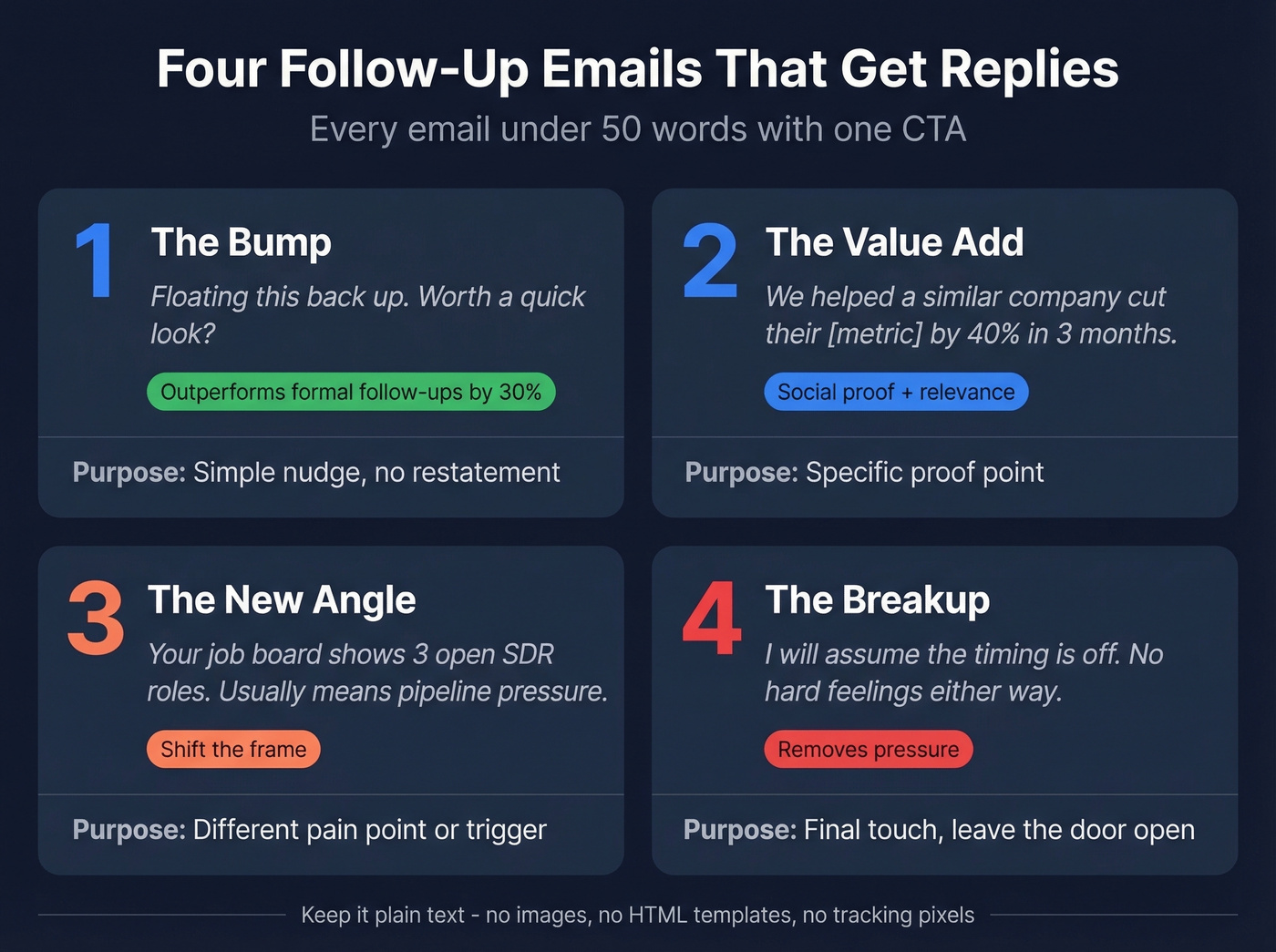
The Bump
Subject: Re: [original subject]
Hey {{first_name}},
Floating this back up. Worth a quick look?
[Original email below]
No restatement. No new pitch. Just a nudge that feels like a reply, which outperforms formal follow-ups by roughly 30%.
The Value Add
{{first_name}} - saw {{competitor}} just raised a Series B. We helped a similar company cut their {{metric}} by 40% in 3 months.
Worth 15 min?
Social proof plus relevance. Keep the proof point specific - "40% in 3 months" beats "significant improvement" every time.
The New Angle
Different angle: {{company}}'s job board shows 3 open SDR roles. Usually means pipeline pressure.
We solve that without adding headcount. Quick chat Tuesday?
Shift the frame entirely. If your first two emails led with ROI, lead with a pain point instead.
The Breakup
{{first_name}}, I'll assume the timing's off. If {{pain_point}} comes back up, here's my calendar: [link]
No hard feelings either way.
The breakup works because it removes pressure. Some of the best reply rates come from this final email - people respond when they don't feel cornered. We've seen breakup emails outperform every other touch in a sequence more times than we can count.

42% of replies come from follow-ups - but only if those follow-ups actually land. Bounce rates above 3% tank deliverability for your entire sequence. Prospeo's 5-step verification delivers 98% email accuracy, catching spam traps and honeypots before they torch your sender reputation. Start with 75 free verifications.
Fix your list before you fix your templates.
Sequencing Best Practices
Keep every email under 50 words. Three short paragraphs max. One CTA per email - "Want to chat Tuesday?" beats "Let me know if you'd like to see a demo, read our case study, or schedule a call."
Plain text only. No images, no heavy HTML templates, no logos. They increase spam risk and hurt deliverability. Send Tuesday through Thursday, 8-11am in the recipient's timezone. That timing shift alone drove +16% opens for one operator.
Subject lines should be short and curious. "Quick question" pulls around 39% opens, while salesy subjects like "Partnership opportunity" drop below 19%. A/B test one variable per week - subject line, CTA phrasing, or send time. Don't change everything at once; that kind of iterative optimization compounds over weeks. If you need a swipe file, start with these cold email subject lines and broader email subject line examples.
And stop obsessing over personalization. Mentioning someone's podcast episode doesn't move the needle the way people think it does. Sending within 48 hours of their company posting a relevant job opening does. Trigger timing beats merge tags. If you want a system for this, use a simple sales triggers workflow.
Here's the thing: if your average deal size is under $10k, you don't need hyper-personalized sequences. You need clean data, tight timing, and volume. Personalization is a luxury for enterprise deals where one meeting justifies 30 minutes of research. For everyone else, infrastructure wins. That's the core mistake most teams make - they invest in copy when they should invest in plumbing.
Fix Your Data First
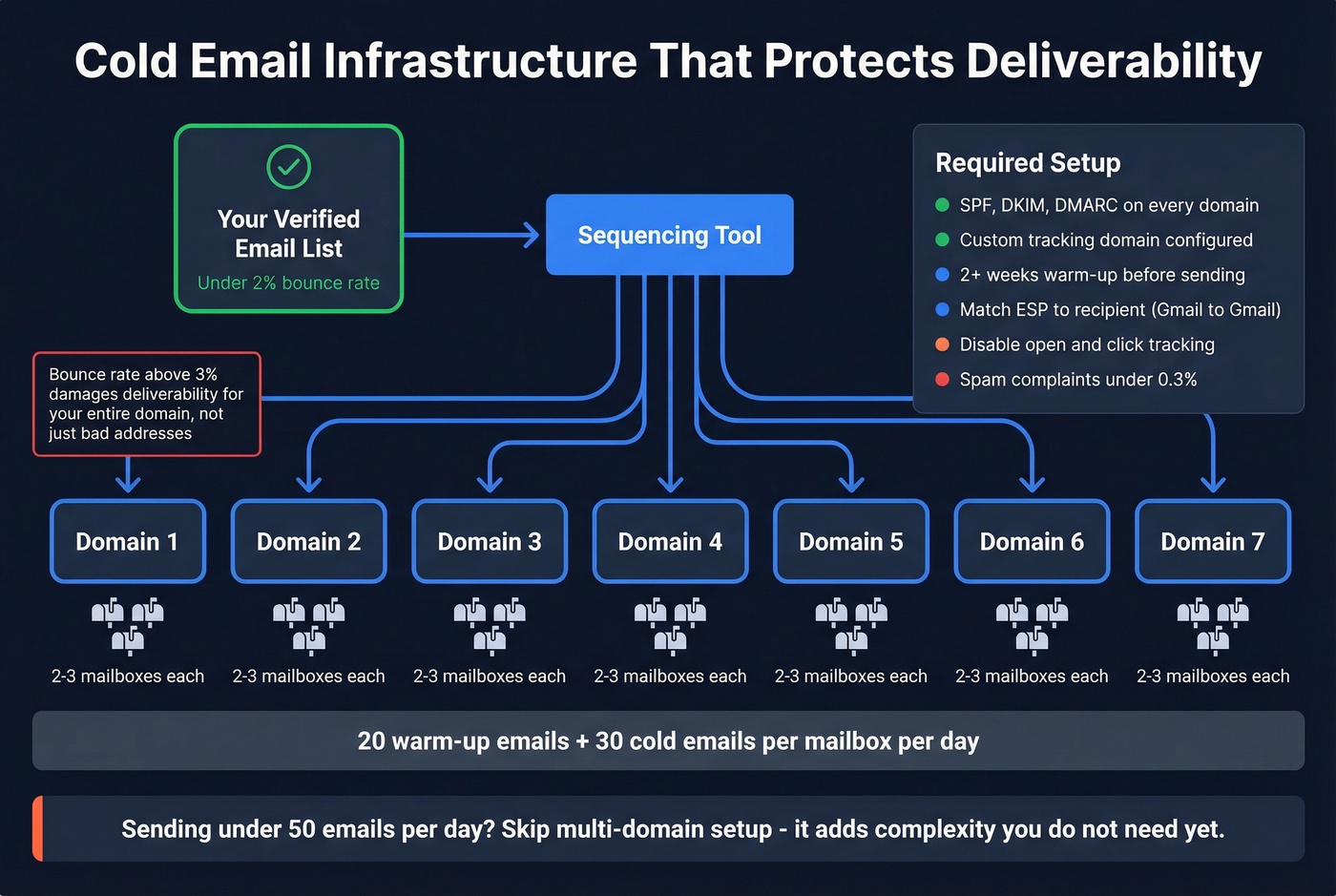
None of the templates above matter if your emails bounce. Bounce rates above 3% damage deliverability for your entire domain - not just the bad addresses, but every email you send after them. One practitioner dropped their bounce rate from 11% to under 2% by manually verifying contacts, and their reply rate doubled. Whether you're running a B2B outbound sequence or a multi-touch sales cadence, list hygiene is the foundation. If you want the deeper technical breakdown, follow an email deliverability guide and monitor your email bounce rate.
Prospeo's 5-step email verification catches invalid addresses, spam traps, and honeypots before they tank your sender reputation. At 98% email accuracy, you're starting every sequence with a clean list instead of gambling on purchased data. Stack Optimize used Prospeo to maintain 94%+ deliverability, bounce under 3%, and zero domain flags across all clients. The free tier covers 75 verifications per month - enough to test before committing.
Beyond list quality, your sending infrastructure needs to be airtight:
- Use around 7 domains with 2-3 mailboxes each. Budget roughly 20 warm-up emails plus 30 cold emails per mailbox per day (see email velocity limits).
- Warm up every mailbox for at least 2 weeks before sending cold. Keep warm-up running continuously (tools help - see unlimited email warmup).
- Configure SPF, DKIM, and DMARC on every domain. Set up a custom tracking domain (and understand what a tracking domain actually is).
- Match your sending ESP to the recipient's - Gmail to Gmail, Outlook to Outlook - for better inbox placement.
- Disable open and click tracking. Tracking pixels often hurt deliverability in 2026 (here’s why: email tracking pixels).
- Keep spam complaint rate under 0.3%. If it spikes, pause immediately.
Skip the multi-domain setup if you're sending fewer than 50 emails a day. It's overkill at low volume and adds complexity you don't need yet.
Quick Compliance Checklist
- CAN-SPAM (US): Physical address required. Honor opt-outs within 10 business days. No misleading subjects. Penalties run up to $50,120 per email.
- GDPR (EU/UK): Legitimate interest basis works for B2B, but document your Legitimate Interest Assessment. Provide opt-out. Penalties up to EUR 20M or 4% of global turnover.
- CASL (Canada): Express or implied consent required. Unsubscribe must function for 60 days. Penalties up to $10M per violation.
Let's be honest - compliance isn't optional overhead. One sloppy sequence can cost more than your entire pipeline generates. We've watched teams lose sending domains over a single GDPR complaint they could've avoided with a proper opt-out link.
Trigger-event timing beats perfect cadence every time. Prospeo tracks 15,000 intent topics, job changes, and funding signals across 300M+ profiles - so your follow-up sequence fires when buyers are actually in-market, not into the void. At $0.01 per verified email, clean data costs less than one bounced send.
Send your next sequence to people who are actually buying.
FAQ
How many follow-up emails should I send?
Four to seven touchpoints is the sweet spot. 2026 benchmark data shows that under four leaves replies on the table, while beyond seven hits diminishing returns unless each touch adds genuine new value. Most high-performing sequences land at five.
What's a good cold email reply rate?
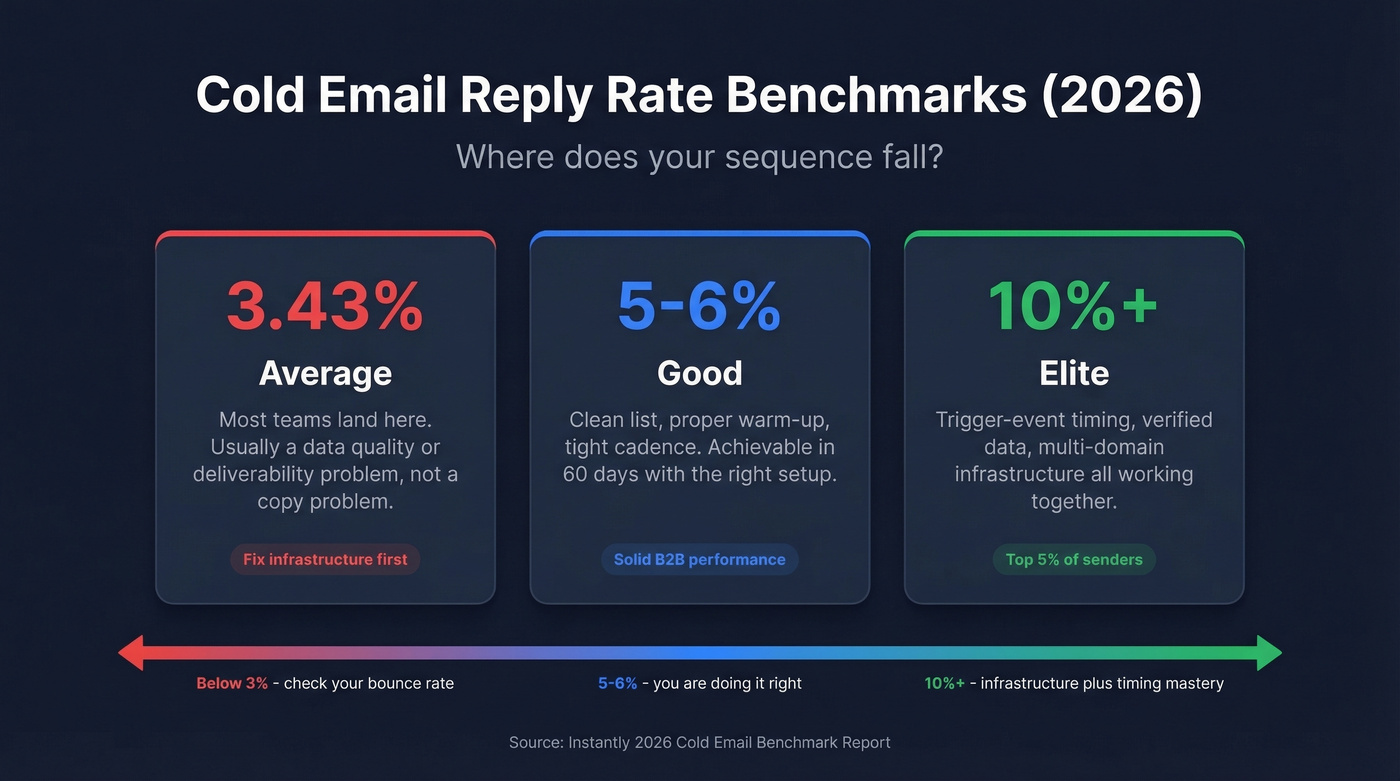
The average cold email reply rate is 3.43%. Good is 5-6%. Elite operators hit 10%+. If you're below 3%, the problem is almost always data quality or deliverability infrastructure, not your copy. Fix bounce rates and domain reputation before rewriting templates.
How do I keep follow-ups out of spam?
Start with a verified email list - bounce rate under 2% is non-negotiable. Use multiple sending domains capped at 26-30 emails per day each, configure SPF/DKIM/DMARC, and send plain-text emails with no tracking pixels. A 5-step verification process that catches spam traps and honeypots will keep your domain clean before problems start.
What makes an effective follow-up sequence?
The best cold email follow-up sequence combines clean data, tight spacing of 3-4 days between touches, and emails that each serve a distinct purpose. Don't repeat the same pitch across multiple follow-ups. Rotate between bumps, value adds, and new angles so the prospect gets a fresh reason to engage at every stage.