

How to Write a Cold Email Intro That Gets Replies in 2026
Of the 200 cold emails you sent this week, 190 got deleted before the preview text even loaded. The average cold email reply rate in 2026 is 3.43%. Your cold email intro is the single biggest lever you have to beat that number.
Most guides tell you to "personalize more." We've seen teams burn weeks on AI-generated first lines that barely move the needle. The real fix is simpler - and it starts before you write a single word.
The 2026 Numbers Worth Memorizing
Instantly analyzed billions of cold email interactions for their 2026 benchmark report. Here's what matters.
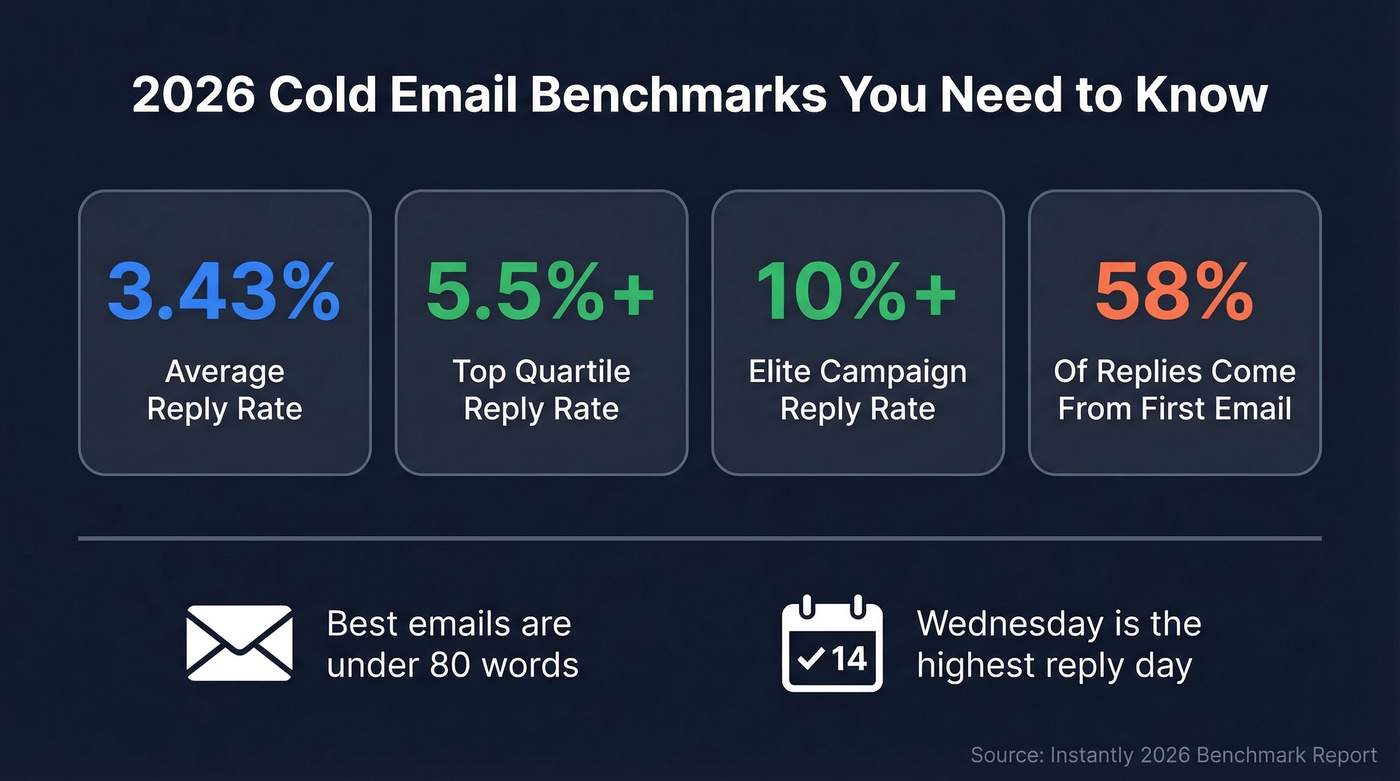
3.43% is the average reply rate. Top quartile hits 5.5%+. Elite campaigns crack 10%+. And 58% of all replies come from the first email - your opening touch does more than half the work of your entire sequence.
Best-performing campaigns keep emails under 80 words. Tuesday and Wednesday are peak reply days, with Wednesday pulling the highest numbers. If you're sending 300-word essays on Friday afternoons, the data is working against you.
Why Your Intro IS Your Preview Text
Before anyone reads your email, they see three things: sender name, subject line, and preview text. That preview text is your opening line - and it often gets more screen real estate than the subject line itself. You've got roughly 6 seconds to capture attention once they open.
Your sender name matters too. A real first name plus company ("Jake at Acme") builds more trust than a generic "Acme Sales Team." Don't waste that trust with a weak first line.
Breakcold's guide lays out three formatting options: greeting plus opener on the same line, opener after a line break, or skipping the greeting entirely. We prefer option three. It's riskier, but it puts your strongest words directly in the preview slot - and when every character of preview text counts, that trade-off is worth it.
The Personalization Theater Problem
Everyone says "personalize your cold emails." But a practitioner who ran 500,000 emails across 15+ verticals found something uncomfortable: heavy AI personalization pulled a 1.9% reply rate. Simple relevance - matching the right message to the right segment - pulled 1.8%. That's a 0.1% difference for 3x the cost and complexity.
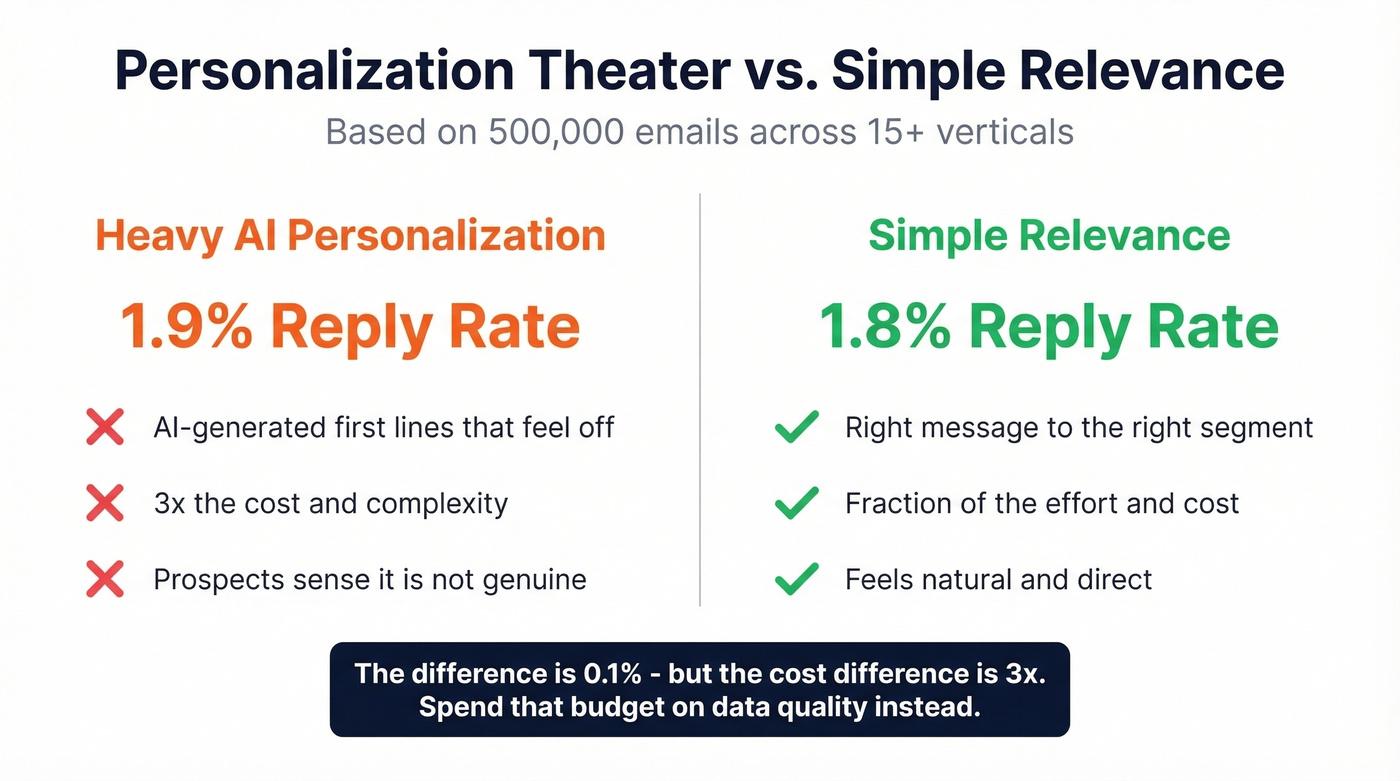
The consensus on r/coldemail is that "Noticed you do X" openers feel generic, and AI-generated first lines referencing a prospect's website still feel "off." This is personalization theater - it looks like effort but doesn't move replies. As GMass puts it, ideal personalization means recognizing the prospect's specific problem. Stop telling prospects what they already know about themselves. Tell them what's broken.
If you're building segments and messaging around real buying intent, intent-based segmentation will do more for replies than another clever first line.

You just read that heavy AI personalization barely outperforms simple relevance. The real multiplier? Sending to verified addresses. Prospeo's 5-step verification delivers 98% email accuracy - catch-all handling, spam-trap removal, honeypot filtering included. Stack Optimize hit $1M ARR with bounce rates under 3% and zero domain flags.
Stop perfecting intro lines that land in the void.
5 Cold Email Intro Formulas That Work
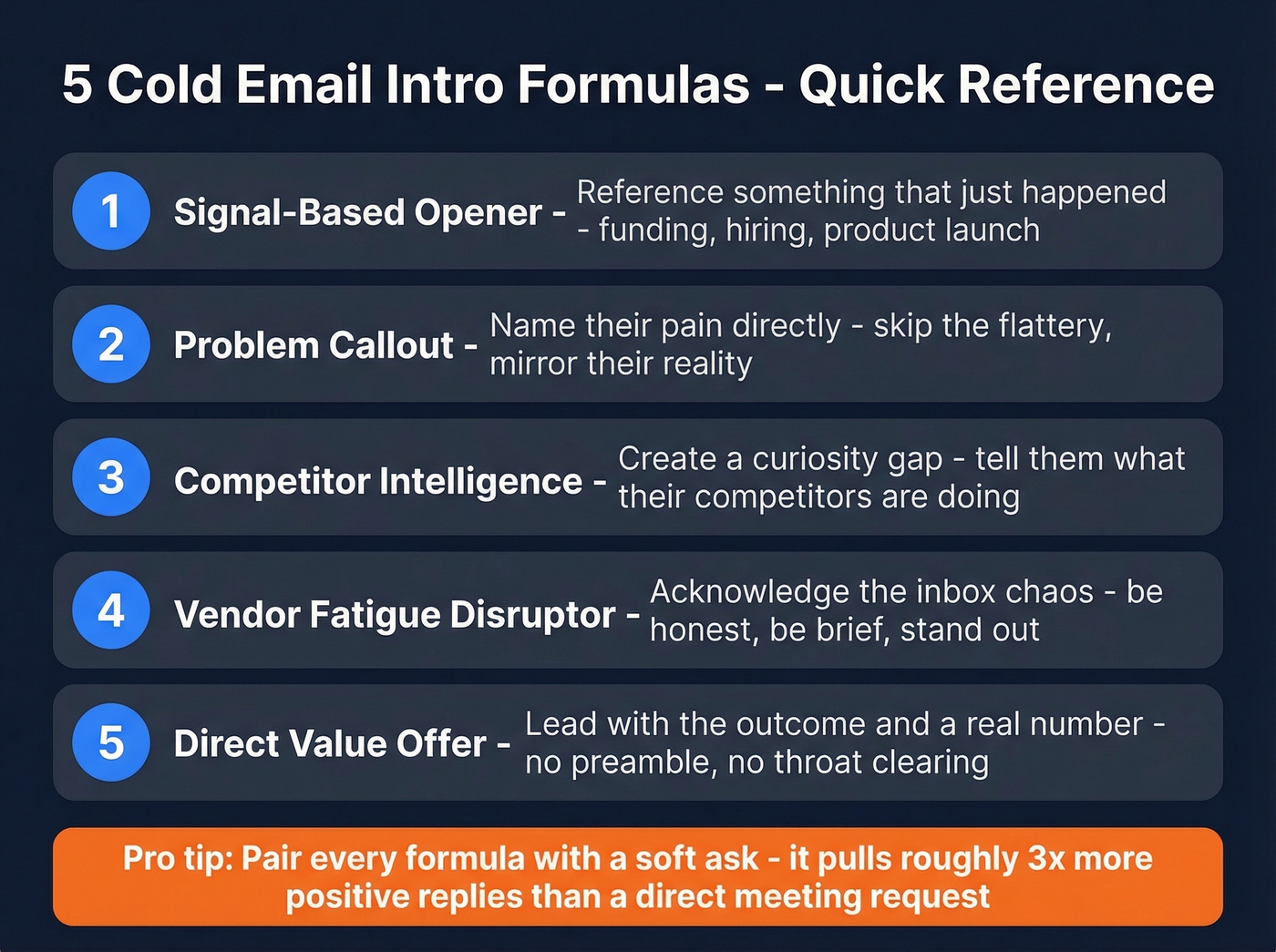
Pair each formula with a soft-ask CTA - a resource, case study, or value asset. In large-scale testing, soft asks pulled roughly 3x the positive reply rate compared to direct meeting requests.
If you want more options for what to send after the opener, keep a swipe file of sales follow-up templates ready.
1. Signal-Based Opener
Best for: Funded startups, companies in hiring mode
"Saw you just closed your Series B and are hiring 12 AEs across EMEA. Most teams at that stage find their CRM data decays faster than reps can clean it."
The signal proves you're paying attention to something that happened, not something that's always been true. One workflow we've seen work well: fill CRM custom fields with a real signal (like a recent post or funding round), then generate a custom first line with GPT based on that signal. Teams using this approach report roughly 3x higher response rates versus generic templates.
To systematize those triggers, borrow a few ideas from how to track sales triggers.
2. Problem Callout
Best for: Outbound-heavy teams with measurable pain
Skip the flattery. Name the pain directly.
"Most B2B teams running outbound at your scale are bouncing 8-15% of their emails. That's killing sender reputation before the copy even matters."
This works because it mirrors what the prospect is already thinking. No preamble, no compliments - just a statement they can't ignore because it describes their Tuesday.
If you’re diagnosing why replies are low, start with email bounce rate benchmarks and root causes.
3. Competitor Intelligence
Best for: Competitive markets where FOMO drives decisions
Before: "I'd love to show you our platform."
After: "Three of your competitors in the fintech space switched from manual list building to intent-based prospecting last quarter. Happy to share what we're seeing work."
The curiosity gap does the heavy lifting here.
This angle works even better when your team has a lightweight competitive intelligence strategy to pull from.
4. Vendor Fatigue Disruptor
Best for: Prospects drowning in sales emails
"You're probably getting 20 cold emails a week from data vendors. I'll keep this to two sentences: one team took bounce rate from 35% to under 4% after switching their data source. Worth a 5-minute look?"
Honesty about the inbox environment disarms skepticism. This format works because it acknowledges reality instead of pretending the prospect isn't buried in pitches.
If you’re scaling volume, make sure you understand email velocity so you don’t burn domains.
5. Direct Value Offer
Best for: Anyone. This is the workhorse.
"Snyk's team (50 AEs) added 200+ new opportunities per month by fixing one thing: data quality."
No preamble, no throat-clearing. Lead with the outcome, attach a resource, done. Use this as your default when you need speed over nuance.
If you need a broader playbook for building pipeline, these sales prospecting techniques pair well with the value-offer opener.
Opening Lines That Kill Replies
"Hope this email finds you well" is filler that screams mass email and wastes your most valuable real estate. "Allow me to introduce myself" is almost as bad - nobody asked, and your signature handles it.
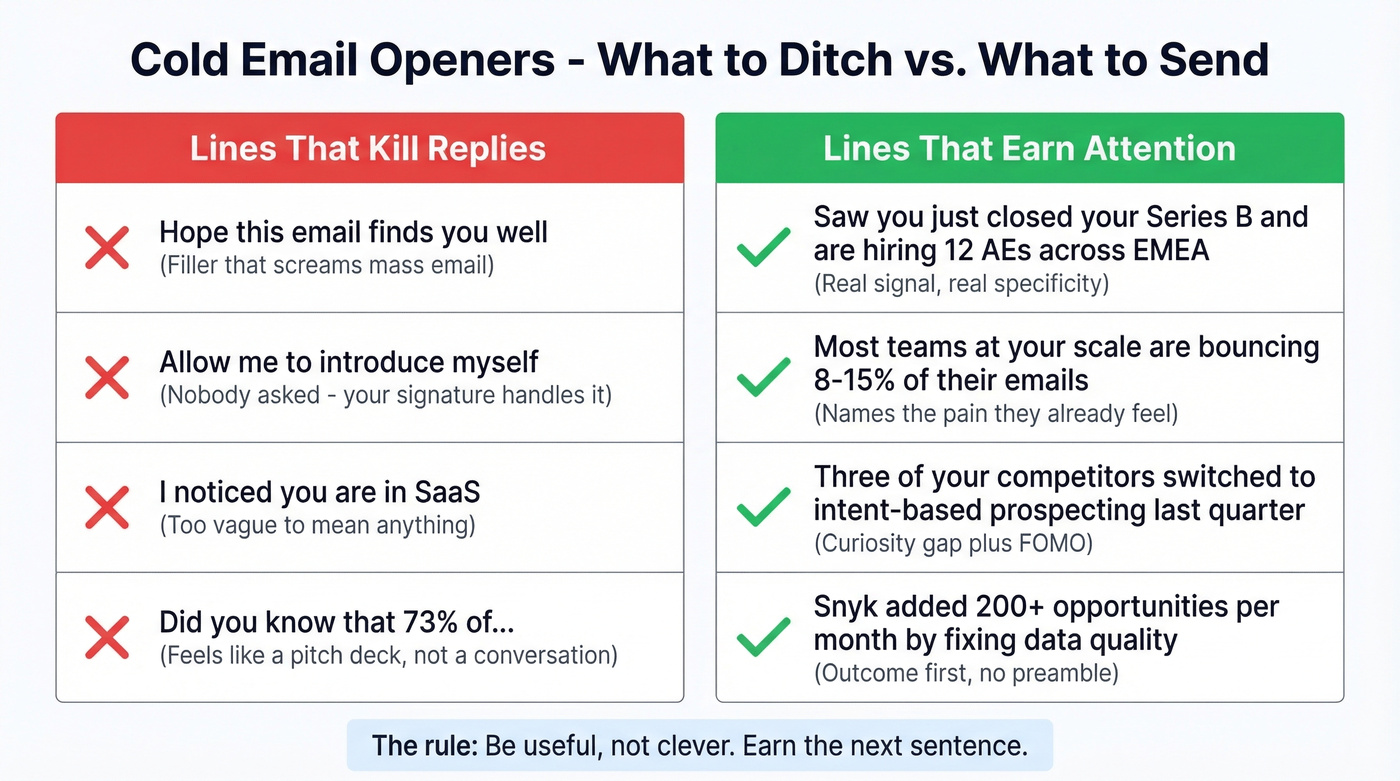
The generic "I noticed you do X" opener deserves special scorn. "I noticed you're in SaaS" tells the prospect nothing. If you can't be specific about what you noticed, skip the line entirely. Same goes for rhetorical questions with industry stats - "Did you know that 73% of..." feels like a pitch deck, not a conversation.
Here's the thing: a strong opening line earns attention by being useful, not clever.
If you’re still iterating on the top of the email, pull a few patterns from these cold email subject line examples (subject + opener work as a pair).
The Prerequisite Nobody Talks About
Let's be honest - most teams rewriting their cold email intro for the fifth time don't have a copy problem. They have a data problem.
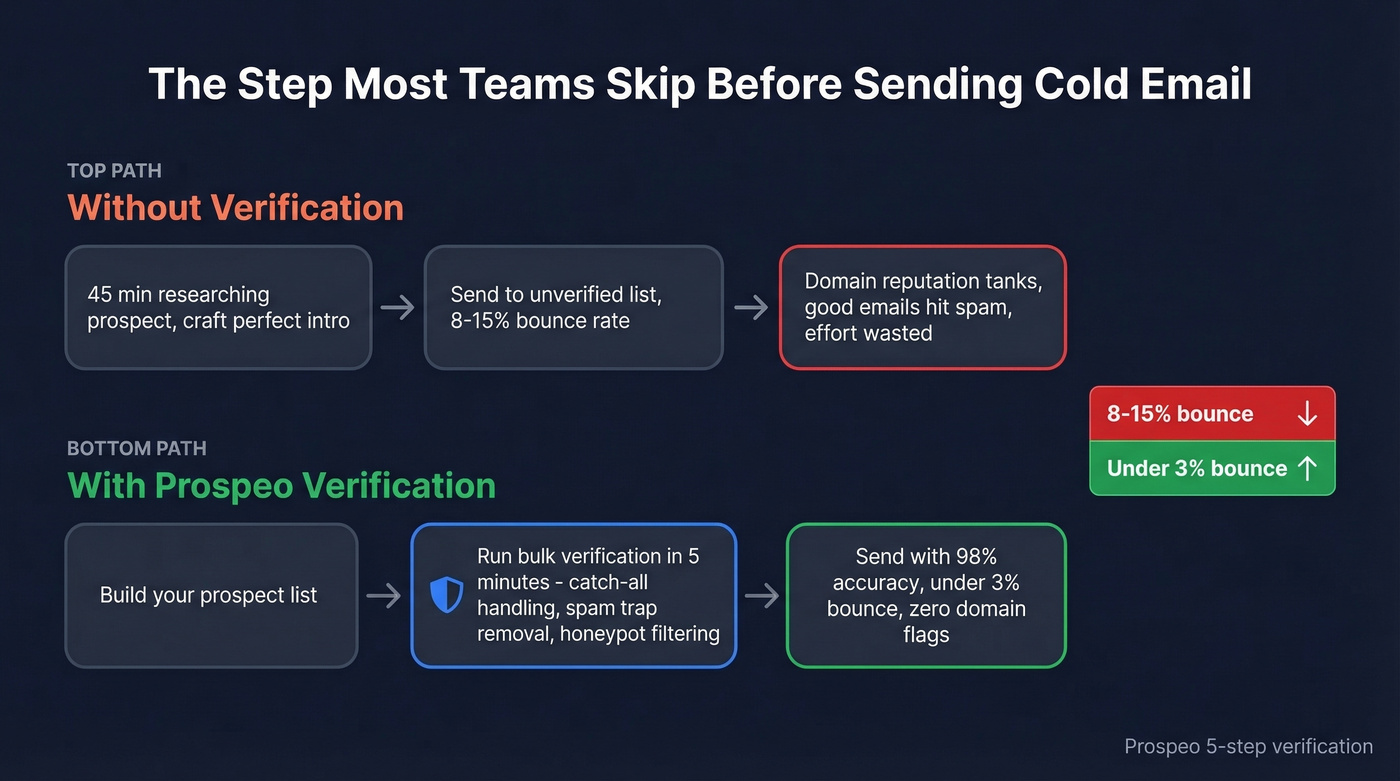
You spend 45 minutes researching a prospect, craft the perfect opening line, hit send - and the email bounces. Pre-built lists run 8-15% bounce rates. At that level, your domain reputation degrades fast, and even your good emails start hitting spam. All that copywriting effort, wasted because the address was dead.
Our team runs every list through Prospeo's bulk verification before anything goes out. Takes five minutes. The 5-step verification process - catch-all handling, spam-trap removal, honeypot filtering - delivers 98% email accuracy. Stack Optimize built from $0 to $1M ARR with bounce under 3% and zero domain flags across all clients. Your intro only matters if it lands.
If you’re troubleshooting inboxing, this email deliverability guide breaks down what to fix first.
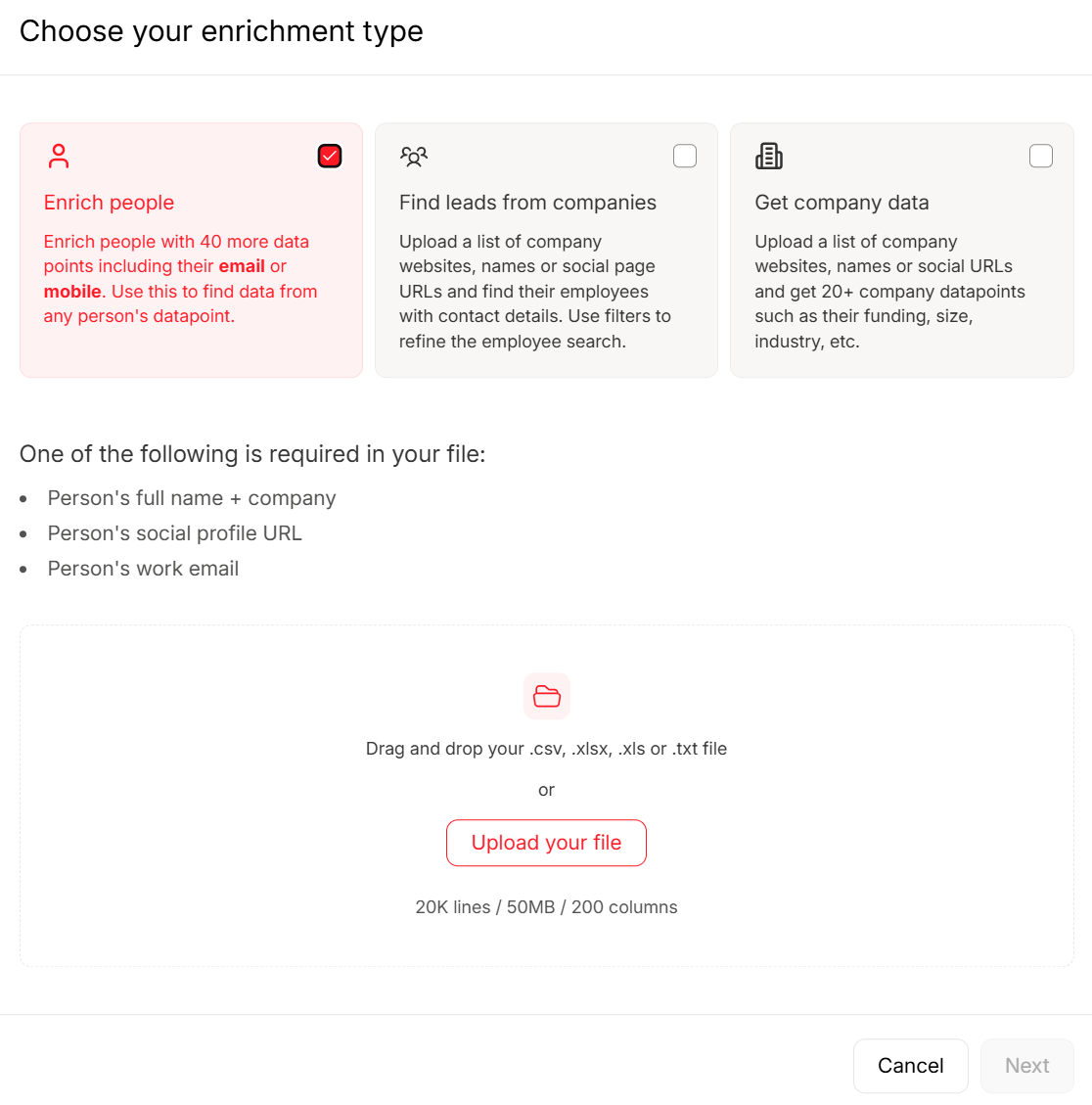
The data says 58% of replies come from your first email. Every bounce is a wasted opening shot and a hit to your sender reputation. Pre-built lists run 8-15% bounce rates - Prospeo cuts that to under 4% at $0.01 per email. Your intro copy deserves an inbox that actually receives it.
Fix your data before you rewrite another first line.
FAQ
How long should a cold email intro be?
One to two sentences max. The total email should stay under 80 words per 2026 benchmarks. Your intro's job is to earn the next sentence, not tell your whole story.
Should I use AI to write opening lines?
AI works for generating drafts at speed, but heavy AI personalization barely outperforms simple relevance - 1.9% vs 1.8% reply rate in large-scale testing. Use AI to produce templates across segments, then layer in real signals manually for each prospect. That's where the actual lift comes from.
What's a good cold email reply rate in 2026?
Average is 3.43%. Top quartile hits 5.5%+. Elite campaigns reach 10%+. If you're stuck under 2%, check data quality before rewriting copy - bounced emails tank deliverability faster than bad subject lines.
Do I need a different template for each persona?
Yes, but fewer than you think. Build three to four core templates - one per pain point - and swap the signal-based opener for each segment. A single pointed question about a known challenge often outperforms longer multi-paragraph pitches. Test, measure, and retire what doesn't work.