

Data Science in Sales Only Works If Your Data Does
Four in five sales leaders missed a quarterly forecast last year. Meanwhile, 74% of organizations poured money into AI initiatives. The investment is there. The results aren't - and the gap almost always traces back to one root cause: the data underneath the models is garbage.
Data science in sales comes down to three things: clean data, the right three or four tools, and one use case to start with. Skip step one and the rest falls apart.
What It Actually Means
It's the practice of applying statistical models and machine learning to the data your revenue team already generates - CRM records, activity logs, win/loss history, engagement signals - so you can make better decisions faster. That shows up as predictive lead scoring, sales forecasting, personalized outreach, churn prediction, and pricing optimization. The BLS pegs data scientist median pay at $112,590 with 34% projected growth through 2034, which tells you the market agrees this discipline matters.
Five Use Cases That Move Revenue
Predictive Lead Scoring
U.S. Bank implemented AI lead scoring using 200+ data points per lead and saw a 260% increase in lead conversion, a 35% shorter sales cycle, and 40% more revenue per rep - all within four months. The model surfaced a hidden pattern: leads engaging with cash management educational content were 3.5x more likely to close within 60 days. No rep discovers that manually.
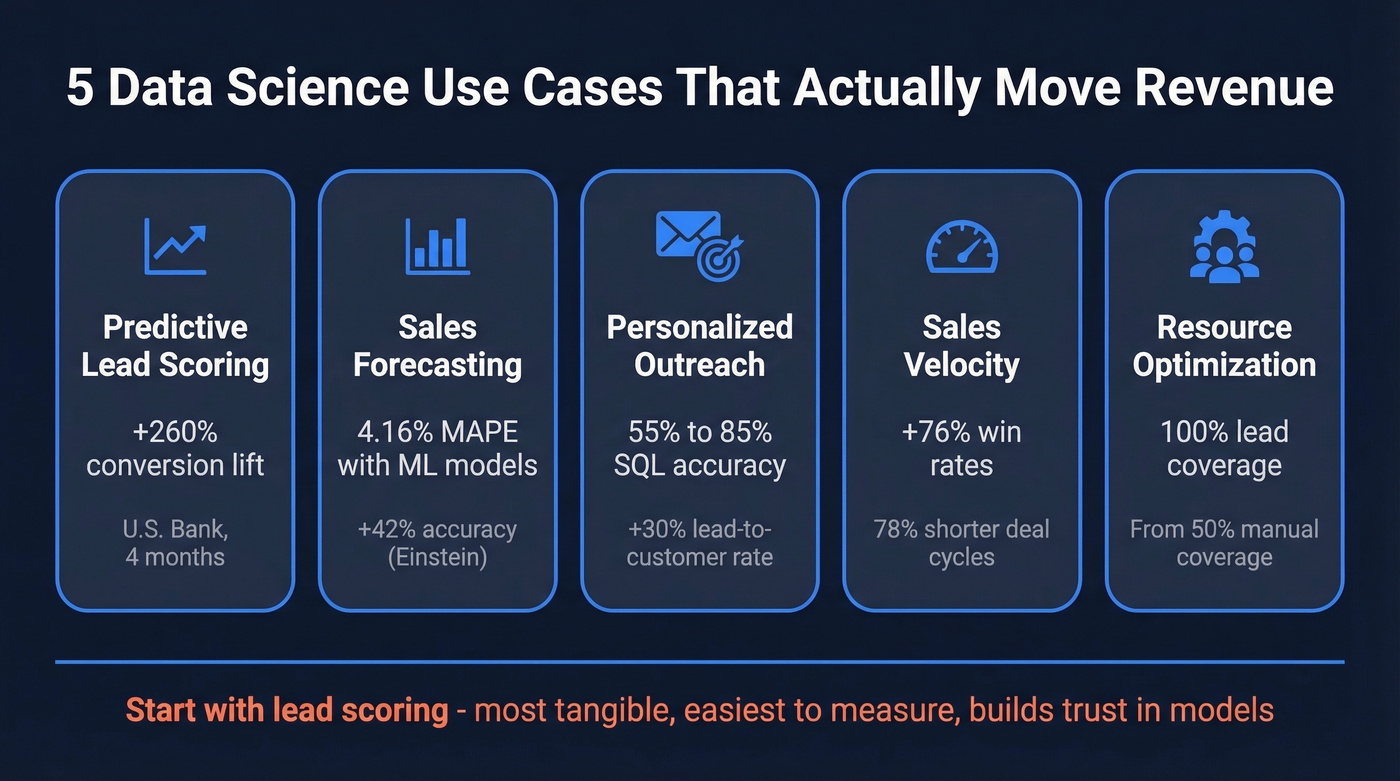
This is the use case we'd start with if we were building from scratch. It's the most tangible, the easiest to measure, and it gives your team a reason to trust the models before you tackle anything harder.
Sales Forecasting
How far off are your forecasts? A peer-reviewed study on hybrid CNN-LSTM models achieved a 4.16% MAPE by incorporating external variables like holidays, salary cycles, and weather. For most B2B teams, moving from spreadsheet rollups to ML-assisted forecasting cuts forecast error by 10-25% in data-mature orgs. Salesforce Einstein is associated with +42% forecast accuracy improvements - and that's an off-the-shelf tool, not a custom build.
Personalized Outreach
HubSpot's internal predictive scoring across 100,000+ customer accounts pushed SQL accuracy from 55% to 85% and cut time to first contact in half. The lead-to-customer rate jumped 30%.
The takeaway isn't that HubSpot is magic. It's that when you feed a model enough clean engagement data, it outperforms the best human gut instinct by a wide margin.
Sales Velocity
Most teams track pipeline and close rate separately. Analytical models connect them. Sales velocity - the formula that multiplies opportunities x deal value x win rate, divided by cycle length - gives you a single metric to optimize.
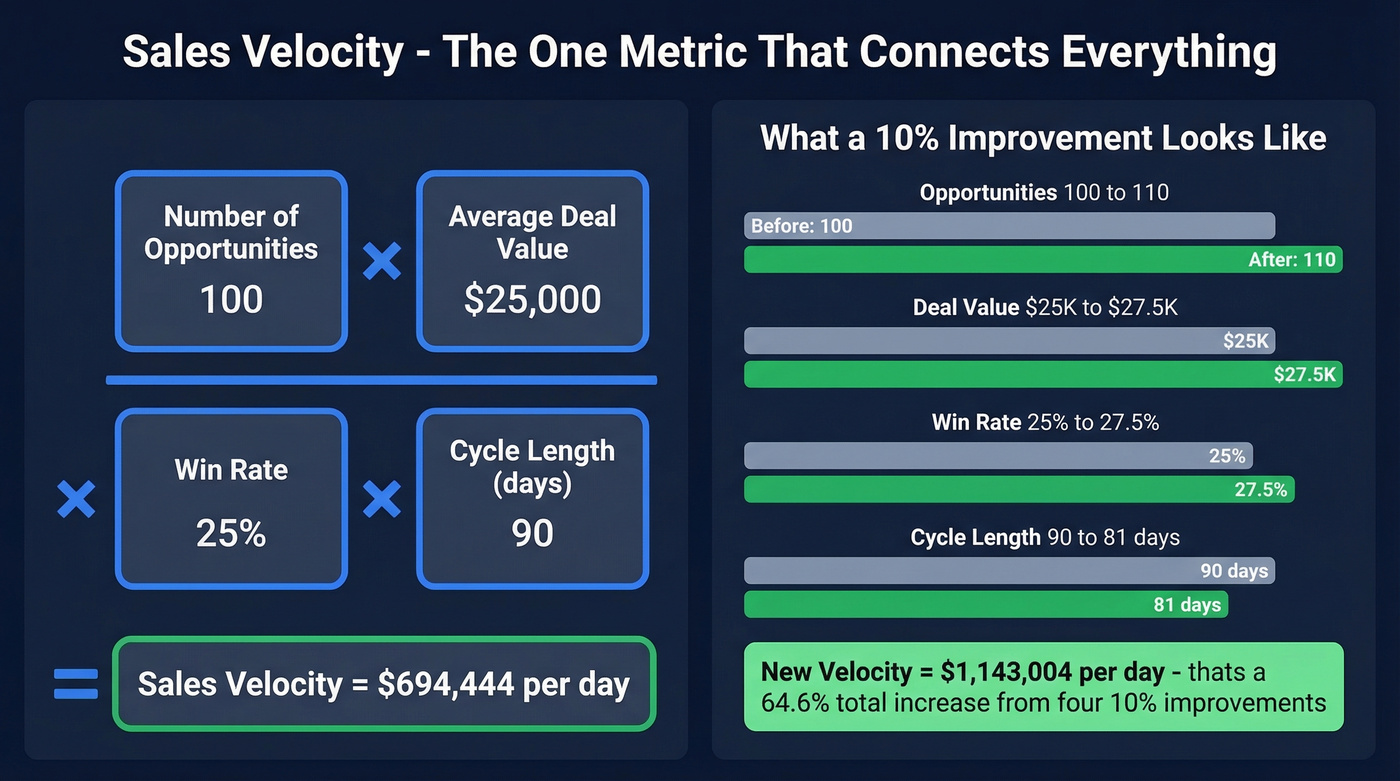
Teams using AI-driven scoring report +76% win rates and 78% shorter deal cycles. Even a 10% improvement in one variable compounds across the entire pipeline, which is why this metric deserves a permanent spot on your RevOps dashboard rather than getting buried in quarterly reviews.
Resource Optimization
VTT Finland found its SDRs were spending roughly 1,000 hours per year qualifying leads manually, covering less than 50% of their ~4,000 annual inbound leads. After deploying AI-driven prospecting, they reached 100% coverage. That's not a marginal improvement - it's a fundamental shift in how resources get allocated against pipeline.

62% of sales analytics initiatives fail because of bad data, not bad models. Prospeo's 5-step verification and 7-day refresh cycle give your lead scoring and forecasting models the clean foundation they need - 98% email accuracy, 92% API match rate, 50+ data points per record.
Fix the input layer and your models finally start delivering.
Why 62% of Sales Analytics Initiatives Fail
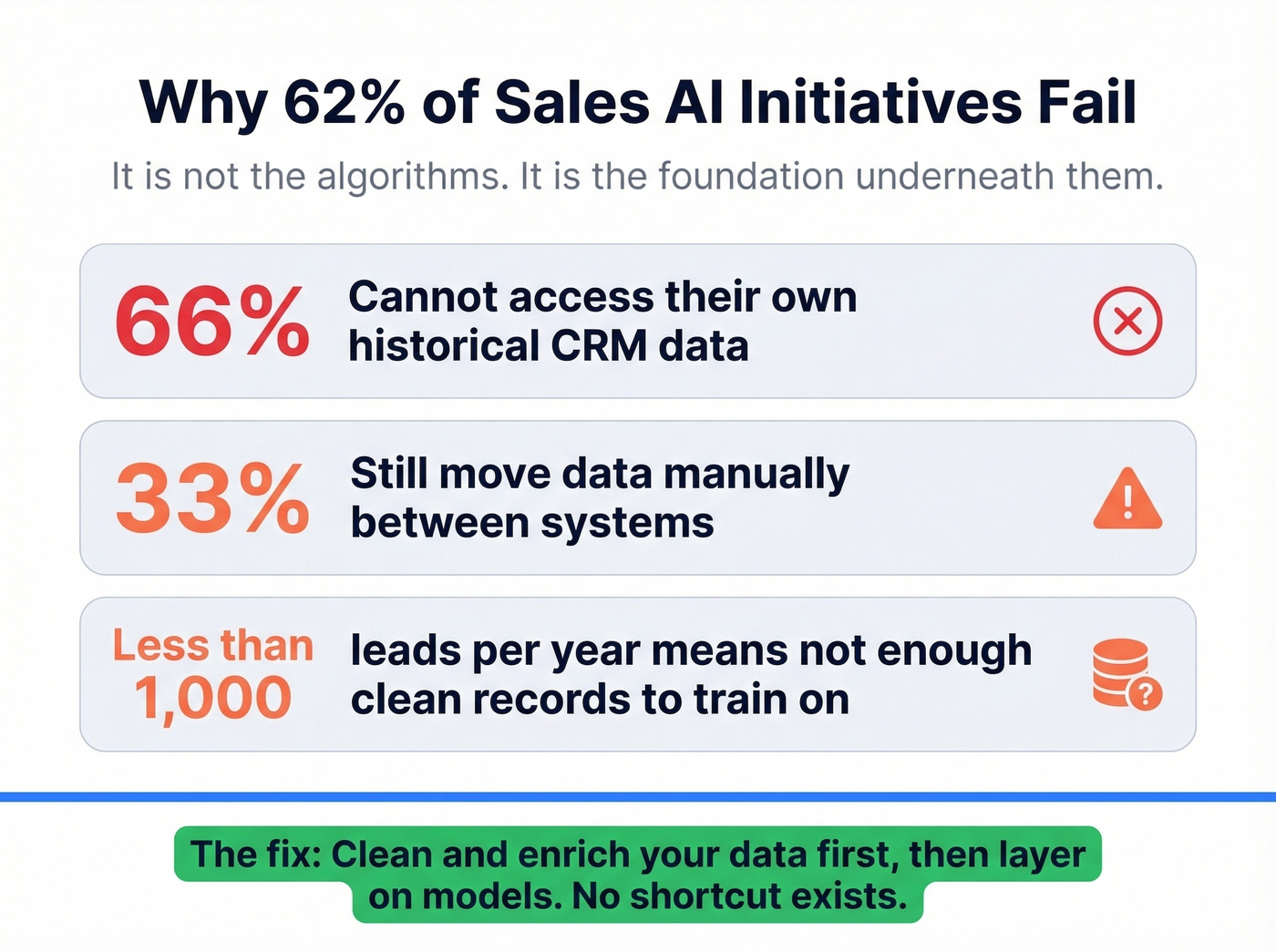
Here's the thing: 62% of AI initiatives in sales fail, and Gartner attributes it to excessive expectations and inadequate preparation. Not bad algorithms. Bad data and unrealistic timelines.

66% of organizations can't access their own historical CRM data through their reporting systems. A third still move data manually between systems. Predictive scoring needs at least 1,000 historical leads per year to find statistically significant patterns - and most teams don't have that volume of clean records.
If you're still stitching together exports, start by fixing your lead generation workflow and tightening your lead status definitions so your training data isn't polluted by inconsistent stages.
The 80/20 Sales Analytics Stack
A RevOps lead on r/revops shared their stack after consolidating from 45+ tools to a core set at a 200-employee SaaS company: 30% reduction in tech spend, 15% improvement in forecast accuracy, 40% less time on manual reporting. In our experience, that consolidation from 10+ tools to five core platforms is where the ROI actually materializes.
If you're building this function, it helps to understand what a RevOps Manager typically owns across systems and reporting.
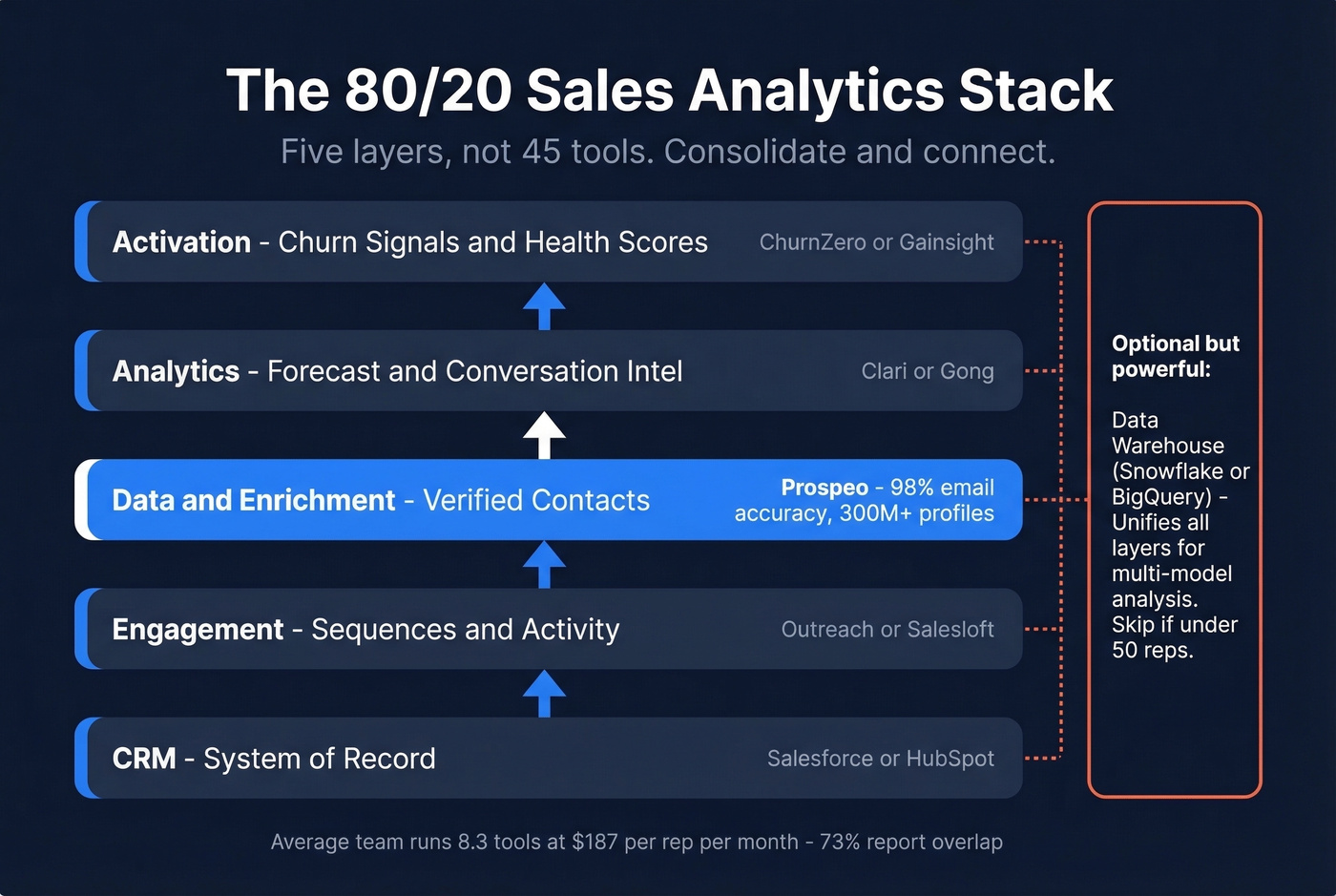
| Layer | Tool | What It Does | Approx. Cost |
|---|---|---|---|
| CRM | Salesforce / HubSpot | System of record | Salesforce varies by edition; HubSpot ~$45/user/mo |
| Engagement | Outreach / Salesloft | Sequences + activity | ~$100-150/user/mo |
| Data & Enrichment | Prospeo | Verified contact data + enrichment | Free tier available; paid plans are credit-based |
| Analytics | Clari / Gong | Forecast + conversation intel | ~$1K-2.5K/user/yr |
| Activation | ChurnZero / Gainsight | Churn signals + health scores | $20K-$100K+/yr depending on seats |
The average sales team runs 8.3 tools at $187/rep/month, with 73% reporting overlap that wastes $2,340 per rep per year. ZoomInfo and Apollo have roughly 70% coverage overlap on US business contacts. You don't need both. Pick one enrichment layer, make sure it integrates natively with your CRM, and build from there.
One often-overlooked piece is a data warehouse - a centralized layer like Snowflake or BigQuery that unifies CRM, engagement, and enrichment data so your models aren't stitching together exports from five different tools. Skip this if you're under 50 reps and your CRM reporting handles your needs. But once you're running multi-model analysis across pipeline stages, a warehouse stops being optional.
At that point, you should also be tracking pipeline health and aligning on sales operations metrics so the models optimize the same outcomes leadership cares about.
You don't need 45 tools to run data science in sales. Prospeo replaces your enrichment layer with 300M+ verified profiles, native CRM integrations, and credits starting at $0.01/email - so your stack stays lean and your models stay accurate.
Start with 75 free verified emails. No contracts, no sales calls.
FAQ
Do you need a data scientist on your sales team?
Most teams under 200 employees don't. Clean CRM data plus built-in AI scoring from Salesforce Einstein or HubSpot covers 80% of the value. Hire a dedicated analyst when you have 1,000+ historical leads per year and custom modeling needs that off-the-shelf tools can't address.
What's the ROI timeline for AI lead scoring?
U.S. Bank saw measurable results within four months: 260% conversion lift and 35% shorter cycles. Mid-market companies typically see lift within one to two quarters, assuming clean underlying data and at least 1,000 scored records to train on. If you're expecting results in week two, recalibrate - the first month is almost entirely data prep.
What's the first step for teams with messy CRM data?
Start with enrichment and deduplication before investing in analytics platforms. No amount of algorithmic sophistication compensates for incomplete or stale records. Get the foundation right, then layer on the models.