

Best Database Sales Tools in 2026: CRMs, Prospecting Data, and Everything In Between
In 2023, only 16% of reps hit quota. US B2B data spending is on track to hit $4.13B by 2027. Companies keep pouring money into database sales tools and getting less from them. The problem isn't a lack of options - it's that most teams pick the wrong type of tool and overpay for features they never touch.
(Looking for jobs selling database technology like MongoDB or Oracle? Different topic. This covers tools that give sales teams better business data for prospecting and pipeline generation.)
Let's be honest: this category covers three completely different product types. A CRM, a prospecting database, and a data marketplace solve different problems. Most listicles lump them together. We won't. We weighted accuracy, pricing transparency, and ease of setup - not feature count.
Our Picks (TL;DR)
| Tool | Category | Best For | Starting Price | G2 Rating |
|---|---|---|---|---|
| Prospeo | Prospecting DB | Verified contacts, accuracy | Free (75 emails/mo) | - |
| Apollo.io | All-in-one | Budget database + outreach | $49/mo/user | 4.7/5 |
| HubSpot CRM | CRM | Free CRM foundation | Free | 4.4/5 |
| ZoomInfo | Prospecting DB | Enterprise data depth | ~$15K/yr | 4.5/5 |
| Cognism | Prospecting DB | European markets, GDPR | ~$15K/yr | 4.5/5 |
| Lusha | Prospecting DB | Quick contact lookups | Free / ~$49/mo | 4.3/5 |
| Pipedrive | CRM | Simple pipeline mgmt | ~$15-25/mo/user | 4.3/5 |
| Clay | Data marketplace | Custom enrichment workflows | $149/mo | 4.8/5 |
| UpLead | Prospecting DB | Mid-market email finding | $74/mo | 4.7/5 |
| Hunter.io | Email finder | One-off email lookups | Free (25/mo) | 4.4/5 |
Enterprise callout: if your budget is $15K+ and you need firmographics, org charts, technographics, and intent data from a single vendor, ZoomInfo is still the default. For everyone else, keep reading.
Three Types of Sales Databases
Confusing these categories is the fastest way to waste budget.
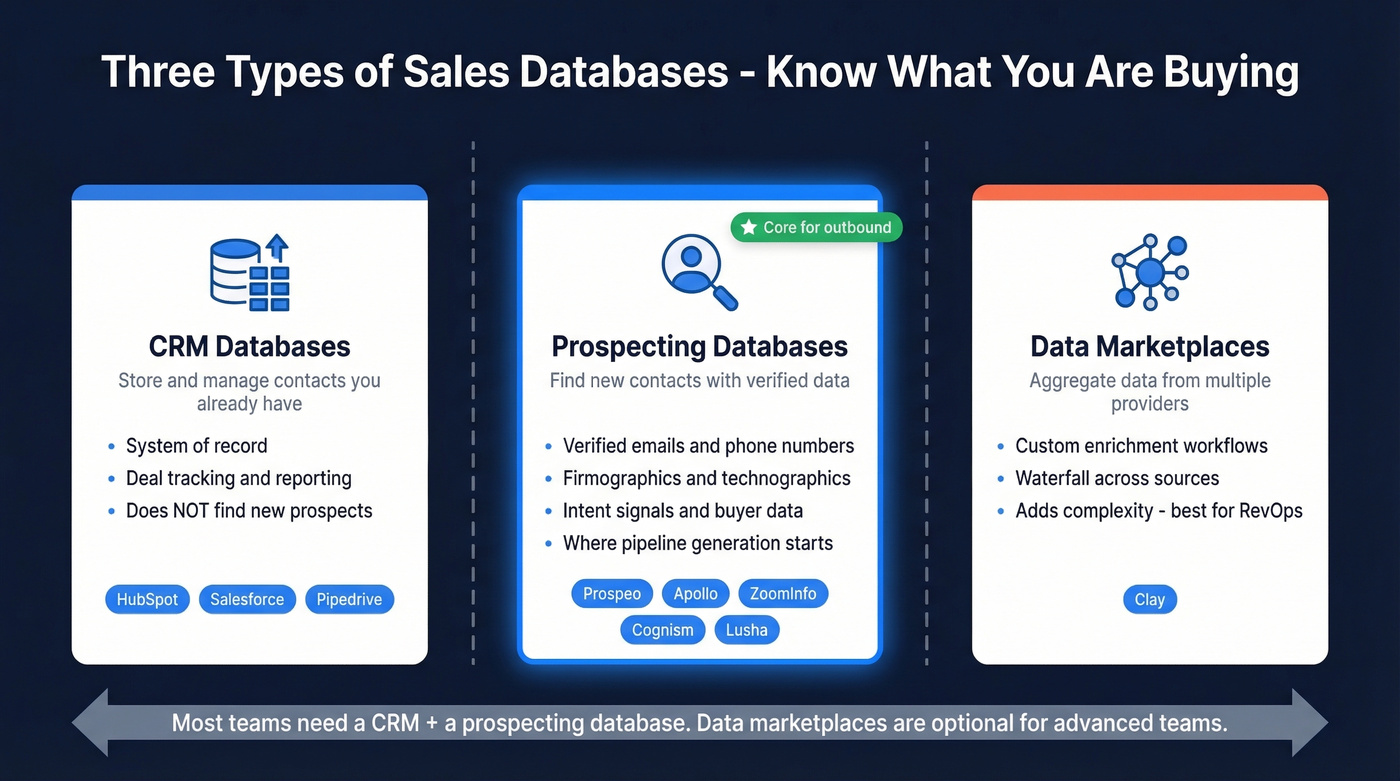
CRM databases - HubSpot, Salesforce, Pipedrive - store and manage contacts you already have. They're your system of record. They don't find new prospects. Every team needs one, but a CRM alone won't fill your pipeline.
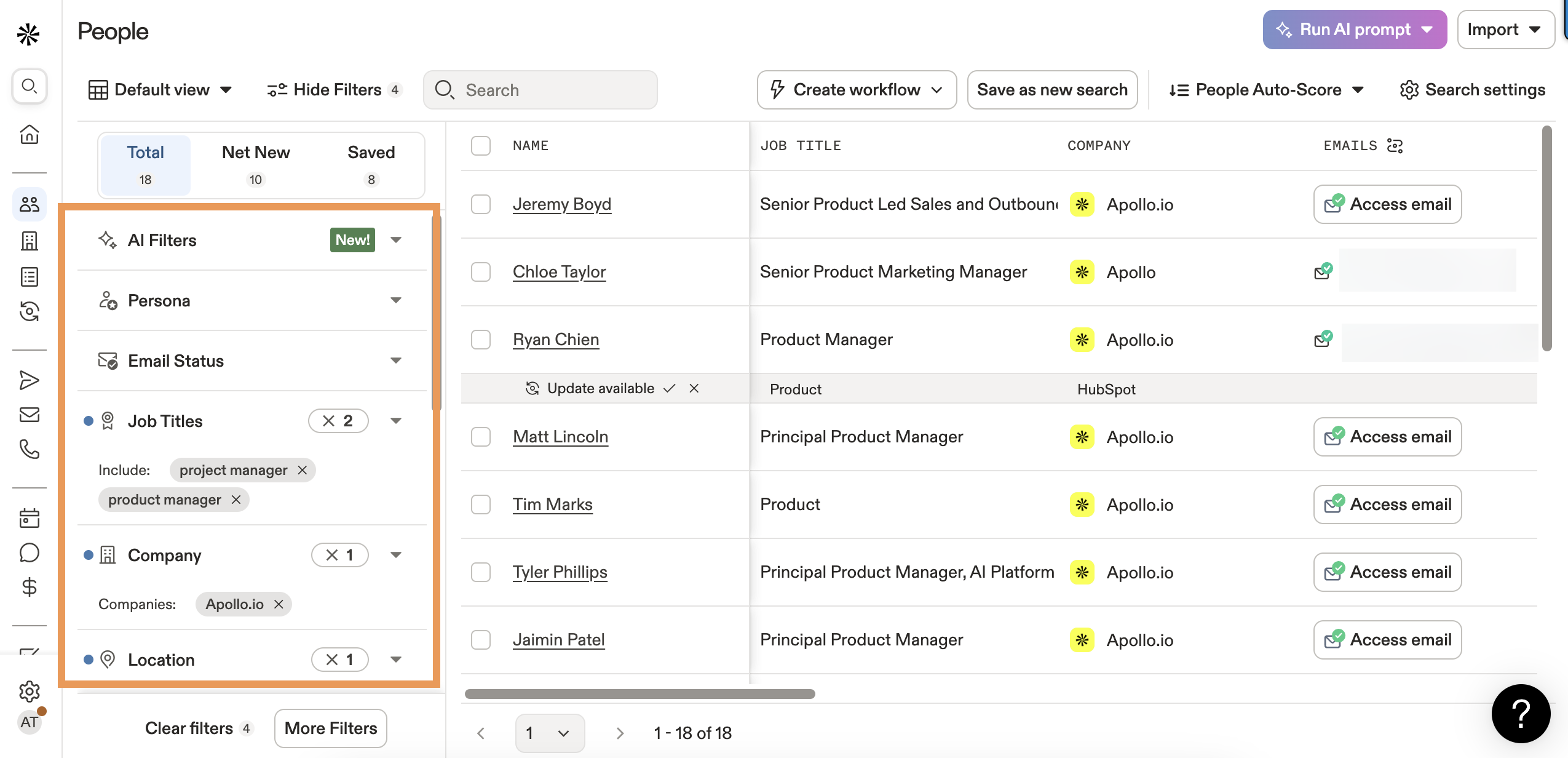
Prospecting databases - Apollo, ZoomInfo, Cognism, Lusha, and others - help you find new contacts with verified emails and phone numbers. These sales contact databases cover firmographics, technographics, intent signals, and engagement history. This is where pipeline generation starts.
Data marketplaces like Clay aggregate data from multiple providers and let you build custom enrichment workflows. Powerful for RevOps teams who want to waterfall across sources, but they add complexity that smaller teams don't need.
Best Tools for B2B Sales Data
Contact & Prospecting Databases
Prospeo
Use this if you care more about data accuracy than database size, you're tired of bounced emails tanking your sender reputation, or you need verified mobile numbers that people actually pick up. Prospeo covers 300M+ professional profiles with 143M+ verified emails and 125M+ verified mobile numbers. The 98% email accuracy rate isn't marketing fluff - Snyk's team of 50 AEs saw bounce rates drop from 35-40% to under 5% after switching, with AE-sourced pipeline up 180%.

The 7-day data refresh cycle is the real differentiator. Industry average is 6 weeks. That gap matters when contact data decays 2.1% per month. You get 30+ search filters including buyer intent powered by 15,000 Bombora topics, technographics, job changes, and headcount growth signals. At roughly $0.01 per verified email - about 90% cheaper than ZoomInfo on a per-lead basis - it makes $15K/year contracts hard to justify for most teams. The free tier gives you 75 verified emails per month to test it without a credit card.
If you’re comparing vendors, start with a broader list of the best B2B databases ranked by accuracy.
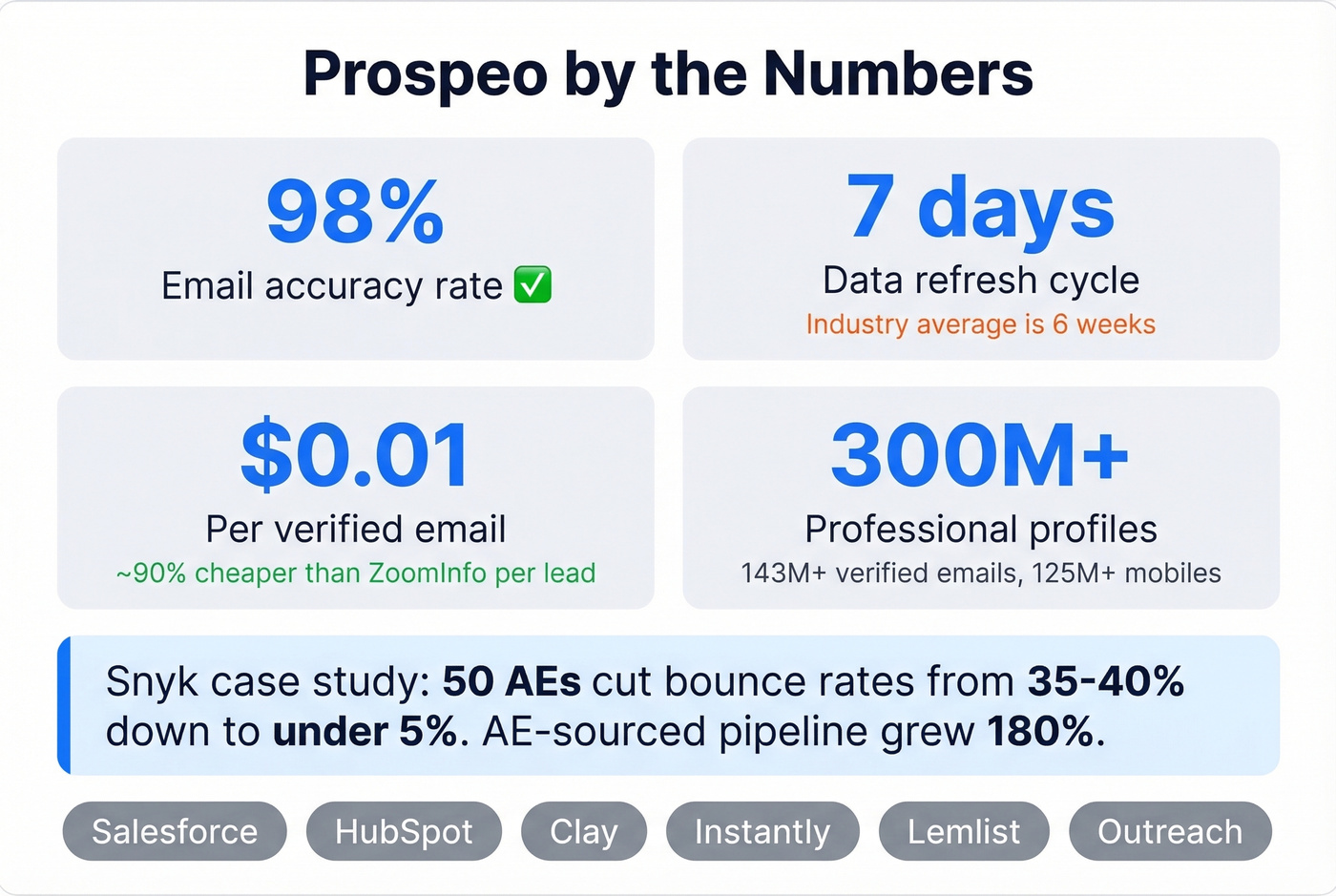
For outreach, pair it with Instantly, Lemlist, or Outreach - Prospeo has native integrations with all three plus Salesforce, HubSpot, and Clay.
Apollo.io
Apollo is the obvious starting point for SMB teams running outbound for the first time. You get a contact database, sequencing, and a dialer in one platform for under $5K/year. The free tier gets you in the door, Basic runs $49/mo per user with 1,000 email credits and 75 mobile credits, Professional is $79/mo, and Organization starts at $119/mo with a 3-seat minimum. At 4.7/5 on G2 across 9,250 reviews, it's one of the most-reviewed tools in the category.
The trade-off is deliverability. We've seen Apollo bounce rates run 15-20% on cold outbound - a recurring theme in tool comparisons and something the consensus on r/sales backs up. Fine for high-volume spray-and-pray, painful if you're protecting a domain. Credits don't roll over month to month, which catches teams off guard.
If you’re building a repeatable outbound motion, use a dedicated outbound email automation tool alongside your data source.
ZoomInfo
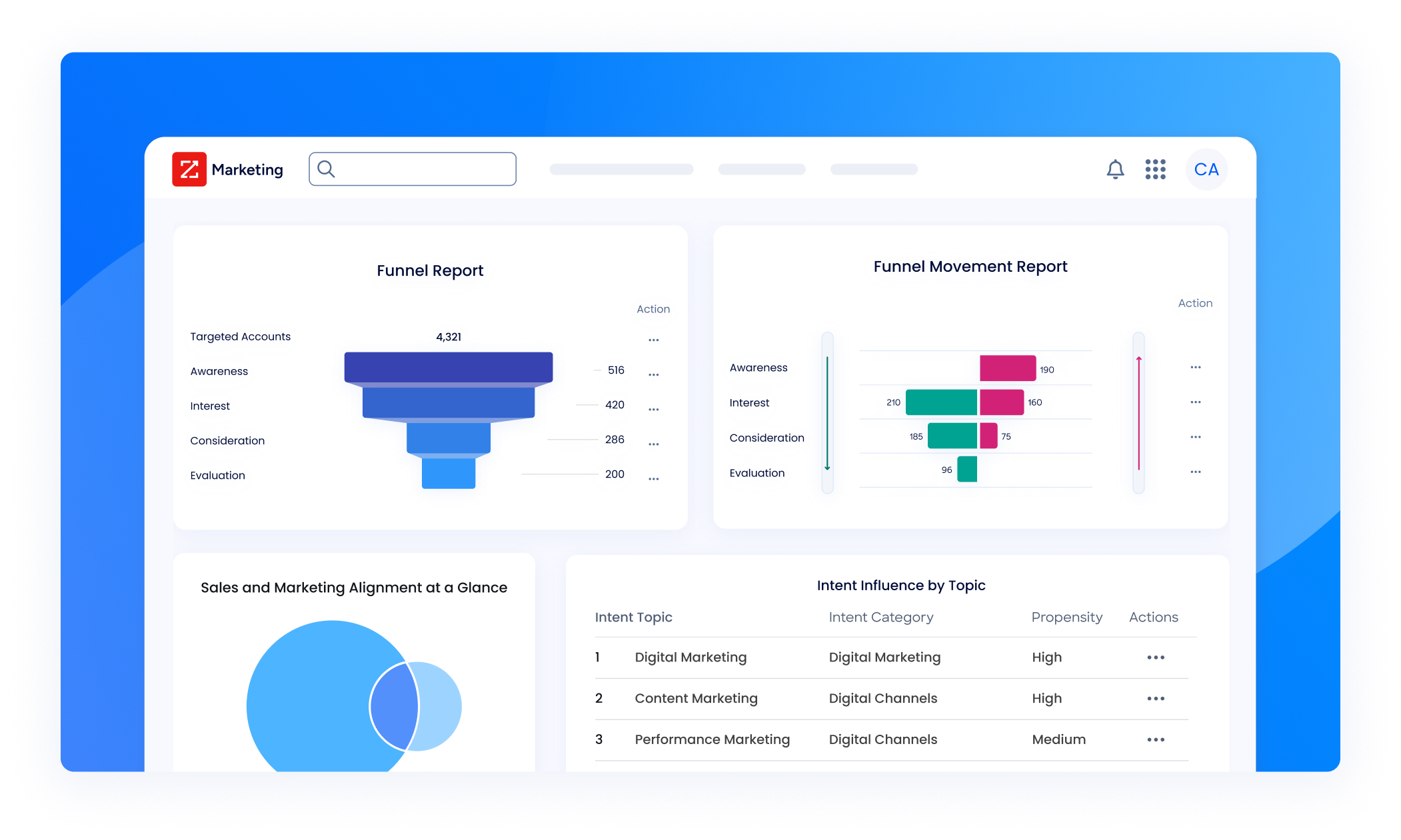
ZoomInfo is the gold standard for B2B data coverage in North America - firmographics, technographics, org charts, intent data, and workflow automation from a single platform. For enterprise-scale sales intelligence, it's unmatched. At 4.5/5 on G2 with 8,875 reviews, it's battle-tested.
Skip this if you're a team under 20 people or your budget is under $15K. Professional tier starts at ~$14,995/year, Advanced runs ~$25-30K, and Elite pushes $35-45K+. Annual contracts only, no monthly option, and renewal uplifts of 10-20% are standard. You often end up paying for add-ons and modules you don't fully use. Discounts of 30-65% are common - never accept the first quote.
Here's our take: ZoomInfo is still the best all-in-one enterprise platform. But if your average deal size is under $10K, you almost certainly don't need ZoomInfo-level data and you're overpaying for it.
Cognism
Cognism owns European data. If you're selling into EMEA and GDPR compliance isn't optional, this is the tool - phone-verified mobile numbers for European contacts are best-in-class, better than ZoomInfo's European coverage by a meaningful margin. G2 rating sits at 4.5/5 across 1,200 reviews. Pricing is custom, typically ~$15,000+/year for small teams with no self-serve option.
Skip it if your market is exclusively North America. The US data doesn't match ZoomInfo or Apollo in depth.
If GDPR is a core requirement, use a GDPR compliant database checklist before you sign.
Lusha
Lusha works best as a quick-lookup utility for individual reps who need a phone number or email right now. The Chrome extension is fast and intuitive. Free plan gives you limited credits monthly, paid plans start around $49-52/user/month. G2 rating is 4.3/5 across 1,566 reviews. It's not a full lead generation platform - skip it if you need bulk list building or intent data.
CRM Databases
HubSpot CRM
HubSpot's free tier is the best CRM foundation available - deal tracking and basic reporting without spending a dime. It's the right base to pair with a dedicated prospecting database. The catch comes when you scale: Sales Hub Professional runs $90/seat/month plus a $1,500 onboarding fee. For complex sales processes, Salesforce still wins on pipeline customization.
If you’re evaluating options, use a framework for how to choose a CRM before you migrate data.
Pipedrive
Pipedrive is built for simple, visual pipeline management for small sales teams. Entry plans land in the ~$15-25/user/month range, and Premium is often priced around $49/user/month billed annually. If you've got 3-10 reps and want simplicity over feature depth, it's the right CRM. Don't expect it to replace a prospecting tool.
Data Marketplaces & Supplementary Tools
Clay
Clay runs on credits starting at $149/month and lets you waterfall enrichment across dozens of data sources. It's a 4.8/5 on G2 with 174 reviews and popular with RevOps teams building custom data workflows. Not for beginners - this is a power tool that assumes you already know what you're doing with data orchestration.
If you want to go deeper on workflows, see our guide to Clay list building.
UpLead
UpLead starts at $74/month for 170 credits with email verification baked in. Solid mid-market alternative if ZoomInfo's pricing makes you flinch but you want cleaner data than Apollo. The database is smaller, but the verification layer keeps bounce rates low.
Hunter.io
Hunter.io is the email-finding specialist - free for 25 searches/month, paid from $49/month. Best for one-off lookups and domain searches, not bulk prospecting.
If you’re mainly doing one-off lookups, compare options in our Hunter alternatives roundup.

Most database sales tools charge enterprise prices for data that decays before you use it. Prospeo refreshes 300M+ profiles every 7 days - not every 6 weeks. At $0.01 per verified email with 98% accuracy, your bounce rates drop and your pipeline grows.
Start with 75 free verified emails - no credit card, no sales call.
Pricing Comparison
| Tool | Starting Price | Model | Free Tier | Contract |
|---|---|---|---|---|
| Prospeo | ~$0.01/email | Credit-based | 75 emails/mo | None |
| Apollo.io | $49/mo/user | Per-seat + credits | Yes (limited) | Monthly/annual |
| ZoomInfo | ~$15K/yr | Annual + credits | No | Annual only |
| Cognism | ~$15K/yr | Custom | No | Annual |
| Lusha | ~$49/mo/user | Per-seat + credits | Yes (limited) | Monthly/annual |
| HubSpot CRM | Free | Per-seat (paid tiers) | Yes | Monthly/annual |
| Pipedrive | ~$15-25/mo/user | Per-seat | No | Monthly/annual |
| Clay | $149/mo | Credit-based | No | Monthly |
| UpLead | $74/mo | Credit-based | No | Monthly/annual |
| Hunter.io | Free / $49/mo | Credit-based | 25 searches/mo | Monthly/annual |
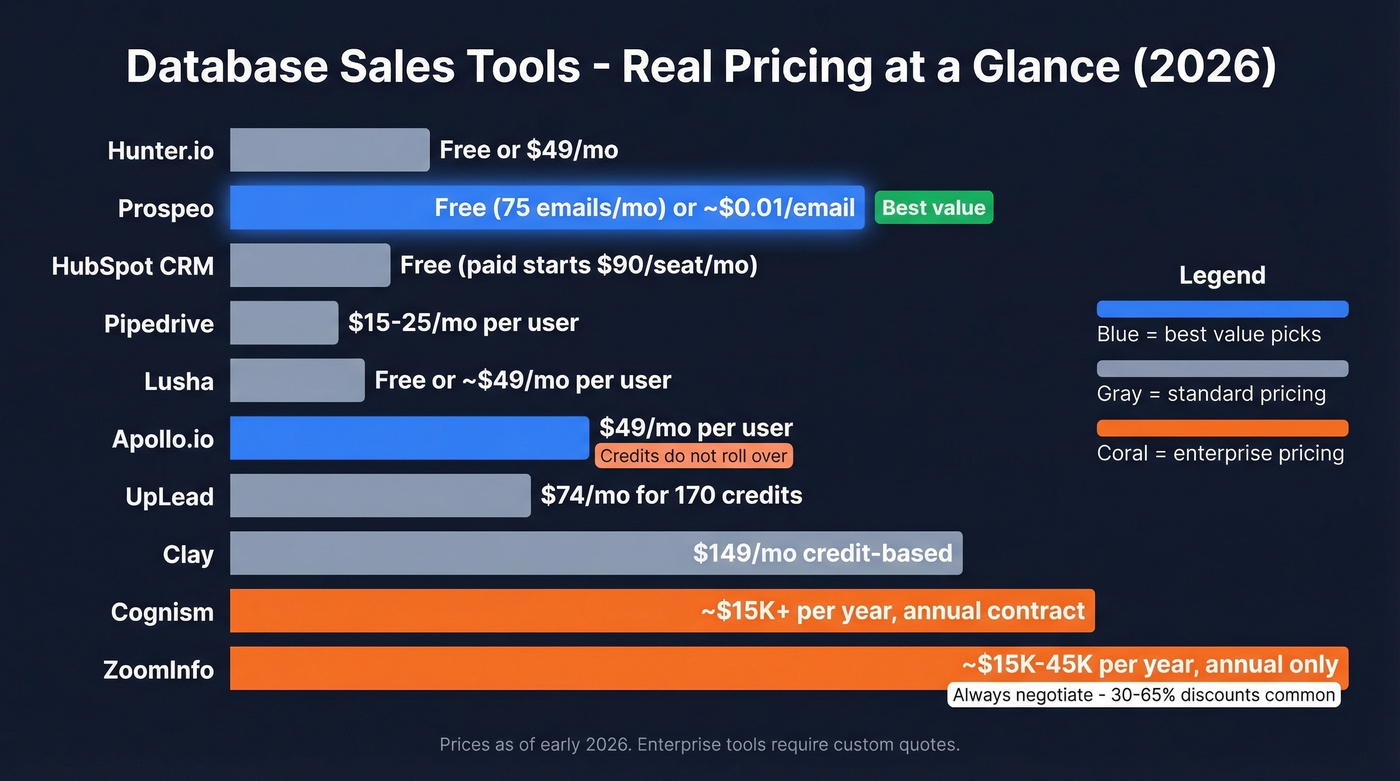
ZoomInfo's "list price" and what you actually pay are different numbers. Discounts of 30-65% are common - never sign without negotiating. Apollo's credits don't roll over, so budget accordingly or you're lighting money on fire every month.
Why Data Quality Beats Size
A 10,000-contact database with 98% accuracy outperforms a 1,000,000-contact database with 80% accuracy. That's not philosophy - it's math.
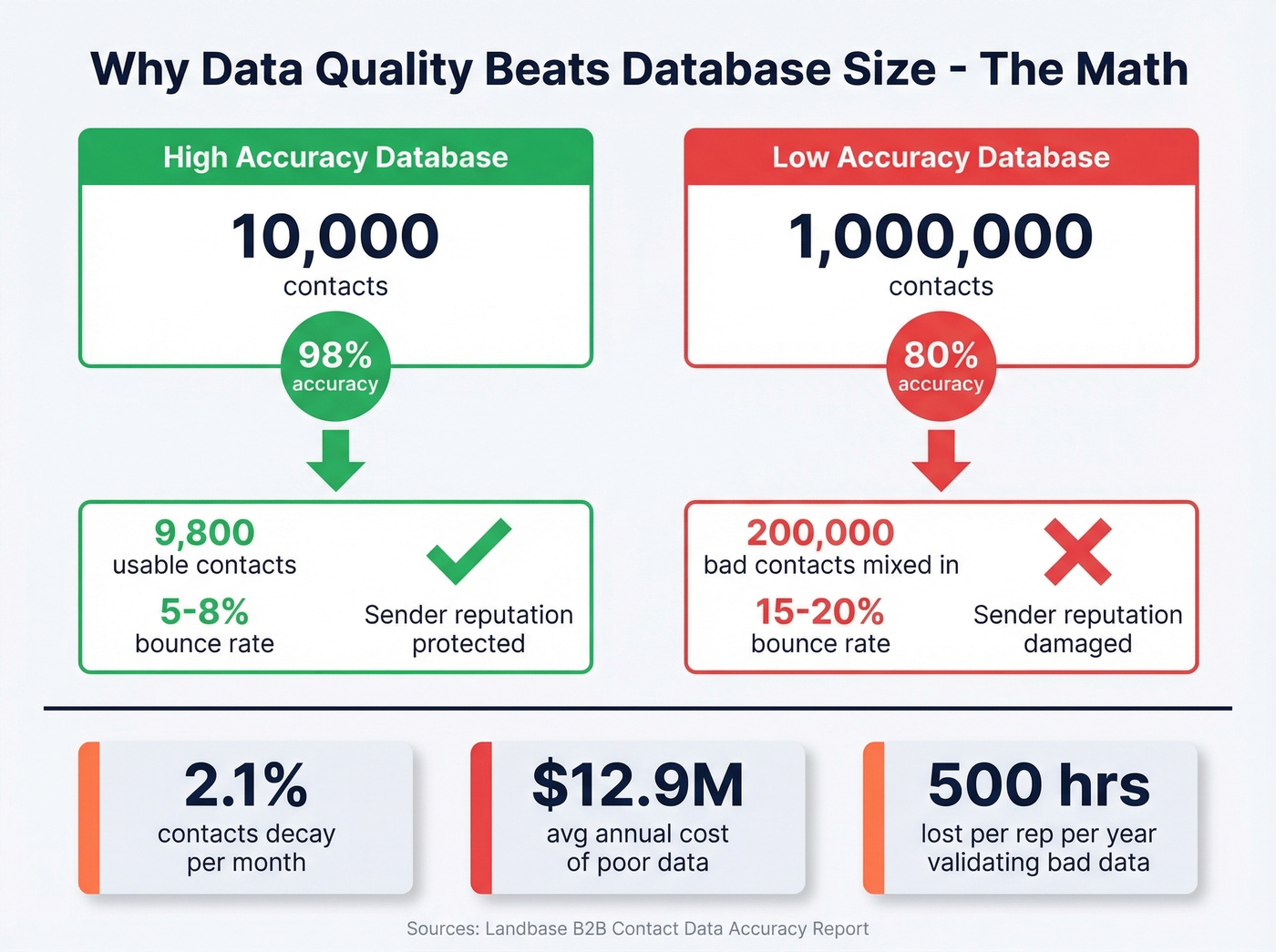
Contact data decays at 2.1% per month - roughly 22.5% of your records going stale every year. Poor data quality costs organizations an average of $12.9M per year, and reps lose an estimated 500 hours annually just validating contact info. That's a staggering amount of selling time burned on data hygiene that should've been handled upstream.
If you’re fixing bounce rates, start with an email verifier before you scale volume.

The practical difference shows up in bounce rates. Premium data tools consistently deliver 5-8% bounce rates on cold outbound, while budget tools often produce 15-20%. Anything above 8% starts damaging your sender reputation, which means your emails stop reaching inboxes entirely - even the good ones.
Snyk's 50 AEs cut bounce rates from 35-40% to under 5% and grew AE-sourced pipeline 180% after switching their sales database. 143M+ verified emails, 125M+ mobile numbers, and 30+ filters including buyer intent across 15,000 topics.
Pick the sales database that actually protects your domain reputation.
How to Build a Sales Database
Five steps, no fluff:
Define your ICP and disqualification criteria. Before you add a single contact, know who you're targeting and who you're not. Industry, company size, title seniority, geography, tech stack. Write down the "no" list too - it'll save you more time than the "yes" list.
Source contacts from first-party and third-party data. First-party sources include form fills, demo requests, and event attendees. Third-party prospecting databases fill the gaps at scale. Manual public sourcing doesn't scale beyond small volumes.
Consolidate everything in your CRM. Not spreadsheets. Set field standards before your first import, map fields correctly, and deduplicate before and after every batch. Watch for one-way sync issues between your prospecting tools and CRM - they cause silent data loss that nobody notices until pipeline reviews.
Enrich and verify. Run email verification to prevent bounces, validate phone numbers to avoid wasted dials, and append firmographic and technographic data so reps have context before they call. This step turns a raw contact list into something your team can actually sell from.
Segment and maintain. Build segments by ICP fit, engagement level, and buying stage. Schedule regular cleaning and track lead sources so you know what's actually working.
If you need more enrichment options, compare the best data enrichment tools.
The biggest mistake we see? Teams skip step one, dump 50,000 contacts into their CRM, and wonder why conversion rates are terrible. Garbage in, garbage out - no tool fixes bad targeting.
Compliance: GDPR vs. CCPA
If you're buying third-party contact data, compliance isn't optional.
GDPR applies to any business processing personal data of EU residents - no revenue minimum, fully extraterritorial. For marketing outreach in practice, it's opt-in. Fines reach EUR 20M or 4% of global turnover.
CCPA/CPRA applies to California residents' data for businesses with $25M+ annual revenue, those handling data on 100,000+ CA residents, or businesses deriving 50%+ of revenue from selling personal information. The model is opt-out. Penalties run up to $7,500 per intentional violation.
Before you buy any third-party data, verify your provider's compliance posture and ask for a DPA. 81% of consumers believe how a company handles personal data reflects how it respects customers. Getting this wrong risks more than fines - it risks trust.
FAQ
What's the difference between a CRM and a prospecting database?
A CRM stores contacts you already have. A prospecting database helps you discover new leads with verified emails and phone numbers. Most teams need both - one to source pipeline, one to manage it through the funnel.
How often should I clean my sales database?
Quarterly at minimum. Contact data decays roughly 2.1% per month, meaning ~22.5% goes stale every year. Tools with weekly refresh cycles reduce this burden significantly compared to the 6-week industry average.
Is it legal to buy B2B sales leads?
Yes, but compliance depends on geography. GDPR requires opt-in consent for marketing outreach to EU residents. CCPA uses an opt-out model for California residents. Always verify your provider's compliance certifications and request a DPA before purchasing.
How much do database sales tools cost?
Free tiers exist from HubSpot CRM, Apollo, and Prospeo (75 emails/month). Paid prospecting tools range from $49/month to $45,000+/year. The biggest cost variable is pricing model - per-seat vs. credit-based vs. flat-rate annual contracts.
What's a good email bounce rate for outbound?
Under 5% is the target. Premium data tools with real-time verification typically land in the 3-5% range, while budget tools often produce 15-20%. Anything above 8% risks damaging your domain reputation across all outbound sends.