

How to Enrich Leads Without Wrecking Your Sender Reputation
Your SDR just told you 30% of yesterday's email campaign bounced. That's not a minor inconvenience - that's your domain reputation taking a hit you'll spend weeks recovering from. B2B data decays at roughly 22.5% per year, about 2.1% every month. When you enrich leads with data that's already six months old, you're stuffing your CRM with contacts that are actively rotting, and every unverified email you send accelerates the damage.
The fix isn't "get more data." It's getting the right data, verifying it before it touches a sequence, and refreshing it on a schedule that keeps pace with reality.
The Short Version
Three things matter more than anything else here:
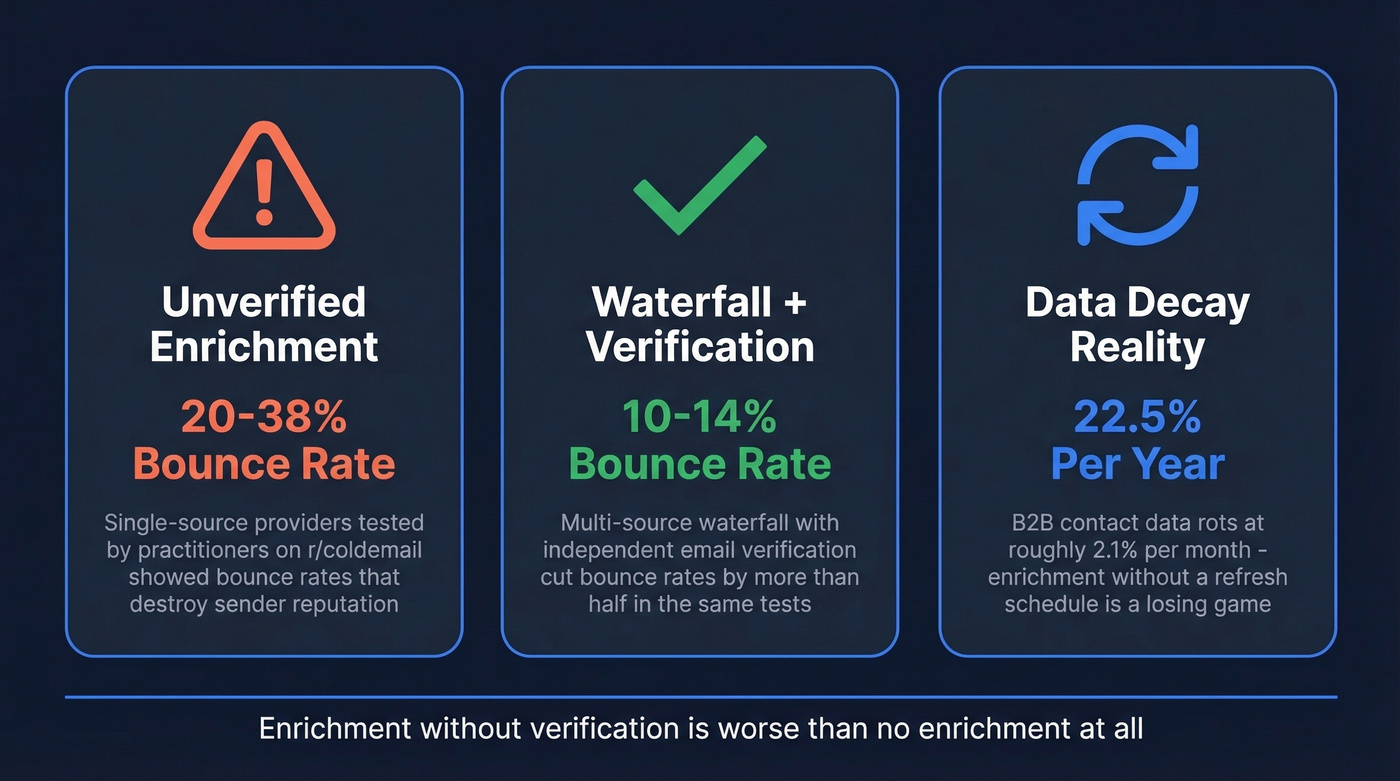
Enrichment without verification is a waste. Appending unverified emails damages your sender reputation more than having no email at all. Single-source providers bounce at 20-38%. A waterfall approach with verification drops that to 10-14% in practitioner tests - we'll show you that data below. Start with one accurate, frequently refreshed data provider. Add an orchestration layer like Clay only if you actually need multi-source workflows.
What Lead Enrichment Actually Means
Lead enrichment is appending missing or outdated data fields to a lead record - turning a name and email into a complete profile your reps can work.
Five categories of data matter. Firmographic covers company size, revenue, industry, and funding stage. Demographic fills in job title, seniority, and department. Technographic reveals the prospect's tech stack. Contact is the obvious one: verified email, direct dial, mobile number. Intent tells you which topics a company is actively researching, signaling buying readiness.
The data enrichment market hit $2.37B in 2023 and is growing at 10.1% CAGR through 2030. This workflow is table stakes now.
Why Enrich Leads?
The ROI Case
Enriched leads convert 20-30% better than non-enriched leads. Teams running proper enrichment report 25% more SQLs, 25% shorter sales cycles, 30% bigger deals, and 12% lower CAC. Companies lose roughly 12% of revenue from poor data quality alone.
For a team doing $5M in revenue, that's $600K in preventable leakage. When lead generation and enrichment work together as a single workflow rather than separate steps, those gains compound fast.
The Data Decay Problem
Enrichment isn't a one-time event. ZeroBounce's 2026 report, analyzing 11B+ email addresses verified in 2025, found at least 23% of any email list degrades within a year. Factor in catch-all emails - about 9% of all checked addresses - and 23% is a conservative floor.
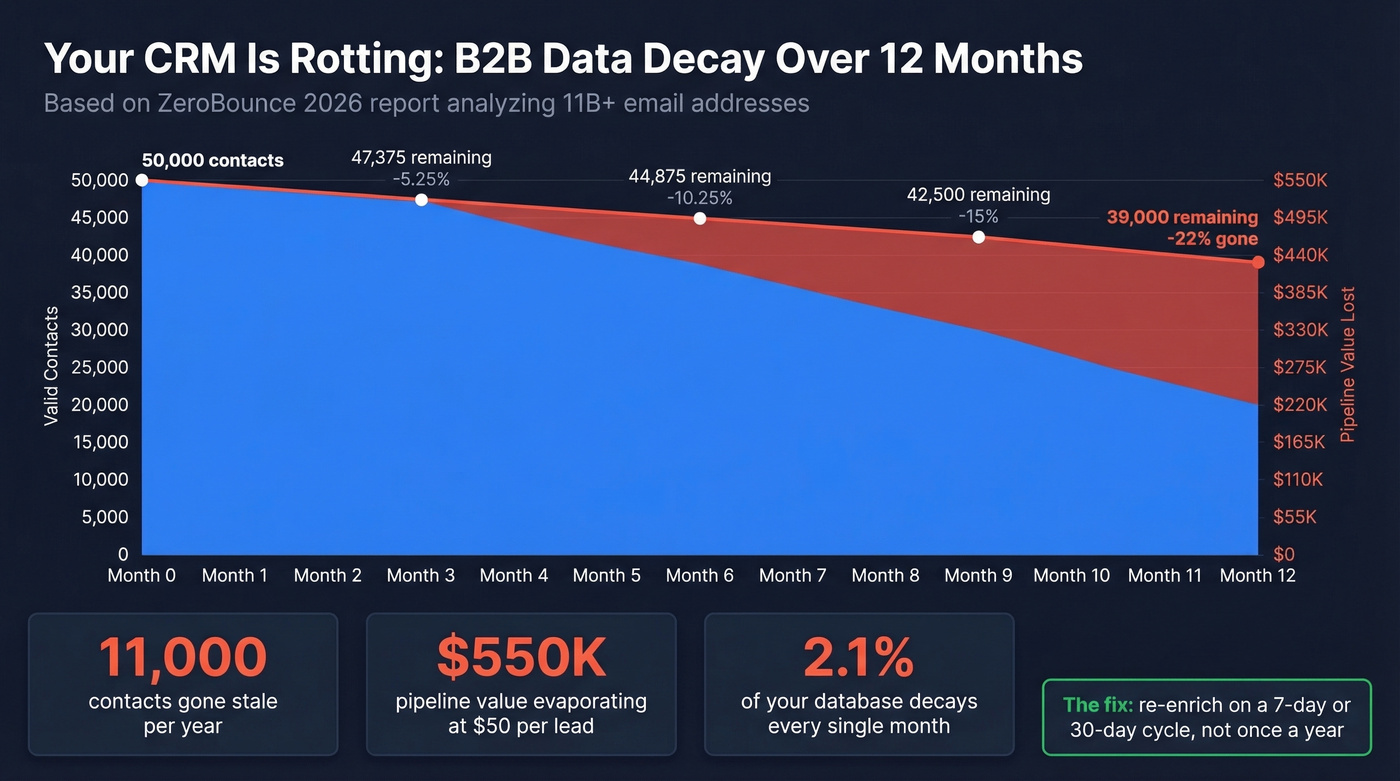
Here's what that looks like in practice: if you've got 50,000 contacts decaying at 22% annually, that's roughly 11,000 contacts going stale every year. At $50 per lead in acquisition cost, you're watching $550K in pipeline value quietly evaporate.
How to Enrich Lead Data
The workflow breaks into four steps, regardless of tooling.
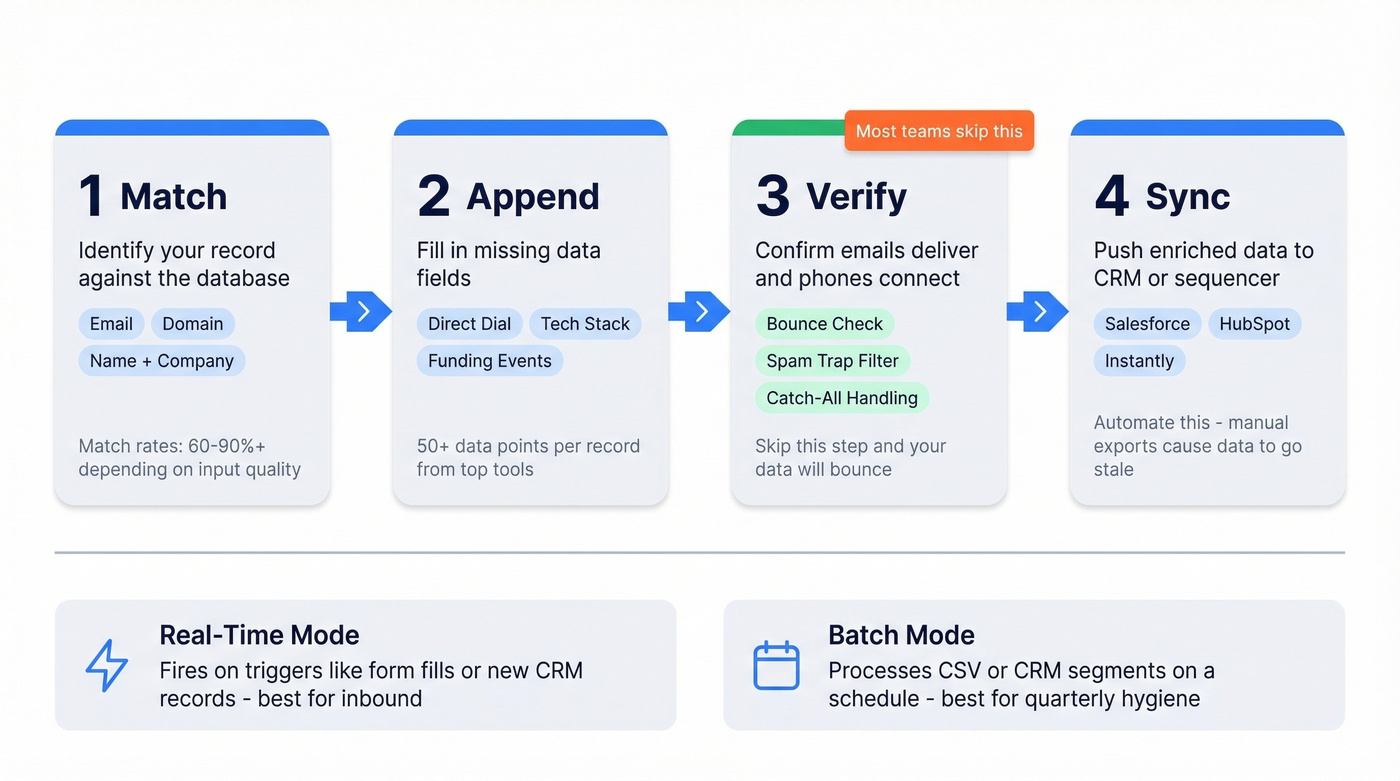
Step 1: Match. The system identifies your record against its database using whatever identifiers you provide - email, domain, full name plus company, or a profile URL. Match rates vary wildly. Expect around 60% to 90%+ depending on the tool and your input quality.
Step 2: Append. Once matched, the system fills in missing fields. Top enrichment tools can return 50+ data points per record - direct dial, tech stack, recent funding events, the works.
Step 3: Verify. This is where most teams cut corners and pay for it later. Verification confirms that appended emails are deliverable and phone numbers are usable. Skip this step and you're just appending data that'll bounce. (If you need a deeper playbook on verification, see email bounce rate benchmarks and fixes.)
Step 4: Sync. Push enriched data to your CRM or sequencer. Prospeo has native integrations with Salesforce, HubSpot, Lemlist, Instantly, and Clay to make this automatic. Manual CSV exports work, but automation prevents the "enriched but never synced" problem that plagues more teams than you'd think.
Two modes matter here. Real-time enrichment fires on a trigger - form fill, website visit, new CRM record - and appends data instantly via API. Batch enrichment processes a CSV or CRM segment on a schedule. Use real-time for inbound form fills so reps get complete records immediately; use batch for quarterly CRM hygiene. Most teams need both.

You just read that single-source providers bounce at 20-38%. Prospeo's 5-step verification and 7-day refresh cycle deliver 98% email accuracy - cutting bounce rates below 4% for teams like Snyk and Meritt. At ~$0.01 per email, you get 50+ data points per enriched record with an 83% match rate.
Enrich your first 75 leads free and see the accuracy difference yourself.
Single Source vs. Waterfall
The Single-Source Problem
We've seen teams running five separate subscriptions - ZoomInfo for contacts, Clearbit for firmographics, BuiltWith for technographics - and manually coordinating between them. Expensive and fragile. But even a single source has problems.
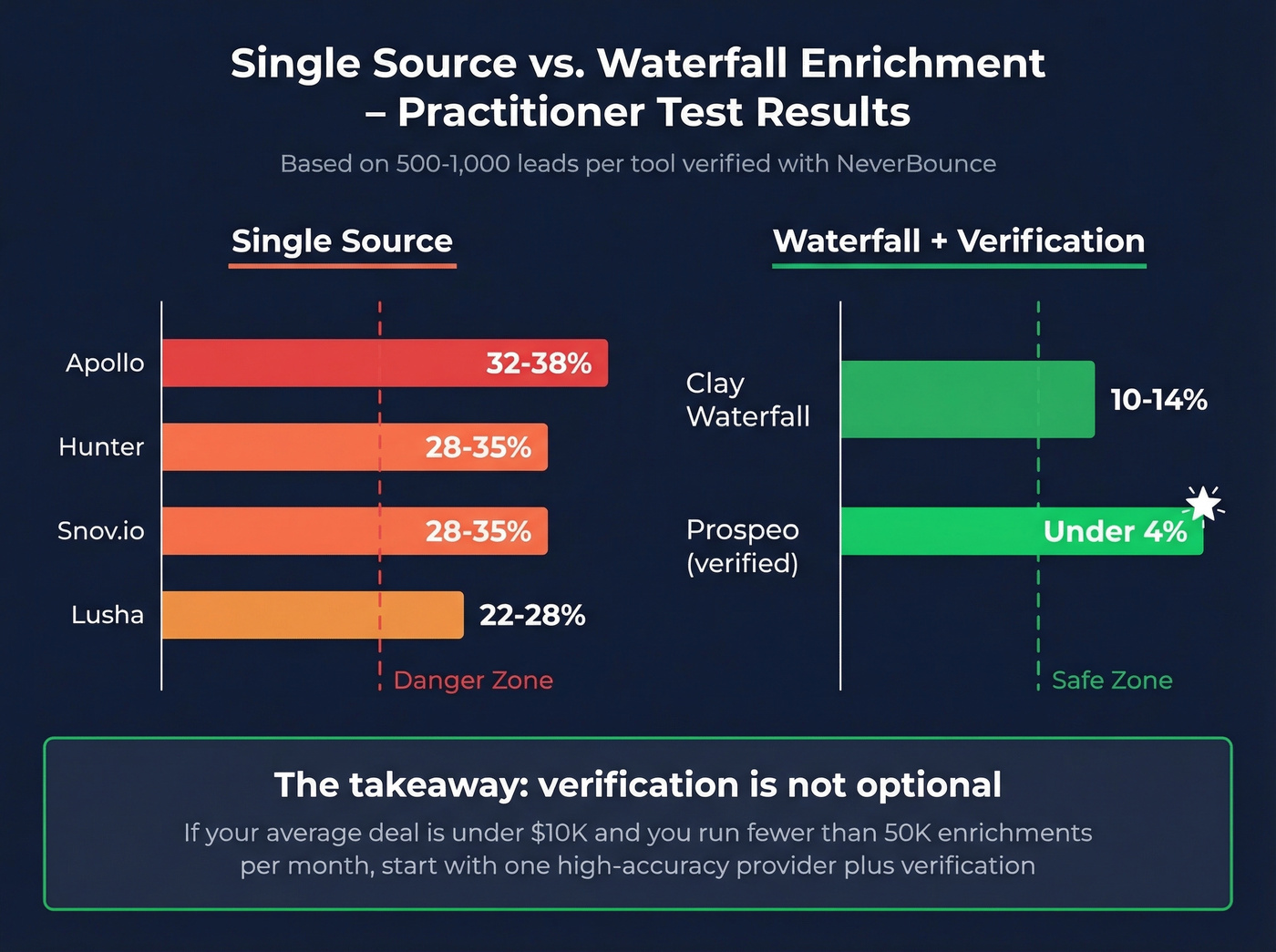
One practitioner on r/coldemail tested six Apollo alternatives by exporting 500-1,000 leads per tool and verifying with NeverBounce. Apollo bounced at 32-38%. Hunter and Snov.io came in at 28-35%. Lusha performed better at 22-28%, but credits ran out fast. Every single-source provider had coverage gaps that drove bounce rates well above acceptable thresholds.
Waterfall Tradeoffs
Waterfall enrichment queries multiple providers sequentially: start with your primary source, cascade to a second if fields are missing, then a third. In that same practitioner test, a Clay-based waterfall achieved the lowest effective bounce at roughly 10-14%.
But waterfall isn't free of tradeoffs. Implementation complexity jumps. Compliance risk multiplies because your chain is only as strong as the weakest provider's data practices. And data conflicts are real - one provider can overwrite a verified phone number with an incorrect one.
Here's the thing: if your average deal size is under $10K and you're running fewer than 50,000 enrichments per month, you don't need waterfall. Start with a single high-accuracy provider, layer verification on top, and add waterfall only when coverage gaps become your actual bottleneck - not before.
Best Lead Enrichment Tools
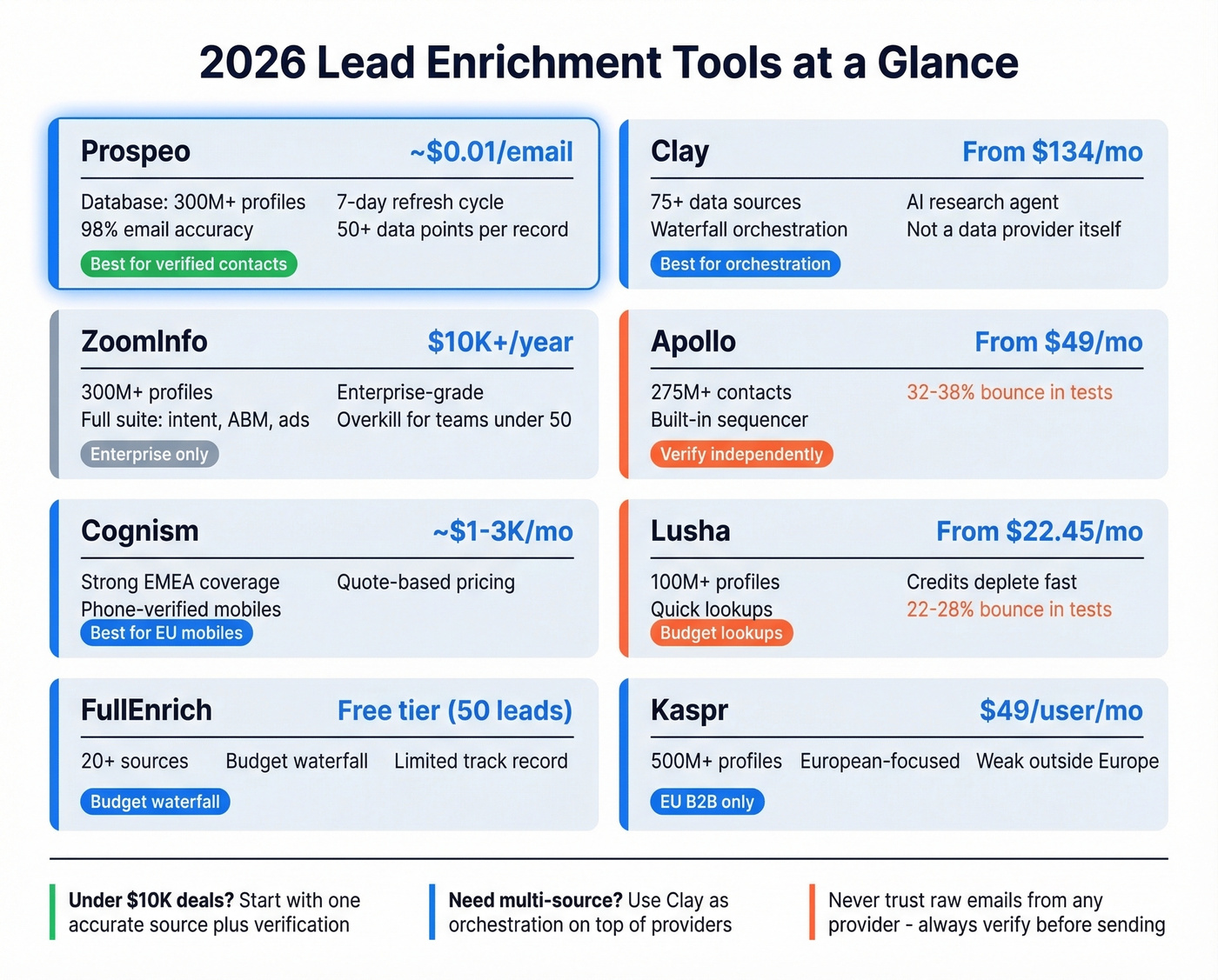
| Tool | Starting Price | Database | Best For | Key Limitation |
|---|---|---|---|---|
| Prospeo | ~$0.01/email (free tier) | 300M+ profiles | Verified contact data | Self-serve only |
| Clay | $134/mo (free tier) | 75+ sources | Waterfall orchestration | Not a data provider |
| ZoomInfo | $10K+/yr (custom) | 300M+ profiles | Enterprise full-suite | Overkill pricing for most |
| Apollo | $49/mo (free tier) | 275M+ contacts | Budget prospecting | 32-38% bounce reported |
| Cognism | ~$1-3K/mo (custom) | Large global DB | European mobiles | Quote-based pricing |
| Lusha | $22.45/mo (free tier) | 100M+ profiles | Quick lookups | Credits deplete fast |
| FullEnrich | Free tier (50 leads) | 20+ sources | Budget waterfall | Limited track record |
| Kaspr | $49/user/mo (free tier) | 500M+ profiles | European B2B | Weak outside Europe |
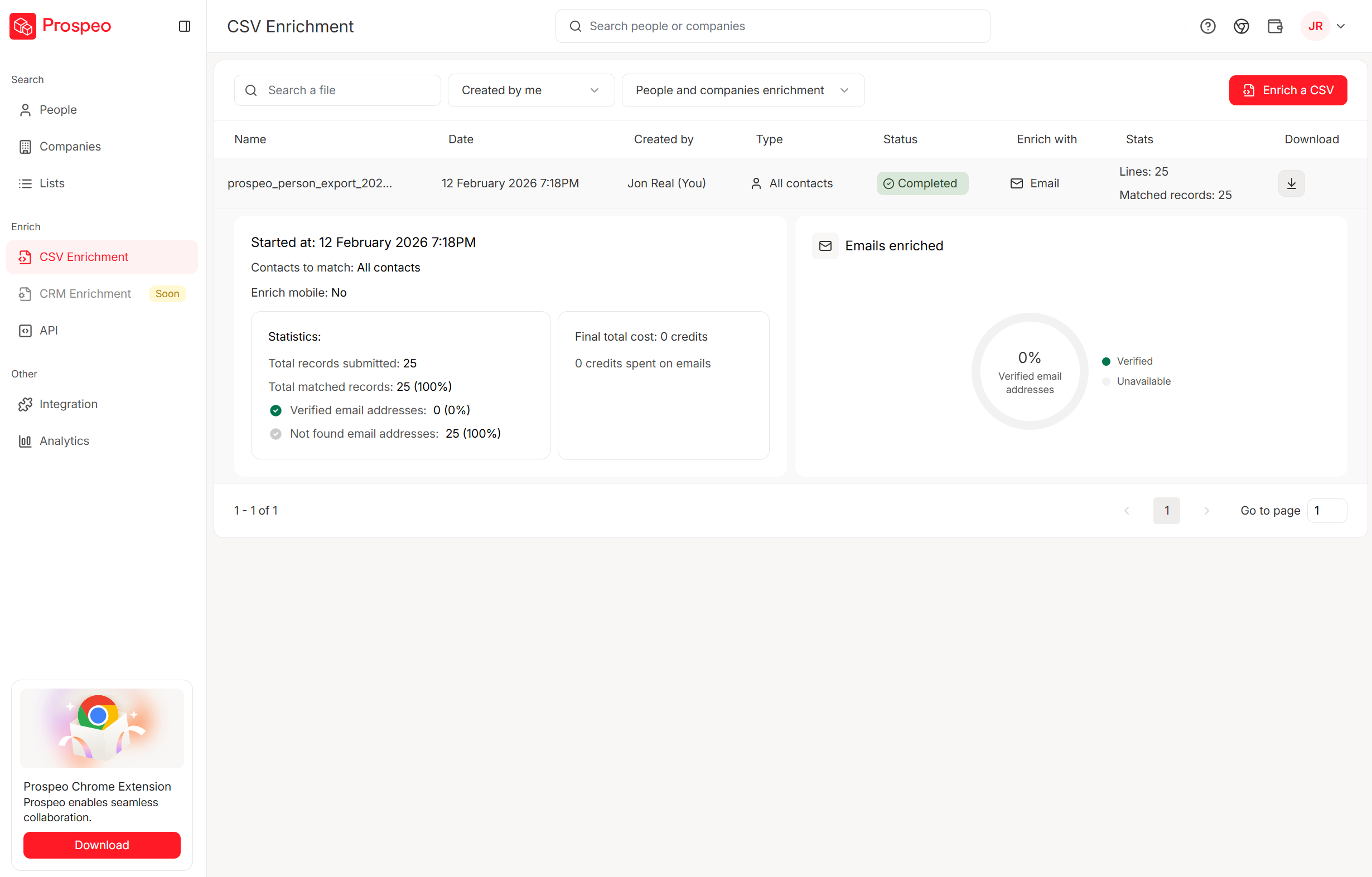
Prospeo
Prospeo covers 300M+ professional profiles with 143M+ verified emails and 125M+ verified mobile numbers at a 30% pickup rate - all on a 7-day refresh cycle that's roughly 6x faster than the industry average. The 98% email accuracy comes from proprietary infrastructure: a 5-step verification process with catch-all handling, spam-trap removal, and honeypot filtering.
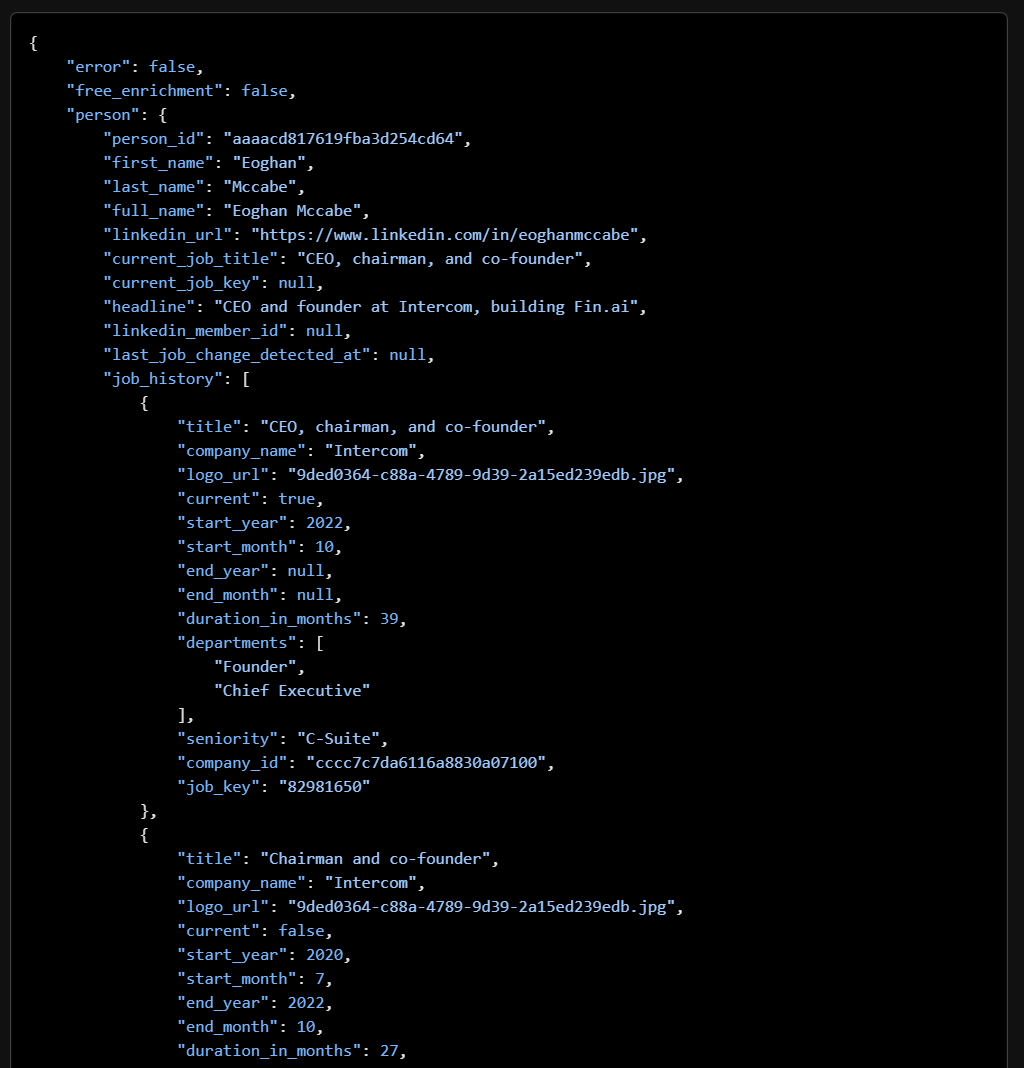
The enrichment API returns 50+ data points per record at a 92% match rate. Search filters go beyond basics - 30+ filters including buyer intent powered by Bombora across 15,000 topics, technographics, job changes, and funding signals. Pricing starts at roughly $0.01 per email with a free tier. No contracts, no sales calls required.
Real results: Meritt went from 35% bounce to under 4% and tripled pipeline from $100K to $300K per week. Snyk cut bounce from 35-40% to under 5% across 50 AEs, driving 180% more AE-sourced pipeline.
Clay
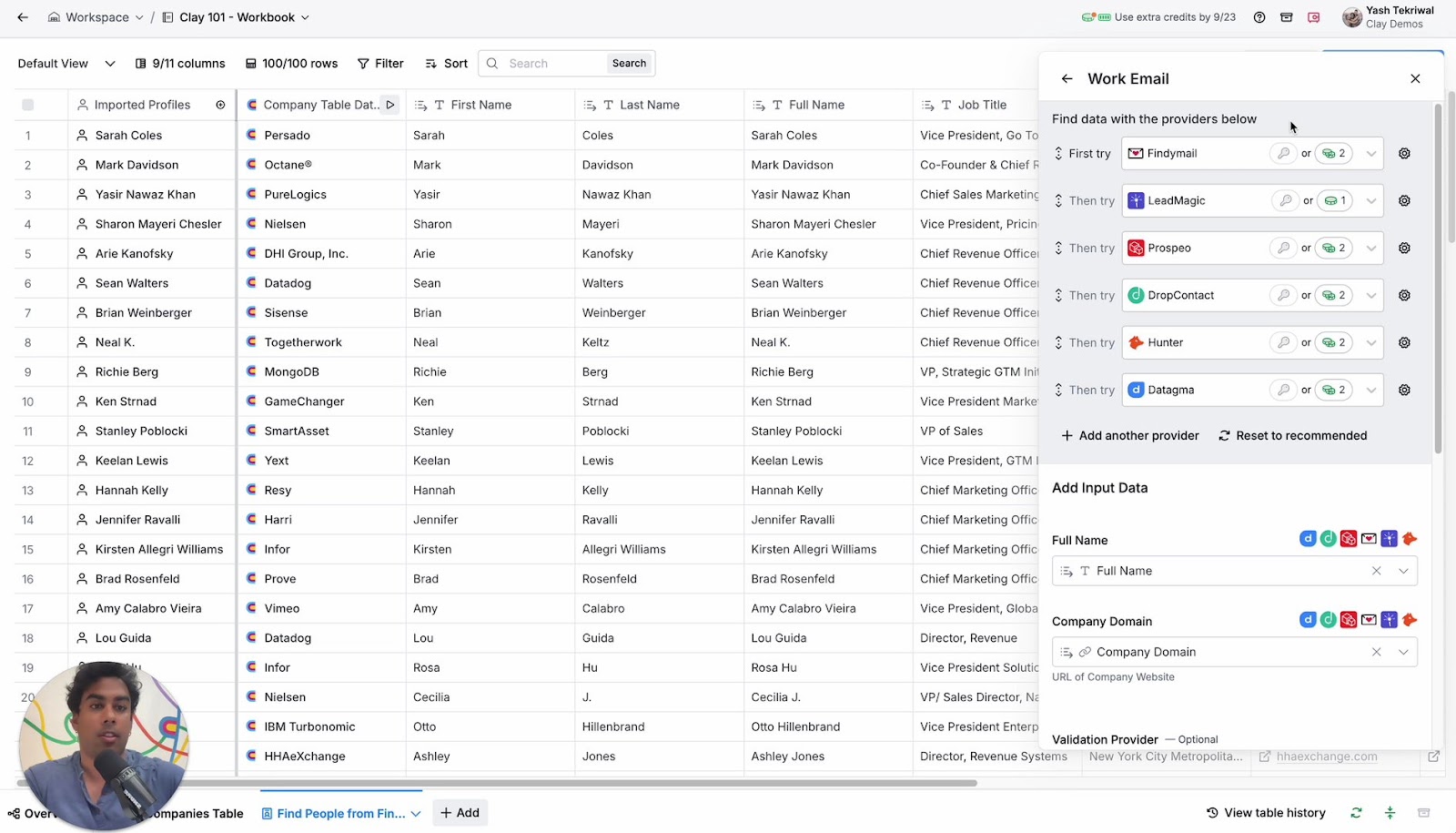
Clay isn't a data provider - it's an orchestration layer that aggregates 75+ data sources into waterfall workflows. You build enrichment sequences visually: query Provider A first, fall back to Provider B if fields are missing, run verification at the end. Clay's AI research agent can pull unstructured data from company websites and news articles.
Free plan available, paid plans from $134/month. Clay works best for teams running complex, multi-source enrichment at scale. The limitation is real: Clay's output quality depends entirely on the underlying providers you plug in. If the sources are mediocre, the waterfall won't save you.
ZoomInfo
Use this if you're an enterprise org running outbound, ABM, intent, and visitor tracking from one platform with budget to match. Skip this if you're a team under 50 people that mostly needs verified emails and phone numbers. ZoomInfo typically runs $10K+/year depending on seats and modules. We've watched teams buy it for the database and then realize they're paying for intent, ads, and workflow features they never activate. If you aren't using multiple modules, you're paying for a lot you won't touch.
Apollo
Apollo's free tier and $49/month entry point make it the default for budget-conscious teams. The database covers 275M+ contacts, and the built-in sequencer means you can prospect and email from one tool.
But data quality has slipped. Practitioner tests show bounce rates of 32-38%, and prices have climbed. Apollo still works if you layer independent verification on top. Don't trust the emails raw. (If you're comparing options, see data enrichment services and best sales prospecting databases.)
Other Tools Worth Knowing
Cognism is the pick for European mobile numbers, with strong EMEA coverage and phone-verified mobiles. Custom pricing, typically $1-3K/month for small teams. The quote-based model is frustrating if you just want to test it quickly.
Lusha starts at $22.45/month with a free plan - the cheapest entry point. Good for quick lookups, but credits deplete fast at any real volume. Bounce rates in practitioner tests landed at 22-28%.
FullEnrich aggregates 20+ enrichment sources into a waterfall approach on a budget. Free tier gives you 50 leads to test. Paid plans are credit-based, roughly $50-200/month based on comparable waterfall tools.
Kaspr runs $49/user/month with a free plan and covers 500M+ profiles, but it's heavily European-focused. Limited utility if your ICP is primarily North American.
Bad enrichment data costs the average $5M team $600K per year. Prospeo returns 50+ verified data points per contact - emails, direct dials, firmographics, technographics, intent - with a 92% API match rate. Native integrations with Salesforce, HubSpot, Clay, and Instantly mean enriched data syncs automatically, not manually.
Replace your rotting CRM data with contacts that actually connect.
Mistakes That Waste Budget
Enriching without verifying. Appending an unverified email is actively worse than having no email. One bad sequence tanks your domain reputation, and recovery takes weeks. Every enrichment workflow needs a verification gate before data hits your sequencer. Full stop. (For deliverability hygiene, see how to improve sender reputation.)
Relying on a single data source without a backup plan. No single provider covers every contact. Even if you don't go full waterfall, cross-check critical contacts against a second source.
Set-and-forget enrichment. With 22.5% annual decay, enriching once guarantees a rotting database. Build a re-enrichment schedule: critical contacts monthly, active opportunities every two months, general database quarterly, cold leads annually. Treating lead list enrichment as a recurring process rather than a one-off task is the single biggest mindset shift most teams need to make.
Over-enriching fields nobody uses. We've watched teams burn through $10K in credits enriching 50+ fields when their scoring model only uses five. Enrich only fields tied to segmentation, scoring, or personalization. Everything else is vanity data. (If you're tightening qualification, pair enrichment with lead scoring.)
Treating all providers as equal. Vet for update frequency (monthly minimum), verification methodology, and compliance certifications. A provider refreshing quarterly is giving you data that's already degrading by the time you use it. Ask for their refresh cadence in writing before you sign anything.
GDPR and Enrichment Compliance
GDPR applies to any company handling EU personal data, regardless of where you're headquartered. For B2B enrichment workflows, the most common lawful basis is legitimate interest. That said, legitimate interest isn't a blank check.
To stay compliant: document your legitimate interest assessment before enriching EU contacts. Verify that third-party data providers obtained their data legally. Honor DSARs within 30 days. Audit provider compliance annually. Support opt-outs immediately.
Enforcement risk is real: EUR 20M or 4% of global annual turnover, whichever is higher. For most companies, the reputational damage matters more than the fine itself.
FAQ
What data does lead enrichment add?
Lead enrichment appends firmographic data like company size, revenue, and industry, along with demographic data such as job title and seniority, technographic data covering the prospect's tech stack, contact data including verified email and direct dial, and intent signals. Top tools return 50+ data points per record, including funding events and hiring trends.
How often should I re-enrich my database?
Re-enrich critical contacts monthly, active opportunities every two months, your general database quarterly, and cold leads annually. B2B data decays at roughly 22.5% per year, so a single enrichment pass leaves 20%+ of records stale within twelve months.
What's the difference between enrichment and verification?
Enrichment appends missing data fields like job title, phone number, and company revenue. Verification confirms appended contact data is valid and deliverable. You need both - enrichment without verification produces data that bounces and damages your sender reputation.
Can I enrich leads for free?
Prospeo's free tier includes 75 verified emails and 100 Chrome extension credits monthly with no credit card required. Apollo and Lusha also offer free plans, though practitioner-tested bounce rates range from 22-38%. Always layer verification on top of any free enrichment source.