

Full Sales Cycle: Stages, Benchmarks & Tips (2026)
The median B2B SaaS sales cycle runs 84 days. Yours might be 38. It might be 270. The difference comes down to deal size, target market, and whether your reps are running a tight full sales cycle or improvising between prospecting blocks and demo calls.
Here's the thing: most teams don't actually know where their cycle breaks down. They know their close rate is low, but they can't tell you whether deals stall at qualification, discovery, or negotiation. We've put together the complete playbook - stage-by-stage benchmarks, conversion data, and the structural decisions that separate teams closing in 46 days from those limping to 170.
Quick Version
- The 7 stages: Prospecting → Initial Contact → Qualification → Discovery → Proposal → Negotiation → Post-Sale
- Key benchmark: Median B2B SaaS cycle is 84 days, with cycles ranging from 25 to 270 days depending on ACV
- Decision nudge: Not sure if full-cycle fits your team? Jump to the full-cycle vs. SDR/AE comparison below
What Is the Full Sales Cycle?
Full-cycle sales means one rep owns the entire journey - finding the prospect, closing the deal, managing the handoff. No SDR booking meetings. No AE swooping in for the demo. One person, start to finish.
The alternative is the assembly-line model: SDRs prospect, AEs close, CSMs onboard. That works at scale, but it creates handoff friction. The average deal involves 13 decision-makers, and 80% of buyer interactions happen digitally. Context loss between reps gets expensive fast. Full-cycle reps carry the relationship through every stage, which means fewer dropped threads and deeper buyer trust.
The 7 Stages Explained
Prospecting
This is where full-cycle reps live or die. It takes an average of 8 touches to generate a single meeting, so every hour spent chasing bad contact data is an hour not spent selling.
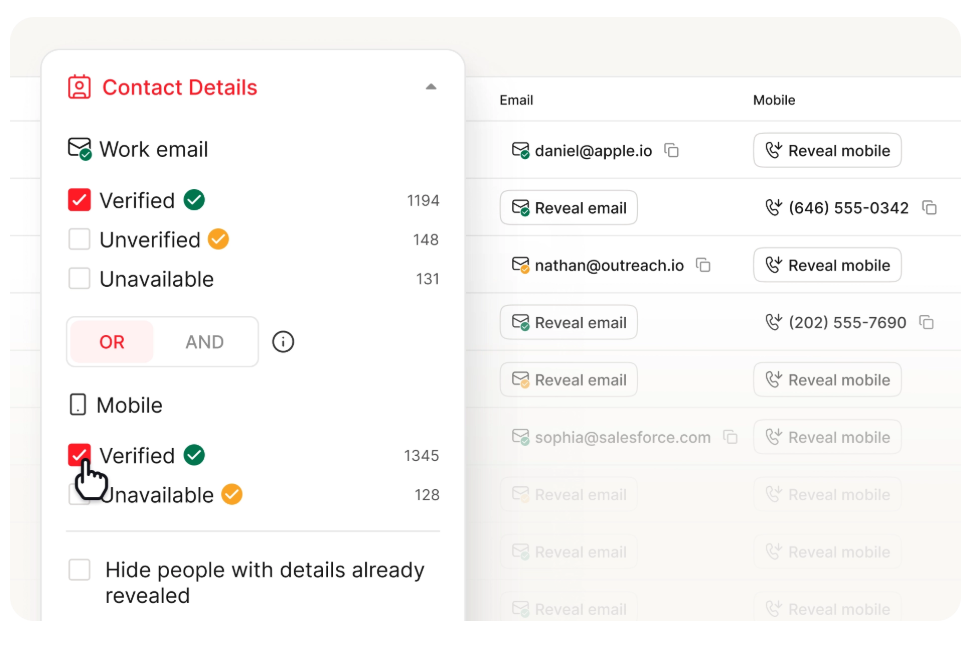
We've seen teams cut list-building from 15 hours to under 3 per week by switching to verified data sources. Prospeo's 98% email accuracy, 125M+ verified mobiles, and 7-day refresh cycle mean you're not burning time on bounced emails or disconnected numbers - you search by 30+ filters, export verified contacts, and get into sequences the same day.
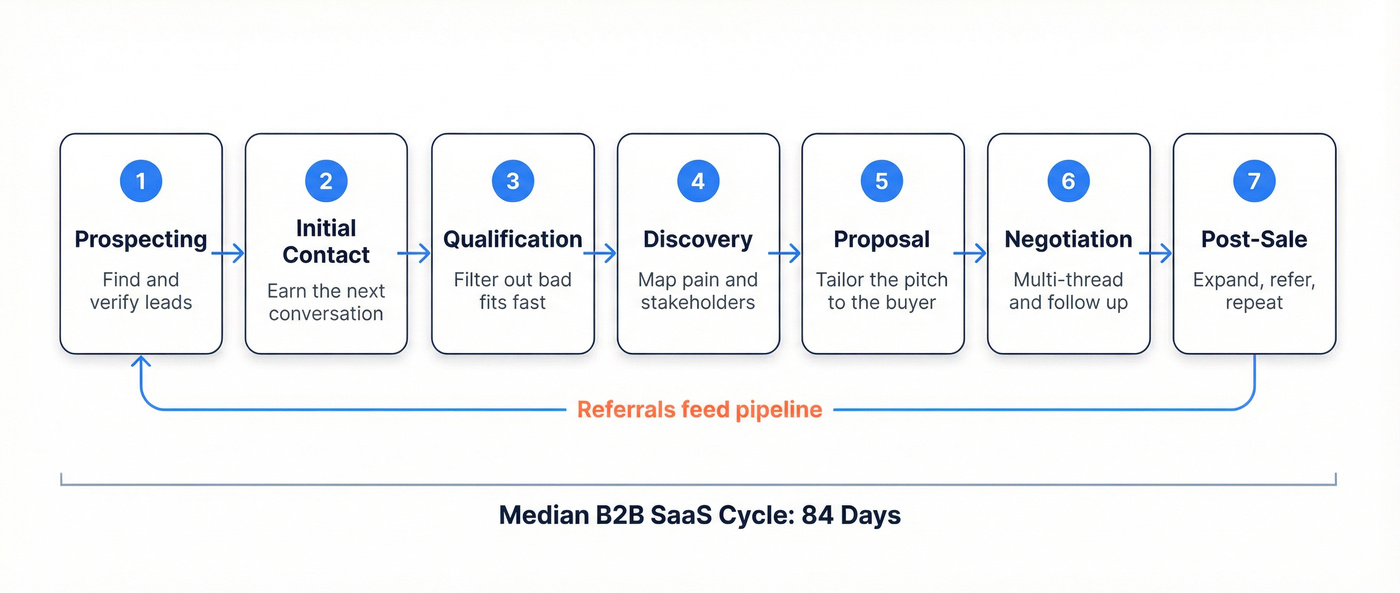
Do your research before you reach out. Even five minutes on a prospect's recent activity changes the quality of your first touch. Referral-sourced deals close in as few as 20 days; cold-call-sourced deals average 60-110. The channel you choose shapes the entire cycle.
Initial Contact
First impressions compound. Whether it's a cold email, a warm intro, or a call, the goal isn't to pitch - it's to earn the next conversation. Personalize the opening line to the prospect's situation, not your product's features.
With 61% of buyers now [preferring a rep-free experience](https://www.gartner.com/en/newsroom/press-releases/2025-06-25-gartner-sales-survey-finds-61-percent-of-b2b-buyers-prefer-a-rep-free-buying-experience), the bar for earning that next conversation has never been higher. Your first touch needs to deliver value, not just request time.
Qualification
This is the stage most reps rush through because demos feel more productive. Don't.
Bad-fit deals that make it to proposal waste your cycle and crowd out real opportunities. Use a framework like BANT, MEDDIC, or CHAMP and disqualify fast. More on these below.
Discovery & Needs Analysis
Go deeper than surface-level pain. Understand the business impact of the problem, who else cares about solving it, and what happens if they do nothing. The 13-stakeholder average means you need to map the buying committee here, not in negotiation. If you're discovering new stakeholders during contract review, you've already lost weeks.
If you want a tighter structure here, use a set of proven discovery questions and keep them consistent across reps.
Proposal / Presentation
Tie every slide, every line item, back to what you learned in discovery. Generic decks kill deals. The proposal should feel like it was built for this buyer - because it was.
If your demos are part of the proposal stage, a simple product demo checklist can prevent the "nice call, no next step" outcome.
Negotiation & Closing
~80% of sales [require at least 5 follow-ups](https://www.invespcro.com/blog/sale-follow-ups/), but nearly half of reps give up after one. That gap alone explains a lot of lost revenue.
Multi-threading - engaging multiple stakeholders simultaneously - [increases win rates by ~130%](https://www.gong.io/blog/data-shows-top-reps-dont-just-sell-they-orchestrate-with-ai). Don't single-thread enterprise deals. With average win rates hovering around 20-21%, every structural advantage matters.
When deals stall, it usually comes down to follow-up quality and timing. Keep a set of sales follow-up templates ready so you don't default to "just checking in."
Post-Sale & Nurture
Full-cycle reps have an edge here because the buyer already trusts you. Use that relationship for expansion revenue, referrals, and case studies. This stage feeds your next prospecting cycle - the best pipeline source you'll ever have is a happy customer who introduces you to their network.
How Long Does the Process Take?
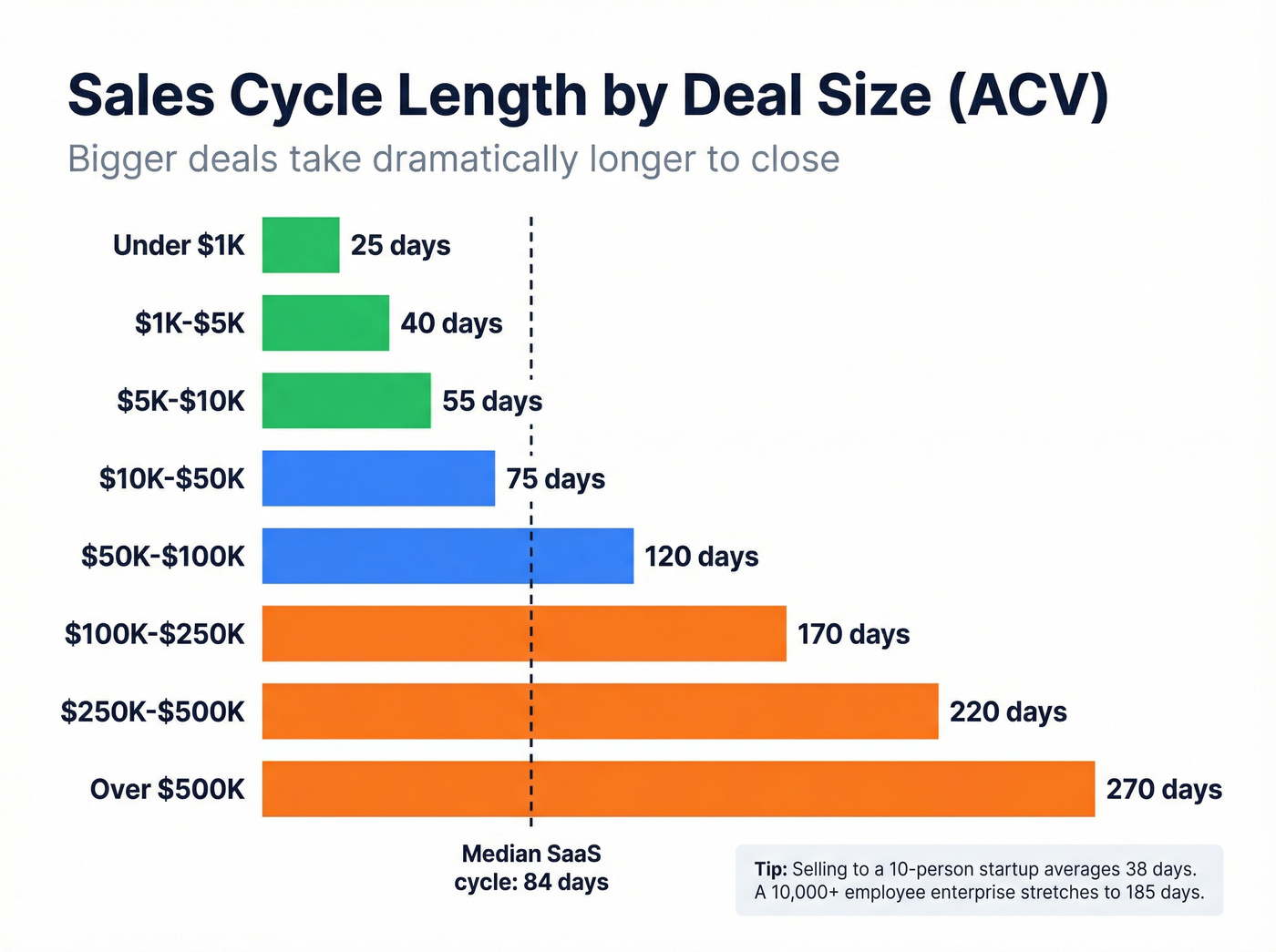
The median SaaS sales cycle is 84 days, with an optimal range of 46-75 days. But that number shifts dramatically by industry and deal size.
Sales Cycle by Industry
| Industry | Avg. Days |
|---|---|
| Retail | 70 |
| Software | 90 |
| Financial Services | 98 |
| Consulting | 103 |
| Technology | 121 |
| Healthcare | 125 |
| Manufacturing | 130 |
| Energy | 155 |
Sales Cycle by ACV
| ACV Range | Avg. Days |
|---|---|
| < $1K | 25 |
| $1K-$5K | 40 |
| $5K-$10K | 55 |
| $10K-$50K | 75 |
| $50K-$100K | 120 |
| $100K-$250K | 170 |
| $250K-$500K | 220 |
| > $500K | 270 |
Company size matters too: selling to a 10-person startup averages 38 days, while a 10,000+ employee enterprise stretches to 185.
If you're trying to forecast cycle time more accurately, track pipeline health and stage aging, not just "days to close."

Your full sales cycle is only as fast as your prospecting stage. Teams using Prospeo cut list-building from 15 hours to under 3 per week with 98% verified emails, 125M+ direct dials, and 30+ filters that pinpoint decision-makers instantly. At $0.01 per email, bad data stops eating your cycle time.
Stop losing weeks to bounced emails and disconnected numbers.
Stage Conversion Benchmarks
Knowing where deals leak is more useful than knowing your overall win rate. The median B2B conversion rate is 2.9% end-to-end, but the stage-by-stage breakdown tells you where to focus.
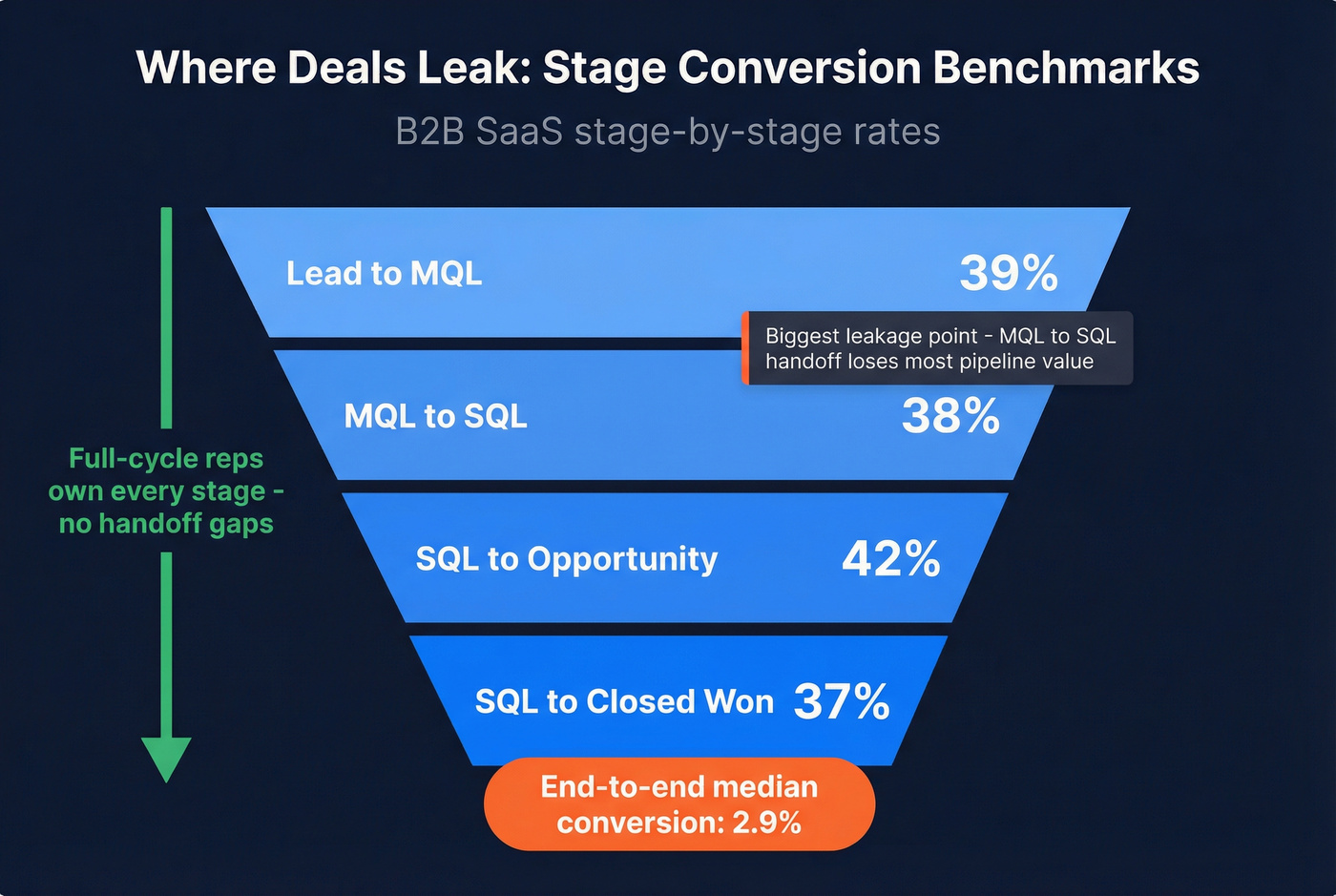
| Stage | B2B SaaS | Manufacturing | Cybersecurity |
|---|---|---|---|
| Lead → MQL | 39% | 26% | 24% |
| MQL → SQL | 38% | 41% | 40% |
| SQL → Opp | 42% | 46% | 43% |
| SQL → Closed | 37% | 51% | 46% |
The MQL → SQL handoff is the biggest leakage point in general B2B, with a typical conversion rate around 15%. The 38-41% numbers above represent stage-to-stage rates from a separate industry dataset. In our experience, this is where most pipeline value evaporates. For full-cycle reps, that's actually good news: you own both sides of that handoff, so there's no gap for leads to fall through.
If you want to go deeper on conversion math, compare your numbers to the average B2B lead conversion rate and isolate the stage that's dragging the whole funnel down.
Full-Cycle vs. SDR/AE Split
The SDR/AE assembly line made sense when outbound volume and specialization were the default playbook. In 2026, many companies under 200 employees are better off with full-cycle reps who manage the end-to-end process themselves. Sales communities on Reddit debate this endlessly, and the answer almost always comes back to ACV, deal complexity, and team size.
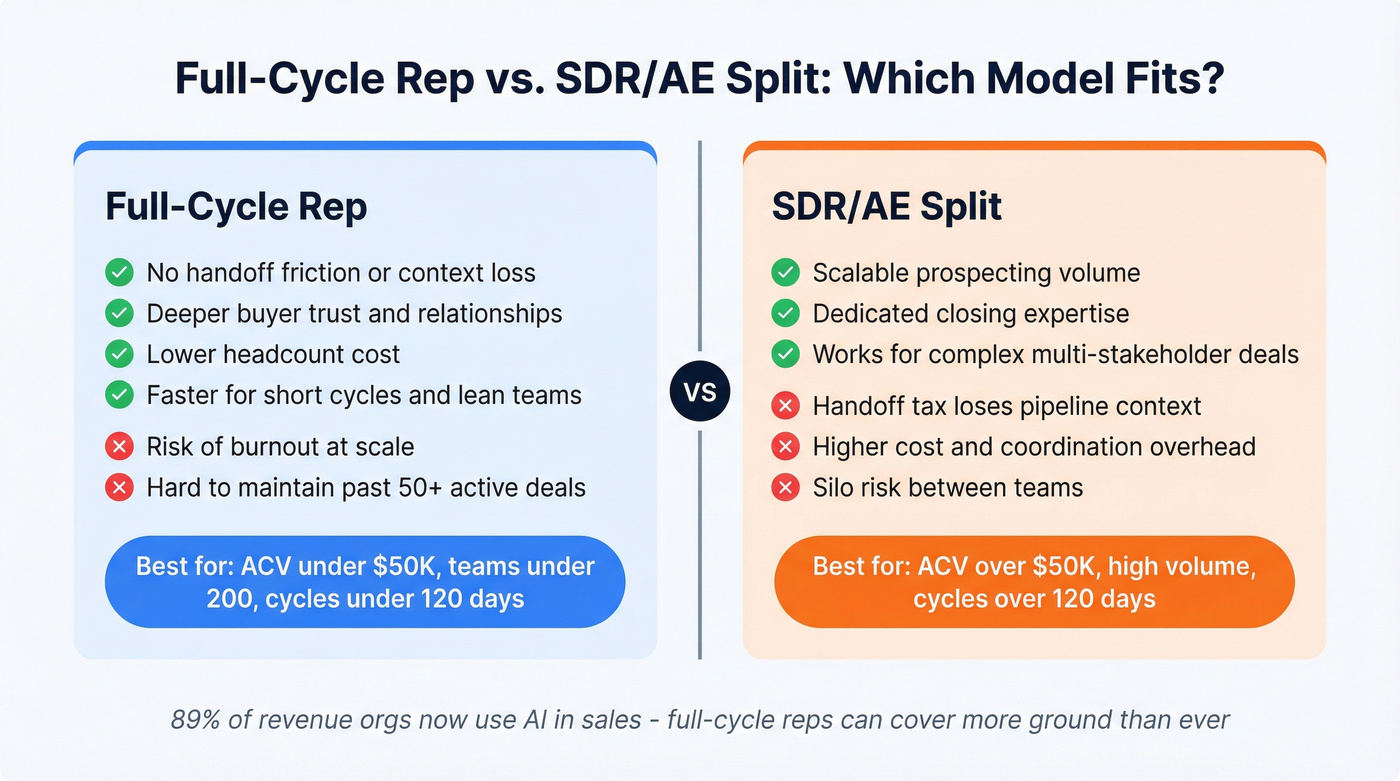
| Full-Cycle | SDR/AE Split | |
|---|---|---|
| Best when | Short cycle, lean team | High volume, complex deals |
| Strengths | No handoff friction, full context | Specialization, scalable prospecting |
| Risks | Burnout, scaling limits | Silo risk, context loss, higher cost |
Let's be honest: if your deals are relatively straightforward and your cycle is short, you probably don't need the SDR/AE split. The handoff tax alone eats more pipeline than the specialization gains. 89% of revenue orgs now use AI in their sales process, and for full-cycle reps, AI handles the grunt work - auto-prioritizing leads, drafting follow-up sequences, surfacing buying signals - so one person can cover more ground than ever before.
If you're building the stack for this model, start with a shortlist of SDR tools and keep the workflow simple.
When to specialize:
- Meeting volume is consistently high enough that prospecting becomes a full-time job
- Deal complexity genuinely requires dedicated closing expertise
- ACV is consistently above $50K and cycles stretch past 120 days
- Your team has grown large enough that handoffs can be standardized without chaos
Skip the split if none of those apply. Don't specialize just because a SaaS playbook told you to.
Qualification Frameworks
BANT (Budget, Authority, Need, Timeline) works for simpler, transactional deals. It's fast, it filters out tire-kickers, and it doesn't require a PhD in sales methodology. Too shallow for anything complex.
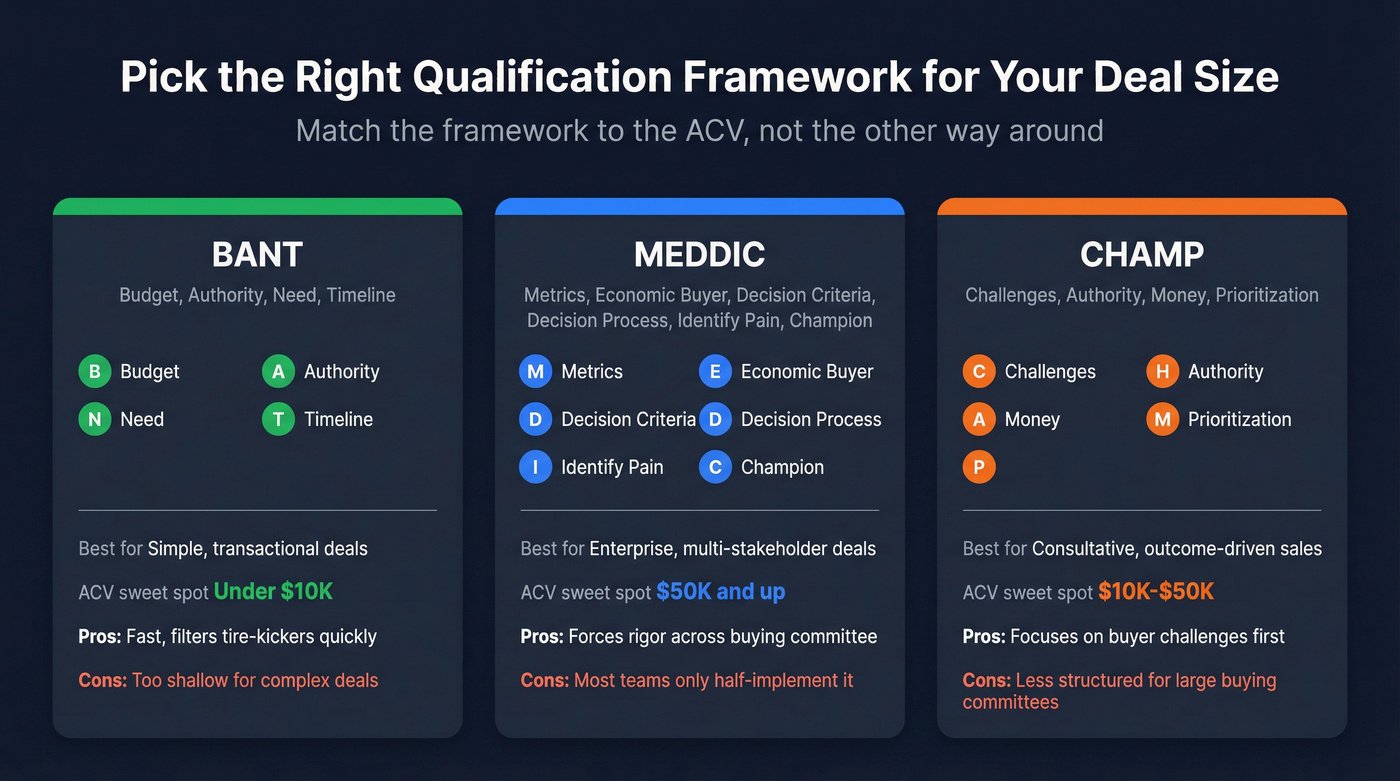
MEDDIC (Metrics, Economic Buyer, Decision Criteria, Decision Process, Identify Pain, Champion) is the standard for enterprise, multi-stakeholder deals. It forces rigor. It also takes real discipline to maintain across a full pipeline, which is why most teams that adopt it only half-implement it.
If you're implementing it seriously, use a consistent set of MEDDIC discovery questions so reps don't "wing it" in discovery.
CHAMP (Challenges, Authority, Money, Prioritization) fits consultative motions where the buyer's challenge matters more than their budget. Great for mid-market deals where you're selling outcomes, not features.
MEDDIC is overkill for a $5K deal. BANT is too shallow for a $100K deal. Match the framework to the ACV.
What Full-Cycle Reps Earn
Full-cycle reps are usually comped like SMB and mid-market AEs: roughly $130K-$175K OTE. Glassdoor's "full cycle sales" snapshot shows a median total pay of $134K/yr, with a range of $101K-$184K.
If you're benchmarking comp plans, it helps to understand OTE in sales and how it maps to quota and attainment.
| Role | Base | OTE | Quota Hit % |
|---|---|---|---|
| SDR/BDR | $60K | $85K | 57.3% |
| SMB AE | $70K | $130K | 44.8% |
| Mid-Market AE | $90K | $175K | 43.9% |
| Enterprise AE | $135K | $265K | 40.9% |
Per RepVue's 2026 salary guide, quota attainment drops as deal size rises. Full-cycle reps carrying their own pipeline land in that SMB/mid-market band, with the added expectation that they're sourcing their own deals.
Mistakes That Kill Deals
Skipping qualification to rush to demo. You feel productive, but you're burning cycles on bad-fit deals. I've watched reps run 15 demos in a week and close zero because none of those prospects were qualified.
Neglecting follow-up. 44% of sales leaders report no-decision losses are increasing. Follow-up discipline is the fix, not more prospecting.
Talking features instead of outcomes. Buyers don't care about your platform. They care about their problem.
Prospecting with unverified data. Every bounced email adds days to your cycle. Meritt cut their bounce rate from 35% to under 4% by switching to verified contact data, tripling their pipeline from $100K to $300K per week in the process. If you're troubleshooting deliverability, start with your email bounce rate and fix the root cause.
Not multi-threading. Single-threading a deal with 8-13 stakeholders is a recipe for stalled pipeline. Engage the buying committee early.
Full-cycle reps own every stage - which means every minute spent chasing stale contacts is a minute not spent closing. Prospeo refreshes all 300M+ profiles every 7 days (not the 6-week industry average), so your outreach hits real inboxes and live phone numbers from day one.
Shorten your sales cycle where it matters most - at the top.
FAQ
How long is the average B2B sales cycle?
The median B2B SaaS cycle is 84 days, with an optimal range of 46-75 days. Cycle length varies by deal size, from 25 days for sub-$1K deals to 270 days above $500K. Industry matters too - healthcare averages 125 days while retail averages 70.
What skills does a full-cycle rep need?
Prospecting, qualification, discovery, negotiation, and relationship management - all in one person. The real differentiator is context-switching stamina: sourcing pipeline at 9 AM, running discovery at 10, negotiating terms at 2. You need to be equally comfortable opening conversations and closing contracts.
What tools do full-cycle reps need?
A CRM like Salesforce or HubSpot for pipeline management, a qualification framework matched to your ACV, and a verified data source for prospecting accuracy. Layer in a sequencing tool like Outreach or Instantly for a complete stack.
When should you switch from full-cycle to SDR/AE?
Consider splitting when meeting volume consistently exceeds what one rep can handle, ACV is above $50K, and your team has 10+ reps. Below that threshold, the handoff friction and added headcount cost usually outweigh specialization benefits.