

How to Generate Warm Leads That Actually Convert
95% of deals go to a vendor already on the buyer's Day One shortlist. If you're not on that list, your nurture sequence is irrelevant. Generating warm leads isn't about emailing harder - it's about being known before the search starts.
Three things make this work: a content engine that earns trust before outreach (SEO leads close at 14.6% vs. 1.7% outbound), a lead scoring model so you know who's actually warm, and verified contact data with 98%+ accuracy so outreach lands instead of bouncing.
What Makes a Lead "Warm"
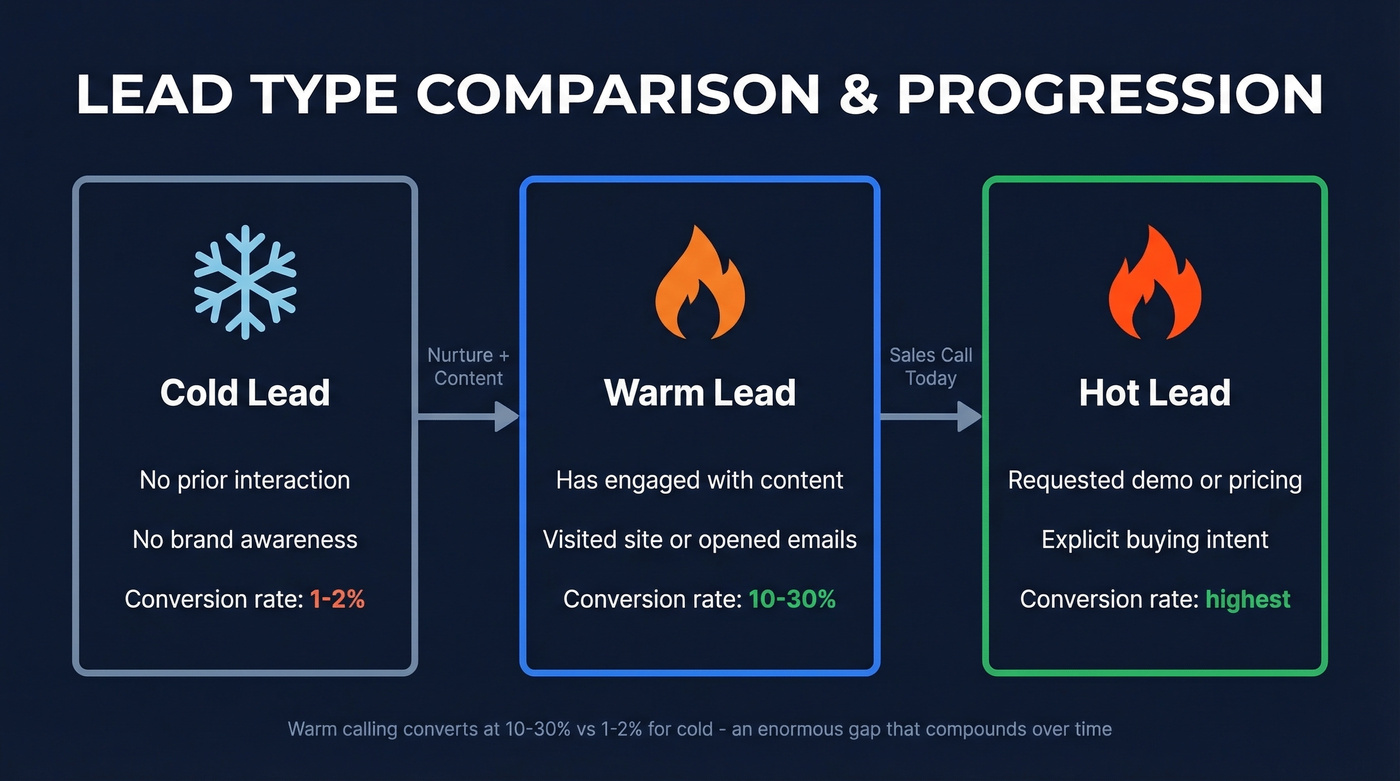
A warm lead has taken at least one action signaling interest - opened an email, visited your site, engaged with content. That single distinction changes everything. Warm calling converts at 10-30% versus 1-2% for cold. And since the average qualified lead conversion across 14 industries is just 2.9%, every percentage point you gain from warming compounds fast.
Strategies to Generate Warm Leads
Content That Builds Trust First
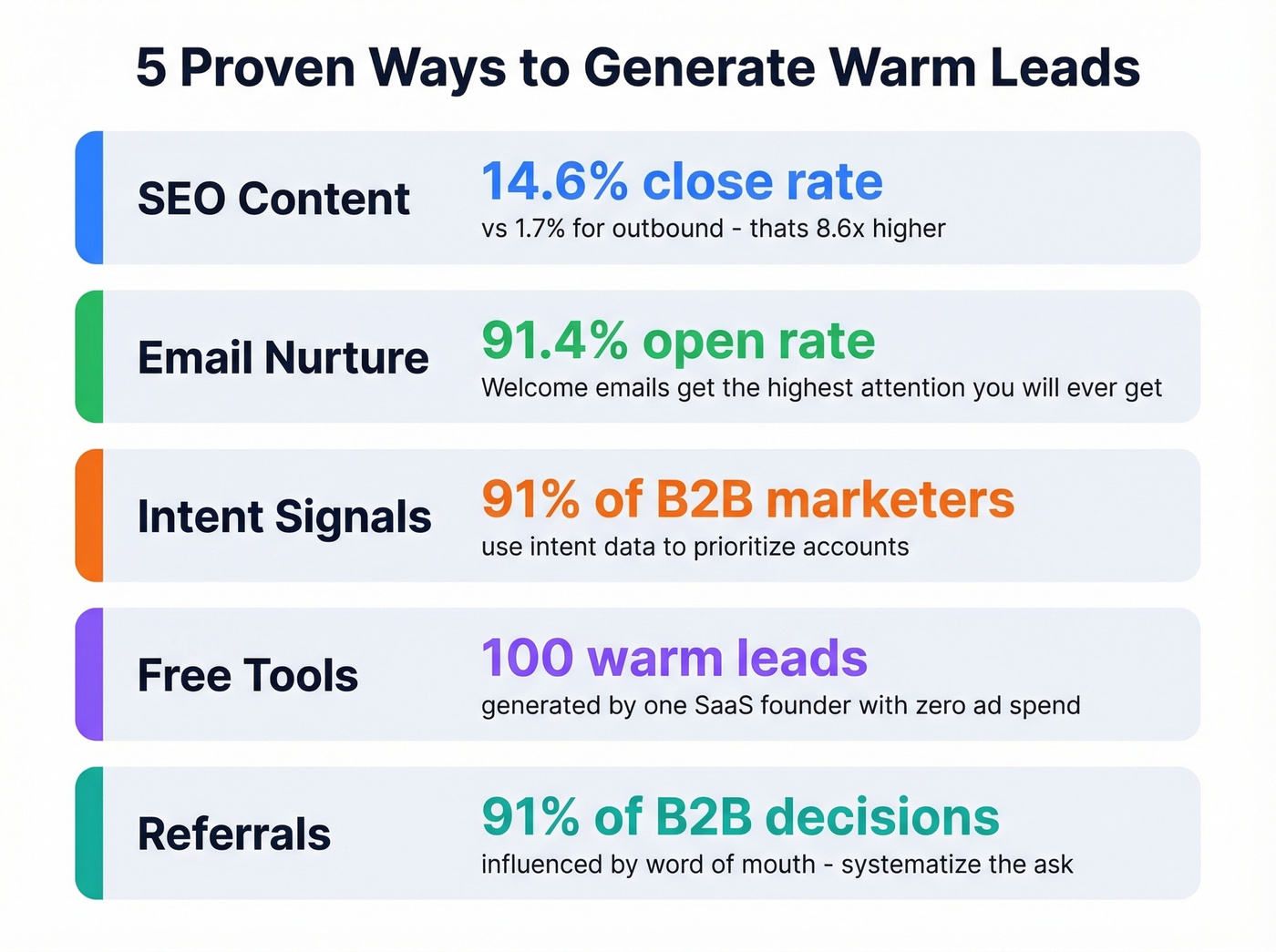
SEO-driven leads close at 14.6% versus 1.7% for outbound - an 8.6x difference that compounds over time. Blog posts, comparison guides, and technical deep-dives create familiarity long before your SDR picks up the phone. By the time outreach happens, the prospect already trusts your brand. That's warmth no email sequence can manufacture, and it's why we've leaned so heavily into B2B content marketing as a top-of-funnel strategy ourselves.
Email Nurture Sequences
Welcome emails average a 91.4% open rate. That's the highest-attention moment you'll ever get, so don't waste it on "thanks for signing up."
Structure with intention: education first, then a use case mirroring their pain, social proof, and a soft ask. Four emails over two weeks. Each one earns the right to send the next. If someone opens all four and clicks a link, that's a warm lead - score accordingly.
Intent Signals
91% of B2B marketers use intent data to prioritize accounts. Enterprise intent tools typically run $12K-$100K+/year - Bombora often lands around $12K-$40K/year, and 6sense can range from free to $300K+ depending on scale. But lighter approaches exist and work surprisingly well. Job changes, pricing page visits, and content engagement patterns all function as buying signals, and they're free if you track them in your CRM.
Free Tools as Lead Magnets
A SaaS founder on r/LeadGeneration generated roughly 100 inbound warm leads by building ungated free tools that solved a specific, painful problem for their ICP. No ads, no cold outreach.
Here's the thing: lead magnets work when they solve something people actually search for at 11pm when they're frustrated - not when they're a gated PDF with "10 tips." This approach is especially effective for small business budgets where paid acquisition isn't sustainable. If you want ideas, start with a shortlist of free lead generation tools.
Referrals and Partnerships
91% of B2B buying decisions are influenced by word-of-mouth, yet most teams treat referrals as something that just happens. Don't. Systematize the ask - after every successful onboarding, after every positive QBR. Referral leads arrive pre-warmed in a way no drip campaign can replicate, and they close faster because trust transferred from someone the buyer already knows.

Your lead scoring model flags a prospect at 50+ points. You reach out within the hour. The email bounces. That's the reality when a third of your list is stale. Prospeo refreshes 300M+ profiles every 7 days - not every 6 weeks - so your warm leads get real outreach, not wasted effort.
Stop warming leads you can't actually reach. Fix the data first.
Lead Scoring Template You Can Steal
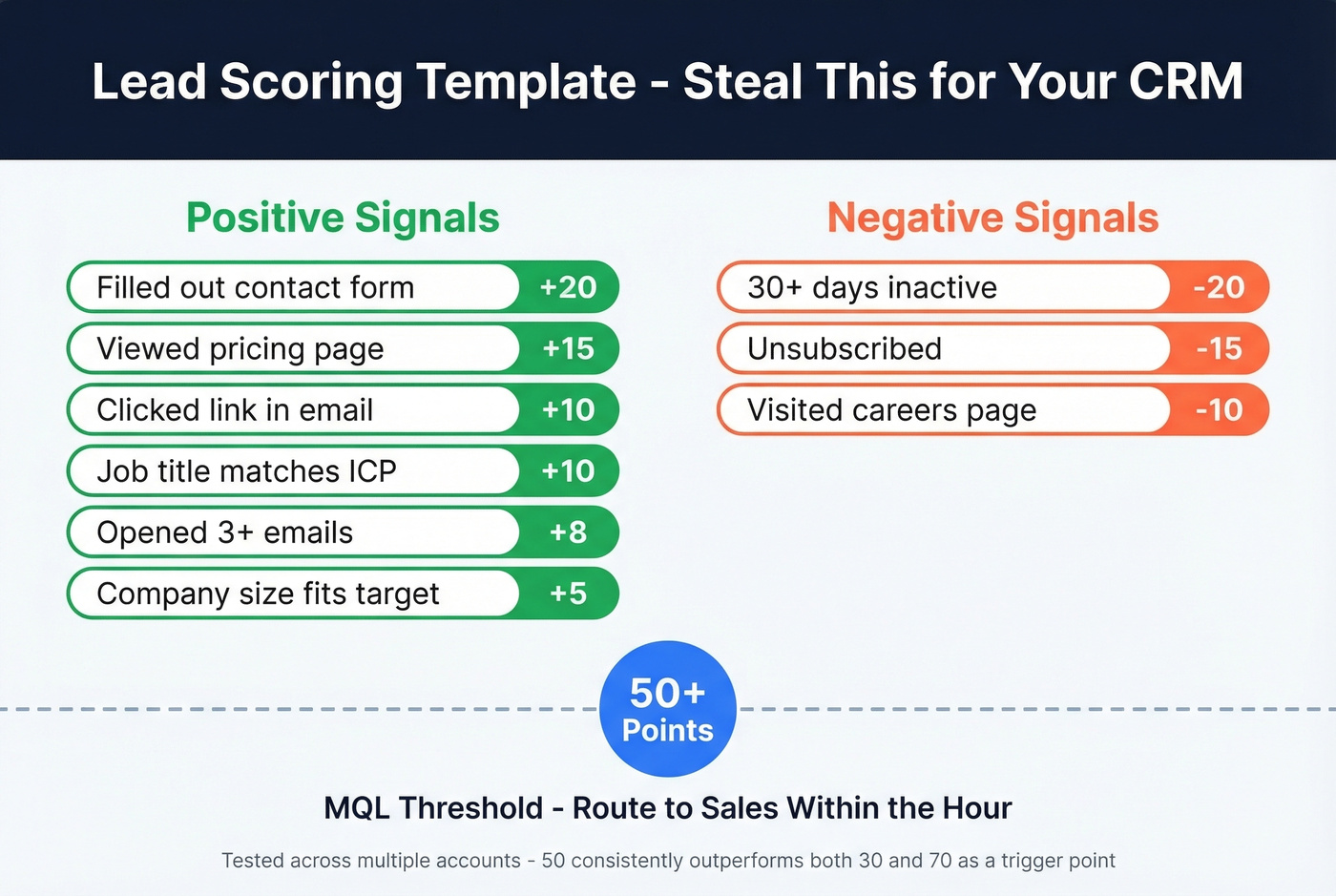
Look, most scoring models are set-and-forget. That's the problem. Here's a point model you can drop into HubSpot or Salesforce this afternoon:
| Action | Points |
|---|---|
| Viewed pricing page | +15 |
| Filled out contact form | +20 |
| Opened 3+ emails | +8 |
| Clicked link in email | +10 |
| Job title matches ICP | +10 |
| Company size fits target | +5 |
| Unsubscribed | -15 |
| Visited careers page | -10 |
| 30+ days inactive | -20 |
Set your MQL threshold at 50+ points. Route to sales within the hour - not the day. We've tested this threshold across multiple client accounts, and 50 consistently outperforms both 30 and 70 as a trigger point.
The negative scoring rows matter more than most teams realize. Careers page visits signal a job seeker, not a buyer. A 30-day silence means interest evaporated. Your model should reflect reality, not optimism.
The Mistake Nobody Talks About
79% of marketing leads never convert into sales, and the usual explanation is "bad nurturing." The simpler culprit is bad data.
You can nail your scoring model and time outreach perfectly - none of it matters if a third of your emails bounce. In one r/Entrepreneurs thread, the OP described being commission-based, spending hours researching prospects, and sending zero emails because they couldn't afford the tools to verify contacts properly. That's the invisible tax of bad contact data, and it kills more pipelines than bad messaging ever will.

Prospeo's database covers 300M+ professional profiles with 98% email accuracy on a 7-day refresh cycle. One customer, Meritt, saw their bounce rate drop from 35% to under 4% after switching, and pipeline tripled from $100K to $300K per week. That kind of jump doesn't come from better copy - it comes from emails actually reaching inboxes. (If you're diagnosing deliverability, start with email bounce rate benchmarks and fixes.)
Meritt tripled pipeline from $100K to $300K/week after switching to Prospeo and dropping their bounce rate from 35% to under 4%. When every warm lead costs you content, nurture emails, and scoring logic to create, losing them to bad data is the most expensive mistake in your funnel.
Your warm leads deserve emails that land. Start at $0.01 per verified contact.
Speed Kills (Slowly)
Marketing generated 200 MQLs last quarter. Sales followed up on 40. By the time they called, 30 had gone cold.
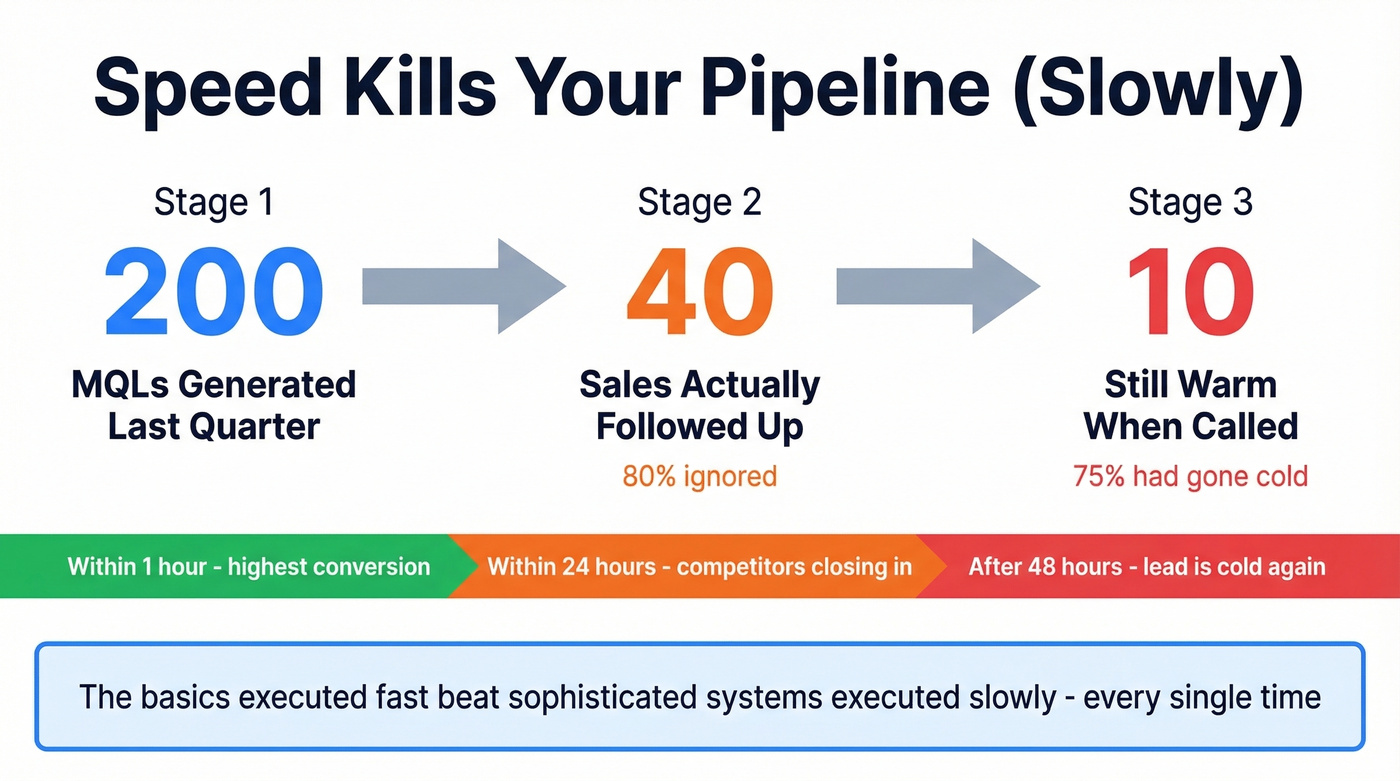
This isn't a lead quality problem - it's a speed problem. If your scoring model flags a lead at 50+ points, the clock starts. Every hour of delay is a competitor's opportunity to get there first. Tighten your process with proven sales follow-up templates and a clear lead status workflow.
Let's be honest: if your average deal size is under $15K, you probably don't need enterprise intent platforms or complex ABM stacks. You need verified data, a scoring model, and a rep who calls within the hour. The basics, executed fast, beat sophisticated systems executed slowly every single time.
FAQ
What's the difference between warm and hot leads?
Warm leads have shown interest through engagement - site visits, email opens, content downloads. Hot leads have expressed explicit buying intent by requesting a demo or pricing. Warm needs nurturing. Hot needs a call today.
How long does it take to warm a cold lead?
The average B2B buying cycle runs 10.1 months. Plan for weeks to months of consistent touchpoints - content, email, social proof - not days. Shorter sales cycles (under $20K ACV) can compress this to 2-6 weeks with the right scoring and follow-up cadence.
What tools help with warm lead generation?
A CRM like HubSpot or Salesforce handles scoring and routing. For verified contact data, Prospeo delivers 98% email accuracy with a 7-day refresh cycle - critical since stale data is the top reason warm leads go cold. Layer in intent data to identify in-market accounts, and a lean team can run the full workflow without enterprise pricing.