

How to Ask for Referrals in Sales: Scripts, Timing, and the System Behind It
Your best client just told you they love the product. You said "thanks" and moved on. That was a referral you left on the table - and it happens dozens of times a quarter across most sales teams.
Knowing how to ask for referrals in sales comes down to three things: phrasing, timing, and removing friction. The most common objection we see in r/sales threads isn't "clients say no" - it's "I feel weird asking." Here's the thing: get over it. The data says you should.
The Quick Version
Three changes that produce more referrals than any incentive program:
- Replace "Do you know anyone?" with "Who do you know that [specific description]?" This single shift forces recall instead of a default "no."
- Ask immediately after a value moment - the client just said "thank you" or shared a win. That's your green light.
- Make it effortless - draft the intro email for them and name the specific person you want to meet.
Why Referrals Outperform Cold Outreach
One widely shared stat is that 84% of B2B buying starts with a referral. Even when you do everything right in outbound, it takes an average of five touches to engage a prospect and roughly nine to reach an executive. That's a lot of effort for someone who doesn't know you.
Referral-sourced opportunities convert 2-4x better than cold outbound and close 10-30% faster. As referral-selling expert Joanne Black puts it, it can take eight to fifteen digital touches to reach someone - but when you get an introduction, you always get the meeting. And with 71% of prospects preferring independent research over talking to a rep, cold outreach is fighting uphill in a way that referrals sidestep entirely.
If your average deal is below $15k, referrals aren't just a nice channel - they're probably the only outbound motion that pencils out after you factor in rep time and tool costs.
When to Ask: Three Green-Light Moments
Ask too early and you're proposing on a first date. Ask too late and the emotional momentum is gone. Before you approach anyone, run a quick relationship audit: How long have you worked together? How responsive are they? Have they expressed satisfaction recently? This filters your list to the clients most likely to say yes.
1. Post-value delivery. The client just said "that really helped" or reported a measurable win. This is the single best moment - they're feeling grateful and your value is top of mind.
2. Post-compliment. They praised your product on a call, in an email, or on social media. Someone who's publicly endorsing you is already doing half the work of a referral. Ask them to do the other half.
3. Post-milestone. A renewal, expansion, case study sign-off, or successful QBR. The ideal time is right after the client has benefited from your product or service - especially right after a compliment, when goodwill is at its peak.
Phrasing That Gets Names, Not Silence
Most salespeople don't have a referral problem. They have a phrasing problem.
"Do you know anyone who could use our product?" is a yes/no question. The default answer is "not off the top of my head." You just killed the conversation. The fix is simple: switch from "Do you know anyone?" to "Who do you know that...?" The word "who" forces the brain to search its memory instead of reaching for a comfortable "no."
Before the conversation, do your homework. Review mutual connections and identify two or three specific people you'd like to meet. Map their inner circle - industry groups, former colleagues, board connections. When you can say "I noticed you're connected with Sarah Chen at Datadog - would you be open to making an intro?" you've removed all the cognitive load. The client doesn't have to think. They just have to say yes.
An alternative opener that works well for longer relationships: "Would you do me a small favor?" The reciprocity frame shifts the dynamic - it's personal, low-stakes, and almost impossible to refuse outright.
Don't limit referral asks to happy clients, either. Prospects who chose a competitor but liked you are often willing to introduce you to peers with different needs. And always ask for permission to name-drop. "Can I mention you reached out?" turns a cold email into a warm one.

You did the hard part - you asked for the referral and got a name. Now imagine that warm intro bouncing because the email was wrong. Prospeo's Email Finder verifies addresses at 98% accuracy so every referral lands in a real inbox, not a dead end.
Don't torch a warm intro with bad data. Verify first.
Copy-Paste Referral Scripts
Use these templates the next time you're requesting introductions. We've tested variations of each across our own outreach - they're designed to feel natural, not transactional.
Script 1: Post-Value Delivery
Hey {Name}, glad {specific result} is working out. Who do you know in {industry/role} dealing with {specific problem}? I'll draft the intro so it takes you 30 seconds.
Script 2: Check-In + Referral Ask
{Name}, making sure everything's smooth with {product/feature}. We're expanding into {vertical/region} - who's one person in your network I should meet? I'll write the intro for you.
Script 3: Specific-Target Intro Request
Hey {Name}, I noticed you're connected with {Target Name} at {Company}. We're helping similar teams with {value prop}. Open to making an intro? Here's a draft you can forward.
What to Do After the Referral
You got the name. Now don't waste the warm intro.
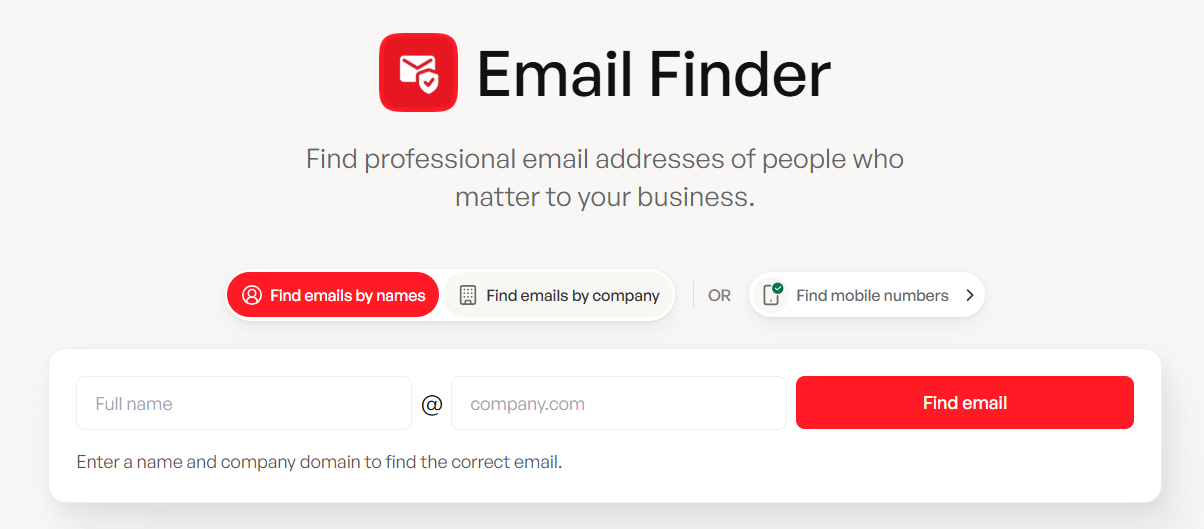
Verify contact info before you reach out. A bounced email after a personal introduction is embarrassing for everyone. Run the referral's name and company through an email verification tool - Prospeo's Email Finder returns verified addresses at 98% accuracy, so you won't torch a warm intro with a dead inbox.
Personalize the outreach. Mention the referrer by name in the first sentence. Keep it under four sentences. Make replying a one-stroke task: "Reply 1 if you're open to a call, 2 if the timing's off." Binary choices outperform open-ended asks almost every time. If you need a few proven nudges, borrow from these follow-up templates.
Close the loop with the referrer. Send a quick thank-you within 24 hours, then a status update when you connect. This trains them to refer again. Referrers who see their intros lead somewhere become repeat sources - and repeat sources are dramatically more efficient than cold prospecting. (If your team struggles with consistency here, build it into your sales activities.)
Five Mistakes That Kill Referrals
1. Asking too soon. You haven't delivered value yet. Requesting introductions before the client has experienced results feels presumptuous. Wait for a green-light moment.
2. Generic, vague asks. "Do you know anyone?" with no specifics. Compare that to: "Who do you know that's a VP of Sales at a Series B SaaS company struggling with outbound reply rates?" The second version gets names. The first gets silence.
3. Professional visitor syndrome. You show up, chat, leave no business value. The client likes you but has no reason to stake their reputation on you. Every interaction should deliver an insight, a benchmark, or a solution - something they can point to when their colleague asks "why should I take this call?" (If you want a framework, see how to add value in sales.)
4. No follow-through after the intro. A rep on our team once got three referrals from a single champion, never updated the champion on any of them, and the intros dried up overnight. Update referrers within a week. Always.
5. Set-and-forget. No tracking, no system, no iteration. Track referrals asked, received, and converted in your CRM - just like any other pipeline source. If you aren't measuring it, you aren't improving it. If you need benchmarks to compare against, start with sales conversion rate and pipeline health.
Building a Repeatable Referral System
You don't need a referral program. You need a referral habit. Once you consistently turn client goodwill into introductions, they compound - each successful intro builds trust that unlocks the next one.
Weekly power hour. Block 30 minutes to review top accounts and identify intro targets. Senior execs should join - they have networks your reps don't. This pairs well with a simple account-based selling list of target accounts.
Intro bounty board. Publish target accounts to your network. A common incentive structure is $500 per meeting held and 5-15% of first-year closed revenue, though some teams use flat rates of $100-$1,000 per qualified meeting depending on deal size. Start simple and adjust based on what actually moves the needle.
CRM tracking fields. Add three fields: referrals asked, referrals received, referrals converted. Most teams have zero visibility into referral activity, which means they can't tell whether their best reps are also their best referral generators. Spoiler: they usually are. If you're rebuilding your process, use a clear CRM example to standardize fields and reporting.
Once the muscle is built, formalize it into a program. Not before.
Let's be honest about the scenario that kills warm intros more than anything else: you got a referral name, guessed at the email format, bounced, and never heard back. Bad data wastes good relationships. Verify before you send. If you're troubleshooting bounces, start with email bounce rate and email deliverability.
Referrals close faster, but they dry up fast if you can't reach the person you were introduced to. Prospeo gives you verified emails and direct dials for 300M+ professionals - at $0.01 per email - so you convert every warm intro into a booked meeting.
Turn every referral into a conversation, not a bounce.
FAQ
How often should I ask clients for referrals?
Every time you deliver measurable value - most reps under-ask by 5-10x. If a client thanks you, shares a win, or renews, that's your opening. Build the habit into every QBR and post-delivery check-in.
What if a client says they can't think of anyone?
They're responding to a yes/no question. Reframe with specificity: "Who do you know that's a VP of Marketing at a mid-market SaaS company?" Naming a role, industry, and problem triggers recall far better than a vague ask.
How do I reach the referred person if I only have a name?
Use an email finder tool to get a verified address from the name and company. A failed email after a personal intro wastes the entire warm connection - verify first, then reach out with the referrer's name in your opening line.
Should I offer incentives for client referrals?
Incentives help but aren't required. Many B2B teams see strong results with $500 per meeting held or 5-15% of first-year revenue. Start by building the ask habit first - formalize a paid program only after referrals flow consistently.