

slug: how-to-find-peoples-email-address
How to Find People's Email Address: 7 Methods That Actually Work
You found the perfect prospect. Right title, right company, right timing. Then you spend 20 minutes hunting down their email, finally land one labeled "verified," fire off your sequence - and it bounces. One Reddit user reported a 20%+ bounce rate despite every email in their list showing a green "verified" badge. That's not a tool problem. It's an industry problem.
Here's the quick version:
- Best free method: Google advanced search operators - surprisingly effective, zero cost.
- The one rule: Always verify before you send. "Found" doesn't mean "deliverable."
Find Email Addresses With a Finder Tool
This is the method that scales. You type in a name and company, or upload a CSV of hundreds, and the tool returns email addresses with a confidence score. Simple in theory. In practice, accuracy varies wildly between providers, and the gap between the best and worst tools is enormous.
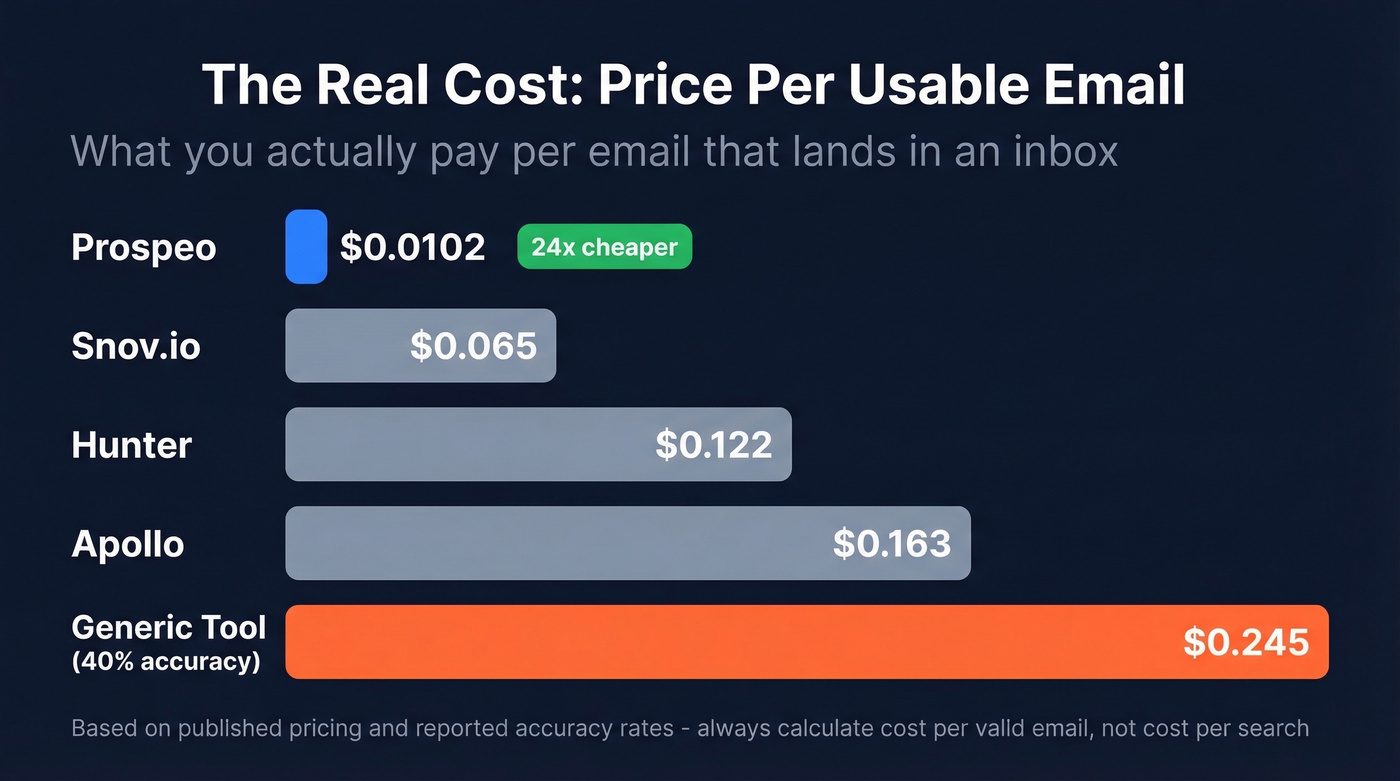
A Feb 2026 benchmark test across nine tools found valid-email rates ranging from ~17% to ~80% depending on the tool and lookup type. That's not a rounding error - it's the difference between a campaign that books meetings and one that gets your domain blacklisted.
Here's the thing: database size is the most overrated metric in this category. A tool with 500M contacts that bounces 15% of them is worse than one with 300M contacts that delivers 98%. The only number that matters is how many of those emails actually land in an inbox.
Let's do the math most vendors hope you never do. If you pay $49/mo for 500 searches and the tool returns valid emails 40% of the time, your effective cost is about $0.245 per usable email. Prospeo's pricing works out to roughly $0.01 per verified email at 98% accuracy - about $0.0102 per usable email. That's roughly 24x cheaper per contact that actually works. Always calculate cost per valid email, not cost per search.
Prospeo
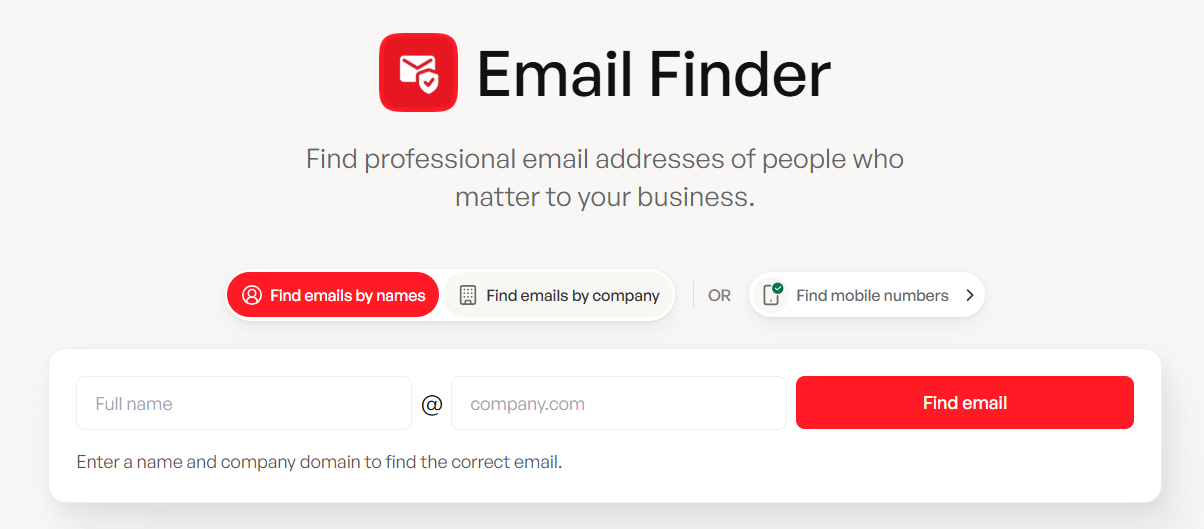
Prospeo covers 300M+ professional profiles with 143M+ verified emails, running a 7-day data refresh cycle. That refresh cadence is the real differentiator - the industry average sits around 6 weeks, which means most tools are serving you addresses that went stale a month ago. The 5-step verification process handles catch-all domains, strips spam traps, and filters honeypots before you ever see a result.
Pricing is credit-based at roughly $0.01 per email, with a free tier of 75 emails per month. No annual contracts. One customer, Meritt, went from a 35% bounce rate to under 4% after switching, which tripled their pipeline from $100K to $300K per week.
Hunter
Hunter is the tool most people try first, and for good reason - clean interface, solid verification layer, and it's been around forever. You get up to 50 free searches per month; the Starter plan runs $49/mo for 500 searches.
Where Hunter genuinely shines is domain search. Plug in a company domain and it surfaces every email pattern it's found, ranked by confidence. Agency operators on Reddit consistently praise Hunter more as a verification layer than a primary email source. The database is smaller than competitors, but what it returns tends to be accurate. For one-off lookups or verifying emails you've found elsewhere, it's hard to beat.

Apollo
The good: 275M+ contacts, and prospecting, sequencing, and data all in one platform. Paid plans start at $49/mo (Basic) and $99/mo (Professional).
The catch: Reddit users consistently flag bounce issues on older contacts. In our experience, Apollo's data feels fresh for recently funded startups and companies actively hiring, but contacts sitting in the database for six-plus months go stale fast. Run your Apollo exports through a standalone verifier before sequencing - we've seen 10-15% of "valid" emails fail on re-verification. (If you're evaluating it specifically for finding emails, see our Apollo Email Finder breakdown.)
RocketReach
Use this if: You have limited info on a prospect - just a name, no company - and need the tool to figure it out. One Reddit user called it the "most accurate so far" after testing multiple tools. Entry pricing starts around $53/mo.
Skip this if: You need bulk list building at scale. RocketReach's credit model gets expensive fast for high-volume campaigns. For a deeper take, see our RocketReach Email Finder Review.
Snov.io
Snov.io runs $39/mo for 1,000 credits and bundles email finding with drip campaigns, a verifier, and a CRM. It's the Swiss Army knife play for solo founders or small agencies running outbound on a budget. Accuracy is moderate, but the all-in-one workflow saves you from stitching together four different tools.
Tool Comparison
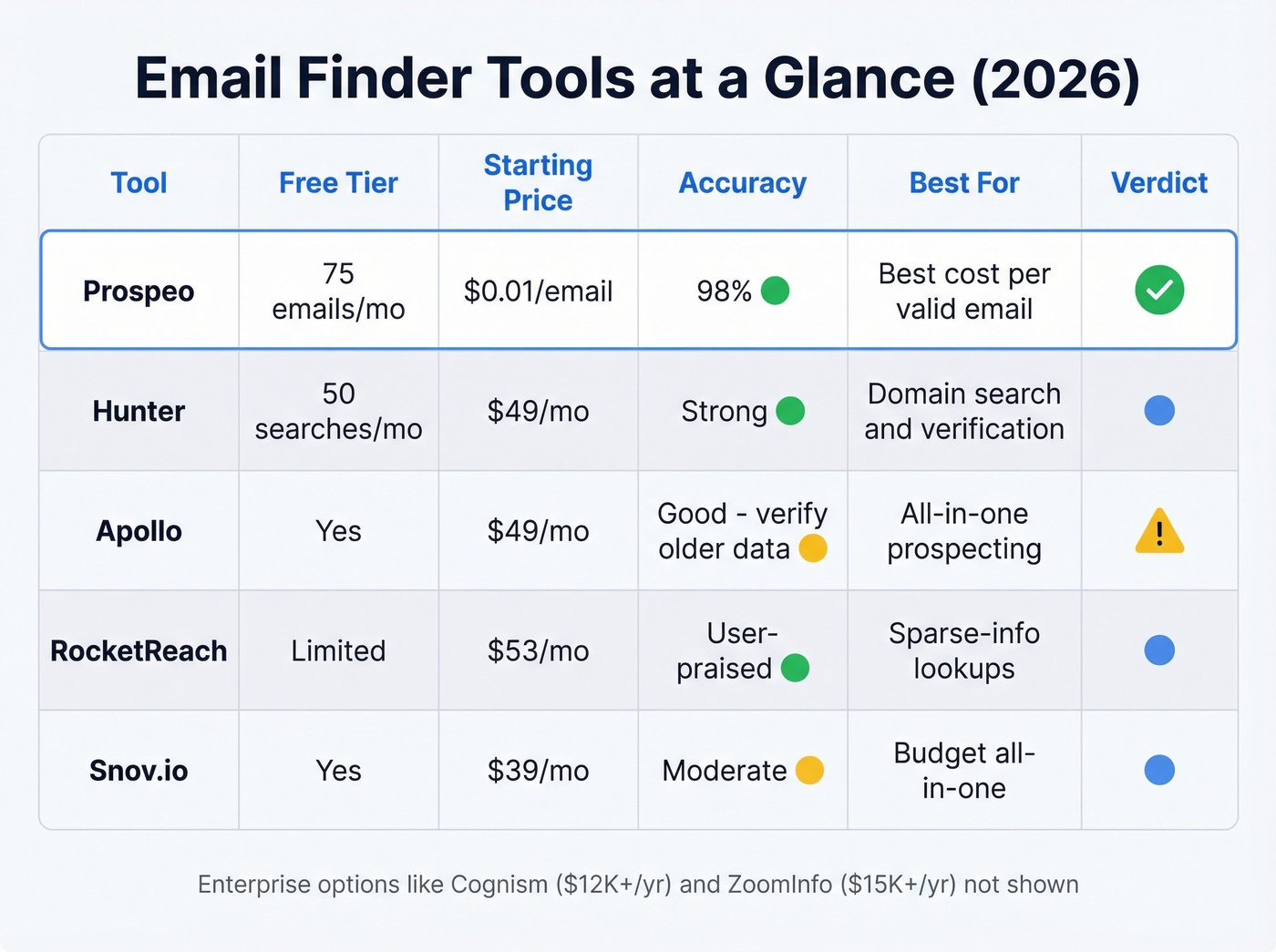
| Tool | Free Tier | Starting Price | Accuracy Signal | Best For |
|---|---|---|---|---|
| Prospeo | 75 emails/mo | ~$0.01/email | 98% verified | Best cost per valid email |
| Hunter | Up to 50 searches/mo | $49/mo | Strong verification | Domain search + verification |
| Apollo | Free tier available | $49/mo | Good (verify older data) | All-in-one prospecting |
| RocketReach | Limited | $53/mo | User-praised | Sparse-info lookups |
| Snov.io | Free tier available | $39/mo | Moderate | Budget all-in-one |
| Lusha | Free tier available | $29/mo | Decent | Quick phone + email |
| Cognism | None | ~$12K-$30K+/yr | Strong for EU/UK | European B2B data |
| GetProspect | 50 emails/mo | $49/mo | Moderate | List building |
| ZoomInfo | None | ~$14,995/yr | Large DB, mixed reviews | Enterprise orgs |
Cognism deserves a mention for anyone targeting EU and UK prospects. Reddit users consistently praise its European data quality, and it includes phone-verified mobile numbers. It's enterprise-priced, though, so it only makes sense for teams with budget to match.
Use a Chrome Extension
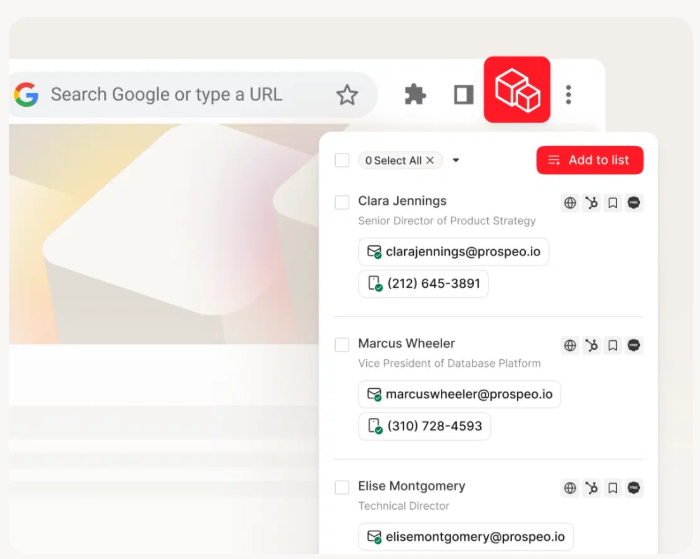
Most email finder tools offer a Chrome extension, and the workflow is dead simple: visit a company website or professional profile, click the extension icon, and verified contact data overlays right on the page. If you want to find someone's email without leaving your browser, this is the fastest path.
Apollo, Hunter, Lusha, and Snov.io all have solid extensions. Prospeo's extension has 40,000+ users and returns 40+ data points per contact. The key difference across tools is verification depth - some extensions return "best guess" emails that haven't been SMTP-verified, while others verify in real time before showing you the result. That distinction is the difference between a clean list and a bounce-rate disaster. (If you're comparing options, start with these Chrome email extensions.)
Google Advanced Search Operators
Nobody talks about this method because it doesn't involve paying for software. Google's advanced operators can surface published email addresses buried in PDFs, team pages, and press releases. It's manual, it doesn't scale, and it works surprisingly well for one-off lookups.
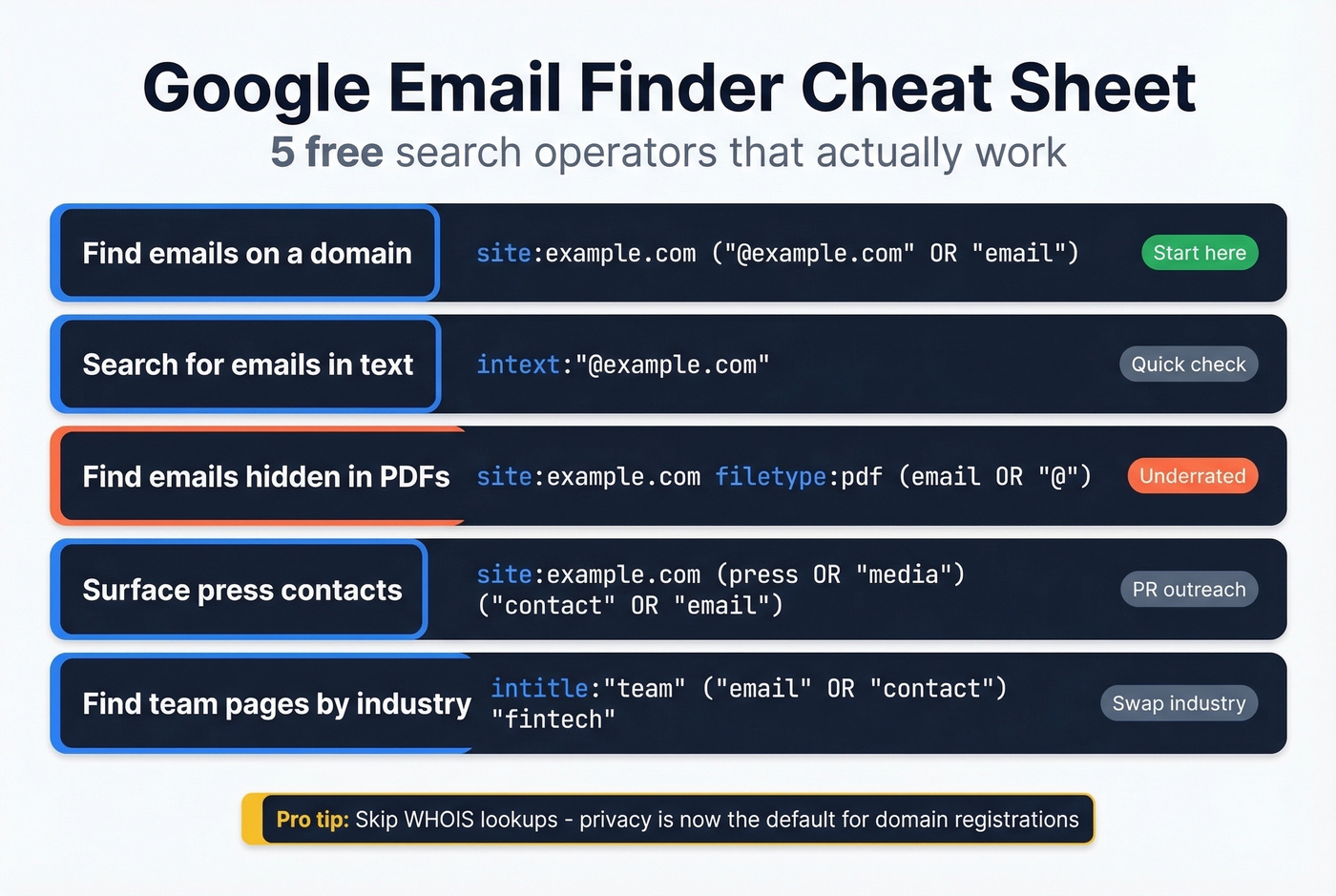
Templates worth bookmarking:
Find emails on a specific domain:
site:example.com ("@example.com" OR "contact" OR "email")
Search for emails in text:
intext:"@example.com"
Find emails in PDFs and documents:
site:example.com filetype:pdf (email OR "@")
Surface press and media contacts:
site:example.com (press OR "media") ("contact" OR "email")
Find team pages by industry:
intitle:"team" ("email" OR "contact") "fintech"
Swap "fintech" for whatever industry you're targeting. The filetype:pdf operator is particularly underrated - companies publish brochures, annual reports, and speaker bios as PDFs with email addresses that never show up on their main website.
One method you'll see recommended elsewhere: WHOIS lookups. Skip it. WHOIS privacy is now the default for domain registrations, so registrant emails rarely surface anymore. (If you're curious why it fails now, see WHOIS Lookup Email.)
Check Websites and Social Profiles
Before you pay for any tool, spend 60 seconds checking the obvious places. Smaller companies often list direct emails for founders and department heads on their About or Team page. Press and media pages almost always publish a PR contact with a direct email. YouTube About tabs, Twitter/X bios, GitHub profiles, and personal websites frequently include business contact info too.
This works beautifully for high-value targets like C-suite executives at smaller companies. It doesn't scale for building a 500-person prospect list, but it's free and often faster than firing up a tool.

You just read that bounce rates swing from 4% to 35% depending on the tool. Prospeo's 5-step verification and 7-day data refresh deliver 98% email accuracy - so the addresses you find are the addresses that land. At $0.01 per verified email, your cost per usable contact is 24x lower than tools charging $0.25 for maybes.
Find 75 verified emails free this month - no credit card, no contract.
Guess the Pattern and Verify
Every company uses an email format. If you know one person's email at a company, you can reverse-engineer the pattern and apply it to anyone else there. The five most common formats:
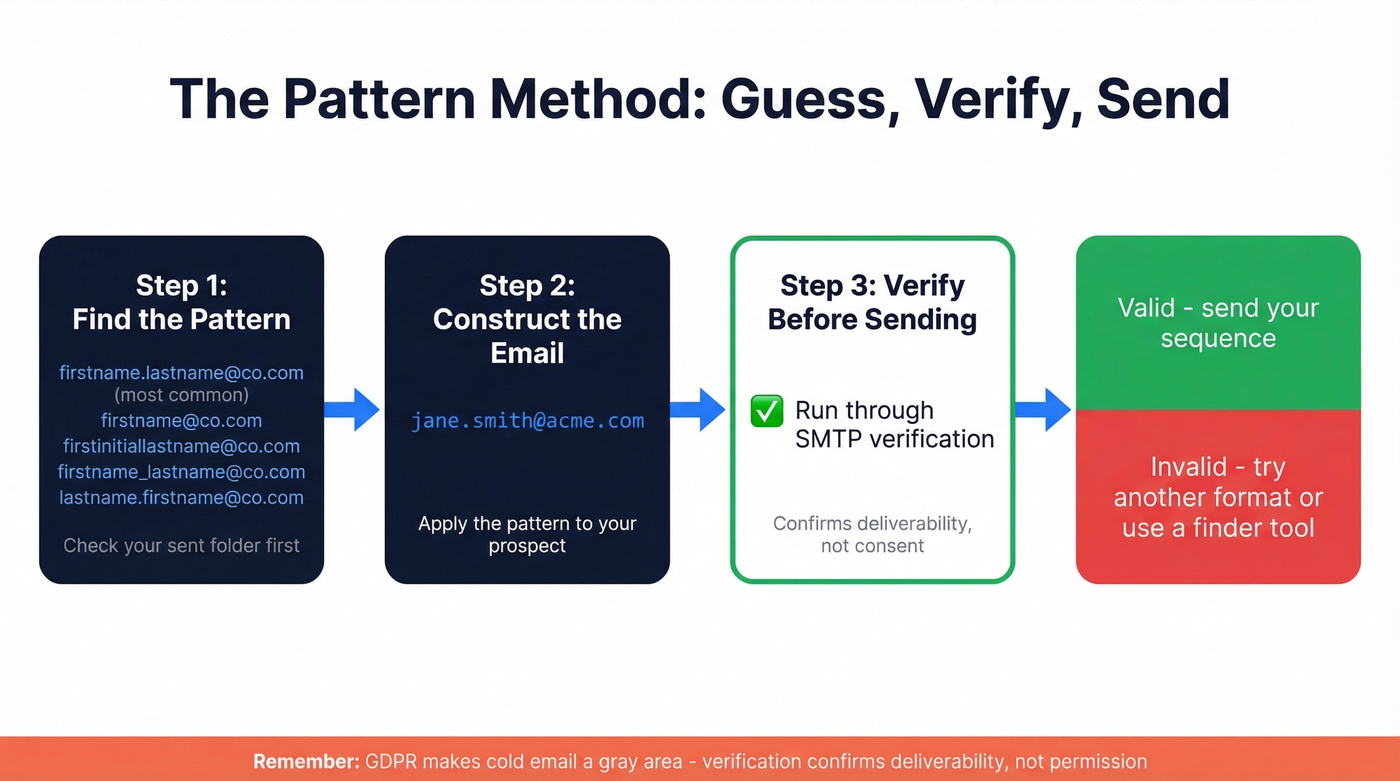
firstname.lastname@company.com(most common by far)firstname@company.comfirstinitiallastname@company.comfirstname_lastname@company.comlastname.firstname@company.com
Check your sent folder - if you've ever emailed anyone at the target company, you already know the pattern. Then construct the email and run it through a verification tool before sending. (For a safer workflow, see guess email address format.)
A word on compliance: guessing emails and cold-emailing them sits in a gray area that gets grayer every year, particularly under GDPR. Verification confirms deliverability, not consent. Treat this as a fallback method, not your primary strategy.
Ask an AI Assistant
ChatGPT, Claude, and Perplexity can sometimes surface publicly available email addresses by compiling information from conference speaker lists, published articles, and company pages. For hard-to-find contacts, it's worth a 30-second ask before giving up.
The critical caveat: AI models hallucinate. They'll confidently generate an email address that looks plausible but doesn't exist. Never send to an AI-suggested email without running it through a verification tool first. (If you're exploring this route, compare AI email address finder options.)
Why Verification Is Non-Negotiable
Here's the uncomfortable reality: the word "verified" has become meaningless across most of the email finder industry. Tools slap a green checkmark on emails that passed a basic SMTP handshake months ago, and by the time you send, the person has changed jobs or the catch-all server has been reconfigured.
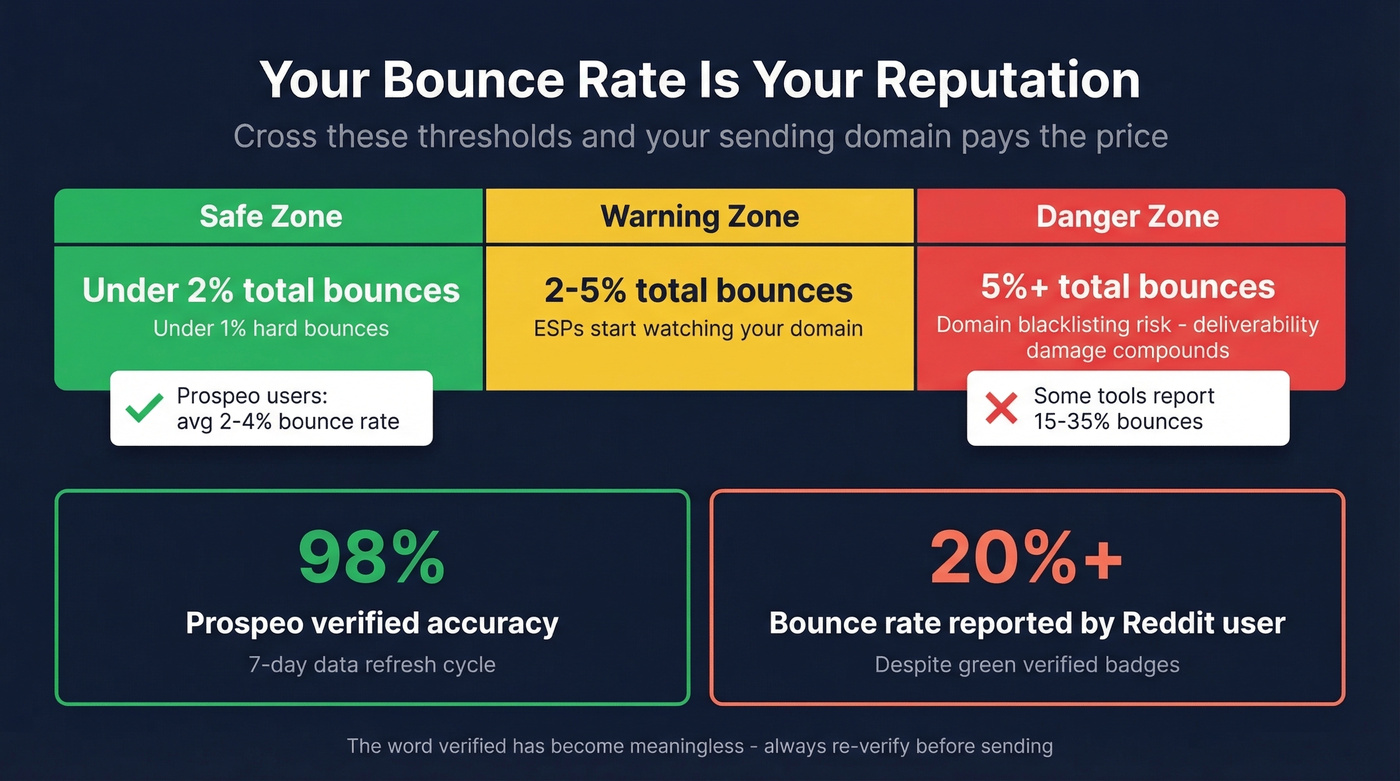
The numbers that matter: keep total bounces under 2% and hard bounces under 1%. Push past those thresholds and your sending domain risks blacklisting. Deliverability damage compounds - once you're flagged, even your good emails stop landing. SendGrid's deliverability guide confirms that sender reputation is the single hardest metric to rebuild once it's damaged.

Five Mistakes That Tank Deliverability
Trusting "verified" labels at face value. A label from six weeks ago means nothing today. Verify within a week of sending.
Ignoring catch-all domains. These accept every email at the domain level, so verification tools mark them "valid" even when the specific mailbox doesn't exist. You need a tool that handles catch-all detection separately.
Sending risky emails from your primary domain. If you have addresses flagged as uncertain, send them from a secondary domain to protect your main sender reputation.
Skipping verification on "fresh" data. Even data from last week can bounce if someone changed roles. We've watched teams assume new data is clean and learn the hard way.
Blending verified and unverified contacts in the same sequence. One bad batch poisons deliverability for the entire send.
Real talk: if your current tool shows "verified" on everything and you're still bouncing above 5%, the tool is lying to you. Verification quality is the single highest-leverage variable in outbound email performance. In our testing, the gap between "verified" and "actually deliverable" is where most campaigns die. (For tool benchmarks, see best email verification.)
Google operators work for one-off lookups. Finder tools work at scale - but only if the data is fresh. Prospeo refreshes 300M+ profiles every 7 days while the industry average sits at 6 weeks. That's why Meritt cut their bounce rate from 35% to under 4% and tripled their pipeline.
Stop sending to stale emails. Get data refreshed weekly.
Legal Compliance in 60 Seconds
Finding someone's email is legal. How you use it is where the law gets specific.
| CAN-SPAM (US) | GDPR (EU/EEA) | |
|---|---|---|
| Model | Opt-out | Opt-in (with exceptions) |
| B2B cold email | Allowed with rules | Needs legitimate basis |
| Requirements | Opt-out link, physical address, honest headers | Disclose data use, honor objections |
| Max penalty | $53,088 per email | up to 20M EUR or 4% of turnover |
CAN-SPAM doesn't require permission to email - it requires you to play fair once you do. Include a physical address, make opt-out easy, and honor unsubscribes within 10 business days. GDPR is stricter: you need a legitimate basis, typically "legitimate interest" for B2B, and you must stop if they object.
One more thing: buying email lists isn't technically illegal under CAN-SPAM, but it's a deliverability death sentence. Purchased lists are full of spam traps, recycled addresses, and people who never asked to hear from you. Build your own lists. Verify them. Send to people who might actually want what you're selling. (If you're doing this at scale, follow an email list hygiene SOP.)
FAQ
Can I find someone's email address for free?
Yes - Google advanced search operators, company websites, and social profiles cost nothing. Hunter offers up to 50 free searches per month, and Prospeo's free tier includes 75 verified emails. Manual methods work for one-off lookups but don't scale for campaign-level list building.
How accurate are email finder tools in 2026?
Accuracy varies dramatically. A Feb 2026 benchmark across nine tools found valid-email rates ranging from ~17% to ~80%. Prospeo leads at 98% verified accuracy; most mid-tier tools land between 60-75%. Always run results through verification before sending, even "verified" results from the finder itself.
Is it legal to email someone without their permission?
In the US under CAN-SPAM, yes - provided you include an opt-out mechanism, a physical postal address, and honest subject lines, and honor unsubscribes within 10 business days. Under GDPR in the EU, you need a legitimate basis, typically "legitimate interest" for B2B, and must disclose how you process their data.
What's a safe bounce rate for cold email?
Keep total bounces under 2% and hard bounces under 1%. Anything above that risks domain blacklisting and long-term deliverability damage. If you're consistently above 3-5%, your data source is the problem - not your sending infrastructure.
How do I find email addresses in bulk?
Use an email finder tool with built-in verification. Upload a CSV of names and companies, or use search filters to build a targeted list directly. The key differentiator is whether verification happens in real time during export or requires a separate cleaning step afterward.